Regulatory Documents
The installation of metal ceilings in cafes and restaurants must comply with certain regulatory documents and requirements to ensure the safety and comfort of visitors. Below are the main regulatory documents governing the installation of metal ceilings in cafes and restaurants:
- DBN V.2.6-98:2013 “Metal Structures. Basic Design Provisions”. This document contains design requirements for metal structures, including ceiling structures.
- Sanitary Standards and Rules СНиП 2.04.05-91 Equipment for Cafes, Bars, and Restaurants. Sanitary Requirements. This document includes sanitary requirements for the equipment of cafes, bars, and restaurants, including the materials from which ceilings are made.
The popularity and success of restaurants and cafes largely depend on the stylish, cozy, and original interior design. Without a doubt, the ceiling is one of the key components of any space’s interior. A stylish ceiling design can completely transform the look of a restaurant or cafe.
We invite you to explore the key requirements for ceilings in restaurants and cafes, as well as check out 50+ beautiful ceiling space design solutions for restaurants and cafes.
Ceiling Requirements for Restaurants
Cafes and restaurants are spaces with specific temperature and humidity conditions. Additionally, the internal environment parameters in such establishments depend directly on their size (large and small cafes differ drastically) and configuration (compare a steakhouse with an open grill to a small cafe where the only heating appliances are a coffee machine and a microwave).
Accordingly, the ceiling requirements in such spaces will also vary. Here, we can outline a universal list:
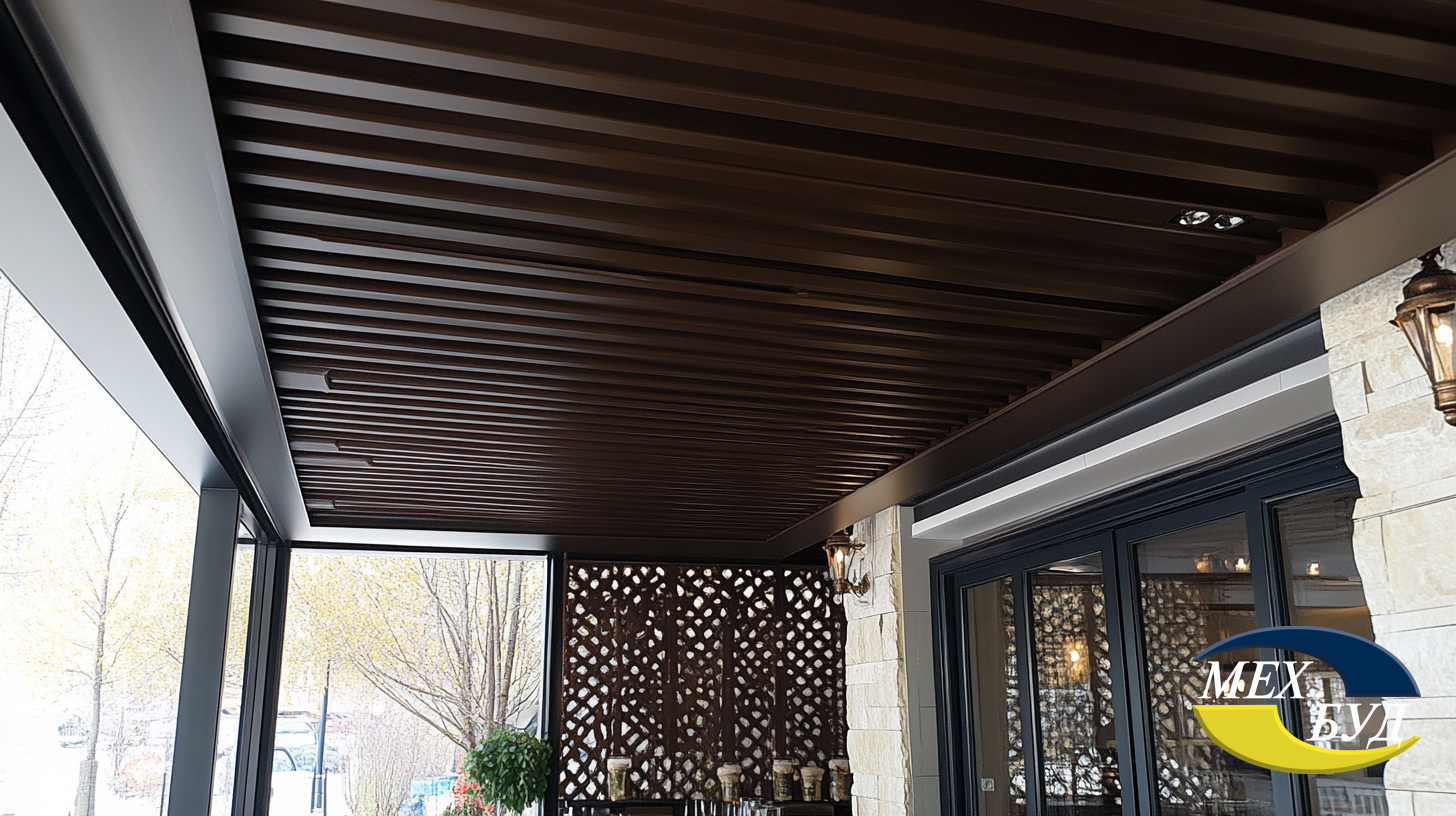
- Attractive Appearance: This is especially important for the ceilings in the customer-facing areas of restaurants. They must look flawless and harmonize perfectly with the interior design. This applies to both the shape of the ceiling panels (from this perspective, cubic-shaped ceilings look the most advantageous) and the color scheme.
- Resistance to External Impacts and Durability: Increased humidity can be a characteristic feature of cafes and restaurants due to the influence of kitchens. Therefore, ceilings are often affected by moisture and corrosion. To avoid this, it is essential to choose ceiling materials that are resistant to high humidity and temperature fluctuations, such as galvanized steel with a polymer protective coating.
- Ability to Hide Communications: People in restaurants rarely pay attention to the ceiling, but that does not mean that cables and ventilation ducts should be left exposed. For most design schemes, concealing communications is highly desirable, while maintaining access to wiring or ventilation pipes for servicing and repairs.
- Ease of Maintaining Sanitary Conditions: While in residential and public buildings, this may not be a priority, in a restaurant, the ability to quickly clean the ceiling from dust, dirt, and grease is critical. That is why porous materials are rarely used in ceiling finishes, with a preference given to metal with polymer coatings.
After analyzing all the requirements mentioned above, experts conclude that one of the best ceiling finishing options for restaurants or cafes is the installation of a suspended steel panel system. When it comes to design, cubic-shaped ceilings stand out the most among metal suspended ceilings.


Main Requirements for Installing Metal Ceilings in Cafes and Restaurants:
- Materials: Metal ceilings should be made from high-quality materials that meet sanitary standards and do not pose any harmful effects on health.
- Construction: Metal ceilings must be designed to support the weight of lighting fixtures and other equipment installed on them. The structure must be sturdy and stable to avoid the risk of ceiling collapse.
- Installation: Metal ceiling installation should be carried out in compliance with safety regulations and using appropriate equipment. Fire safety requirements should also be met, including the installation of specialized fire suppression systems and ensuring access for fire services.
- Operation and Maintenance: Metal ceilings should be regularly inspected for damage and repaired as necessary. Proper support and cleaning of the ceiling from dust and other contaminants should also be ensured.
- Hygiene: Metal ceilings should be easy to clean from dust and dirt. They should have a smooth surface without bumps or indentations that could collect dirt. To maintain hygiene, no condensation, mold, mildew, or other contaminants should form on the ceiling.
- Fire Safety: Metal ceilings must meet fire safety requirements, including the installation of fire suppression systems and ensuring access for fire services.
When installing metal ceilings in cafes and restaurants, it is crucial to follow regulations and requirements to ensure the safety and comfort of visitors. By relying on the strength and stability of the ceiling structure, you can be confident that it will last for years and ensure the safety of patrons.
Types of Ceilings for Restaurants and Cafes
When designing a restaurant or cafe, one of the key elements is the ceiling, which sets the atmosphere of comfort and coziness for visitors. The choice of ceiling structure depends on various factors, such as the establishment’s style, functionality, and design concepts.
Classic types of ceilings for restaurants and cafes include plasterboard ceilings, stretch ceilings, wooden ceilings, and metal ceilings. However, today, metal is the most popular material for ceilings.
Here are several types of ceilings widely used in restaurant and cafe design:
- Cubic Shaped Ceiling: This ceiling has a cube shape and can be used to create a sense of volume in the space. It is ideal for modern interiors.
- Rectangular Ceiling: The most common type of ceiling, which can imitate traditional cornices and straight lines. It is perfect for creating a clean and modern interior.
- Rack Ceiling: This ceiling consists of a grid of horizontal and vertical elements that create rows of cells. It is ideal for traditional and classic interiors.
- Cassette Ceiling: This ceiling consists of square or rectangular panels that create a geometric pattern. It can be used to create a modern and stylish interior.


Solutions for Filling Ceiling Space in Restaurants and Cafes
Modern designers are increasingly using cubic-shaped ceilings in interiors. This is due to the fact that this type of ceiling combines:
- Ease of installation
- Aesthetically pleasing appearance
- Excellent functional characteristics
By combining different colors and sizes of cubic-shaped ceilings, you can highlight the distinctive style of any restaurant or cafe.

Maximum Light and Fresh Air, as Well as Increased Space – This Is What a Cubic Shaped Ceiling Will Bring to Your Cafe, Bar, or Restaurant.
The cubic shaped ceiling is the perfect solution for interiors in the “loft” style.
Trends for 2025
Cubic shaped ceilings remain a popular choice for cafes and restaurants, but in 2025, designers are introducing new accents.
Main Trends:
1. Innovative Lighting Systems
- Integration of LED strips, linear lights, and spot elements to create unique lighting effects.
- Use of dynamic lighting that adjusts brightness and color to match the time of day or events.
2. Combination with Natural Design Elements
- Combining metal ceilings with wooden elements to create a sense of warmth and comfort.
- Using natural shades and textures, such as wood surface imitation, to enhance the feeling of natural harmony in the interior.
Cubic shaped ceilings remain relevant due to their ability to adapt to modern design solutions. Their combination with innovative technologies and natural elements opens up new possibilities for decorating cafes and restaurants.




Related articles
How much does it cost to install a turnkey suspended ceiling?
Read a detailed breakdown of suspended ceiling installation costs, as well as useful lifehacks for reducing the installation price, in our new article below.
Lining of roof overhangs and other structures
What roof overhangs are and why they need to be lined. What functions roof overhang lining performs in different categories of buildings.
The architectural and engineering paradigm of modern metal mirrored ceilings
Modern metal mirrored ceilings: cassette, panel, and linear systems. Explore their architecture, materials, acoustics, and visual space expansion.