Strategic Fabrication in Modern Construction: A Comprehensive Analysis of Metal Forming Technologies, Equipment Asset Management, and Market Trajectories (2025–2034)
Generic selectors
Exact matches only
Search in title
Search in content
Post Type Selectors

Strategic Fabrication in Modern Construction: A Comprehensive Analysis of Metal Forming Technologies, Equipment Asset Management, and Market Trajectories (2025–2034)

December 25, 2025
6  

1. Executive Intelligence: The Convergence of Construction and Advanced Manufacturing

The modern construction landscape is undergoing a structural transformation, moving beyond the traditional binaries of on-site assembly and off-site manufacturing. While the foundational elements of reinforcement—rebar and mesh—remain critical to concrete integrity, the broader definition of “metal reinforcement” in the built environment has expanded to encompass the precision fabrication of architectural skins, structural cladding, and complex metal profiles that reinforce the building envelope against environmental stressors. This report synthesizes a vast array of data regarding the machinery, market dynamics, and operational strategies that underpin this sector. It addresses the user’s requirement for a comprehensive guide by focusing on the means of production—the fabrication equipment that transforms raw metal into structural and architectural reinforcement—based on the specific research material available.

The analysis reveals a sector driven by two opposing yet complementary forces: the democratization of manufacturing capability through portable, contractor-grade bending solutions, and the simultaneous centralization of high-precision industrial fabrication through automated, robotic press brake cells. As we approach 2025, the market is characterized by a robust secondary trade in industrial machinery, aggressive fiscal incentives for equipment acquisition, and a technological shift from hydraulic to electric drive systems.

1.1 Global Market Dynamics and Future Outlook (2025–2034)

The trajectory of the metal sheet bending and fabrication market is indicative of a broader industrial upcycle. The global metal sheet bending machine market, valued at approximately USD 988.1 million in 2024, is projected to surge to over USD 1.5 billion by 2032, registering a compound annual growth rate (CAGR) of 5.50%.1 When viewed through the wider lens of sheet metal fabrication services—encompassing cutting, welding, and bending for automotive, aerospace, and construction sectors—the market is poised to grow from USD 22.32 billion in 2025 to USD 33.31 billion by 2034, with a steady CAGR of 4.55%.

This growth is not uniform across all geographies. The Asia Pacific region currently commands the dominant share (approximately 39% in 2024), fueled by rapid urbanization and infrastructure projects in emerging economies. However, North America is witnessing a renaissance in fabrication capacity, driven by “reshoring” initiatives—the strategic repatriation of manufacturing to mitigate global supply chain fragility. This is particularly evident in the United States, where strong adoption of Industry 4.0 technologies and CNC-based machines is accelerating market value.

Underlying Trends Driving Market Expansion:

  1. Infrastructure Renaissance: Global initiatives to upgrade aging infrastructure require massive volumes of precision-bent metal components, from structural brackets to architectural fascia.
  2. The Automation Imperative: With skilled labor shortages becoming chronic, the industry is pivoting toward robotic bending solutions. The robotic sheet metal bending segment alone is forecast to grow at an aggressive CAGR of 11.9% through 2029.
  3. Sustainability and Energy Efficiency: The shift toward green manufacturing is influencing equipment design, favoring energy-efficient electric press brakes over continuous-run hydraulic systems, and promoting the use of recyclable materials.

1.2 The Scope of Metal Reinforcement Equipment

While the user query highlights rebar and mesh, the industrial reality reflected in the research emphasizes that the equipment used to process these heavy reinforcement materials often overlaps with or parallels the machinery used for sheet metal forming. The “reinforcement” of a structure is a composite function of its internal concrete skeleton (rebar) and its external metal skin (cladding/flashing). The machinery discussed in this report—press brakes, folders, and portable benders—are the primary tools used to create the rigid, weather-resistant, and structural metal components that reinforce the building’s exterior and interior functionality.

Market Segment Forecast Period Projected Value (End of Period) CAGR Primary Drivers
Metal Bending Machines 2025–2032 ~$1.52 Billion 5.50% Automation, Infrastructure
Fabrication Services 2025–2034 ~$33.31 Billion 4.55% Automotive, Construction Demand
Robotic Bending 2024–2029 ~$3.53 Billion 11.9% Industry 4.0, Labor Efficiency
ZOV Marketing A high tech industrial electric press brake in 3319add5 ea7a 42b6 a4ee 16ad010ffec1 1

2. The Physics and Mechanics of Precision Metal Forming

To understand the equipment that reinforces modern construction, one must first understand the physics of metal deformation. Bending metal is not merely about folding it; it is a complex interplay of material properties, grain structure, and elasticity. Whether reinforcing a concrete slab with bent rebar or creating a watertight lock seam on a standing seam roof, the principles remain constant.

2.1 The Mechanics of Plastic Deformation

When metal is bent, it is subjected to stress beyond its yield point but below its ultimate tensile strength. The material on the inside of the bend compresses, while the material on the outside stretches. Between these two zones lies the “Neutral Axis,” a theoretical line where the metal neither stretches nor compresses.6

  1. K-Factor: The location of this Neutral Axis shifts during bending. The K-factor is the ratio of the Neutral Axis offset to the material thickness. Accurate calculation of the K-factor is critical for determining the “flat pattern” size—the exact length of material needed before bending to achieve the desired final dimensions. If this calculation is off, the reinforcement component will not fit, leading to costly scrap.
  2. Springback: Metal is elastic. Upon releasing the bending force, the material attempts to return to its original shape, a phenomenon known as springback. High-tensile strength materials (often used in structural reinforcement) exhibit greater springback. Advanced CNC press brakes compensate for this by “overbending” the material slightly (e.g., bending to 92 degrees to achieve a final 90-degree angle) based on pre-calculated material libraries.

2.2 Grain Direction and Structural Integrity

Metal sheet and plate are produced by rolling mills, which creates a grain structure in the material similar to wood. Bending parallel to this grain can cause micro-fractures on the outside radius, significantly weakening the structural integrity of the component.

  1. Best Practice: For critical reinforcement components, bends should ideally be formed perpendicular to the grain direction. This orientation allows the material to stretch more ductility without cracking. If bending parallel to the grain is unavoidable, a larger bend radius must be used to distribute the stress.

2.3 Bending Methods: Air Bending vs. Bottoming

Modern fabrication relies heavily on “air bending,” a technique where the punch presses the sheet into the die but does not press it against the bottom of the die.

  1. Air Bending: The sheet makes contact with the punch tip and the two shoulders of the V-die. The angle is determined by how deep the punch descends into the die. This method is highly versatile, allowing a single set of tooling to produce multiple angles. The inside bend radius is primarily a function of the V-die opening (typically 16% of the die opening for mild steel) rather than the punch radius.
  2. Rule of 8: A critical rule of thumb for tooling selection in air bending is that the V-die opening should be eight times the material thickness (8xT). This ratio provides the optimal balance between tonnage requirements and bend quality. Using a smaller die opening increases the required tonnage and the risk of cracking the material.
ZOV Marketing Close up of a laser guarding system Lazer Safe cac321d2 f5ab 47a1 b251 4eff7dd15d16 0

3. Industrial Fabrication Infrastructure: The Press Brake Ecosystem

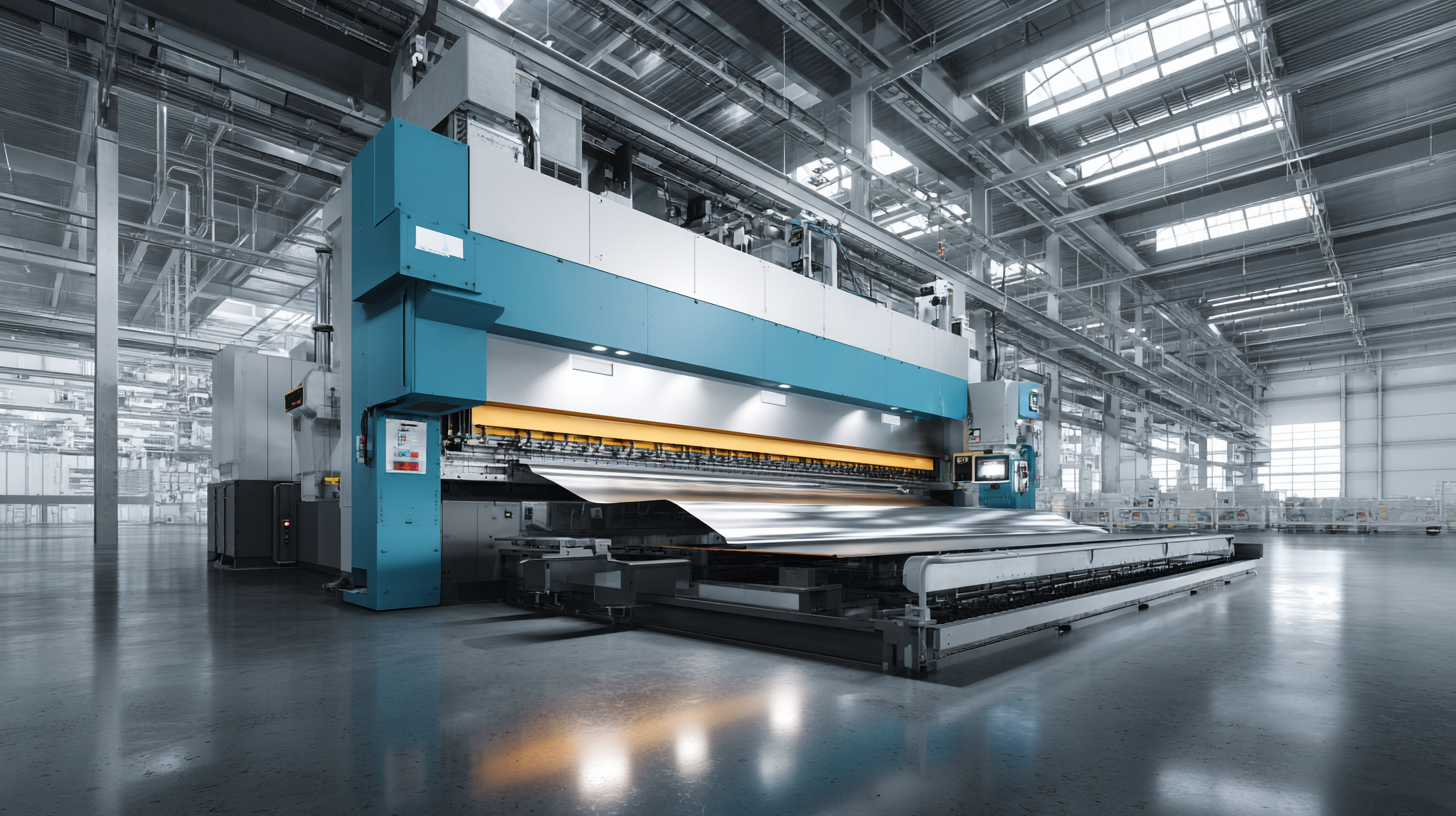
In the hierarchy of metal forming, the industrial press brake is the apex predator. These machines are capable of exerting hundreds of tons of force to bend heavy structural plate and complex architectural reinforcement profiles. The market is currently segmented by drive technology, each offering distinct advantages for different construction applications.

3.1 Hydraulic Press Brakes: The Heavy Lifters

Hydraulic press brakes have been the industry standard for decades. They utilize synchronized hydraulic cylinders to drive the ram down.

  1. Operational Profile: These machines are favored for their immense force generation capabilities. They are the only viable option for bending thick structural steel plate used in heavy construction reinforcement.
  2. Advantages: They possess a high tonnage-to-cost ratio, making them accessible for general fabrication shops. They are robust and forgiving in heavy-duty environments.
  3. Disadvantages: The hydraulic pumps run continuously, consuming energy even when the machine is idle. They require significant maintenance, including hydraulic fluid changes, filter replacements, and seal monitoring to prevent leaks.
  4. Market Position: Best suited for high-tonnage, low-to-medium precision structural work where brute force is the primary requirement.

3.2 Electric Press Brakes: The Precision Instruments

Electric press brakes represent the shift toward sustainable, high-precision manufacturing. They use servo motors to drive the ram, often via a belt-and-pulley system.

  1. Operational Profile: These machines consume energy only during the actual bending cycle, offering significant operational savings. They provide micron-level accuracy and rapid cycle times.
  2. Advantages: High energy efficiency, low noise, and minimal maintenance (no hydraulic fluids or seals). They are ideal for high-volume production of intricate architectural components where consistency is paramount.
  3. Disadvantages: They have a higher upfront capital cost and are generally limited in tonnage (typically maxing out around 300 tons), making them unsuitable for heavy structural plate.
  4. Market Position: Best suited for high-precision, high-speed fabrication of lighter gauge architectural metals and cladding.

3.3 Hybrid Press Brakes: The Best of Both Worlds

Hybrid systems combine the efficiency of electric drives with the force of hydraulics. A servo motor drives the hydraulic pump only when movement is requested.

  1. Operational Profile: This configuration drastically reduces the volume of hydraulic oil required and eliminates the energy waste of continuous idling pumps.
  2. Advantages: They offer the speed and precision of electric machines with the force capability of hydraulics. They represent a balanced solution for fabricators handling a mix of light and heavy work.
  3. Market Position: Ideal for job shops that require versatility across a wide range of material thicknesses.

3.4 Automation and Robotic Integration

The integration of robotics is transforming press brake operation from a manual craft to an automated science. “Robotic Tending” involves a robotic arm that loads the sheet, manipulates it during the bending sequence, and offloads the finished part.

  1. Operational Impact: Automation addresses the chronic shortage of skilled press brake operators. A robotic cell can run lights-out (unattended), ensuring consistent throughput and quality. Systems now include “squaring tables” and “re-grip stations” to ensure the robot maintains precise control over the part orientation.
  2. Software Ecosystem: The efficacy of these systems relies on advanced software like “BendWare,” which allows for offline programming. This means engineers can program the bending sequence and robot movements on a computer while the machine is still running production, minimizing downtime.
Feature Hydraulic Electric Hybrid
Drive Mechanism Hydraulic Fluid + Pump Servo Motors Servo + Reduced Hydraulic
Energy Profile Continuous consumption On-demand (efficient) Efficient
Force (Tonnage) High (>300T common) Low/Medium (<300T) Medium/High
Maintenance Fluid, Filters, Seals Mechanical Lubrication Low Fluid Maintenance
Accuracy High (with CNC) Ultra-High (Micron) High
Cycle Speed Slower Fastest Fast
ZOV Marketing A professional business owner in a workshop rev 2b2e2a6a 32d1 4882 beb4 660b43afa380 2

4. Contractor-Grade Portable Solutions: The Field Fabrication Standard

While industrial fabrication creates the heavy components, the “last mile” of construction reinforcement—specifically in roofing, siding, and exterior trim—is handled by portable bending brakes. These machines allow contractors to fabricate custom profiles on-site, ensuring a perfect fit that pre-manufactured parts cannot match.

4.1 Comparative Technical Analysis: Van Mark vs. Tapco

The market for portable brakes is dominated by two primary manufacturers: Van Mark and Tapco. While they serve the same function, their engineering philosophies differ significantly, catering to different segments of the contractor market.

4.1.1 Structural Engineering and Durability

Van Mark: Known for “tank-like” durability.

  1. Construction: Van Mark brakes are constructed from military-grade aluminum castings and steel tubing. They utilize a Cam-Lock system rather than a leaf-locking bar. This system has fewer moving parts and is less prone to wear over time. The lack of plastic or rubber flappers means the locking mechanism remains consistent even after years of exposure to job site grit.
  2. Weight: The robust construction makes these units heavier. A 10’6″ TrimMaster is significantly harder for a single person to load onto a truck rack than its Tapco equivalent. However, the ergonomic handle design facilitates two-person lifting.

Tapco: Known for lightweight portability and precision.

  1. Construction: Tapco brakes use high-tech anodized alloys to minimize weight. The Moving Pivot Hinge allows the brake to clamp without marring the material, offering a “soft touch” that is ideal for delicate pre-finished coils.
  2. Portability: The primary selling point is weight. A Tapco Pro 14 or 19 is designed to be moved by a single operator if necessary, making it the preferred choice for solo contractors or smaller crews.
  3. Durability Concerns: The lightweight design can be less forgiving of abuse. The locking bar mechanism requires periodic adjustment (tuning) to maintain even clamping pressure across the length of the brake.

4.1.2 Operational Capabilities and Throat Depth

The “throat depth” determines the width of the material that can be inserted into the brake.

  1. Van Mark TrimMaster: Typically features a 14″ throat depth. This is sufficient for most standard residential fascia and window trim profiles.
  2. Tapco Pro 19: Features a 19″ throat depth. This extra depth is invaluable for complex, wide profiles or when bending custom flashing for commercial roofing applications. It allows the contractor to manipulate larger pieces of coil stock without removing them from the brake.

4.1.3 Accessories and Hemming

Both systems support a range of accessories that enhance productivity.

  1. Cutters: The Van Mark TrimCutter and Tapco Pro Cut-Off are essential. They ride on the top rail of the brake and slice the material to width. This produces a factory-edge quality that hand snips cannot replicate and significantly speeds up the workflow.
  2. Hemming: Creating a hem (a 180-degree fold) adds rigidity to the edge of a metal sheet, effectively reinforcing it. Van Mark’s Power Lock bar is often cited as providing a tighter clamping force, which facilitates crisper hems without the material slipping.
Feature Van Mark (e.g., Mark II TrimMaster) Tapco (e.g., Pro 14/19) Implications
Material Military-grade aluminum/steel Anodized alloys Van Mark = higher impact resistance; Tapco = ease of transport.
Locking System Cam-Lock Moving Pivot Hinge Van Mark is often cited as lower maintenance.
Throat Depth 14″ (Standard) – 20″ (Industrial) 14″ (Pro 14) – 19″ (Pro 19) Tapco Pro 19 offers greater versatility for wide profiles.
Weight Heavier Lighter Tapco preferred for solo contractors.
Price Point Generally Higher Mid-Range/Affordable Tapco offers a lower barrier to entry.

4.2 Maintenance and Field Optimization

The longevity of a portable brake is directly tied to its maintenance.

  1. Vinyl Wear Strip Replacement: The vinyl strip inside the brake protects the material finish. It is a consumable item. Manufacturers recommend replacement annually. The process involves removing the old strip, cleaning the channel of adhesive and debris, and carefully feeding the new strip in. This often requires two people to prevent stretching the vinyl, which would cause it to bunch up later. A fresh strip ensures the material is gripped securely and prevents slippage during bends.
  2. Tension Adjustment: On Tapco brakes, the clamping pressure must be uniform. A common field test involves placing a business card at each clamping station (C-clamp) and locking the brake. If the card pulls out easily, that station is too loose. Adjustment involves tightening the tension bolts or wedges until the card is held firm. Uneven tension leads to “bowed” bends where the center of the sheet is bent to a different angle than the ends.
  3. Lubrication: Pivot points should be lubricated with lightweight machine oil (like 3-in-One), not heavy grease which attracts dirt. For Tapco brakes, oiling the main hinge is critical to prevent binding. Van Mark’s cam design is more tolerant but still benefits from periodic cleaning and lubrication.

5. Strategic Asset Management: The Lifecycle of Equipment

Managing a fleet of fabrication equipment is a capital-intensive endeavor. Understanding how to value, buy, and sell these assets is as important as knowing how to operate them.

5.1 The Secondary Market: Buying Used Equipment

The market for used fabrication machinery is efficient and active. A high-quality press brake, unlike a consumer vehicle, retains substantial utility value for decades.

  1. The “Legacy Dividend”: There is a specific market niche for machines from the late 1990s and early 2000s produced by top-tier manufacturers (e.g., Amada, Trumpf). These machines combine heavy-duty, over-engineered mechanical frames with CNC controls that are just modern enough to be functional. They often sell for 30-50% of the price of a new unit while offering 90% of the capability for general fabrication.

5.1.1 The Pre-Purchase Inspection Protocol

Buying used carries risk. A rigorous inspection protocol is required:

  1. Frame Integrity: Inspect the side frames for stress cracks. A machine that has been consistently overloaded will show signs of deformation or cracking at the throat.
  2. Hydraulic Health: Check the hydraulic cylinders for chrome peeling or pitting. This is a major repair expense. Listen to the pumps under load; a whining noise suggests cavitation or wear.
  3. Control Obsolescence: The mechanical iron might be sound, but if the CNC control is dead and the manufacturer no longer supports it, the machine is effectively scrap. Verify that the control boots up, the screen is readable, and the software can still be serviced or upgraded.
  4. Backgauge Repeatability: The backgauge determines the accuracy of the flange length. It should move smoothly without “backlash” (play). Run it to several positions and verify the actual position matches the readout.

5.2 Disposition Strategy: Maximizing Value when Selling

When it comes time to upgrade or liquidate, presentation is the primary driver of final sale price.

  1. Visual Hygiene: “Clean the machine and the area.” A photo of a press brake covered in oil and surrounded by piles of scrap metal signals neglect to a buyer. The area should be swept, lighting should be bright (use floodlights if indoors), and unrelated items (tooling not included in the sale) must be removed to avoid disputes later.
  2. Documentation: A machine with a complete service history, original manuals, and electrical schematics commands a premium. It signals to the buyer that the machine was managed professionally.
  3. Sales Channels:
    • Auctions (e.g., BidSpotter, Revelation Auctions): Best for rapid liquidation of multiple assets. However, sellers must be aware of commission structures and buyers must factor in the “Buyer’s Premium” (typically 15-21%).
    • Dealers: Selling to a dealer offers a fast, guaranteed exit but typically at a wholesale price.
    • Private Treaty/Marketplaces: Platforms like Surplus Record allow for higher sale prices but require the seller to handle inquiries, negotiations, and logistics.

5.3 Financing and Tax Strategy (Fiscal Year 2025)

For the 2025 fiscal year, the tax environment is highly favorable for equipment acquisition, specifically through Section 179 of the IRS tax code.

  1. Section 179 Deduction: For 2025, the deduction limit has been raised to $2,500,000. This allows businesses to deduct the full purchase price of qualifying equipment (new or used) from their gross income in the year it is placed in service, rather than depreciating it over 20 years. This effectively subsidizes the purchase by the business’s tax rate.32
  2. Spending Cap: The total equipment purchase ceiling is $4,000,000. If a business spends more than this on equipment in 2025, the deduction begins to phase out dollar-for-dollar.
  3. Bonus Depreciation: For 2025, bonus depreciation remains at 100%. This serves as a “safety net” for businesses that exceed the Section 179 cap, allowing them to depreciate the remaining balance of the asset’s cost immediately.

Strategic Implication: A contractor with $500,000 in taxable income who purchases a $100,000 press brake in 2025 can deduct the full $100,000, reducing their taxable income to $400,000. At a 35% corporate tax rate, this saves $35,000 in taxes, effectively lowering the cost of the machine to $65,000.

Parameter 2021 Limit 2025 Limit Change Impact
Deduction Max $1,050,000 $2,500,000 Massive increase, incentivizing heavy machinery purchase.
Spending Cap $2,620,000 $4,000,000 Allows larger fleets/factories to qualify.
Bonus Depreciation 100% 100% Continued support for writing off overage.
Eligible Equipment New/Used New/Used Supports the secondary market significantly.

ZOV Marketing A high tech industrial electric press brake in 3319add5 ea7a 42b6 a4ee 16ad010ffec1 0

6. Operational Excellence: Safety and Efficiency

6.1 Safety Protocols in Metal Forming

Press brakes are inherently dangerous machines. The “pinch point” between the punch and die can exert tons of force.

  1. Laser Guarding: Modern safety standards (such as ANSI B11.3) favor laser guarding systems (e.g., Lazer Safe). These systems project a laser beam just below the punch tip. If an operator’s finger breaks the beam, the ram stops instantly. This technology allows the ram to approach the work at high speed (fast approach) and only slow down at the “mute point” just before bending, significantly improving cycle times compared to older physical barriers or light curtains.

6.2 Surface Finish and Quality Control

In architectural reinforcement, the aesthetic quality of the metal is often as important as its structural integrity.

  1. Tooling Strategies: To prevent “die marking” (scratches on the outside radius of the bend), fabricators use urethane die films or specialized “wing” dies that fold the material rather than dragging it over the die shoulder.
  2. Cleanliness: “Pit metal” or galling occurs when small particles of the work material adhere to the tool. This buildup can gouge subsequent parts. Regular cleaning of tooling is not just maintenance; it is a quality assurance necessity.

7. Conclusion

The domain of metal reinforcement in construction is evolving rapidly, driven by a convergence of advanced machinery, automation, and favorable economic policies. While the fundamental materials—rebar and mesh—remain the hidden strength of concrete, the fabrication of these and other metal components has moved into a high-tech era. The contractor on a roof with a Van Mark brake and the industrial fabricator with a robotic electric press brake are both part of a continuum of precision manufacturing that reinforces the modern built environment.

For stakeholders in this industry, the path forward involves a strategic mix of asset management—leveraging Section 179 for new acquisitions and the secondary market for value—and operational modernization through automation. As the market grows toward 2034, the ability to manipulate metal with speed, precision, and energy efficiency will define the successful construction enterprise. The transition from “brute force” bending to “smart” fabrication is not just a trend; it is the new standard of reinforcement.

author
Alexander Guk
About the author:

Our expert in fencing structures has over 5 years of experience working at the Mehbud factory. Helps you choose the optimal design and model of fencing according to your needs. Professionally deve...

More
0 0 votes
Article Rating
Subscribe
Notify of
guest
0 Comments
Oldest
Newest Most Voted
Inline Feedbacks
View all comments