Life After Installation: Care, Cleaning, and Renovation of Polymer Coatings on Facades and Fences
Generic selectors
Exact matches only
Search in title
Search in content
Post Type Selectors

Life After Installation: Care, Cleaning, and Renovation of Polymer Coatings on Facades and Fences

March 31, 2026
5  

The Evolution of Architectural Metal Structures and the Operational Paradigm

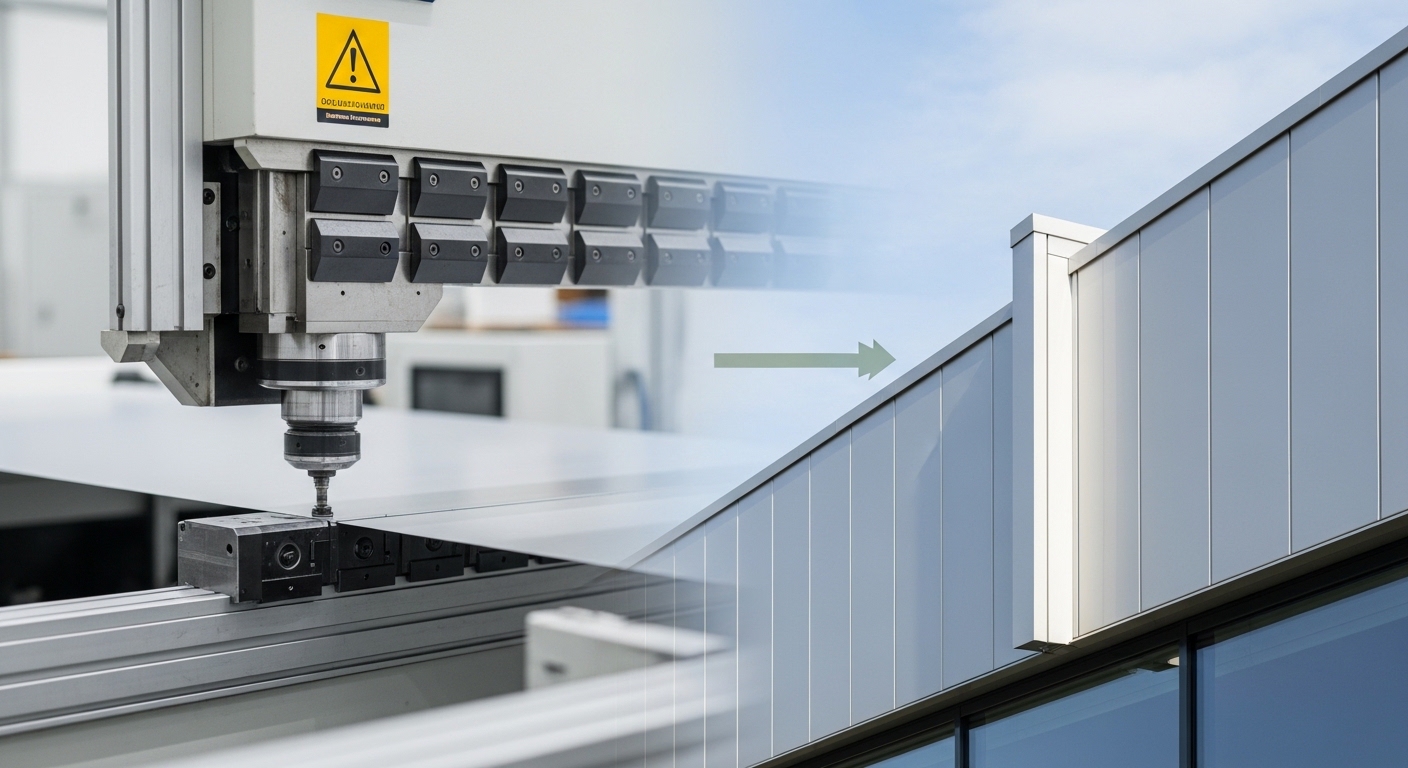
The modern architectural and construction industry is experiencing a fundamental paradigm shift in the perception and design of enclosing and facade systems. Thanks to the rapid introduction of advanced metal processing technologies, such as predictive kinematics in CNC press brakes and comprehensive BIM (Building Information Modeling), the accuracy of manufacturing and installing structures has reached an unprecedented level. Analytical data confirms that the use of BIM technologies can reduce spatial collisions and installation errors by at least forty percent, ensuring the perfect geometry of facade cassettes and fence elements. However, even the most perfect “Plug-and-Play” metal architecture requires a strategic approach to its operation. The lifecycle of a metal facade or a modern fence does not end the moment the completion certificate is signed; on the contrary, this is exactly when the longest and most responsible stage begins—the operational phase.

Among private clients and even some institutional developers, a misconception has long dominated that galvanized steel with a polymer coating is a completely maintenance-free material. This approach, often called “set and forget,” leads to disastrous consequences for the longevity of the structures. Practical experience and numerous laboratory tests show that ignoring basic care rules leads to premature degradation of the protective organic layer, the development of aggressive localized corrosion, and, ultimately, the irreversible loss of the product’s structural integrity. National manufacturers, whose vision is to transform urban and private spaces under the slogan “We make the country beautiful!”, constantly emphasize the importance of post-installation support for their products.

Effective care, preventive cleaning, and timely professional renovation can prolong the service life of polymer coatings to fifty years or more, while maintaining their original chromatic characteristics, gloss levels, and the overall investment appeal of the real estate object. This report offers a comprehensive, scientifically based analysis of the chemical nature of polymer coatings, the mechanisms of their degradation under extreme environmental factors, as well as detailed protocols for the care, cleaning, and restoration of facade systems and modern ventilated fences.
dohlyad 9

Physicochemical Architecture of Polymer Matrices

The durability of any metal facade or fence fundamentally depends on the molecular structure of the polymer coating applied over the passivating zinc layer. According to strict European standards, specifically EN 10169, organic coatings for steel products are classified along two critical vectors: resistance to ultraviolet radiation (categories RUV1 to RUV4) and overall corrosion resistance in various atmospheric conditions (categories RC1 to RC5).

  1. Polyester (PE and matte MPE): A cost-effective thermosetting coating. The standard layer thickness is about 25-35 micrometers. Polyester demonstrates a reliable basic level of protection (class RC3, RUV2-RUV3). Due to the relatively thin film, it is the most sensitive to photochemical degradation and requires extremely delicate mechanical cleaning.
  2. Pural (Polyurethane, PUR): Provides a significantly higher level of protection. Its thickness is usually 50 micrometers. Modification with polyamide gives it exceptional resistance to mechanical damage and sharp temperature fluctuations. It is confidently classified under the highest standards RC4-RC5 and RUV4, making it an ideal choice for industrial and coastal zones.
  3. PVDF (Fluoropolymer): Considered the gold standard in modern architecture. It consists of 70% polyvinylidene fluoride resin and 30% acrylic (thickness 25-35 µm). Extremely strong carbon-fluorine bonds make the coating practically inert to aggressive chemicals and extreme ultraviolet light (RUV4 and RC4). It is capable of retaining its original color for decades.
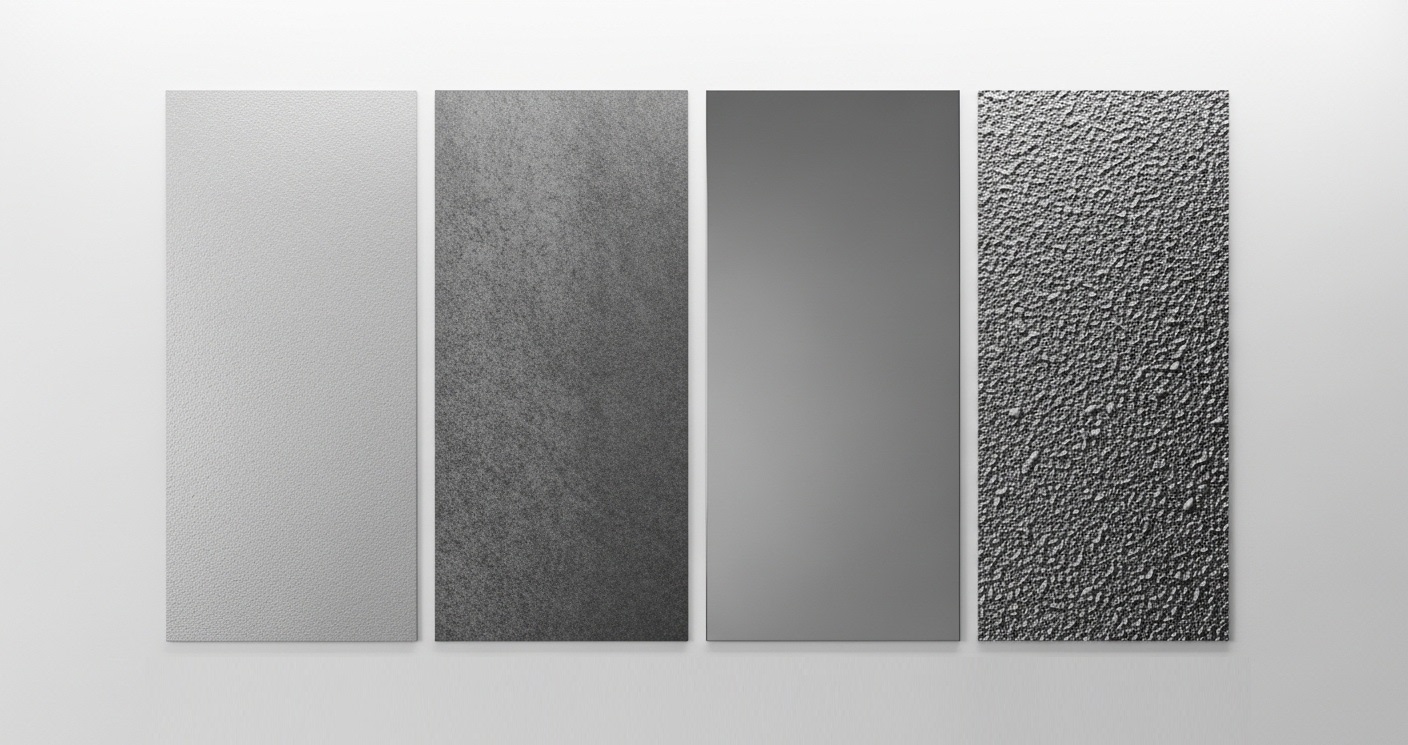
  4. Plastisol (PVC-P): A thick-film PVC-based coating (100-200 µm) with a textured surface. Demonstrates unsurpassed resistance to mechanical impacts and corrosion in salt spray conditions. However, plastisol is less tolerant of extremely high temperatures, so its UV resistance is limited to RUV3.
Polymer coating type Nominal thickness (µm) Corrosion resistance class (RC) UV resistance class (RUV) Structural type Key performance characteristics
Polyester (PE) 25 RC3 RUV2 – RUV3 Thermosetting Smooth surface; basic resistance; requires delicate cleaning due to the risk of micro-scratches.
Matte Polyester (MPE) 35 RC3 RUV3 Thermosetting Textured surface; better at masking atmospheric dust; increased wear resistance.
Pural (PUR) 50 RC4 – RC5 RUV4 Thermosetting Polyamide-modified; extreme wear resistance; optimal for industrial zones.
PVDF (Fluoropolymer) 25 – 35 RC4 RUV4 Thermoplastic Chemically inert; highest color and gloss retention; excellent solvent resistance.
Plastisol (PVC-P) 100 – 200 RC4 – RC5 RUV3 Thermoplastic Deep texture; maximum protection against mechanical impacts and marine salt; sensitive to overheating.

Table. Comparative physicochemical analysis of architectural polymer coatings

dohlyad 7

Mechanisms of Environmental Degradation and Corrosion Fatigue

Regardless of chemical perfection, any polymer matrix will eventually undergo irreversible destruction. The fundamental factor of degradation is the continuous exposure to ultraviolet radiation combined with atmospheric oxygen. The breaking of molecular bonds leads to the phenomenon of chalking—the formation of a whitish deposit on the surface and a network of microcracks through which moisture gains access to the metal.

In urbanized zones, natural photooxidation is compounded by the destructive impact of acid rain (due to emissions of sulfur dioxide and nitrogen oxides), which softens polyester resins. In coastal regions, chlorides (marine salt) multiply the rate of electrochemical corrosion.

Particular attention should be paid to a specific type of corrosion—the formation of “white rust” (zinc hydroxide). It is initiated in areas where the polymer layer is compromised, when water stagnates in crevices or under a layer of dirt without free access to carbon dioxide. If the development of white rust is not stopped by cleaning, it can quickly destroy the protective zinc layer. In addition, biogenic fouling (mosses, algae) and the accumulation of urban dirt not only ruin the aesthetics but also retain moisture on the facade, while microorganisms secrete acids that eat away at the polymer.

Standardization of Care and Warranty Policy

The warranty obligations of steel manufacturers (which can span up to 50 years) have strictly defined legal frameworks and are only valid if basic operational protocols are followed. According to the technical documentation, the owner must strictly perform several critical procedures:

  1. Annual visual inspection: Detailed inspection of all surfaces, with a special focus on “unwashed areas”—sections under eaves or in complex joints where rain does not reach but aggressive dust accumulates.
  2. Regular professional cleaning: Washing unwashed areas with clean water and mild detergents to prevent the accumulation of corrosive agents.
  3. Maintaining a service log (maintenance logbook): Careful recording of inspection dates, names of detergents used, and repairs performed. This is an absolutely necessary legal condition for satisfying claims.

During inspections, it is also necessary to check the condition of the cut edges (most vulnerable to corrosion), tighten loose fasteners, and monitor the effectiveness of drainage systems at the base of the structures.

dohlyad 6

Hydrodynamics and Chemistry of Metal Structure Cleaning Processes

The vast majority of modern premium coatings have a self-cleaning effect powered by rainwater. However, stubborn dirt requires intervention.

Effective and safe cleaning requires strict adherence to rules:

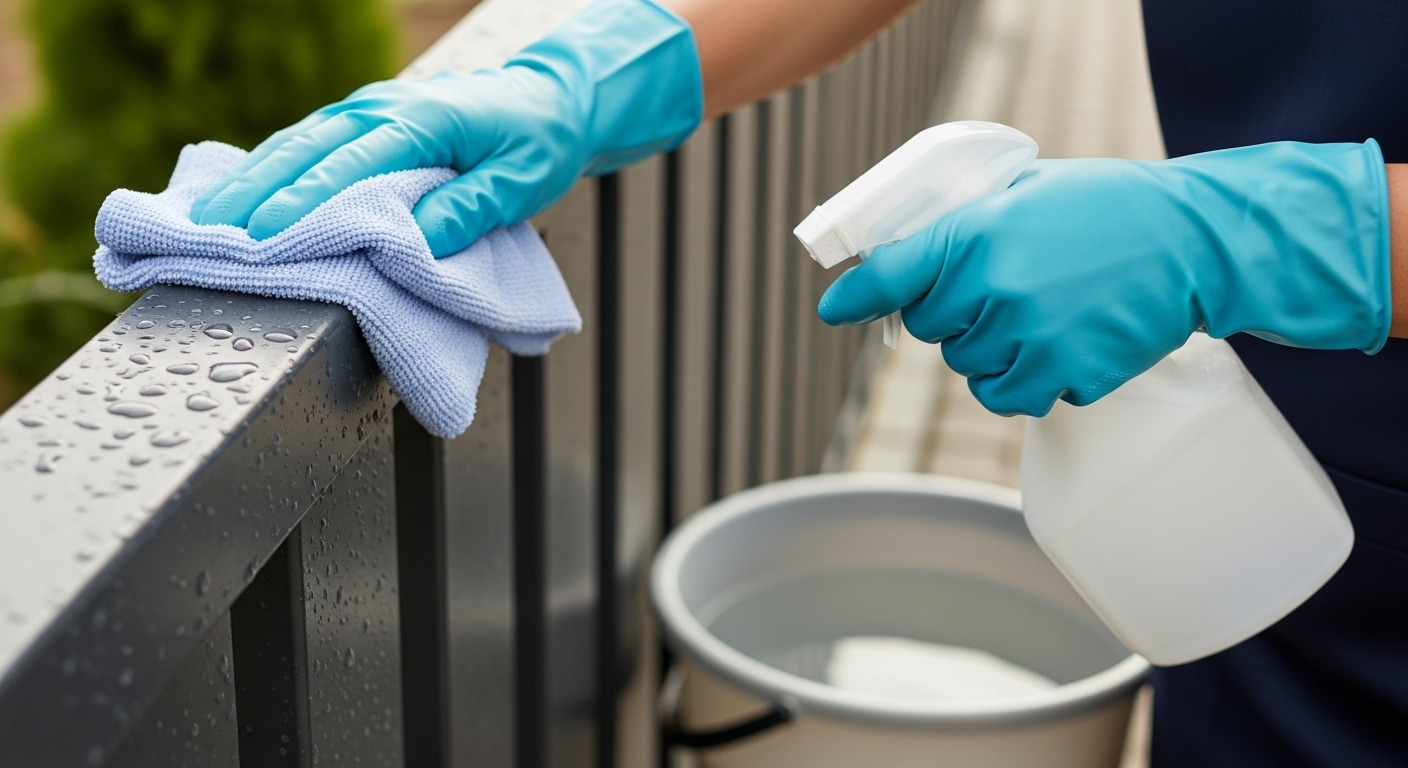
  1. Pressure control: The use of high-pressure washers is permitted, but the operating pressure strictly must not exceed the limit of 100 bar. Exceeding this creates the risk of tearing the micro-bonds between the polymer and the zinc.
  2. Correct nozzles: The use of rotary (turbo) nozzles or nozzles with a zero-degree angle (0°) is prohibited. The only safe choice is flat fan nozzles with a spray angle of 25–40 degrees, maintaining a distance to the surface of at least 20–30 cm.
  3. Chemical compatibility: It is permitted to use exclusively pH-neutral or very mildly alkaline detergents (pH 5–8). Highly alkaline agents destroy polyester resins (saponification), while acids dissolve zinc. Chlorine-containing bleaches and abrasives are strictly prohibited.
  4. Thorough rinsing: After using any chemicals, the surface must be generously rinsed with water until all surfactant residues are completely removed.

Specific contaminants require a localized approach: white rust is removed with a soft nylon brush or a weak (5-10%) vinegar solution, followed by mandatory rinsing; graffiti is carefully removed with isopropyl alcohol or white spirit after testing on an inconspicuous area.

Specifics of Maintaining Ventilated Structures: “Blinds” and “Rancho” Fences

Ventilated enclosures from innovative manufacturers, such as the “Mehbud” company (the “Blinds” and “Rancho” product lines), offer a radical reduction in wind load and rapid drying of the metal thanks to free air circulation. Their high-quality polymer coating withstands decades in the open sun without discoloration, and hidden fasteners minimize corrosion risks.

However, the specific geometry of horizontal and angled slats creates “shelves” for dust accumulation. The care algorithm for such fences is as follows:

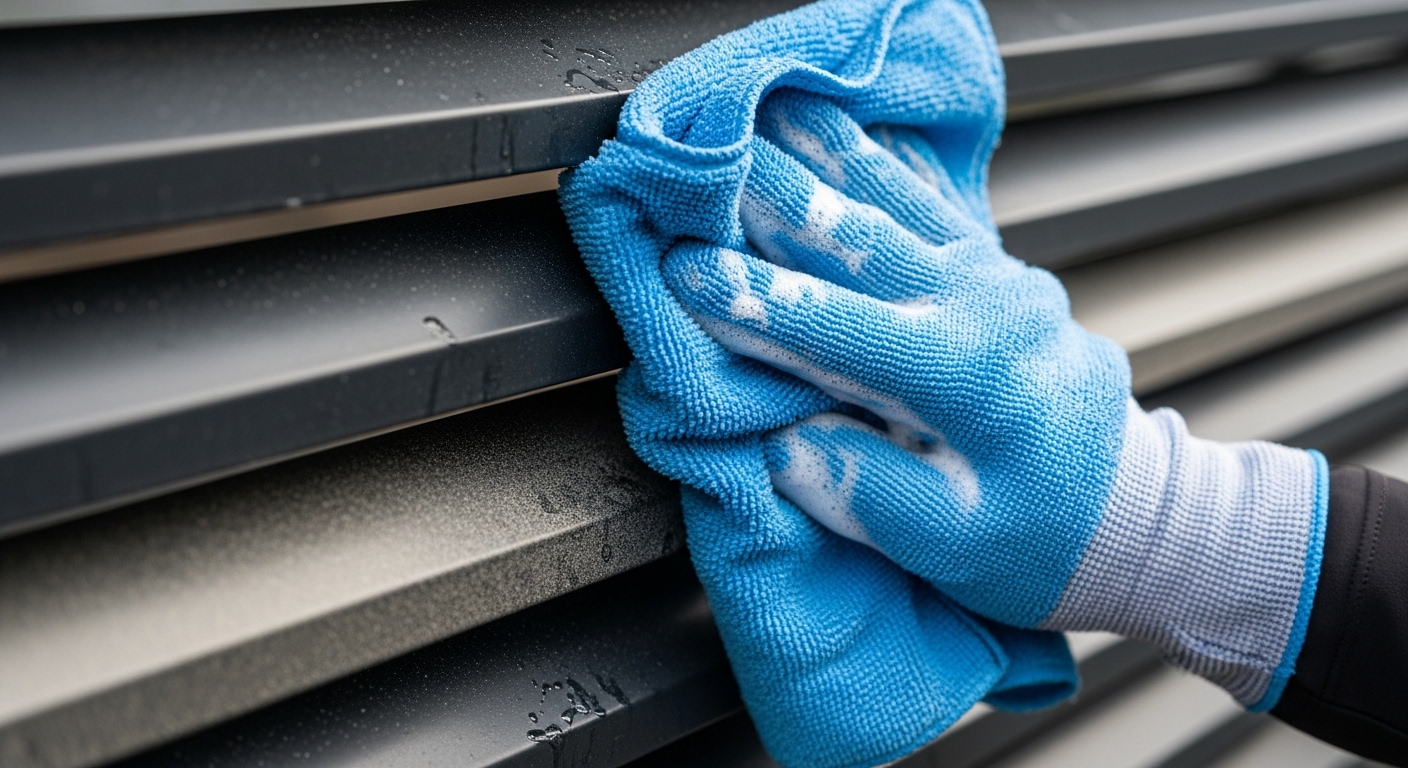
  1. Preliminary rinsing: Use a garden hose with a fan spray pattern, directing the water parallel to the angle of the slats or from top to bottom to prevent moisture from flowing inside the supporting posts.
  2. Delicate washing: Treat each slat with a mild soapy solution using a soft microfiber cloth or a car sponge, moving strictly from top to bottom.
  3. Protective treatment (optional): The manufacturer permits the use of high-quality automotive cosmetics (liquid wax), which creates a hydrophobic film and repels dirt in the future.
dohlyad 4

Renovation Strategies: From Micro-Repairs to Massive Transformation

Despite the quality of the coatings, mechanical damage from hail, stones, or branches requires timely intervention.

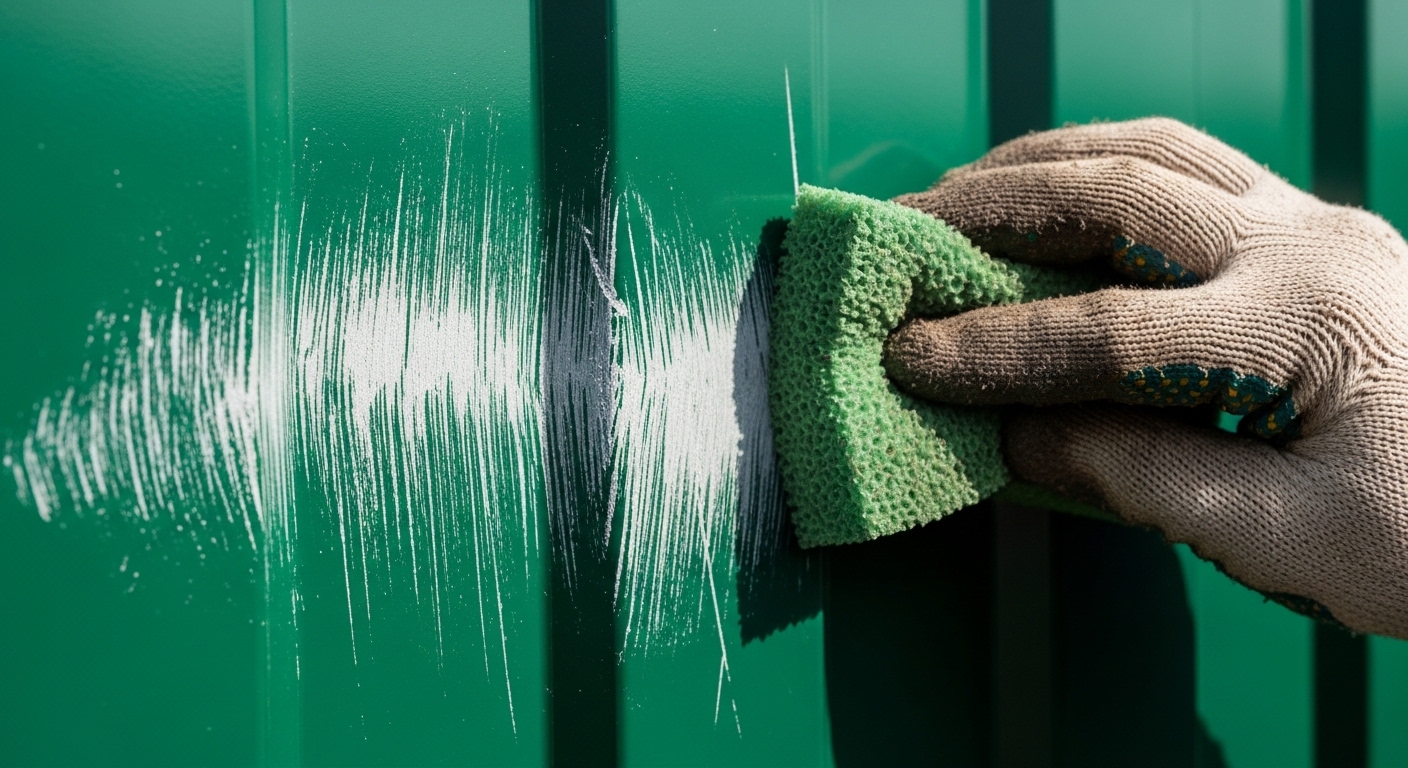
  1. Local repair (Touch-Up): Any deep scratch must be repaired immediately. The damage is carefully sanded with fine sandpaper (#400), degreased, and, if necessary, primed with an epoxy zinc-rich compound. The final coating is done with a touch-up marker or a thin brush in exact accordance with the RAL color. Using aerosol sprays over large areas is prohibited, as the touch-up paint will fade differently, creating an unaesthetic halo effect.
  2. Large-scale repainting (Industrial Spray Painting): If after decades the facade has lost its gloss but has been structurally preserved, global repainting on-site is the most cost-effective option. This involves aggressive hydrodynamic cleaning, acid etching to create an adhesion profile, priming, and the application of premium polyurethane or fluoropolymer dispersions.
  3. Architectural vinyl restyling: A modern alternative is the application of textured architectural films (e.g., imitating wood or stone). Although this is a fast process with no smell or dirt, it is not suitable for metal with deep rust or highly complex geometric profiles, which are common in fences and corrugated sheets.

Critical Mistakes in Operation

Operational negligence can quickly destroy even the most expensive facade. The most common fatal mistakes are:

  1. Using abrasive materials: Hard sponges or powders physically cut through the micron-thin polymer film, opening a path for moisture.
  2. Leaving metal shavings: Swarf left behind after drilling instantly rusts and burns through the polymer due to the formation of a galvanic couple.
  3. Incorrect chemistry: Household bleaches, acids, or aggressive solvents cause chemical burns and paint crystallization.
  4. Lack of drainage: The accumulation of wet leaves at the base of the fence or dirt in the gutters provokes hidden corrosion.
  5. Painting over rust: Applying paint over unprepared corrosion only traps moisture inside, leading to the rapid peeling of the new layer.
dohlyad 2

Strategic Conclusions

Operating modern metal facades and fences with a polymer coating is an active asset management process that requires methodical discipline. No chemical formula, no matter how perfect (PVDF or Pural), can compensate for basic negligence or systematic mechanical damage.

Regular inspections, gentle hydrodynamic cleaning with pH-neutral detergents, and the timely restoration of micro-damages can completely neutralize degradation threats. Investing in the proper maintenance of complex systems like the “Blinds” and “Rancho” fences is the only reliable mechanism to preserve their premium aesthetics and maintain the high market value of the property for decades to come.

author
Alexander Guk
About the author:

Our expert in fencing structures has over 5 years of experience working at the Mehbud factory. Helps you choose the optimal design and model of fencing according to your needs. Professionally deve...

More
0 0 votes
Article Rating
Subscribe
Notify of
guest
0 Comments
Oldest
Newest Most Voted
Inline Feedbacks
View all comments