Complete Guide to Metal Baseboards: Architectural Detailing, Performance, and Implementation
Generic selectors
Exact matches only
Search in title
Search in content
Post Type Selectors

Complete Guide to Metal Baseboards: Architectural Detailing, Performance, and Implementation

December 9, 2025
4  

1. Introduction: The Architectural Evolution of the Floor-Wall Junction

The junction between the vertical wall plane and the horizontal floor surface represents one of the most critical, yet frequently overlooked, details in interior architecture. For centuries, the baseboard—also known as the plinth or skirting board—served a dual purpose: acting as a sacrificial barrier protecting the friable plaster wall from physical impact and moisture, while simultaneously providing a cosmetic concealant for the inevitable ragged edge where wall materials met the floor. Historically, this functional necessity was articulated through applied timber mouldings, the scale and ornamentation of which denoted the hierarchy of the space. However, the trajectory of contemporary architecture, driven by the dual engines of aesthetic modernism and rigorous performance standards, has precipitated a fundamental material shift toward metal baseboards—specifically aluminum and stainless steel.

In the current global construction landscape, the specification of a metal baseboard is no longer merely a stylistic preference driven by minimalist design trends; it is a complex technical decision influenced by lifecycle costing, fire safety regulations, hygienic mandates in healthcare, and the precision requirements of modern pre-fabricated construction methods such as Light Gauge Steel Framing (LGSF). This shift represents a move from “carpentry,” where trim is applied to cover errors, to “assembly,” where the baseboard becomes an integral component of the wall system, requiring foresight and coordination.

This report provides an exhaustive analysis of metal baseboard systems, examining their material properties, architectural detailing, installation complexities, economic implications, and role in sustainable building practices. We will explore how the transition from applied timber to integrated metal profiles alters the construction sequence, demanding a higher level of precision from the framing stage through to the final finishes. For developers, architects, and construction professionals, understanding these nuances is essential for delivering projects that meet the exacting standards of modern commercial, residential, and institutional environments.

baseboard 1

2. Material Science and Metallurgy in Architectural Plinths

The performance of any architectural element is inextricably linked to its material composition. Unlike biological materials like wood, which respond to humidity with hygroscopic expansion and contraction, or polymers like PVC, which may degrade under UV exposure or release volatile organic compounds (VOCs), architectural metals offer dimensional stability, non-combustibility, and precise tolerance control. The two primary alloys employed in the manufacturing of metal baseboards are aluminum and stainless steel. Each possesses distinct mechanical and chemical characteristics that define their suitability for specific environmental conditions and aesthetic requirements.

2.1 Aluminum Alloys: The Dynamics of Extrusion and Anodization

Aluminum is the dominant material for architectural baseboards in the general commercial and residential sectors due to its exceptional strength-to-weight ratio and its capacity for extrusion. The density of aluminum is approximately 2.7 g/cm³, roughly one-third that of steel, which facilitates easier handling, lower transportation costs, and reduced dead load on building structures. However, pure aluminum is soft and rarely used in construction. Instead, it is alloyed to enhance its mechanical properties.

2.1.1 The 6000 Series Alloy

The industry standard for architectural aluminum extrusions, including aluminum skirting and shadow gap profiles, is the 6000 series alloy, specifically 6063-T5 or 6063-T6. This alloy contains magnesium and silicon as its major alloying elements.

  1. Extrudability: The primary advantage of the 6063 alloy is its high malleability during the extrusion process. This allows manufacturers to create highly complex cross-sectional profiles. A single aluminum baseboard profile can integrate features such as screw ports for mechanical fastening, alignment tabs for connectors, recessed channels for LED lighting strips, and “mud legs” that allow the profile to be plastered into the wall. This geometric complexity is impossible to achieve efficiently with stainless steel or wood.
  2. Thermal Treatment: The “T5” designation refers to the temper. The metal is cooled from an elevated temperature shaping process and then artificially aged. This provides a surface finish that is exceptionally smooth and receptive to anodizing, while maintaining sufficient tensile strength to resist impacts from vacuum cleaners and foot traffic.

2.1.2 Surface Protection: Anodizing vs. Powder Coating

Aluminum naturally forms a microscopic oxide layer that protects the substrate from further oxidation. While this natural passivation provides moderate protection, architectural aluminum is almost always treated to enhance durability and aesthetics.

  1. Anodizing: This is an electrolytic passivation process that thickens the natural oxide layer, integrating it into the metal surface. Unlike paint or plating, which sits on top of the substrate, the anodic layer is part of the metal itself. This means it cannot peel, chip, or flake. Anodized finishes (typically Clear, Champagne, or Black) offer superior hardness (60–70 Rockwell C) and resistance to abrasion, making them ideal for high-traffic areas where the baseboard acts as a bumper. Anodizing also preserves the metallic luster and texture of the aluminum, appealing to the modernist aesthetic.
  2. Powder Coating: For projects requiring specific color matching (e.g., RAL colors to match wall paint or branding), powder coating is the preferred method. A dry powder—typically a thermoplastic or thermoset polymer—is applied electrostatically and then cured under heat to form a “skin.” While modern powder coats are durable, they are essentially a layer of plastic over the metal. Under heavy impact, a powder coat can chip, exposing the raw aluminum underneath. However, powder coating offers better chemical resistance in some specific acidic or alkaline environments where the anodic layer might degrade.

2.2 Stainless Steel: Hygiene and High-Impact Durability

Stainless steel is selected when the application demands the highest levels of corrosion resistance, impact strength, or sanitary performance. It is an iron-based alloy containing at least 10.5% chromium. This chromium reacts with oxygen to form a passive chromium oxide film that is non-porous and self-repairing; if the surface is scratched, the film reforms, preventing rust.

2.2.1 Grade 304: The Standard Specification

Grade 304 (UNS S30400) is the standard “18/8” stainless steel (18% chromium, 8% nickel) used in the majority of interior architectural applications. It offers excellent resistance to oxidizing acids and general atmospheric corrosion. Grade 304 is the economical choice for office lobbies, high-end residential features, and general commercial areas where the environment is controlled and extreme chemical exposure is not expected. It provides the classic “stainless” look—usually specified in a brushed (No. 4) or satin finish—that conveys permanence and hygiene.

2.2.2 Grade 316: The “Marine” and Healthcare Standard

For environments subject to more aggressive conditions, Grade 316 (UNS S31600) is the mandatory specification. This alloy contains 16-18% chromium, 10-14% nickel, and crucially, 2-3% molybdenum. The addition of molybdenum dramatically increases resistance to pitting and crevice corrosion, particularly in chloride-rich environments.

  1. Applications: Grade 316 stainless steel plinths are essential in coastal properties (where salt air is prevalent), swimming pool areas, and rigorous healthcare environments. In hospitals, operating rooms and sterile cores are frequently cleaned with harsh disinfectants containing chlorides or bleaching agents. Grade 304 may eventually show signs of pitting under this regimen, whereas Grade 316 remains inert.

2.2.3 Fabrication Constraints

Unlike aluminum, stainless steel is significantly harder and stiffer, with a higher modulus of elasticity. While this makes it impervious to dents from heavy carts or gurneys—a key benefit in hospital corridors—it limits fabrication options. Stainless steel baseboards are typically brake-formed or roll-formed from sheet metal. This results in simpler profiles, usually simple rectangles or L-shapes, without the intricate internal geometries (like screw ports) found in aluminum extrusions.

2.3 Comparative Material Data

The following table synthesizes the critical performance metrics of these two materials to guide architectural specification.

Feature Aluminum (Anodized 6063-T5) Stainless Steel (Grade 304/316)
Density ~2.7 g/cm³ (Lightweight) ~7.9 g/cm³ (Heavy)
Corrosion Mechanism Oxide layer (Anodizing enhances) Passive Chromium Oxide film
Chloride Resistance Low (unless specialized coating) High (specifically Grade 316)
Fabrication Method Extrusion (Complex shapes possible) Brake-Forming/Rolling (Simple shapes)
Impact Resistance Moderate; susceptible to denting High; resists heavy mechanical abuse
Hygienic Properties Good; smooth surface Excellent; non-porous, withstands harsh chemicals
Cost Moderate High (20-30% premium for 316 over 304)
Primary Use Cases Shadow gaps, flush details, office fit-outs Healthcare, food processing, labs, high-traffic corridors


baseboard 2

3. Substrate Dynamics: Light Gauge Steel Framing Integration

The aesthetic success of a metal baseboard—especially flush or reveal types—is entirely dependent on the quality of the underlying structure. In modern commercial and multi-unit residential construction, the substrate is predominantly Light Gauge Steel Framing (LGSF), also known as Cold-Formed Steel (CFS). The interaction between the precision of the metal baseboard and the precision of the LGSF is a critical interface.

3.1 The Necessity of Dimensional Stability

Wood framing is hygroscopic; it absorbs and releases moisture, leading to warping, twisting, and bowing. In a traditional construction scenario with surface-mounted wood baseboards, the wood trim is flexible enough to follow the undulations of the wall, and caulk fills the gaps.

However, a flush baseboard details creates a co-planar relationship between the drywall face and the baseboard face. Any deviation in the framing—such as a twisted stud or a misaligned track—will telegraph through to the finish, resulting in unsightly gaps, lippage, or shadow lines that wave rather than run straight. LGSF members are manufactured to strict tolerances (ASTM A1003 standards) and are dimensionally stable, meaning they do not shrink or warp over time. This predictability is non-negotiable for shadow gap details where the reveal might be as narrow as 10mm; a 5mm bow in a stud would visually destroy the linearity of the shadow line.

3.2 Galvanic Corrosion Risks

When installing aluminum baseboards onto steel framing, the potential for galvanic corrosion must be considered. While LGSF is typically galvanized (zinc-coated) to resist corrosion (using G60 or G90 coatings), the direct contact between dissimilar metals—aluminum and steel—can create a galvanic cell in the presence of moisture/electrolytes, leading to the corrosion of the aluminum (the anode).

  1. Mitigation: In dry interior environments, this is rarely a structural issue, but in moisture-prone areas (bathrooms, coastal zones), a separation barrier is recommended. This can be achieved by using plastic shims, EPDM gaskets, or simply by the anodized layer of the aluminum which acts as an insulator.

3.3 Fastening and Interference

A specific technical challenge in flush baseboard installation on metal studs is the protrusion of fastener heads. Wafer-head screws used to attach the steel stud to the bottom track can protrude roughly 1/8 inch (3mm) from the face of the stud.

  1. The Conflict: A flush baseboard profile is designed to sit flat against the stud assembly. If it hits these screw heads, it will kick out at the bottom, ruining the 90-degree vertical alignment.
  2. The Solution: Installers must anticipate this by either specifying countersunk framing screws at the base track or, more commonly, creating a relief channel in the back of the baseboard (if utilizing a millwork insert) or using a metal profile design that has a void space at the bottom to accommodate these fastener heads. Do not remove the framing screws, as this compromises the structural integrity of the wall.

3.4 Fire Safety and Non-Combustibility

Both LGSF and metal baseboards contribute to the non-combustibility of the wall assembly. Steel framing is non-combustible and does not contribute fuel to a fire. When paired with a metal baseboard, the assembly eliminates the “wick” effect that traditional wood baseboards can present, where fire spreads quickly along the combustible trim at the floor level. This combination is particularly advantageous in high-rise and healthcare construction where minimizing the flame spread index is a critical code requirement. Furthermore, the use of steel framing can lead to significant reductions in Builder’s Risk insurance premiums—up to 75% in some cases—due to the reduced fire load.

baseboard 4

4. Architectural Typologies: From Applied to Integral

The specification of a metal baseboard fundamentally defines the aesthetic language of the interior. We can categorize these systems into three primary typologies, each with increasing levels of installation complexity and cost.

4.1 Surface Mounted (Applied) Baseboards

This is the traditional method adapted for metal materials. The baseboard is adhered or mechanically fixed to the finished wall surface, protruding into the room.

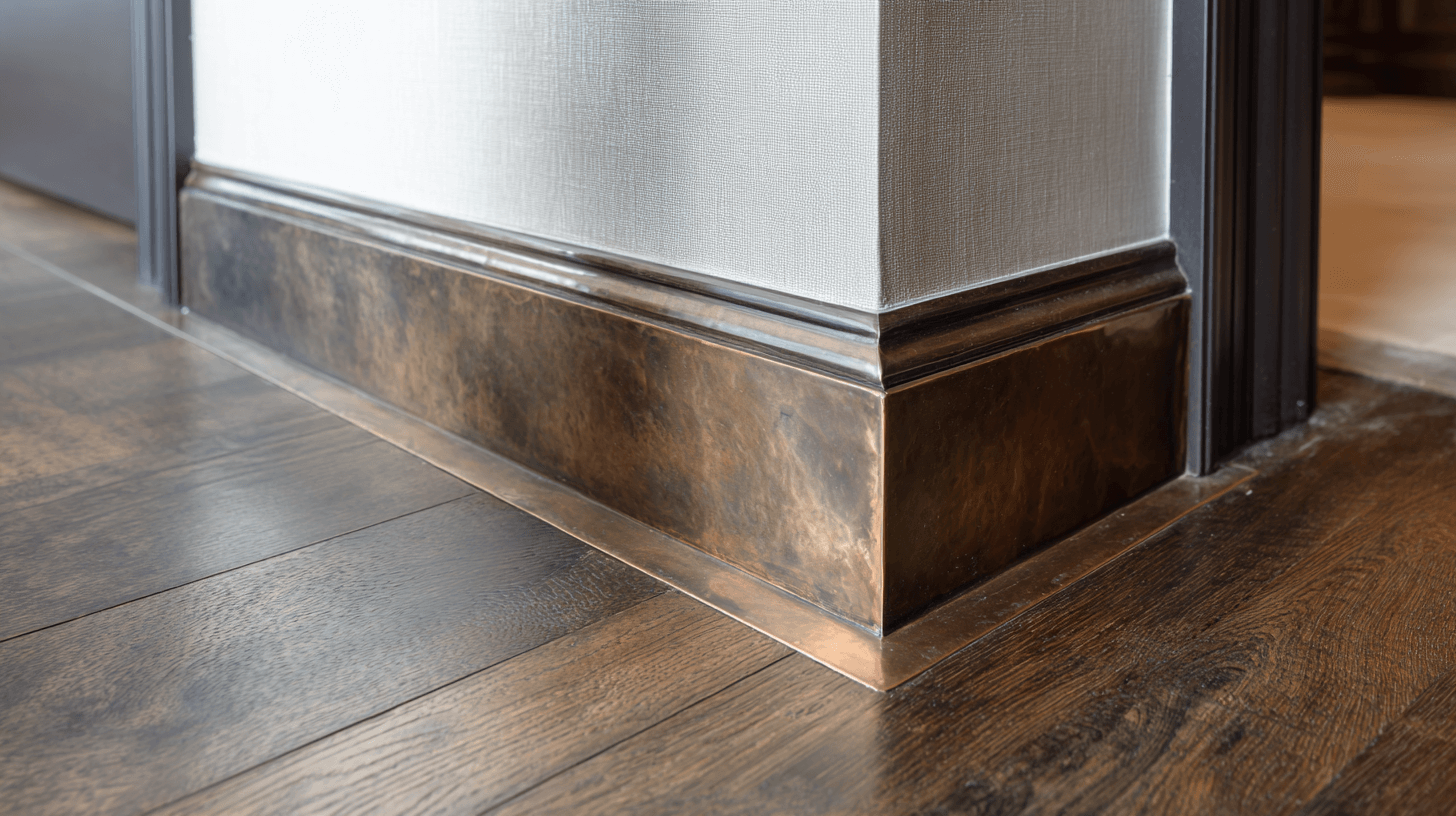
  1. Profile: These are typically rectangular profiles or “sit-on” skirts with a slight toe to cover the expansion gap between the floor and the wall. Brands like Schluter (DesignBase-SL) and Gradus offer these in stainless steel and aluminum.
  2. Installation: This is the most forgiving method. It is installed after the flooring and wall finishes (paint/wallpaper) are complete. The baseboard can flex slightly to follow minor wall irregularities, and the toe covers the rough edge of the flooring.
  3. Aesthetic: Functional and industrial. While sleeker than wood, it still reads as a distinct “add-on” element rather than an integrated architectural feature. It creates a dust ledge, albeit a small one.
  4. Use Case: Retrofits, renovations where walls are not being rebuilt, and commercial corridors where a robust crash rail is needed at the floor level.

4.2 Flush (Planar) Baseboards

In this detail, the face of the baseboard is perfectly flush with the face of the wall (drywall or plaster). This creates a completely smooth vertical plane from floor to ceiling, totally eliminating the dust ledge.

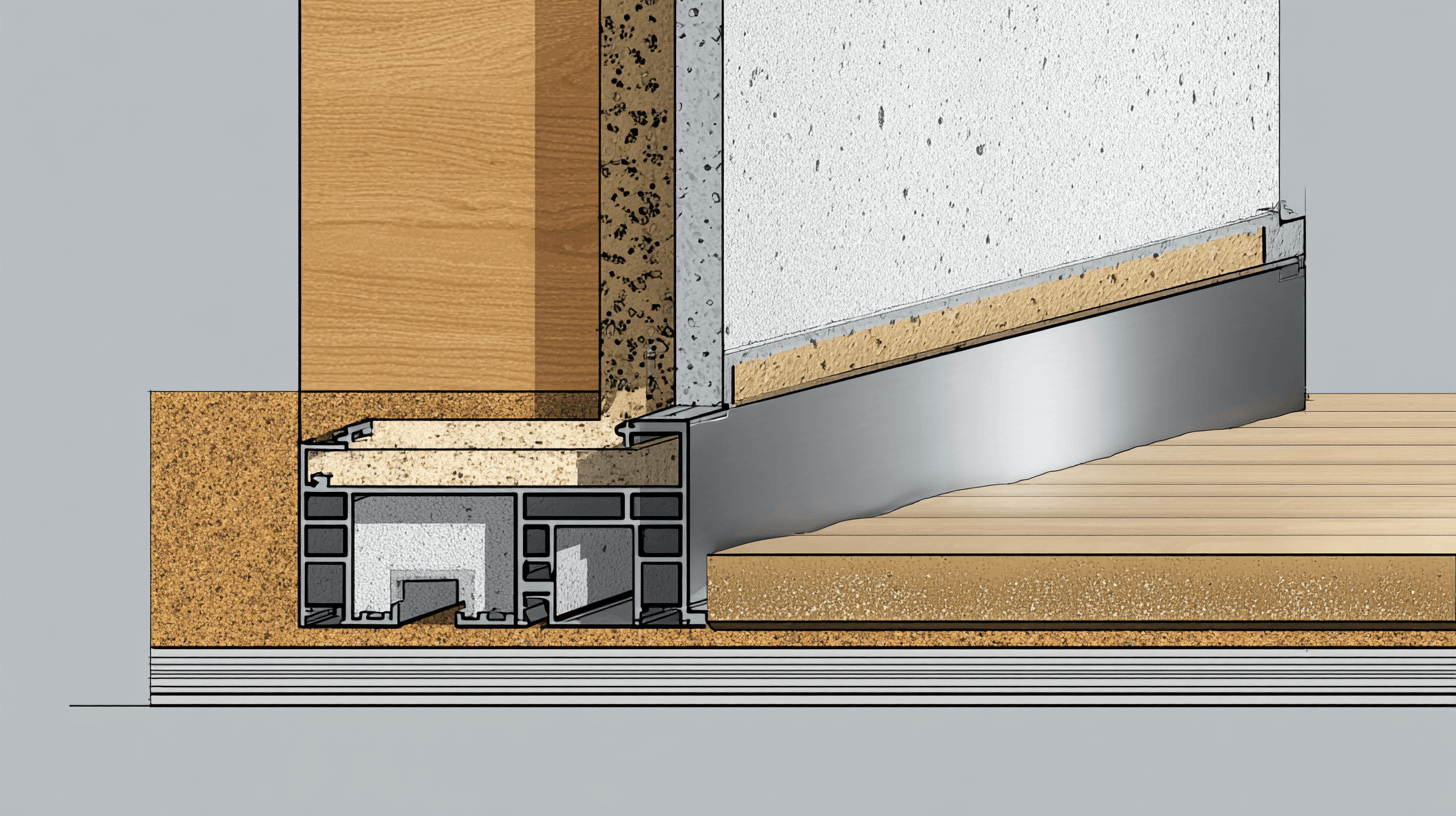
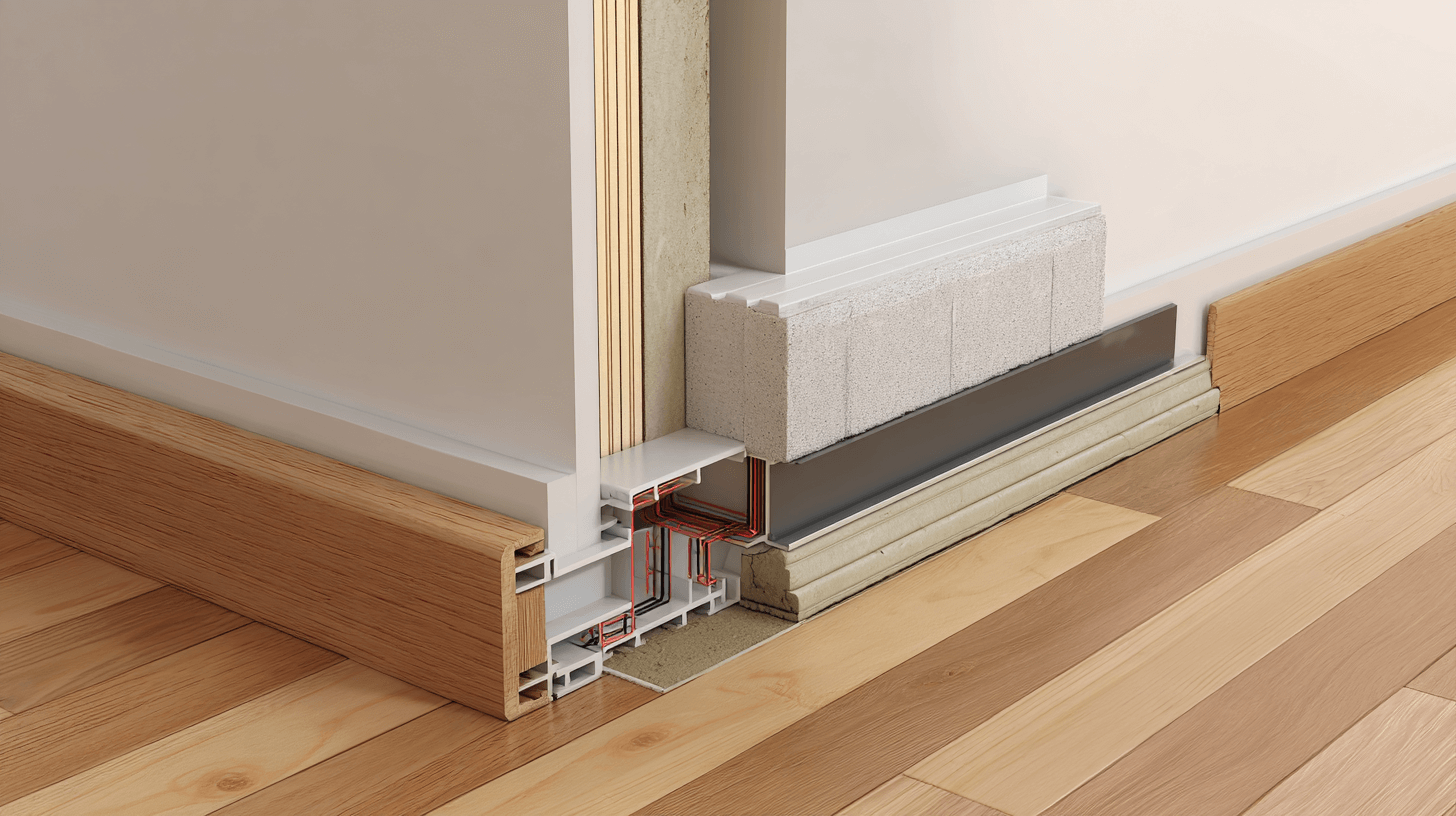
  1. Construction Logic: This typology requires the drywall to be held up from the floor level. A specialized metal profile (e.g., Dorsis Linus, Fry Reglet Flush Base) is attached to the stud framework before the drywall is hung. The drywall then rests on or abuts the top flange of this profile.
  2. Aesthetic: Minimalist and hygienic. It allows furniture to sit perfectly flat against the wall, maximizing usable floor space. It visually declutters the room, allowing the volume of the space to speak for itself.
  3. Complexity: It requires precise coordination of floor heights. If the finished floor level varies, the baseboard cannot be scribed (trimmed) easily like wood; the gap must be managed, often requiring self-leveling compounds prior to installation to ensure a tight fit.

4.3 Shadow Gap (Reveal) Details

The shadow gap, or architectural reveal, is a subset of the recessed baseboard where the skirting is not flush but recessed further back from the wall plane, or completely omitted to leave a negative space.

  1. The “Floating Wall”: By creating a deep recess (e.g., 10-20mm high and 10-15mm deep) at the base of the wall, the vertical surface appears to hover above the floor. This effectively disconnects the wall from the floor visually, creating a sense of lightness.
  2. Profiles: Profiles like the “Z” reveal or “F” reveal (Fry Reglet, Trim-Tex) are used. These profiles have a mud flange (taping flange) that is finished into the drywall, creating a crisp metal edge that acts as a stop for the plaster.
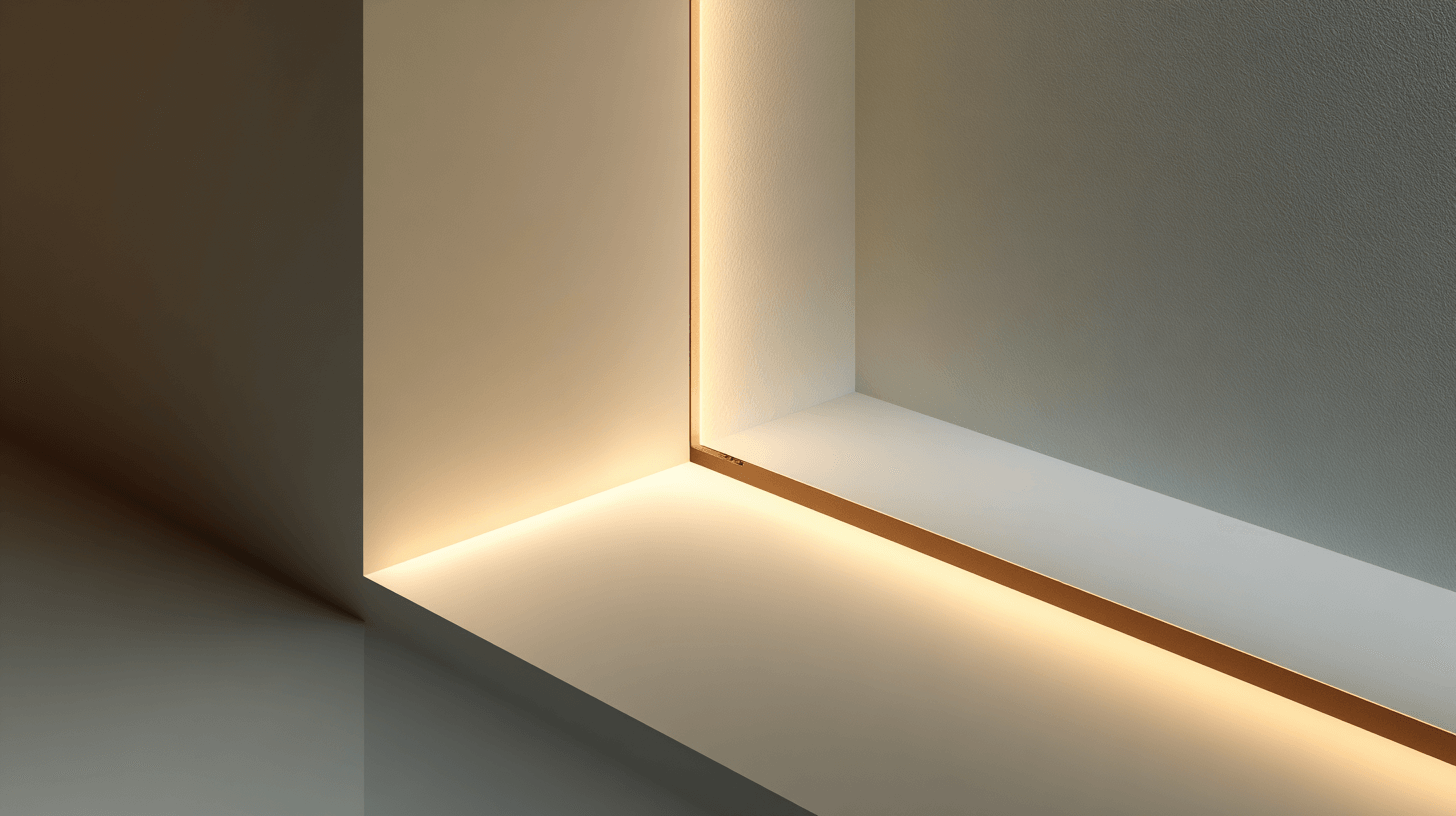
  3. Lighting Integration: The recess provided by a shadow gap is an ideal location for linear LED strip lighting. This creates a wash of light across the floor, enhancing the floating effect and providing functional night lighting in corridors or hospital wards.

4.4 The “Shadowline” Hybrid

A variation often seen in high-end office fit-outs is the shadowline skirting (e.g., Intrim, AluBase). This involves a metal profile that creates a recess but also provides a durable metal face at the bottom. It combines the aesthetic of the shadow gap with the durability of a metal plinth.

5. Technical Implementation and Buildability

The shift from surface-mounted to flush or reveal baseboards represents a move from a finish trade to a framing/drywall trade activity. This requires a rethink of the construction schedule.

5.1 Installation Sequencing

For flush and shadow gap systems, the sequence of construction is critical and less flexible than traditional methods.

  1. Framing & Blocking: LGSF studs are erected. Crucially, continuous blocking (plywood strips or flat metal strapping) must be installed between studs at the baseboard height to provide a solid backing for the profile.
  2. Leveling: The subfloor must be surveyed. Unlike wood baseboards which can be scribed to a waving floor, metal profiles are rigid. Significant undulations in the slab must be corrected with self-leveling compound before the profiles are set.
  3. Profile Installation: The metal baseboard profile is laser-leveled and screwed to the framing/blocking. It acts as a screed guide for the bottom of the wall.
  4. Drywall & Finishing: Drywall is hung, resting on or abutting the profile’s upper flange. The joint between the drywall and the profile’s mud leg is taped and spackled (mudded) to create a seamless transition.
  5. Flooring: Flooring is typically installed after the walls are finished to prevent damage. The flooring slides under the recess of the shadow gap or abuts the flush base. An expansion gap must be maintained for the flooring, which is hidden by the recess in shadow gap designs.

5.2 Drywall Coordination and “Level 5” Finishes

Flush baseboards are unforgiving of wall imperfections. Because the metal edge provides a perfectly straight reference line, any bowing or waviness in the drywall finish becomes immediately apparent. Consequently, projects specifying flush metal bases often require a Level 5 drywall finish (a full skim coat of joint compound over the entire surface) to ensure the wall flatness matches the precision of the metal profile. This requirement significantly impacts the project budget and schedule, as it involves more labor and drying time than a standard Level 3 or 4 finish.

5.3 Addressing the Floor-Wall Joint

A critical technical challenge is the expansion gap required for floating floors (laminate, engineered wood).

  1. Flush Base Issue: A true flush baseboard sitting on top of the flooring traps the floor, preventing expansion. Therefore, flush details often require the baseboard profile to be slightly elevated or designed with a “rebate” at the bottom to allow the floor to expand underneath.
  2. Shadow Gap Solution: This is technically superior for floating floors. The recess allows the flooring to expand and contract underneath the cantilevered wall edge without becoming visible, effectively hiding the movement joint.

5.4 Retrofit Challenges

Retrofitting flush baseboards into an existing building is notoriously difficult and expensive. It typically involves cutting back the existing drywall, removing old baseboards, potentially shimming out the wall to create depth for the profile, and re-plastering the entire lower section of the wall. For renovations, surface-mounted metal profiles or “over-skirting” covers are often the only pragmatic solution unless a full gut-renovation is planned.

baseboard 6

6. Regulatory Framework and Performance Standards

The specification of metal baseboards is heavily influenced by building codes, particularly in the healthcare and food service sectors, where hygiene is paramount.

6.1 Hygiene and Sanitation (Healthcare & Food Service)

In environments where infection control and sanitation are critical, metal baseboards—specifically stainless steel—are often the only compliant option.

6.1.1 FDA Food Code

The FDA Food Code, specifically sections 6-201.11 and 6-201.13, dictates stringent requirements for floor-to-wall junctures in food establishments.

  1. Requirement: The code mandates that in establishments where wet cleaning methods (flushing) are used, the juncture between the floor and wall must be coved and closed to no larger than 1 mm. This radius cove prevents the accumulation of debris in the sharp 90-degree corner and facilitates effective cleaning.
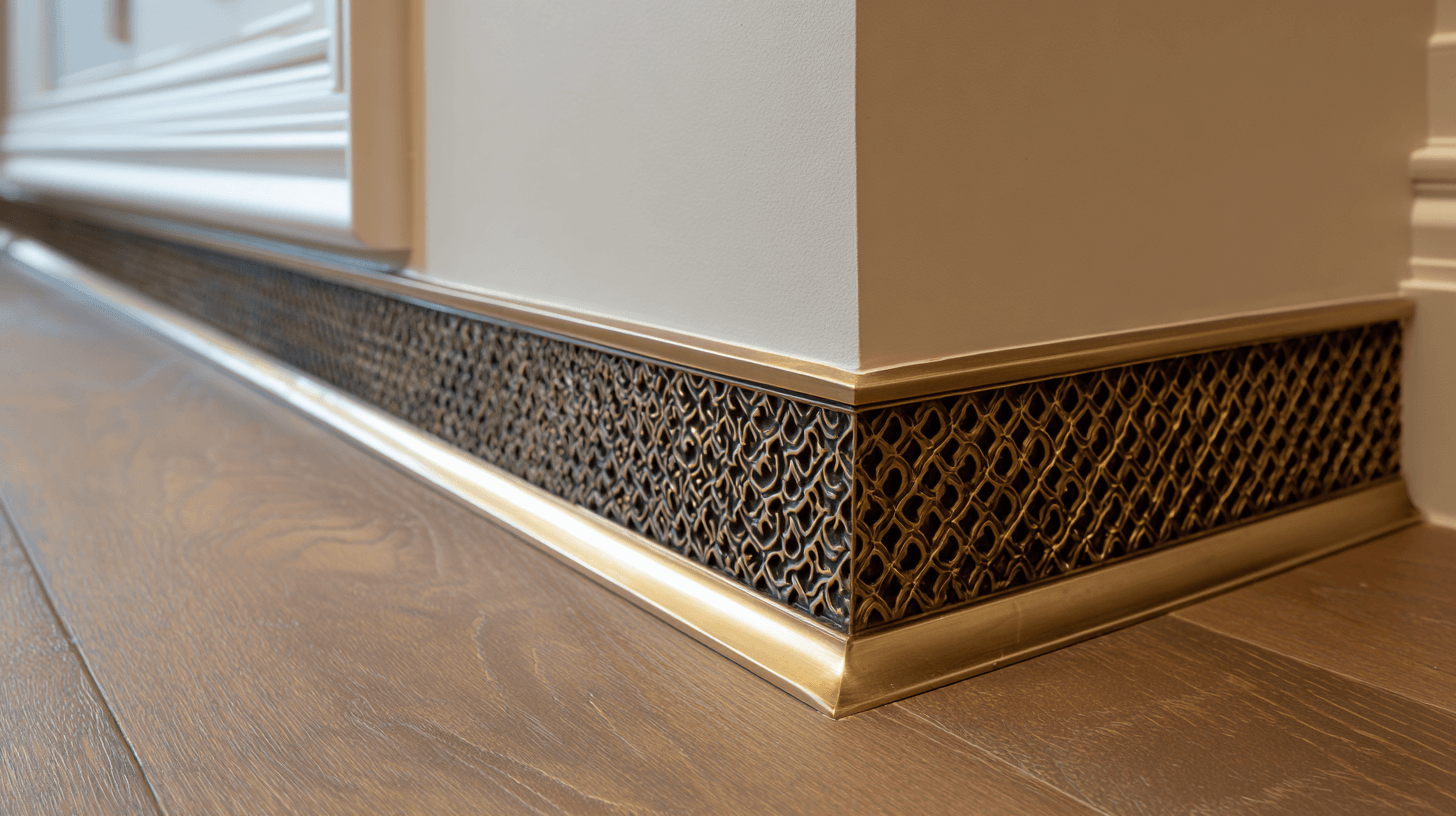
  2. Metal Solution: Stainless steel baseboards with an integral cove (a curved bottom edge) are frequently used to meet this requirement. They provide a seamless, water-tight transition that can be washed down without degrading.

6.1.2 FGI Healthcare Guidelines

The Facility Guidelines Institute (FGI) Guidelines for Design and Construction of Hospitals sets the standard for healthcare facilities in the US.

  1. Monolithic Surfaces: The guidelines require monolithic, scrubbable surfaces in operating rooms, procedure rooms, and sterile processing areas. The floor and wall base assemblies must be tightly sealed to prevent bacterial harborage.
  2. Durability: Stainless steel baseboards are preferred because they withstand the harsh chemical decontamination protocols (using bleach, peroxide, or quaternary ammonium compounds) that would degrade vinyl or rubber bases over time. Grade 316 stainless steel is often specified for these “wet” or sterile zones due to its superior resistance to chlorides found in cleaning agents.

6.2 Fire Resistance

Metal baseboards are inherently non-combustible (Class A fire rating). In the egress corridors of high-rise buildings, minimizing the flame spread index is critical. Unlike wood or certain plastics, aluminum and steel do not contribute to smoke generation or flame spread.

  • Fire-Rated Assemblies: When used in conjunction with fire-rated drywall assemblies, metal reveals and baseboards must be carefully detailed. Recessed details, if not properly backed, can reduce the effective thickness of the gypsum board protection, potentially compromising the fire rating of the wall. Manufacturers like Fry Reglet often provide specific details on how to maintain fire ratings with their recessed profiles.

6.3 Impact Resistance

In commercial corridors, airports, and schools, baseboards serve as “bumpers” against luggage, carts, and floor polishers.

  1. Stainless Steel: Offers the highest impact resistance. It creates a rigid barrier against cart traffic. Brake-formed stainless steel corners are often welded to prevent snagging, creating a continuous protective ribbon.
  2. Aluminum: While durable, aluminum is softer than steel. Ideally, aluminum baseboards in high-traffic areas should be anodized rather than powder-coated, as anodizing is harder and doesn’t chip. However, heavy impacts can dent aluminum profiles.

7. Cost Analysis and Economic Implications

The decision to specify metal baseboards involves a tradeoff between material costs, installation labor, and long-term lifecycle value.

7.1 Material Cost Differentials

  1. Aluminum vs. Stainless Steel: Aluminum is generally less expensive per linear foot than stainless steel. Stainless steel, particularly Grade 316, commands a premium of 20-30% over Grade 304 due to the cost of alloying elements like molybdenum.
  2. Metal vs. Wood/MDF: Standard MDF baseboard is significantly cheaper (approx. $0.50–$1.50/ft) compared to architectural aluminum profiles, which can range from $5.00 to over $20.00/ft depending on complexity, finish, and accessories.

7.2 The Labor Cost Multiplier

The most significant cost factor in metal baseboard installation is not the material, but the labor.

  1. Surface Mounted: Installing surface-mounted metal baseboards is comparable to installing wood, though cutting metal requires different blades and adhesives. Labor costs are moderate ($5–$8/ft).
  2. Flush/Recessed: Installing flush baseboards is exponentially more expensive due to the sequencing and precision required. It involves:
    1. Framing Crew: Installing continuous blocking.
    2. Drywall Crew: Installing the bead/profile and mudding to a perfect edge.
    3. Painter: Precise masking to avoid getting paint on the metal reveal.
      This eliminates the “fudge factor” that surface baseboards provide. Industry estimates suggest flush detailing can cost 3 to 5 times more than standard applied baseboards due to the high-skill labor and extended schedule required. The requirement for Level 5 drywall finish alone can add significant cost per square foot to the wall assembly.

7.3 Lifecycle Costing

Despite the high initial cost, metal baseboards offer superior lifecycle value in commercial settings.

  1. Durability: Metal does not rot, warp, or suffer from termite damage. It is impervious to water damage from mopping.
  2. Maintenance: In healthcare and high-traffic zones, wood or vinyl baseboards require frequent replacement due to impact damage and peeling. Stainless steel can last the life of the building with minimal maintenance, justifying the upfront investment.
  3. Insurance Savings: The use of non-combustible materials like steel framing and metal trim can contribute to lower Builder’s Risk insurance premiums, potentially offsetting some upfront costs.
baseboard 5

8. Sustainability and Environmental Impact

Metal baseboards align well with contemporary green building standards such as LEED (Leadership in Energy and Environmental Design) and BREEAM.

8.1 Recyclability and Circular Economy

Steel and aluminum are infinitely recyclable materials.

  1. Steel: The global steel industry reports a recycling rate of approximately 85-90% for construction steel. At the end of a building’s life, stainless steel baseboards can be recovered and remelted without any loss of properties.
  2. Aluminum: Aluminum is also highly recyclable, requiring only 5% of the energy to recycle compared to primary production. Using metal baseboards contributes to circular economy principles, diverting waste from landfills.

8.2 Recycled Content Credits

Cold-formed steel and aluminum extrusions often contain high percentages of recycled content (both post-consumer and pre-consumer). Specifying metals with high recycled content contributes directly to LEED v4 Material & Resources (MR) credits.

8.3 Indoor Air Quality (IAQ)

Metal baseboards are inert and do not off-gas Volatile Organic Compounds (VOCs).

  1. Finishes: Powder coatings and anodized finishes are generally VOC-free once cured.
  2. Adhesives: The primary IAQ concern is the adhesive used for installation. Architects must specify low-VOC construction adhesives to maintain IAQ credits and ensure a healthy indoor environment.

9. Design Impact: Aesthetics and Integration

The adoption of metal baseboards is often driven by the desire for a specific aesthetic—modern, clean, and architecturally honest.

9.1 The “Shadow Gap” Aesthetic

Popularized by minimalist architects like John Pawson and Claudio Silvestrin, the shadow gap reduces visual clutter. By separating the floor and wall planes with a negative reveal, the architecture feels lighter and more precise. It removes the “heavy” visual anchor of a traditional tall skirting board, making ceiling heights appear greater. In Pawson’s work, such as the Design Museum in London, these details create a sense of calm and visual continuity.

9.2 Integration with Door Systems

Modern interior design often pairs flush baseboards with frameless (trimless) doors. Systems like Dorsis or EzyJamb provide door frames that are hidden within the wall.

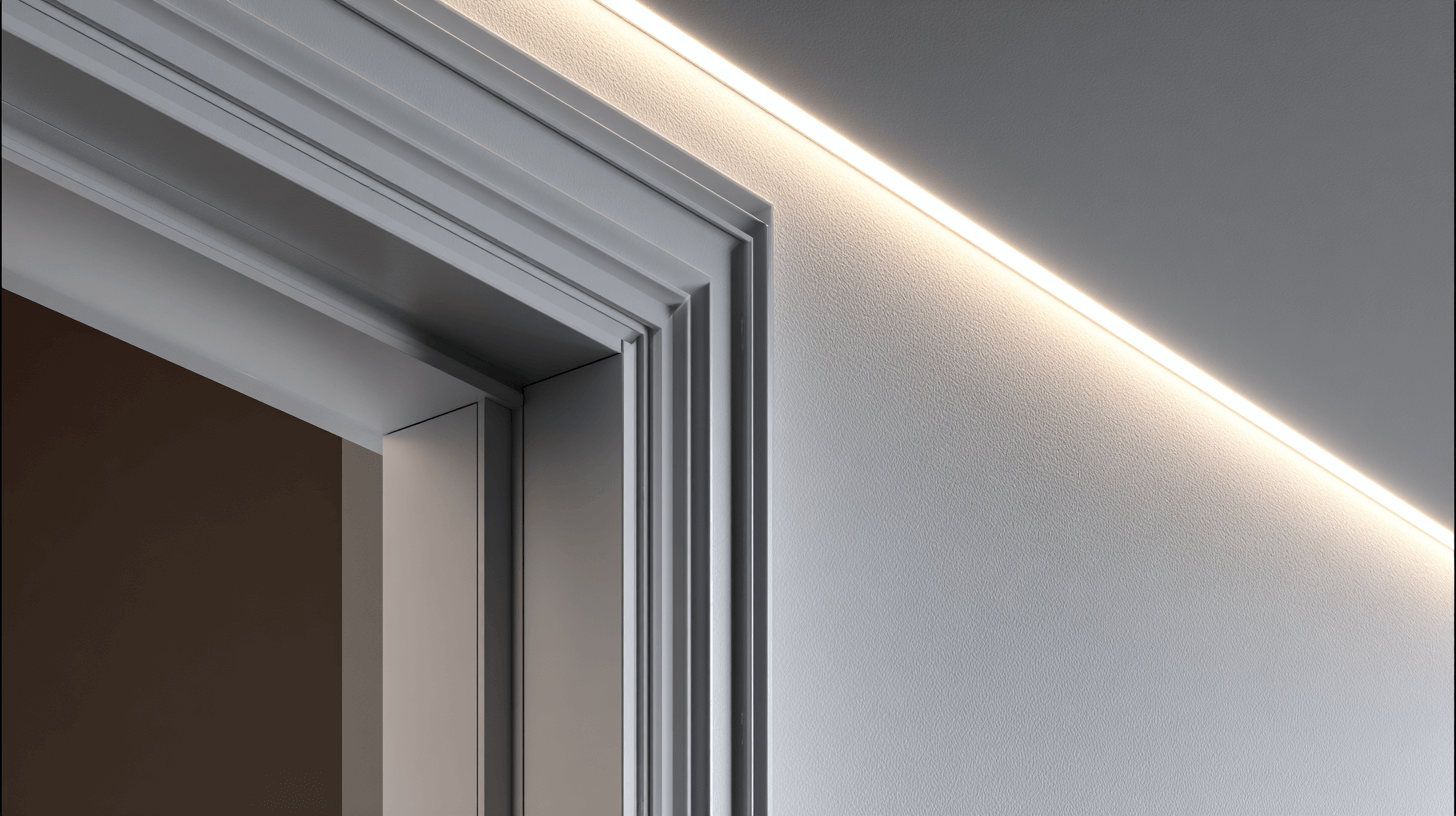
  1. Seamless Continuity: The flush baseboard profile is designed to terminate cleanly into these invisible door frames without a jogging detail. Specialized connectors allow the baseboard to run continuously to the door opening, creating a uninterrupted flush surface around the entire room perimeter. This level of integration requires a holistic specification strategy where door frames and baseboards are sourced as a compatible system.

10. Sector-Specific Applications

10.1 Healthcare

  1. Requirement: Infection control, durability, ease of cleaning.
  2. Solution: Flush stainless steel baseboards or high-impact aluminum with integral coving.
  3. Benefit: Eliminates the ledge where dust and bacteria settle. Withstands impact from beds and trolleys. Complies with FGI guidelines for monolithic surfaces.

10.2 High-End Residential

  1. Requirement: Minimalist aesthetic, integration with stone or hardwood floors.
  2. Solution: Recessed aluminum shadow gaps, often with LED integration (e.g., Dorsis Linus).
  3. Benefit: Creates a sophisticated, museum-quality ambiance. Allows for “floating wall” effects and night lighting.

10.3 Commercial Office

  1. Requirement: Durability, wire management, modularity.
  2. Solution: Aluminum surface-mounted or flush systems. Some profiles include channels for data/power cabling.
  3. Benefit: Protects drywall from vacuum cleaners and foot traffic while maintaining a corporate, modern look. Aluminum profiles can be anodized to match window mullions.
baseboard 3

11. Conclusion: The Convergence of Craft and Industry

The specification of metal baseboards represents a convergence of aesthetic ambition and technical performance. While they demand a higher degree of design foresight, coordination, and investment compared to traditional materials, the benefits in terms of durability, hygiene, and architectural clarity are substantial.

For the developer and contractor, the key takeaway is preparedness. The decision to use flush or shadow gap metal baseboards cannot be made on-site during the finishing phase; it must be integrated into the framing logic and budget from day one. It transforms the baseboard from a decorative afterthought into a fundamental component of the building’s anatomy. When executed correctly, metal baseboards elevate the perceived quality of a space, transforming a utilitarian necessity into a defining feature of the architectural envelope.

Key Takeaways

  1. Material Suitability: Aluminum (6063-T5) is the versatile choice for complex extruded shapes like shadow gaps and flush details, offering a balance of cost and aesthetics. Stainless Steel (304/316) is the mandatory choice for healthcare and corrosive environments due to superior hygiene, chloride resistance, and impact strength.
  2. Installation Complexity: Flush and reveal baseboards require early integration into the construction schedule. They are installed before drywall and flooring, unlike traditional baseboards. They demand higher-level framing precision (LGSF) and often Level 5 drywall finishes.
  3. Cost Implications: While material costs are higher than wood, the labor cost for flush details is the primary driver, potentially costing 3-5 times more than surface-mounted options due to the precise coordination required between framers, drywallers, and painters.
  4. Hygiene & Code Compliance: Stainless steel baseboards with coved details are essential for meeting FDA Food Codes (6-201.11) and FGI Healthcare Guidelines regarding cleanability and infection control in sterile environments.
  5. Aesthetic Impact: Metal baseboards enable the “floating wall” aesthetic central to modern minimalist design, allowing for the integration of LED lighting and seamless interfaces with frameless door systems.
author
Alexander Guk
About the author:

Our expert in fencing structures has over 5 years of experience working at the Mehbud factory. Helps you choose the optimal design and model of fencing according to your needs. Professionally deve...

More
0 0 votes
Article Rating
Subscribe
Notify of
guest
0 Comments
Oldest
Newest Most Voted
Inline Feedbacks
View all comments