How to Sell CNC Bending Press: The Comprehensive Global Sales, Valuation, and Acquisition Guide
Generic selectors
Exact matches only
Search in title
Search in content
Post Type Selectors

How to Sell CNC Bending Press: The Comprehensive Global Sales, Valuation, and Acquisition Guide

December 17, 2025
11  

The Strategic Intersection of Architecture, Fabrication, and Asset Liquidity

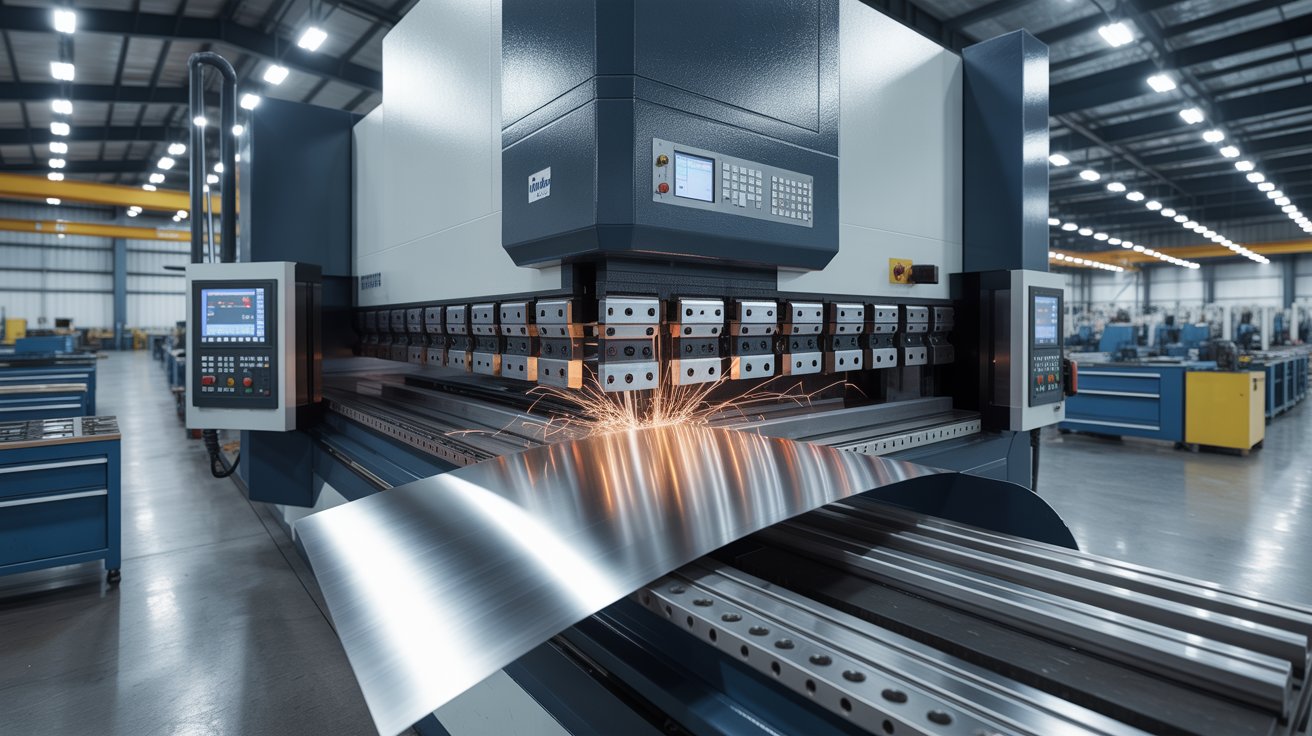
The modern built environment is increasingly defined by the fluidity of its skin. From the parametric curves of Zaha Hadid’s legacy projects to the crisp, angular linearity of contemporary Scandinavian commercial centers, the architectural facade has evolved from a passive barrier into a dynamic statement of engineering capability. At the operational heart of this aesthetic revolution sits a singular, often underappreciated piece of industrial machinery: the CNC (Computer Numerical Control) bending press, or press brake. For the developer, the architect, and the construction professional, the press brake is not merely a tool for bending metal; it is the critical node in the supply chain that translates digital design intent into physical reality. It dictates the precision of a shadow gap on a rainscreen cladding system, the structural integrity of a light gauge steel frame, and the economic feasibility of a custom perforated facade.

However, the lifecycle of this capital-intensive asset is complex. Whether a fabrication facility is upgrading to Industry 4.0 automation or a developer is liquidating assets from a dissolved joint venture, the process of selling—or strategically acquiring—a used CNC bending press is fraught with financial opacity, technical nuance, and logistical peril. Unlike standardized commodities, a press brake’s value is a function of its control architecture, hydraulic health, tooling compatibility, and brand lineage. A miscalculation in valuation can result in six-figure losses, while a failure in pre-purchase due diligence can introduce catastrophic project delays due to equipment failure.

Furthermore, the marketplace for these machines is aggressively global. A machine decommissioned in a German automotive plant today may be the ideal acquisition for a Turkish facade manufacturer tomorrow, eventually producing panels for a skyscraper in Dubai. Navigating this ecosystem requires a mastery of not just mechanical engineering concepts, but also international trade law, shipping logistics, and cross-border regulatory compliance.

This comprehensive report serves as the definitive manual for navigating the secondary market of CNC bending presses. It is designed for the high-level decision-maker—the developer scrutinizing asset recovery values, the architect understanding the capabilities of the supply chain, and the facility manager executing a strategic upgrade. We will dissect the global market dynamics driving demand, provide a rigorous, data-driven framework for valuing used machinery, and outline a granular, step-by-step protocol for the sales and acquisition process. From the metallurgy of bending allowances to the legalities of the Harmonized System (HS) codes, this guide bridges the gap between the boardroom and the shop floor.
Part I: Global Market Dynamics and The Architecture of Demand

To successfully navigate the sale or purchase of a CNC bending press, one must first understand the macroeconomic forces and industry trends that dictate liquidity and pricing. The demand for used machinery is not a standalone metric; it is a derivative of the health of the global construction and manufacturing sectors.

The Macro-Economic Landscape of Metal Forming

The global appetite for metal forming machinery is expanding, driven by a dual engine of infrastructure development in emerging economies and a re-industrialization push in developed nations. Market analysis indicates that the global bending machines market size was valued at approximately USD 5.2 billion in 2024 and is projected to maintain a robust growth trajectory, reaching over USD 7.3 billion by 2030, with a Compound Annual Growth Rate (CAGR) of 6.1%.

This growth is not uniform, creating distinct arbitrage opportunities for sellers. The Asia Pacific region, led by China and India, currently represents the largest revenue-generating market.1 The demand here is multifaceted: while top-tier manufacturers in Shenzhen or Pune demand the latest automated systems, the vast ecosystem of Tier 2 and Tier 3 suppliers drives an insatiable hunger for reliable, used CNC machinery imported from Europe and North America. Conversely, the North American and European markets are characterized by a “replacement cycle.” As labor costs rise, Western fabricators are compelled to replace functional standalone CNC brakes with fully automated bending cells to reduce headcount. This sheds high-quality, well-maintained inventory into the secondary market.

Architectural Trends Driving Machinery Value

For the architect and developer, the capabilities of the machine directly influence design possibilities. The resale value of a press brake is increasingly tied to its ability to execute modern architectural trends.

  1. Parametricism and Mass Customization: Modern facade design often utilizes algorithms to generate non-repetitive panel shapes. A press brake with advanced offline programming capabilities and a 6-axis backgauge (allowing for tapered bends and complex geometries) commands a significantly higher premium than a standard 2-axis machine. The ability to seamlessly import 3D CAD files from software like Revit or Rhino into the machine’s control is a key selling point.
  2. Material Complexity: The shift toward exotic facade materials—pre-patinated copper, zinc, and high-strength weathering steel (Corten)—requires machines with sophisticated crowning systems (deflection compensation) to ensure bend accuracy over long lengths. A machine known for its rigidity and precision (e.g., a Trumpf or Amada) retains value because it can handle these expensive materials without generating scrap.
  3. The Rise of Modular Construction: With the increasing adoption of Light Gauge Steel (LGS) framing and modular building techniques, there is a specific, high-value market for press brakes capable of high-speed, repetitive bending of structural profiles. Machines with high rapid-approach speeds and electric drive systems are particularly prized in this sector for their cycle-time efficiency.

Brand Hierarchy and Residual Value

In the secondary market, brand reputation acts as a proxy for reliability, parts availability, and service support. The market stratifies strictly along brand lines, affecting depreciation curves significantly.

Brand Tier Key Manufacturers Market Perception Depreciation Profile Target Buyer Profile
Tier 1 (Premium) TRUMPF (Germany), AMADA (Japan), Bystronic (Switzerland) Synonymous with precision, longevity, and proprietary software ecosystems. Parts are expensive but available. Low: Retains 40-50% of value even after 7-10 years. Aerospace, High-end Architectural Facades, Medical Device Fab.
Tier 2 (Mid-Range) LVD (Belgium), Salvagnini (Italy), Cincinnati (USA), Accurpress (Canada) Workhorses. Reliable, rugged, and often easier to repair with off-the-shelf components. Moderate: Solid value retention, particularly in their home regions (e.g., Accurpress in N. America). General Construction, Structural Steel, Heavy Equipment.
Tier 3 (Economy) Durma (Turkey), Ermaksan (Turkey), Various Chinese OEMs Value-focused. Good price-performance ratio when new, but perceived longevity issues. High: Steep depreciation in years 1-3. Harder to sell without a significant discount. Job Shops, Startups, Developing Market Importers.

The implication for the seller is clear: A 15-year-old Amada HFE series may fetch the same price as a 5-year-old generic machine because the market trusts the Amada to continue operating for another decade.

a detailed industrial photograph of a

Part II: The Valuation Matrix – Science Over Sentiment

Determining the asking price for a CNC bending press is a multi-variable calculus. Sellers often fall into the trap of pricing based on “book value” or emotional attachment, ignoring the technical realities that savvy buyers and dealers scrutinize. A precise valuation requires a forensic audit of the machine’s configuration and condition.

1. The Control System: The Obsolescence Cliff

The single most critical determinant of a used press brake’s value is not the hydraulics or the steel frame; it is the CNC control system. The frame may last 50 years, but the control is a computer, and like all computers, it faces obsolescence.

  1. Modern vs. Legacy: A machine equipped with a Windows-based control, touchscreen interface, and USB/Ethernet connectivity (e.g., Delem DA-66T, Cybelec ModEva Pac) is highly liquid. It integrates with modern shop floor networks.
  2. The “Black Box” Penalty: Machines with CRT monitors, floppy disk drives, or proprietary controls where the manufacturer has ceased support (e.g., old Amada NC9 series without upgrade paths) suffer a massive valuation penalty. Buyers anticipate a retrofit cost of $15,000 to $25,000 to modernize the control, and this cost is deducted directly from the machine’s value.

2. Mechanical Configuration and Capacity

Beyond the brand, the physical specifications dictate the addressable market.

  1. Tonnage and Bed Length: The relationship between force (tonnage) and length is key. A 100-ton, 3-meter machine is the “Honda Civic” of the industry—universally useful but common. Specialized configurations, such as high-tonnage/short-bed (for thick plate) or low-tonnage/long-bed (for architectural flashing), can command premiums due to scarcity.
  2. Throat Depth and Open Height: In facade fabrication, deep boxes and cassettes are common. A machine with an extended throat depth (the distance from the tooling center to the back frame) and a large open height allows for the manipulation of bulky panels. Architects specifying cubic-shaped facade solutions drive demand for these high-clearance machines.
  3. Backgauge Complexity:
    • 2-Axis (X, R): Limits the machine to simple flanges.
    • 4-Axis or more (X, R, Z1, Z2, X1, X2): Independent finger movement (Z1/Z2) is essential for bending asymmetrical parts or staging multiple setups along the bed length. This is a massive value-add for high-mix, low-volume job shops.9

3. The Crowning System: The Hidden Value Multiplier

For any machine over 2.5 meters, deflection (the bending of the ram under load) is a physical certainty. To counteract this and produce straight bends, machines use “crowning.”

  1. Hydraulic Crowning: Cylinders in the lower beam push up to counteract deflection. Preferred for its adjustability.
  2. Mechanical Crowning (Wila/CNC): A system of wedges. Highly precise and desirable.
  3. No Crowning/Shim Crowning: On older or cheaper machines, operators must manually shim dies—a time-consuming process. These machines are significantly less valuable to modern fabricators prioritizing throughput.

4. Depreciation Models and Residual Value Forecasting

Financial modeling for industrial machinery relies on the Modified Accelerated Cost Recovery System (MACRS) in the US or similar capital allowance schemes globally. However, real-world resale value follows a different curve.

Industrial Press Brake Market Value Retention Curve:

Machine Age Tier 1 Brand Value (Estimated) Tier 3 Brand Value (Estimated) Technical Milestone / Trigger
New (Year 0) 100% 100% Installation & Commissioning
Year 1-2 80-85% 65-70% Initial “drive-off” depreciation. Warranty active.
Year 3-5 65-75% 45-55% Warranty expires. Financing often concludes.
Year 6-10 50-60% 30-40% Maintenance history becomes the primary value driver.
Year 10-15 35-45% 20-25% Control system risks increase. Hydraulic seals need replacement.
Year 20+ 20-30% 10-15% (Scrap+) Value is in the frame (“Iron Value”). Controls likely obsolete.

Retail vs. Liquidation Valuation

Sellers must distinguish between Fair Market Value (FMV) and Orderly Liquidation Value (OLV).

  1. FMV (Retail): The price a dealer asks. It assumes the machine is cleaned, serviced, and comes with a limited warranty. It requires 6-12 months to realize.
  2. OLV (Auction): The price realized in a forced timeline (e.g., 30-90 days). Typically 30-40% lower than FMV. This is the reality for most developers clearing a site quickly.

Part III: The Seller’s Playbook – Preparation, Presentation, and Process

Selling a complex industrial asset is a project management exercise. The difference between a stagnant listing and a quick sale often lies in the quality of preparation and documentation.

Phase 1: The Pre-Sale Audit and Refurbishment Calculation

Before listing, the seller must decide whether to sell “as-is” or invest in refurbishment.

  1. The “Clean and Cycle” Rule: At a minimum, the machine must be deeply cleaned. Industrial degreasers should remove years of oil mist and metal dust. A clean machine signals maintenance discipline.
  2. Minor Repairs with High ROI:
    • Safety Curtains: If the light guards are misaligned or broken, fix them. A machine without functional safety gear is a liability lawsuit waiting to happen, scaring off corporate buyers.
    • Hydraulic Leaks: A $50 O-ring kit and 4 hours of labor can stop a weep that makes the machine look like a wreck.
    • Lighting: Replace blown work lights. A well-lit workspace in photos implies precision.

Phase 2: Building the Data Room

Sophisticated buyers (and their banks) require a comprehensive data package. Create a digital folder containing:

  1. Original Invoices: Proving ownership and original configuration.
  2. Maintenance Logs: The “Carfax” of machinery. Documented oil changes, filter replacements, and accumulating repairs are gold.
  3. Electrical & Hydraulic Schematics: If these are missing, the machine is nearly unserviceable. Obtaining duplicates from OEMs can take weeks and cost thousands.
  4. Backup Disks: Software backups for the CNC parameters.

Phase 3: Visual Marketing Assets

Industrial photography is often poor. To stand out:

  • The “Proof of Life” Video: A static photo proves nothing. Record a 3-minute video showing:
    • The machine referencing (homing) all axes upon startup.
    • The ram cycling up and down smoothly.
    • The backgauge fingers moving to extreme positions (proving no motor burnout).
    • A test bend on a piece of metal, verifying the angle.
  • Macro Photography: Close-ups of the tool holders (to show wear), the turret/clamping mechanism, and the control screen (showing software version and run hours).

Phase 4: Choosing the Sales Channel

The route to market depends on the urgency of liquidity versus maximum value recovery.

Channel Time to Sell Value Recovery Effort Required Best For
Private Sale (Marketplaces) High (3-12 months) High (Retail – 10%) High (Marketing, Logistics, Negotiation) Sellers with time, single assets, wanting max ROI.
Machinery Dealer Low (1-4 weeks) Medium (Wholesale – 30-50%) Low (They handle logistics/payment) Need for quick cash, trade-ins for upgrades.
Industrial Auction Fixed Date Variable (OLV – 40-60%) Low (Auctioneer manages process) Liquidating entire facilities, closing businesses.
ZOV Marketing A high dynamic range HDR wide shot of a modern 7c2b67b2 b322 4e89 9c85 a5289ac1c6f2 0

Part IV: The Buyer’s Protocol – Technical Due Diligence

For the architect or developer acquiring machinery to verticalize operations, buying used is a capital-efficient strategy, but it requires rigorous vetting. The following inspection protocol is mandatory to avoid acquiring a “boat anchor.”

1. The Hydraulic Health Check

Hydraulics are the muscle of the machine.

  1. Static Hold Test: Bring the ram to the bottom of the stroke under full tonnage and hold it for 10-20 minutes. Use a dial indicator to measure if the ram drifts upward. Drift indicates internal bypassing in the cylinders or valve leakage—a major repair.
  2. Cavitation Check: Listen to the pumps. A gravelly, grinding noise indicates cavitation (air in the oil) or pump wear.
  3. Oil Analysis: Take a sample of the hydraulic fluid. Milky oil indicates water contamination. Burnt-smelling oil indicates overheating and seal degradation.

2. Geometric Accuracy and Frame Integrity

  1. The “Canoe” Effect: Over years of bending short, thick parts in the center of the machine, the bed and ram can become permanently deformed (upset), creating a gap in the center. Place a precision straightedge along the bed and table. If light is visible in the center but not the ends, the machine is structurally compromised. It will never bend long straight parts correctly again.
  2. Ram Parallelism: Check the Y1 and Y2 axis synchronization. If the ram tilts or “crabs” during descent, the encoding scales or proportional valves are faulty.

3. Backgauge Repeatability

The backgauge determines the flange length accuracy.

  1. The Push-Pull Test: Physically grab the backgauge fingers and try to push/pull them. Any play or “slop” suggests worn ball screws or linear bearings.
  2. Repeatability Cycle: Program the gauge to move to 100mm, then 500mm, then back to 100mm. Measure the position with calipers. It should repeat within +/- 0.05mm.

4. Tooling Interface Inspection

Inspect the tool clamping system (Amada Promecam style, Wila hydraulic, or standard Euro-style).

  1. Wear: Check the seating surfaces for indentations. If the clamp surface is pitted, tools will not seat vertically, causing accuracy errors.
  2. Compatibility: Ensure the machine accepts standard tooling. Proprietary or obsolete tool styles can make sourcing consumables difficult and expensive.

Part V: Global Logistics – The Heavy Lift

The transaction does not end with a handshake. Moving a CNC press brake, which can weigh between 10,000 kg and 50,000 kg and is top-heavy with sensitive electronics, is a massive logistical undertaking.

Rigging: The Art of Moving Heavy Iron

You cannot move a press brake with a pallet jack. It requires “riggers”—specialists with high-capacity forklifts (Versa-Lifts) and hydraulic gantries.

  1. Cost Estimation: Rigging is expensive. A simple move out of a factory onto a truck can cost $3,500 to $7,500.
  2. Preparation: The hydraulic ram must be blocked (rested on timber supports) to remove pressure from the lifting hydraulics. The backgauge must be parked and locked with transit brackets to prevent it from bouncing and destroying its calibration during transport.

International Shipping: Containerization Strategy

For global sales, the choice of shipping container is critical. Press brakes rarely fit in standard containers due to their height and width.

  1. Standard Dry Van (20’/40’):
    • Pros: Cheapest option.
    • Cons: Extremely difficult to load. Forklifts cannot drive inside easily with a heavy load. Requires “skating” the machine in, which is high risk. Only viable for small (under 30-ton) brakes.
  2. Open Top Container (OT):
    • Pros: The industry standard for machinery. The roof tarp is removable, allowing an overhead crane to lower the machine directly into the container.
    • Cons: More expensive than dry vans (20-30% premium). Requires tarping to prevent moisture damage.
  3. Flat Rack (FR):
    • Pros: Necessary for “Out of Gauge” (OOG) machines that are too wide or heavy for walls. Allows side and top loading.
    • Cons: Most expensive. The machine is exposed to the elements. Requires Vacuum Packing (VCI foil) and heavy crating to survive the salt air of an ocean crossing.

Corrosion Prevention

Salt air is the enemy of precision surfaces. Machines shipping via ocean freight must be vacuum-sealed in VCI (Vapor Corrosion Inhibitor) bags. A light coat of oil is insufficient for a 4-week ocean transit.

ZOV Marketing A close up macro shot of a technicians hand usi 4b4cfabe 66b7 455e a720 75db6375cdb2 3

Part VI: Regulatory Compliance, Safety, and Liability

The global trade of machinery is governed by a patchwork of regulations. What is legal in Shanghai may be illegal in Stuttgart or Seattle. Sellers and buyers must understand the liability landscape.

The European Union: CE Validity

  1. The “CE” Mark: Machinery sold or used in the EU/EEA must bear the CE mark, certifying compliance with the Machinery Directive (2006/42/EC).
  2. Used Machinery Trap: If a used machine is imported into the EU for the first time (e.g., from the US or Asia), it is treated legally as a “new” machine. It must undergo a full CE conformity assessment, which can cost thousands of Euros. Simply having a CE sticker from 1995 is not enough if the machine has been modified.
  3. Seller Liability: Selling non-compliant machinery in the EU is a criminal offense. Sellers must provide the original Declaration of Conformity.

The United States: OSHA and ANSI Standards

  1. Machine Guarding: The US does not use CE. Instead, equipment must meet OSHA 1910.212 (General Requirements for all Machines) and ANSI B11.3 (Safety Requirements for Power Press Brakes).
  2. The Liability Gap: Older press brakes often lack modern laser sentinels or light curtains. While it is legal to sell a machine “As-Is” without guards, the buyer (employer) is legally prohibited from letting an employee use it until guards are installed.
  3. Contractual Protection: Sellers should include a specific indemnity clause: “Buyer acknowledges that the equipment may not meet current OSHA/ANSI standards and assumes full responsibility for the installation of safety devices before operation”.

Export Controls and Customs

  1. HS Codes: Correct classification is vital to avoid customs delays. The Harmonized System code for CNC bending machines is typically 23 (Numerically controlled press brakes).
  2. Dual-Use Goods: High-precision CNC machines (often 5-axis or high accuracy) can be considered “dual-use” (civilian and military applications). Exports to certain sanctioned destinations may require an export license from the Bureau of Industry and Security (BIS) in the US or equivalent bodies.

Part VII: Financial Modeling and ROI for the Architect-Developer

Integrating fabrication capability via a used press brake is a strategic capital investment. The financial logic extends beyond the purchase price.

ROI Calculation: In-House vs. Outsourcing

For a developer utilizing galvanized steel in construction or custom sheet metal coating types, outsourcing flashing and facade panels often incurs a 20-30% markup and 2-4 week lead times.

  1. The Breakeven Analysis: If a used CNC brake costs $50,000 and the salary of an operator is $60,000/year, but it saves $150,000 in outsourcing costs and eliminates project delays (which can cost $10,000/day in liquidated damages), the ROI is realized in under 12 months.

Tax Implications

  1. Section 179 (USA): Allows businesses to deduct the full purchase price of qualifying equipment (including used-to-you machinery) purchased or financed during the tax year, rather than depreciating it over years. This creates a massive cash-flow incentive to buy before fiscal year-end.
  2. Capital Allowances (UK/EU): Similar schemes exist to encourage capital investment, often allowing for “Super-Deductions” for efficient, modern machinery.

Sustainability and Operating Costs

From a green building perspective, the choice of machine matters.

  1. Hydraulic vs. Servo-Electric: Traditional hydraulic brakes run their main pumps continuously, consuming electricity even when idle. Modern servo-electric brakes consume power only when the ram moves.
  2. The Energy Delta: An electric brake can reduce energy consumption by up to 50%. Over a 10-year lifespan, this operational saving can offset the higher purchase price of a newer, greener machine, aligning with LEED or BREEAM sustainability goals.
ZOV Marketing A high dynamic range HDR wide shot of a modern 7c2b67b2 b322 4e89 9c85 a5289ac1c6f2 2

Conclusion

The market for CNC bending presses is a microcosm of the global construction industry: high-stakes, technically demanding, and rewarding for those who master the details. For the seller, value is created not just by the iron, but by the integrity of the data package, the quality of the presentation, and the transparency of the transaction. For the buyer, risk is mitigated through forensic due diligence, a deep understanding of architectural requirements, and a robust logistics strategy.

As we move toward a future of automated, parametric construction, the press brake remains an essential bridge between the digital dream and the built reality. Whether you are liquidating a legacy asset or acquiring the capability to shape the skylines of tomorrow, the principles of precision—in valuation, inspection, and execution—remain your most valuable currency.

Addendum: Key Data Tables & Checklists

Table 1: Comparative Analysis of Shipping Container Options for CNC Press Brakes

Feature Standard Dry Van (20’/40′) Open Top Container (OT) Flat Rack (FR)
Primary Advantage Cost Efficiency (Cheapest) Ease of Loading (Overhead Crane) Capacity (Oversized/OOG Cargo)
Primary Disadvantage Difficult Loading (Skating required) Cost (Premium over Dry Van) Exposure to Elements / Highest Cost
Max Cargo Height ~2.39m (Door height limits) Flexible (Tarp allows minor over-height) Unlimited (within infrastructure limits)
Loading Method Forklift / Skating (Rear) Overhead Crane (Top) Crane / Side Forklift (Top/Side)
Corrosion Risk Low (Enclosed) Moderate (Tarp integrity crucial) High (Requires heavy VCI packing)
Ideal Machine Size Small brakes (<30 Tons, <2.5m) Medium to Large (Up to 40′ length) Extra Wide / Heavy Industrial

Table 2: 2025 Depreciation Schedule Estimates (Tier 1 vs. Tier 3 Brands)

Machine Age Tier 1 Value Retention (e.g., Amada, Trumpf) Tier 3 Value Retention (e.g., Generic Import) Buyer Actionable Insight
Year 1 85% 70% Initial depreciation hit. Good for buyers seeking “like new.”
Year 3 70% 50% Warranty expiry creates a price drop. Sweet spot for value buyers.
Year 5 60% 40% Finance terms end. High supply in secondary market.
Year 10 40% 20% Critical Check: Is the control system supported?
Year 15+ 25-30% 10-15% Value is primarily mechanical (“Iron Value”). Retrofit candidate.

Checklist: The 10-Point Pre-Purchase Inspection

  1. Cold Start: Watch the boot sequence for controller errors.
  2. Static Drift: Measure ram drop over 20 minutes under load.
  3. Pump Noise: Listen for cavitation or bearing whine.
  4. Backgauge Play: Physical push/pull test on fingers (X/R axes).
  5. Crowning Check: Inspect mechanical wedges or hydraulic cylinders for leaks.
  6. Tooling Seating: Check upper and lower beam grooves for pitting/wear.
  7. Electrical Audit: Look for bypassed safety relays or “jumpered” fuses.
  8. Test Bend: Perform a full-length bend to check for “canoeing” (angle variance center vs. ends).
  9. Maintenance Log Review: Verify oil change intervals.
  10. Safety Test: Break the light curtain beam during descent; the ram must stop instantly.
author
Alex Z
About the author:

Oleksandr — Digital Marketing Expert for Construction & Manufacturing Industries Oleksandr is a seasoned digital marketing specialist, delivering powerful results for the construction and manuf...

More
0 0 votes
Article Rating
Subscribe
Notify of
guest
0 Comments
Oldest
Newest Most Voted
Inline Feedbacks
View all comments