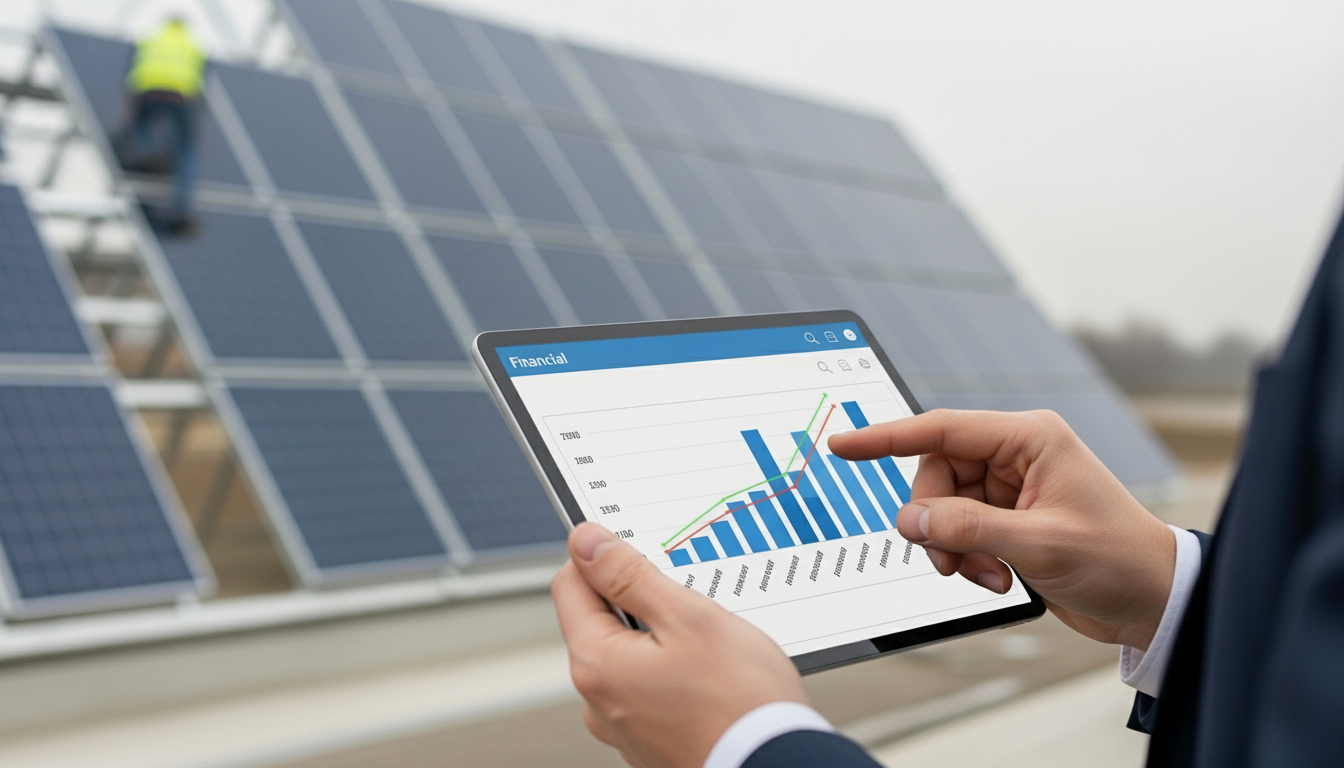
Integration of Solar Panels into Metal Facades: The Energy-Independent Architecture of Ukraine’s Future
Generic selectors
Exact matches only
Search in title
Search in content
Post Type Selectors

Integration of Solar Panels into Metal Facades: The Energy-Independent Architecture of Ukraine’s Future

April 2, 2026
6  

A Paradigm Shift in Architecture and Construction in the Era of Energy Challenges

Modern global architecture and building engineering are undergoing a fundamental and irreversible transformation, where aesthetic expression and the basic functionality of enclosing structures are giving way to multidimensional, environmentally responsible, and energy-active solutions. In light of global climate challenges, as well as the unprecedented energy crisis in Ukraine—directly caused by the systematic destruction of critical generating infrastructure—traditional approaches to designing and constructing commercial, administrative, and residential real estate require a radical review. Historically, buildings have always been exclusively energy consumers. According to statistics, the building sector and building operations account for about 39% of all global carbon dioxide emissions, of which 28% are generated directly during operational activities (heating, cooling, lighting), and another 11% result from the production of building materials and the construction process itself. Today, this balance must change dramatically, turning every new or reconstructed building into an autonomous energy-generating unit capable of not only meeting its own needs but also supporting the resilience of local energy grids.

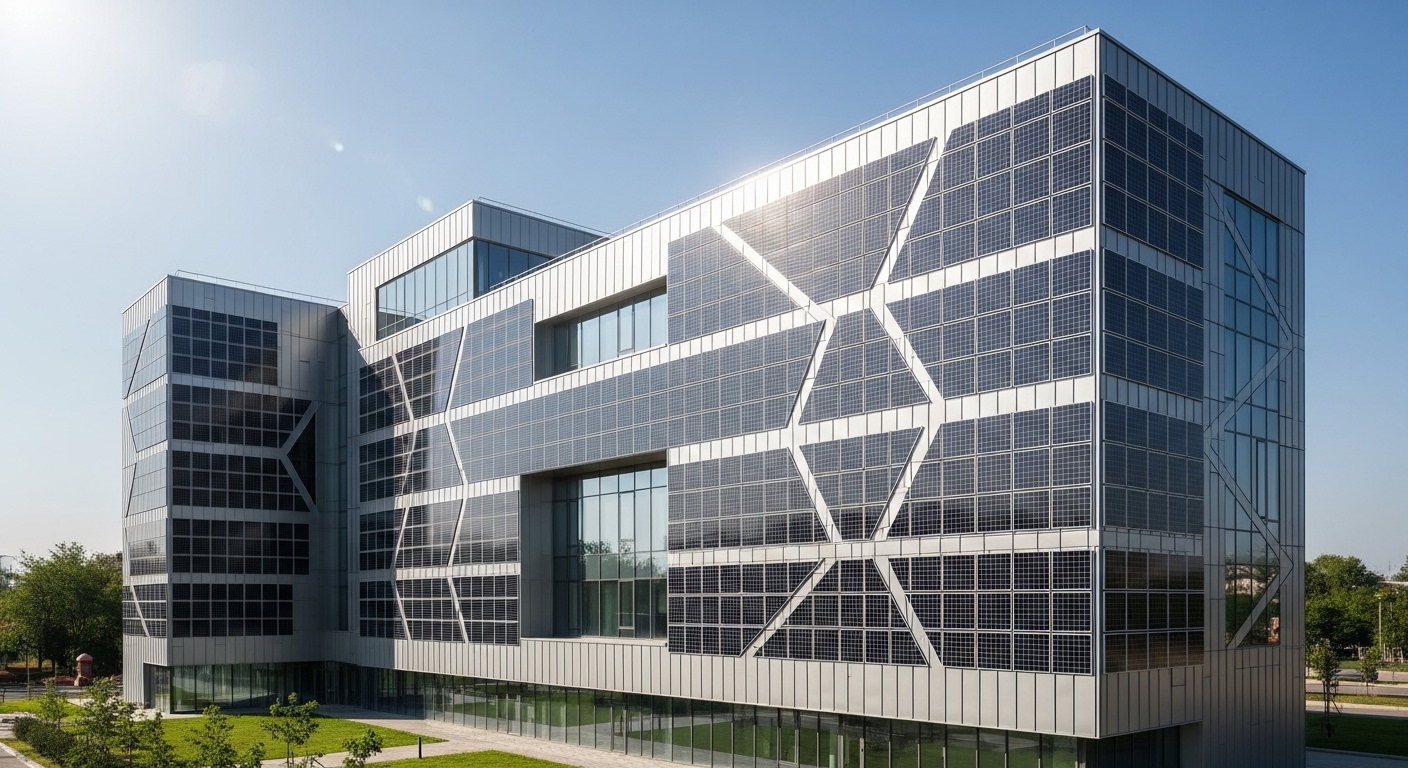
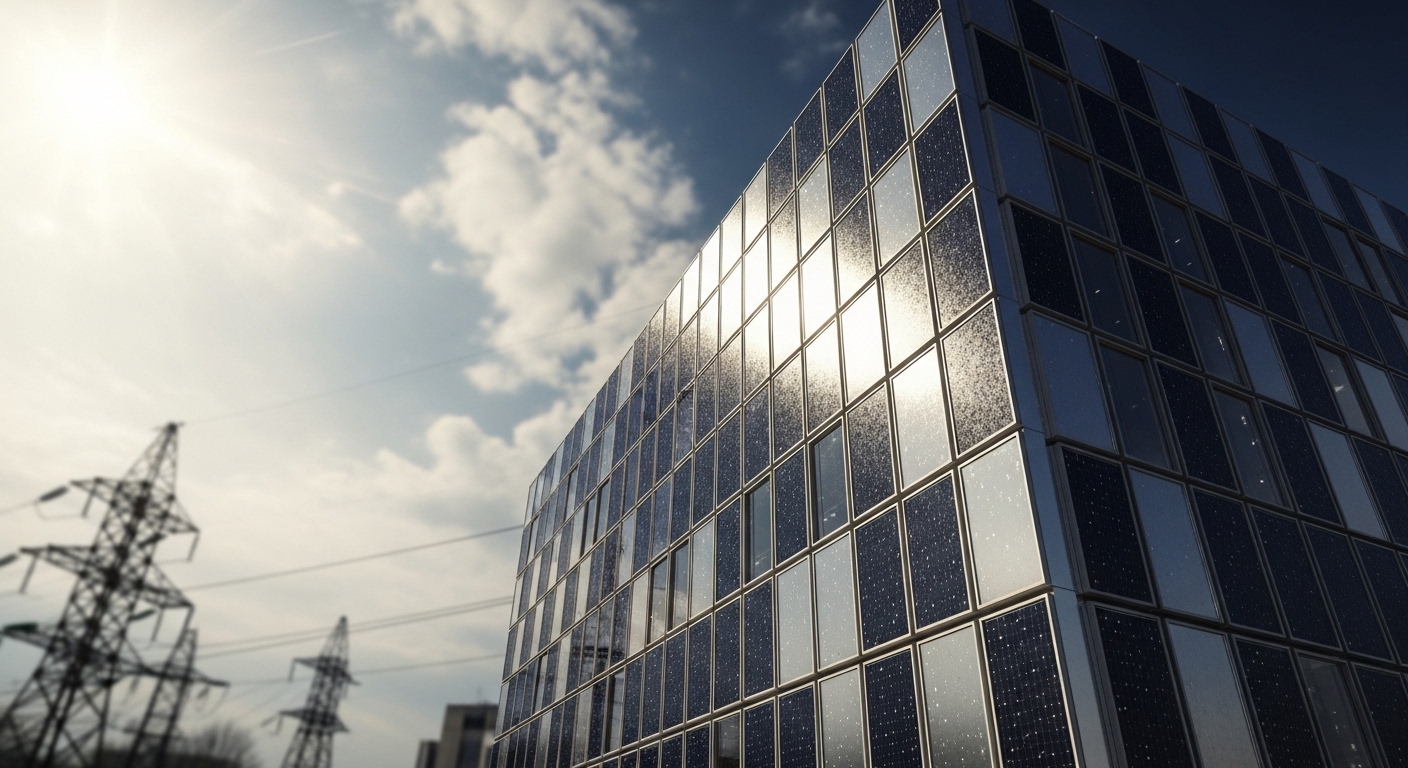
In this highly complex technological context, the concept of BIPV (Building-Integrated Photovoltaics) comes to the forefront as the most rational and promising solution. Unlike traditional BAPV (Building-Applied Photovoltaics) systems, which are mounted on top of an existing roof or facade using additional mounts and frames, BIPV systems are designed to be an integral part of the building envelope itself. They perform a critically important dual function: on the one hand, they serve as a full-fledged cladding material that provides waterproofing, wind protection, thermal insulation, and architectural expression, while on the other, they function as powerful generators of renewable electricity.

The global facade systems market is experiencing a period of exponential growth. According to leading analytical agencies, the market size in 2024 was estimated at approximately 302 billion US dollars, and it is projected to have every chance of reaching over 640 billion dollars by 2034. This impressive economic leap—almost doubling in a decade—is primarily driven by the growing demand for energy-efficient solutions, the integration of photovoltaic elements, and the transition to the concept of “smart facades”, which can adapt to changing environmental conditions.

Metal ventilated rainscreen facades occupy a special, strategically important place in this technological evolution. Thanks to their exceptional durability, high structural strength, resistance to aggressive environmental impacts, and limitless architectural flexibility, metal has become an ideal platform for integrating modern solar panels. Leading Ukrainian manufacturers play a key role in this process. For example, the “Mehbud” plant, which has over 40 years of production experience and more than 20 years of specialization specifically in high-quality ventilated facades, offers advanced architectural solutions that include cassette, linear (rack), panel, and louvered facades. The use of high-quality galvanized steel with a thickness of 0.7 mm and aluminum, which are coated with specialized polymer paints (PVDF guarantees property retention for up to 20 years, powder coating for at least 15 years, and overall corrosion protection reaches 30 years), creates a reliable, durable foundation for the implementation of BIPV technologies in Ukraine. This report offers a deep and comprehensive analysis of all technological, engineering, physical, economic, and architectural aspects of integrating solar panels into metal facades, with a special, detailed focus on the conditions for developing Ukraine’s new, energy-independent infrastructure in the 2025-2026 perspective.
Intehratsiya sonyachnykh paneley u metalevi fasady 8

Global Architectural Trends: From Passive Envelope to Parametric “Smart” Facade

The global market for building materials and architectural design is currently under immense pressure from strict environmental standards and climate mandates, shaping entirely new trends in the appearance of modern cities. In North America and Europe, the philosophy of architectural minimalism undeniably dominates. This trend is characterized by the use of clean, continuous lines, smooth surfaces, and simple geometric forms, where metal cladding is combined with high energy efficiency and technology. Tall commercial buildings, corporate headquarters, and administrative centers increasingly use metal cassettes and glass panels that can imitate natural materials, such as stone or wood, but simultaneously offer significantly better performance characteristics, lighter weight, and ease of integrating engineering systems.

Aesthetic Innovations and Materials Science

Modern architecture is abandoning dull, monotonous gray planes in favor of dynamic, living surfaces. A study of global facade construction trends for 2024-2025 highlights several key directions that directly impact how BIPV technologies adapt to the market.

First, there is a pronounced European trend of a “love for rust”. The use of Corten steel, which develops a natural, noble patina, is gaining immense popularity not only in industrial facilities but also in residential and commercial construction. This material, despite its significant weight (three times heavier than aluminum) and specific drainage requirements (as the facade literally “weeps” rust particles during rain), creates a unique organic look that changes over time. BIPV manufacturers are already adapting to this trend by creating solar panels with terracotta or copper-tinted glass that visually dissolve against a Corten facade background.

Second, color palettes inspired by nature are taking center stage. Instead of traditional metal shades, architects are choosing dynamic colors. A prime example is the innovative titanium-zinc facade lines from RHEINZINK. Their PRISMO series offers expressive shades of orange, blue, green, and red. The PRISMO brushed white⁺ finish deserves special attention—a soft, neutral white color with a refined metallic sheen and a matte texture. Thanks to its matte surface, this material interacts dynamically with sunlight, reflecting different hues depending on the angle of incidence and the time of day. Other lines, such as PREPATINA ECO ZINC (blue-grey and graphite tones) or GRANUM (matte basalt and light grey), demonstrate the metal’s ability to self-heal and develop a protective patina that automatically “heals” micro-damage and ensures a facade lifespan of over 100 years. Such aesthetic properties require BIPV manufacturers to develop corresponding matte and colored glass surfaces so that active energy-generating elements do not look like alien patches on a refined metal canvas. The use of Kromatix™ technologies (innovative solar glass from SwissINSO) allows the creation of colored BIPV modules where the solar cells are almost completely invisible, while maintaining a high level of transparency for photons.

Third, parametric design and kinetic facades are shaping the architecture of the future. Using complex 3D modeling software, architects create unique three-dimensional patterns, smooth flowing curves, and non-standard geometric shapes. Metal panels undergo laser perforation (e.g., MD Formatura or MD Designperforation systems), creating regional visual codes: triangles for the Rotterdam style, organic shapes for the Amsterdam style. Moreover, kinetic facades use the movement of individual elements under the influence of wind or minimal electricity to draw attention to the building’s architecture and create a dynamic play of shadows, which also helps prevent the overheating of interior spaces during hot summer months.

Digitalization and Facade Design Software

Integrating a complex BIPV system into a metal facade is impossible without the use of advanced computer-aided design tools. Depending on the complexity of the project, modern engineers and architects use a wide range of software solutions :

  1. Basic Modeling and Visualization: Programs like ArCon, Planner 5D, Home Plan Pro, or Envisioner Express allow for the creation of initial concepts, exterior and interior planning, and exporting models to professional environments (e.g., 3DS Max) for high-quality rendering. These tools help the client visualize the future appearance of the solar facade.
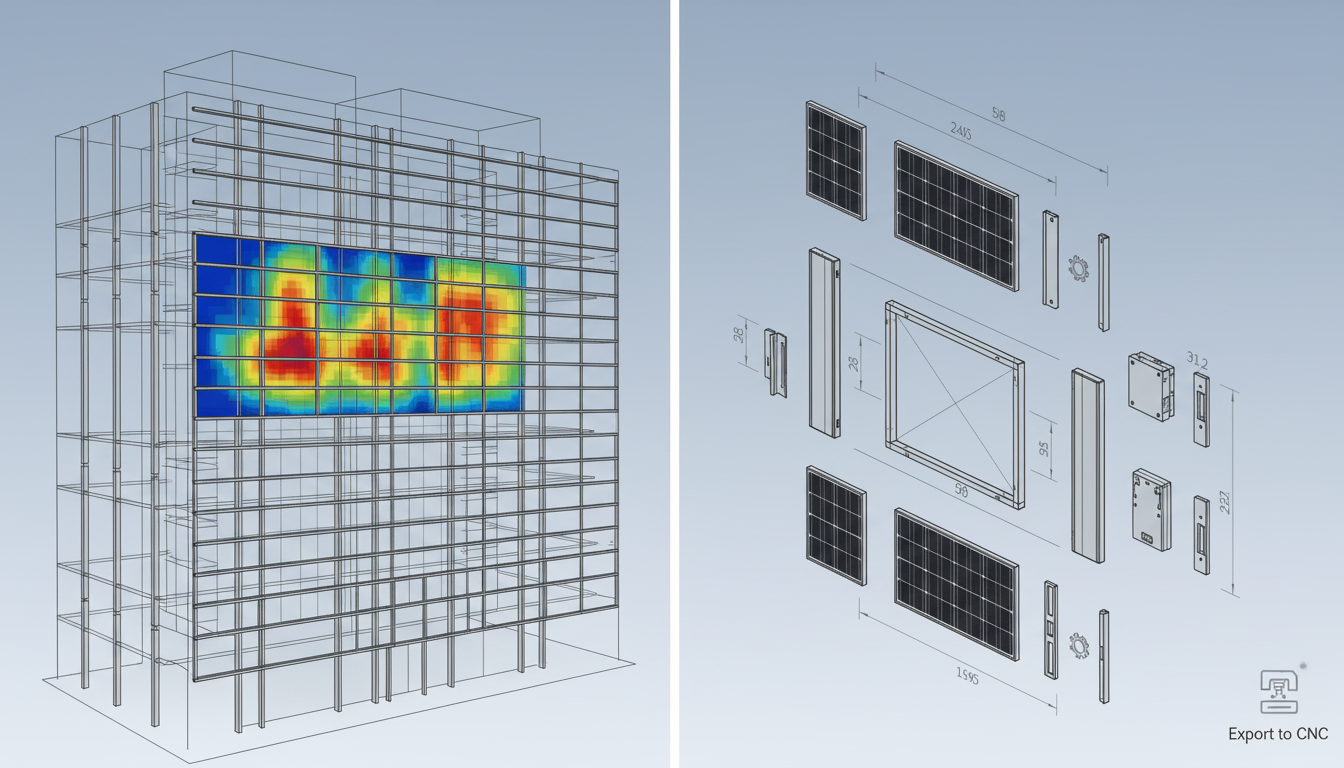
  2. Professional Engineering Calculation (CAD): Specialized utilities are used to calculate mechanical loads, deformations, and specifications of fastening systems for ventilated facades. These include Pahomov.pro (for estimators), Arkulyator-7 (for precise calculation of wall material volumes, rail, and fastener costs), Kadet-Ventfasad (a professional AutoCAD-based application for precise layout of cassettes and fasteners), and ALUM-3D. The latter is critically important as it allows for static calculations of profile deflections under wind loads, calculates anchor stresses, and generates drawings for CNC machines.
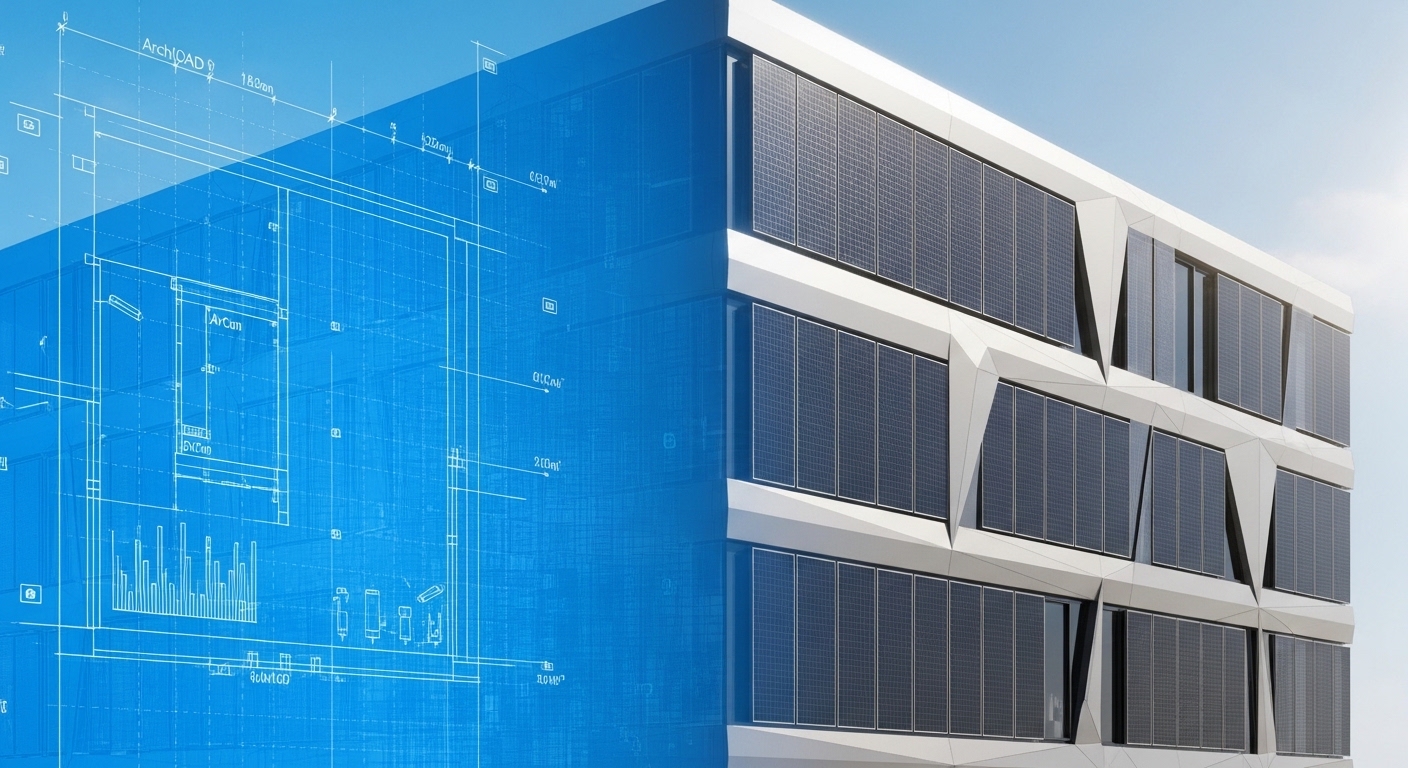
  3. BIM Technologies (Building Information Modeling): Revit (by Autodesk) and ArchiCAD (by Graphisoft) are industry standards. They allow the creation of a single, object-oriented digital model of a building, where the facade is viewed not just as an image, but as a database. In such a model, a BIPV cassette has its physical characteristics (weight, thermal conductivity coefficient), electrical parameters (generation power, voltage), and connection data to engineering networks (HVAC, electrical). This enables architects and energy engineers to work in a unified information field, avoiding collisions during the installation phase.
Intehratsiya sonyachnykh paneley u metalevi fasady 5

Evolution of Photovoltaic Technologies: From Silicon to Flexible Thin-Film Systems

The synergy of metal facade systems and modern photovoltaic converters creates an entirely new class of smart building materials. Historically, the evolution of BIPV on metal substrates dates back to the late 1990s and early 2000s when engineers and scientists first realized that the load-bearing capacity of metal decking or cassettes allowed for the complete elimination of bulky, heavy secondary mounts for solar panels. This innovative solution not only reduced the overall weight of the system but also eliminated critical risks of roof leaks and building waterproofing breaches.

For successful facade application and integration into metal panels (cassette, linear, or louvered facades by “Mehbud”), several key types of solar cells are commercially available and actively used today, each possessing unique physical and optical properties.

Comparative Characteristics of Photovoltaic Technologies for BIPV

Technology Type Efficiency Power Density Main Advantages for Metal Facades Limitations and Disadvantages
Crystalline Silicon (c-Si) 20% – 22% Highest (approx. 180-200 W/m²)

Highest level of energy generation per square meter, technological maturity, long proven service life.

Significant weight (glass modules), absolute structural rigidity, high heat sensitivity, and sharp power drop during partial shading.

CIGS (Copper Indium Gallium Selenide) 12% – 15% Medium (~85-130 W/m²)

High flexibility, extremely low weight, excellent generation in diffuse light and shading, solid aesthetic color (all-black), low temperature coefficient.

Lower absolute power compared to c-Si, higher production cost for specific sizes.
CdTe (Cadmium Telluride) 15% – 18% Medium to High

Economic efficiency in production, very good temperature coefficients (does not lose power in heat).

Form-factor limitations, environmental concerns regarding cadmium disposal (though safely encapsulated in modern modules).
a-Si (Amorphous Silicon) 6% – 9% Low

Ability to create semi-transparent modules (for windows and skylights), stable operation in cloudy weather conditions.

Requires significantly larger areas to achieve comparable generation power due to low efficiency.

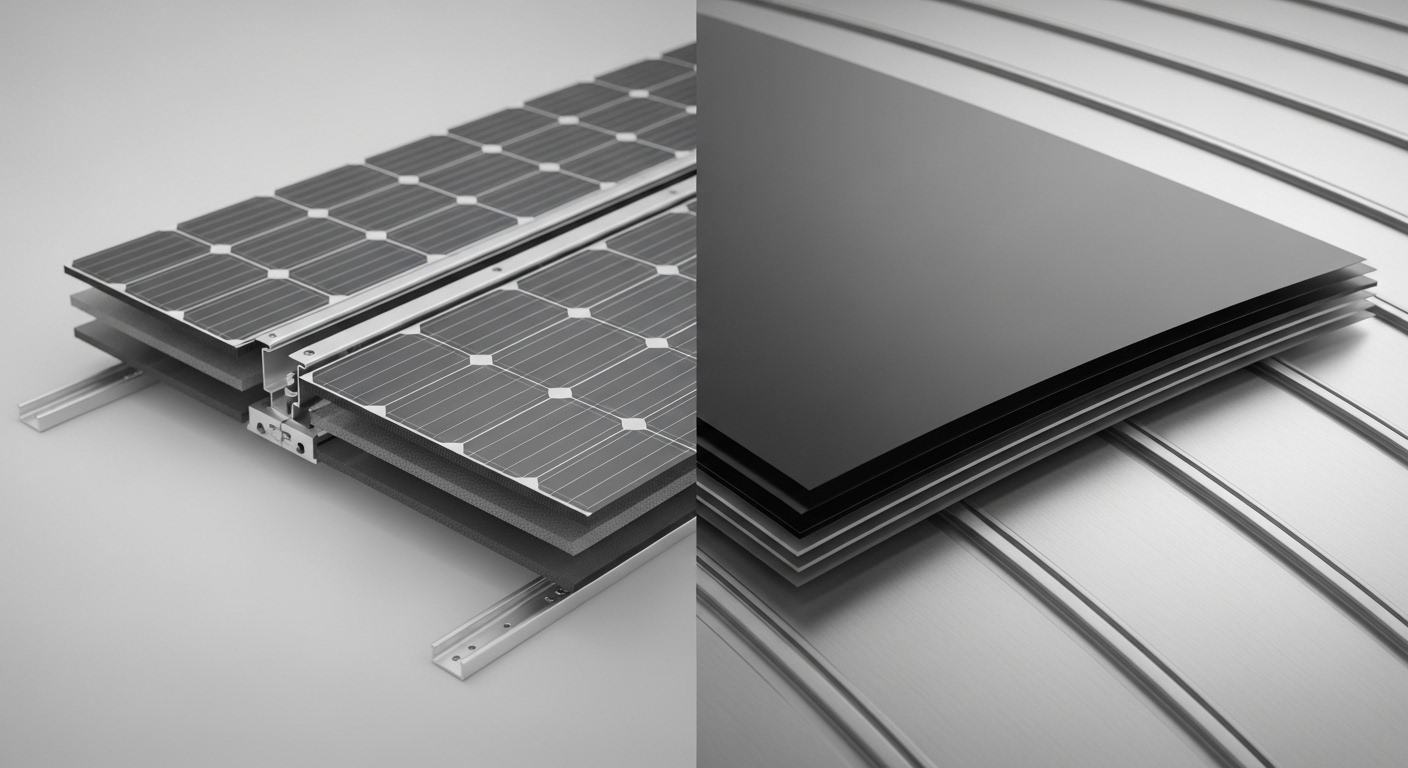
Traditional crystalline silicon elements (c-Si), despite their high efficiency, have historically faced integration difficulties in vertical facades. Their construction (usually silicon wafers sandwiched between two layers of tempered glass, each 2 to 6 mm thick) makes them heavy and rigid, requiring reinforced metal facade substructures. Additionally, architects often rejected them due to the visible grid of conductive busbars, which ruined the building’s aesthetic. However, innovations continue: today, companies offer facade cassettes where silicon elements are hidden behind specially treated matte glass that imitates various materials while retaining transmittance for solar rays.

Yet, the real revolution for metal facades has been thin-film technologies, with CIGS (Copper Indium Gallium Selenide) being the undisputed leader in this segment. The thickness of the active semiconductor layer in CIGS elements is measured in micrometers. This technology is perfectly suited for metal integration. Flexible CIGS modules can be adhered directly to metal surfaces at the factory. Companies like the UK-based BIPVco manufacture ultra-lightweight systems (e.g., the METEKTRON product), where the CIGS film is inextricably bonded to an aluminum cassette. This integration reduces the entire structure’s weight to less than 7 kg per square meter, as the metal acts simultaneously as the facade’s load-bearing structure and a protective barrier for the solar module, radically cutting installation time and costs on-site. An added advantage of CIGS is its extraordinary shade tolerance: unlike crystalline silicon, where a shadow from one tree on a part of the panel can “shut down” the entire module, CIGS panels continue to stably generate energy proportionally to the illuminated area. This is critical for vertical facades in dense urban environments.

For agricultural facilities or large logistics complexes, where exterior aesthetics may be less important than economic viability and fire resistance, using standard metal linear or panel facades integrated with classic BIPV solutions provides an optimal balance of price and energy generation. Galvanized steel metal cladding reliably protects the building, and its absolute non-combustibility enhances the facility’s overall fire safety.

Intehratsiya sonyachnykh paneley u metalevi fasady 7

Engineering Mechanics and Building Physics of BIPV Facades

Designing and installing BIPV systems on metal facades is not simply a process of attaching panels to a wall. It is a complex interdisciplinary task that requires a deep understanding of building physics, air flow thermodynamics, materials science, and electrical safety. The ventilated rainscreen facade, which forms the foundation of product lines from companies like “Mehbud,” is recognized by the global engineering community as the most optimal and safe structural base for implementing BIPV solutions.

Thermodynamics of the Ventilation Gap (Stack Effect)

A fundamental problem with any photovoltaic converter is the negative temperature coefficient: as the solar cell heats up beyond standard laboratory test conditions (usually 25°C), its electrical resistance increases, and energy generation efficiency linearly drops. On a vertical building facade, under direct summer sun, a closed (unventilated) solar panel can accumulate thermal mass, causing its surface temperature to reach extreme levels of 80-87°C (at an ambient temperature of about 40°C). Such thermal stress not only catastrophically reduces electricity output but also accelerates the degradation of polymer films (EVA), adhesives, and sealants designed for a 30-50 year lifespan.

This is why the rainscreen or ventilated facade concept is vital. An air gap deliberately left between the back of the metal BIPV cassette and the insulation layer of the load-bearing wall functions as a natural aerodynamic channel. Heated by the sun, the air in this gap becomes lighter and rapidly rises, creating a “stack effect” (thermal draft). Cold air is drawn in from the bottom of the building, passes up the entire height of the facade, actively cools the back of the solar elements, and exits through the parapet. The “Mehbud” plant reasonably highlights in its technical descriptions that such suspended systems significantly improve a building’s overall thermal insulation, keeping it cool in summer and reducing air conditioning costs. BIPV integration adds an impressive synergistic effect to this process: the massive solar energy, which in a traditional facade would exclusively heat the wall, is partially converted into useful electricity, while residual heat is effectively blown away by ventilation flows. In some advanced projects, this heated air is even captured by roof recuperators and used for water heating or supporting HVAC (heating, ventilation, and air conditioning) systems in winter.

Managing Mechanical Loads and Thermal Expansion

The metal substructure of the facade, consisting of heavy-duty brackets, vertical load-bearing guides (T- or L-shaped profiles), and horizontal rails, must be designed to reliably support and transfer two types of loads to the structural wall. The first is the constant static load (Dead Loads), i.e., the dead weight of the BIPV modules and the subsystem, which usually ranges from 15 to 30 kg/m² depending on the chosen technology (glass-glass or flexible film on metal). The second type involves colossal dynamic wind loads (reaching survival speeds up to 50 m/s) and snow loads (up to 1.4 KN/m² for sloped sections and roofs).

A particularly complex engineering task is compensating for thermal expansion. Metal facade profiles and the glass or polymer layers of solar cells possess entirely different linear thermal expansion coefficients. Under the scorching sun, an aluminum guide several meters long can extend by millimeters. If the panel is rigidly fixed, this inevitably leads to internal mechanical stress, deformation of the metal cassette, and, worst-case, microcracks in fragile silicon cells. Therefore, premium mounting systems strictly employ a combination of fixed and sliding points. These allow metal rails and facade cladding to freely “breathe” (expand in summer and contract in winter) along specified axes without applying any pressure to the photovoltaic modules. Open joints between modules in open rainscreen systems further compensate for these micrometric shifts while simultaneously promoting better ventilation. Alternatively, “shingle overlap” methods can be applied, where modules overlap like scales to absorb thermal movements.

Preventing Galvanic Corrosion: The Battle of Metals

Another invisible yet critically dangerous enemy of metal facades is galvanic corrosion. This occurs when two dissimilar metals (e.g., galvanized steel brackets and an aluminum BIPV module frame) come into direct electrical contact in the presence of an electrolyte (which can be ordinary rainwater or humid city smog). In such a galvanic pair, the less noble metal begins to degrade rapidly.

To prevent this destructive process, engineers and installers must apply strict isolation protocols. Special dielectric EPDM rubber gaskets and anodized aluminum coatings are used, and exclusively high-quality stainless steel is applied for all bolted connections, nuts, and self-tapping screws. It is these meticulous details that allow manufacturers to guarantee a facade subsystem lifespan of 25-30 years, matching the economic life cycle of the solar panels themselves.

Electrical Integration and Uncompromising Fire Safety

BIPV integration technologically transforms an ordinary passive architectural shell into a full-fledged electrical power plant. Since facade systems form a continuous ventilation cavity capable of rapidly spreading flames via draft, fire safety becomes an existential issue for large commercial buildings. Although metal itself (aluminum or steel cassettes) is an absolutely non-combustible material (combustibility class NG), granting facades a high level of baseline fire resistance (a fact notably emphasized by “Mehbud” for protection against external fires ), electrical cables, junction boxes, and thin polymer encapsulant films inside solar cells can melt or sustain burning during a short circuit.

To meet the highest safety standards (such as ANSI/FM 4411i or UL 61730 certification ), modern BIPV facades are designed as comprehensive ecosystems. A key requirement is the implementation of Rapid Shutdown systems, regulated by strict norms like NEC 690.12. This technology ensures that in the event of a fire, earthquake, or other emergency, the entire facade can be instantly de-energized (dropping voltage to a safe level within the array) so firefighters can safely conduct rescue operations using water. Reliable grounding of all metal equipment and the use of Arc Fault Protection systems, capable of detecting micro-sparking in a damaged cable and breaking the circuit before a flame ignites, are also mandatory.

To route kilometers of cables in modern systems, concealed cable channels integrated directly into metal mullions or special trays at the rear of the linear subsystem are used. This protects wiring from the destructive effects of ultraviolet radiation, atmospheric moisture, ice, and mechanical damage. Furthermore, because vertical facades suffer heavily from uneven shading (neighboring buildings, trees, and chimneys can cast moving shadows throughout the day), it has become a de facto standard to use microinverters or DC optimizers at the level of each cassette. Maximum Power Point Tracking (MPPT) technology at the individual level isolates a shaded panel, preventing it from dragging down the power of the entire string of panels, radically boosting overall annual generation efficiency.

Intehratsiya sonyachnykh paneley u metalevi fasady 4

The Economic Paradigm: Why BIPV Has Become an Imperative for Business

For a long time, the main barrier to the mass adoption of integrated solar facades was their high initial cost. The situation has changed dramatically in recent years due to the decreasing costs of semiconductor technologies, the standardization of metal mounting systems, and, most importantly, the global surge in prices for traditional energy resources.

Cost, Payback, and Material Substitution

Today, the economic viability of BIPV has reached an absolute turning point. In Europe, the average cost of turnkey BIPV systems ranges from 200 to 625 euros per square meter. At first glance, this is a significant sum. For comparison, the base cost of standard architectural solutions from the “Mehbud” plant is: cassette facade — from $32.00 per m², cubic facade — from $30.00 per m², louvered facade — from $50.00 per m² (excluding the cost of the metal subsystem and installation works).

However, the secret to BIPV profitability lies in the principle of substitution. Unlike rooftop stations (BAPV), where the solar panel is additional equipment on top of an existing roof, a BIPV cassette or glass is the facade cladding material itself. The investor does not pay twice—once for porcelain stoneware or a composite panel, and then for a solar station. BIPV replaces expensive traditional cladding. When Capital Expenditures (CAPEX) are correctly calculated during the early design stages of a building, the marginal cost of a solar facade proves perfectly acceptable.

Global statistics indicate that payback periods for such systems in the commercial sector now range from 10 to 15 years, demonstrating a stable internal rate of return (IRR) of 6-12%. Given Ukraine’s energy landscape in 2025-2026, this payback period could be even shorter due to specific factors.

Regulatory Environment and Ukraine’s Energy Market in 2025-2026

Ukrainian businesses and developers face unprecedented challenges. On one hand, the cost of electricity for non-household consumers is steadily rising. On the other hand, the risks of emergency blackouts force enterprises to mass-purchase diesel and gasoline generators, where the cost per kilowatt-hour is extremely high and destroys business margins.

To support energy decentralization, the state has introduced powerful legislative incentives. The Verkhovna Rada and the Cabinet of Ministers of Ukraine have drastically simplified bureaucratic procedures for installing solar panels on roofs and building facades. The most revolutionary step was the introduction of the “Active Consumer” mechanism (a prototype of Net Billing).

This mechanism operates as follows: a non-household consumer (a factory, office center, logistics hub) installs a solar facade. Since solar energy generation does not always coincide with the building’s consumption peaks (for example, the office is closed on weekends, but the facade generates maximum power), the enterprise can feed surplus generated energy into Ukraine’s general grid. Under Net Billing rules, the value of this fed energy is credited to a special enterprise account at the “day-ahead” tariff (market price). Moreover, the state encourages the implementation of balancing systems: if an enterprise has an industrial energy storage system (batteries), the energy is credited at the average monthly tariff, which is approximately 15-20% higher than the standard one. The virtual funds accumulated in this way can be used by the enterprise to pay for grid electricity consumed during evening or night hours (incidentally, using the night tariff, which is much cheaper ), or during cloudy winter months. As industry experts note, this mechanism relieves enterprises of the headache of forecasting schedules. For large consumers with a capacity of over 1 MW, these funds are accrued over an entire year, balancing out seasonal generation fluctuations (summer surpluses cover winter deficits). An important requirement is that the installed generation capacity cannot exceed the permitted grid consumption capacity.

Additionally, Ukraine still operates the “Green Tariff” program, set to run until the end of 2029 (or 2030), which allows individuals and legal entities operating stations with a capacity of up to 30 kW to sell energy at a fixed, state-guaranteed rate. This creates a reliable financial foundation for smaller commercial facilities, such as service stations (STO) or car dealerships.

Intehratsiya sonyachnykh paneley u metalevi fasady 3

International and State Funding for Green Reconstruction (Grants 2025-2026)

Despite high profitability, implementing innovative facades requires significant initial capital (CAPEX), access to which is limited under wartime conditions. Understanding this, the international community and the Ukrainian government have deployed an unprecedented ecosystem of grant support and concessional financing, making 2025-2026 an ideal time to invest in BIPV.

Ukraine Facility Plan (European Union)

The largest support mechanism is the EU’s Ukraine Facility, totaling 50 billion euros, designed for the 2024-2027 period. The program consists of three Pillars, and critically important for the construction industry and business is Pillar 2: Ukraine Investment Framework (UIF). The UIF operates with an investment budget of 9.5 billion euros aimed at mobilizing up to 40 billion euros of private investment through guarantees and partial risk coverage mechanisms. As of late 2025, the priority sector for the UIF is specifically energy, allocated 40% of all funds (social housing takes 6%, water supply — 5%). Introducing innovative energy-efficient materials, including BIPV, fully complies with the program’s cross-cutting criteria for “green transition” and decarbonization. Ukrainian businesses can access these funds via international and local partner banks, obtaining affordable loans for building modernization.

Climate Innovation Vouchers (EBRD and EU)

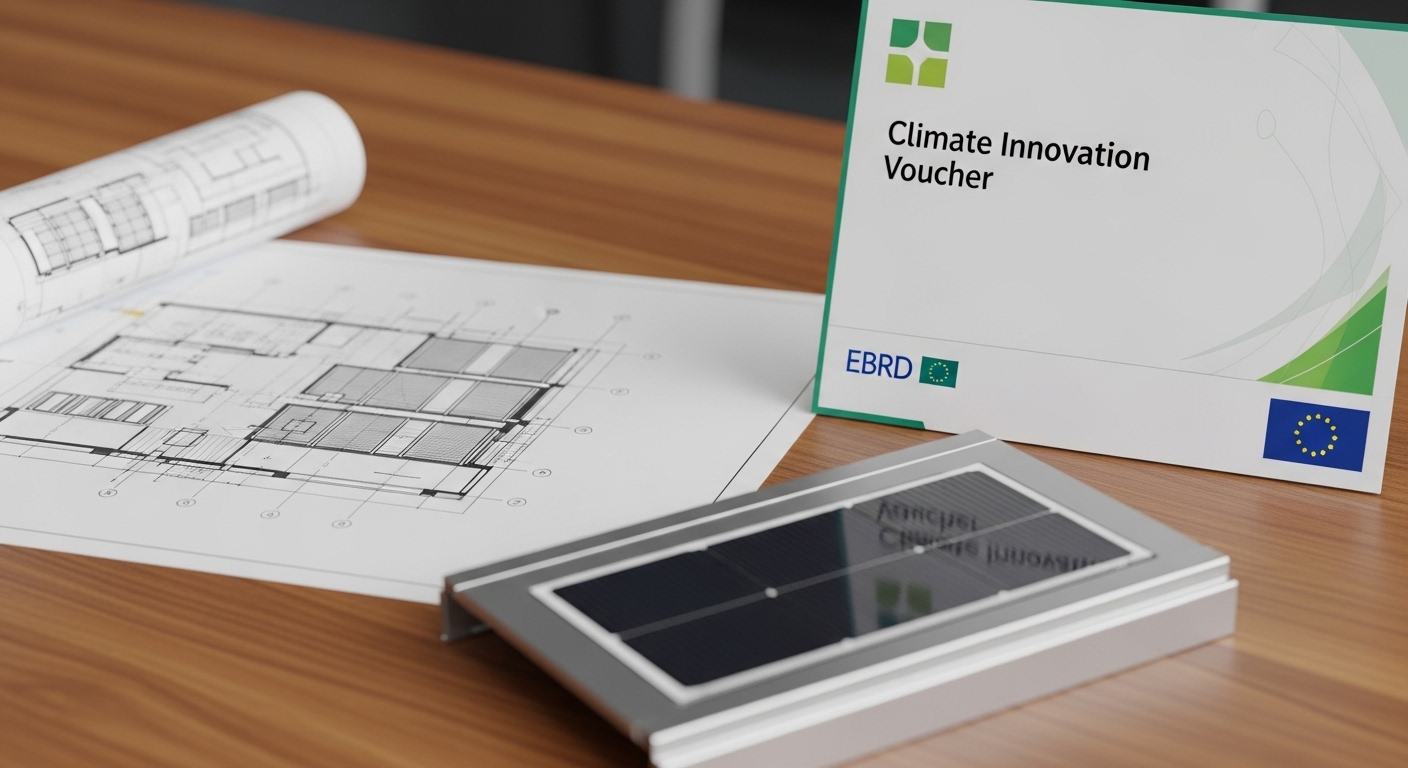
For small and medium-sized enterprises (SMEs) seeking to implement or develop green technologies, the Climate Innovation Vouchers program is active (under the global FINTECC program of the European Bank for Reconstruction and Development). This is one of Ukraine’s largest grant competitions for climate innovations. Companies can receive a non-repayable grant of up to €50,000, covering 75% of project or service implementation costs. As of September 2025, over 50 Ukrainian companies had already received such support, totaling over 2 million euros. Integrating solar panels into facade structures is a classic example of a technology that meets FINTECC criteria for reducing greenhouse gas emissions.

State Programs for the Residential Sector and HOAs (OSBB)

The issue of energy independence is pressing not only for businesses but also for multi-apartment residential buildings, which make up a massive portion of the housing stock. The residential sector in Ukraine accounts for almost a third of total energy consumption due to the extremely low energy efficiency of buildings constructed before 1990. To address this, the Energy Efficiency Fund (EEF) is active, strongly supported by the German government (via the GIZ agency) and the European Union.

  1. “SvitloDim” Program: Launched by the government, this program allows Homeowner Associations (HOAs / OSBB) to obtain grants ranging from 100,000 to 300,000 UAH. The funds are earmarked and can be spent on purchasing generators, inverters, batteries, and solar panels to ensure the autonomous operation of the building’s critical life-support systems during prolonged outages. Metal facades or facade louvers on ground floors or technical balconies are excellent places for integrating such panels.
  2. “ENERGODIM” and “VidnovyDIM” Programs: Provide grants to HOAs from 40% to 70% for comprehensive thermal modernization (facade insulation, window replacement). The “VidnovyDIM” program offers 100% cost coverage (up to 7.2 million UAH per object) for reconstructing residential buildings damaged by military actions. Implementing BIPV elements as part of comprehensive facade reconstruction can significantly lower residents’ common-area electricity bills.

Microbusiness Support Programs (Sole Proprietorships)

Even for microbusinesses, the state has developed support mechanisms. The Ministry of Economy of Ukraine implements the “Energy Independence of Small Business” program. Sole Proprietors (FOPs) can apply via the “Diia” portal to receive a one-time non-repayable financial aid amount ranging from 7,500 to 15,000 UAH, which can be directed toward purchasing energy equipment.

Grant Program Name Main Donor / Operator Target Audience Financial Terms and Program Focus
Ukraine Facility (Pillar 2: UIF) European Union Medium/Large Business, Municipalities

€9.5 billion investment fund to mobilize loans. Priority: energy (40%), reconstruction, “green transition”.

Climate Innovation Vouchers (FINTECC) EBRD and EU SMEs (Small and Medium Enterprises)

Grants up to €50,000 (covering up to 75% of costs) for the implementation/development of innovative climate technologies (e.g., BIPV).

SvitloDim Government of Ukraine (Energy Efficiency Fund) HOAs (Multi-apartment buildings)

Non-repayable grants from 100k to 300k UAH for solar panels, batteries, inverters for elevators, pumps, and lighting.

VidnovyDIM / ENERGODIM EU, German Government (GIZ), IFC HOAs

40-70% compensation for thermal modernization (facades) or 100% coverage for war-damaged objects (up to 7.2 million UAH).

Energy Independence of Small Business Ministry of Economy of Ukraine Sole Proprietors (depending on employee count)

One-time payment of 7.5k – 15k UAH (via “Diia” portal) to purchase small energy equipment.

Intehratsiya sonyachnykh paneley u metalevi fasady 3

Global Experience and Ukrainian Prospects: Analysis of Realized Case Studies

The transition from a theoretical basis to practical implementation is best proven by real architectural objects. Monitoring the operational characteristics of BIPV systems across various continents irrefutably proves that integrated solar architecture is mature, durable, and commercially justified.

European BIPV Architecture Role Models

One of the most detailed documented examples is the Living Lab for BIPVs in Berlin (Germany). This building had 360 CIGS thin-film modules mounted across three facades. The largest array is traditionally placed on the south side, but placement on the west and north facades is critically important for researchers. The fact is that thin-film CIGS panels can effectively capture diffuse light, justifying their use even on building sides where direct sunlight rarely hits. Researchers emphasize that proper design of the facade’s ventilation gap significantly improved both the building’s thermal balance and the overall energy yield.

The experience of the Center for Solar Energy and Hydrogen Research (ZSW) in Stuttgart is highly indicative. Researchers equipped the southeast and southwest facades of their 5-story office building with flexible thin-film CIGS modules that visually perfectly match stylish black glass panels. A generated computer model showed impressive results: covering just 25% of the facade area and 30% of the roof area of a typical office center with BIPV elements can cover 29% of its total annual energy consumption. ZSW analysts draw a crucial conclusion: if a BIPV system is budgeted at the drawing-board stage (replacing standard facade glass or composite panels), the investment pays for itself in just 10 years.

In Spain, architects demonstrate a virtuoso combination of form and function. At the Genyo research center (Granada), a Double-skin facade technology was implemented using semi-transparent amorphous silicon (a-Si) modules covering 550 m². The 19.3 kW system not only generates 32 MWh of electricity annually but also plays a critical role in climate control: the semi-transparent panels filter the aggressive Andalusian sun, drastically reducing the heat load on interior spaces. A similar concept of ecological symbiosis is implemented in the famous Azurmendi restaurant (Bilbao, Spain), integrated into a hillside. The suspended solar facade and glass roof structures allowed for a 55% reduction in the entire complex’s energy consumption.

Ukrainian Context and Construction Trends (2024-2026)

In Ukraine, decentralized generation technologies are quickly moving from architectural exotica to vital elements of national security and critical infrastructure. Real estate market analytics for Ukraine in 2024 show that the construction market adapted to wartime conditions and even grew by 20% in Hryvnia equivalent. The main drivers of commercial real estate investments were warehouses, logistics complexes, and retail spaces. In these giant logistics parks, the demand for solar power installations on roofs and facades surged, as the massive areas of metal cladding (sandwich panels or ventilated facades) are perfectly suited for panel mounting.

Overall, in 2024, Ukraine added an impressive 800 MW of new solar capacity, proving that the sector is one of the fastest-growing in Eastern Europe.

The real impact of decentralized generation at the municipal level is vividly demonstrated by a unique project in the city of Chortkiv (Ternopil region), commissioned in September 2025. Thanks to €460,000 in grant funding from the E5P environmental fund, technical support from the Swedish government, and operational support from the NEFCO corporation, solar power stations with a total capacity of 340 kW were installed at three local water utility sites. This system autonomously covers about 20% of the enterprise’s annual electricity needs, guaranteeing Chortkiv residents uninterrupted water supply and drainage even during severe blackouts.

In the commercial architectural sector, Ukrainian leaders are already forming the visual code of modern cities, ideally prepared for BIPV integration. A striking example is the development strategy of the Sport Life fitness club network, which implements a “city within a city” concept and dominates the sports infrastructure market. Analysts describe their architectural style as “functional monumentalism”: the facilities act as urban dominants in their districts, distinguished by clean volumes, maximum use of natural lighting, and active application of advanced metal ventilated facade systems to ensure the energy efficiency of giant buildings. Considering that such sports giants require colossal energy expenditures for powerful climate control systems and water heating, integrating thin-film BIPV modules (e.g., black CIGS) into their metal facades is the most logical next step to ensure the financial autonomy of these facilities.

Intehratsiya sonyachnykh paneley u metalevi fasady 2

Conclusion: A Strategic Imperative for Architects, Engineers, and Investors

A deep analysis of global trends, materials science, engineering physics, and macroeconomic indicators leads to an unequivocal conclusion: integrating solar panels into metal facades (BIPV) is no longer an experimental concept but has become a technologically mature, economically justified, and critically necessary standard for modern capital construction. For Ukraine, currently traversing an emergency energy transition path and preparing for massive reconstruction according to European environmental standards, BIPV facades offer a unique combination of functions. This includes reliable protection of building structures, outstanding architectural aesthetics, full compliance with global decarbonization climate goals, and, most importantly, energy autonomy and business resilience.

The domestic industrial potential, worthily represented by industry leaders such as the Kyiv-based “Mehbud” plant with its high-precision metal suspended facade production capabilities, creates a solid material and engineering base for the localization and rapid implementation of innovative projects. Using high-quality galvanized steel and aviation-grade aluminum with durable polymer coatings guarantees the reliability of a building’s protective screen for 30 years or more, perfectly correlating with the lifecycle of modern solar panels.

Combining advanced architectural forms with liberalized legislation (the Net Billing mechanism), high tariffs for traditional electricity, and targeted support from international donor funds (Ukraine Facility, EBRD FINTECC, Energy Efficiency Fund grants) creates an ideal “window of opportunity” for Ukrainian developers, municipalities, and investors.

The commercial, administrative, or residential building of the future in Ukraine is no longer just a passive fortress of concrete, metal, and glass. It is a smart, active generator. Investing in BIPV facades at the early design or capital reconstruction stage today guarantees uninterrupted operation and absolute competitive advantage for Ukrainian businesses in a complex yet technological tomorrow.

author
About the author:

A marketing and communications expert at the Mehbud factory. Develops the brand, showcasing all the advantages of Mehbud products to clients. Helps you make the right choice by providing consultat...

More
0 0 votes
Article Rating
Subscribe
Notify of
guest
0 Comments
Oldest
Newest Most Voted
Inline Feedbacks
View all comments