Strategic Analysis of Ukraine’s Metal Roofing Market: Production Ecosystems, Competitive Landscape, and Key Players
Generic selectors
Exact matches only
Search in title
Search in content
Post Type Selectors

Strategic Analysis of Ukraine’s Metal Roofing Market: Production Ecosystems, Competitive Landscape, and Key Players

December 30, 2025
4  

1. Introduction: Macrostructure and Evolution of Ukraine’s Roofing Materials Market

Ukraine’s metal roofing market is a complex, multi-level mechanism that over the past three decades has evolved from total dependence on imports of finished products to creating a powerful domestic processing industry. Metal tiles and standing seam roofing today occupy a dominant share in the pitched roof segment, displacing traditional slate and competing with bituminous shingles. This report offers a comprehensive analysis of leading companies shaping this market, examining them not merely as sellers but as complex production-logistics systems operating under conditions of high volatility and geopolitical challenges.

The current state of the industry is characterized by a transition from price competition to competition in services and technologies. If in the early 2000s the main selection criterion was metal availability in stock, today consumers and professional builders demand comprehensive engineering solutions, guaranteed chemical resistance of polymer coatings, and aesthetic compliance with modern architectural trends.

1.1. Market Segmentation Methodology

For a deep understanding of individual players’ positions, it’s necessary to move away from simple ranking by sales volume and transition to classification by added value level and supply chain control. The market clearly divides into three strategic groups:

  1. Vertically Integrated International Holdings: Companies controlling the entire cycle from ore extraction (or direct contract with a metallurgical plant) to profiling the final product.
  2. National Manufacturer-Profilers: Companies owning equipment fleets in Ukraine but purchasing raw materials (steel coils) on the open market.
  3. Local Traders and Economy-Segment Profilers: Players operating with minimal margins, focusing on the cheapest raw materials (predominantly of Asian origin).
ZOV Marketing A construction worker in professional safety ge b2c39be5 558e 4293 8fb2 112504ea4021 3

2. Technological Foundation: Raw Material Impact on Market Architecture

Understanding company hierarchy is impossible without analyzing the raw material base. Metal roofing is a deeply processed product, whose quality is 90% determined at the steel coil production stage, not during its bending (profiling). Access to premium raw materials is the main differentiating factor between “TOP” companies and the rest of the market.

2.1. Metallurgical Alliances as a Stability Factor

Leading Ukrainian manufacturers build their reputation on exclusive or long-term contracts with European metallurgical giants. This allows them to guarantee such critical parameters as:

  1. Zinc coating mass: The “Premium” standard requires at least 225 g/m² (preferably 275 g/m²), ensuring cathodic protection of cut edges.
  2. Steel base thickness: The standard is 0.50 mm. Deviation to 0.45 mm moves the product to the “Standard” category, and 0.40 mm and below to “Economy.”
  3. Polymer coating type: From basic polyester (PE) to complex polyurethane compositions (Pural, Purmat), providing UV resistance and mechanical damage protection.
Quality Level Main Steel Suppliers Galvanization (g/m²) Polymer Coating Typical Ukrainian Manufacturing Partners
High-End SSAB (Sweden/Finland) 275 GreenCoat Pural BT, Hi-Matt Ruukki Ukraine
Premium ArcelorMittal (Germany/Poland), Voestalpine (Austria) 225-275 Ultramat, Purlak, DeLux Pruszyński, TPK, Inteco
Standard U.S. Steel Košice (Slovakia), Marcegaglia (Italy), Dongbu (Korea) 140-225 Polyester (Matte/Gloss) Stalmex, Bulat, Arsenal-Center
Economy Chinese, Indian, Turkish plants 60-100 Polyester Most regional profilers
ZOV Marketing A detailed architectural shot of a double stand d3f78b8c 32ec 475e b6ee 3f763c6e44c8 2

3. Detailed Analysis of Market Leaders: Strategies, Portfolio, Insights

In this section, we’ll conduct an in-depth breakdown of companies that don’t just sell roofing but set industry standards in Ukraine.

3.1. Ruukki Ukraine (SSAB Group): Quality Standard and Vertical Integration

Ruukki company occupies a unique niche in the Ukrainian market. It’s the only player essentially independent of external metal suppliers, being part of the Swedish metallurgical concern SSAB. This vertical integration creates an unprecedented level of quality control unavailable to competitors.

Production Philosophy and Infrastructure

The Ruukki plant in Kopylov village (Kyiv region) is a model of European production culture on Ukrainian territory. Unlike competitors who often seek to maximize volumes, Ruukki focuses on maximizing per-unit product value through brand and technology.

  1. Unique raw material base: All products are manufactured exclusively from in-house steel (Finland). This allows the company to provide “Technical Warranty” up to 50 years, the highest indicator in the market.
  2. Environmental imperative: Ruukki was first to introduce GreenCoat biotechnological coatings in Ukraine, where a significant portion of petroleum-based solvents is replaced with rapeseed oil. This is not just a marketing move but strategic preparation for future EU environmental standards, which will inevitably be implemented in Ukraine as part of European integration.

Product Innovations

Ruukki doesn’t follow the market—it creates trends.

  1. Standing Seam Roofing (Falz): Ruukki popularized the “click-seam” system in Ukraine through the Classic model. Their Classic Silence innovation with integrated sound-insulating felt solved one of metal roofs’ main problems—noise during rain.
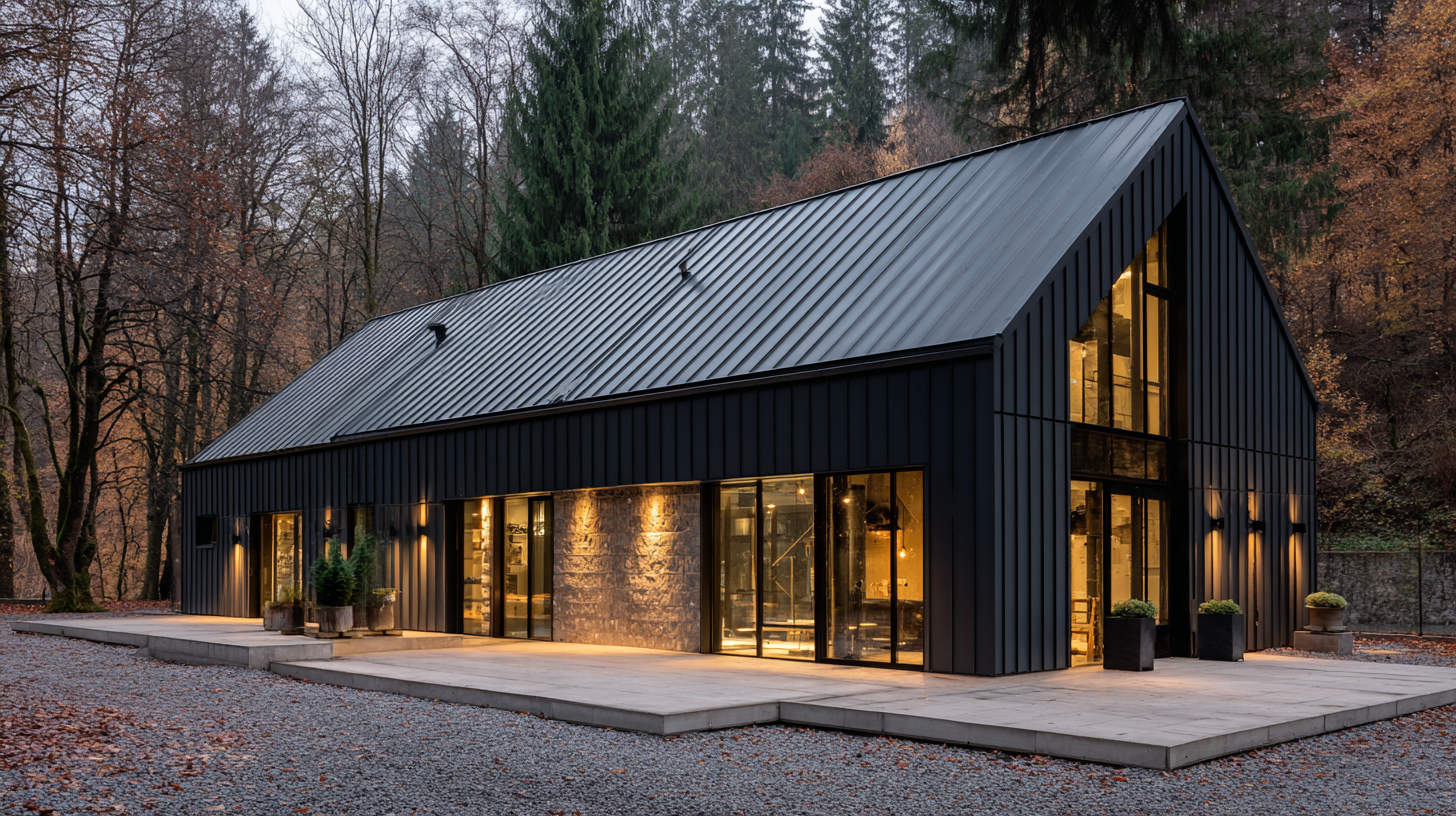
  2. Geometry: The Adamante model became the standard for “Mediterranean” style, while the modular Hyygge tile set the trend for flat, minimalist forms perfectly suited to modern high-tech and barnhouse architecture.

Market Position and Risks

Ruukki consciously ignores the “budget” segment. Their products are the choice of affluent private builders. The main risk for the company lies in the narrowing of solvent demand due to war. However, analysis shows that in the elite housing reconstruction segment, demand for Ruukki remains stable, as clients view the roof as a lifetime investment.

3.2. Blachy Pruszyński (Pruszyński Ukraine): Scale, Assortment, Engineering

If Ruukki is a roofing materials “boutique,” then Pruszyński is an industrial-scale “hypermarket.” The subsidiary of Polish giant Pruszyński Sp. z o.o. is the Ukrainian market leader in metal processing volumes and assortment breadth.

Production Capacity and Logistics

The company’s plant in Zghurivka and warehouses near Kyiv form a powerful logistics hub. Pruszyński’s strategic advantage lies in tight integration with the parent company in Poland.

  1. Supply chain resilience: After Black Sea ports were blocked in 2022, Pruszyński found themselves in a winning position, as their established rail and road routes from Europe (through Poland) operated seamlessly, unlike competitors dependent on maritime imports from Asia or Turkey.
  2. Raw material diversification: The company works with a wide pool of suppliers (ArcelorMittal, Voestalpine, Tata Steel, Myriad), allowing flexible price maneuvering. They offer clear gradation: from elite Purmat coatings (30-year warranty) to standard Polyester (10 years).

Assortment Strategy

Pruszyński dominates in both residential and commercial construction.

  1. Metal tiles: Models Kron, Shafir, Arad, Tur, and Ren cover all aesthetic demands—from classic to modern. The Arad model (modular) became the answer to market demand for concealed fastening, improving roof aesthetics.
  2. Commercial sector (BMZ): Pruszyński is the undisputed leader in producing structural profiles (load-bearing corrugated sheets T-135, T-160) for shopping centers and warehouses. This gives the company financial stability independent of private construction seasonality.

Standing Seam Roofing

In the seam segment, Pruszyński actively promotes RetroLine panels (click-system). Their approach’s distinguishing feature is the ability to apply micro-waves to the panel surface, eliminating the “waviness” effect (oil canning) that often occurs on flat metal sheets due to thermal expansion.

3.3. TPK (Trade and Industrial Company): Domestic Standard of Reliability

TPK company is a veteran of the Ukrainian market, founded in 1992. It stood at the origins of industry formation and maintained a reputation as a reliable partner for complex projects.

Focus on Quality and B2B Segment

TPK positions itself as an expert for professionals. The company fundamentally refuses to work with low-quality Chinese metal (with zinc content below 100 g/m²) under its main brand.

  1. Laboratory control: TPK is known for strict incoming raw material control. This is one of the few companies that publicly declares real metal thickness parameters, fighting against the widespread market practice of “negative tolerances” (selling 0.45 mm disguised as 0.5 mm).
  2. Project sales: TPK’s strength is working with architects and developers at the design stage. Their products are often included in estimates for large residential complexes and commercial facilities.

3.4. Inteco Construction: Engineering and Facade Solutions

Inteco represents an example of evolution from corrugated sheet manufacturer to engineering company. They view roofing as part of the building “envelope.”

Comprehensive Approach

Inteco’s main competitive advantage is the ability to supply comprehensive solutions for a building’s external contour: roofing, ventilated facades, gutter systems, and metal structures.

  1. Aesthetics and modernity: The company actively develops modular metal tile lines (Horizon, Verona) that imitate natural tiles but weigh 10 times less.
  2. Seam specialization: Inteco invested in modern lines for producing standing seam panels with various rib stiffener types, meeting the demands of the most discerning architects designing in minimalist style.

3.5. Stalmex: Regional Leader with National Ambitions

Based in Western Ukraine (Rivne), Stalmex demonstrates how a regional manufacturer can compete with giants through flexibility and understanding of local mentality.

Flexibility and Responsiveness

Ukraine’s western region is characterized by a high share of private construction and remittance investments in real estate. Stalmex perfectly adapted to this market.

  1. Multi-brand warehouse: Stalmex stocks both premium German steel (ThyssenKrupp) and quality Korean (Dongbu). This allows them to close deals “here and now,” offering clients choice for any budget.
  2. Logistics arm: Thanks to border proximity and compact geography of main sales, Stalmex ensures ultra-fast delivery, critical for roofing crews who don’t want downtime.

3.6. Arsenal-Center: Industrial Giant of Retail Trade

“Arsenal” Group is one of the most visible players thanks to aggressive marketing policy and a huge proprietary network of plants throughout Ukraine.

Business Model

“Arsenal’s” strategy is based on maximum coverage. They have production facilities in many regional centers, minimizing transportation costs.

  1. Accessibility: “Arsenal” often acts as the “first price” in the market among large manufacturers. They mass-produce classic profiles (Monterrey) and corrugated sheets.
  2. Raw material spectrum: The company actively works with Asian metal (China, India, Korea), allowing them to dominate economy and mid-range segments. At the same time, they have European metal lines for demanding clients.

4. Standing Seam Roofing Market Analysis: From Heritage to Trend

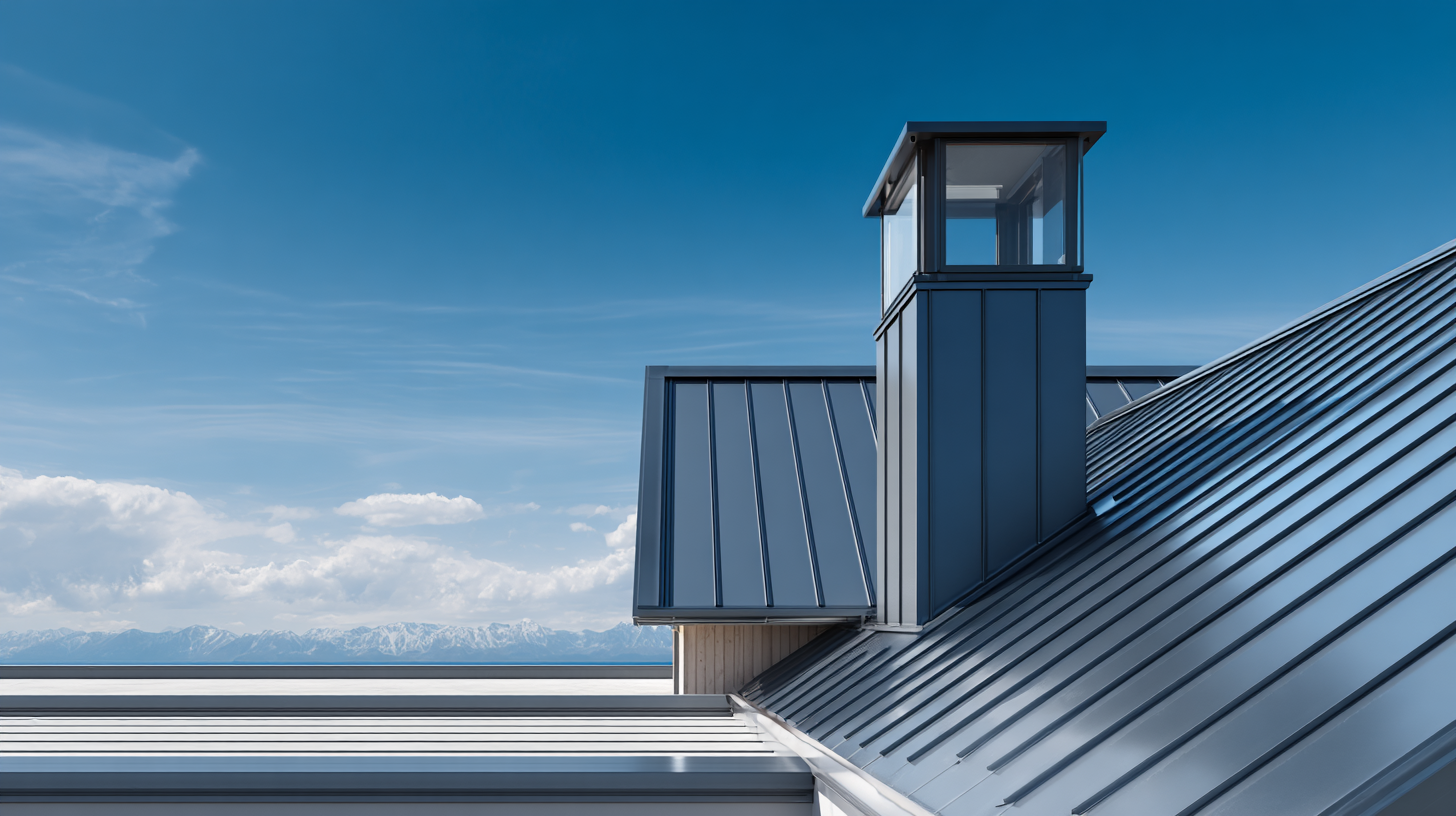
Standing seam roofing is experiencing a true renaissance in Ukraine. If previously it was a choice exclusively for restoring historic buildings or churches, today it’s a symbol of modern private architecture.

4.1. Technological Dichotomy

The seam market is divided into two unequal parts:

  1. Classic double standing seam: Requires high roofer qualification and special tools for closing seams. This is the choice for complex roofs with low pitch angle (from 3-5 degrees). The key role here is played by steel softness (grades DX52/DX53), supplied by companies like Ruukki and Metipol partners.
  2. Click-seam (Self-locking): Panels with factory locks that close with pressure. This technology democratized the market, allowing medium-qualified crews to install standing seam roofs.

4.2. Leaders in the Seam Segment

  1. Ruukki: Undisputed leader in the premium segment. Their steel has the lowest internal stress coefficient, ensuring perfect panel flatness.
  2. ThermaSteel: A dynamically developing Poltava company. They integrate standing seam roofing production with LSTC (light steel thin-walled structures) production, offering turnkey frame houses.
  3. Mayster-Metal: A specialized player focusing exclusively on standing seam roofing and accessories, often acting as a subcontractor for complex architectural forms.
ZOV Marketing A luxury showroom displaying various types of m 76c81713 f7ed 4f77 bd4c 8125e57d1cf5 3

5. Local Painting Role: The Metipol Factor

Special attention deserves Metipol company. This is not a roofing manufacturer but a plant for applying polymer coatings to galvanized steel.

  1. Strategic significance: Before Metipol appeared, Ukrainian profilers were forced to import pre-painted steel. Metipol enabled importing “raw” galvanized steel (which is cheaper and more accessible) and painting it domestically.
  2. Market impact: This gave impetus to mid-size manufacturers’ development, who can now order small batches of exclusive color metal without waiting months for overseas delivery. This significantly increased Ukrainian market flexibility.

6. Comparative Analysis of Technical Capabilities

For clarity, let’s compare key parameters of leading companies in a table.

Table: Competency Matrix of Leading Roofing Manufacturers

Company Main Focus Raw Material Sources (Origin) Warranty (max.) Seam Technologies Features
Ruukki Ukraine Premium Residential In-house plants (Finland) 50 years Classic (Click), Double Seam Vertical integration, unique Pural coatings
Pruszyński Volume Leader (All segments) ArcelorMittal, Voestalpine, Tata 30 years RetroLine, Standing Seam Widest assortment, engineering support
TPK B2B / Quality Standard ArcelorMittal, SeAH, U.S. Steel 20-30 years Classic Seam No “economy” compromises, project sales
Inteco Facade & Roof Integration U.S. Steel, Dongbu, ArcelorMittal 20 years Click-Faltz Comprehensive facade solutions, modular products
Stalmex Regional Speed & Value ThyssenKrupp, Marcegaglia, Asian 25 years Click-System Warehouse flexibility, Western Ukraine focus
Bulat Budget / Mid-range ArcelorMittal, China, India 10-20 years Retro-Click Order execution speed, accessibility
Arsenal-Center Retail Mass Market China, India, Korea, Europe 10-20 years Seam & Corrugated Huge proprietary network, all-region coverage

7. Logistics and Geopolitics: New Reality

The 2022 invasion fundamentally changed the industry’s logistics map.

  1. End of the Odesa era: Previously, cheap Asian metal massively entered through Greater Odesa ports. The blockade forced reorientation of flows to Romanian (Constanța) and Polish (Gdańsk) ports, increasing logistics costs by 15-20%.
  2. Market Europeanization: Complicated logistics from Asia made European metal (entering by rail/road transport) more competitive. This strengthened positions of players like Pruszyński and Ruukki, whose supply chains were least vulnerable.
  3. Labor shortage: Mobilization of qualified personnel hit both production facilities (line operators) and especially installation crews. This creates a paradoxical situation: a client can buy material but wait 2-3 months for installation. This stimulates demand for modular tiles and click-seam, which install faster and easier.

8. Consumer Insights and Trends

Demand analysis allows identifying several key development vectors for coming years.

8.1. Aesthetic Revolution: “Graphite” vs. “Chocolate”

Five years ago, 80% of Ukrainian roofs were “Rotten cherry” (RAL 3005) or “Chocolate” (RAL 8017) color. Today there’s total dominance of gray shades: Graphite (RAL 7024), Anthracite (RAL 7016), and Black (RAL 9005).

  1. Consequences for manufacturers: Companies are forced to revise warehouse stocks. Those who didn’t timely ensure sufficient volumes of graphite metal in matte finish lose clients. Ruukki and Pruszyński were first to respond to this trend, offering a wide range of gray shades in premium coatings.

8.2. “Modules” Segment Growth

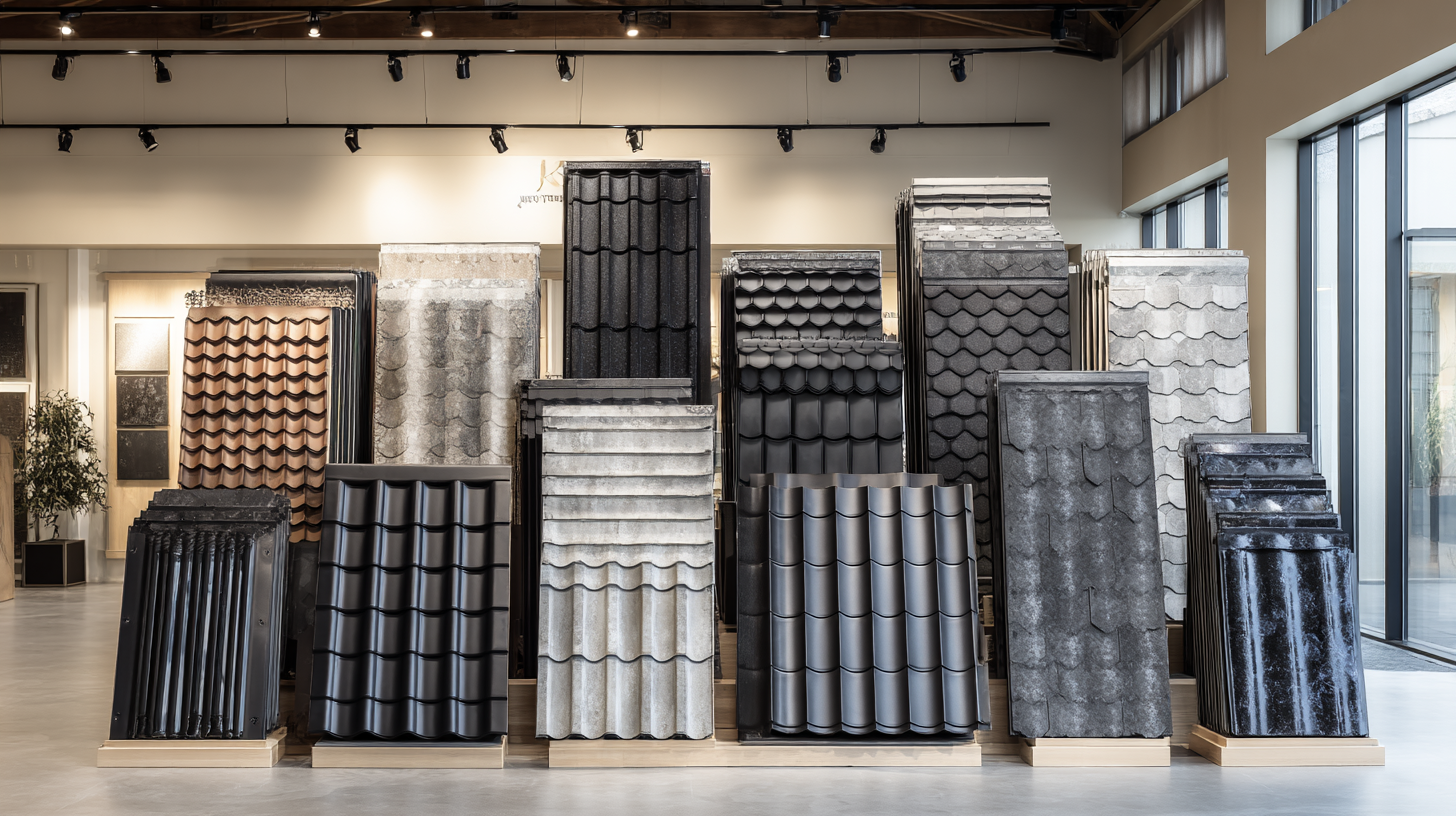
Modular metal tiles (small sheets for 1-2 steps) are displacing classic “long-length.”

  • Reasons:
    1. Logistics: Modules can be picked up in a station wagon trunk or on one pallet, cheapening delivery.
    2. Waste: On complex roofs, modular tile waste is 3-5%, while sheet tile reaches 20-25%.
    3. Warehouse program: Dealers can stock modules, selling them instantly without waiting for custom production.
ZOV Marketing A high end modern barnhouse with a sleek anthra 2e745179 93e4 41a7 96de 1ffff84f96a9 0

9. Conclusions and Recommendations

Ukraine’s metal roofing market is mature, highly competitive, and technologically developed. Dominant positions are occupied by companies that managed to build sustainable supply chains for quality European raw materials.

  1. For premium segment: The undisputed leader remains Ruukki Ukraine. Their vertical integration and unique products (GreenCoat, Classic Silence) make them the only choice for those seeking maximum quality and warranty.
  2. For optimal price/quality/assortment ratio: Blachy Pruszyński is the best choice. A huge selection of profiles and coatings allows selecting a solution for any budget without risk of receiving substandard product.
  3. For patriotic and pragmatic choice: Companies TPK, Inteco, and Stalmex offer worthy alternatives to international giants, often winning through better customer service, flexibility, and speed of response to requests.
  4. Prospects: The market will move toward installation simplification (click-systems, modules) and increased aesthetic requirements (matte seam, concealed fastening). Ukraine’s reconstruction will create enormous demand for budget and mid-range material segments, where local manufacturers with established raw material logistics will play a key role.

Under conditions of uncertainty, the most reliable strategy for consumers is choosing a manufacturer that laser-marks or prints on the reverse side, indicating steel producer, thickness, and zinc content. Transparency becomes the main currency in Ukraine’s metal roofing market.

author
Alexander Guk
About the author:

Our expert in fencing structures has over 5 years of experience working at the Mehbud factory. Helps you choose the optimal design and model of fencing according to your needs. Professionally deve...

More
0 0 votes
Article Rating
Subscribe
Notify of
guest
0 Comments
Oldest
Newest Most Voted
Inline Feedbacks
View all comments