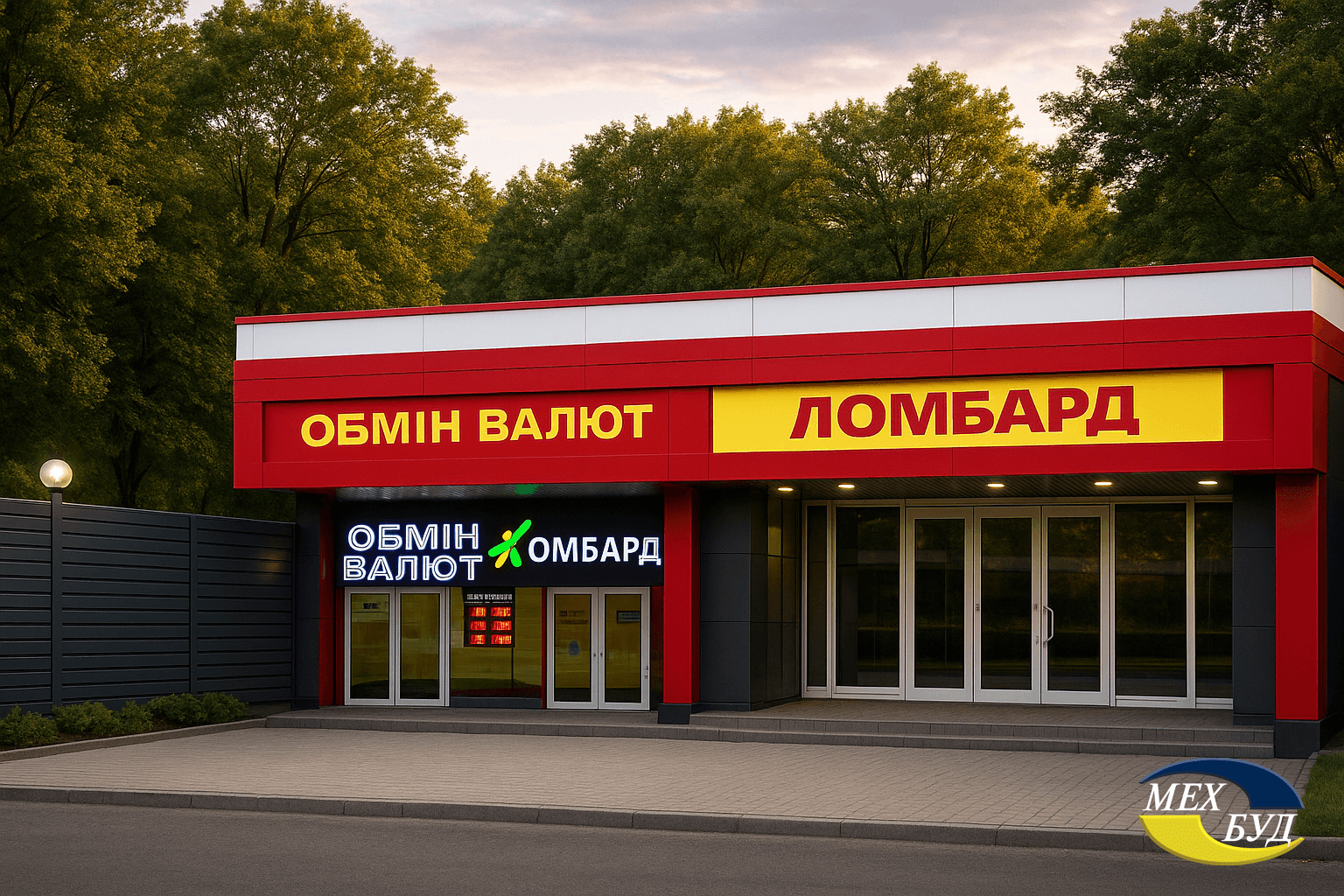
1. Introduction: Architectural Landscape of Financial Retail in Ukraine During Transformation Era
Modern Ukraine is experiencing an unprecedented period of reimagining its urban space. This concerns not only residential housing stock or infrastructure giants, but also the fabric of everyday city life – street retail facilities and neighborhood financial institutions. The non-banking financial services sector, particularly pawnshop networks, has long existed within a paradigm of temporariness and visual aggression. The “quick money architecture” of the 90s and 2000s was characterized by chaotic accumulation of small architectural forms (MAF), use of cheap plastic materials and garish color schemes designed to attract attention at any cost, often ignoring the aesthetics of the urban environment.
However, market analysis for 2024-2025 reveals tectonic shifts in approaches to design, construction and design of these establishments. Leading market players have realized that in conditions of growing competition and increasing demands from Ukrainian consumers, architecture becomes a strategic asset. A pawnshop branch can no longer be just a “window in the wall”; it is transforming into a full-fledged financial hub that conveys brand values through its form, materials and ergonomics: reliability, transparency, security and technological sophistication.
1.1. Typology Evolution: From “MAF” to Inclusive Office
A key trend in recent years has been the shift from non-capital structures towards integration into ground floors of capital buildings or construction of proprietary modular pavilions of high architectural class. This transition is driven not only by aesthetic considerations, but also by the stringency of state construction standards (DBN). Modern inclusivity requirements (DBN V.2.2-40:2018) oblige owners to ensure barrier-free access, requiring capital reconstruction of entrance groups: installation of standard-grade ramps, widening of doorways, use of tactile paving.
1.2. Materiality of Trust: Construction Innovations
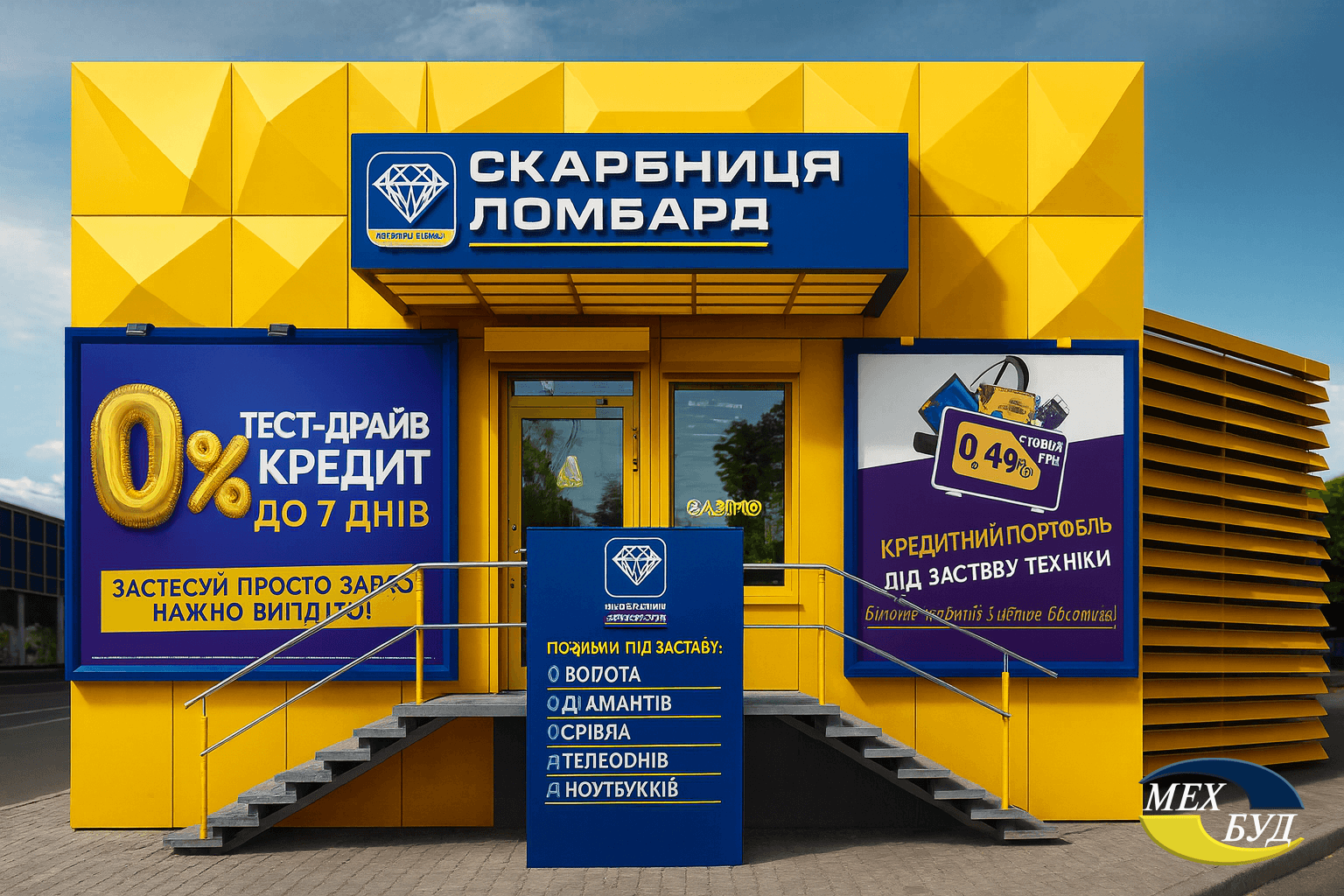
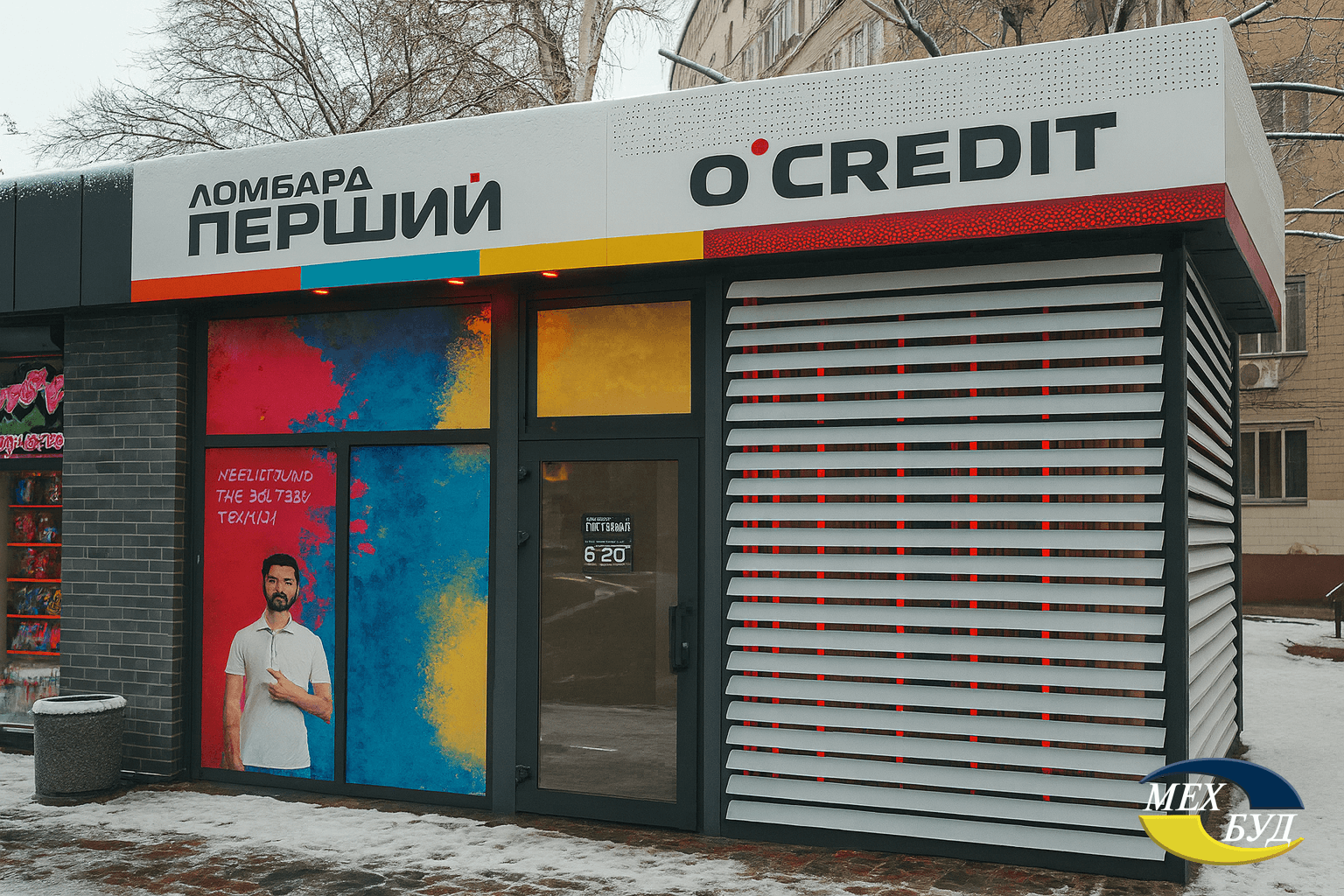
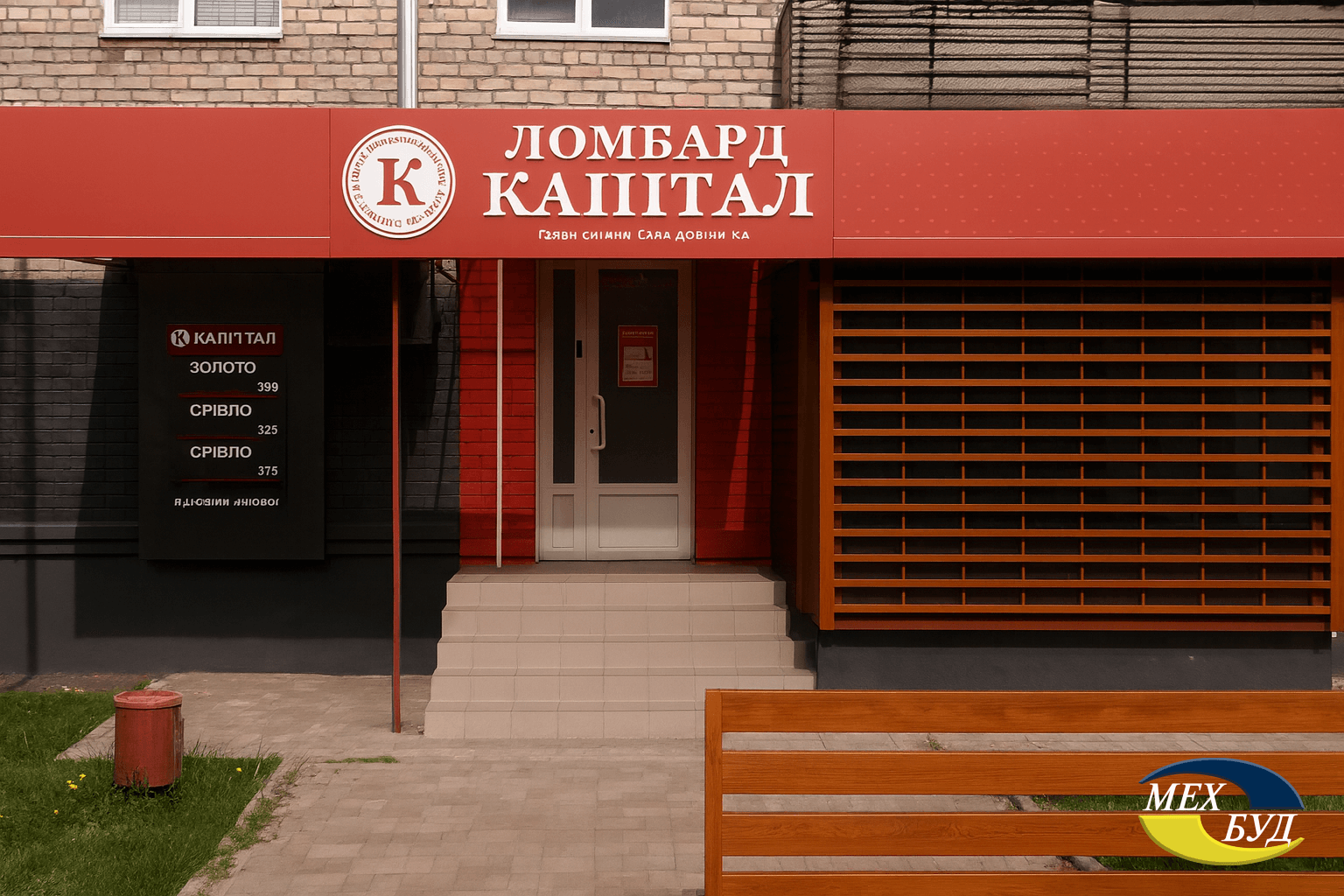
The change in functional purpose brings with it a change in material base. While vinyl siding and banner fabric previously dominated, today network architects are turning to ventilated facade systems, composite panels, tempered glass and architectural metal. This shift has deep psychological underpinnings: a financial institution must look “substantial” and “eternal.” Stone, metal and glass become the language through which the brand communicates with the city.
Energy efficiency takes on special significance. Given the energy challenges facing Ukraine, construction solutions must ensure maximum autonomy and heat preservation. This stimulates the use of multifunctional glass units, efficient insulation in curtain facade systems and implementation of air recovery systems.
1.3. Partner’s Role: Mehbud Factory in Renovation Context
This report pays special attention to the potential of using products from the Ukrainian “Mehbud” factory. As a leading manufacturer of metal fences, facades and ceilings, “Mehbud” offers solutions that perfectly match current demands: they are durable (thanks to quality galvanizing and polymer coating), non-combustible (NG group), anti-vandal and aesthetically flexible. Integration of such solutions into financial networks’ design codes allows achieving balance between security and visual appeal.