Analytical Report: The Market for Passive Protection Systems, Modular Shelters, and Safe Rooms in Ukraine (2024–2026)
Generic selectors
Exact matches only
Search in title
Search in content
Post Type Selectors

Analytical Report: The Market for Passive Protection Systems, Modular Shelters, and Safe Rooms in Ukraine (2024–2026)

January 30, 2026
7  

1. Introduction: Architecture of Resilience in Conditions of Permanent Threat

The full-scale military aggression that began in 2022 became a catalyst for fundamental changes in Ukraine’s construction industry and, in particular, in the civil protection sector. If before 2022 the market for protective structures was a niche market oriented mainly towards government contracts within the civil defense system or a narrow segment of elite private construction, today it has transformed into a critically important sector of the national economy. Demand for safety ceased to be situational and acquired the characteristics of a systemic need, which is forming a new architectural landscape for the country.

This report offers a deep analysis of the current state of the market for manufacturers of modular shelters and safe rooms in Ukraine. The document is based on a detailed study of leading market players, analysis of technical regulations, the evolution of state standards, and an assessment of innovative solutions implemented by domestic engineers.

1.1. Transformation of the Security Paradigm

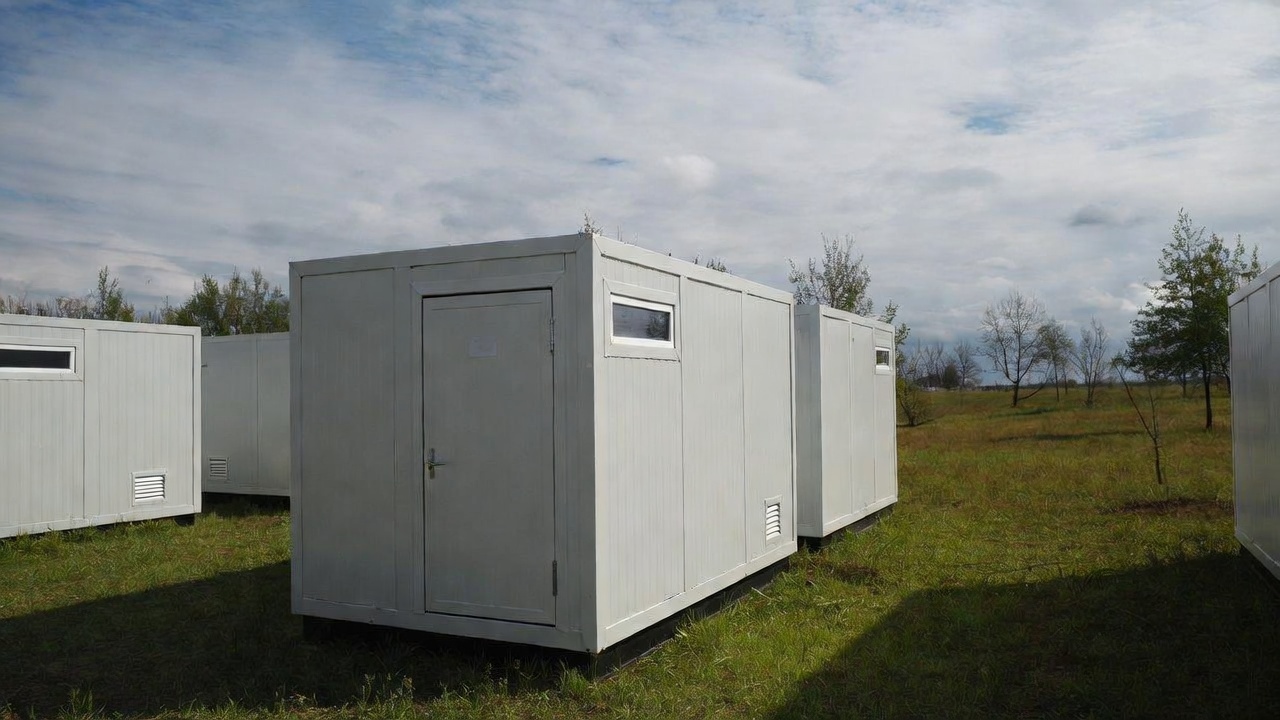
Combat experience demonstrated the ineffectiveness of outdated approaches to civil protection, which were based on the use of dual-purpose basement premises, often not meeting safety standards. There was an acute need for solutions that could be deployed quickly (within days or weeks), which are mobile (ability to relocate along with infrastructure or business relocation), and which provide guaranteed protection from fragments, shock waves, and small arms fire.

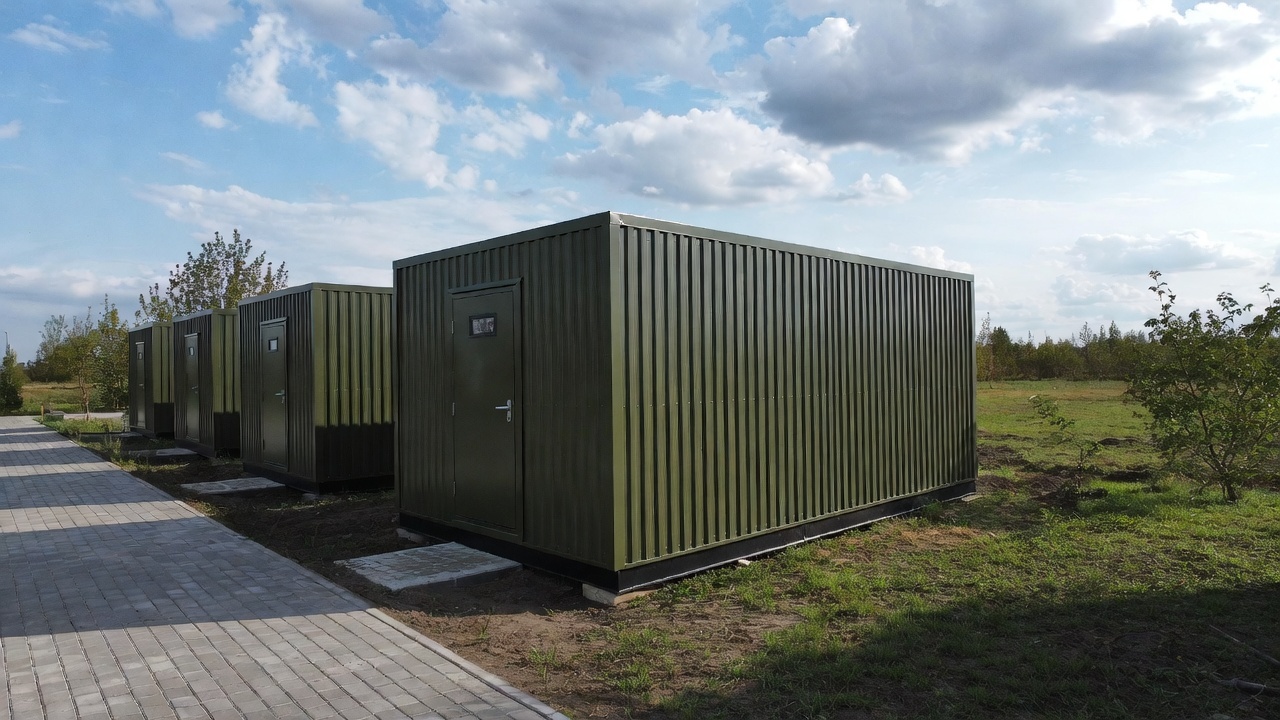
This niche was filled by manufacturers of modular reinforced concrete and metal shelters. Market analysis indicates a transition from artisanal production to series production of certified products that meet strict DSTU standards. This became possible through the adaptation of reinforced concrete product (RCP) factories and metal structure facilities to meet defense needs.

1.2. Report Structure and Research Objects

This study examines key market segments:

  1. Industrial giants: Manufacturers using the capacity of large RCP factories for mass production of unified modules (e.g., BetonEnergo, RGM group).
  2. Design innovators: Companies that integrate psychological aspects into engineering solutions, creating a comfortable environment for prolonged stay (Hobbit House).
  3. Technology leaders: Developers of high-tech autonomous bunkers with closed-cycle life support systems (Smart Bunkers UA, Bunker-OK).
  4. Rapid response: Manufacturers of quick-assembly fortification structures (Fortecya Zone).

Particular attention is paid to analyzing the regulatory framework, including the implementation of the DSTU 9195:2022 standard and the expected DSTU 9329:2025, which define the rules of the game in the market and establish entry barriers for unscrupulous manufacturers.
ukrittya

2. Evolution of the Regulatory Framework: From Chaos to Standardization

The development of the market for protective structures in Ukraine clearly correlates with the evolution of the regulatory framework. In the first months of the invasion, the market was filled with chaotic offers that often did not guarantee real safety. However, government policy quickly adapted, creating strict certification requirements.

2.1. DSTU 9195:2022 as the Foundation of the Industry

A key turning point was the adoption of DSTU 9195:2022 “Quick-Assembly Protective Structures of Civil Protection, Modular Type.” This standard became a response to the need for unification of requirements for modular shelters. It regulates:

  1. Concrete class and reinforcement: Requirements for the use of high-strength heavy concretes (class not less than C30/35) and specific reinforcement capable of withstanding dynamic loads from explosive waves.
  2. Wall thickness: Minimum parameters to ensure protection from kinetic energy of fragments and bullets.
  3. Installation requirements: Regulation of module connections to ensure hermeticity and structural integrity of the structure under external impact.

Manufacturers such as “Fortecya Zone” actively use compliance with this standard as a key competitive advantage, citing certification by the State Scientific Research Institute of the Ministry of Defense of Ukraine. This underscores that certificate possession became a mandatory requirement for participation in government tenders and procurement for critical infrastructure.

2.2. New Horizons: DSTU 9329:2025

Analysis of BUNKER-OK’s activities indicates further development of the regulatory framework. Mention of the new standard DSTU 9329:2025, dated November 2025, indicates that the industry is moving forward. This document likely introduces even stricter safety requirements for mobile shelters, based on empirical data obtained from three years of operation of similar structures under real war conditions.

The new standard is expected to focus on:

  1. Life support systems: More detailed requirements for ventilation and air filtration.
  2. Durability: Requirements for waterproofing and material resistance to corrosion in conditions of buried installation.
  3. Energy efficiency and autonomy: Integration of backup power requirements as an integral part of modular shelters.

The implementation of new standards stimulates manufacturers to undergo technological modernization. Companies that cannot adapt their production lines to new requirements (e.g., artisanal concrete ring manufacturers) will be pushed out of the market, giving way to technology giants and specialized engineering bureaus.

3. Top Manufacturers: Analysis of Market Leaders

Based on available data, we can identify a group of companies that shape the face of the modern protective structures industry in Ukraine. Each has chosen a unique development strategy, targeting different consumer segments.

3.1. BetonEnergo: Industrial Strength and Scalability

BetonEnergo is a classic example of successful adaptation of a major industrial player to wartime conditions. Positioning itself as a leader in reinforced concrete construction with factories in Kyiv and Dnipro, the company used its scale to saturate the market with mass-produced products.

Product strategy: BetonEnergo has bet on diversification. Their product line covers almost all possible needs:

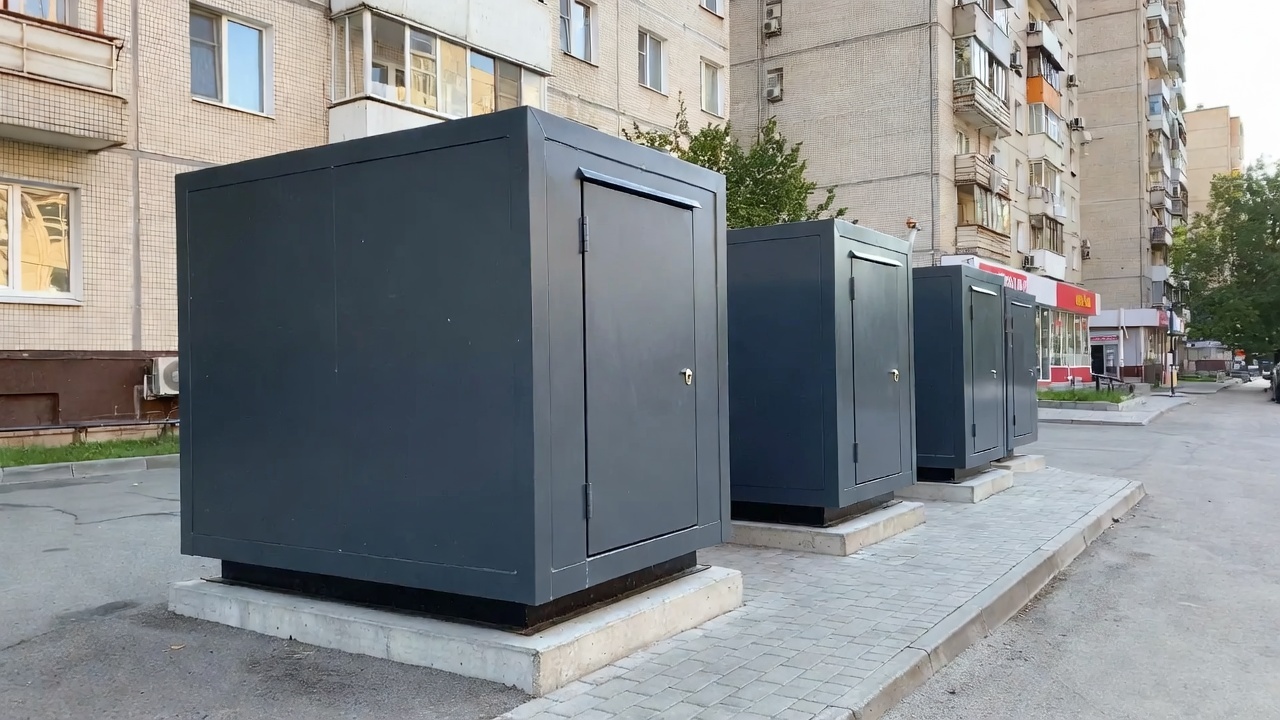
  1. Mobile shelters (PMU): Solutions for public transport stops and places of people gathering. These are simple but reliable concrete boxes that protect from fragments.
  2. Personnel shelters: Modular structures for factories, logistics centers, and offices.
  3. Radiation protection shelters (PRU): Complex engineering structures for critical infrastructure, providing protection not only from kinetic effects but also from radiation contamination.
  4. Fortification blocks: Elements for creating defensive lines and checkpoints.
  5. Market indicators and trust: The stated figure of over 200 manufactured and installed shelters and protection of over 5,000 people indicates high production capacity. The company actively uses media resources (stories on 1+1 channel, YouTube channel) to demonstrate manufacturing and testing processes, which is critically important for building trust when concrete quality cannot be verified visually.

Technological advantage:

The use of factory conditions allows BetonEnergo to control the concrete curing process (steam curing, moisture control), which is impossible when pouring monolithic structures on a construction site. This guarantees the design strength of each module.

3.2. Hobbit House: Psychology of Safety and Social Responsibility

Hobbit House chose a unique niche, focusing on the education sector and the emotional aspect of safety. Their approach is revolutionary: a shelter should not traumatize a child’s psyche with its appearance.

  1. Conceptual features: Styling as a “hobbit house” (from J.R.R. Tolkien’s works) is not just marketing but an element of therapeutic design. The completed project in Hostomel for an elementary school brightly demonstrates this approach: the interior is decorated with fairy-tale murals, creating an atmosphere of play rather than threat. This helps minimize stress in children during air alarms.
  2. Modularity and partnership: The “Fortress” line (from 2.25 XL to 3.5 5XL) is based on a modular system that allows assembling shelters of various capacities like a constructor set. Such flexibility is important for schools with different numbers of students. Cooperation with powerful partners such as USAID, GURTUM Charitable Foundation, Epicenter and Superhumans, indicates that Hobbit House is a major operator in the segment of donor and charitable projects for educational infrastructure restoration.
  3. Technical characteristics: Despite external “fairy-tale” appearance, these are full-fledged buried reinforced concrete structures with high protection class. They are equipped with two exits, sanitary facilities, and learning areas, which meet State Emergency Service requirements for educational institutions.

3.3. BUNKER-OK: Innovation and Strategic Vision

BUNKER-OK positions itself as a comprehensive security integrator working at the intersection of private and corporate sectors.

Innovative activities: The company doesn’t just manufacture concrete boxes but invests in R&D (research and development). Mention of the “Ark-Nova” module that underwent “combat testing” indicates the presence of a testing facility, which is the highest level of quality verification. Participation in “SECURITY 2.0” and “EuroBuildExpo-2025” exhibitions demonstrates the company’s ambitions to be an industry trendsetter.

Product assortment matrix:

BUNKER-OK covers all segments:

  1. Above-ground and underground shelters.
  2. Commercial and private solutions.
  3. Specialized solutions for children’s playgrounds (which is rare in the market).

Strategy “After Victory”: Interesting is their narrative that “shelters will be needed after victory too.” This points to a strategy of transforming shelters into dual-use facilities (warehouses, wine cellars, game rooms), making bunker investment more attractive to private clients.

3.4. Smart Bunkers UA: Technologies of Comfort and Autonomy

Smart Bunkers UA represents the segment of premium solutions where safety is combined with five-star hotel level comfort.

  1. Technological excellence: Their “smart bunkers” are complex engineering systems. Emphasis is placed on complete autonomy: own electricity generation, water supplies, air regeneration and purification systems, heating, and internet connectivity. This allows a family of 4-12 to stay in a shelter for a month or more with no contact with the outside world.
  2. Client-oriented approach: The use of advanced visualization tools (animation, installation video presentations) on the website indicates orientation towards demanding clients who need to understand every aspect of the product before purchase. They offer size and burial depth customization, essentially building underground houses.

3.5. Fortecya Zone: Operational Speed and Mobility

Fortecya Zone occupied the niche of “rapid safety.” Starting operations in April 2022, they focused on manufacturing and installation speed.

  1. Constructor for adults: Their concept is based on multi-ton blocks/elements that can be assembled into any configuration. This allows protection not only of people but also valuable equipment, machinery, or property. Certification according to DSTU 9195:2022 is their “quality mark.”

3.6. RGM group: Infrastructure Approach

RGM group approaches the shelter question from a large-scale construction perspective.

  1. Speed and scalability: Key advantage is the ability to install within several hours. For municipalities or industrial facilities where downtime is critical, this is a decisive factor. The ability to “grow” modules allows expanding shelters as the enterprise workforce or neighborhood population grows. Design according to Ministry of Defense standards adds weight to their solutions in the government sector.

4. Safe Rooms: Architecture of Personal Safety Within Buildings

A separate, rapidly growing market segment is Safe Rooms (security rooms) or panic rooms. Unlike external modular shelters, these solutions are integrated directly into residential or office space.

4.1. Concept and Purpose

A Safe Room in Ukrainian realities is a modernized version of the “two walls” rule. This is a room (often a closet, bathroom, or bedroom) that is additionally reinforced to protect from:

  1. Glass and facade fragments.
  2. Small arms fire.
  3. Secondary damaging factors of explosions.
  4. Breaching and penetration by sabotage groups or looters.

4.2. Manufacturers and Solutions

Companies present on the market, such as European Shelters (operating in Ukraine and Poland), offer Safe Room manufacturing. Key technological solutions include:

  1. Armored doors: High class of protection against burglary and explosion.
  2. Wall reinforcement: Use of Kevlar panels or steel sheets to strengthen existing partitions without significant increase in floor load.
  3. Autonomous ventilation: Compact filter-ventilation units (FVU).

This segment is particularly popular in major cities (Kyiv, Kharkiv, Odesa), where apartment building residents don’t have time or ability to descend to external shelters during ballistic threats.

5. Technological Analysis: Materials and Engineering

Choice of shelter material determines its cost, protective properties, and installation speed.

5.1. Comparative Technology Table

Material Advantages Disadvantages Installation Speed
Reinforced Concrete (RCP) High strength, durability, scalable production Heavy weight, requires special transport and cranes Average (3-7 days)
Metal (steel) Lighter than RCP, flexible design, faster assembly Corrosion, less protection from explosions, requires welding High (1-3 days)
Polymers/composites Light, rust-resistant, simple assembly More expensive, less testing, low real-world verification Very high (several hours)
Combined (RCP + metal) Optimal balance of strength and mobility More complex design, requires specialists Above average (2-5 days)

5.2. Engineering Systems: The Lungs of the Shelter

Modern shelters cannot exist without life support systems. Manufacturers such as Pulsar Construction and Smart Bunkers UA emphasize this.

  1. Ventilation: Use of overpressure valves (explosion-proof valves) that automatically close upon shock wave, protecting people inside from barotrauma.
  2. Filtration: Installation of FVU (filter-ventilation units) with carbon filters and absorbers capable of cleaning air from combat chemical agents and radioactive dust.
  3. Hermetic doors: Key element. Marine or special bunker doors with bolt locking systems and rubber seals are used.
ukrittya6

6. Economic and Logistical Analysis

6.1. Pricing

Analysis of offers shows that the starting price for the simplest modular ground shelter (20 m³) begins at 86,000 UAH. However, this is a “bare” structure. Full shelter cost consists of:

  1. Materials: Concrete, rebar (metal prices fluctuate significantly), special doors.
  2. Engineering: FVU, generators, electrical work can comprise up to 50% of project cost.
  3. Logistics: Delivery of a 20-ton module requires special transport and powerful cranes, which significantly increases project cost under war conditions and fuel shortage.
  4. Earthwork: For underground shelters, pit and waterproofing costs are substantial.

Companies Viton and Kievgradservice offer a “general contractor” approach where price is individual and includes the complete cycle: from site geology to operational launch.

6.2. Financing and Procurement

Main customers are:

  1. Government and municipalities: Through Prozorro system for schools, kindergartens, hospitals. Certified manufacturers with the lowest price win (BetonEnergo, RGM).
  2. International donors (USAID, UNICEF): Finance education projects (Hobbit House), requiring not only safety but also inclusivity and comfort.
  3. Private business: Purchases shelters to protect personnel and maintain business continuity.
  4. Private individuals: Segment of Smart Bunkers UA and Bunker-OK.

7. Trends and Forecasts: Where is the Market Heading?

Based on analysis of key players’ activities, we can identify trends for 2025–2026.

7.1. Dual Purpose and Aesthetics

The era of “gray boxes” is ending. As demonstrated by the experience of Bunker-OK (“architecture of the future”) and Hobbit House, shelters are integrating into urban space. In peacetime, these can be cafes, sports halls, coworking spaces, or underground parking. Aesthetics becomes as important as wall thickness.

7.2. Smart Technologies (IoT)

Integration of shelters into “Smart Home” and “Smart City” systems. Automatic door opening on alarm signal, air quality and oxygen level monitoring via smartphone, remote control of life support systems—this is what technology leaders (Smart Bunkers UA) are working on.

7.3. Export Potential

Ukrainian manufacturers have accumulated unique, unfortunately, experience. No other European country has such statistics of real-world “testing” of protective structures with modern weapons. This opens enormous export potential. Ukrainian modular shelters can become in demand in Baltic, Polish, and Scandinavian markets, which are now actively reviewing their civil protection doctrines.

7.4. Growing Demands for Energy Independence

In conditions of attacks on energy infrastructure, shelters become “points of unbreakability.” The trend is equipping modules not only with diesel generators but also with energy storage systems (batteries) and integration with solar panels.

ukrittya5

8. Conclusions

The market for modular shelters and Safe Rooms in Ukraine has traveled from reactive, chaotic response to threat to the formation of a mature, high-tech industry.

  1. Market maturity: The presence of clear standards (DSTU) and an established pool of leaders (BetonEnergo, RGM, Hobbit House, Bunker-OK, Smart Bunkers UA) indicates market stabilization.
  2. Segmentation: Clear division occurred between mass/infrastructure segment (concrete modules) and premium/private segment (metal smart-bunkers).
  3. Technological leap: Ukrainian shelters have evolved from concrete rings to complex engineering structures with autonomous life support systems.
  4. Social function: Manufacturers like Hobbit House demonstrate that a shelter can be a humane space that reduces the traumatic experience of war, especially for children.

Ukraine not only provides its own protection but is becoming a global hub of expertise in civil defense and protective structure construction. The experience gained by Ukrainian engineers and manufacturers will shape global safety standards for decades to come.

Sources of information: Data used in this report are based on analysis of open sources and materials provided for research.

author
Alexander Guk
About the author:

Our expert in fencing structures has over 5 years of experience working at the Mehbud factory. Helps you choose the optimal design and model of fencing according to your needs. Professionally deve...

More
0 0 votes
Article Rating
Subscribe
Notify of
guest
0 Comments
Oldest
Newest Most Voted
Inline Feedbacks
View all comments