Thermal Expansion in Metal Roofing and Facades: Calculating Expansion Gaps for the Ukrainian Climate
Generic selectors
Exact matches only
Search in title
Search in content
Post Type Selectors

Thermal Expansion in Metal Roofing and Facades: Calculating Expansion Gaps for the Ukrainian Climate

January 19, 2026
8  

The design of metallic building envelopes—standing seam roofing, ventilated facades, and structural cladding—sits at the intersection of material science and climatology. In Ukraine, where the climate shifts from Arctic-like winters to subtropical summer heat, managing thermal expansion is not just a detail; it is a fundamental requirement for structural integrity.

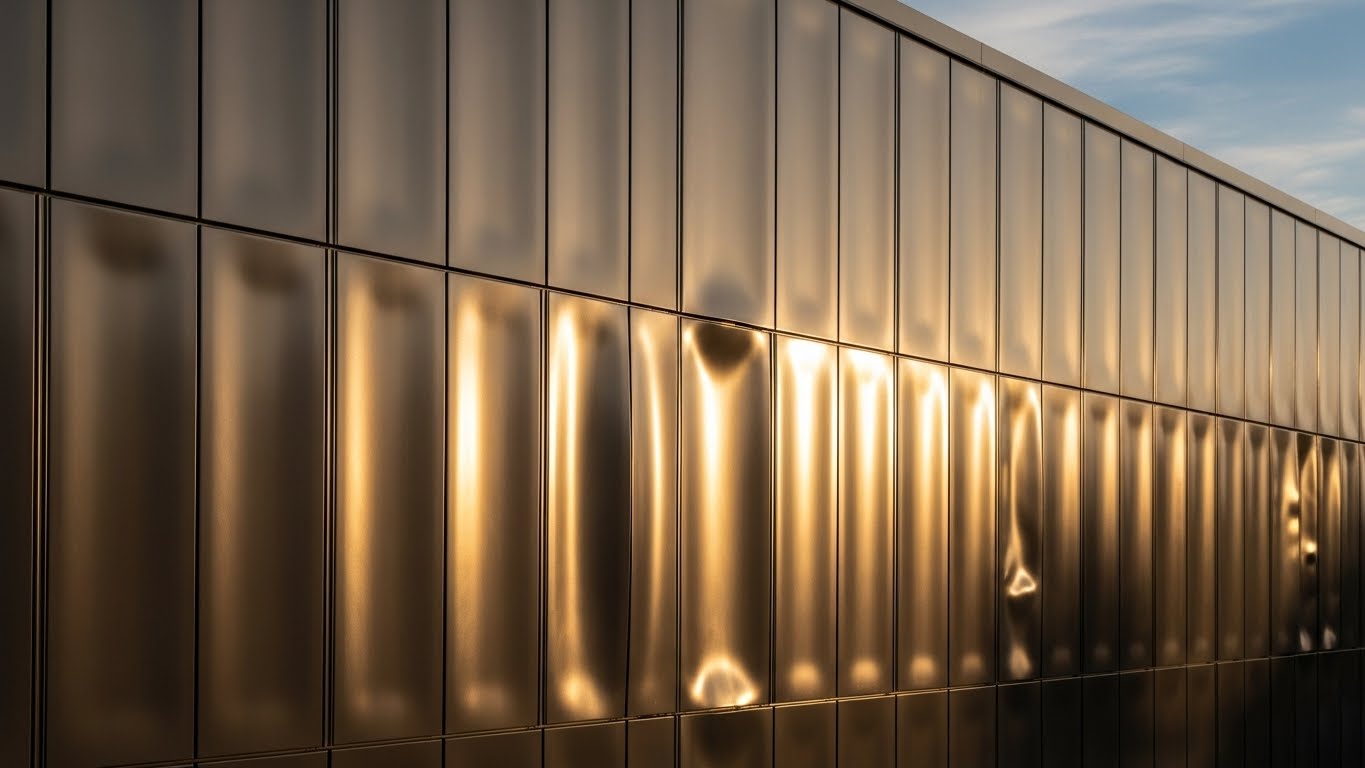
Failure to account for the “breathing” of metal leads to catastrophic results: buckled panels (oil canning), sheared fasteners, elongated holes, and compromised waterproofing. This guide provides architects, developers, and engineers with a practical methodology for calculating expansion gaps and specifying the right fixation systems for the Ukrainian environment.
teplovoe rasshirenie metallicheskoy krovli fasadov ukraina 3

1. The Physics of Movement: Why Metals Warp

Thermal expansion is the tendency of matter to change in volume in response to a change in temperature. For linear building elements like roof panels or facade profiles, we focus on Linear Thermal Expansion.

When a metal panel heats up, its atoms vibrate more vigorously, pushing each other apart. If the panel is free to move, it simply gets longer. If it is restricted—pinned at both ends—it converts that expansion potential into mechanical stress.

  1. Steel is rigid. If restricted, it generates massive force that can shear screws or crack concrete.
  2. Aluminum and Zinc are softer but expand twice as much as steel. If restricted, they tend to buckle, warp, or tear at the fastening points.

The Material Hierarchy (Coefficient of Expansion)

To calculate movement, you need the Coefficient of Linear Thermal Expansion (alpha) for your specific material. This number represents how much a material expands per meter of length, for every 1 degree Celsius rise in temperature.

  1. Steel (Galvanized/PVDF):012 mm/m/°C
  2. Stainless Steel (304/316):017 mm/m/°C
  3. Copper:017 mm/m/°C
  4. Titanium Zinc:022 mm/m/°C
  5. Aluminum:024 mm/m/°C

Key Insight: Aluminum and Zinc expand roughly twice as much as Steel. A mounting system designed for steel cassettes will fail if used for aluminum without modification.

teplovoe rasshirenie metallicheskoy krovli fasadov ukraina 1

2. Defining the Thermal Load: The Ukrainian Context

Calculating the expansion requires knowing the temperature difference (Delta T). In construction, this is not the air temperature; it is the surface temperature of the metal.

The “Black Roof” Effect

Ukraine’s DBN V.1.2-2:2006 (Loads and Impacts) standards dictate design temperatures, but real-world surface temperatures are driven by color (albedo).

  1. Winter Extreme: In regions like Kharkiv or the Carpathians, air temperature can drop to -25°C. Due to night-sky radiation, metal surfaces can super-cool to -30°C.
  2. Summer Extreme: In Kyiv or Odesa, air temperature hits +35°C. However, a dark anthracite (RAL 7016) or black roof absorbs solar radiation, reaching surface temperatures of +80°C.

The Design Delta (Delta T)

For a safe calculation in Ukraine, we assume the worst-case scenario (Dark Surface):

  1. Minimum Temp: -30°C
  2. Maximum Temp: +80°C
  3. Total Design Range (Delta T): 110°C

3. The Calculation Formula (Plain Text)

To determine how much a specific panel will expand, use this formula:

Expansion (mm) = Length (m) x Coefficient (alpha) x Temperature Change (Delta T)

Example 1: Aluminum Facade Profile (6 meters)

You are installing a 6-meter vertical aluminum profile for a ventilated facade in Dnipro.

  1. Length: 6 meters
  2. Material: Aluminum (Coefficient = 0.024)
  3. Temp Range: 100°C (Safety margin)

Calculation:

Expansion = 6 x 0.024 x 100

Expansion = 14.4 mm

Result: The profile will change length by nearly 1.5 cm between mid-winter and mid-summer. You must leave a gap of at least 15mm between profile sections to prevent buckling.

Example 2: Steel Standing Seam Roof (12 meters)

You are installing a continuous galvanized steel roof sheet in Kyiv.

  1. Length: 12 meters
  2. Material: Steel (Coefficient = 0.012)
  3. Temp Range: 100°C

Calculation:

Expansion = 12 x 0.012 x 100

Expansion = 14.4 mm

Result: Despite steel’s lower expansion rate, the long length results in significant movement. If this panel is pinned at both the ridge and the eave, it will buckle. It requires sliding clips that allow for at least ±8mm of travel.

4. Engineering Solutions for Thermal Movement

Once you know the expansion value, you must design the system to accommodate it.

A. The Fixed Point Strategy

Every panel or profile must have one (and only one) fixed point. This is the anchor that holds the element in place against gravity and wind loads.

  1. Center Fixation: If you pin a 12m panel in the middle, it expands 7.2mm towards the top and 7.2mm towards the bottom. This halves the movement requirement at the edges.
  2. Top Fixation: If you pin it at the top, all 14.4mm of expansion moves downwards. This is common for vertical facade profiles.

B. Sliding Clips (Standing Seam)

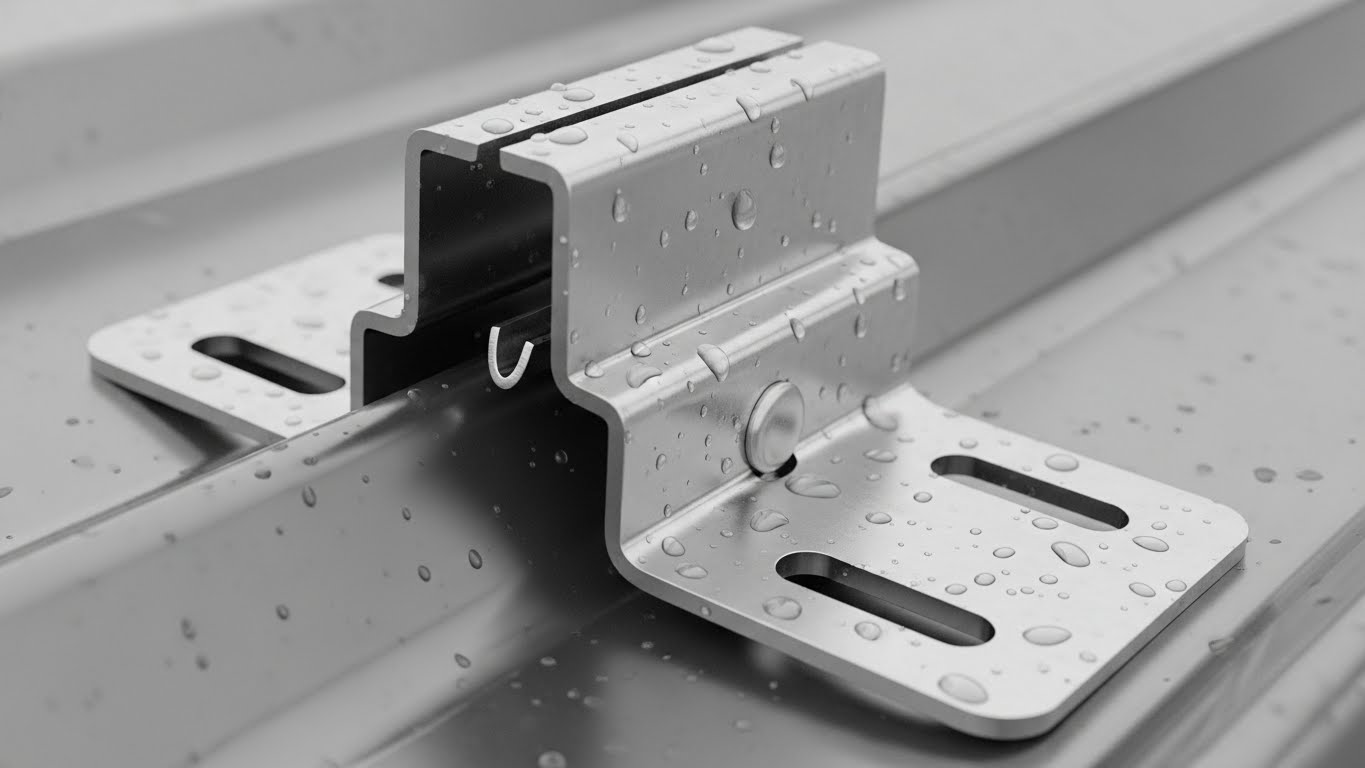
For roofing, never use screws that penetrate the panel directly into the purlin (unless the sheet is very short). Use sliding clips. These clips have a movable tab that slides back and forth as the roof expands, while the base remains screwed to the deck.

  • Note: Standard clips have a range of ~25mm. For roofs longer than 15-20m, you may need “Long Throw” clips or a step-joint (expansion joint) in the roof design.

C. Oversized Holes (Facades)

For screwing flat panels (e.g., composite or corrugated) onto a substructure:

  1. Drill Diameter: The hole in the panel must be larger than the screw.
    • Formula: Hole Diameter = Screw Diameter + Expected Expansion + 2mm Safety.
  2. Washer: Use EPDM washers to cover the oversized hole and provide a watertight seal that allows the metal to slide underneath.
  3. Torque: Do not over-tighten. The panel needs to “float.”
teplovoe rasshirenie metallicheskoy krovli fasadov ukraina 4

5. Installation Guidelines: Seasonal Calibration

The most common installation error is failing to account for the temperature on the day of installation.

  1. Summer Installation (+30°C): The panel is already expanded. It will mostly contract (shrink) in the future.
    • Action: Install sliding clips biased towards the “expanded” position, leaving room for the clip to pull back as winter approaches.
  2. Winter Installation (-5°C): The panel is contracted. It will mostly expand (grow) in the future.
    • Action: Install clips biased towards the “contracted” position, leaving room for the clip to push forward as summer arrives.
  3. Zinc Warning: Titanium Zinc becomes brittle at low temperatures. Never fold or seam zinc below +7°C, as it will develop micro-cracks that lead to corrosion. In Ukrainian winters, materials must be warmed before bending.

Key Takeaways

  1. The 2x Rule: Aluminum and Zinc expand approximately twice as much as Steel. Never apply steel fastening rules to non-ferrous metals.
  2. Surface Temp Matters: Design for surface temperatures of -30°C to +80°C, not just air temperature.
  3. One Fixed Point: Never pin a panel at two ends. Pin it once, and let the rest float using sliding clips or slotted holes.
  4. Calculate It: Use the formula Length x Alpha x 100 to get a quick estimate of total movement in millimeters for the Ukrainian climate.
  5. Seasonal Adjustment: Adjust clip positions based on whether you are installing during the heat of summer or the cold of winter.
author
About the author:

A qualified expert in metal structures from the Mehbud factory. Work experience, excellent knowledge of the production process, construction market, and latest technologies allow me to assist clie...

More
0 0 votes
Article Rating
Subscribe
Notify of
guest
0 Comments
Oldest
Newest Most Voted
Inline Feedbacks
View all comments