RAL Therapy in Landscape Design: Managing Spatial Perception Through Fence Color and Texture
Generic selectors
Exact matches only
Search in title
Search in content
Post Type Selectors

RAL Therapy in Landscape Design: Managing Spatial Perception Through Fence Color and Texture

April 27, 2026
6  

Architectural Phenomenology and Psychology of Space

In modern architecture, urban planning, and landscape design, the concept of space formation goes far beyond the physical dimensions of a plot. For owners of small adjacent territories, townhouses, or urban gardens, the fence becomes one of the most critical landscape elements. The fence is a physical boundary that delineates the property’s territory, yet its visual impact can either create a feeling of a tight, enclosed “box” or, conversely, masterfully model the illusion of a spacious, open, and boundless environment. This scientifically grounded approach, based on the purposeful use of standardized colors to adjust the psychological perception of physical space, has been termed RAL therapy in professional circles.

Color is not just an aesthetic characteristic of an object; it is a powerful tool influencing human perception, emotional states, and physiological responses. Back in the seventeenth century, Sir Isaac Newton, by passing white light through a prism, proved that color is an integral property of light itself, breaking it down into a spectrum. The modern human visual apparatus is evolutionarily tuned to a specific perception of this color spectrum: warm shades subconsciously seem closer to us, creating an approaching effect, whereas cool and neutral tones visually recede, creating depth. The use of the international RAL color matching system allows landscape designers and architects to match fence shades with mathematical precision, perfectly harmonizing with the house facade, roof, and surrounding flora, transforming strict physical plot limitations into a visual perspective.

This expert report offers a comprehensive, multidisciplinary analysis of the impact of fence colors on the visual expansion of small-sized plots. The study details the physics of light propagation, environmental color psychology, RAL standard color schemes, the impact of material textures, and the synergy of the botanical environment with the overall architectural ensemble.
RAL u landshaftnomu dyzayni 10

Physics of Light and Visual Perception of Space in Landscape Architecture

The perception of the size of a garden or courtyard directly depends on how the human eye and brain process light waves of varying lengths reflecting off surrounding surfaces. Studies in environmental psychology and landscape economics confirm that complex, scientifically calibrated color schemes can not only transform the sense of scale but also increase real estate market value by 10-12 percent compared to properties with a minimalist landscaping approach.

At the core of the mechanisms of visual space expansion lies filigree work with color temperature. All spectrum colors are conventionally divided into warm (red, orange, yellow) and cool (blue, green, purple). Warm colors are characterized by longer light waves. In optical perception, they visually “step” forward, aggressively attracting attention and making objects appear significantly larger and closer to the observer than they actually are. Accordingly, painting a fence around a small yard in bright red or vibrant yellow will rapidly narrow the plot’s visual boundaries. Such an approach can create a sense of intimacy, but simultaneously forms a persistent impression of confinement and claustrophobia in limited space.

Conversely, cool colors generate shorter waves. Their optical nature forces objects to visually “recede” from the observer. Using cool or neutral achromatic shades for perimeter fences creates a powerful illusion of spatial depth. This happens because cool colors imitate aerial perspective — a natural physical phenomenon where distant objects appear blurrier, bluish, or grayish due to light scattering in the atmosphere. Thanks to this, cool fence colors act as an ideal optical background that seemingly dissolves into the environment, allowing warm accents in the foreground (such as bright flowers or garden furniture) to pop forward and create multidimensional, layered landscape depth.

Another critical physical parameter in this methodology is the light reflectance value (LRV). This metric measures the exact percentage of visible light reflected from a surface on a scale from zero (absolute black, absorbing all light) to one hundred (absolute white, reflecting the entire spectrum). Light fence colors have a high reflectance value, effectively bouncing sunlight back into the garden, making the space feel more open, airy, and expansive. This architectural solution is especially effective for shady plots or gardens with limited direct sunlight. On the other hand, dark colors with an extremely low reflectance value absorb light intensely, causing the plot boundaries to become less noticeable to the human eye; they seemingly “dissolve” into the deep shadows of surrounding vegetation.

Physical Impact Mechanism Basic Optical Characteristic Psychological and Spatial Impact on the Yard
Warm colors (long waves) High energy, quickly focus vision. Aggressively narrow space, bring fence walls closer to the observer.
Cool colors (short waves) Recede to the background, do not stimulate the optic nerve. Expand boundaries, create aerial perspective and depth.
High reflectance value (>60) Reflect maximum natural and artificial light. Create a persistent effect of openness and increase overall brightness.
Low reflectance value (<20) Absorb photons, merge with complex shadows. Erase the clarity of physical borders, making the area visually boundless.
RAL u landshaftnomu dyzayni 15

Evolution of Color Standardization: From Theory to the RAL System

Achieving the ideal optical effect and implementing the concept of space expansion requires unprecedented mathematical precision in color selection. That is exactly why the RAL palette is used in modern construction practice. This abbreviation originates from the German Institute for Quality Assurance and Certification, which first standardized colors for industrial needs in the 1920s.

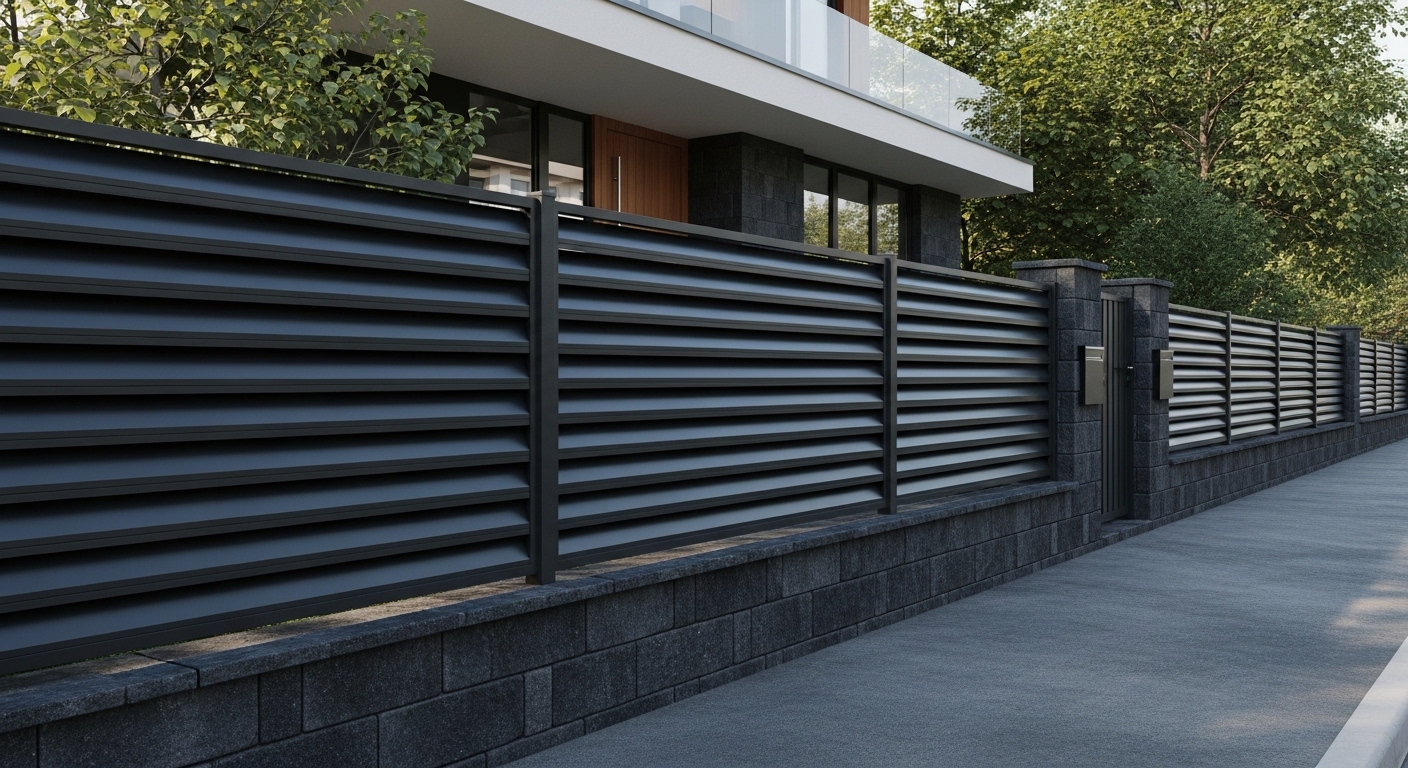
The RAL Classic system, which currently dominates architecture, construction, design, and powder coating manufacturing, contains a collection of strictly standardized color samples, each assigned a unique four-digit numerical code. This uncompromising standardization resolves a key, chronic issue in landscape design: the need for exact color coordination across fundamentally different materials. For example, to ensure a fence made of corrugated metal, welded mesh, aluminum panels, or modern blinds (louvers) seamlessly matches plastic window frames, wooden facade elements, or metal gutters, one simply provides suppliers with the same RAL code.

Relying on descriptive, abstract names like “light grey,” “sea wave,” or “dark green” in design inevitably leads to visual disharmony since different manufacturers interpret these concepts differently, and different pigments react differently to light. Modern RAL therapy relies strictly on precise indices, allowing architects to predict light reflectance levels, texture interaction, and the ultimate psychological effect during the blueprint and 3D modeling stages.

Neurobiology of Color: Emotional and Physiological Impact on the Observer

To fully grasp the mechanisms of visual yard expansion, one must analyze the human nervous system’s response to the color environment. Color is not just what we see, but what we feel on a physiological level; it shapes our emotions, directs our attention, and alters behavioral patterns. Renowned color authority Faber Birren noted that color is a unique life experience requiring no conscious intellectual struggle to be appreciated and understood.

A massive review of 128 years of psychological research, encompassing over 42,000 participants from 64 countries, empirically confirmed that people reliably and consistently associate different colors with specific emotions. Bright warm colors inevitably induce energy and excitement, accelerating the pulse, whereas cool colors trigger states of calm and restoration.

Specific neurobiological studies on the perception of foliage and vegetation colors have shown that viewing green, pale green, yellow-green, and white-green shades is robustly associated with relaxation, comfort, and, most importantly, a decrease in oxyhemoglobin levels in relevant brain areas, which is a direct biomarker of stress reduction. Another specialized study on the impact of autumn leaf combinations revealed that properly selected hue combinations can influence brainwave activity and heart rate variability. Fast-food chains and commercial spaces utilize warm colors to increase customer turnover, while healthcare facilities integrate cool shades to accelerate healing processes. Translating this data into landscape design, it becomes clear that aggressive or overly contrasting fence colors generate sensory overload in confined spaces, whereas integrating natural, desaturated RAL system shades fosters a therapeutic, boundless environment.

RAL u landshaftnomu dyzayni 8

Fundamental Strategies for Spatial Expansion: “Open Light” and “Invisible Boundary” Concepts

A deep analysis of color schemes and architectural projects reveals two fundamentally different, yet equally effective approaches to visually enlarging a small garden or courtyard using perimeter fence colors: the “Open Light” concept and the “Invisible Boundary” concept.

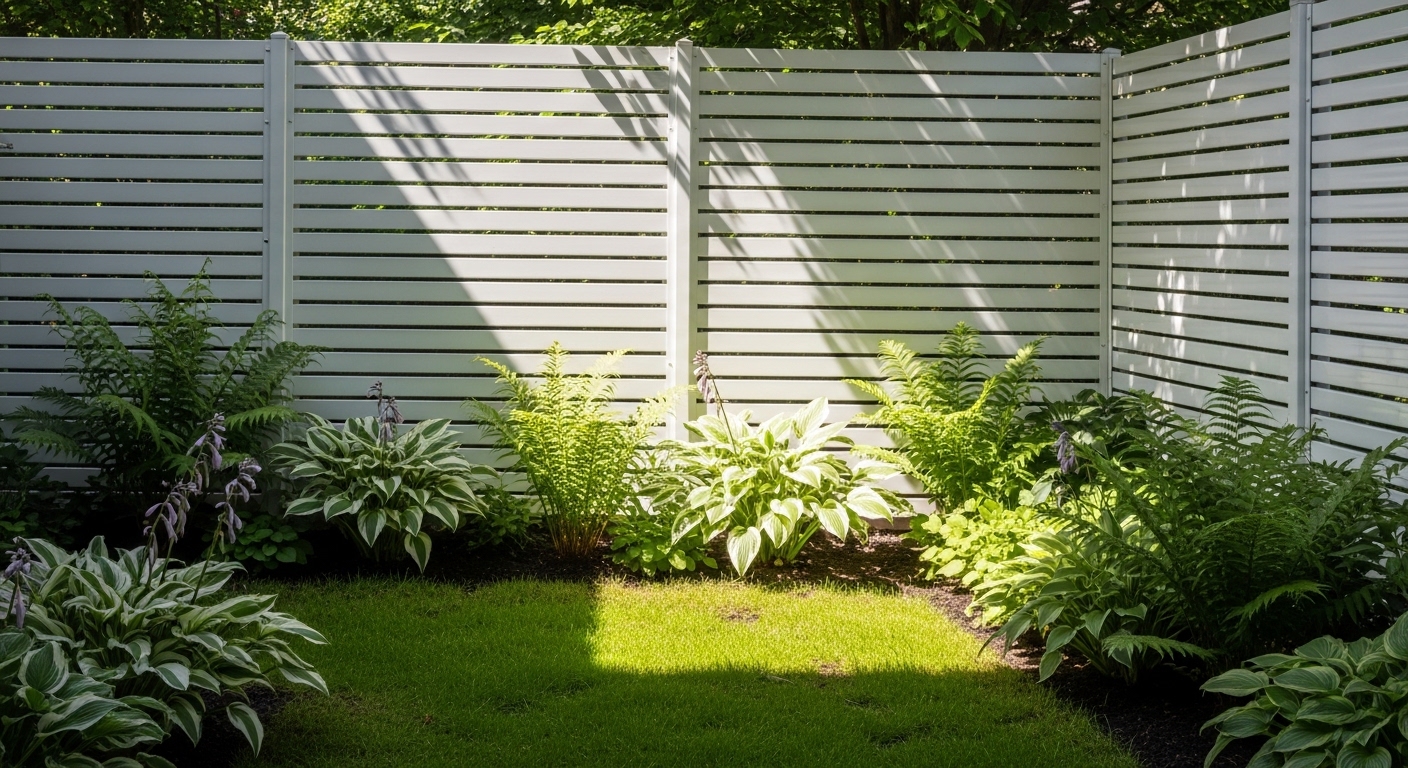
The first strategy, the “Open Light” concept, relies on utilizing light achromatic and pastel shades that maximize light reflection (light greys, pale blues, creams). These colors are designed to blur the harsh geometric line between the top edge of the fence and the sky, softening the plot’s overall cubature. Thanks to this strategy, the space subjectively feels significantly larger and oxygenated due to intensified overall brightness and a high reflectance value.

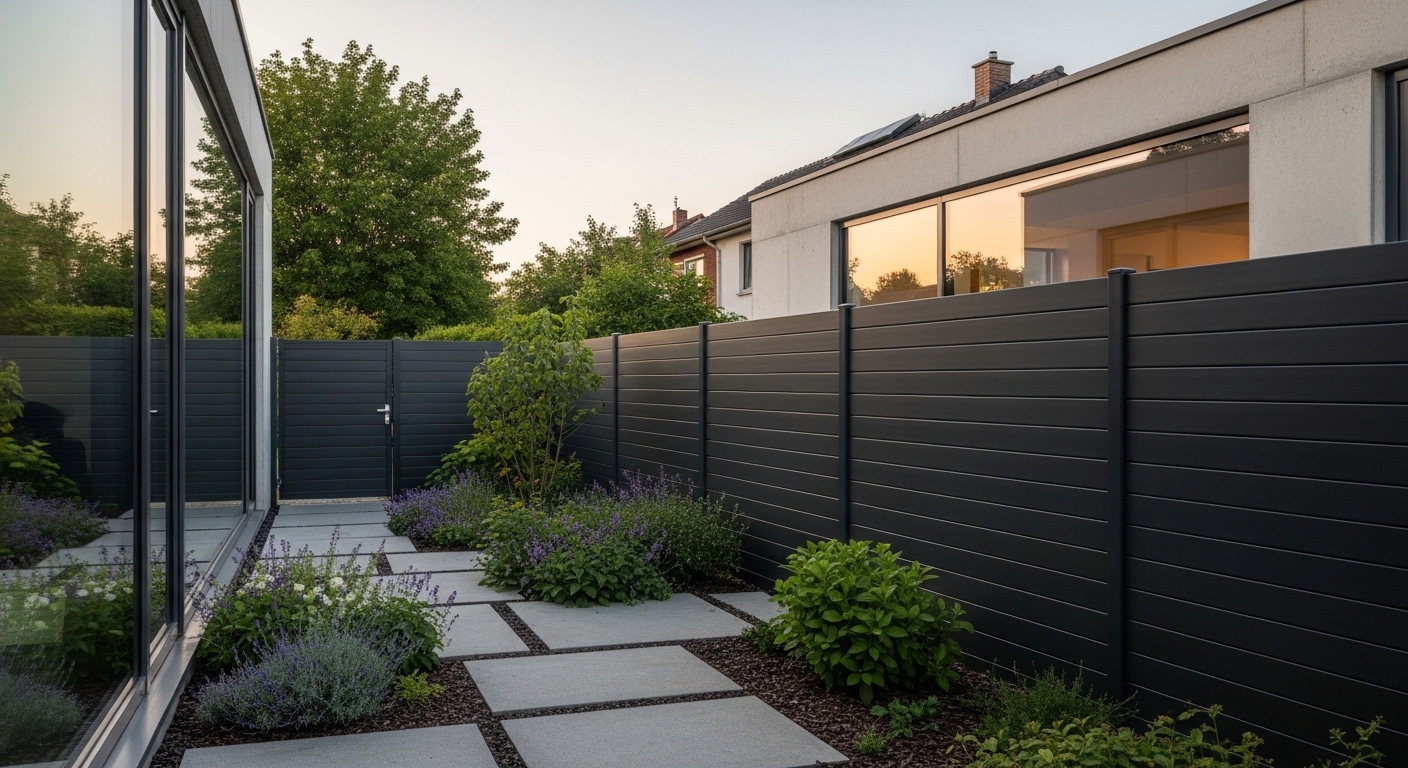
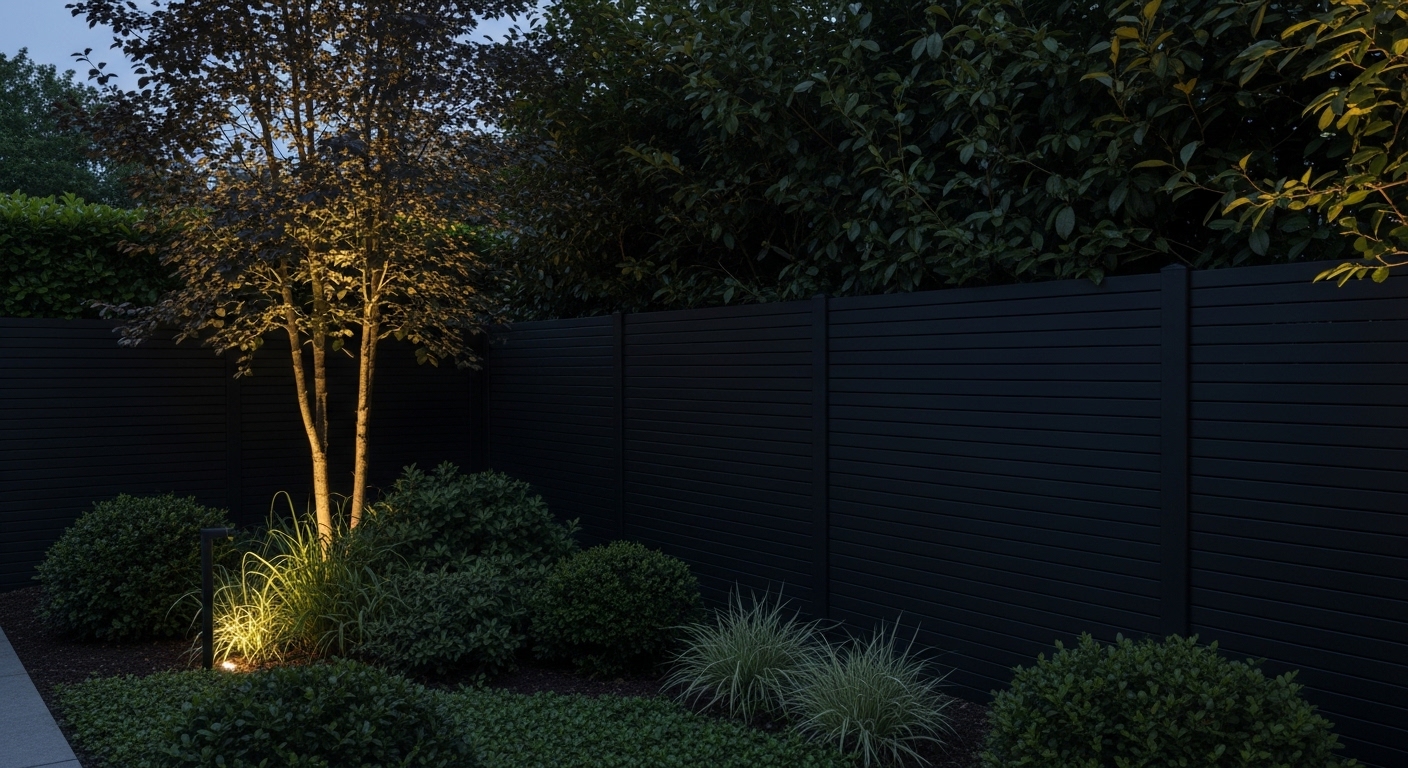
The second strategy, the “Invisible Boundary” concept (or the architectural shadow effect), employs a diametrically opposed physical principle. It relies on light-absorbing colors that merge with the dark background of nature (anthracite, jet black, dark brown). Amidst complex, multi-layered landscaping containing trees, shrubs, and perennials, a dark fence simply ceases to register in the human brain as a physical barrier. The observer’s eye automatically focuses on bright foreground objects, completely ignoring the dark background, thus creating a persistent illusion of infinite space seamlessly continuing beyond the property lines.

Achromatic Illusion: Detailed Analysis of the Grey RAL Palette

Grey and its numerous variations in the RAL system are considered some of the most sophisticated tools for making a garden’s perimeter visually “disappear.” Grey is an achromatic color; it does not compete for attention with other colors, allowing living plants and small architectural forms to take the center stage.

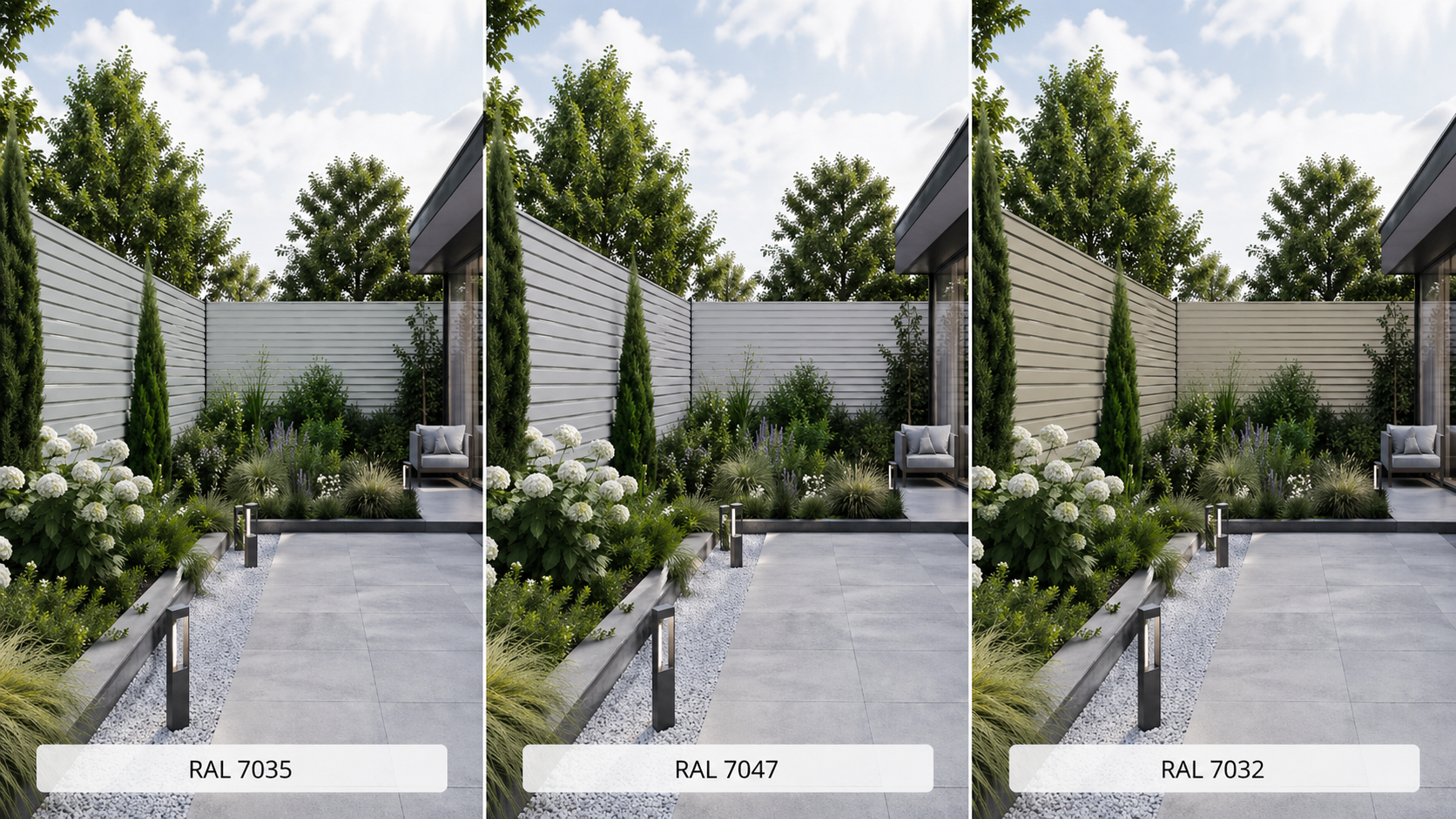
RAL 7035 (Light Grey) is recognized by experts as one of the safest and most effective choices. This specific shade features a soft, almost imperceptible lilac undertone, completely devoid of the harshness inherent in darker urban greys. With a high light reflectance value (around 56-58), it beautifully reflects sunlight, making shaded areas feel more cheerful and welcoming. It establishes a modern, flawlessly clean atmosphere, serving as an ideal candidate for properties in modern, coastal, or Scandinavian styles.

RAL 7047 (Telegrey 4) presents another extremely light, slightly cooler shade of grey that injects freshness into exterior design, crafting an illusion of endless spatial lightness. It harmonizes perfectly with architecture featuring exposed concrete, glass, or polished metal elements.

RAL 7032 (Pebble Grey) offers a slightly different optical dynamic. It is a noticeably warmer shade of grey with a slightly lower reflectance value, phenomenally blending with natural stone paving, gravel surfaces, or sandy pathways, offering the most natural, unobtrusive backdrop for a garden.

Landscape designers note that utilizing a light grey fence not only complements modern hardscaping elements but also creates a delicate contrast against which the vibrating, saturated colors of flower beds appear even more expressive, visually adding deep multi-layering to the garden plane.

RAL u landshaftnomu dyzayni 2

Space Absorption: Dark Palette and the Architectural Shadow Effect

Contrary to the common intuitive belief that exclusively dark colors shrink space, in landscape architecture, they can work paradoxically, acting as an “architectural shadow.”

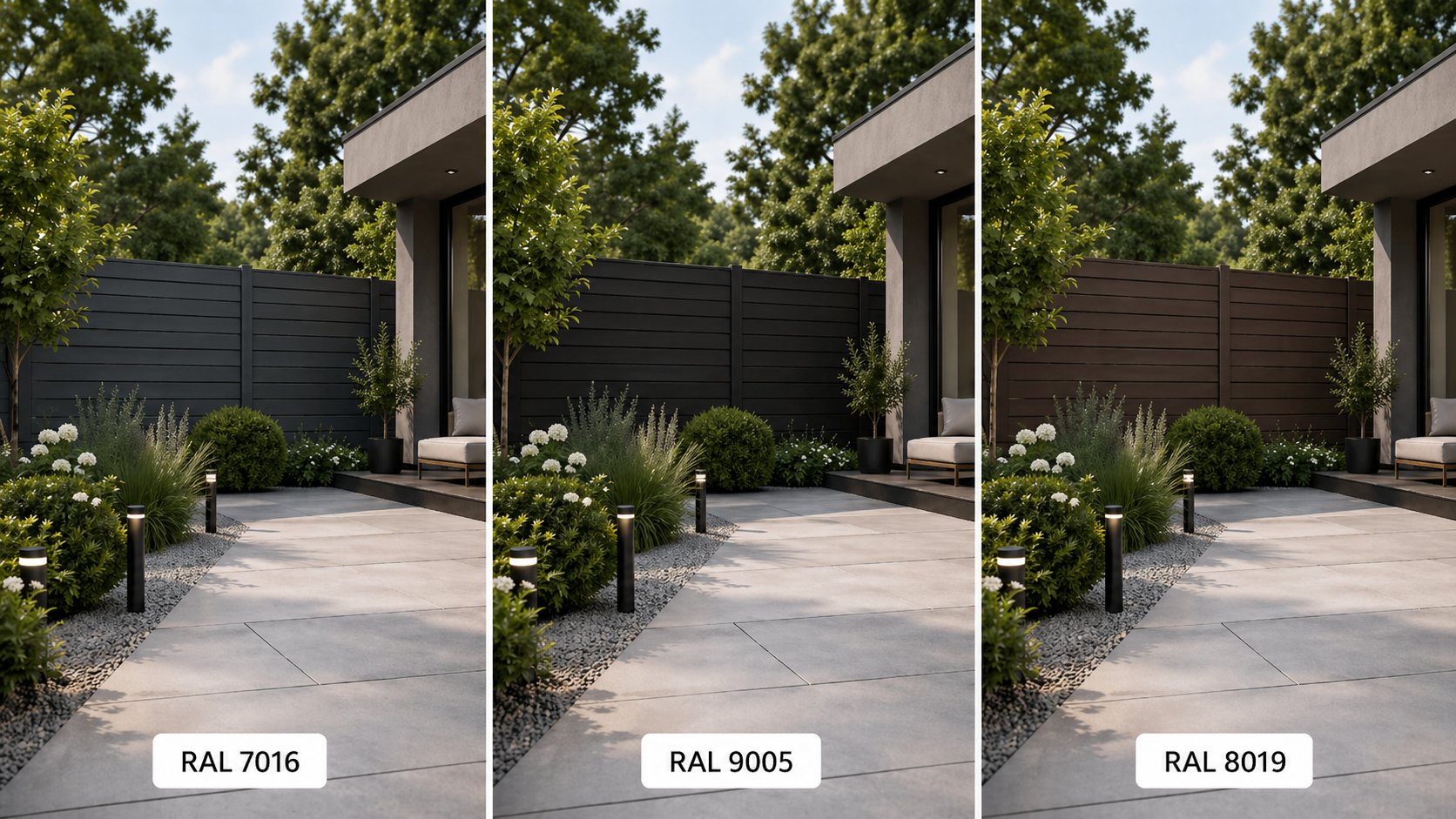
RAL 7016 (Anthracite Grey) is an absolute bestseller and the most sought-after color for modern fences. It is an extremely deep, complex shade balancing on the fine line between charcoal and near-black, distinguished by a subtle cool undertone. Thanks to its absolute neutrality, this color projects strength and stability without drawing unnecessary attention. In evening twilight or the thick shade of trees, such a fence becomes virtually invisible to the human eye. The eye cannot clearly lock onto the plot’s physical boundary, causing the garden space to seem much deeper and wider.

RAL 9005 (Jet Black) represents one of the boldest and most expressive design choices. This color is an optical black hole — it absorbs light waves almost entirely. When vibrant green plants are placed against it, a dramatic optical contrast is born: the greenery explodes with color and leaps forward to meet the observer, while the fence recedes completely, forming the sensation of an endless backdrop stretching into infinity. Experts point out that the fire-preserving wood method, known as the Japanese Shou Sugi Ban technique, also achieves this deep black effect while providing natural material longevity without chemical paints.

RAL 8019 (Grey Brown) completes the top trio of dark colors. This is a deep, rich chocolate-grey shade flawlessly merging European elegance with conservatism. Dark brown fences operate on the same dark background principle, letting vibrant flora pop out while retaining a sense of organic warmth and natural grounding, mimicking the colors of earth and old tree bark.

RAL Code Color Name Reflectance Level Optimal Stylistic Application
RAL 7035 Light Grey High Modern minimalism, expanding shaded zones.
RAL 7016 Anthracite Low High-tech, erasing boundaries at dusk.
RAL 9005 Jet Black Minimal Dramatic contrast, creating an infinite backdrop.
RAL 8019 Grey Brown Low Eco-style, blending with tree trunks and soil.
RAL u landshaftnomu dyzayni 1

Biophilic Design: Green and Earthy Shades for Blending with Flora

If an architect’s strategic goal is to turn the perimeter fence into an organic, integral extension of the living garden, natural shades of the green spectrum are optimal. They seamlessly connect the yard to the external surrounding landscape, completely nullifying the psychological sensation of an artificial barrier.

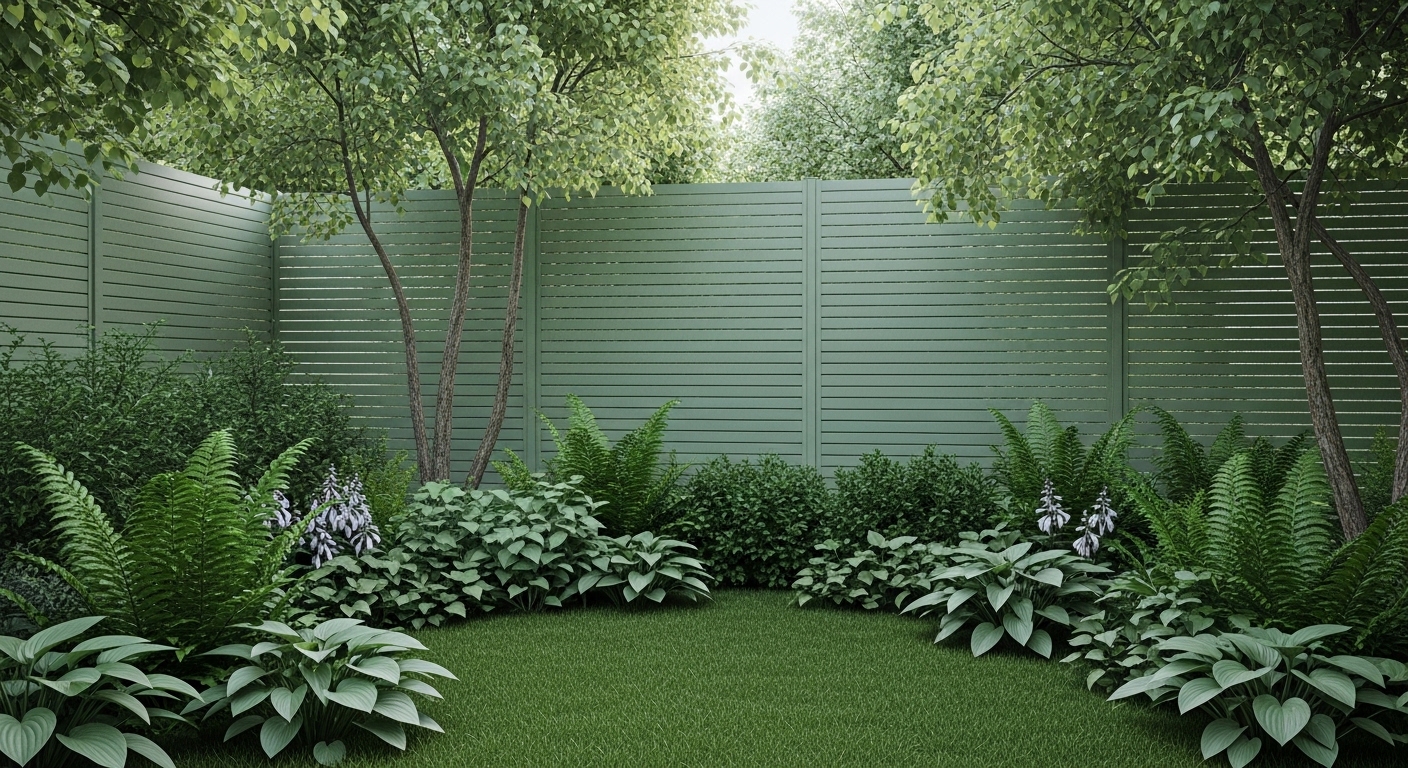
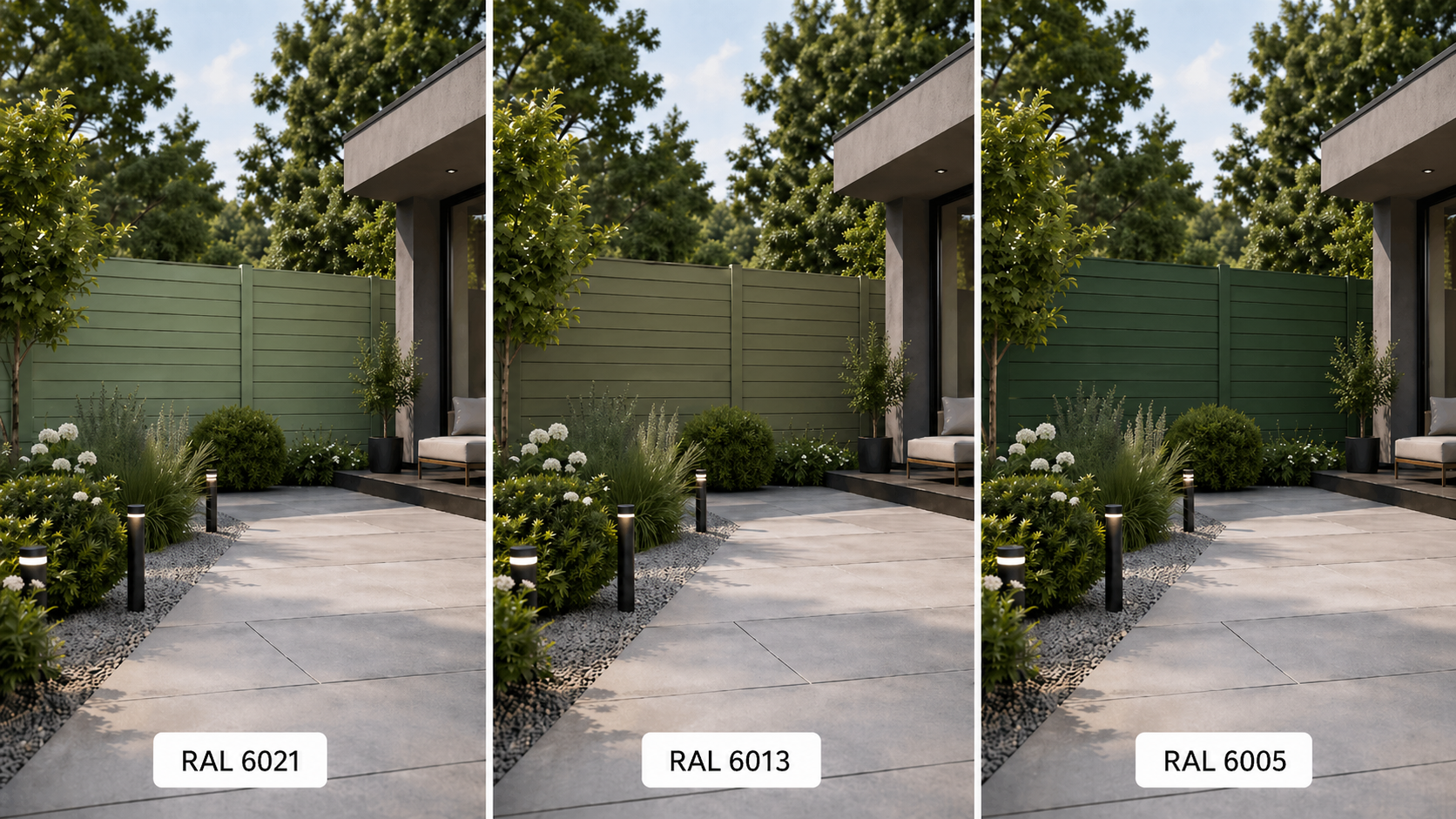
RAL 6021 (Pale Green) is an outstanding example of biophilic design. This sophisticated hue evokes sage or eucalyptus leaves. According to research, it deeply calms and tunes the nervous system to relaxation, subconsciously associating with soft spring foliage or vegetation in muted lighting. Such a soft green instantly blends with lawns and shrubs, making rigid plot borders appear blurred. It never dominates; rather, it quietly integrates into the space.

RAL 6013 (Reed Green) is a complex shade with a pronounced earthy undertone, delicately imitating the color of old moss or reed stems. This color is ideal for establishing a sense of rustic coziness without visually overloading the space.

RAL 6005 (Moss Green) is a deeper, more saturated green hue traditionally used for classic chain-link fences or welded metal panels. Its ability to perfectly fit into natural woodland landscapes renders the yard’s boundary utterly unnoticeable against dense coniferous or deciduous plantings. The ecological aesthetics of all these green shades tangibly lower visual stress and reduce eye fatigue, ensuring a smooth, unbroken transition between private property and the outside environment.

RAL u landshaftnomu dyzayni 4

Sky Perspective: Blue and Pastel Shades

Borrowing architectural colors from nature is not strictly limited to earthly greens. Utilizing subtle shades of blue is an attempt by designers to transpose the vastness of the sky onto the vertical planes of a small yard.

RAL 5014 (Pigeon Blue) is a soft, somewhat muted grey-blue color. In human consciousness, blue is inextricably associated with boundless space, openness, and the movement of air masses. Studies show that blue is physiologically capable of lowering blood pressure and fostering trust. Using pigeon blue for a fence creates a persistent illusion that the barrier dissolves into the sky’s atmosphere, making the courtyard feel more open and “breathable.”

RAL 5024 (Pastel Blue) offers an even lighter, more ethereal shade. It injects tangible cheerfulness into confined spaces while remaining understated enough to avoid looking infantile or overly intrusive. Such pastel shades, including muted lavender or powder blue, elevate the mood without overloading sensory systems and are perfect for cottage gardens or vintage-styled outdoor spaces.

The White Color Paradox: Advantages and Critical Disadvantages of RAL 9010

White color, specifically the standardized RAL 9010 (Pure White), is frequently viewed by beginners as a universal visual expansion tool due to its maximum capacity to reflect light rays. A classic white fence serves as a brilliant, sterile backdrop that makes any flowers and plants stand out with maximum contrast. It can introduce critically needed light to highly shaded gardens and is an integral part of classical colonial style and European suburbia.

However, a deep analysis of using white on small plots exposes significant flaws continuously highlighted by landscape architecture experts: Firstly, the phenomenon of boundary accentuation. Unlike grey or black, which tend to blend with the background, bright white contrasts so powerfully with natural greenery that it extremely sharply outlines the plot’s entire geometry. The observer’s eye instantly locks onto the continuous white fence line, which paradoxically can heighten the psychological sensation of being in a closed, strictly limited box. Secondly, the catastrophic impracticality of the material. Any dirt, dust, rain splashes, or organic stains on a white background become instantly and highly visible. Without regular, constant, and thorough washing, a white fence incredibly quickly acquires a sloppy, marginal appearance, entirely canceling out all its initial aesthetic benefits. Experts advise using high-quality polymer materials for white fences, as they allow non-stubborn dirt to be washed off with a simple hose stream, though this does not negate the need for regular maintenance.

RAL u landshaftnomu dyzayni 11

Materials Science in Landscape Architecture: Textures, Finishes, and Reflection

The optical impact of color on spatial perception cannot be objectively separated from the physical texture of the surface itself. When selecting a finishing coat for metal, plastic, or wooden fences, designers inevitably face a choice between matte, satin, and glossy effects.

A glossy finish features a perfectly smooth microstructure that provides mirror-like light reflection. While gloss makes colors appear brighter, richer, and more dramatic, it generates intense sun glares. These blinding glares not only distort the fence’s original color, making it look visually faded in certain spots, but they also forcefully focus the brain’s attention on the barrier’s surface. A glossy fence literally “screams” about its physical presence, thereby drawing maximum attention to the plot’s borders, which is absolutely counterproductive for expanding small areas. Furthermore, on gloss, any micro-defects, dried raindrops, dust layers, and scratches become instantly noticeable, exponentially increasing maintenance costs and cleaning time.

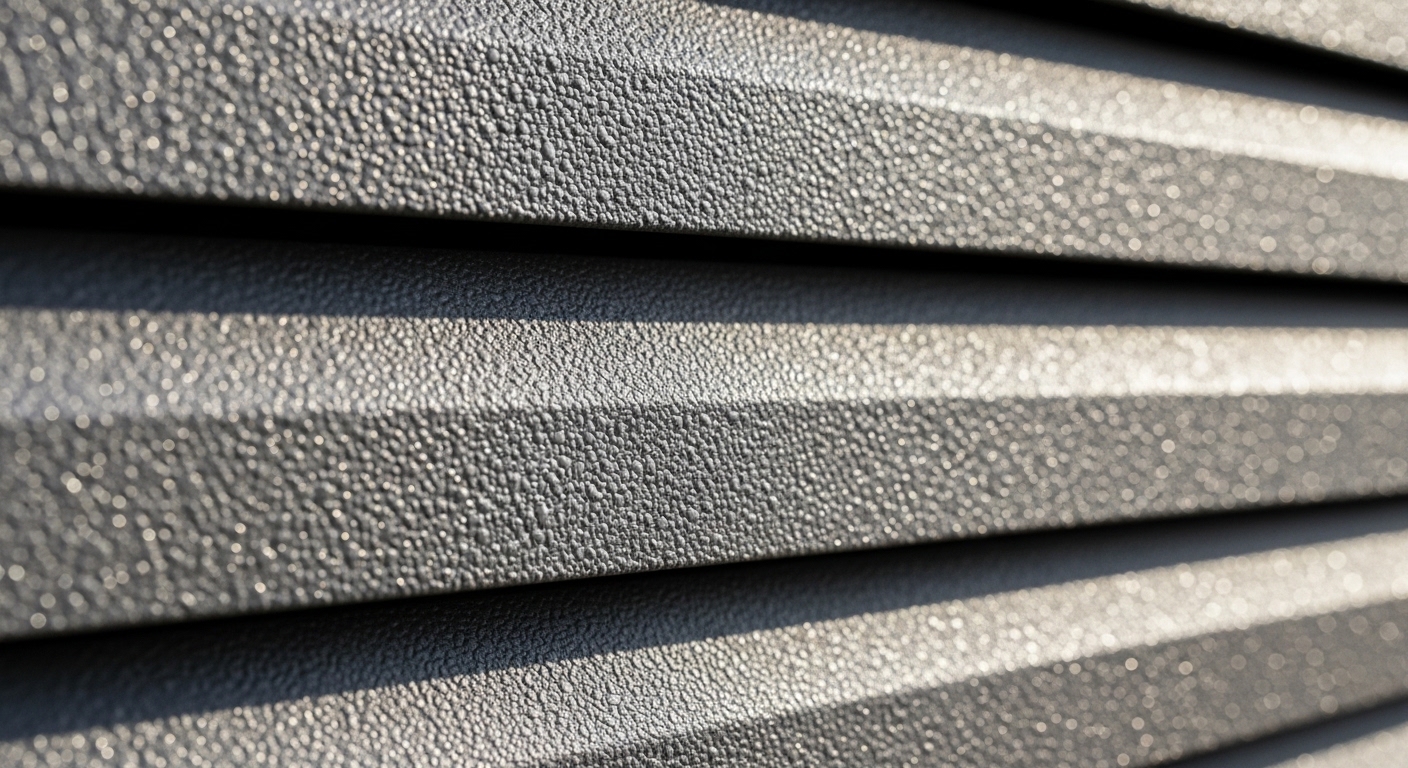
A matte finish works in exactly the opposite way, delivering diffuse (scattered) reflection of light. This creates an even, muted, and noble velvety effect, guaranteeing color stability completely regardless of the angle of intense sun rays. The absolute lack of irritating glare allows a matte fence to remain inconspicuous and smoothly dissolve into the landscape. In terms of practicality and durability, the micro-relief of matte paint masks dust settling evenly on the surface much better, keeping the fence looking clean for longer, which makes this option the undisputed favorite of modern urban designers.

For metal fences (such as steel or aluminum ), advanced powder coatings are used, providing exceptional weather resistance in matte and textured finishes. Some innovative powder paints even contain silver ions that suppress the growth of mold, fungi, and bacteria on the fence surface, ensuring it looks flawless for years.

Physical Characteristic Matte Finish Glossy Finish
Optical effect Muted, uniform, dissolves. Bright, shiny, draws attention to the border.
Type of light reflection Scattered (diffuse), no glares. Mirror-like, generates blinding sun spots.
Dirt resistance Hides minor dirt, settled dust, and streaks. Ruthlessly highlights any stains and drops.
Shade stability The shade looks identical from any angle. Shifts depending on sun intensity.

Architectural Harmony: Synchronizing Fence Color with Facade and Roof

A fence never exists in an architectural vacuum. Even the most scientifically sound color for space expansion can completely ruin a property’s aesthetics if it harshly clashes with the main building’s architectural ensemble. To achieve flawless unity, designers employ several key coordination strategies based on RAL standards.

The first strategy is harmonization and synchronization. The most reliable method is selecting a fence color that literally duplicates one of the house’s structural color elements. For example, synchronizing the fence with the roof or matching a modern blinds fence design to architectural trims is a classic, time-tested approach. Typically, a roof features a darker shade than the facade walls. If the house roof is finished in graphite (RAL 7024) or grey-brown (RAL 8019), a fence painted the exact same color visually closes the composition into a single contour, letting the light house facade vividly and advantageously stand out against their shared background. An alternative is supporting minor accent elements: the fence color is perfectly matched to window frames, gutters, or front door trims. If a house has a white facade and anthracite window frames (RAL 7016), an anthracite fence will establish a robust, flawless visual link between the building and the landscape.

The second strategy rests on the principles of contrast and balance. If the house facade is painted a highly saturated, bold color (e.g., terracotta, dark blue, or features red brick texture), a massive fence on a small plot is strongly recommended to remain neutral (use light grey, cream, or a natural wood shade). This wise decision will allow the house to remain the sole primary focal point, preventing hazardous visual space overload from fierce color competition. Additionally, geographic orientation must be considered: if a house is situated in a way that its architecture seems somewhat gloomy (e.g., a dark facade on the northern, unlit side), utilizing a light fence (such as RAL 7035) is absolutely necessary to capture maximum sun rays, expand the space, and add illumination to the territory.

Also, modern technologies should not be overlooked, such as finishes that allow metal panels or blinds (louvers) to imitate the texture of natural wood (dark wood, golden oak). On a subconscious level, natural wood textures are psychologically perceived by humans not as artificial metal barriers but as natural ecosystem elements, making the yard borders feel friendlier, warmer, and entirely non-dominating in the space.

RAL u landshaftnomu dyzayni 1

Botanical Choreography: Color Wheel and Plant Companions

Choosing the perfect fence color to enlarge a small yard cannot be considered in isolation from the meticulous planning of the vegetation itself. Professional landscape design utilizes the classic color wheel concept, which allows for stunning optical illusions via the combinatorics of primary (red, yellow, blue), secondary, and tertiary colors. Properly composed plants multiply the RAL therapy effect.

Dark fences (jet black, anthracite) function as a perfect, endless contrasting canvas. Against their backdrop, light-green hosta leaves, elegant silver ornamental grasses, and flowers of intense warm shades (red roses, yellow Black-eyed Susans) appear extraordinarily alive, bright, and voluminous. The warm colors of these flowers aggressively pop forward visually toward the observer, leaving the dark absorbing fence background far behind, thereby projecting an incredible spatial depth in the garden.

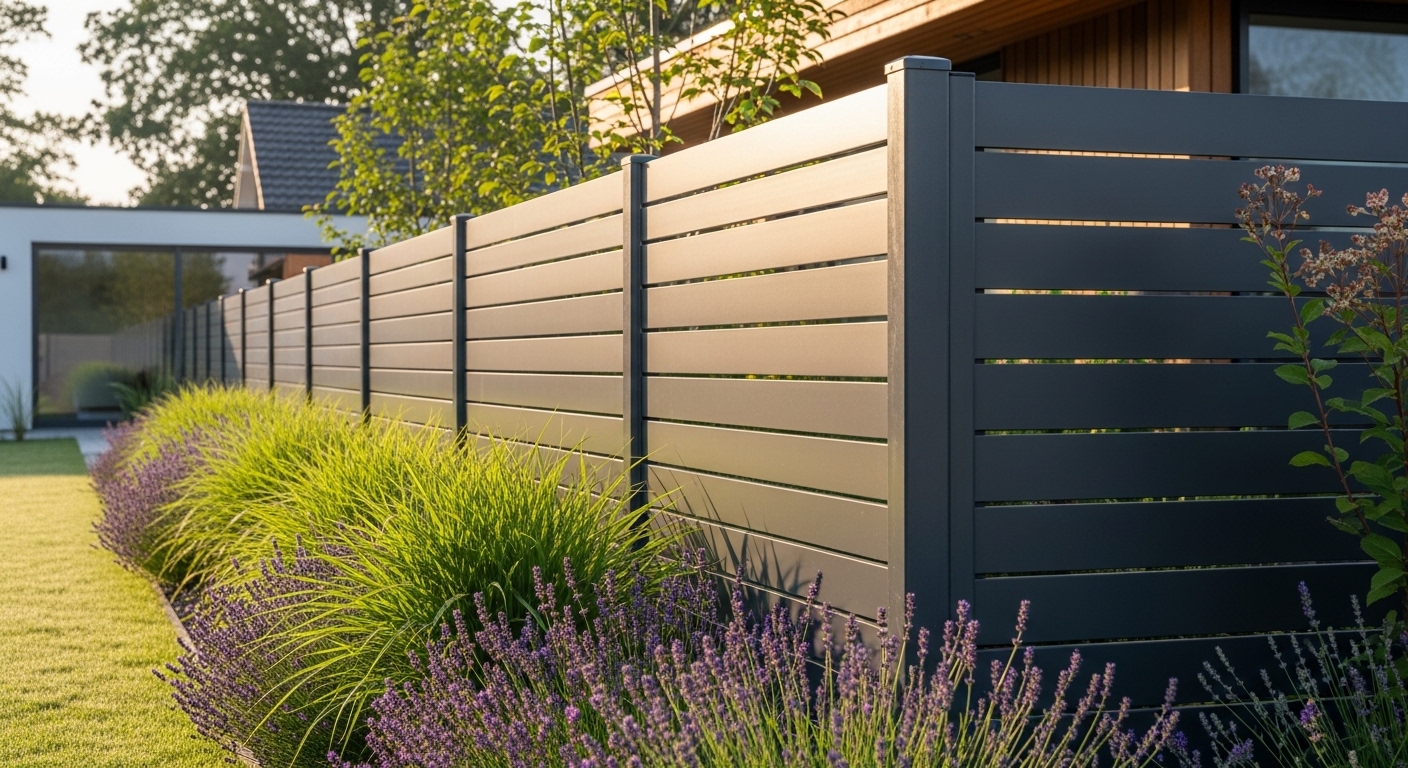
Conversely, a light grey fence (e.g., RAL 7035 or RAL 7047) serves as a fantastic, airy base for cool-toned flowers. The use of lilac clematis, blue irises, pale hydrangeas, or sprawling lavender against a light grey border creates a refined, monochrome, cool atmosphere that literally breathes with free space.

Landscape designers also suggest employing deeply symbolic color schemes. For instance, a powerful solution is combining blue flowers (early Iris reticulata, delphiniums, lupines, Scilla siberica) and yellow flowers (sunflowers) against a neutral light fence backdrop. This triadic or contrasting approach yields a striking optical accent that forcefully attracts and holds the gaze at the center of the garden, entirely distracting the brain from evaluating the physical size and boundaries of the plot itself.

Base Fence Color by RAL Optimal Botanical Companions Final Visual Effect in Space
Anthracite / Black (RAL 7016, RAL 9005)

Ferns, hostas, yellow rudbeckias, red geraniums, ornamental grasses.

Maximum contrast. Deep perspective. Bright flower colors illusively “jump” forward.

Light Grey (RAL 7035, RAL 7047)

Blue clematis, blue hydrangeas, lavender, azaleas, pink roses.

Harmonious, cool palette. Borders feel absolutely weightless and airy.

Pale Green (RAL 6021, RAL 6013)

Plants with bronze or purple foliage, pastel flowers.

Biophilic dissolution into nature. The fence gets subtly lost among dense leaves.

White / Cream (RAL 9010, RAL 1015)

Sunflowers, yellow petunias, blue delphiniums, emerald lawns.

Classic bright contrast. Increases overall light but sharply highlights the perimeter.

RAL u landshaftnomu dyzayni 2

Climatic and Geographical Factors in Coating Selection

RAL therapy, as a serious architectural discipline, demands not only purely aesthetic but also rigid pragmatic analysis. The choice of the ideal color for space expansion must absolutely account for real operational conditions and microclimate.

The issue of dust and location is key. If a small plot is situated near a busy road, in an industrial zone, or an area with large open soil massifs (black soil, sand), installing a light (especially white) fence is a fundamental mistake. Dust, exhaust fumes, and dirt will incredibly quickly turn it into a dirty, textured, highly conspicuous obstacle that destroys the illusion of space and visually shrinks the yard. In such aggressive urban or dusty zones, “vandal-proof” dark matte colors (RAL 7024, RAL 8019) are far more effective, as they naturally mask the settling of dirt and preserve background depth.

On the other hand, there is the problem of UV radiation and inevitable pigment fading. Saturated dark colors (especially jet black, dark brown, and bright green) are significantly more prone to thermal degradation and fading under intense direct sun compared to light shades. That is exactly why implementing dark colors in southern regions makes it critically vital to use exclusively high-quality metal polymer coatings or paints with powerful UV protection, guaranteeing the preservation of the original color depth and corrosion protection for many decades. In addition, thermal loads must be factored in: dark fences intensely accumulate solar heat. For delicate shade-loving plants planted right next to a black metal fence, the risk of overheating from radiant surface heat during peak summer periods must be considered.

RAL u landshaftnomu dyzayni 3

Conclusions and Strategic Recommendations

Summarizing the colossal array of data from physiological color psychology, architectural industrial standards, and advanced landscape design practices, we can highlight the following key, unbreakable rules of applying RAL therapy to effectively visually enlarge a small-sized plot:

Cool and neutral colors are the designer’s most potent optical allies. To visually expand a plot, categorically avoid bright warm fence shades (red, orange, bright yellow) that aggressively advance on the observer. Always favor colors that possess the physical ability to recede into the background: light grey (RAL 7035), pale blue (RAL 5014), or pastel green (RAL 6021). They flawlessly mimic atmospheric depth and render physical borders weightless.

Never be afraid of the dark. Dark graphite (RAL 7016), deep brown (RAL 8019), and absolute black (RAL 9005) fences are an unmatched, elite architectural solution for gardens with dense, multi-tiered planting. They act like a brilliant optical illusionist, making the hard borders of a plot completely dissolve into shadows, while simultaneously incredibly highlighting the beauty, brightness, and volume of flowers in the foreground.

White color demands extreme caution. Although white (RAL 9010) reflects light photons the most, it harshly and uncompromisingly outlines the boundaries of the space and requires constant, exhausting washing. Instead of pure white, it is much more advisable to use soft light greys or cream shades that provide light without drawing attention to dirt.

Only matte textures can create the illusion of infinity. To maintain the illusion of openness and spatial depth, it is highly recommended to avoid glossy surfaces that reflect sun rays like a mirror. Matte paint evenly and nobly scatters light, hides structural flaws in metal or wood, prevents annoying glares, and is significantly easier to maintain.

A fence is an integral part of the house, so systemic integration is mandatory. The barrier must not clash stylistically or coloristically with the main building. Utilize the mathematical precision of the RAL system to fully synchronize the fence color with the roof, window frames, or architectural facade trims.

Applying correct, scientifically backed coloristics does not require purchasing extra land or executing complex, destructive construction interventions in the landscape. Thanks to the conscious selection of a RAL standard color code, an understanding of the optical-physical properties of light, and the brain’s spatial psychology mechanisms, even the smallest and tightest plot can be permanently transformed into a visually spacious, deep, harmonious, and aesthetically flawless ecosystem.

author
About the author:

A marketing and communications expert at the Mehbud factory. Develops the brand, showcasing all the advantages of Mehbud products to clients. Helps you make the right choice by providing consultat...

More
0 0 votes
Article Rating
Subscribe
Notify of
guest
0 Comments
Oldest
Newest Most Voted
Inline Feedbacks
View all comments