Top-10 Ukraine: Architectural Masterpieces and Construction Innovations in Retail 2025 (Specialized Networks Sector)
Generic selectors
Exact matches only
Search in title
Search in content
Post Type Selectors

Top-10 Ukraine: Architectural Masterpieces and Construction Innovations in Retail 2025 (Specialized Networks Sector)

December 12, 2025
8  

Introduction: Architectural Renaissance of Ukrainian Retail and Urban Transformation

The architectural face of modern Ukraine is undergoing fundamental changes that extend far beyond residential construction or the creation of monumental office centers. A true revolution is happening “on the ground” — in spaces that city dwellers interact with daily. The retail sector, particularly specialized networks selling beverages and craft products, has transformed from a utilitarian function of supplying goods into a powerful tool for shaping the urban environment. We are witnessing a transition from chaotic development with small architectural forms (MAFs) to the creation of conceptual spaces that integrate into the historical and contemporary context of cities — Kyiv, Lviv, Kharkiv, Dnipro, and Odesa.

Modern commercial premises design borrows best practices from financial institutions and technology hubs. If previously bank branches were models of stability and transparency, using stone and glass, today these principles — openness, technological sophistication, reliability — are being implemented in network retail. The consumer of 2025 demands not just a product, but an emotional experience formed through visual aesthetics, tactile sensations from materials, and comfortable indoor climate.

In this report, we analyze the architectural strategies of leading market players, considering their points of sale as complex engineering and construction objects. Special emphasis is placed on materials science and innovative construction technologies. An important role in this study is played by the analysis of integration potential of solutions from the national manufacturer — the “Mehbud” factory. The use of modern enclosing structures, ventilated facades, and designer metal ceilings becomes a response to the challenges of our time: the need for energy efficiency, anti-vandal protection, and aesthetic uniqueness.

Retail architecture today solves three main tasks:

  1. Sociocultural Integration: Creating a “third place” (between home and work), where design promotes socialization.
  2. Technological Resilience: Using materials capable of withstanding intensive traffic and climate changes (from Ukraine’s hot south to the humid Carpathian climate).
  3. Visual Communication: Facade and interior as brand language, speaking about product quality even before the moment of purchase.

Below is a detailed rating and expert analysis of companies setting trends in the architecture of Ukrainian specialized retail.
#1 – HOP HEY (Beer Sea Network)

Architectural Profile: From Kiosk to Social Market

The transformation of the “Beer Sea” network into the HOP HEY brand has become a textbook example of how changing architectural paradigm affects the business model. The company rejected closedness in favor of the “open space” concept, characteristic of modern coworking spaces and IT offices.

Architectural Concept:

The main idea is “accessible loft.” This style, which originated in New York in the 1940s, has acquired new meanings in Ukrainian realities. The use of exposed brick, open wiring, and massive metal elements creates an atmosphere of honesty and openness of the production process. Flagship stores in Dnipro and Kyiv demonstrate the rejection of blind showcases. Instead, panoramic double-glazed windows are used for the full height of the floor, visually blurring the boundary between interior and street. This solution, borrowed from European urban planning practice, makes streets safer (the “passive surveillance” effect) and more attractive.

Interior and Exterior Design Features:

The interiors are dominated by a palette of natural materials. Warm-toned wood contrasts with the graphite metal of retail equipment. An important element is lighting design: the use of track lighting systems allows changing accents in the hall without construction interventions. Exterior solutions often include entrance groups with ramps, complying with new state building codes (DBN) regarding inclusivity.

Construction Achievements and Engineering

A network with hundreds of locations requires an industrial approach to construction. The company has implemented standardized premises reconstruction protocols (“fit-out”).

  1. Object Types: Street retail in residential complexes, separate pavilions, zones in shopping malls.
  2. Engineering Innovations: Implementation of heat recovery systems in ventilation. Heat released by refrigeration equipment (kegerators) is not expelled outside but used for heating premises in winter or water heating. This reduces the facility’s energy consumption by 15-20%.
  3. Materials: Use of wear-resistant porcelain stoneware flooring (wear resistance class PEI IV-V) and anti-vandal wall coatings.

Mehbud Conceptual Design for HOP HEY

A network of this scale requires solutions that combine aesthetics with extreme durability and installation speed.

Concept Visualization:

Imagine a HOP HEY store facade in a Kyiv residential district. Instead of typical composite, the facade is clad with “Block House” metal siding from the “Mehbud” factory with “Golden Oak” texture. This gives the facility warmth and environmental friendliness, visually distinguishing it among concrete jungle.

  1. Ceiling Solutions: In the interior, we propose using cube-shaped slats in black with a 50-100 mm pitch.
    • Functionality: Slatted ceilings allow hiding air conditioning mains and electrical trays while maintaining free access for technical maintenance (slats can be raised without tools).
    • Aesthetics: The clear geometry of slats emphasizes the industrial loft style, and black color “dissolves” the ceiling, visually increasing room height.
  2. Facade System: For separate pavilions — using “Horizont” panels. Their reinforced locking part guarantees resistance to wind loads characteristic of open spaces in new neighborhoods.
  3. Zoning: “Rancho” decorative partitions inside the store to separate the warehouse zone from the client area. This provides warehouse ventilation (through gaps between slats) but hides technical processes from the buyer’s eyes.

Analytical Conclusion: Integration of “Mehbud” metal solutions into the HOP HEY network will allow increasing the facade maintenance interval from 3-5 years (for plaster or wood) to 15-20 years, significantly reducing the company’s OPEX (operating expenses).

#2 – LITRA

Architectural Profile: Laboratory of Taste

The LITRA network has chosen the path of radical minimalism and technological aesthetics. Their stores resemble not classic beer halls, but sterile laboratories or high-tech showrooms. This is a conscious step aimed at changing the perception of the product as premium.

Architectural Concept:

“High-Tech transparency.” The main architectural element becomes the equipment itself. Cold rooms are made entirely of glass, transforming into a central showcase. Pipelines made of polished stainless steel, through which beverages are supplied, are not hidden in walls but laid openly, creating a complex geometric pattern under the ceiling.

Design Solutions:

  • Color scheme: White, silver, chrome. Absence of visual noise.
  • Materials: Food-grade stainless steel, tempered glass, glossy ceramic tiles, poured polymer floors.
  • Lighting: Cool white light (4000-5000K), emphasizing the purity of surfaces and metal shine.

Construction Achievements

LITRA project implementation requires jeweler’s precision in construction work. “Clean” styles do not forgive errors in wall geometry or tile laying.

  1. Waterproofing and Drainage: Considering the specifics of work (equipment washing), floors are equipped with complex drainage systems made of stainless steel, integrated into the slab.
  2. Microclimate: Use of precision air conditioners to maintain exact temperature in the product storage zone.
  3. Glazing: Use of frameless glazing (“spiders” or clamp profiles) to create the effect of a continuous transparent cold room wall.

Mehbud Conceptual Design for LITRA

For LITRA, “Mehbud” products can become a tool for strengthening the technocratic image.

Concept Visualization:

The store facade is made of “Optima” metal cassettes in “silver metallic” color (RAL 9006) with a mirror effect. The facade reflects the dynamics of the city, literally dissolving in it.

  1. “Grilyato” Ceiling:
    • Description: Cell ceiling in white or metallic color.
    • Advantage: It perfectly complements the concept of “transparency.” Through the cells, you can see perfectly laid communications painted in one color. This adds depth and complexity to the interior. Additionally, “Grilyato” ensures unimpeded operation of fire suppression and smoke extraction systems, which is critical for facilities in shopping malls.
  2. Facade Solutions: Using “Exclusive Blinds” slats to conceal external air conditioning units on the facade. The slats have a shape that ensures free air intake but completely blocks direct visual contact with technical equipment. This maintains the “purity” of the building’s architectural image.
  3. Interior Columns: Cladding of load-bearing columns in the sales area with curved perforated “Mehbud” metal panels. Behind the panels, RGB lighting can be placed, which will change color depending on the time of day or promotions.

#3 – Konteyner (Bar-Store Chain)

Architectural Profile: Industrial Chic and Adaptive Reuse

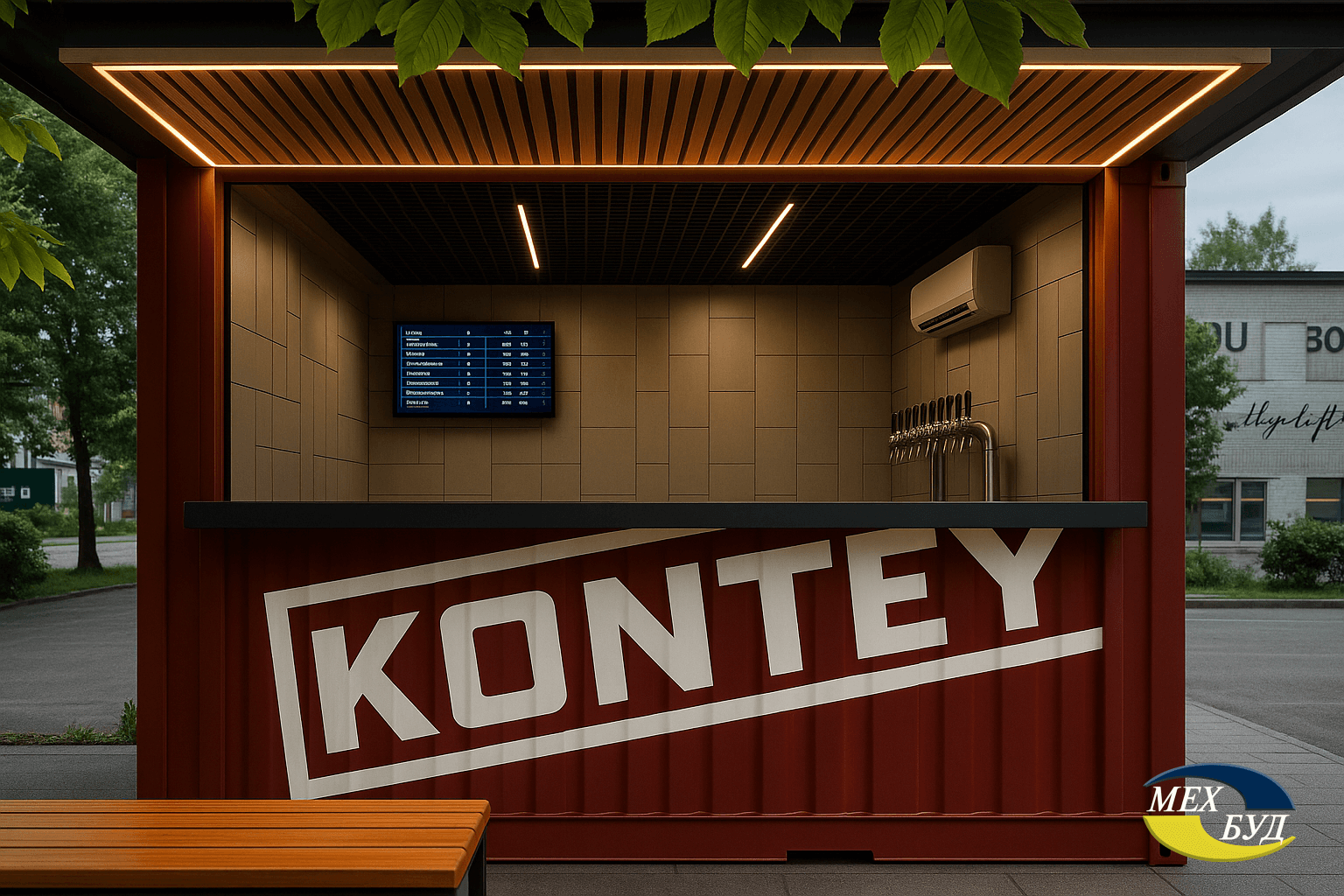
Konteyner is a bright representative of the “new wave” of Kyiv design, exploiting the aesthetics of maritime transportation and port warehouses. This is not just decor, but a philosophy of mobility and globalization.

Architectural Concept:

Using the aesthetics of shipping containers in stationary architecture. Walls are often sheathed with profiled metal, imitating the side of a container. The color scheme is restrained: anthracite, concrete, with bright accents of signal yellow or orange (colors of port cranes).

Design Features:

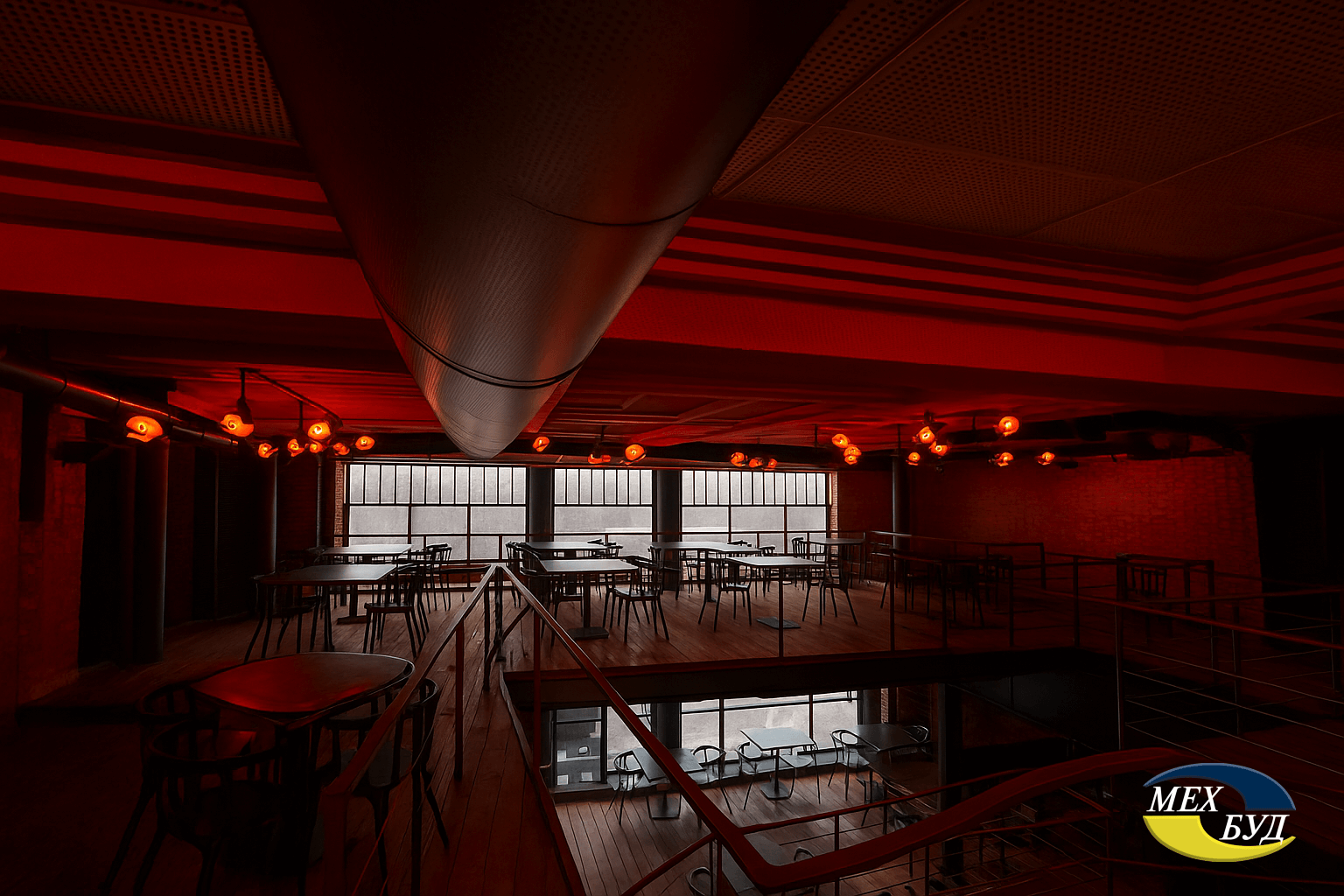
  • Space: Open planning, often using two-level structures (mezzanines) in high-ceiling premises.
  • Decor: Use of industrial markings, navigation signs, and technical fonts in the interior graphic design.

Construction Achievements

The network often occupies premises difficult to adapt in the historical center of Kyiv (for example, the Velyka Vasylkivska Street area), which requires a delicate approach to reconstruction.

  1. Historical Building Renovation: Strengthening foundations and walls when arranging new entrance groups. Use of brick masonry injection technologies for basement waterproofing.
  2. Acoustics: A large amount of metal and concrete creates an echo effect. An engineering achievement is the use of sprayed acoustic cellulose on the ceiling or the use of special sound-absorbing panels disguised as industrial decor.
konteyner

Mehbud Conceptual Design for Konteyner

Konteyner’s aesthetics perfectly resonates with the industrial DNA of the “Mehbud” factory.

Concept Visualization:

The bar’s summer terrace is fenced not with a standard fence, but with the “Horizon” system from “Mehbud” in deep matte gray. Fence sections are mounted on massive metal channels, reinforcing the industrial look.

  1. Wall Solutions: Using “Liberty” facade panels for interior wall finishing.
    • Innovation: The seamless construction of panels and the possibility of mounting them both horizontally and vertically allows creating unique geometric patterns that imitate container cladding, but with premium surface quality (without waves and defects inherent in ordinary profiled sheeting).
  2. Ceiling: Combined ceiling: “Grilyato GLK” above the bar area and “Cube-shaped slat” above the seating area. Slats with light wood texture will soften the industrial harshness of the interior, adding coziness for visitors without violating the overall concept.
  3. Entrance Group: Entrance canopy using a rack system integrated with linear lighting. This creates an effective light portal inviting inside.

#4 – MOVA Brewing Co. (Dnipro)

Architectural Profile: Industrial Monumentalism

MOVA in Dnipro is an architectural case of national scale. This is an example of revitalization of a former industrial zone and creation of a multifunctional complex including a factory, museum, restaurant, and store.

Architectural Concept:

“Factory as a spectacle.” The building is designed so that the production process is the main hero. A huge glass facade opens a view of a row of cylindrical-conical tanks (CCTs), which are illuminated at night, turning the factory into a light landmark of the district. The architecture is laconic, massive, with a clear rhythm of vertical elements.

Awards:

The project has been noted in numerous architectural reviews as an example of high-quality modern industrial architecture that has become a tourist magnet for Dnipro.

Construction Achievements

  1. Structure: Use of large-span metal trusses to cover huge halls without intermediate columns. This ensures maximum flexibility in space use.
  2. Energy Efficiency: Facade glazing is made using Double Silver multifunctional glass, which cuts off excess solar heat in summer (critical for Dnipro) and retains heat in winter.
  3. Flooring: Industrial polymer floors resistant to aggressive chemical environments and heavy loading equipment.

Mehbud Conceptual Design for MOVA

The scale of the facility requires solutions capable of covering large areas with perfect geometry.

Concept Visualization:

The factory’s administrative building is clad with a ventilated facade made of large-format “Mehbud” metal cassettes (up to 1-1.5 meters).

  1. Facade System: Ventilated facade with 150 mm thick mineral wool insulation.
    • Efficiency: Metal cassettes provide reliable protection of insulation from moisture and mechanical damage. The substructure system levels out irregularities in the walls of the old industrial frame. PVDF coating guarantees color fastness to fading under the active Dnipro sun for 30+ years.
  2. Tasting Hall Interior: Using “Pyramidal slat” ceiling. Its textured shape provides excellent sound diffusion, improving acoustic comfort in a large hall where hundreds of people can be simultaneously.
  3. Territory: Perimeter fence of the factory with “Blinds” system. This allows hiding the territory from prying eyes, ensuring ventilation (reduction of wind load on the fence), and maintaining the status of a modern enterprise.

#5 – Varvar Bar & Shop

Architectural Profile: Scandinavian Epic

The Varvar brand, inspired by Viking mythology, translates this aesthetic into architecture. This is a strict, masculine design where every detail has weight and texture.

Design and Materials:

Rough, “honest” materials dominate: charred wood (Shou Sugi Ban technique), black metal, concrete, leather. The color scheme is dark, dramatic: deep blue, graphite, wet asphalt color. Interiors often resemble a modern interpretation of the Scandinavian “Longhouse.”

Construction Solutions

Varvar locations are often situated in adapted premises with history.

  1. Conservation: Architects preserve old brick walls, covering them with matte lacquer to protect against dust but leaving time marks visible.
  2. Metal Structures: Active use of I-beams in the interior as decorative and load-bearing elements.

Mehbud Conceptual Design for Varvar

How to combine cold metal with wood aesthetics?

Concept Visualization:

Interior of a new Varvar bar. Walls are partially sheathed with “Vertical” metal siding with Printech “Antique Oak” coating.

  1. Facade and Interior: Using metal siding with aged wood imitation.
    • Advantage: Metal does not burn (combustibility group NG), unlike real wood, which removes numerous issues with fire inspection, especially for establishments with large crowds. At the same time, 3D printing technology on metal allows conveying not only the color but also the wood texture.
  2. Ceiling: Rack ceiling with multi-level mounting. Using slats of different heights creates a “wave” effect or inverted landscape, adding drama to the interior.
  3. Zoning: Perforated metal sheets (laser cutting) with patterns of runes or brand logo to create semi-transparent partitions between tables.

#6 – Obolon (Branded “O Market” Network)

Architectural Profile: Corporate Standard and Modularity

National giant “Obolon” is conducting a large-scale rebranding of its retail network. “O Market” architecture is an example of corporate functionalism. The main goal is recognizability and scaling speed.

Architectural Concept:

Clear geometric forms, predominance of white and corporate green colors. Large area of facade glazing. Buildings are designed as modular constructors, allowing easy adaptation to sites of different configurations.

Construction Achievements

  1. Quick-Assembly Buildings (QAB): Use of LSTC (light steel thin-walled structures) technology for building pavilions. This allows erecting a full-fledged store in 3-4 weeks.
  2. Energy Saving: Use of sandwich panels with polyisocyanurate (PIR) — material with the lowest thermal conductivity coefficient among modern insulations.

Mehbud Conceptual Design for “O Market”

For the mass segment, anti-vandalism, ease of maintenance (easy to clean), and corporate identity are important.

Concept Visualization:

The facade of a typical “O Market” is clad with “Optima” cassettes in corporate RAL colors.

  1. Facade: Metal cassettes.
    • Practicality: If vandals or a vehicle damage one cassette, it can be replaced locally without disassembling the entire facade. Metal is easily cleaned of graffiti using special solvents without damaging the coating.
  2. Ceiling: “Italian Design” ceiling (slat with rounded edges).
    • Hygiene: Absence of sharp corners and tight fit of slats prevents dust accumulation, which is important for food retail. White glossy color improves room lighting, allowing energy savings on electricity.
  3. Navigation: Integration of signs directly into the facade system using special embedded parts from “Mehbud,” which guarantees mounting reliability and absence of “cold bridges.”

#7 – Pravda (Beer Theater, Lviv)

Architectural Profile: Historical Context and Theatricality

“Pravda” in Lviv is a unique example of fitting a brewery and store into the fabric of a UNESCO World Heritage Site. Location on Rynok Square in the building of the former department store (Zipper Trading House) dictates the highest design requirements.

Architecture:

Style — modernism and art deco. The interior is built around the idea of “theater,” where production processes and consumption are a performance. High ceilings, galleries around the perimeter, huge brass vats.

Construction Challenges:

  1. Acoustics: The huge volume of the premises and hard surfaces create problems with sound during orchestra performances.
  2. Load: Placing heavy equipment on the floors of a historic building required creating unloading platforms and strengthening slabs with carbon fiber and metal beams.

Mehbud Conceptual Design for “Pravda”

Intervention in the facade of a historic building is impossible, so the focus shifts to interior and courtyard solutions.

Concept Visualization:

The inner courtyard (patio) is arranged as an additional recreation area using vertical landscaping and metal pergolas.

  1. Acoustic Ceiling: Using perforated metal panels with acoustic fleece on the back side in areas under galleries. This allows “dampening” unwanted sound reflections, making the orchestra sound clearer. Metal can be painted “as copper” or “aged bronze” to harmonize with the historic interior.
  2. Technical Fencing: Production zone fencing with expanded metal mesh in a frame. This is an industrial but refined material that passes light and air.

#8 – Tsypa (Hutsul Craft Brewery)

Architectural Profile: Carpathian Fusion

Origin from the village of Kvasy (Carpathians) determines the brand’s DNA. “Tsypa” establishment architecture is an attempt to rethink traditional Hutsul architecture in a modern way.

Design:

Use of shingles (wooden tiles) not only on roofs but also in interior wall decoration. Stone, rough plaster, wrought iron. This is “warm,” tactile architecture.

Mehbud Conceptual Design for “Tsypa”

“Mehbud’s” task is to offer materials that visually follow traditions but have the technological advantages of metal.

Concept Visualization:

“Tsypa” restaurant summer terrace in Kyiv. The fence is made of metal pickets imitating a wooden fence but with perfect geometry.

  1. Facade: “Block House” metal siding with “Dark Oak” print with 3D effect.
    • Context: In humid climate or polluted city, natural wood quickly loses appearance (grays, cracks). Metal with polymer coating maintains the appearance of fresh log for decades.
  2. “Rancho” Fence: Wide horizontal terrace fence slats create coziness, reminiscent of animal pens in the mountains (allusion to the name “Tsypa”), but look modern and stylish.
  3. Ceiling: Rack ceiling with wood texture in the interior. It corresponds to the ecological style but allows integrating modern fire suppression systems (sprinklers), which is difficult to do in wooden lining.

Analytical Review: Construction Trends and Industry Statistics 2025

Based on the analysis of architectural solutions of top networks, we can identify key quantitative and qualitative indicators characterizing the construction industry in this sector.

Statistical Data

Indicator 2025 Value Dynamics (vs 2020) Expert Comment
Adaptive Reuse Share 65% ⬆ +20% Retailers increasingly choose old buildings instead of new ones, valuing the “character” of the premises.
Metal Ceiling Integration 45% of areas ⬆ +30% Metal displaces “Armstrong” and drywall due to durability and design.
Facade Energy Efficiency R ≥ 3.3 m²K/W Standard Regulatory value for Ukraine’s first temperature zone has become a mandatory minimum.
Average Fit-out Time 35 days ⬇ -15% Use of dry technologies (ventilated facades, modular ceilings) accelerates launch.
Use of Ukrainian Materials 70% ⬆ +25% Logistical risks and patriotism stimulate transition to domestic brands (like “Mehbud”).

Second-Order Insights

  1. Impact of COVID-19 and War on Architecture: We observe the consolidation of the trend towards autonomy and safety. Modern stores are designed considering the possibility of quick transformation (increasing distance between tables, contactless pickup zones). Metal surfaces that are easy to disinfect and do not absorb dirt have become priorities in material selection.
  2. Aesthetics as Added Value: In conditions of fierce competition, facade design becomes a direct conversion factor. Research shows that a high-quality, illuminated, and tactilely pleasant facade increases spontaneous visitor flow (“walk-in traffic”) by 20-25%. “Mehbud” products (designer facades) here act not as consumable material but as an investment in marketing.
  3. Environmental Paradox: On one hand, consumers want “naturalness” (wood), on the other — environmental friendliness is now understood as durability. A metal facade that serves 50 years and is 100% recyclable is more environmentally friendly (“sustainable”) than wood that needs replacement every 10 years and chemical treatment.

Case Study: Renovation of Historic Building for Flagship Store (Hypothetical Project)

Let’s consider a detailed example (case) of how modern “Mehbud” technologies can solve a complex architectural task.

Object: First floor of a 1905 building in Podil (Kyiv).

Task: Create a modern beer restaurant, preserving historical charm while ensuring energy efficiency.

Solution:

  1. Facade: Restoration of brickwork. Entrance group and new window openings are framed with metal reveals from “Mehbud” cassettes in “Dark Copper” color. This creates a contrast of old and new, emphasizing history rather than imitating it.
  2. Ceiling: Historical vaulting (“Monier arches”) is cleaned. Under it, a “floating” island of “Grilyato” ceiling is mounted on suspensions. Acoustic mats are integrated into the grilyato cells.
    • Result: We see the beauty of the old ceiling through the grille but solve the echo problem and placement of modern ventilation hidden behind the grilyato.
  3. Inner Courtyard: Technical zone fencing (chillers, garbage bins) with “Louvers” fence. It provides equipment ventilation but completely blocks visual noise for upper floor residents looking into the courtyard.

Conclusions

The Ukrainian specialized retail market demonstrates high maturity. We see a departure from primitivism and kitsch towards meaningful, contextual architecture.

Key Conclusions:

  1. Materials Decide Everything: The success of architectural image depends on material quality. Metal (steel, aluminum) becomes the dominant material due to its versatility — it can be both “cold hi-tech” (Litra) and “warm loft” (HOP HEY, Varvar).
  2. Partnership with Manufacturers: Implementation of complex design ideas is impossible without direct cooperation with manufacturers such as the “Mehbud” factory. The ability to manufacture non-standard elements (radius slats, custom perforation, unique colors) allows architects not to limit their imagination to catalog positions.
  3. Urban Responsibility: Business has realized that a beautiful city is profitable. Investments in quality facade, adjacent territory improvement, and inclusivity return through customer loyalty and brand capitalization growth.

The industry’s future lies in hybrid solutions where historical heritage combines with advanced construction, energy efficiency, and design technologies, creating comfortable and aesthetic space for Ukrainian life.

author
Alex Z
About the author:

Oleksandr — Digital Marketing Expert for Construction & Manufacturing Industries Oleksandr is a seasoned digital marketing specialist, delivering powerful results for the construction and manuf...

More
0 0 votes
Article Rating
Subscribe
Notify of
guest
0 Comments
Oldest
Newest Most Voted
Inline Feedbacks
View all comments