RWA Tokenization of Heavy Machinery: How to Trade Construction Yields
Generic selectors
Exact matches only
Search in title
Search in content
Post Type Selectors

RWA Tokenization of Heavy Machinery: How to Trade Construction Yields

July 8, 2026
6  
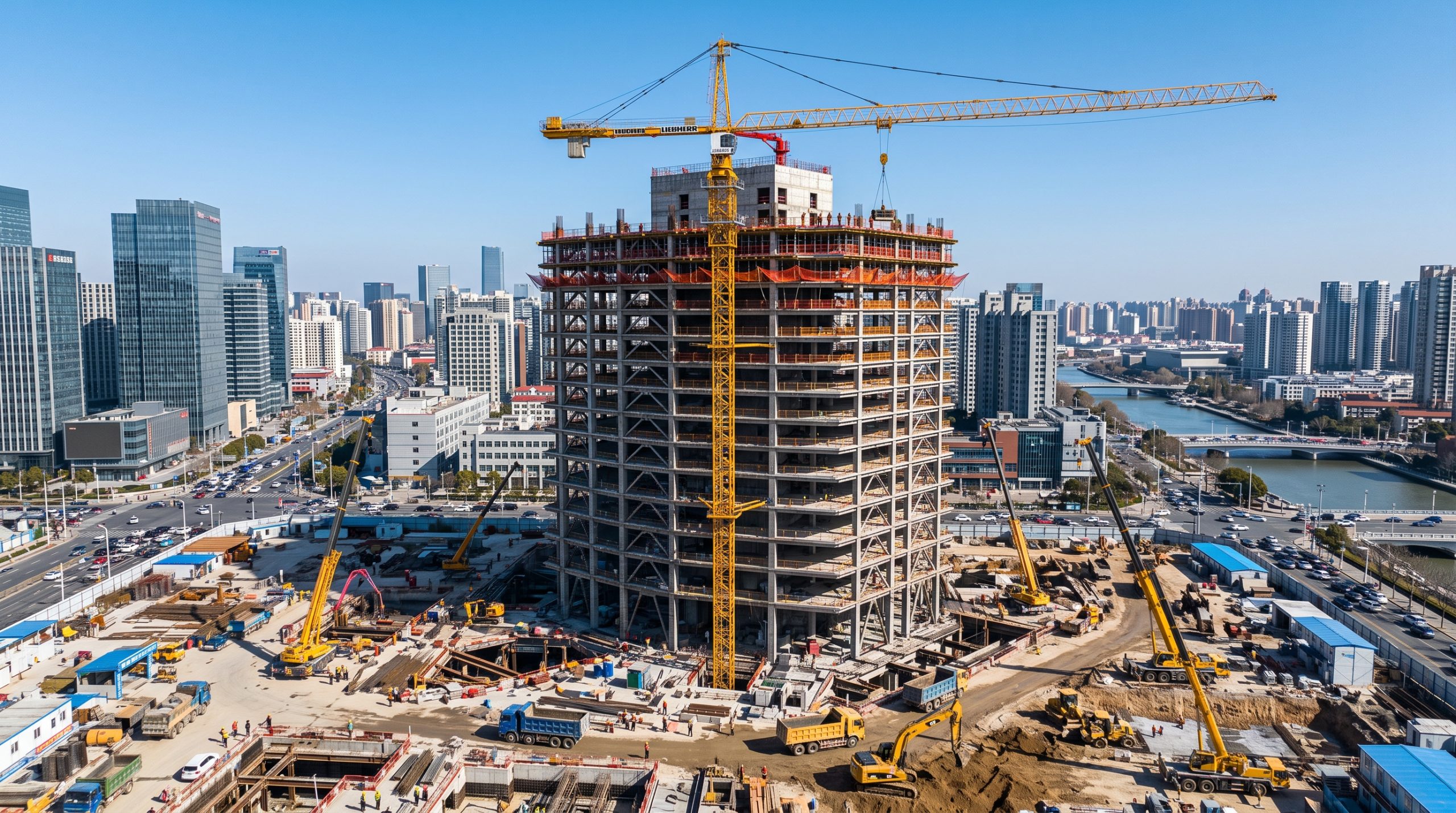
Large yellow tower crane operating on a commercial skyscraper construction site against a clear blue sky.

The global construction and manufacturing sectors run on massive capital expenditure. Securing the equipment needed to build modern infrastructure — from towering commercial high-rises to sprawling industrial facilities — requires staggering upfront investment. A new high-capacity crawler crane or a specialized CNC milling machine can easily exceed $2 million, while even compact earthmoving equipment requires hundreds of thousands of dollars to deploy. Traditionally, these assets sit on the balance sheets of large leasing conglomerates or major contractors, generating consistent rental yields that remain completely inaccessible to the average retail or institutional investor.

The maturation of blockchain technology and decentralized finance (DeFi) is starting to change that. RWA (real-world asset) tokenization of heavy machinery converts physical, steel-and-hydraulics construction equipment into fractionalized digital assets. Through blockchain-based tokens, a $2 million tower crane can in principle be divided into 20,000 digital shares priced at $100 each.

This approach bridges traditional B2B equipment leasing with Web3-style liquidity. For construction firms, it can unlock trapped capital and provide working funds without the delays of conventional bank financing. For investors, it offers a route to exposure on rental yields generated by physical infrastructure. Using IoT telemetry, smart contracts, and legal wrappers, the operating hours of a bulldozer in one city can, in theory, translate into a digital yield payout for an investor elsewhere.

This guide explains the mechanics, economics, and technology behind fractional heavy machinery ownership, along with the real risks that come with tokenizing physical, depreciating assets. This article is for educational purposes only and does not constitute financial, investment, or legal advice.

Quick Answer

What is RWA tokenization of heavy machinery? RWA tokenization of heavy machinery is the process of converting ownership or revenue rights in industrial equipment into fractional digital tokens on a blockchain. This is designed to let multiple investors buy small shares of an expensive machine and receive proportional yields generated by the equipment’s leasing rates, tracked through smart contracts and IoT sensors.

The Illiquidity Problem in Heavy Construction

To understand the appeal of tokenizing construction assets, start with the structural inefficiencies of traditional heavy-industry financing. Construction companies operate in a capital-intensive environment with thin margins and delayed payment cycles. A contractor may secure a multi-year contract to build a commercial tower, but must front the capital for tower cranes, excavators, and material handlers long before the client pays the final invoice.

That creates a liquidity problem: millions of dollars sit trapped as physical assets on the balance sheet. These machines hold real value, but they can’t be liquidated quickly to cover payroll, materials, or emergency repairs. Bank loans against equipment exist, but the process is friction-heavy — weeks of underwriting, extensive checks, and interest costs that eat into already-thin margins.

Tokenization offers an alternative operating model. Instead of relying on conventional lending, a firm places its equipment’s ownership record on a distributed ledger and sells fractional usage rights or revenue shares to a pool of investors. The enterprise gets working capital; investors gain access to an asset class historically gated by high capital minimums.

The Architecture of RWA Tokenization

Turning a physical crane into a yield-bearing digital asset requires legal structuring, hardware telemetry, and blockchain architecture working together. Each layer exists to make sure the digital token reflects the physical reality of the machine’s operation.

The Legal Wrapper: Special Purpose Vehicles (SPVs)

A blockchain token has no intrinsic value unless it is legally bound to a real-world asset. That connection is typically established through a “legal wrapper.” In heavy-machinery tokenization, the physical equipment is usually purchased and held by a Special Purpose Vehicle (SPV) — an independent, bankruptcy-remote legal entity such as an LLC or a specialized trust.

The SPV holds title to the machine and issues equity or debt instruments, which are then represented by digital tokens on a blockchain network. This structure is meant to protect investors: if the tokenization platform itself fails, the physical asset in principle remains owned by token holders through the SPV, not the platform operator.

Programmatic compliance is typically embedded into the token itself, often through the ERC-3643 compliance standard, which layers identity checks directly onto the token contract. In practice this means every transfer is checked against Know Your Customer (KYC) and Anti-Money Laundering (AML) registries before it executes, so fractional shares can move only between verified, eligible wallets — a requirement for staying inside securities regulations in most jurisdictions.
IoT, Telemetry, and Data Oracles

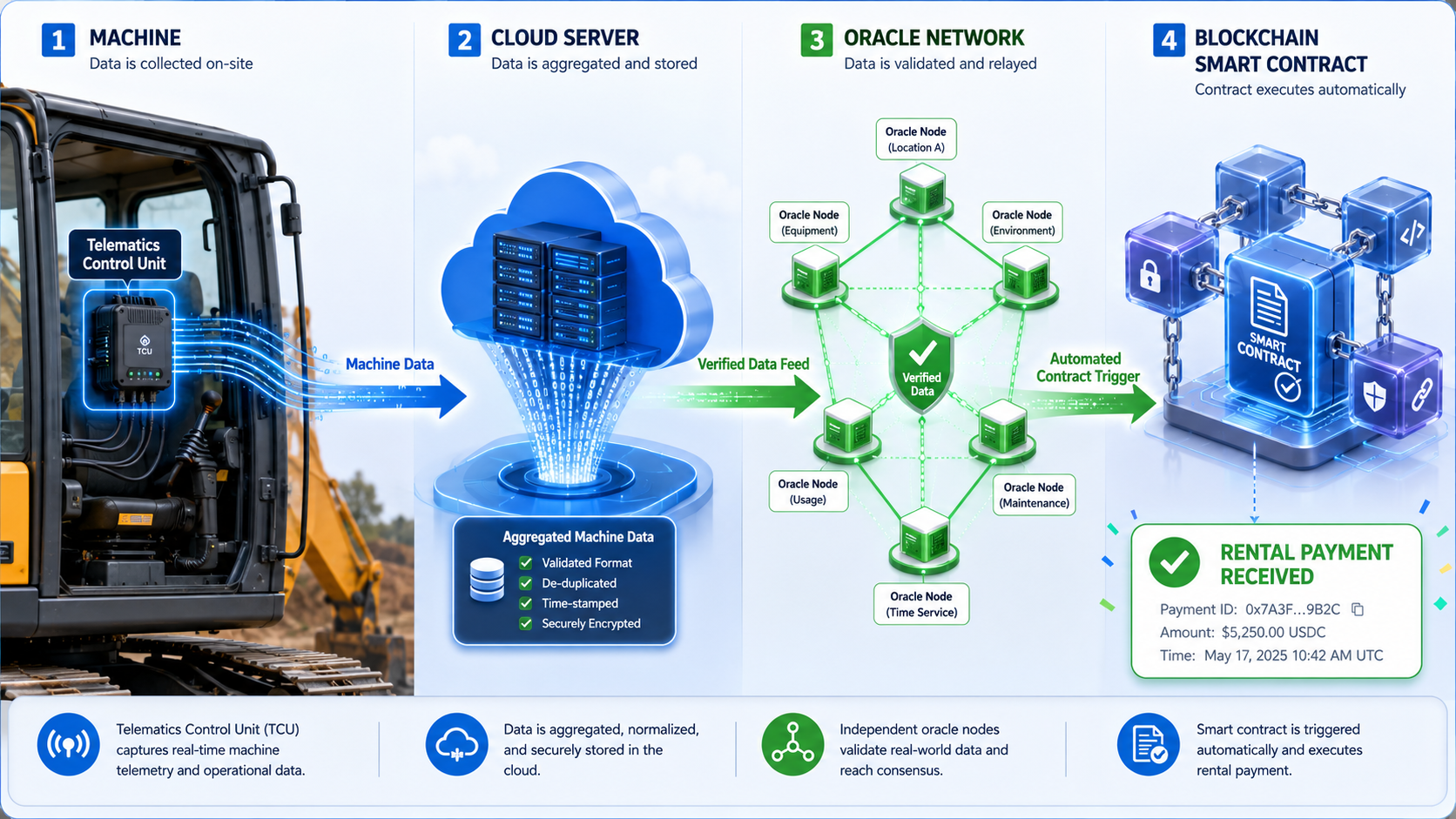
Infographic showing data flowing from a construction excavator's IoT sensor to a cloud server, through an oracle network, into a blockchain smart contract.

For a smart contract to distribute yield based on actual equipment usage, the blockchain needs a reliable way to know what the physical machine is doing. That’s the job of Internet of Things (IoT) sensors and Original Equipment Manufacturer (OEM) telematics.

Modern heavy equipment already generates substantial operational data. Telematics platforms such as Caterpillar’s VisionLink and Liebherr’s LiDAT system track metrics including engine service meter hours, fuel consumption, hydraulic pressure, payload weight, and GPS location through onboard telematics control units connected to the machine’s diagnostic bus.

That data reaches cloud-based APIs over cellular or satellite links. Blockchains, however, are isolated systems that cannot natively pull data from external servers. Decentralized Physical Infrastructure Networks (DePINs) bridge this gap using cryptographic oracles — networks such as Chainlink — which fetch telemetry from the OEM API, attempt to verify it, and feed the result into the smart contract that calculates yield.

Layer-1 Blockchains and Smart Contract Execution

While general-purpose blockchains can technically handle asset tokenization, specialized Layer-1 networks are emerging for the higher-frequency demands of what’s sometimes called the “machine economy.” Peaq’s Machine RWA Framework is one example: it registers a physical machine with a decentralized identity, mints it as a non-fungible token (NFT), places that NFT into a tokenization container, and fractionalizes it into compliant ownership shares.

As IoT data flows in through oracles, the smart contract calculates accrued lease revenue, deducts programmed amounts for maintenance reserves, insurance, and operator costs, and routes the net yield — usually in a stablecoin such as USDC — to the wallets of fractional token holders.

The Economics of Heavy Machinery: Trading Construction Yields

To assess the investment appeal of Machine RWAs, it helps to look at the baseline economics of construction equipment leasing. Unlike speculative digital assets driven by hype and inflationary tokenomics, heavy machinery generates revenue tied to essential, utility-driven construction work. This section is for educational purposes only and is not financial advice — historical rental rates are not a guarantee of future returns.

Analyzing Crane Lease Rates

Cranes represent large capital investments with correspondingly large rental returns. Leasing structures generally fall into two categories: bare rentals (the contractor supplies operator and fuel) and operated-and-maintained rentals (the leasing company supplies equipment, a certified operator, and a rigging crew).

Published market data gives a sense of the cash-flow range. For bare rentals, a 110-ton crawler crane can average roughly $15,500 per month, while a 440-ton crawler crane can reach around $90,000 per month. For operated rentals, hourly rates scale with lifting capacity: a mid-sized 40-ton hydraulic crane may bill around $315 per hour, while a 600-ton all-terrain crane can require a minimum of roughly $1,595 per hour.

Because tokenization targets the asset’s direct revenue, an SPV operating a fleet of bare-rental crawler cranes can, in principle, capture fairly predictable, contract-backed monthly cash flow — demand for a tower crane on an active job site doesn’t move with cryptocurrency market cycles.

Excavators and Earthmoving Equipment

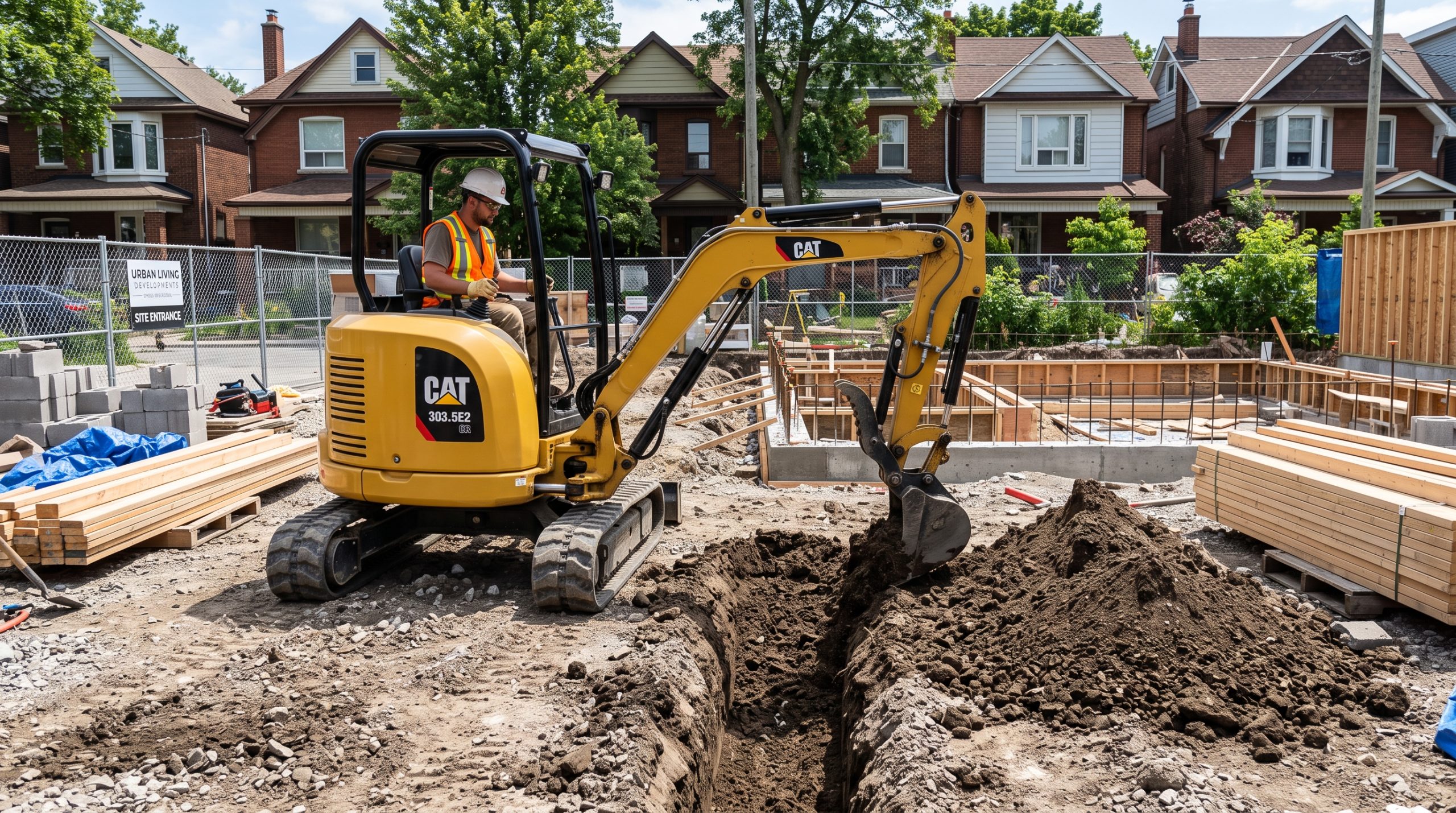
Compact mini excavator digging a trench on a residential construction site.

While cranes dominate vertical construction, earthmoving equipment represents a more fluid rental market for civil and residential work. In major metropolitan markets, daily rates for a 1-to-3 tonne mini excavator commonly range from roughly $300 to $700, depending on delivery logistics and attachments.

A single mini excavator generates far less revenue than a tower crane, but tokenized platforms can aggregate entire fleets of earthmoving equipment into a single yield-bearing vehicle. Because these machines deploy across many residential and commercial sites, a tokenized fleet can diversify geographic and project-specific risk more easily than a single large asset.

Comparative Economics of Construction Equipment Leasing

Equipment Type Estimated Capital Cost Rental Structure Typical Rate Range (USD) Primary Application
Mini Excavator (1–3 Ton) $30,000 – $60,000 Daily $300 – $700 / Day Urban residential, trenching
Hydraulic Crane (40 Ton) $200,000 – $400,000 Hourly (Operated) $315 – $375 / Hour Commercial steel erection
Crawler Crane (110 Ton) $800,000 – $1.2M Monthly (Bare) ~$15,500 / Month Heavy civil infrastructure
Crawler Crane (440 Ton) $2.5M – $4.0M Monthly (Bare) ~$90,000 / Month Wind turbine assembly, bridges
All-Terrain Crane (600 Ton) $3.5M+ Hourly (Operated) ~$1,595+ / Hour Specialized heavy lifts

Rates are illustrative industry ranges and vary significantly by region, market conditions, and contract terms. Verify current pricing with equipment lessors before making business decisions.

Strategic Implementation: B2B Business Adoption

For construction and manufacturing firms, adopting blockchain-based leasing is less about chasing a trend and more about restructuring working capital. A tokenized leasing model could allow regional contractors and mid-sized manufacturers to access capital pools that were previously reserved for large firms with direct bank relationships.

That said, moving from traditional ledger accounting to on-chain SPV management requires specialized knowledge that most construction firms don’t have in-house. As a crypto construction expert can help explain to companies exploring blockchain, DeFi, and AI adoption in construction or manufacturing, the technical side of tokenization needs to be connected to practical B2B execution — aligning OEM telemetry standards, regulatory requirements, and smart contract deployment before capital is committed.

The Cross-Industry Ripple Effect on Architecture and Manufacturing

Tokenizing heavy machinery has downstream effects on the broader building-materials supply chain. When construction firms reduce equipment financing costs, they free up project budgets for better materials.

Consider non-bearing ventilated facades (NVF). High-quality building envelopes often use engineered galvanized steel panels — commonly 0.7 mm to 2.0 mm thick — to hold up against wind shear and provide long-term structural integrity. Installing these panels on commercial high-rises requires extended use of aerial lifts, scaffolding, and tower cranes, which is exactly the kind of equipment access that tokenized financing is designed to make cheaper and more available.

The same logic extends across sheet metal applications more broadly, including the suspended metal profiles used in ceiling systems, which generally need to be at least 0.45 mm thick to avoid sagging and long-term deformation. When contractors are squeezed by expensive equipment financing, they sometimes substitute thinner, cheaper sheet metal to preserve margins. If tokenized liquidity genuinely lowers the cost of financing heavy equipment, it could reduce the pressure to cut corners on materials, supporting better building safety and durability over time.

Traditional Leasing vs. Tokenized Machinery

Feature / Metric Traditional Equipment Leasing Tokenized Heavy Machinery (RWA)
Capital Source Commercial banks, credit lines, private equity Global fractional investors via digital platforms
Asset Liquidity Illiquid; selling a used crane can take months Designed for 24/7 secondary-market trading (where regulated venues exist)
Yield Distribution Quarterly or annual dividends Potentially real-time or daily automated payouts via smart contracts
Entry Barrier Often $1 million+ minimum Fractional shares starting as low as $50–$100 on some platforms
Data Transparency Siloed in proprietary corporate databases Telemetry and revenue data can be made verifiable on-chain
Compliance & Identity Manual paperwork, banking audits Programmatic KYC/AML enforcement via standards like ERC-3643

Realistic Business Scenario: From Job Site to Digital Wallet

To illustrate the mechanics, here is a hypothetical, illustrative example — not a real transaction or a projection of expected returns.

Asset initialization: A construction logistics company needs a 200-ton all-terrain hydraulic crane priced around $1.5 million. Instead of a high-interest bank loan, it partners with a Machine RWA tokenization platform. An SPV holds the physical title and tokenizes 50% of the asset’s value ($750,000) into 7,500 digital tokens priced at $100 each.

The investment: An investor completes the platform’s KYC verification and purchases one token for $100, representing a 1/15,000th fractional revenue right to the crane’s operational yield.

The operation: The crane deploys to a commercial project and is leased on an operated basis at roughly $825 per hour for structural steel erection.

The data flow: The crane’s onboard telematics system records ten hours of active hoisting on a given day. The telematics control unit transmits the encrypted data to the manufacturer’s cloud API. A decentralized oracle network fetches that data, attempts to verify the operating hours, and triggers the smart contract.

The yield distribution: The smart contract calculates gross daily revenue (~$8,250), deducts roughly 30% for wages, fuel, maintenance escrow, and platform fees, and converts the remaining ~$5,775 into a stablecoin distributed proportionally to token holders. The investor’s 1/15,000th share would work out to roughly $0.38 for that day, or around $7.70 over a heavily utilized month of 200 operating hours.

This is a simplified illustration of the mechanism, not an investment projection — actual yields depend heavily on utilization rates, downtime, platform fee structures, and market demand, all of which vary considerably in practice.

Risks, Limitations, and Expert Considerations

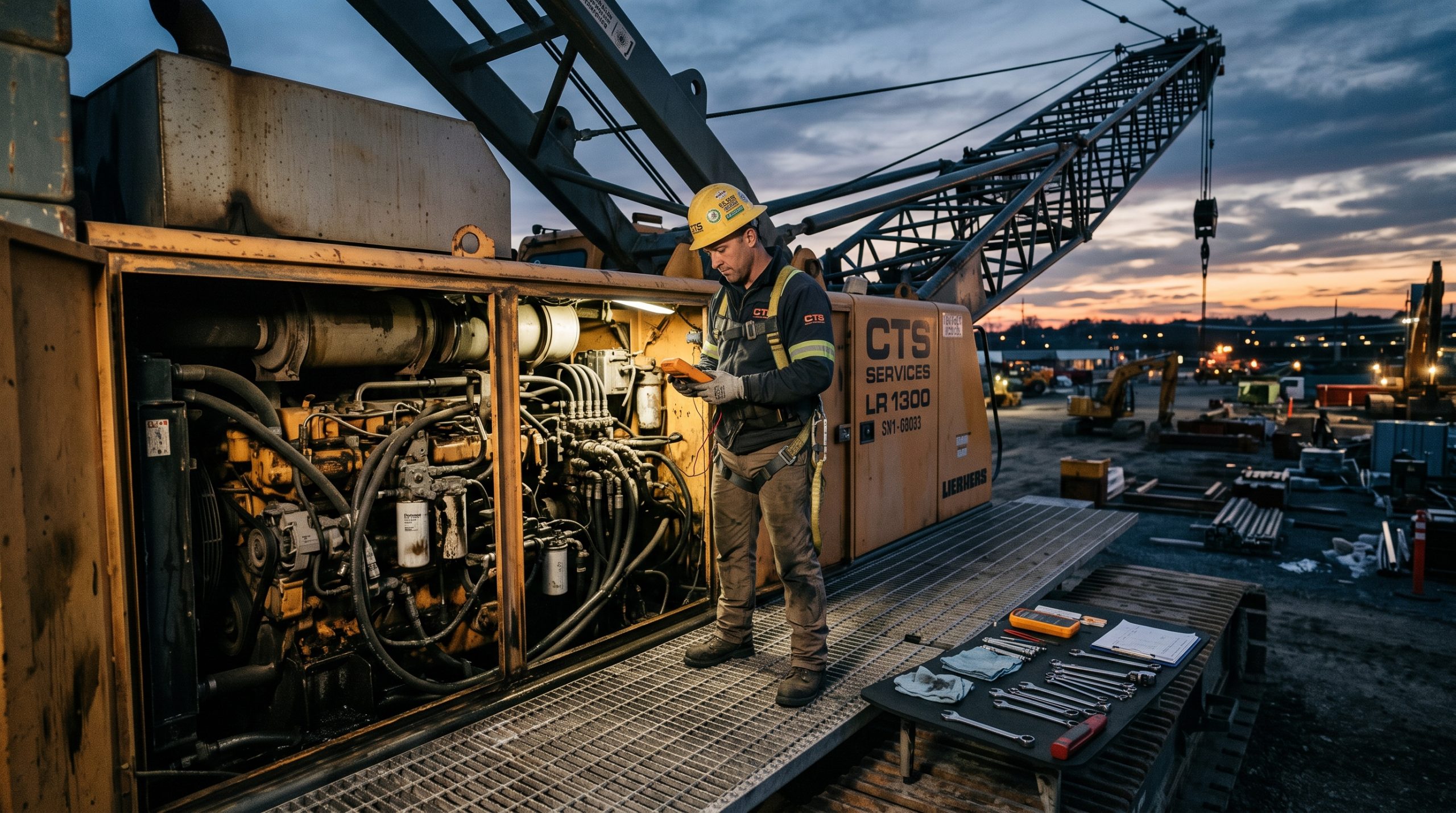
Heavy construction crane undergoing maintenance with an engineer inspecting hydraulic components.

Tokenizing heavy equipment carries a stacked risk profile that differs from purely digital DeFi protocols. Investors and B2B leaders should approach the sector with a clear understanding of its limitations.

  1. Regulatory uncertainty. Tokens representing fractional ownership and revenue shares are generally classified as securities by regulators including the U.S. SEC. Navigating frameworks like the EU’s MiCA regulation requires careful legal structuring; a flaw in the legal wrapper or a shift in regulatory classification could make tokens unenforceable or halt secondary trading.
  2. Hardware depreciation and mechanical failure. Unlike a software protocol, a physical crane or excavator breaks down and requires maintenance. Yield models need to account for depreciation and maintenance reserves realistically — a catastrophic hydraulic failure resulting in months of downtime would push tokenized yield to zero for that period.
  3. Oracle manipulation and telemetry spoofing. The system depends on the integrity of the IoT data bridging the physical and digital worlds. If telematics data is tampered with or spoofed, a smart contract could be tricked into making incorrect payouts. Reputable platforms mitigate this by cross-referencing multiple independent data points (engine RPM, GPS, hydraulic pressure) before confirming operations.
  4. Secondary market liquidity gaps. Tokenization theoretically enables 24/7 trading, but actual liquidity depends on market demand. An investor holding shares in a specialized machine may struggle to find a buyer during a construction-sector downturn, leading to price slippage or effectively trapped capital.

Key Takeaways

  • RWA tokenization of heavy machinery converts illiquid, high-CAPEX equipment into fractional digital assets, potentially unlocking working capital for construction and manufacturing firms.
  • It could give retail and institutional investors access to yields tied to physical equipment leasing rates, without the traditional million-dollar entry barrier — though this remains a securities-regulated, illiquid, and risk-bearing asset class.
  • The mechanism depends on a working stack of OEM telemetry, decentralized oracles, and specialized Layer-1 blockchains built for machine-economy use cases.
  • Legal structuring (SPVs) and programmable compliance (such as ERC-3643) are prerequisites for staying inside securities regulations, not optional extras.
  • Returns are tethered to physical realities — depreciation, downtime, and local rental demand — and are not comparable to purely digital yield products.

FAQ

How is a physical crane converted into a digital token?

The physical crane is purchased and held by a Special Purpose Vehicle (SPV), such as a trust or an LLC. The SPV then issues digital tokens on a blockchain that represent fractional shares of the entity’s equity or debt, governed by smart contracts designed for regulatory compliance.

What ensures a token holder actually receives their yield?

Yield distribution is intended to be handled by self-executing smart contracts connected to the machine’s IoT telemetry via data oracles. When the machine reports verified operating hours, the contract is designed to deduct maintenance fees and route net leasing revenue to token holders’ wallets — though this depends entirely on the platform’s technical implementation and legal enforceability.

Are heavy machinery tokens considered securities?

In most major jurisdictions, tokens offering a reasonable expectation of profit derived from the managerial efforts of others — such as leasing out construction equipment — are treated as securities and must comply with relevant financial regulations. This is not legal advice; consult a securities attorney for a specific jurisdiction.

Can fractional machine tokens be sold at any time?

In principle, tokenization enables 24/7 trading on secondary digital exchanges. In practice, because these tokens are regulated securities, they typically can only be sold to other KYC/AML-verified investors on compliant platforms, and actual liquidity depends heavily on market demand for that specific asset.

What happens if the physical machine breaks down or is destroyed?

If a machine breaks down, it stops generating leasing revenue and token yield pauses until repairs are complete. To manage this risk, SPVs managing these assets typically carry heavy equipment insurance; in the event of total loss, insurance payouts would be distributed proportionally to token holders under the platform’s terms.

How could blockchain reduce financing costs for construction companies?

By issuing tokens, construction firms could potentially bypass some of the interest costs, lengthy approval processes, and intermediary fees associated with traditional bank financing, raising capital directly from a pool of investors. This is a developing area, and actual cost savings depend on platform fees, legal structuring costs, and regulatory compliance overhead, which can be substantial.

This article is for educational purposes only and does not constitute financial, investment, tax, or legal advice. Tokenized real-world assets carry regulatory, technical, and market risks; consult qualified professionals before making investment or financing decisions.

3. Key Takeaways

  • RWA tokenization of heavy machinery converts illiquid, high-CAPEX equipment into fractional digital assets, potentially unlocking working capital for construction and manufacturing firms.
  • It could give investors access to yields tied to physical equipment leasing, without the traditional million-dollar entry barrier — while remaining a securities-regulated, illiquid, and risk-bearing asset class.
  • The mechanism depends on a working stack of OEM telemetry, decentralized oracles, and specialized Layer-1 blockchains built for machine-economy use cases.
  • Legal structuring (SPVs) and programmable compliance (e.g., ERC-3643) are prerequisites, not optional extras.
  • Returns are tethered to physical realities — depreciation, downtime, and local rental demand.
author
Alex Z
About the author:

Oleksandr — Digital Marketing Expert for Construction & Manufacturing Industries Oleksandr is a seasoned digital marketing specialist, delivering powerful results for the construction and manuf...

More
0 0 votes
Article Rating
Subscribe
Notify of
guest
0 Comments
Oldest
Newest Most Voted