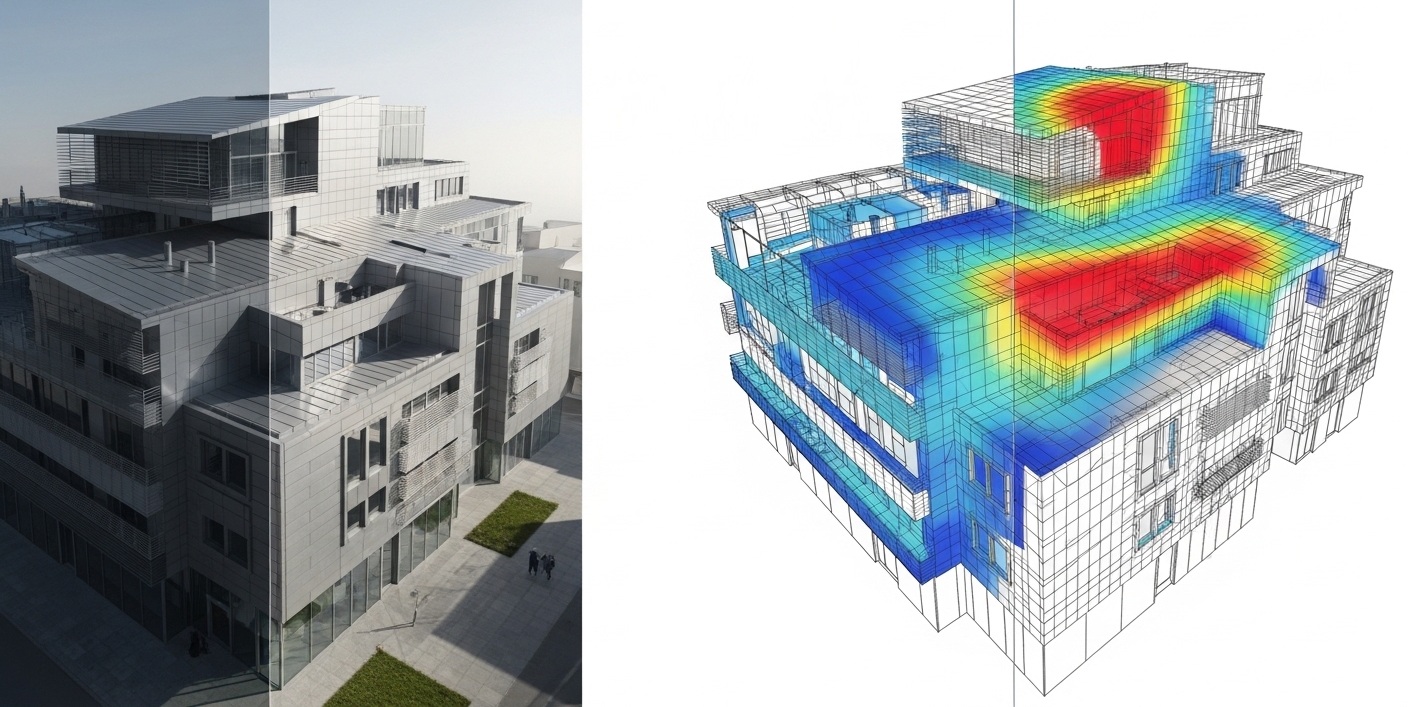
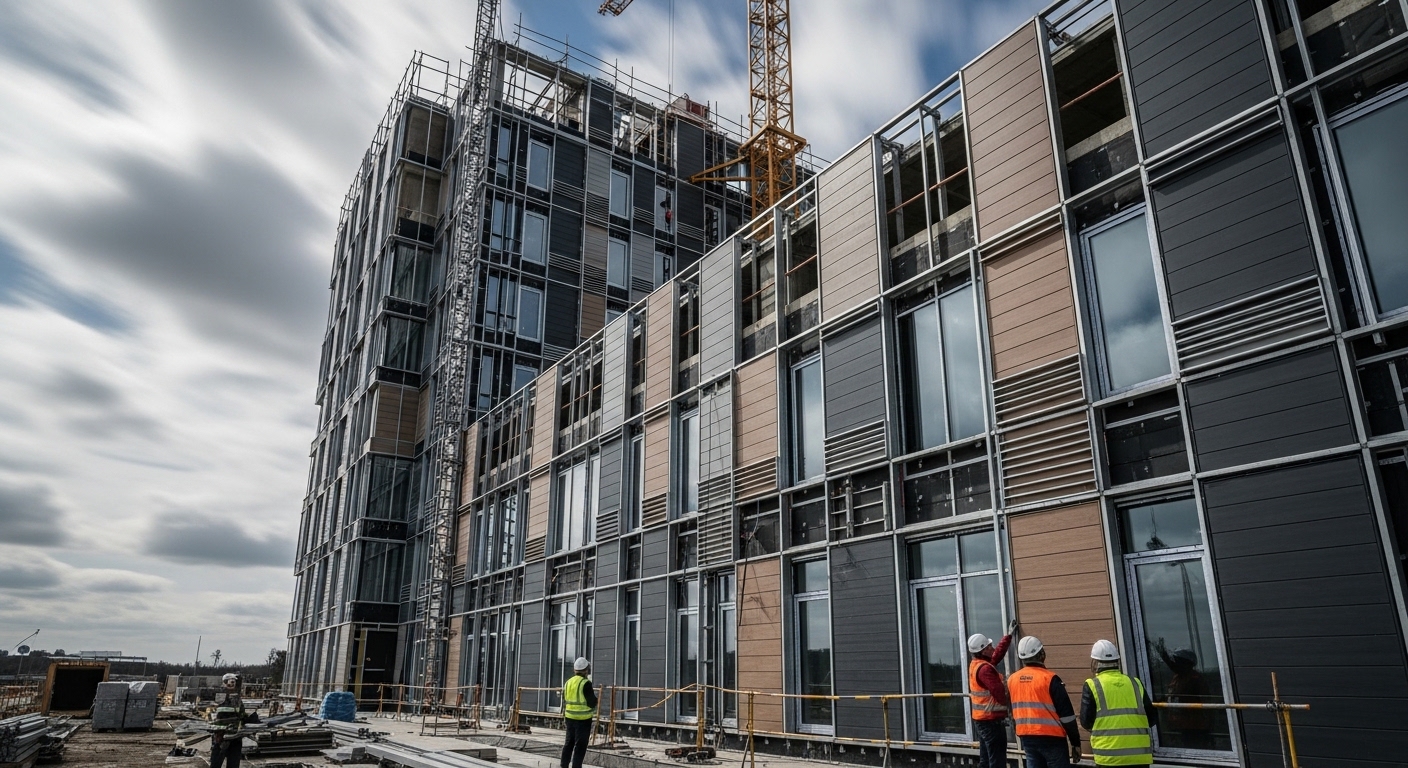
As of 2026, the Ukrainian construction sector is undergoing a phase of profound modernization and large-scale reconstruction. Climate change is also dictating new conditions: while winters are becoming somewhat milder, the frequency of extreme wind gusts and anomalous snowfall is increasing. For building envelope systems—such as facades, roofs, and fences produced by “Mehbud”—these factors are decisive during the design phase.
Why Calculation Accuracy is Critical in 2026
Mehbud products, including facade cassettes, lamellas, and metal slats, are manufactured from high-quality galvanized steel with a polymer coating, typically ranging from $0.7$ to $1.5$ mm in thickness. While these systems offer lightness and aesthetic appeal, their low self-weight makes them highly susceptible to wind pressure, a characteristic known as “sail area.” Without proper structural analysis, even the highest-quality cassette can deform or be torn from its substructure due to negative wind pressure, often referred to as the suction effect.
In 2026, the transition to the second generation of Eurocodes and updated National Standards (DBN) in Ukraine has been finalized, requiring engineers to use modern software capable of handling new reliability algorithms.