Analytical Report: State and Prospects of Ukraine’s Energy-Efficient Materials and Building Envelope Market (2026)
Generic selectors
Exact matches only
Search in title
Search in content
Post Type Selectors

Analytical Report: State and Prospects of Ukraine’s Energy-Efficient Materials and Building Envelope Market (2026)

December 22, 2025
2  

1. Macroeconomic Landscape and Strategic Context of the Industry

Ukraine’s thermal insulation materials and building envelope market as of 2025 is undergoing a period of fundamental transformation driven by a complex of geopolitical, economic, and regulatory factors. The industry, traditionally viewed through the lens of seasonal construction demand, has acquired strategic significance in the context of national security and energy independence. The key development vector has become large-scale restoration of damaged housing stock and infrastructure, occurring in parallel with implementation of strict European energy efficiency standards.

1.1. Regulatory Imperatives and Standardization

The defining factor of market dynamics in 2025 is the harmonization of Ukrainian construction legislation with European Union standards. Specifically, this concerns the transition to NZEB (Near Zero Energy Buildings) standards. This transition requires developers and private investors to use comprehensive solutions that include not only thicker insulation layers but also integration of recuperation systems, high-efficiency glazing, and renewable energy sources.

State support programs such as the Energy Efficiency Fund and the “GreenDIM” program serve as catalysts for demand for certified materials. In June 2025, the European Union together with Germany provided additional financing of 18 million euros to support these initiatives, demonstrating long-term confidence from international partners in the chosen course of thermal modernization. This creates a stable, government and donor-guaranteed sales market for manufacturers capable of confirming their product compliance with high quality standards.

1.2. Economic Challenges: Inflation and Pricing

Despite positive demand trends, the manufacturing sector faces serious economic challenges. Analysis of forecasts from leading market players indicates inevitable growth in the cost of construction materials and work in 2025. Experts expect price increases in the range of 15% to 25%, driven by the cumulative effect of several macroeconomic indicators.

First, there is significant inflationary pressure, which according to forecasts may reach 10% annually. This directly affects the cost of raw material components, a significant portion of which, especially for the chemical industry (polystyrene foam production) and metallurgy (high-quality coated steel), remains import-dependent. Currency fluctuations, particularly the expected dollar rate of 45 hryvnias, automatically increase the final product cost for Ukrainian consumers.

Second, changes in fiscal policy, particularly the increase in military tax from 1.5% to 5%, raise the tax burden on payroll and operational activities of enterprises. This forces manufacturers to revise wholesale prices to maintain profitability.

Third, a critical factor remains the shortage of qualified labor. Mobilization processes and migration have led to a shortage of installation specialists, provoking wage growth in the sector and, consequently, increasing the cost of facade insulation services. Labor market analysis shows that prices for facade insulation work start from 550-650 UAH per square meter, and this figure tends to grow.
ZOV Marketing Industrial scene Large stacks of EPS and XPS bo 358dea1c 92df 43b1 bd08 f54857f10b57 3

2. Polymer Thermal Insulation Market Segmentation: EPS and XPS

Polymer insulation materials, particularly expanded (EPS) and extruded (XPS) polystyrene, hold a significant market share due to the optimal ratio of price to thermal technical characteristics. This segment is characterized by high competition and the presence of powerful national manufacturers.

2.1. Manufacturing Giants and Technological Innovations

Penoboard (LLC “Elite-Plast”)

Penoboard Company occupies leading positions in the extruded polystyrene segment. The company’s strategy is based on geographical diversification of production capacities, which is critically important under martial law conditions and disrupted logistics chains. The company’s plants are located at two strategic points: in the South (Kherson) and in the West (Ternopil). This location allows effective coverage of demand both in reconstructed regions and in western oblasts where a construction boom is observed.

The technological advantage of Penoboard products is the use of structural solutions to minimize heat loss. The boards are equipped with a so-called “rebated edge” (L-shaped edge), which allows overlap installation. This eliminates direct joints between sheets, which in ordinary polystyrene foam become “cold bridges,” reducing the overall thermal envelope effectiveness. Additionally, the sheet dimensions (1250×550 mm) are optimized to accelerate installation work on large facade areas, reducing labor costs.

LLC “Alfa-M”

Company “Alfa-M”, whose production facilities are concentrated in the Kyiv region (Vyshneve), has chosen a strategy of deep integration into monolithic construction technology. Besides classic EPS, the company’s key product is thermal blocks for “Thermodom” technology. This is a permanent formwork system that allows building walls that already contain insulation. According to the manufacturer, houses built using this technology have 40% higher thermal insulation compared to traditional methods. The company’s commercial policy is oriented toward direct sales without intermediaries, making their products attractive to private developers in the capital region.

Ros-Plast

A manufacturer from Bila Tserkva, operating in the market since 2002, positions itself as a standard-bearer for state standards (DSTU) compliance. “Ros-Plast” focuses on the corporate segment, supplying materials for major construction companies in Kyiv and the region. An important element of their value proposition is providing energy audit services, indicating a transition from simple product sales to comprehensive energy efficiency improvement services.

2.2. Comparative Material Characteristics

To understand the technical differences between products on the market, it’s useful to analyze data provided by Alfaplex company. This analysis clearly delineates the application areas of ordinary polystyrene foam and extruded polystyrene.

Parameter Polystyrene Foam (EPS) Extruded Polystyrene (XPS) Analysis and Implications
Thermal Conductivity (λ) ~0.040 W/(m·K) ~0.028 W/(m·K) XPS is 30% more effective insulator, allowing reduction of insulation layer thickness to achieve normative thermal resistance.
Water Absorption (24 hours) ~2.0% ~0.2% EPS can absorb moisture, reducing its properties. XPS is practically waterproof, making it indispensable for plinths and foundations.
Density 15-35 kg/m³ 28-45 kg/m³ Higher XPS density provides better mechanical load resistance, important for exploited roofs and floors.

The data confirms that while EPS remains popular for facades due to lower cost, XPS is technologically necessary for zones with increased humidity and mechanical loads.

3. Mineral Insulation Market: Safety and Sustainability

Mineral wool (stone and glass wool) occupies a strategic niche in high-rise and public construction due to its non-combustibility (class NG). This segment is controlled by large industrial groups that provide a full production cycle.

3.1. Key Players and Their Strategies

Sweetondale

Sweetondale Company is one of the most powerful market players, having inherited and modernized assets previously associated with the TechnoNICOL brand. The company has an extensive management structure divided into directions: “Polymer Insulation,” “Mineral Insulation,” and “Bitumen Membranes.” This specialization allows effective management of different product lines.

The company’s production and logistics capacities cover the entire territory of Ukraine. Regional managers are based in key hubs: Kyiv (Center), Lviv (West), allowing prompt response to market demands. The assortment includes popular “Technoblock” mineral wool series, positioned as a universal solution for frame structures and layered masonry.

Termolife

Kharkiv’s Termolife plant continues functioning in conditions of direct proximity to the combat zone, demonstrating high resilience. The plant’s products are widely represented on Ukrainian marketplaces and in construction chains. The company specializes in basalt wool, used both for facades under plaster and for ventilated facades.

Knauf Insulation

International concern Knauf occupies the niche of environmentally oriented products. Their ECOSE technology (natural-based binder without formaldehyde) resonates with consumers oriented toward ecological housing standards. Products in the “Ekoboard” and “Natureroll” series are available in various thicknesses (50, 100 mm), allowing formation of multilayer insulation.

4. External Thermal Insulation Composite Systems (ETICS)

The modern market is moving from selling individual materials to the ETICS (External Thermal Insulation Composite Systems) concept—certified comprehensive systems where all components (adhesive, insulation, mesh, primer, plaster) are tested for compatibility.

4.1. Leadership of System Integrators

Ceresit (Henkel Bautechnik Ukraine)

The Ceresit brand is the de facto standard in Ukraine’s “wet” facade market. The company offers the widest range of specialized products, clearly segmented by purpose.

  1. Adhesive mixtures: Separate products for polystyrene (CT 83) and mineral wool (CT 180 PRO). This is important because adhesion to wool fibers requires a different chemical formula.
  2. Reinforcement: CT 85 and CT 190 mixtures that create the base waterproof layer.
  3. Final finishing: Huge selection of decorative plasters, including silicone (CT 74) and silicate, as well as the innovative VISAGE line that imitates natural textures (wood, stone, brick), allowing architects to implement complex design solutions without using heavy suspended elements.
  4. Installation innovations: Implementation of polyurethane adhesive foam CT 84, which allows reducing insulation fixing time several times compared to cement mixtures.

Baumit

Austrian brand Baumit, having powerful production in Velyka Dymerka (Kyiv region), promotes the “Healthy Living” philosophy. The company emphasizes vapor-permeable “Baumit Open” systems that allow walls to “breathe,” preventing fungus and mold formation. The company’s logistics structure covers all regions of Ukraine with regional managers in Lviv, Odesa, Kharkiv, and Dnipro, ensuring quality service support for projects.

Caparol Ukraine

German concern Caparol occupies the premium solutions niche with unique technological characteristics.

  1. Carbon Technology: The flagship product is the Capatect Carbon insulation system reinforced with carbon fiber. According to manufacturer data, this system withstands impact loads up to 60 Joules, which is 10 times higher than standard systems. This makes it an ideal solution for plinths, schools, and areas with high vandalism risk.
  2. Aesthetic Freedom: Carbon use allows applying dark and saturated colors on facades (with light reflectance coefficient HBW < 20), which in ordinary systems would lead to overheating and surface cracking.

5. Integrated Solutions: Roofing as Part of the Thermal Envelope

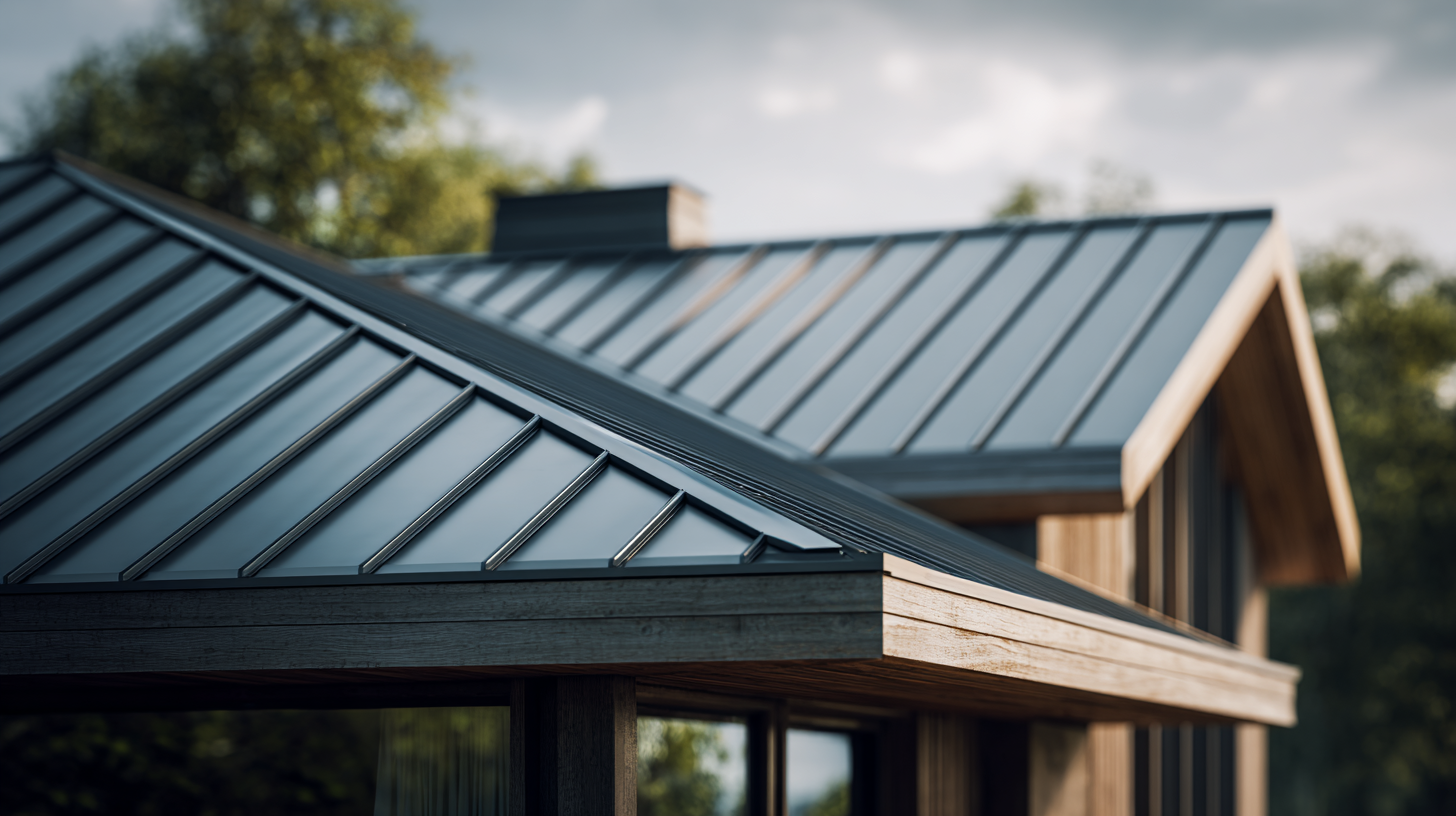
In 2025, roofing is viewed not simply as protection from precipitation but as a critical element of the building’s thermal circuit. Standing seam roofing, which ensures absolute tightness and perfect integration with thick attic insulation layers, has gained particular popularity.

5.1. Metal Standing Seam Systems Market

The standing seam roofing market is represented by both international giants and local manufacturers offering products from European steel.

Ruukki (SSAB)

Finnish brand Ruukki remains the technological leader and quality benchmark.

  1. Products: The main line is Ruukki Classic (models C, D, M) with self-locking connection (click system), simplifying installation.
  2. Ruukki Classic Silence: Unique solution for residential attics. Panels are equipped with a special sound-insulating layer on the reverse side that effectively dampens rain and hail noise, solving the main problem of metal roofs.
  3. Ecology and Longevity: Use of bio-based coatings (GreenCoat Pural Matt BT), where petroleum products are replaced with Swedish rapeseed oil. Warranty on such products reaches 50 years.

Pruszynski

Polish holding with a plant in Ukraine (Zghurivka) offers technological solutions adapted to Ukrainian climate.

  1. RetroLine: Standing seam panels in this series solve the problem of metal thermal expansion. Thanks to factory oval mounting holes, metal can move freely when heated, preventing “waves” on the roof in heat.
  2. Assortment: Wide selection of coatings (PURMAT, PURLAK) and nano-profiling availability for additional panel rigidity.

Budservis IF

Powerful manufacturer from Western Ukraine (Ivano-Frankivsk), using its geographical proximity to the border to import premium raw materials (ThyssenKrupp, Arvedi steel).

  1. Technology: “Click Falts” line (PREMIUM, SMART) is manufactured using 3D cutting that repeats the cornice shape, giving the roof a finished architectural appearance. The company offers products with high zinc content (up to 275 g/m²), guaranteeing corrosion resistance.

Thermasteel

Manufacturer from Poltava offering flexible solutions for central and eastern regions. The company specializes in both classic standing seam and panels with stiffening ribs. An important competitive advantage is providing site supervision services, allowing quality control of work execution on site.

5.2. Comparison of Roofing Attachment Technologies

Technology Mechanism Advantages Representatives
Classic Double Standing Seam Sheet edges are mechanically rolled with special tools into a double lock. Absolute tightness (can be filled with water), suitable for complex geometric shapes and small pitch angles. Metalroof, Thermasteel, Arsenal-Center
Click Standing Seam Panels connect via factory self-locking connection. High installation speed, doesn’t require expensive special tools, concealed screw fastening. Ruukki Classic, Pruszynski RetroLine, Stalex, Budservis IF

ZOV Marketing A sleek metal standing seam roof like Ruukki Cl a2b4d50e 87bc 4531 98e3 ea73b0136f79 2

6. Regional Logistics and Industrial Geography

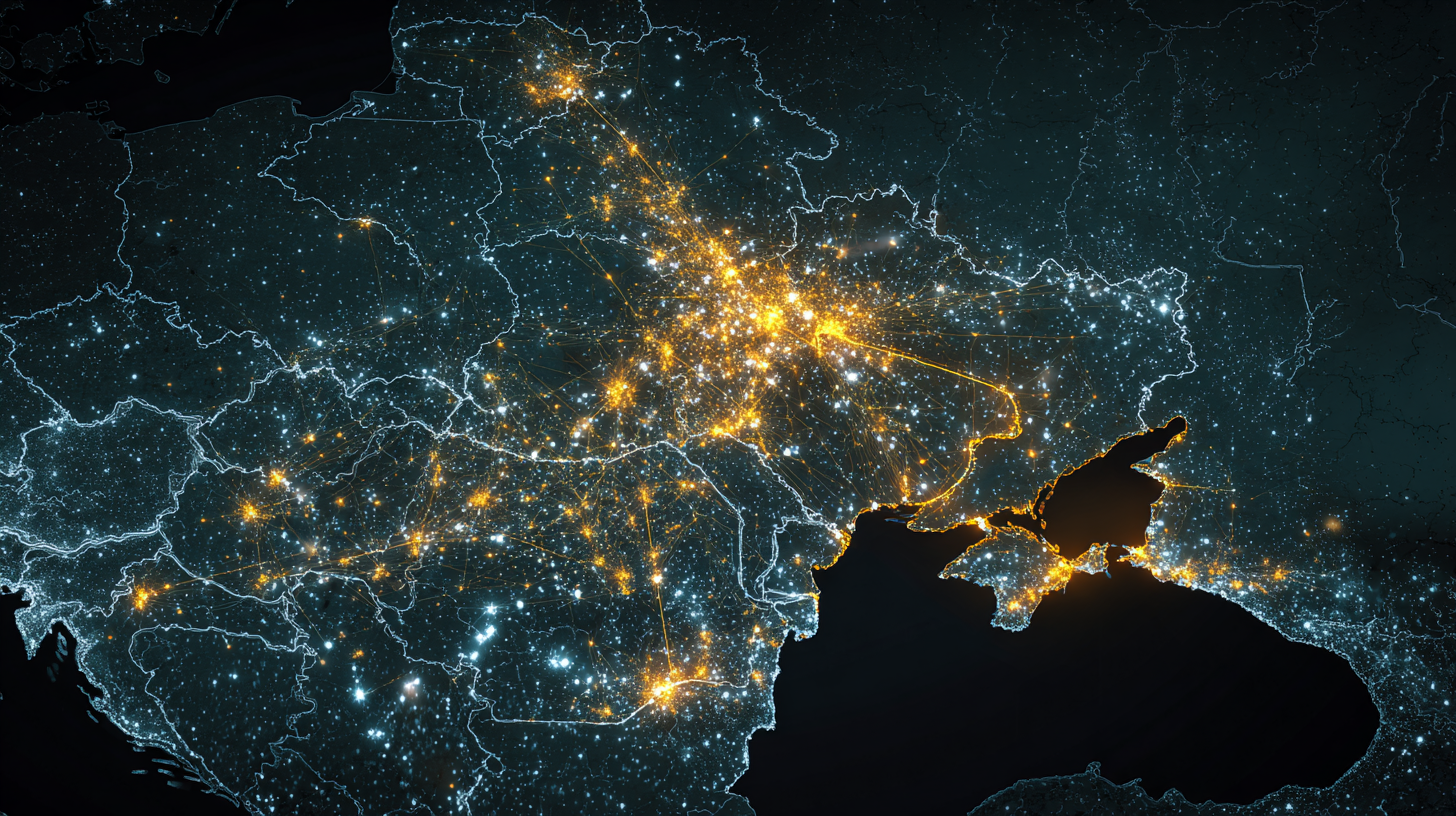
The war’s impact has led to significant changes in Ukraine’s construction industry logistics map. There is a clear trend toward decentralization and emphasis shift to western regions.

  1. Western Hub: Ivano-Frankivsk and Ternopil have transformed into new insulation material production centers. Placement of Penoboard plants in Ternopil and Budservis IF capacities in Ivano-Frankivsk allows minimizing logistics risks and ensuring uninterrupted raw material supply from Europe.
  2. Kyiv Decision-Making Center: Kyiv and the region remain the main administrative and logistics center. Headquarters and central warehouses of most international brands (Ceresit, Baumit, Caparol, Ruukki) are located here. Logistics hubs in satellite cities (Vyshneve, Brovary) ensure product distribution throughout Central and Northern Ukraine.
  3. Eastern Outpost: Despite security challenges, the East’s industrial potential persists. Kharkiv’s Termolife plant continues operation, and Dnipro remains a key hub for Sweetondale company and eastern branches of Pruszynski, serving reconstruction needs in front-line zones.

7. Digital Transformation and Commercial Strategies

In 2025, success in the construction materials market is impossible without an effective digital strategy. Search query analysis demonstrates that consumers increasingly seek technical solutions online.

7.1. SEO and Battle for Visibility

High competition is observed for transactional keywords such as “mineral wool 100 mm,” “standing seam roofing price,” “facade insulation.” Companies invest significant resources in SEO optimization, creating expert content that answers user questions. Local SEO (Google Maps) becomes a critical tool for attracting customers in specific regions, allowing conversion of search traffic into real orders.

7.2. E-Commerce and Services

Leading players implement digital tools to facilitate product selection:

  1. Online calculators: Ruukki and Stalex companies offer tools on their websites for calculating required roofing material quantities, increasing customer loyalty and lowering the purchase barrier.
  2. Visualization: Baumit and Ruukki provide facade and roof visualization services, allowing customers to see the final result before work begins. This is especially important when choosing expensive premium products.
  3. Video Marketing: Brands actively use YouTube for educational work. Caparol demonstrates crash tests of its carbon facades, and Stalex publishes installation instructions, forming an expert image and increasing brand trust.
ZOV Marketing A map of Ukraine highlighting key production hu 1e2ef174 38d2 4b3e 9ae0 e6226fe2f388 3

8. Conclusions and Market Development Forecast (2025-2030)

Ukraine’s energy-efficient materials market demonstrates high adaptability and technological growth despite complex macroeconomic conditions.

Key Trends and Forecasts:

  1. Quality Consolidation: The market is finally moving away from cheap, uncertified materials (so-called “garage polystyrene”). Consumers, stimulated by state compensation programs, choose branded products (Penoboard, Ceresit, Sweetondale) that have certificates of compliance with European standards.
  2. Systematic Approach: The dominant sales model becomes “system,” not “product.” Manufacturers offer comprehensive solutions (wall + insulation + adhesive + dowel + finish) that guarantee operational longevity. This forces mono-product manufacturers to enter strategic alliances.
  3. Technological Complexity: Products become more science-intensive. Carbon reinforcement (Caparol), bio-coated steel (Ruukki), 3D metal profiling (Budservis) become new industry standards, displacing outdated technologies.
  4. EU Integration: Ukrainian manufacturers (Pruszynski, Budservis, Penoboard) actively implement European standards (EN). This not only increases product quality for the domestic market but also opens export opportunities and allows participation in international grant programs for Ukraine’s reconstruction.

For investors, developers, and private owners, 2025 poses a clear requirement: investment in quality building thermal envelope is an alternative-free strategy for protection against rising energy prices and ensuring real estate liquidity in the future.

author
Alex Z
About the author:

Oleksandr — Digital Marketing Expert for Construction & Manufacturing Industries Oleksandr is a seasoned digital marketing specialist, delivering powerful results for the construction and manuf...

More
0 0 votes
Article Rating
Subscribe
Notify of
guest
0 Comments
Oldest
Newest Most Voted
Inline Feedbacks
View all comments