Comprehensive Comparative Analysis of Facade Systems Under Martial Law: Metal and Glass Building Envelopes in the Architecture of Ukraine
Generic selectors
Exact matches only
Search in title
Search in content
Post Type Selectors

Comprehensive Comparative Analysis of Facade Systems Under Martial Law: Metal and Glass Building Envelopes in the Architecture of Ukraine

April 29, 2026
4  

1. Introduction and Conceptualization of the Architectural Security Problem

1.1. Paradigmatic Shift in Urbanism and Design

Throughout the history of the construction industry and architectural thought, building security has remained one of the most important, fundamental aspects for designers, engineers, and constructors, as it has a direct connection to the safety and preservation of the lives of people inside the structures. However, prior to the outbreak of full-scale hostilities, the priorities of domestic and global architects focused mostly on aesthetic appeal, maximum provision of natural light (insolation), energy efficiency, and the environmental friendliness of building materials. The modern city was perceived as a safe environment where the main external threats to a building were considered to be wind and snow loads, temperature fluctuations, seismic activity, or local fires.

Under martial law in Ukraine, architects, designers, and urban planners have faced unprecedented challenges that require a radical rethinking of approaches to planning both building exteriors and interiors. The concept of urban architectural space has undergone a paradigmatic shift. Every element — from the external facade cladding and perimeter fencing to the internal suspended ceiling systems — must now be viewed through the prism of safety, physical resilience, adaptability, and the ability to withstand impulse loads of extreme power. In the face of the constant threat of missile strikes, artillery shelling, and infrastructure destruction, wartime construction requires finding a delicate but critical balance between the protective functions of a facility and its aesthetics, ergonomics, and resistance to environmental impacts.

1.2. The Role of External Enclosing Structures in Combat Conditions

The external building envelope, which includes load-bearing and self-supporting walls, window units, stained-glass systems, glass or metal facade panels, and roofing, is objectively the most vulnerable part of any structure to external hazards. This is due to the fact that the facade acts as the first physical barrier closest to the source of the threat (the epicenter of an explosion) and is the first to absorb the kinetic impact of a blast wave or thermal radiation damage. Consequently, facade systems function as the most important line of defense to protect the people inside.

The design of public, commercial, and residential buildings must now take into account the ability to withstand not only conventional loads (such as hurricanes, wind pressure, or seismic vibrations), but also extreme external explosions. Although in many cases massive reinforced concrete or steel load-bearing building frames can withstand the impact of a shock wave without global progressive collapse, the safety of people inside remains a major concern. This is because the absolute majority of injuries occur not from the collapse of floors, but during the second stage of destruction — during the dispersion of fragments from facade infill elements, particularly glass and cladding elements, which fly at enormous speeds.

1.3. Damage Statistics and Identification of Main Risk Factors

An in-depth analysis of statistical data collected by the United Nations and expert institutions highlights the scale of the problem. In cases of explosions during terrorist acts or bombings in urban areas, approximately 80 percent of all injuries and fatalities among the civilian population are caused by primary and secondary fragments (debris). Primary fragments are parts of the munition itself, while secondary fragments are formed due to the destruction of building structures, road surfaces, urban infrastructure, etc.

Even more striking is the fact that 80 percent of the total number of injuries caused by all debris and building rubble fragments specifically result from broken window and facade glass. Using simple mathematical extrapolation, experts state that about 64 percent of all deaths and injuries resulting from explosive impacts on urban infrastructure are directly caused by the scattering of fragments of broken window glass and glass facade elements. This makes the choice of facade material, its mechanical strength, and its ability to fail safely a key issue of national security in urban planning.

This analytical report aims to provide an exhaustive comparative analysis of the operational, physical, mechanical, regulatory, and economic characteristics of two main types of modern facade systems: translucent (glass) curtain wall systems and opaque metal (composite and ventilated) facades in the unique and highly complex conditions of wartime in Ukraine.
porivnyannya skla ta metalu 2

2. Regulatory and Legal Framework and Standardization of Facade System Safety

2.1. Evolution of State Building Norms (DBN)

The response to the challenges of war was the accelerated adaptation of the domestic regulatory and legal framework in the construction sector. The key document that changed the approach to the design of underground and above-ground facilities was the new State Building Standard DBN V.2.2-5:2023 “Protective structures of civil protection,” which officially came into force on November 1, 2023. These updated building codes establish strict, mandatory requirements for the design and construction of civil protection shelters, which are divided into three main categories: classic shelters, anti-radiation shelters, and dual-purpose structures with the protective properties of shelters or anti-radiation shelters. A systematic and comprehensive approach to security organization, combined with strict compliance with these DBN requirements and recommendations of civil protection authorities, is the only way to reduce risks for enterprise workers and ensure the uninterrupted functioning of the city even in the most difficult wartime conditions.

Legislators paid special attention to critical social infrastructure facilities, which is reflected in the updated DBN V.2.2-10:2022 “Healthcare institutions. Basic provisions”. These standards define the specifics of space-planning decisions, the number of floors, building heights, and requirements for individual architectural elements of medical, preventive, and sanatorium-resort institutions. Considering that hospital patients are often low-mobility groups and are unable to quickly move to a shelter during an air raid alert, the external enclosing structures of medical facilities (in particular, the glazing area of wards and operating blocks) must be designed with an increased explosion resistance coefficient and structural redundancy.

2.2. Implementation of Explosion Resistance Standards (DSTU EN)

Before the active phase of hostilities began, Ukraine had already implemented European standards for the classification of explosion-resistant structures, but they were rarely used in mass civil construction. The basis of the regulatory framework for testing windows and facades for blast impact consists of the standards: DSTU EN 13123-1:2006 “Windows, doors and blinds. Explosion resistance. Classification and technical requirements” and DSTU EN 13123-2:2006, which are identical translations of the pan-European norms.

These standards provide for a strict classification of structures. For example, the first level of explosion resistance classification — EXR1 class — means that a window is capable of withstanding an explosion equivalent to 3 kilograms of TNT at a distance of only 5 meters from the facade, and the structure must remain intact without forming dangerous fragments (including glass splinters) inside the room. To grasp the realism of this test, experts note that standard 120-millimeter mortar mines typically contain a TNT charge weighing between 2.7 and 4.9 kilograms. Accordingly, an EXR1 class facade system is theoretically capable of protecting people in a room from the close detonation of a heavy mortar mine right in front of the building. In addition to European norms, specialists in Ukraine also focus on international testing protocols to integrate the world’s best practices in building envelope protection.

2.3. Thermotechnical Norms and Conflict of Requirements

In parallel with explosion resistance requirements, facade systems must meet strict energy conservation criteria, which are regulated by the normative document DBN V.2.6-31:2016 “Thermal insulation of buildings” and its amendments. According to these regulations, the minimum heat transfer resistance for translucent structures is set at 0.85 sq. m · °C/W. Furthermore, the area of translucent structures must comply with natural lighting standards under DBN V.2.5-28, and the insolation regime of rooms must comply with sanitary rules DSP 173-96.

At the same time, the influx of excessive solar radiation during the summer period must be minimized in accordance with DSTU-N B V.2.2-210:2010. This set of standards creates a serious engineering challenge: to achieve the required energy efficiency indicator, it is necessary to use massive double or triple-glazed windows with thick glass filled with inert gases. However, increasing the mass of the glass without using special laminating layers makes such a structure even more dangerous under the impact of a shock wave, as the mass of potential fragments increases exponentially.

2.4. Fire Safety of Metal Systems

In the field of designing suspended ventilated and composite facades, fire safety takes on critical importance. Metal elements must be calculated according to Eurocodes, specifically DSTU-N B EN 1993-1-2 regarding the design of steel structures under fire loading. The facade cladding subsystem (which usually consists of aluminum rails or galvanized steel profiles) and all fasteners must withstand the effects of extremely high temperatures without structural collapse. During the war, state control bodies and military administrations persistently remind construction teams of the need to strictly adhere to the requirements for creating fire barriers on facades. This refers to the mandatory installation of horizontal fire barriers at the level of each floor slab behind ventilated facades to interrupt the airflow and prevent the chimney effect, which causes the instantaneous spread of flames. These preventive measures have already proven their critical importance and saved many lives during real incidents involving projectiles hitting residential buildings in Ukraine.

3. Physics of Explosion and Dynamics of Enclosing Structures Destruction

3.1. Shock Wave Parameters

To objectively compare the behavior of glass and metal, it is necessary to understand the physical nature of the load they experience. The explosion of a munition in an urban environment generates a spherical or hemispherical shock wave that propagates from the epicenter at a speed exceeding the speed of sound. An analysis of the mechanism of blast impact on building structures relies on the calculation of two key parameters :

  1. Peak overpressure: This is the maximum value of the sharp, almost instantaneous jump in atmospheric pressure at the front of the shock wave, which delivers the primary destructive blow to the plane of the facade glazing or cladding.
  2. Positive phase duration: This is the period of time during which the elevated air pressure acts on the surface of the structure, bending it inward into the building.

After the positive phase ends, the negative phase (rarefaction or suction phase) begins. The pressure drops below the ambient atmospheric level, creating a powerful reverse force vector that often tears weakened window frames and facade cassettes outwards onto the street. The sudden release of a colossal amount of energy is a typical characteristic of impulsive loads during explosions.

3.2. Energy Transmission and Dissipation in Facade Subsystems

The kinetic energy of the blast wave is transmitted to the curtain wall and the main load-bearing structures of the building in the form of elastic energy. This elastic energy is defined as a function of the elastic deformation of the main components of the facade system. Essentially, this elastic energy is the portion of the energy input that is accumulated and stored by the structure in the first milliseconds of motion after the wave impacts, and is subsequently rapidly released.

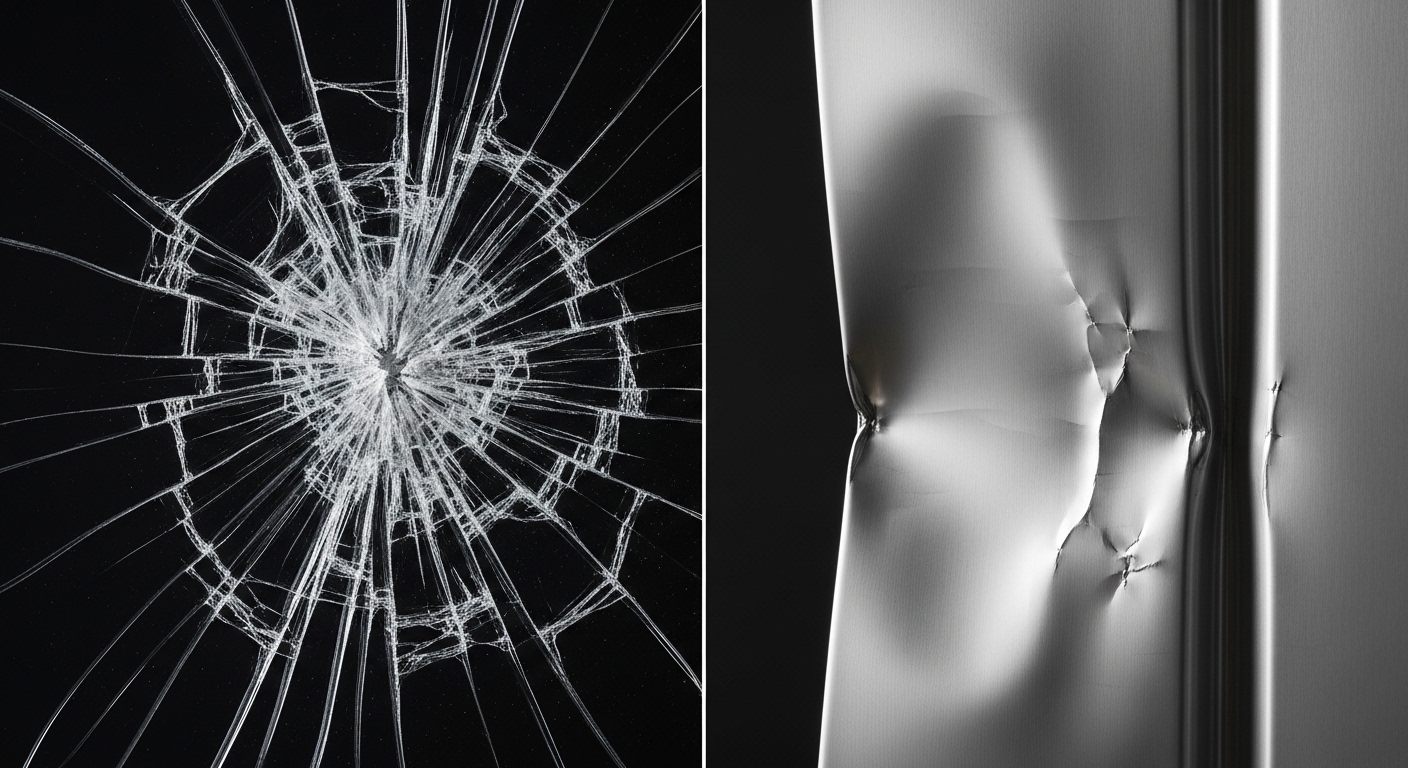
If the facade material is brittle (such as raw glass), it is incapable of significant plastic deformation. When the tensile strength limit of the material is exceeded, energy is released through the catastrophic formation of master cracks and fragmentation of the material. Conversely, if the material is capable of plastic flow (like steel or aluminum facade panels), a significant portion of the energy is spent on an irreversible change in geometry (metal crushing), which protects the load-bearing fasteners from shearing. The dynamic response also heavily depends on the total mass of the facade structure. Heavier systems possess greater inertia but require significantly stronger anchor connections to the reinforced concrete frame.

3.3. Viscoelastic Dissipative Devices

In the context of improving system resilience, scientists are studying the behavior of facades equipped with viscoelastic dissipative devices or vibration isolators, which are installed between the facade frame and the load-bearing wall. The effectiveness of such a mechanism lies in its powerful dissipative (scattering) capabilities, as well as in providing additional, implicit deformability to the entire curtain wall, allowing the system to “spring back” rather than rigidly absorb the impact. For the optimal design of such a system to dampen blast energy, engineers must necessarily consider both the material’s ability to dissipate energy and the kinematics of deformation.

porivnyannya skla ta metalu 7

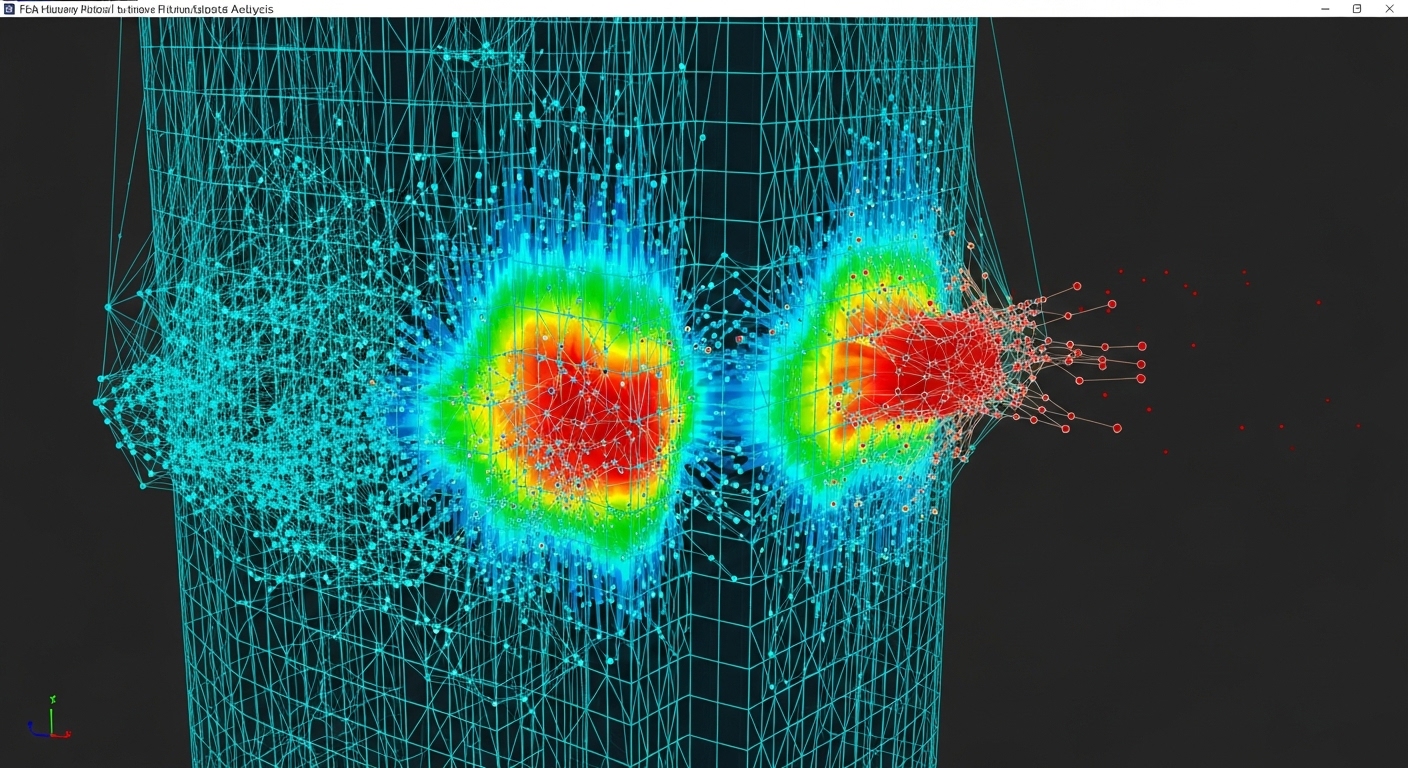
4. Finite Element Modeling of the Dynamic Response of Facades

To gain an in-depth understanding of the behavior of complex architectural envelopes under the action of a shock wave, high-precision computational methods are applied. Previous scientific and engineering studies have demonstrated the importance of optimizing and minimizing the use of materials in curtain wall systems. It has been established that glass panels linearly bonded to metal profiles using high-strength structural adhesive sealants can achieve a composite action effect under flexural loads, demonstrating significantly better behavioral characteristics even after glass fracturing.

4.1. Specifics of Using Engineering Software

Modern engineering analysis is impossible without advanced software. To conduct series of numerical experiments and analyze the behavior of investigated curtain walls under blast action, specialists widely use multipurpose finite element analysis programs (for example, ABAQUS), which are ideally suited for solving nonlinear dynamic problems.

4.2. Modeling of Glass and Composite Panels

In the developed finite element models, glass panes and composite layers are modeled using special quadrilateral shell elements. These elements use reduced integration technology and have a built-in formulation for large deformations, allowing them to adequately describe the geometry of a facade bending under blast pressure.

To correctly account for the presence of multiple different layers in a laminated glass panel (for example, two sheets of glass and a special triplex film between them), a special composite shell option is used. During the calculation, the system analyzes stresses at a minimum of five integration points throughout the thickness of the composite section. Additionally, to perfectly replicate the real physical geometry of the stained-glass system, a section offset from the centroidal axis is applied to the shell elements (in studies, this value is often 12.26 millimeters). Researchers have proven that by comparing numerical results using layered shell elements and 3D solid elements, composite shells are the ones that most accurately reflect the behavior of laminated glass under air blast loading, especially at the stage when both glass sheets have already failed.

4.3. Approximation of Load-Bearing Profiles Behavior

The framing part of the facade — aluminum vertical mullions and horizontal transoms — are modeled in the software as three-dimensional beam elements. To describe the real geometry of the frame, a simplified box cross-section is often used, where the mullion wall thickness is set as a constant equal to 10 millimeters, along with the corresponding moments of inertia. Such a meticulous approach to modeling allows for the early identification of “weak links” in facade systems prior to the stage of their physical testing at proving grounds, finding the optimal ratio of metal stiffness to infill brittleness.

porivnyannya skla ta metalu 6

5. Vulnerability Analysis of Translucent (Glass) Facade Systems

5.1. Phenomenology of Brittle Fracture of Glass

Despite the fact that glazed curtain walls are an integral, basic component of modern commercial and residential development, they contain fatal flaws in combat conditions. During an explosive event, a glazed facade transforms into a weapon of mass destruction under colossal pressure: the glass shatters instantly into thousands of sharp pieces (fragments) that fly into the building at extremely high speeds, causing severe stab-and-cut wounds and lethal outcomes for the people in the rooms.

Ordinary thermally polished “raw” glass is a typical brittle material: it undergoes almost no plastic deformation and ruptures as soon as the tensile stress on the outer surface reaches its critical strength limit. Fragments of such ordinary glass have sharp, razor-like edges and scatter over a massive radius, creating a deadly hazard. According to statistics and research conclusions, facade glazing is undeniably the weakest point and the main source of danger for a building during a terrorist or military blast threat. Understanding the dynamic response of individual glass panes to applied loads is necessary, but for engineers, it is an imperative requirement to study the global behavior of the entire curtain wall system as a single macro-element.

5.2. Practical Cases of Destruction in Kyiv

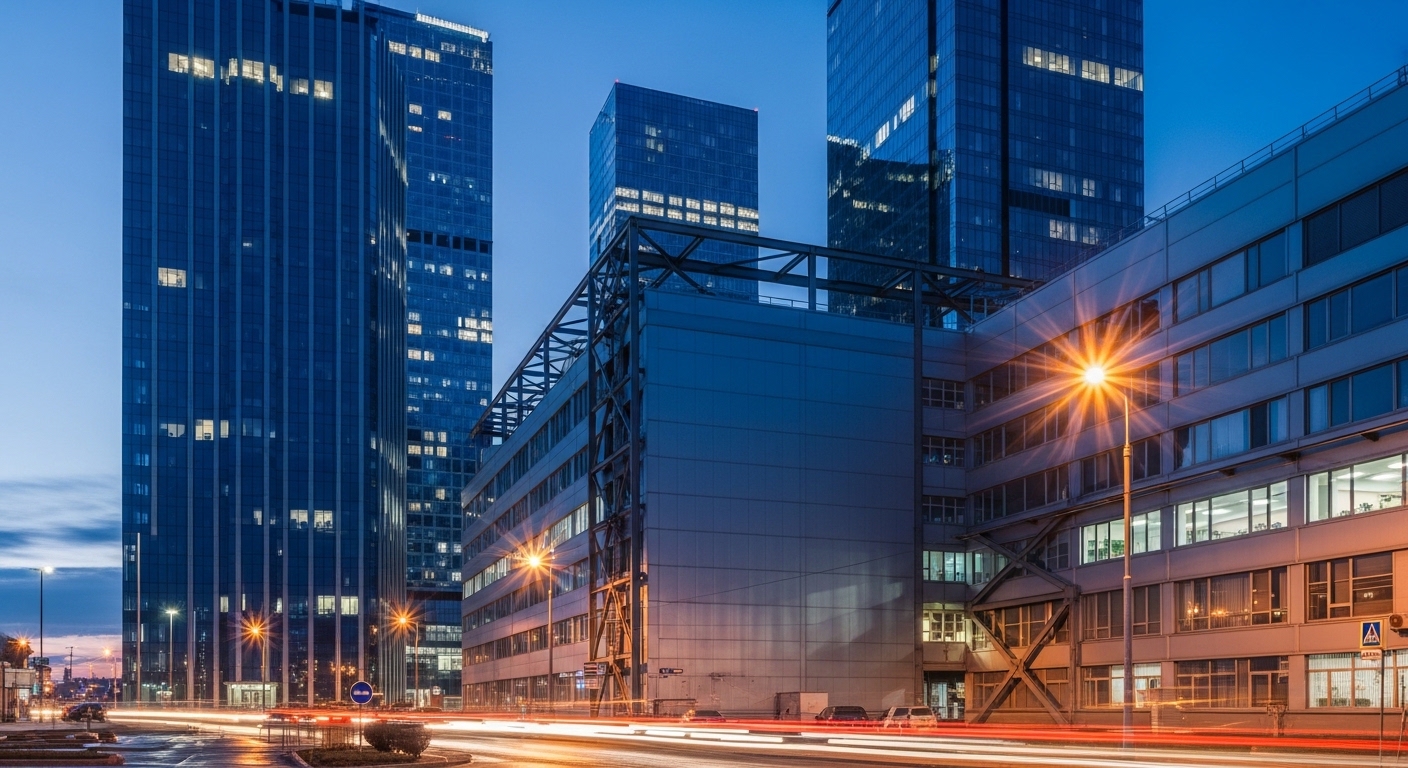
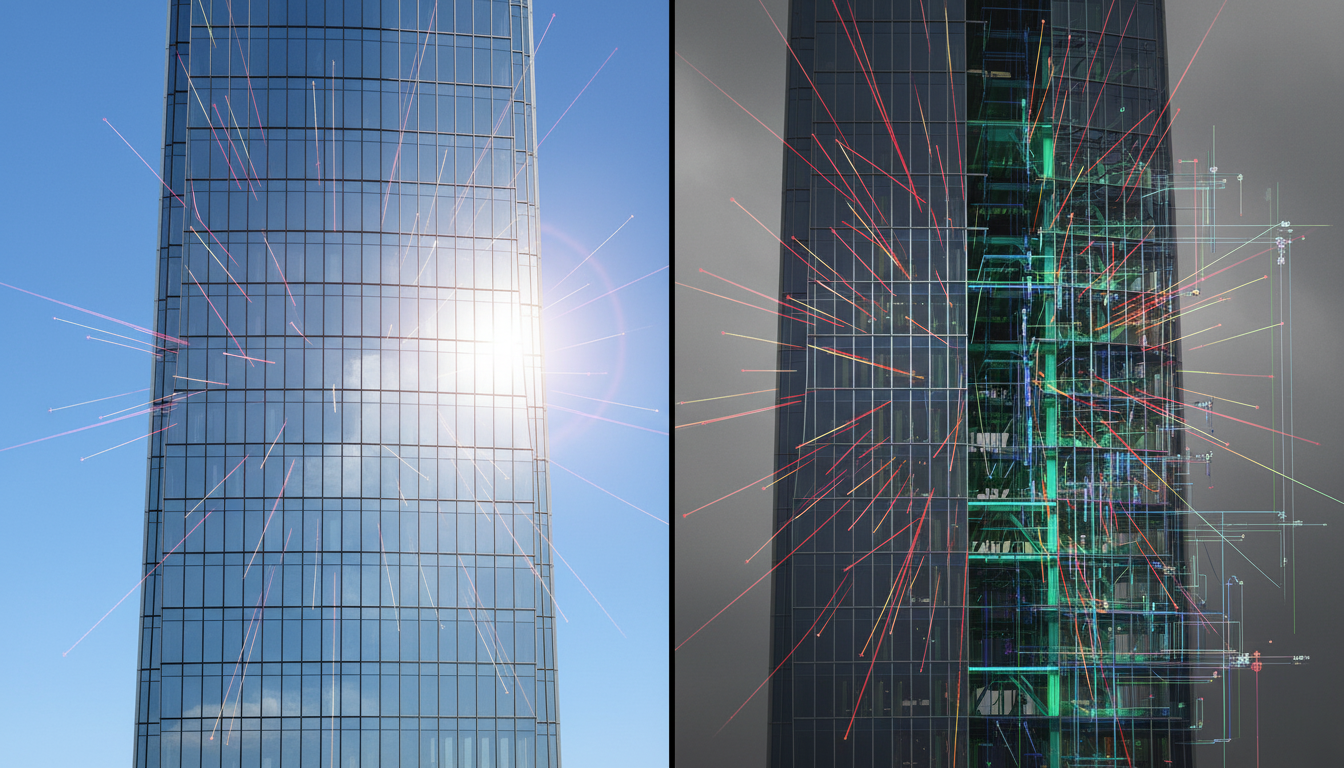
The consequences of massive missile strikes on Kyiv have served as a vivid illustration of the catastrophic vulnerability of all-glass facade systems. One of the most iconic examples is the damage to the well-known business center “101 Tower”, located in the central part of the capital. This modern 27-story commercial real estate object suffered critical facade damage due to the impact of a powerful shock wave from a missile that exploded nearby. A building of this scale with continuous flat glazing essentially acted as a giant “sail” catching the shock wave front. As a result of the sharp pressure drop, windows were blown out en masse on dozens of floors in the business center. According to official information, miraculously, no one was injured in the building at the time of the strike. However, photos published online of the blast’s aftermath at “101 Tower” clearly demonstrate the scale of destruction: the building, while maintaining the integrity of its reinforced concrete frame, instantly became unfit for operation due to the complete loss of its envelope. A similar situation was observed during the destruction of other large shopping centers, where glass storefronts and facades were annihilated by the wave over a large area.

5.3. Preventive Measures and Innovative Strengthening Approaches

Given that more than half of all injuries and deaths occur not from the direct action of the explosion itself or from fragments of the metal projectile, but specifically from broken facade glass, the Ukrainian construction community posed a question: is it possible to change this terrible statistic for vulnerable objects such as kindergartens, schools, and hospitals? This problem was brought to the forefront by domestic specialists who began testing various approaches.

An analysis of the consequences of shelling in residential neighborhoods revealed a non-obvious phenomenon: window units equipped with special burglar-resistant hardware demonstrated significantly higher resistance to shock waves and were not torn out of their openings as easily as regular windows. The reliable multi-point fixation of the window sash to the frame around its entire perimeter allowed the blast energy to be transferred from the profile directly to the load-bearing wall of the building. This observation became the impetus for the development of domestic explosion-resistant structure designs, which passed several stages of testing.

To improve glazing safety, experts categorically recommend that architects :

  1. Design buildings with fewer large-format solid glass panels, reducing the daylight opening area.
  2. Use exclusively laminated (triplex) or specially tempered safety glass that does not form sharp fragments.
  3. Install additional reinforcing frames secured with heavy-duty anchors.
  4. For existing buildings where replacing facades is impossible — mass-apply special anti-shatter films to existing “raw” glass, capable of holding fragments together after fracturing.
  5. Implement modern certified systems that involve the use of special multi-layered glass integrated into a reinforced frame, which “catches and holds” the blast wave, dissipating its energy.
porivnyannya skla ta metalu 2

6. Characteristics and Behavior of Opaque Metal Facades

6.1. Mechanics of Energy Absorption by Metals

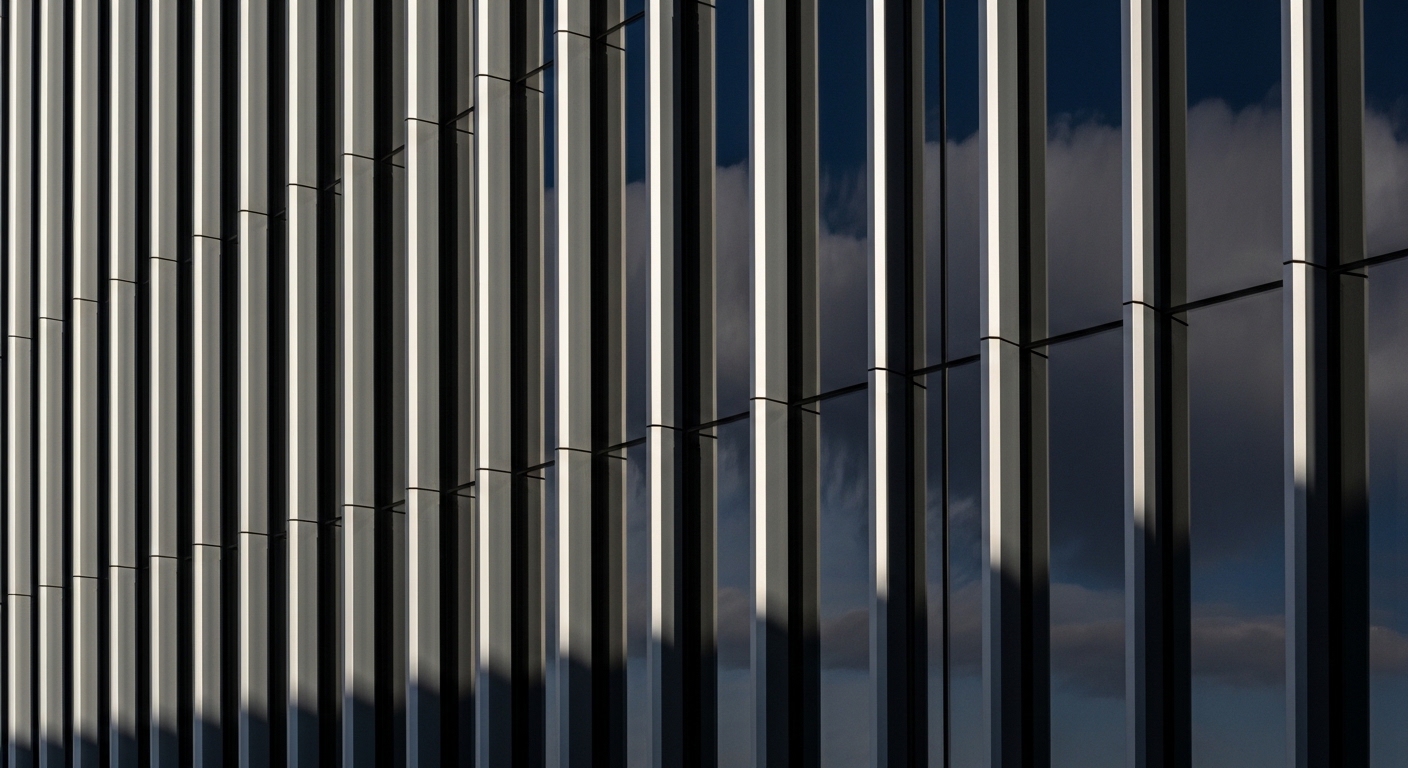
In contrast to the brittleness of glass expanses, metal facade systems (suspended ventilated facades, aluminum composite panels, steel cassettes) demonstrate a fundamentally different character of response to blast loads. Metal ventilated facades, made of high-quality galvanized steel and aluminum alloys, function as a powerful, physically robust protective screen for the building envelope.

Thanks to their crystalline lattice, metal alloys possess high elongation at break and plasticity. Upon impact with the front of a shock wave, a metal panel does not shatter into tiny fragments. Instead, it undergoes deep plastic deformation (crushing, bending, stretching). This process of irreversible shape change performs a colossal amount of work in absorbing the kinetic energy of the explosion. A building envelope equipped with metal systems is designed in such a way as to reliably withstand shock waves and prevent further destruction of the inner insulation layers and the aerated concrete wall block, protecting people from fragments of the munition itself.

6.2. Concept of Redundancy and “Sacrificial Layers”

In modern practice for designing facilities to operate in wartime conditions, architects and constructors actively implement the philosophy of structural redundancy and the concept of so-called sacrificial facade layers. The essence of the approach is that the external metal curtain wall is deliberately designed as an element that “can be sacrificed.” In the event of a direct or close hit by a missile or artillery shell, this outer screen may be completely crushed, pierced by shrapnel, or partially torn from its mountings, but its destruction absorbs the lion’s share of the destructive energy. This ensures the preservation of the main capital reinforced concrete load-bearing structures and avoidance of a chain, progressive collapse of the building.

To implement this strategy, it is critically important to ensure extremely reliable, reinforced anchoring of the facade subsystem (brackets and profiles) to the walls. If the anchors fail, the massive metal panels and decorative elements will detach themselves and turn into heavy, deadly secondary “projectiles” flying through the streets under the force of the wave. Using higher safety factors when calculating anchor assemblies is a mandatory requirement of the times. In addition, the use of secondary protective screens, such as heavy metal mesh, louvers, or metal facade blinds, allows for effective trapping of broken glass fragments from neighboring buildings, while partially preserving natural light access to the rooms.

6.3. Fire Challenges: “Chimney Effect”

The main vulnerability of a suspended ventilated facade system is its geometry: between the metal cladding and the layer of mineral insulation, there is a continuous air gap to vent moisture. In conditions of shelling accompanied by massive fires (due to incendiary munitions or fuel spills), this gap becomes a source of extreme danger. If fire penetrates the facade cavity, a powerful chimney effect (air draft) occurs, capable of spreading flames tens of meters up the facade in a matter of minutes.

That is why current regulations prohibit the use of any combustible materials in the envelope. For insulation, it is permitted to use exclusively non-combustible mineral wool. Furthermore, to block this effect, it is necessary to strictly follow the requirements for fire barriers. These are metal (galvanized) plates installed horizontally at the level of each floor slab, physically cutting off the draft in the ventilation gap. This practice has proven its critical importance and prevented the complete burnout of several multi-story residential buildings following missile hits in Kyiv and other cities.

6.4. Integration of Military Standards into Civil Construction

An unprecedented process in the history of Ukrainian architecture is underway: the merging of civil and military technological standards. Envelope reinforcement technologies involving bulletproof glass facades, blast-resistant metal doors of increased thickness, and reinforced composite perimeter fencing systems, which were previously used exclusively at military facilities or restricted enterprises, have become the norm. Although such solutions are often governed by strict military regulations (for example, NATO STANAG armor resistance standards) or special standards for certifying bulletproof armored glass, they are increasingly being implemented in civil projects.

Banking institutions, foreign embassy buildings, and even new luxury residential complexes built in high-risk shelling zones are massively installing armored, bulletproof glazing and heavy composite panels on lower floors. Conversations with leading Ukrainian architects and engineers confirm that simply changing the cladding material is not enough to ensure true blast resistance of a facade; it is necessary to add a significantly more powerful and heavier steel load-bearing facade substructure capable of withstanding colossal dynamic loading.

porivnyannya skla ta metalu 3

7. Macroeconomic, Logistical, and Social Dimensions of Restoration Works

7.1. Global Supply Crisis and Scale of Destruction

The physical destruction of facade systems across the entire territory of Ukraine has reached apocalyptic proportions, directly affecting the national economy and demographics. According to construction industry monitoring data, since the start of the armed conflict, approximately 750 million square meters of window glass have been blown out and destroyed nationwide. This catastrophic volume of destruction of transparent enclosing structures has left millions of square meters of living space without a thermal envelope, forcing huge numbers of people to abandon their own homes before the onset of cold weather.

The situation is critically exacerbated by the complete lack of a raw material base: Ukraine currently has no large-scale domestic production of sheet glass. Before the start of the full-scale war, the domestic industry was critically dependent on raw material imports. For obvious reasons, these logistical and trade ties were instantly and permanently severed following the start of the military operation by the aggressor. Consequently, today practically all new glass needed to rebuild Ukraine is forcedly imported from other European Union countries. This process is complicated by logistical hurdles at the borders, requires significantly more time, and is accompanied by a colossal increase in material costs, all of which significantly slow down the reglazing process in damaged cities.

7.2. State Programs and Restoration Economics

To overcome the consequences of shelling, the state and municipalities are mobilizing budgets. The capital provides an illustrative example. By the decision of Kyiv City Council deputies, amendments were made to the Economic and Social Development Program of the city of Kyiv for 2024-2026, allocating significant additional funds to restore urban infrastructure facilities damaged by enemy attacks. Just in November 2025, the Department of Economics and Investments of the Kyiv City State Administration directed about another 79 million hryvnias for these purposes. Earlier, in October of the same year, almost 300 million hryvnias were additionally allocated under the same Program for capital repairs of urban infrastructure facilities. This financial resource is primarily distributed for basic restoration works in multi-apartment residential buildings — the urgent replacement of blown-out windows, installation of new doors, repair of entrance groups, and restoration of damaged roofing, as well as eliminating damage in city institutions of general education, social protection, and healthcare facilities.

Regarding metal ventilated facades, prices for their installation and materials have also experienced inflationary processes, yet they remain within forecasted estimates. According to construction contractor price lists, the average cost of installing ventilated facades in Ukraine (using regional rates in the city of Lviv as an example) ranges from a base of 700 hryvnias per square meter for the simplest systems up to 972 hryvnias for mid-class, reaching 1380 hryvnias per square meter when using complex composite panels and reinforced mounting subsystems.

7.3. Temporary Emergency Solutions Versus Capital Modernization

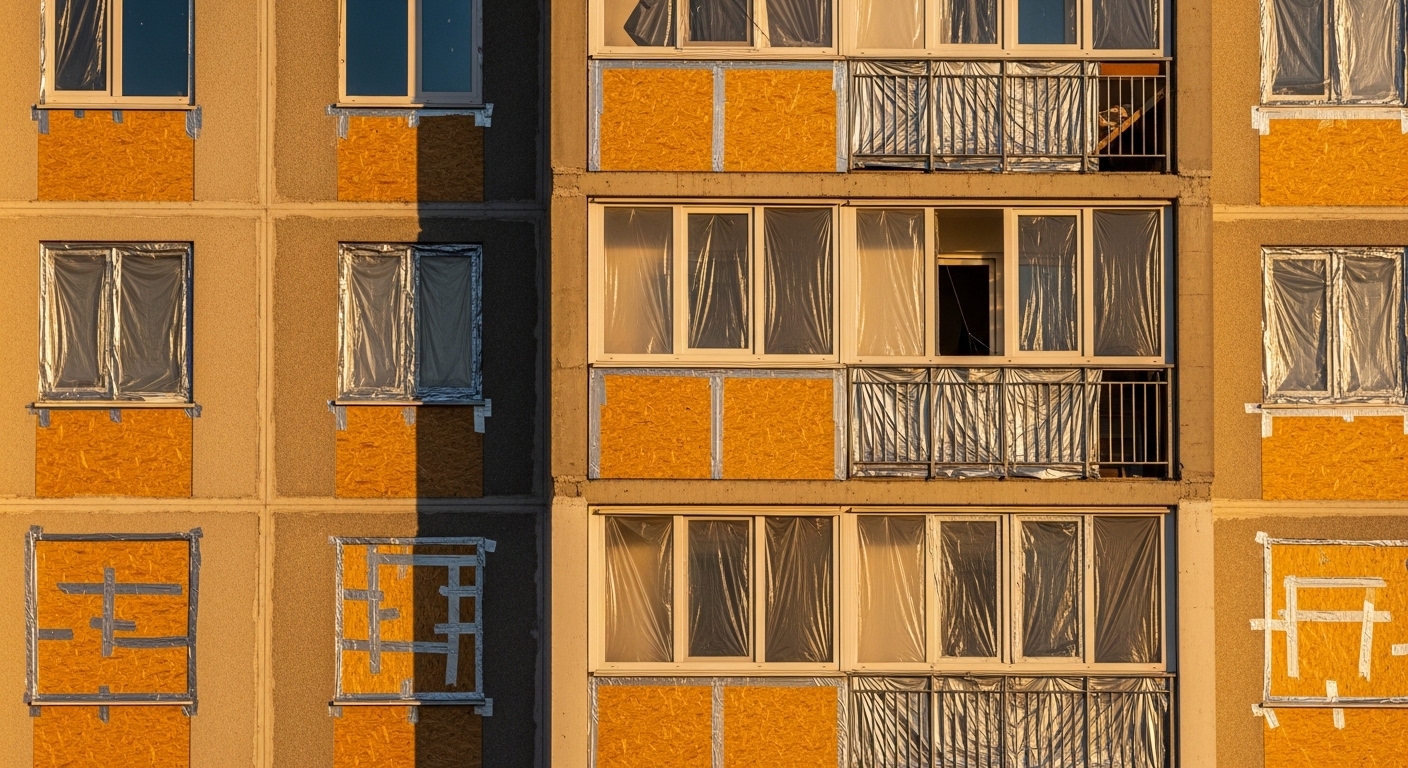
Due to the massive shortage of glass and the slow pace of receiving compensation funds from the state, citizens are forced to resort to quick temporary restoration means for their homes’ thermal envelopes. Action algorithms on how to quickly restore heat to a home without fully replacing damaged structures involve emergency measures that take only a couple of hours. Residents massively use OSB boards, plywood, or thick cardboard to board up openings, tape up broken frames with dense film, and carefully seal loose joints and seams with polyurethane mounting foam and reinforced tape. For extra insulation, heavy blankets and thermal curtains are applied. These cheap and quick solutions lack architectural aesthetics and block sunlight, but they are critically vital for survival, as they allow for a rapid halt in heat loss and can raise the air temperature in a damaged room by several degrees within the first 24 hours, simultaneously reducing the load on electric heaters.

At the same time, the capital replacement of old, damaged windows with new energy-efficient double-glazed windows is viewed not just as restoration, but as a strategic investment in energy independence. According to energy auditors’ calculations, after the proper installation of high-quality energy-efficient windows, the overall heat losses of a building are drastically reduced by 25-40 percent. In financial terms, an average family is capable of saving a significant portion of utility costs for heating every month.

7.4. Role of Charitable and Corporate Initiatives

To partially mitigate the massive humanitarian and housing crisis, the international non-governmental sector and large socially responsible businesses have joined the rebuilding processes. A unique response to the glass shortage was the activity of an international charitable organization called “Insulate Ukraine”. Considering the high cost and difficulty of delivering glass windows from Europe, engineers of this organization developed a technology for producing innovative and highly cost-efficient polymer windows, whose design contains no breakable glass and which can be fully assembled and installed in a window opening in just 15 minutes. The materials they are made of are incapable of forming sharp shards, solving the primary safety problem.

This charitable initiative scaled up thanks to the support of domestic industrial giants. In particular, the Metinvest Group joined in funding this project to help restore the housing stock and critical infrastructure in frontline regions that suffer from the war daily. The first major industrial city to reap real benefits from this collaboration was Zaporizhzhia, where at the company’s expense over 1,500 units of such impact-resistant temporary window blocks were manufactured and successfully installed in buildings that sustained substantial damage from artillery and missile strikes.

7.5. Domestic Production and Rolled Metal Market

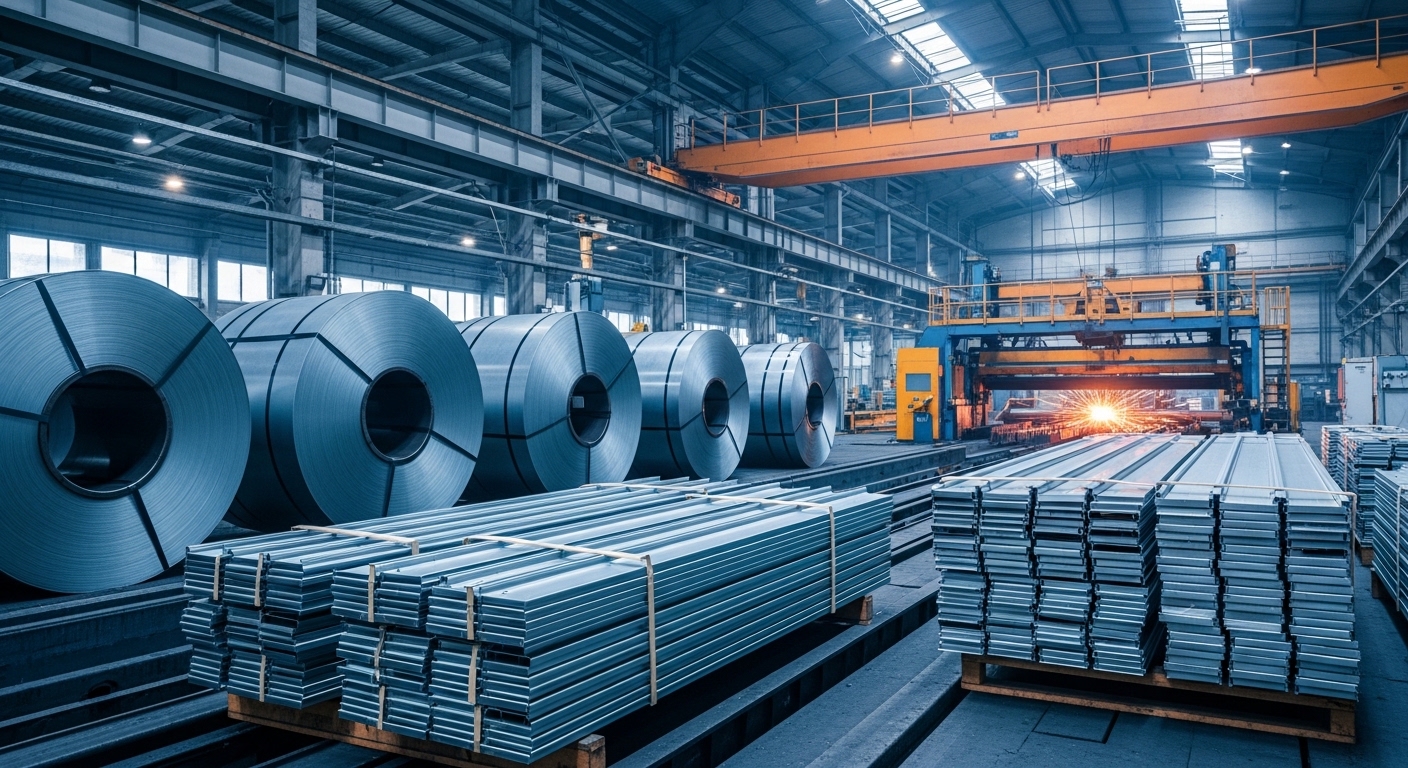
In contrast to the glass industry, the rolled metal market in Ukraine shows positive dynamics and the capacity to meet the needs of active rebuilding. Analytics on rolled metal consumption indicate the following stable trends in the metal facade materials market:

  1. Revitalization of the construction industry: There is general growth in construction and the restoration of infrastructure facilities.
  2. Reduction of import dependence: The share of domestic metal production reaches over 62 percent of total consumption volume, making logistics more stable and predictable.
  3. Growing demand for specific materials: A significant increase in demand is expected precisely for metal profiles used in facade and roofing work.
  4. Stimulation of related production: Demand is increasing for galvanized rolled products and profile pipes, which are critically important foundations for mounting ventilated facade substructures.
porivnyannya skla ta metalu 4

8. Comparative Analysis of Operational Characteristics of Facade Systems

To systematize the provided data and technical indicators, a comparative efficiency matrix of translucent (glass) and metal/composite facades in the context of combat impact has been developed.

Parameter or characteristic Glass (translucent) facade systems and windows Metal (ventilated / composite) facades
Mechanics of blast wave resistance

Extremely low level. The material undergoes almost instantaneous brittle fracture when the stress threshold is exceeded, without the possibility of energy absorption.

High level of stability. The crystal lattice of steel/aluminum provides a high capacity for plastic deformation and the absorption of a huge amount of elastic energy.

Threat to life and health of civilian population

Critically high risk. They form a massive cloud of high-speed fragments. According to UN statistics, the majority of deaths and injuries in explosions are caused precisely by broken glass.

Moderate, controllable risk. A threat arises exclusively in cases where the shock wave tears off large panels due to the shearing of weak anchor mountings or incorrect frame calculation.

Reaction to thermal and fire loads Glass does not burn, but under high temperatures it rapidly cracks and falls out. This instantly opens access for a huge volume of oxygen into the room, catalyzing further burning and fire spread.

Metal is classified as a non-combustible material. However, the presence of an air gap requires the mandatory installation of galvanized fire barriers on every floor to prevent the chimney effect.

Dependence on supply chains and imports

Absolute dependence. Due to the destruction of a massive volume of glass and the lack of domestic production, almost all material is imported from European countries, which is expensive and slow.

Partial autonomy. Ukraine possesses powerful production lines for metal profile processing, manufacturing substructures, and composite panels, greatly simplifying reconstruction logistics.
Vectors of modernization and adaptability during war

Mass application of anti-shatter films to windows. Window replacement using burglar-resistant hardware to retain the frame in the wall. Replacing tempered glass with heavy triplex.

Implementation of the “sacrificial facade layers” philosophy, taking the blow upon themselves. Easy and fast modular replacement of crumpled cassettes without needing to fully dismantle the load-bearing wall frame.

Economics of recovery and thermal efficiency

Temporary solutions are cheap but drastically reduce comfort. Full replacement with new windows retains heat, but requires significant time for profile manufacturing.

High predictability of expenses. The installation cost per square meter of a ventilated facade allows for quick planning of state estimates for infrastructure restoration.

porivnyannya skla ta metalu 1

9. Second and Third-Order Effects: Architectural Psychology and Energy Impact

The interaction of various physical, regulatory, and economic factors generates a series of non-obvious, profound consequences that completely reformat the urban environment and the sociology of architecture:

First, an unprecedented engineering conflict arises: “Mass vs. Security” (or the dilemma of thermal insulation and explosion resistance). DBN regulatory requirements for thermal insulation mandate the use of heavy multi-chamber double-glazed windows. However, from the standpoint of blast dynamics (according to the inclusion of total system mass in calculations), such massive glazing accumulates enormous inertia. If this heavy glass breaks and turns into fragments, their kinetic energy will be multiple times higher than the fragments of an ordinary thin window, making them even more lethal. The solution is to use ultra-strong laminated triplex combined with viscoelastic isolators , but this leads to a significant increase in the load on load-bearing profiles and anchors, making such systems incredibly expensive for mass development.

Second, the glazing crisis is a direct driver of the collapse of the energy system. The loss of millions of square meters of windows and facades is not just the physical destruction of an envelope. Temporary solutions made of plywood or film are incapable of providing the normative heat transfer resistance. Accordingly, the residential and commercial building stocks begin to lose heat at a catastrophic rate in the winter, nullifying all state energy efficiency programs of previous years. To compensate for temperature losses, residents turn on electric heating appliances. This creates a colossal, uncalculated load on transformer substations and the overall national power grid, which is already severely damaged by shelling, thereby provoking regular and large-scale power outages. Thus, the problem of a broken facade directly impacts the resilience of the entire country’s critical infrastructure.

Third, there is a radical transformation in the visual aesthetics of the city and the psychological impact of architecture on the population’s morale. In pre-war times, large areas of panoramic glass were associated with status, business transparency, and unity with nature. During the war, residents developed a persistent psychological “syndrome of fear of open space” facing large windows. Designers and architects are forced to maneuver. On one hand, they implement bright colors and national motifs on blank metal facades to maintain morale, psychological resilience, and hope in society. On the other hand, for designing hospitals (in accordance with DBN V.2.2-10:2022 requirements ) and shelter facilities, they must choose the most inconspicuous, neutral colors and textures so that these critical objects visually blend in with general development, do not attract attention, and do not become potential targets. The flexibility and modularity of metal facades and partitions in this context allow for easy and quick changes to the functional purpose of premises, for instance, urgently converting a commercial center lobby into a secure temporary medical clinic during a mass influx of wounded.

porivnyannya skla ta metalu 5

10. Strategic Conclusions

The conducted comprehensive comparative analysis of the technical, regulatory, and operational functioning conditions of enclosing facade structures of buildings under martial law and regular missile-artillery shelling of Ukrainian territory allows us to state the irreversible end of the era of total, uncontrolled architectural glazing in urban infrastructure.

Translucent curtain walls, despite their dominant role in shaping the city skyline over the past twenty years, have proven to be the most vulnerable, technically imperfect, and critically dangerous link in a building’s life-support and protection system. Their propensity for instantaneous brittle fracture when the overpressure threshold of a blast wave is exceeded makes them the main risk factor: the scattering of sharp secondary glass fragments is responsible for the lion’s share of all cases of injury and death among the civilian population in urbanized impact zones. A deep institutional crisis in the construction industry, caused by the complete destruction of domestic sheet glass production capacities and total reliance on expensive foreign imports, makes the process of restoring broken facades an extremely long-term and financially exhausting process for the state budget. Although innovative volunteer and corporate initiatives to install temporary polymer windows, apply retaining anti-shatter films, and use protective hardware are saving the situation in the short term—preventing thermal collapse and the freezing of cities—they do not constitute a full-fledged systemic solution.

In contrast, metal and composite ventilated facade systems demonstrate an order of magnitude higher efficiency in preserving the structural integrity of facilities. Thanks to the physical and mechanical properties of steel and aluminum alloys, which are capable of significant plastic deformation, these systems can function as a reliable kinetic damper. The integration of the architectural concept of “sacrificial layers,” where the metal facade envelope takes the hit and dissipates the impact energy, allows the load-bearing skeleton of the structure to be reliably protected from collapse. The determining requirement for their mass implementation is strictly adhering to severe fire safety rules — exclusively using non-combustible mineral insulation and integrating horizontal steel fire barriers to completely neutralize the chimney effect in air cavities.

The future architectural rebuilding strategy for Ukraine will be based on the development of hybrid, combined facade solutions that envision a substantial reduction in the percentage of translucent surfaces in favor of blank, metal-reinforced wall enclosures. The design of buildings meeting updated regulations (DBN for protective structures and healthcare institutions) will require the implementation of military protection standards into civil practice: the use of armored triplex, metal perforated screens, external protective louvers, and the integration of viscoelastic damper systems into the building frame’s mounting joints. The architecture of the future in Ukraine is an inevitable synthesis of military robustness, modular flexibility, and thermophysical reliability, where the safety of human life is the absolute and only priority.

author
Alexander Guk
About the author:

Our expert in fencing structures has over 5 years of experience working at the Mehbud factory. Helps you choose the optimal design and model of fencing according to your needs. Professionally deve...

More
0 0 votes
Article Rating
Subscribe
Notify of
guest
0 Comments
Oldest
Newest Most Voted
Inline Feedbacks
View all comments