Analytical Report: Ventilated Façade Market with Ceramogranite in Ukraine — Structure, Key Players and Technological Trends (2024–2025)
Generic selectors
Exact matches only
Search in title
Search in content
Post Type Selectors

Analytical Report: Ventilated Façade Market with Ceramogranite in Ukraine — Structure, Key Players and Technological Trends (2024–2025)

December 15, 2025
27  

1. Introduction: Macroeconomic and Technological Context of Industry Development

The modern Ukrainian construction market is undergoing fundamental transformation, driven by both global energy efficiency trends and specific wartime challenges. In this context, the segment of ventilated façade systems (VFS) with ceramogranite cladding demonstrates stable development dynamics, transforming from a niche architectural solution into an industrial standard for commercial real estate, comfort-class residential complexes, and social infrastructure facilities. This report offers a comprehensive analysis of the VFS ecosystem in Ukraine, covering production, engineering, and installation sectors.

1.1. Evolution of Façade Solutions in Ukraine

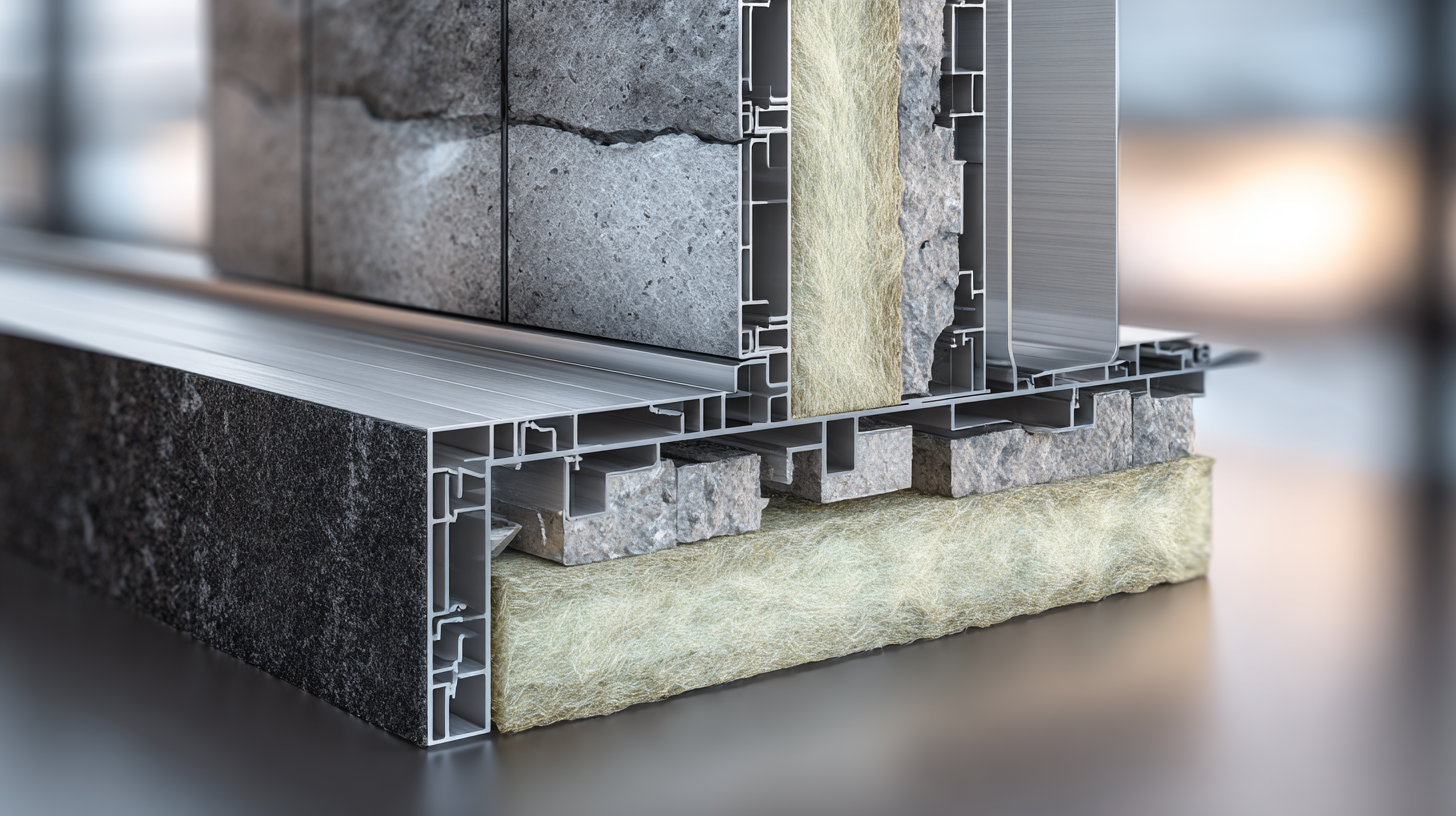
Historically, the Ukrainian façade market evolved from the simplest “wet” systems (plaster with insulation) to complex engineering structures. Changes in climate standards, rising energy costs, and new DBN (State Building Norms) requirements for thermal conductivity of enclosing structures became catalysts for mass transition to ventilated systems. Ceramogranite, as a cladding material, has taken a dominant position thanks to its unique combination of physical and mechanical properties: low water absorption (less than 0.05%), high frost resistance, and non-combustibility class (NG), which is critical for high-rise construction.

1.2. Impact of External Factors on Supply Chains

The war significantly changed the logistics map of the industry. If before 2022 a significant portion of components (aluminum alloys, ceramics) was imported through southern ports or eastern borders, today the main cargo flow has been reoriented to the western border and domestic production. Ukrainian companies such as KMD Facade Solutions and Scanroc demonstrated high adaptability by relocating capacities or diversifying warehouse stocks between regions (Kyiv, Kharkiv, Western Ukraine) to minimize risks. This led to market consolidation around players capable of ensuring a full project implementation cycle — from subsystem production to turnkey installation.

2. Technological Anatomy of the Market: Systems and Materials

Understanding the market is impossible without deep analysis of the technological component. The VFS market in Ukraine is clearly segmented by subsystem type (framework) and cladding material format.

2.1. Competition of Subsystem Materials: Aluminum versus Galvanized Steel

Ukraine has developed a duopolistic subsystem market where aluminum and steel solutions compete.

2.1.1. Aluminum Systems (KMD, AMTT, Temina)

Aluminum subsystems are considered the de facto standard for business-class facilities and above, as well as for high-rise construction.

  1. Corrosion Resistance: The use of AMG group alloys (aluminum-magnesium) provides natural corrosion protection without the need for additional coating, guaranteeing a service life of over 50 years even in aggressive urban environments.
  2. Weight Characteristics: Low specific gravity of aluminum reduces the load on load-bearing walls and foundations, which is especially important when reconstructing old buildings where structural strength reserves may be limited.
  3. Manufacturability: Aluminum is easier to process (extrusion), allowing for the creation of complex profiles to solve non-standard architectural tasks such as radius façades or complex junctions.

2.1.2. Galvanized Steel Systems (Scanroc, Readycon)

Steel systems occupy a significant market share in the mass residential construction segment and budget facilities.

  1. Economic Feasibility: The cost of a steel subsystem is usually lower than aluminum, making it attractive for developers focused on budget optimization.
  2. Fire Safety: Steel has a significantly higher melting point (about 1500°C) compared to aluminum (about 660°C), which is an argument in favor of steel systems for facilities with increased fire resistance requirements for the framework.
  3. Scanroc Specifics: The Scanroc system is a unique hybrid where a steel framework is combined with small-format façade tiles (stone) that imitate brickwork. This solution avoids the use of clamps, as tiles are mounted on specially configured profiles.

2.2. Ceramogranite: Format and Design Trends

Analysis of supplier offerings indicates a demand shift toward large-format slabs.

  1. 600×600 mm Format: Remains the “gold standard” for technical floors, budget facilities, and plinths. It is convenient for transportation and installation, minimizing waste during cutting.
  2. 600×1200 mm Format: Becoming dominant in modern architecture. Vertical or horizontal layout of such slabs allows visual alteration of building proportions, giving it monumentality. This format requires a more rigid subsystem and higher installer qualifications.
  3. Aesthetics: The market is moving away from monocolors toward complex textures imitating natural stone (marble, travertine), concrete, or metal. This allows architects to achieve a premium building appearance while maintaining budget.

3. Analysis of Key Façade System Manufacturers (Vendor Landscape)

This section presents a detailed analysis of companies forming the industrial base of the market — developers and manufacturers of system solutions.

3.1. KMD Facade Solutions: Market Leader with Dual Base

KMD Facade Solutions is a striking example of Ukrainian business resilience. Positioning itself as the largest domestic manufacturer of ventilated façade systems, KMD managed not only to maintain its positions during the war but also to expand its presence.

  1. Production Infrastructure: The company’s strategy is based on asset diversification. Main production facilities were partially relocated to Kyiv (5000 m²), but a strategically important workshop of 5500 m² continues to function in Kharkiv. This decision has both a social component (supporting jobs in a frontline region) and a logistics component — serving the eastern region of Ukraine.
  2. Technology Stack: The company owns a complete aluminum processing cycle, including pretreatment lines, painting, and mechanical processing on CNC machines. This allows quality control at all stages and rapid product adaptation for individual orders.
  3. Product Ecosystem: KMD offers not just “hardware” but engineering solutions. Their portfolio includes specialized subsystems for various types of cladding: ceramogranite slabs, clinker tiles, HPL panels, fiber cement, and natural stone. Such versatility allows architects to combine materials within a single façade using a unified mounting system from one supplier.
  4. Customer Orientation: The presence of showrooms in four key cities (Kyiv, Kharkiv, Odesa, Uzhhorod) and large warehouse stocks ensure prompt deliveries. The company actively works with the architectural community, providing technical solution albums and consulting support at the design stage.

3.2. Scanroc: Innovations in Energy Efficiency

Scanroc occupies a unique niche, offering a complete façade system that includes both a subsystem and its own cladding material (façade stone).

  1. Active Ventilation Technology: Scanroc’s key competitive advantage is a patented design with an active air channel between insulation and cladding. Due to temperature difference in this channel, stable draft is created (chimney effect), ensuring constant drying of insulation and walls. This allows increasing wall thermal resistance and reducing building energy consumption by up to 40%.
  2. Durability and Warranties: The company declares a design service life of up to 100 years, one of the highest indicators in the market. When installation is performed by certified partners, a 30-year warranty is provided, indicating high manufacturer confidence in product quality.
  3. Installation Flexibility: The system is designed on the principle of “dry installation,” allowing work to be carried out year-round, regardless of weather conditions. The absence of “wet” processes significantly accelerates construction or reconstruction pace.
  4. Production: The factory, equipped with Swedish equipment, is located in Ukraine, ensuring independence from imports and price stability. Products are exported to EU countries and Scandinavia, confirming compliance with European quality standards.

3.3. AMTT Group: Veteran of the Aluminum Industry

AMTT Group is one of the oldest and most experienced players in the enclosing structures market in Ukraine.

  1. Materials Science: The company emphasizes the use of high-quality aluminum alloys (AMG), which have increased corrosion resistance. This makes their systems ideal for use in aggressive environments (industrial zones, coastal cities).
  2. Comprehensive Offering: AMTT is not limited to façades alone. They offer integrated solutions including window systems, entrance groups, transparent façades, and interior solutions (slatted ceilings). This approach allows developers to close the entire building exterior envelope with one contract.
  3. System Variability: The company’s range includes different types of fasteners, from economical solutions for low-rise construction to reinforced systems (e.g., P5-50.10 series) for high-rise buildings with high wind loads.

3.4. Temina: Turnkey Model

Temina represents a modern type of Ukrainian manufacturer that integrates production and service.

  1. “Result is Ours” Philosophy: Temina positions itself not just as a profile seller but as a partner responsible for the final result. Their business model includes a complete cycle: from geodetic façade survey and project development to subsystem production, complete material supply (insulation, membranes, fasteners), and installation by their own qualified crews.
  2. Localization and Logistics: The company’s office and warehouse facilities are concentrated in Kyiv (Yevhena Sverstiuka / Oleksy Dovbusha St.), allowing instant response to capital developers’ needs and minimizing transportation costs.

4. Installation and General Contracting Ecosystem: Who Builds Façades?

The quality of the final product (façade) depends 80% on installation craftsmanship. Even the best Scanroc or KMD system won’t work effectively if installation technology is violated (e.g., blocking the ventilation gap or incorrect membrane installation). The installation services market in Ukraine is represented by several powerful players, each with their own specialization.

4.1. Star-Svit: Regional Leader with National Scale

Star-Svit (Rivne) is a dominant player in the western and central regions, but the geography of their projects covers all of Ukraine.

  1. Scale of Experience: The company’s portfolio includes over 560 completed projects of various purposes — from residential complexes (RC “Central City Apartments”) to infrastructure facilities (bus stations) and office centers. Such volume indicates established business processes and ability to manage many projects simultaneously.
  2. In-house Production of Shaped Elements: A critical advantage of Star-Svit is having a workshop for producing flashings, parapets, slopes, and other sheet metal elements. This allows independence from third-party suppliers and prompt resolution of junction issues directly during installation, significantly reducing project delivery times.
  3. Comprehensive Approach: The company offers turnkey services, including façade glazing, aluminum door installation, and suspended ceiling installation, making them a convenient general contractor for commercial customers.

4.2. Olsay: Engineering and Aesthetics

Kyiv-based Olsay occupies the niche of high-class engineering and complex architectural solutions.

  1. Design Flexibility: Olsay specializes in projects where the façade is a key element of architectural expression. They have deep expertise in working not only with ceramogranite but also with thermo-boards, natural stone, clinker, and decorative plasters. This allows implementation of complex combined façades popular in modern premium housing.
  2. Project Approach: The company emphasizes the design stage (engineering-first approach). Detailed junction node development and 3D modeling help avoid collisions on the construction site. The case with a private house in F.L. Wright style (420 m² of façade, 120 mm insulation) demonstrates their ability to work with demanding private clients and complex architectural styles.
  3. Transparency and Communication: Olsay actively uses digital channels to demonstrate their processes, building trust with clients and architects.

4.3. Alpinist: Specialization in High-Altitude Work

Alpinist (Kyiv) is a bright representative of the industrial mountaineering niche in the façade industry.

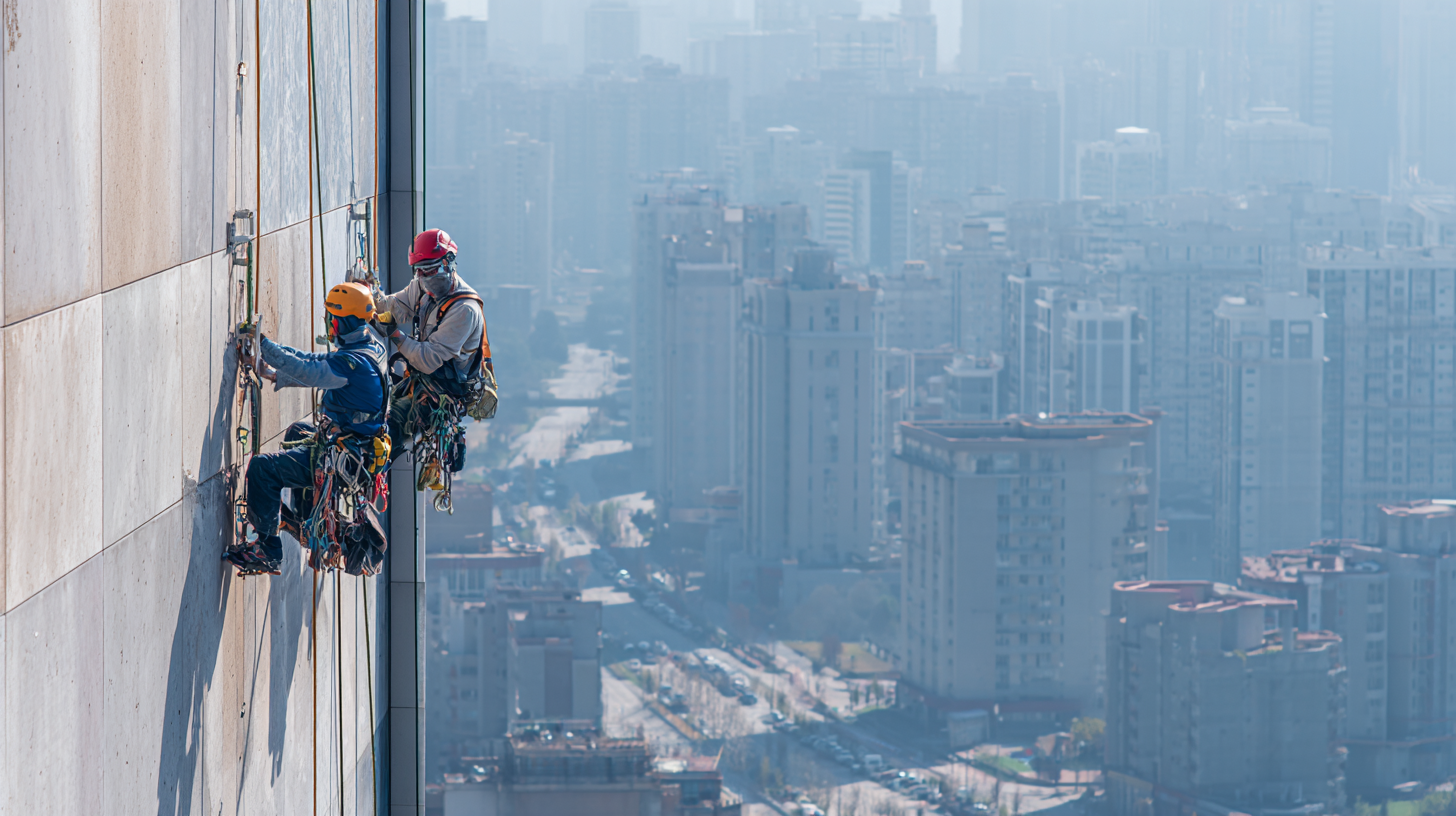
  1. Access Methodology: The main competitive advantage is the use of industrial mountaineering methods (rope access). This allows installation and repair of façades at any height without using expensive special equipment (aerial platforms, cranes) and without installing bulky scaffolding that requires permits and occupies sidewalk space.
  2. Renovation and Repair: Alpinist is an indispensable contractor for repairing existing façades, sealing joints, replacing damaged ceramogranite slabs, and high-altitude cleaning. They work in dense urban development conditions where equipment access is often impossible.
  3. Certification: The company emphasizes the use of certified materials and provision of warranties on completed work, which is an important factor for HOAs and management companies.

4.4. Bautech-Ukraine: Large-Scale Commercial Construction

Bautech-Ukraine is a powerful player with Odesa roots, specializing in large investment projects.

  1. Portfolio: The company has implemented a number of landmark projects, including hotel complexes (Zatoka), business centers (BC “Vuzovsky”), and infrastructure facilities (checkpoints). Their experience covers the full construction cycle — from foundation to final façade finishing.
  2. Innovation: Bautech was among the first in Ukraine to implement frame construction technologies, combining them with modern façade systems. This significantly reduces commercial real estate construction timelines.

4.5. Ufacade: Focus on Durability

Ufacade offers a systematic approach to installation, focusing on operational characteristics.

  1. Strategy: The company emphasizes that their façades are designed for a service life of about 50 years. They pay special attention to protection from atmospheric influences (UV radiation, moisture) and mechanical damage, achieved through careful material selection and installation quality control.
ZOV Marketing Close up view of a ventilated facade system cro 27da5bbf 2040 4790 ba6f 8da1551a80cb 3

5. Economic Analysis: Pricing and Cost Structure

Budget formation for installing a ventilated ceramogranite façade is a complex process depending on many variables. In 2024-2025, there is a trend of cost increase due to inflation, logistics costs, and skilled labor shortage.

5.1. Analysis of Work and Material Costs

Cost Item Approximate Cost (2025) Comments and Influencing Factors
Installation (labor) 680 — 2000 UAH/m² Base price (680 UAH) applies to simple planes. Price increases to 2000 UAH/m² for complex architectural forms, high-altitude work, slope and junction installation. Also influenced by seasonality and region.
Ceramogranite (material) 865 — 900+ UAH/m² The specified price is indicative for popular formats (600×1200 mm) of Indian production. European brands will cost significantly more (from 50-70 EUR/m²).
Subsystem (aluminum) Calculated individually Depends on wind loads, number of floors, insulation thickness (bracket projection). Aluminum is tied to currency rates.
Insulation (mineral wool) Depends on thickness 150 mm is becoming standard instead of the previous 100 mm to comply with new energy efficiency standards, which increases the façade “pie” cost.

5.2. Cost Drivers

  1. Building Geometry: The presence of many windows, corners, protrusions leads to increased tile waste (cutting) and costs for expensive shaped elements (corners, flashings).
  2. Height: Work at heights above 2-3 floors requires machinery, scaffolding, or industrial mountaineers, which increases rates.
  3. Logistics: Transportation costs can constitute a significant portion of the budget, especially if the project is located far from main warehouses in Kyiv or Kharkiv.
ZOV Marketing A construction site scene showing specialized w 83e2f47d c0f4 44d1 badf 316d10f9855e 3

6. Regional Specifics and Logistics Market Map

The VFS market in Ukraine is geographically heterogeneous. Each region has its leaders and demand specifics.

6.1. Kyiv Region (Capital Hub)

Kyiv remains the center of decision-making, financial flows, and the most large-scale projects. The headquarters of most leading companies are concentrated here (KMD, Temina, Alpinist, Olsay).

  1. Specifics: High competition, demand for premium and complex solutions, many high-rise projects. Availability of showrooms and warehouses allows customers to “touch” materials before purchase.

6.2. Kharkiv Region (Eastern Outpost)

Despite the complex security situation, Kharkiv demonstrates incredible vitality.

  1. Specifics: Preservation of KMD production facilities in the city is critically important for ensuring jobs and supplying materials for regional reconstruction. The local market is focused on rebuilding damaged infrastructure and housing.

6.3. Western Region (Rivne, Lviv, Uzhhorod)

The region that became the rear of the Ukrainian economy is experiencing a construction boom.

  1. Specifics: Strong regional players such as Star-Svit (Rivne), which have powerful reputation and their own production bases, dominate here. KMD also strengthens its presence through a showroom in Uzhhorod, targeting both domestic demand and export opportunities.

6.4. Southern Region (Odesa)

Odesa maintains the status of an important construction market with its own specifics.

  1. Specifics: The maritime climate with high humidity and salt content places increased demands on façade corrosion resistance. Companies with experience working in such conditions, such as Bautech-Ukraine, have strong positions here. Importers such as Hilal Aluminum Ukraine, providing aluminum profile supplies, are also present.

7. Prospects and Trends (2025-2030)

Analysis of the current situation allows identifying several key trends that will determine the future of the façade market in Ukraine.

  1. Total Energy Efficiency: Ventilated façades will become an alternative-free solution for thermal modernization of old housing stock. Systems like Scanroc, which allow significant energy consumption reduction, will have priority in state reconstruction programs.
  2. Installation Industrialization: Growing shortage of qualified personnel will force the market to move toward systems that are installed quickly and simply (prefabrication, node unification), as well as toward companies offering complete turnkey cycles (Temina, Star-Svit).
  3. Aesthetic Evolution: Ceramogranite will continue to displace other types of cladding due to its ability to imitate any natural materials while remaining more affordable and durable.
  4. Production Localization: Ukrainian subsystem manufacturers (KMD, AMTT) will strengthen their positions, displacing imports, thanks to better logistics and independence from currency rate fluctuations.

Conclusion

The ventilated ceramogranite façade market in Ukraine is mature, highly competitive, and technologically advanced. Customers have a wide choice between premium aluminum systems and reliable steel solutions, as well as access to qualified installation companies with various specializations. The key to a successful project is choosing a partner capable of ensuring a comprehensive approach, system warranty, and compliance with installation technology standards.

author
Alexander Guk
About the author:

Our expert in fencing structures has over 5 years of experience working at the Mehbud factory. Helps you choose the optimal design and model of fencing according to your needs. Professionally deve...

More
0 0 votes
Article Rating
Subscribe
Notify of
guest
0 Comments
Oldest
Newest Most Voted
Inline Feedbacks
View all comments