
The Architectural Physiology of a Modern Professional Kitchen
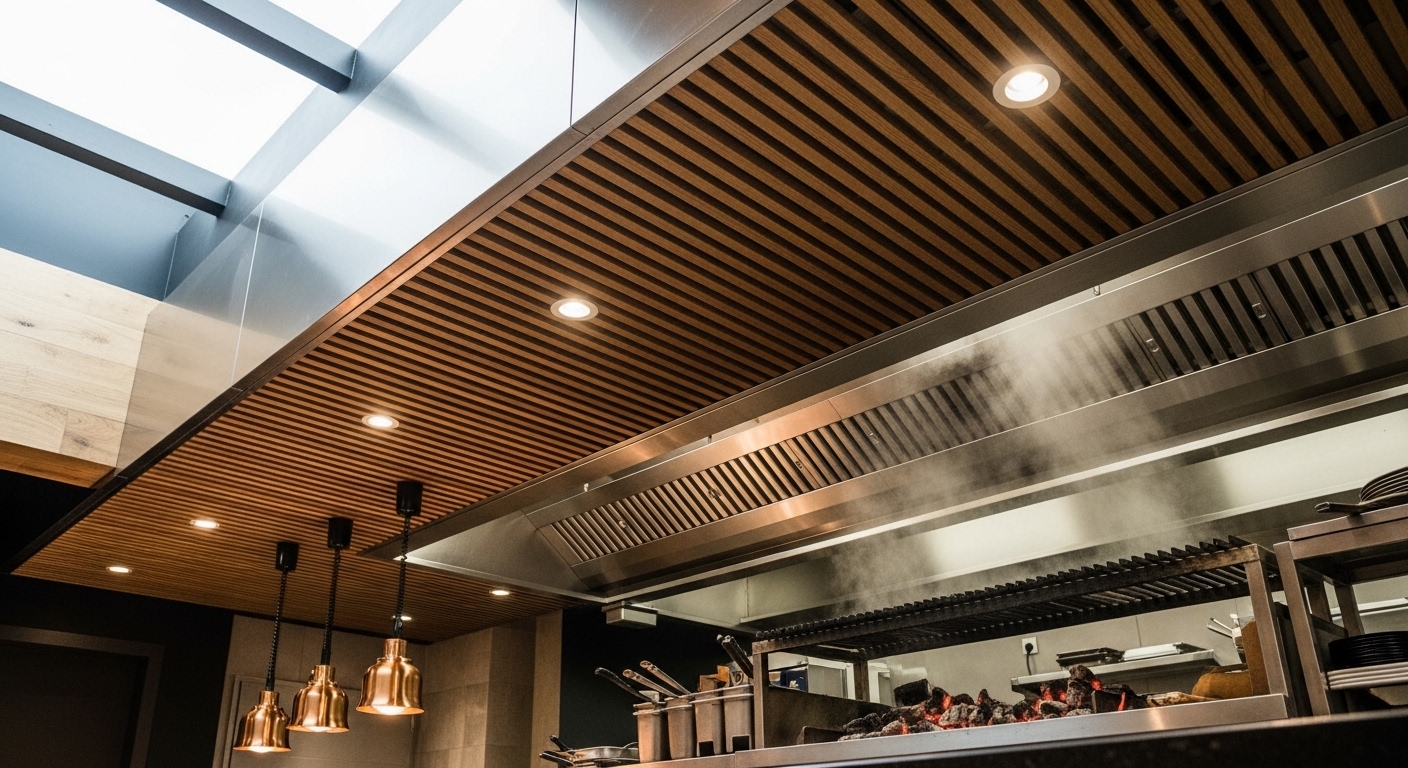
A modern professional kitchen in a restaurant or a large food processing enterprise is an extremely complex, high-tech, and extreme working environment. During intensive multi-shift food preparation, colossal volumes of thermal energy, water vapor, aerosolized fat suspensions (known in international engineering practice as FOG), and various volatile organic compounds are generated. The combination of these thermodynamic and chemical factors creates ideal conditions for the unhindered reproduction of pathogenic microorganisms, the formation of aggressive mold colonies, and the development of highly resistant biofilms on all accessible surfaces. Traditionally, from the perspective of sanitary control, the greatest attention of inspectors and facility managers is given to stainless steel work surfaces, cutting tools, refrigeration equipment, and floors. However, the ceiling plays an equally, and often more critical, role in ensuring the overall food safety and engineering stability of the entire food preparation block.
From the point of view of gas physics, the ceiling is the final and inevitable reservoir for ascending convective flows of heated air carrying concentrated moisture and microscopic droplets of polymerized fat. If the ceiling structure does not meet strict hygienic and material science standards, it instantly turns into a high biological hazard zone. Porous building materials actively absorb moisture, creating a deep breeding ground for bacteria, and inadequate surface thermal conductivity provokes massive condensation formation. The condensation that forms on a microorganism-contaminated ceiling sooner or later reaches a critical mass and drips directly onto prepared culinary products, open gastro-containers, or raw material processing zones. This process is a classic mechanism of cross-contamination, which is considered one of the most serious and dangerous violations in the global food industry.
Awareness of these risks has led modern architectural design of restaurants to massively abandon traditional basic finishing and painting of capital concrete slabs in favor of specialized suspended metal systems. These systems perform a dual function: first, they allow for the reliable concealment of complex engineering communications, such as ventilation system mains, freon lines, fire extinguishing pipes, and power wiring; second, they create an absolutely smooth, aggressive-washing-resistant, and biologically inert surface capable of meeting the highest standards of cleanrooms according to the international ISO classification.
This comprehensive report presents a deep analysis of the requirements for washable and antibacterial metal ceilings in the food industry. The research covers the detailed regulatory framework of Ukraine, strict international certification standards, material science aspects of silver ion technologies, the physics of acoustic comfort, architectural differences between concealed and exposed mounting systems, as well as rigid operational and chemical cleaning protocols that guarantee the long-term safe operation of restaurant kitchens.
Regulatory Framework of Ukraine and International Safety Protocols
Food safety management in Ukraine at the current stage is based on the deep harmonization of national legislation with advanced European directives and international engineering standards. The choice of building and finishing materials for the ceiling in hot kitchens is strictly and uncompromisingly regulated by a multi-level set of documents covering sanitary-epidemiological, building, fire safety, and operational aspects.
HACCP System Implementation and Strict Legal Liability
According to current Ukrainian legislation, the development and implementation of permanent procedures based on the Hazard Analysis and Critical Control Points (HACCP) principles at facilities are absolutely mandatory for all food market operators without exception. Proper space-planning of a kitchen according to HACCP standards is based on preventing any potential risks of physical, chemical, or microbiological contamination at all stages of the production chain.
The ceiling in the strict context of HACCP principles is viewed not as a decorative element, but as a critical infrastructure barrier that must unquestioningly meet a number of basic sanitary requirements. First, the ceiling must be absolutely monolithic, integral, without structural cracks, deep seams, and technological gaps where organic dirt could accumulate or insects and pests could find shelter. Second, the building’s construction and the materials used must minimize the risk of condensation formation, which, as noted earlier, is a direct transport route for the biological contamination of food products. Third, finishing materials must be designed for regular and intensive washing using aggressive disinfectants, alkalis, and pressurized water without the slightest loss of their initial structural or aesthetic properties. In addition, HACCP-based planning involves strict zoning of the space into clean and dirty zones (receiving area, warehouses, primary processing, thermal processing, ready-to-eat food distribution, washing area), where raw material and ready food flows never intersect, which also dictates different requirements for ceiling structures in each of these zones.
Ignoring these principles and failing to fulfill the obligation to implement an effective HACCP system, including through saving on building materials and using porous non-washable ceilings, entails extremely strict legal and financial liability. Ukrainian legislation provides for a significant fine for legal entities ranging from 30 to 75 minimum wages. For individual entrepreneurs, the sanctions range from 3 to 15 minimum wages. Even more critically for the business, regulatory authorities have the full right to apply a sanction in the form of an immediate and complete suspension of the production facility’s operations until all infrastructure deficiencies are eliminated.
State Building Codes (DBN) and Sanitary Expertise Conclusion (SES)
The engineering design of catering enterprises in Ukraine is strictly guided by the State Building Codes, the main one being DBN V.2.2-25:2009 “Catering enterprises (restaurant establishments)”. This fundamental document regulates not only general space-planning decisions, such as the need to install freight elevators when locating production areas in the basement space, but also clearly distinguishes visitor areas and production zones. Requirements for ceiling finishes in production hot kitchens and specialized primary processing zones (meat, fish, root vegetables) mandate the use of exclusively non-toxic, wear-resistant, and fully moisture-resistant materials.
Before any finishing material is allowed to be installed in a catering unit, it must undergo mandatory and thorough state sanitary-epidemiological expertise. The supplier or manufacturer of the ceiling panels is obliged to provide an official “Conclusion of the State Sanitary and Epidemiological Expertise”. This document is a legal confirmation that the product is chemically stable, does not emit toxic substances (such as phenols, formaldehydes, or heavy metals) under the influence of extreme kitchen temperatures and high humidity, and fully complies with the radiological and chemical safety standards of the state. The process of obtaining this conclusion is lengthy and takes from 7 to 45 days from the moment of submitting the full document package. For imported products, the applicant is required to provide a detailed technical description, foreign certificates of conformity, and laboratory test reports.
| Regulatory Document / Authority | Key Regulatory Requirement for Ceiling Infrastructure | Consequences of Identified Non-Compliance |
| HACCP System (State Service of Ukraine on Food Safety and Consumer Protection) | Monolithic smooth surface, complete absence of condensation, ease of deep cleaning, spatial zoning. | Fine of 30-75 minimum wages, forced suspension of the facility’s operation. |
| DBN V.2.2-25:2009 (State Building Codes) | Compliance with approved space-planning decisions, resistance to moisture and extreme temperatures. | Inability to legally commission the constructed facility. |
| Conclusion of State Sanitary-Epidemiological Expertise | Presence of a valid Conclusion for all building materials, laboratory confirmation of non-toxicity. | Direct ban on using selected materials in the catering unit, dismantling requirement. |
International Standardization: FDA Food Code and Environmental Certificates
Due to the globalization of the technological equipment and building technologies market for catering establishments, the best global practices are often dictated by international supervisory agencies. The most authoritative of these is the U.S. Food and Drug Administration (FDA). According to the requirements of the FDA Food Code 2017, ceilings in all food preparation, food storage, and equipment washing areas must meet four inviolable criteria: they must be smooth, extremely durable, non-absorbent, and easily cleanable. The FDA categorically and directly prohibits the use of untreated wood in such environments, as well as traditional acoustic panels made of porous mineral fiber. Furthermore, the standards require ceilings to be fully sealed: insulating materials (e.g., mineral wool) must never be exposed or subjected to kitchen air, as they can release dangerous microparticles that infiltrate food products.
Additionally, advanced industrial ceiling systems are classified according to the strict standards of cleanrooms under the ISO 14644-1 standard. For facilities with an extremely high risk of contamination, materials providing a strict air cleanliness class from ISO 5 to ISO 3 are required. Specialized concealed metal systems with an integrated antibacterial coating can reduce the emission of microparticles into the air practically to zero, allowing them to meet the strictest global cleanliness criteria.
No less important is the environmental safety of the materials themselves for the staff, who spend 12-14 hours a day in the kitchen. Modern panels are certified according to GREENGUARD Gold standards, which guarantees an extremely low level of volatile organic compound (VOC) emissions. To obtain this certificate, the maximum allowable VOC concentration must not exceed 220 µg/m³, and formaldehyde emissions are strictly limited to 9 µg/m³. The philosophy of sustainable development is also applied, confirming that the materials are completely free of carcinogens, mutagens, and reproductive toxins.

Material Science and Engineering: Metal vs. Alternative Solutions
Choosing the base physical material for a suspended ceiling in a professional kitchen is always a complex engineering compromise between the approved budget, expected durability, and hygienic properties. While standard moisture-resistant drywall or cheap mineral-fiber ceiling tiles are economically advantageous during the capital construction phase, their microporous structure and high tendency to irreversible deformation when wet make them absolutely unsuitable for long-term operation in the aggressive conditions of hot kitchens. An in-depth analysis of industry data conclusively proves that the best, safest, and ultimately most economical solution is metal ceiling systems.
Physico-Mechanical Advantage of Metal Ceiling Panels
Modern professional cassette ceilings are most often made of high-quality cold-rolled galvanized steel or lightweight aluminum. These metals undergo a complex multi-stage anti-corrosion preparation and are coated in an electrostatic field with wear-resistant powder enamels. Standard geometric sizes of the panels are ideally suited for creating a flexible modular layout, allowing easy integration of lighting systems, ventilation diffusers, and fire sprinklers into the ceiling.
The undeniable engineering advantages of metal panels over other building materials include:
- 100% Moisture Resistance: Metal, by its molecular nature, does not absorb water at all. Unlike high-quality acoustic mineral or stone wool tiles, which may declare the ability to withstand up to 95-100% relative humidity, they still have a physical moisture saturation limit, whereas metal is a completely impermeable barrier. Even under conditions of extreme and constant exposure to thick hot steam, metal cassettes never sag, warp, or lose their strict geometric parameters for decades.
- Uncompromising Fire Safety: Metal ceilings are fundamentally non-combustible building materials that fully meet the highest international and national fire safety criteria. Given the statistically high risk of sudden ignition of fat deposits in restaurant exhaust ventilation ducts, the fire resistance of a metal ceiling serves as a reliable barrier to contain the catastrophic spread of fire to the building’s load-bearing structures.
- Extreme Durability and High Resistance to Mechanical Impact: Sanitary protocols for modern kitchens require intensive, rigorous cleaning, often using brushes, mops, and high-pressure water. Painted steel and aluminum can withstand thousands of repeated washing cycles using powerful chemical degreasers and disinfectants without color degradation or surface destruction. In case of local mechanical damage or insurmountable deformation, an individual metal cassette can be easily and quickly removed and replaced with a new one, making the entire system highly efficient in terms of total cost of ownership.
Comparative Analysis: Metal vs. Hydrophobic Stone Wool
Although metal is objectively the leader for extreme kitchen conditions, the hygiene industry also actively uses specialized ceiling panels made of hydrophobic stone wool. The technological advantage of stone wool is that it is a completely inorganic material. Since it has no nutritional organic value, it is by definition incapable of supporting the development of mold fungi, mildew, and pathogenic bacteria.
However, when making a direct physical comparison with metal in professional kitchen conditions, stone wool has significantly lower resistance to direct, rough mechanical impact and is vulnerable to high-pressure water washing, which is often necessary to wash away old fat. Metal wins by providing a rigid, impenetrable monolithic surface that is much easier and faster for staff to clean. Furthermore, light-colored metal cassettes with a powder coating provide phenomenal light reflectance (up to 85%). This dramatically improves the overall illumination of work surfaces without the need to install additional energy-consuming light fixtures. At the same time, it is important to understand that smooth metal is an acoustically reflective material, which creates serious challenges with noise pollution, which are solved through complex panel perforation.
| Material Characteristic | Metal Cassettes | Stone Wool Panels | Traditional Mineral Fiber |
| Moisture Resistance | 100% (does not absorb water) | Up to 95-100% (hydrophobic properties) | Low (absorbs moisture, sags) |
| Resistance to Pressure Washing | Very high (in concealed mounting systems) | Low / Not recommended | Categorically prohibited |
| Resistance to Bacteria/Fungi | High (with antibacterial coating) | High (inorganic base) | Very low (nutrient medium) |
| Mechanical Strength and Rigidity | Maximum | Medium | Low |
| Light Reflectance Coefficient | Up to 85% (lighting savings) | Around 80-85% | 70-80% |
Antibacterial and Antimicrobial Technologies: The Biochemistry of Silver Ions
The key scientific innovation that transformed metal ceilings from a simple passive building material into a super-active food safety barrier is the massive introduction of high-tech antibacterial coatings. The primary and only effective active ingredient in the vast majority of these specialized coatings is silver ions (Ag+).
The Mechanism of Triple Biocidal Action of Silver Ions at the Cellular Level
Elemental silver is historically and scientifically known for its powerful antimicrobial properties. Its extremely high efficacy against a remarkably broad spectrum of Gram-positive and Gram-negative microorganisms, combined with an almost complete lack of toxicity to human cells, makes it an ideal agent for use in the food industry.
The mechanism of suppressing bacterial growth by silver ions is complex and provides a unique triple action that completely precludes the evolutionary development of resistance in pathogens :
- Blocking Primary Cellular Metabolism and Membrane Disruption: Silver ions, gradually released from the ceiling’s polymer coating, physically bind to the thiol groups of bacterial cell membrane proteins. They catastrophically disrupt the osmotic permeability of the cell wall.
- Halting Cellular Respiration: By freely penetrating into the cell’s cytoplasm through the damaged membrane, Ag+ ions rigidly deactivate crucial respiratory enzymes of microorganisms, effectively chemically “suffocating” the bacteria from the inside.
- Preventing Cell Division: In the final stage of the attack, silver ions directly interact with the nucleic acids (DNA and RNA) of the bacteria, causing their condensation and structural changes. This completely blocks genome replication processes.
Innovative Integration Technology and Prolonged Coating Action
The critical effectiveness of the silver antimicrobial coating depends on the chemical matrix into which these active ions are integrated. Modern professional metal ceilings utilize a complex technology of electrostatic application of a polymer layer.
The most important operational feature of this smart coating is its thermodynamic activation mechanism. The antimicrobial substance lies dormant and is activated specifically by increased humidity. This is a phenomenal advantage for the extreme conditions of restaurant kitchens: the higher the humidity in the room and the greater the risk of dangerous condensation forming, the more intensively the active ceiling surface releases silver ions to combat the growing bacterial population. The polymer coatings are designed to provide a very slow and continuous leaching of silver agents, ensuring that bactericidal properties are maintained at a high level for many years. It is important to emphasize that such paints are absolutely non-toxic, completely safe for humans, animals, and food products.
Architectural Engineering: Deep Analysis of Mounting Systems
Choosing the right profile mounting system for the panels is strategically just as important a decision as choosing the material of the panels themselves or the antibacterial chemistry of the coating. The global construction market is dominated by two conceptually different main suspended metal ceiling mounting systems: the exposed mounting system and the concealed mounting system. Each of these engineering designs has its specific aerodynamic and operational characteristics.
Detailed Comparative Analysis of Architectural Systems
Exposed Mounting System (Visible Grid) This classic system uses a visible metal profile onto which metal cassettes are laid from above, held by their own weight.
- Engineering Advantages: The main advantage is maximum simplicity, speed of installation, and ease of subsequent dismantling. Any individual tile can simply be pushed up by hand to get instant, unimpeded access to complex engineering communications in the ceiling plenum. This makes the system significantly cheaper for daily technical maintenance.
- Critical Disadvantages for Kitchens: The metal tiles simply lie freely on the framework. The operation of ultra-powerful industrial exhaust hoods over cooking lines creates significant air pressure differentials. Under such conditions, unfixed tiles can vibrate and shift out of place, freely allowing heated, dirty air to pass into the clean plenum. Moreover, it is absolutely impossible to wash such a gravity-held ceiling with pressurized water, because any strong jet of water will simply knock the lightweight panels out of their cells. Right angles also become ideal traps for the accumulation of heavy fat and dust.
Concealed Mounting System (Rigid Framework) In this high-tech system, special clamping spring runners are used, which are rigidly attached to the structural ceiling. The metal panel is forcefully inserted from the bottom up and firmly snaps into the concealed framework.
- Engineering and Sanitary Advantages: This design creates a completely monolithic, visually seamless, perfectly smooth surface. The primary and most important functional advantage is mechanical fixation: the reliable spring snap mechanism holds the panel dead in place. This not only makes the ceiling airtight but also allows cleaning personnel to wash it with rigid mops using significant physical effort, or regularly apply aggressive high-pressure water washing from the bottom up.
- Operational Disadvantages: Dismantling fixed tiles to access hidden communications is more complicated and requires the use of a special hand tool.
| Technical and Operational Characteristic | Exposed Mounting System | Concealed Mounting System |
| Visual and Architectural Effect | Visible grid framework, segmented surface | Monolithic, perfectly smooth surface |
| Access to Engineering Communications | Easy, fast manual lifting of any panels | Difficult, requires a special tool |
| Resistance to Aggressive Pressure Washing | Extremely low (lightweight panels instantly shift upward) | Maximum (panels are securely mechanically locked) |
| System Airtightness | Low / Medium (allows airflows to pass) | Very high (dust-, vapor-, and airtight) |
| Optimal Application Area in a Restaurant | Dining halls, administrative corridors, dry storage | Hot kitchens, intensive dishwashing zones, quality labs |
Space Chemical Sealing and Aerodynamic Pressure Management
To achieve the maximum hygienic level in a professional kitchen, it is not enough to simply install a mechanical system. It is necessary to ensure 100% chemical airtightness of the entire ceiling structure. This is done to reliably prevent any microscopic penetration of fatty vapors and pathogenic bacteria into the free ceiling plenum. If hot moist vapor under pressure penetrates there and cools, deadly mold will instantly form in the dark.
Total airtightness is ensured by the meticulous application of a specialized sanitary silicone sealant directly onto the microscopic joints between the installed metal panels. Experts emphasize the importance of using exclusively neutral sanitary silicone containing powerful fungicidal additives to prevent irreversible darkening and biological degradation of the silicone joints themselves in the future. Only with such pedantic sealing of the joints can manufacturers guarantee the possibility of aggressively washing the panels with high-pressure water.
In addition to pure bacteriological protection, a perfectly sealed ceiling plays a critical aerodynamic role in designing complex HVAC systems. Clearing the air of smoke and heat requires ventilation with colossal volumes of air. A completely sealed ceiling acting as a continuous aerodynamic barrier allows engineers to precisely maintain the calculated pressure differential.
Acoustic Physics in Sterile Environments: Overcoming the Material Paradox
Designing restaurant kitchens always faces a profound acoustic paradox. The same building materials that are best suited to harsh chemical cleaning and sanitary disinfection (monolithic, smooth surfaces) are inherently perfect reflectors of acoustic sound waves.
In practice, this means that hard metal ceilings and tiled walls create a horrific effect of multiple reverberation (echo). Sound waves continuously bounce off each other and multiply the overall sound pressure. This constant background noise causes deep psychological stress, rapid physiological burnout, and a sharp decrease in concentration among chefs. This is a direct cause of an increase in workplace injuries and fatal errors in observing HACCP sanitary protocols.
On the other hand, traditional effective acoustic materials (porous panels) are categorically prohibited for use in food preparation areas. They absorb volatile fat, moisture, and bacteria, turning them into biological ticking time bombs.
Combined Multi-Layer Solutions: Acoustic Metal with Integrated Bioprotection
To resolve this paradox, specialized multi-layer acoustic metal ceilings have been developed.
These innovative composite panels combine several functional layers:
- Face Metal Barrier: The outer cassette features precision microperforation. This perforation is calculated to allow sound waves to pass through but be small enough for easy washing.
- Active Protective Coating: All surfaces are coated with an antibacterial compound, ensuring total protection against microorganism reproduction.
- Internal Acoustic Layer: A special sound-absorbing fiberglass fleece, which is completely biologically inert, is securely glued to the inside.
The energy of sound waves freely passes through the micro-holes of the metal and is instantly absorbed in the fiberglass fleece, drastically reducing echo. At the same time, this fleece acts as a completely dust-proof membrane filter. This perfect engineering solution simultaneously ensures staff comfort and guarantees absolute food safety.
Operation, Technical Maintenance, and Strict Cleaning
Even the most advanced antibacterial ceiling will very quickly lose all its functionality if regular maintenance is not provided. The most insidious enemy of any kitchen infrastructure is fat deposits.
The Physico-Chemical Problem of Fat Deposit Formation
During continuous high-temperature frying, oils and fats vaporize and rise with the air. Moving away from the heat source, they quickly cool and inevitably settle as a sticky film on all accessible surfaces. These deposits create three catastrophic problems at once:
- Aesthetic and Mechanical Degradation: They make surfaces sticky, attracting dust. For modern restaurants with open kitchen formats, where guests observe the chefs at work, a dirty ceiling is absolutely unacceptable. Additionally, grease dripping onto the floor creates a slip hazard for staff.
- Blocking Bioprotection: If microscopic silver ions are tightly covered by a layer of fat, they physically cannot contact bacterial cells. Biocidal action ceases completely.
- Extreme Fire Risk: Fat accumulation is a top-level fire hazard. The sudden ignition of overheated fat in exhaust ventilation systems is one of the main causes of devastating fires in the restaurant business.
Scientifically Justified Cleaning Protocols and Delicate Material Safety
According to strict HACCP requirements, facility cleanliness management must be strictly divided into regulated cycles.
- Dry Cleaning: To safely remove loose dust, it is necessary to use an industrial vacuum cleaner with an exclusively soft brush attachment.
- Daily Damp Cleaning: Performed at the end of every work shift using a clean sponge lightly moistened with water. This should be done while all surfaces remain warm, as warm grease washes away much more easily.
- Deep Cleaning and Chemical Degreasing: Conducted at least weekly. This must include the use of specialized liquid chemical degreasers. For monolithic metal systems, intensive wet cleaning using a large amount of water is permitted.
- Extreme Pressure Washing: Permitted exclusively for specialized metal systems and only subject to confirmed, complete silicone sealing of all seams.
Critical Warnings Regarding the Use of Aggressive Chemistry: The use of hard abrasive sponges or stiff-bristled brushes by line staff is categorically prohibited. Microscopic abrasives ruthlessly scratch the surface, physically scraping off the invaluable micron layer of polymer paint containing silver ions. Bacteria instantly begin to multiply in these micro-scratches, and destructive metal corrosion rapidly develops.
Surfaces cleaned with chemicals must be heavily rinsed with clean water to completely remove all residues of the alkaline degreaser. It is also important not to forget the inseparable synergy between the cleanliness of the exhaust hood filters and the cleanliness of the ceiling itself. The workflow requires completely removing filters at least once a week and soaking them in chemical solutions.
Strict Storage Conditions and Handling of Delicate Materials
The operational durability of a metal ceiling is established at the stage of its proper transportation and warehouse storage. Cardboard boxes of metal panels must be stored strictly vertically. They must categorically not be laid horizontally in high stacks to completely prevent the deformation of the thin metal. Furthermore, long metal framework profile runners must never rest only on their ends over a void, to avoid microscopic bending. Storage must take place exclusively in closed, dry rooms, even if the pallets are shrink-wrapped.
Strategic Conclusions for Architects and Food Industry Managers
The design and operation of metal ceiling systems in professional kitchens requires designers and investors to deeply understand strict legislative norms (DBN, HACCP) and advanced material science achievements.
To achieve the highest global standards of sanitary safety, it is strongly recommended to adhere to the following solutions:
- Unalternative Use of Concealed Metal Suspended Systems: For the hottest and most humid production zones, the only optimal solution is choosing a concealed suspended system. Exposed systems with visible grids should be kept only for dry zones.
- Total Chemical Sealing: To absolutely prevent moist vapors and pathogenic bacteria from penetrating into the free ceiling plenum, the joints between installed panels must be mandatorily sealed with high-quality neutral sanitary silicone.
- Financial Investment in Active Antibacterial Technologies: The application of specialized metal panels with a certified silver-ion coating provides continuous biological protection 24 hours a day.
- Finding the Perfect Acoustic Balance: Modern projects must necessarily include the use of hybrid acoustic metal systems to preserve the health of kitchen staff.
- Uncompromising Adherence to Maintenance Protocols: The biological effectiveness of the most expensive ceiling will be nullified by fat deposits if operational rules are ignored. Management is obliged to implement and strictly document cleaning cycles.
Strict adherence to these complex but vitally necessary engineering and sanitary principles guarantees restaurateurs easily passing all audit checks and building a safe culinary production.
Related articles
Top 7 Companies to Buy Gabions in Ukraine: Ranking of Trusted Manufacturers
Rating of reliable manufacturers. Price comparison, expert tips on wire thickness and stone selection for durability.
Warranty for metal structures in Ukraine: Legal regulation, engineering standards, and judicial practice
Metal structure warranties in Ukraine: Legal regulation (10 years), DBN standards, ISO corrosion protection, fireproofing, and how to file defect claims.
Top companies performing foundation works in Kyiv
Rating of TOP foundation work companies in Kyiv 2026. Current prices, contractor comparison, market analysis, and expert advice on choosing a reliable foundation.