Macroeconomic and Technological Landscape of the European Building Materials Market
The modern European building materials market, particularly in the thermal and acoustic insulation segment, is undergoing a profound structural and technological transformation. This process is catalyzed by unprecedentedly strict environmental directives from the European Union, ambitious climate goals to achieve complete carbon neutrality (the European Green Deal), and fundamental changes in energy efficiency requirements for real estate. The rising cost of energy forces developers to reconsider traditional approaches to designing building envelopes.
The mineral wool sector in Europe is characterized by an extremely high level of consolidation. Statistical data indicates that five major transnational corporations control about 95% of the total European production volume. This group includes giants such as Saint-Gobain, Rockwool, Paroc, URSA, and Knauf Insulation. Such a market structure dictates exceptionally high quality standards and stimulates a continuous race for innovation. Companies are forced to invest resources in the development of bio-based ecological binders, the implementation of fully electric hybrid furnaces with zero emissions, and the integration of zero-waste production models, where material residues are returned to the production cycle.
Fundamental Physics and Thermodynamics of Insulation Materials
To deeply understand the competitive advantages of leading European companies, it is necessary to thoroughly examine the physical and chemical nature of their products. Mineral wool as a class of insulation materials is conceptually divided into two main subgroups: glass wool and basalt wool (or stone wool). Although both materials function on a common principle—immobilizing air molecules within a complex three-dimensional matrix of randomly intertwined fibers to minimize heat loss—their thermodynamic, acoustic, and water-repellent properties differ significantly.
Thermodynamic Properties and Fire Resistance Limits
Basalt wool is primarily manufactured from volcanic rocks (basalt, diabase, gabbro), which are melted in special electric furnaces at extreme temperatures exceeding 1500°C. Due to this mineral structure, this thermal insulation demonstrates exceptional thermal stability. It can withstand direct exposure to temperatures over 1000°C without the fibrous structure collapsing or melting. This characteristic makes the product an irreplaceable choice for designing passive fire protection systems and insulating high-temperature industrial equipment.
Glass wool, which is predominantly made from quartz sand and a significant proportion of recycled glass, has a lower melting point but stands out with other engineering advantages. Glass fibers are much longer, thinner, and more elastic than stone fibers. This allows for an extremely low material density while maintaining high thermal resistance values. The elasticity of glass wool allows it to be highly compressed during packaging (up to one-sixth of its original volume), which radically reduces logistical costs during transportation over long distances. Both materials confidently achieve the highest European fire safety class (non-combustible materials that do not spread flame).
Hydrodynamics and Moisture Management
The behavior of an insulation material upon contact with moisture fundamentally affects the durability of the structure. The accumulation of moisture in the insulation pores leads to a catastrophic loss of its thermal performance.
Stone wool from leading manufacturers possesses pronounced water-repellent properties. Water droplets do not wet the surface of the fibers but roll off them. At the same time, the material remains highly vapor-permeable, allowing moisture to escape freely to the outside, preventing condensation buildup and mold growth. Glass wool has historically been more prone to absorbing moisture, so its use requires a careful approach to the integration of vapor barriers, although modern premium European product lines undergo powerful water-repellent treatments.
Ranking of European Mineral Wool Manufacturers
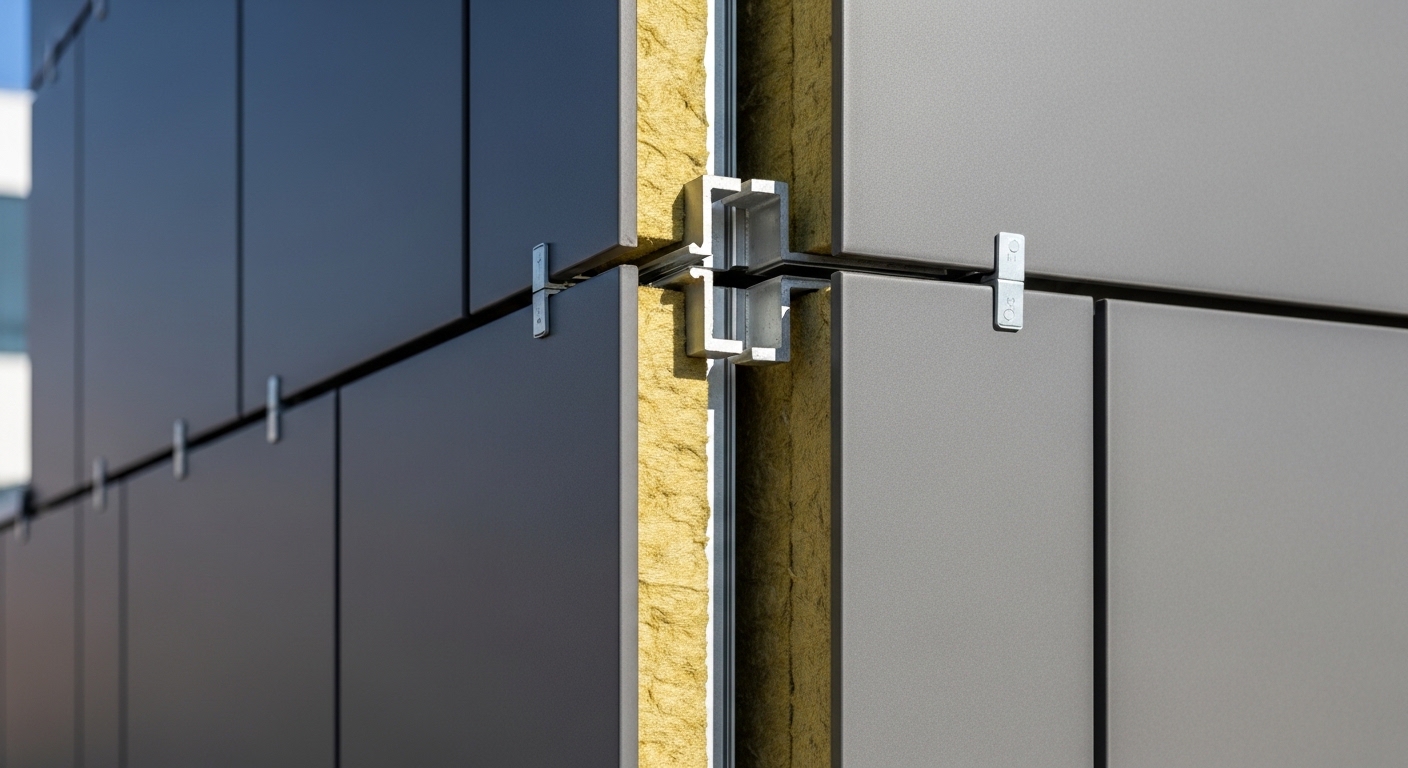
The ranking presented below provides an objective cross-section of the market positions of the most influential corporations specializing strictly in the production of thermal insulation materials from mineral raw materials, and whose headquarters are localized within the European Union.
1. Rockwool International A/S
The global flagship and most influential European player in the stone wool segment. The company distinguishes itself by focusing on non-combustible, high-density insulation solutions for complex architectural projects, flat roofs, and fire protection systems. The volcanic nature of the materials guarantees exceptional thermal stability, effective sound insulation, and moisture resistance. The brand is a leader in implementing a circular economy cycle on the European continent.
- Core specialization: Basalt wool, fire protection systems, acoustic panels, facade insulation.
- Advantages: Withstands temperatures over 1000°C, highest environmental responsibility rating, endless recycling cycle.
- Headquarters and registration: Hedehusene, Denmark (EU).
- Official European website: www.rockwool.com
- Why choose them: An ideal choice for facilities with strict fire safety requirements and humid operating conditions.
2. Knauf Insulation
One of the most powerful insulation divisions of the German Knauf group, which stands out in the market due to its expertise in producing both glass wool and stone wool. The brand’s main competitive advantage is the breakthrough technology of using innovative bio-based binders without added formaldehyde. This technology radically improves the environmental friendliness of the installation process and contributes to high scores under building eco-certification standards.
- Core specialization: Glass wool, stone wool, HVAC insulation, solutions for green roofs.
- Advantages: Ecological bio-binders, absence of toxic fumes, comprehensive solutions for residential and commercial construction.
- Headquarters and registration: Visé, Belgium (EU).
- Official European website: www.knaufinsulation.com
- Why choose them: The best solution for internal partitions and rooms with high sanitary requirements for air quality.
3. Saint-Gobain (Isover brand)
A division of the French industrial conglomerate Saint-Gobain, a global leader in developing insulation based on highly elastic glass staple fibers. Isover products guarantee the highest level of compression in packaging, which optimizes logistics. In recent years, the company has spearheaded the trend to reduce carbon emissions in Europe: launching electric furnaces for glass melting has significantly reduced the negative impact on the environment.
- Core specialization: Elastic glass wool, technical insulation, marine insulation, facade insulation.
- Advantages: High compressibility (cheaper logistics), benchmark sound absorption in partitions, extremely low carbon footprint.
- Headquarters and registration: Courbevoie (Paris), France (EU).
- Official European website: www.saint-gobain.com
- Why choose them: The optimal choice for frame construction and projects where optimizing delivery costs for large volumes of insulation is crucial.
4. URSA Group (part of Etex)
A strong European player that is currently part of the transnational Etex group (Belgium). With 70 years of development experience, URSA is one of the top five European manufacturers specializing in the production of high-quality glass wool. The company’s strategic positioning is based on providing comprehensive solutions to improve building energy efficiency, directly complying with European norms for reducing energy consumption.
- Core specialization: Glass mineral wool (rolls and slabs).
- Advantages: High thermal resistance values, adaptability of materials to strict energy-saving regulations, strong technical support for European architects.
- Headquarters and registration: Zaventem, Belgium / Madrid, Spain (EU).
- Official European website: www.ursa.com
- Why choose them: Excellent price-to-energy-saving performance ratio for large-scale residential complexes.
5. Paroc Group
A Scandinavian manufacturer with deep Finnish roots that has earned a reputation as an unsurpassed expert in the high-tech stone wool segment. Its core specialization is focused on developing passive fire protection systems, technical insulation for industrial pipelines, and solutions for load-bearing flat roofs. The basalt products are characterized by exceptional compressive strength.
- Core specialization: High-density basalt wool, technical fireproof insulation.
- Advantages: High resistance to mechanical loads, adaptation to harsh northern climates, durability on flat roofs.
- Headquarters and registration: Helsinki, Finland (EU).
- Official European website: www.paroc.com
- Why choose them: Indispensable for insulating industrial facilities and roofs subject to constant loads and personnel movement.
6. Petralana S.A.
A highly dynamic Polish manufacturer of basalt wool that quickly gained trust in the European market thanks to a unique symbiosis with coking plant production. The company’s factory runs on coke oven gas, making the rock melting process energy-efficient and stable. The company is a 100% privately owned Polish enterprise producing specialized lines of mineral wool slabs for facades and roofs.
- Core specialization: Basalt mineral wool for facades, roofs, and internal partitions.
- Advantages: Modern high-tech equipment, optimized pricing due to industrial symbiosis, uninterrupted production process.
- Headquarters and registration: Bytom / Katowice, Poland (EU).
- Official European website: www.petralana.eu
- Why choose them: An excellent choice for contractors seeking European-quality basalt insulation at a competitive price from a highly specialized European factory.
Main B2B Search Optimization Trends in 2026
In the context of total digitalization of building materials sales, traditional promotion methods are losing their effectiveness. For queries like buy mineral wool or finding thermal insulation manufacturers, the architecture of search engines dictates new rules.
Firstly, search algorithms have significantly tightened the requirements for the Experience, Expertise, Authoritativeness, and Trustworthiness of content. For European mineral wool suppliers, this means that articles with superficial material descriptions will no longer reach the top of search results. Texts must contain detailed analyses of thermal engineering calculations and material thickness comparisons.
Secondly, there is a rapid shift towards the “zero-click search” format and the use of smart overviews powered by artificial intelligence. Users receive comprehensive answers directly on the search page. To remain visible, companies need to use clear comparative lists (e.g., “Thermal resistance of basalt wool compared to glass wool”) and formulate text as concise answers to frequently asked questions by engineers and procurement specialists.
Thirdly, the approach to building external links has fundamentally changed. The quantity of links has taken a back seat to their quality. An effective strategy in 2026 requires acquiring links exclusively from authoritative architectural portals, official European partner websites, and government resources related to energy efficiency programs.

Conclusion
The in-depth analysis of the European market demonstrates that the thermal and acoustic insulation segment has evolved from the production of basic materials to high-tech engineering. Leading corporations (Rockwool, Knauf Insulation, Saint-Gobain, URSA, Paroc, and Petralana) set global standards in heat preservation, acoustic comfort, and fire safety. Their massive investments in environmentally friendly production lines are a direct response to European environmental protection requirements.
For building contractors and developers, cooperating with these manufacturers guarantees a reliable supply of original and certified European materials. Meanwhile, successfully promoting these technologies digitally in a highly competitive market requires adapting marketing strategies: focusing on deep engineering expertise, high-quality comparative materials, and an authoritative network of European partner resources.
Related articles
Top 7 Companies to Buy Gabions in Ukraine: Ranking of Trusted Manufacturers
Rating of reliable manufacturers. Price comparison, expert tips on wire thickness and stone selection for durability.
Warranty for metal structures in Ukraine: Legal regulation, engineering standards, and judicial practice
Metal structure warranties in Ukraine: Legal regulation (10 years), DBN standards, ISO corrosion protection, fireproofing, and how to file defect claims.
Top companies performing foundation works in Kyiv
Rating of TOP foundation work companies in Kyiv 2026. Current prices, contractor comparison, market analysis, and expert advice on choosing a reliable foundation.