Metal 3D Printing in Architecture: Will Printed Nodes Replace Traditional Fasteners in 2027?
Generic selectors
Exact matches only
Search in title
Search in content
Post Type Selectors

Metal 3D Printing in Architecture: Will Printed Nodes Replace Traditional Fasteners in 2027?

April 28, 2026
4  

1. A Paradigm Shift in Architectural Engineering and Construction

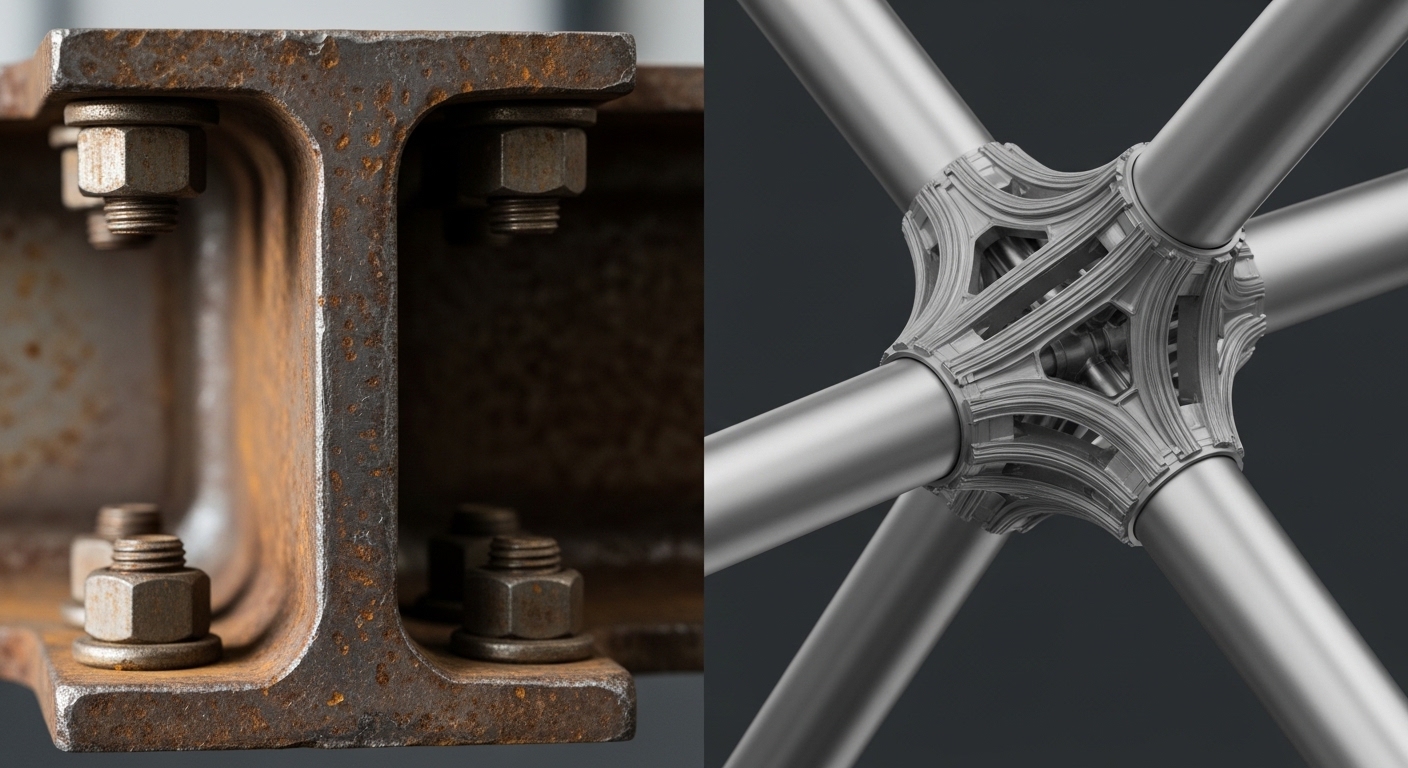
The introduction of additive manufacturing technologies into the construction industry and architectural design has caused a fundamental shift in the understanding of how load-bearing and enclosing structures are developed, analyzed, and assembled. Historically, the construction industry and architectural engineering have relied on traditional fasteners for metal structures, such as arc welding, bolted, and riveted joints, which were standardized back in the era of early industrialization. While these methods have proven their reliability over centuries, they impose significant limitations on geometric complexity, require intensive manual labor, and lead to substantial material waste due to the necessity of using standardized rolled metal.

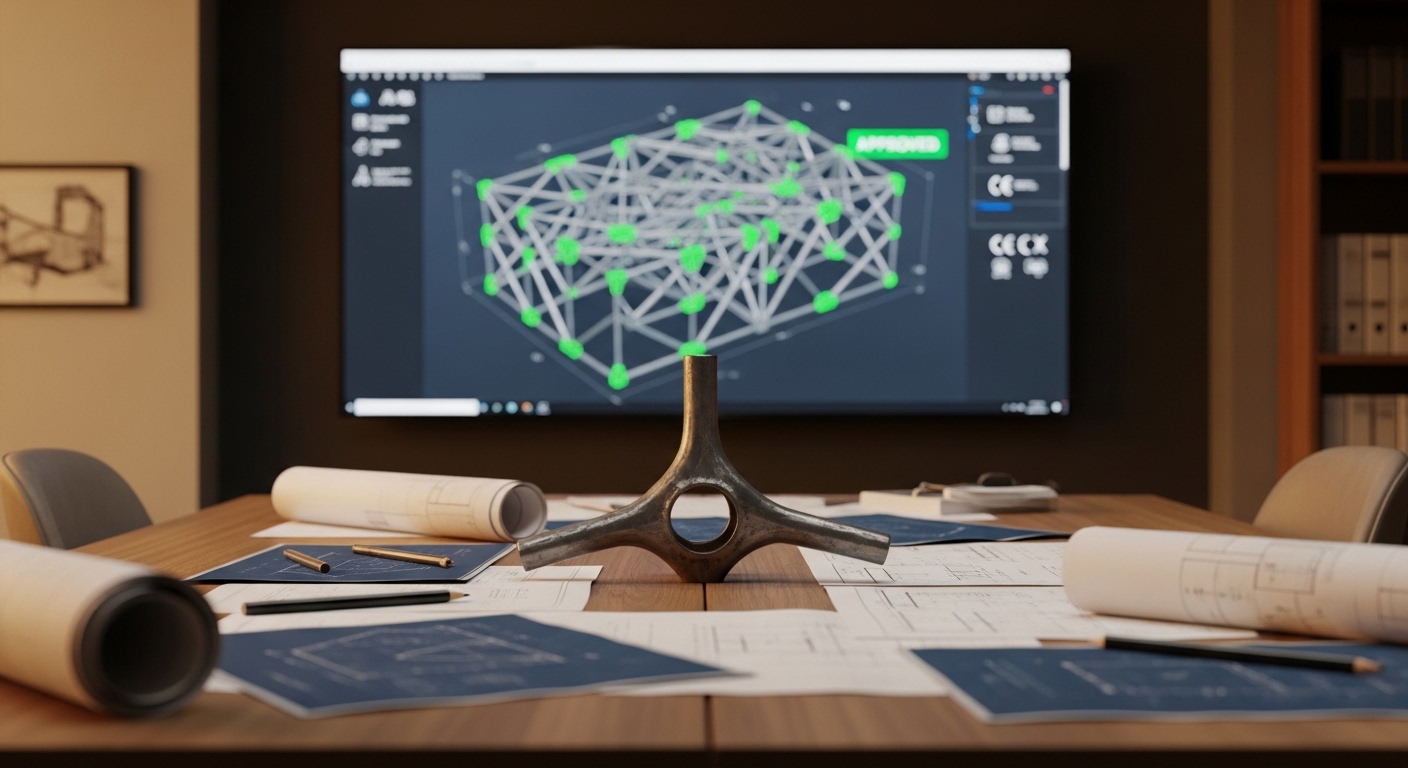
However, with the advancement of technologies, architects and structural engineers have gained unprecedented freedom in creating complex geometries that were previously considered technically impossible or economically unfeasible. The question of whether printed architectural nodes will replace traditional metal connections in 2027 is one of the most pressing in modern engineering. The choice of 2027 as a timeline benchmark is not coincidental: it is during this period that the final implementation of key regulatory documents is scheduled, such as the updated AISC 360-27 standard in the United States and the second generation of Eurocodes (specifically Eurocode 3) in the European Union. These standards will, for the first time, officially and comprehensively regulate the use of metal parts manufactured via additive manufacturing in load-bearing building structures, opening the path to their mass commercialization.

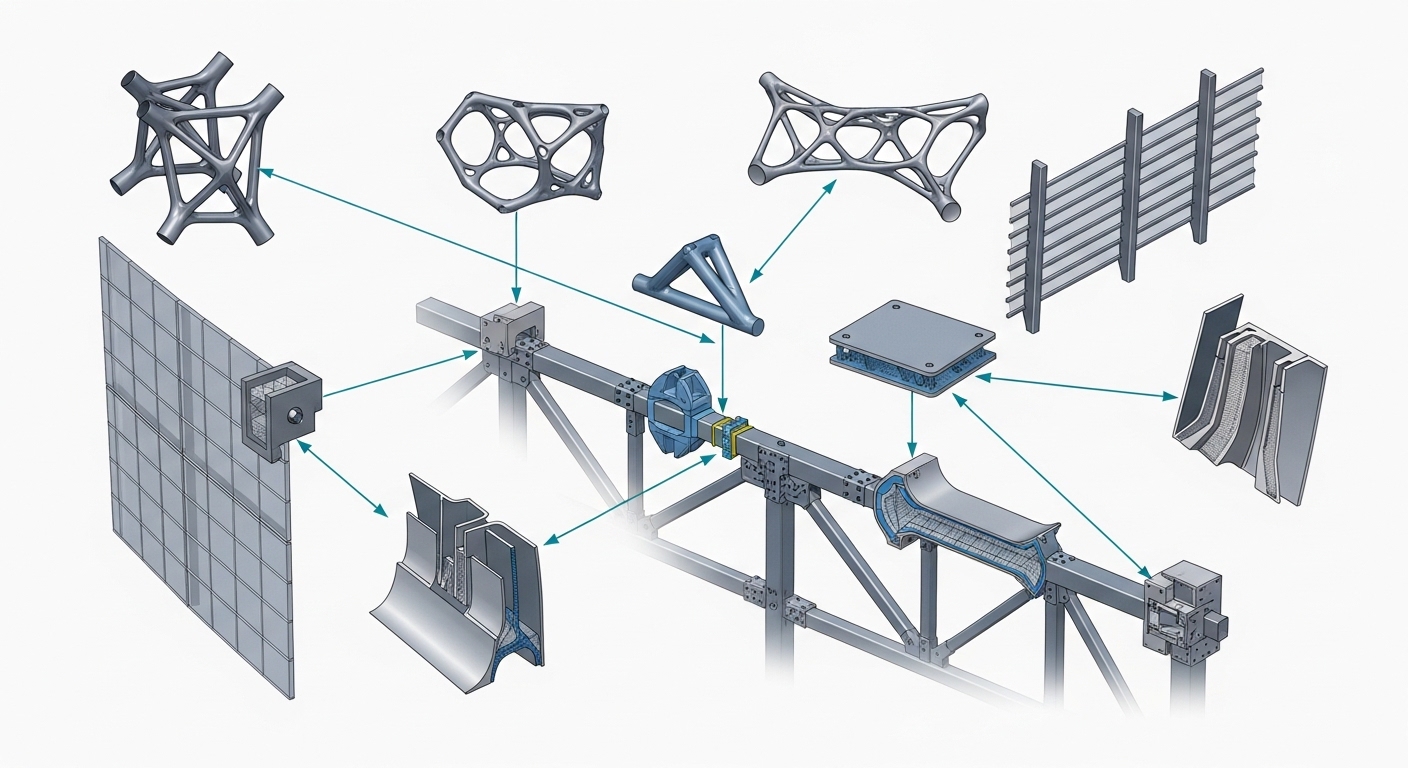
This report offers a comprehensive and in-depth analysis of the impact that metal 3D printing will have on modern and future architecture. The research focuses on the technological, economic, metallurgical, and regulatory aspects of the transition from traditional fasteners to optimized nodes. Furthermore, it thoroughly explores the integration of this technology into non-structural and hybrid architectural elements: parametric facades, multifunctional ceilings (integrating lighting and climate control), and metal fences and security enclosures.
2. Global Metal 3D Printing Market: Economic Drivers and Forecasts to 2027-2035

The economic viability of utilizing cutting-edge technologies in architecture and construction is rapidly increasing, bolstered by significant investments from the aerospace, automotive, and medical industries, which act as catalysts for development. According to macroeconomic data, the market is currently in a stage of exponential growth.

2.1. Macroeconomic Indicators and Growth Forecasts

In 2023, the global metal additive manufacturing market was valued at 7.73 billion USD. It is projected that by 2030, this figure will reach 35.33 billion USD, demonstrating a compound annual growth rate (CAGR) of 24.2% between 2024 and 2030. Other analytical agencies provide even more optimistic long-term forecasts: the overall market is expected to reach 102.32 billion USD by 2035, with a growth rate of approximately 23.86%.

If we look exclusively at the construction printing segment (which includes both concrete and metal technologies), its size was estimated at 2.51 billion USD in 2025 and is projected to reach 44.41 billion USD by 2035, with an impressive growth rate of 33.40%. Such rapid growth is driven by the need for quick prototyping, reduced production costs, and improved accuracy of the final product.

Market Segment / Analytical Report Base Year Estimate (Billion $) Forecast Year Projected Value (Billion $) CAGR

Global Metal 3D Printing Market

$7.73 (2023) 2030 $35.33 24.2%

Global Metal 3D Printing Market

$12.04 (2025) 2035 $102.32 23.86%

3D Printing in Construction (Overall)

$2.51 (2025) 2035 $44.41 33.40%

Printed Aerospace Fasteners Market

$0.22 (2026) 2036 $0.405 6.3%

2.2. Cost Analysis: Subtractive vs. Additive Manufacturing

Traditional metalworking manufacturing (subtractive methods such as milling, as well as forging and casting) is highly efficient for the mass production of thousands of identical standardized parts, where economies of scale offset high initial tooling costs. For example, forming automotive panels using hydraulic presses takes less than 10 seconds per part but requires the fabrication of dies costing over $20,000.

Modern parametric architecture operates under different laws. Buildings with complex organic forms, glass domes, spatial envelopes, and large-span bridges require hundreds, and sometimes thousands, of completely unique connecting nodes. Each such node features unique beam intersection angles, a different number of branches, and is subjected to varying load vectors.

In a traditional process, manufacturing one unique, complex node requires a significant amount of manual welding labor to join several distinct metal plates, leading to the formation of numerous heat-affected zones, a risk of thermal deformation, and a reduction in the overall integrity of the material. Moreover, subtractive methods generate a vast amount of waste. Studies show that during traditional metal machining, waste (chips, offcuts) can amount to 20% to 70% of the initial workpiece mass.

Conversely, metal 3D printing demonstrates a material utilization efficiency of 90-95%, as the metal powder or wire is deposited exclusively where dictated by the digital model. According to industry surveys, 82% of enterprises that have implemented large-format printing report substantial cost savings, and 22% use this technology specifically to reduce manufacturing waste.

Production Parameter Traditional Manufacturing (Welding/Milling) Metal 3D Printing (Deposition)
Material Utilization Efficiency

20-50% (high level of waste in the form of chips)

90-95% (minimal powder/wire waste)

Geometric Flexibility

Low (constrained by tool accessibility)

High (ability to create internal cavities)

Lead Time for Unique Prototypes

2-4 weeks (requires drafting and tooling)

1-2 weeks (direct printing from a digital model)

Economic Viability (Custom Orders)

Low (high fixed setup costs)

High (no costs for dies and molds)

Economic Viability (Mass Production)

High (low unit cost at high volumes)

Low (high cost of machine time and material)

Metalevyy 3D druk v arkhitekturi 3

3. Technological Landscape: Mechanisms and Materials Science

Understanding whether printed nodes will be able to replace traditional fasteners requires a deep analysis of the physicochemical processes underlying the technologies. Three primary approaches dominate architecture and construction: wire arc additive manufacturing, laser powder bed fusion technologies, and binder jetting followed by casting.

3.1. Wire Arc Additive Manufacturing (WAAM)

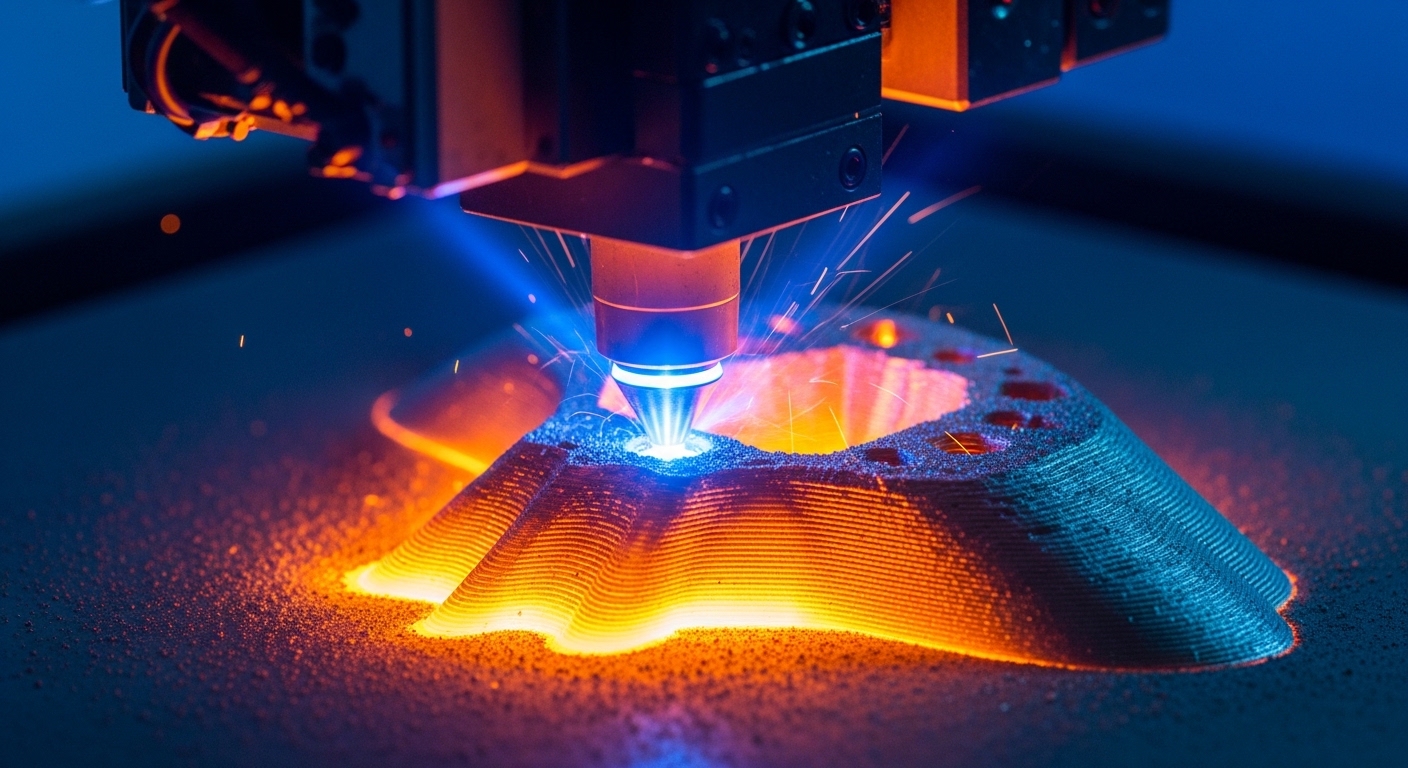
This technology is the most promising for macro-scale structural engineering. The process utilizes standard metal wire (which is significantly cheaper than specialized metal powders), melted by an electric arc, while a robotic arm deposits the molten metal layer by layer.

Advantages and Metallurgical Properties: The main advantage is an extremely high deposition rate and the ability to create large-scale structures (e.g., bridge elements several meters long), as the process is not limited by the dimensions of a closed printer chamber. The mechanical properties of such structures are impressive. Experimental studies of walls printed from standardized stainless steel showed an average microhardness exceeding that of commercially available forged counterparts. Ultimate tensile strength and yield strength indicate that such structures match, and sometimes surpass, traditional steel elements in strength, although their ductility may be slightly lower.

Challenges: The primary drawback is low surface resolution. Finished parts feature a characteristic wavy texture caused by the deposition of thick layers of molten metal. For nodes requiring a precise fit to glass or facade panels, the parts almost always necessitate intensive mechanical post-processing of contact surfaces. Furthermore, the uneven heating and slow cooling of large metal masses generate significant residual thermal stresses, which can lead to part warpage.

3.2. Selective Laser Melting (SLM / LPBF)

Powder bed fusion technologies operate on the principle of completely melting fine metal powder with a high-power laser in an inert environment. This process achieves millimeter precision, creating exceptionally complex internal geometries, lattice structures, and channels that cannot be replicated by any other method.

Quality Optimization Parameters: The quality of a printed node critically depends on operational parameters. For instance, the hatch distance between adjacent laser beam passes. If this distance is too large, the powder between passes will not melt, leading to the formation of internal voids and high-porosity zones (lack-of-fusion defects), which act as stress concentrators and initiation sites for fatigue cracks. Scanning speed affects the heating and cooling rate, directly determining the metal’s microstructure.

Size and Scalability: Historically, such printers were limited to small build chambers. However, in recent years, the industry has achieved a breakthrough by introducing systems with a build area of over three meters, utilizing an array of dozens of synchronized lasers. This enables the printing of monolithic, large-scale architectural nodes, overcoming previous scalability barriers.

3.3. Hybrid Methods and Sand Mold Printing

For projects where direct metal printing is either too expensive or constrained by dimensions, a hybrid approach is utilized. Large-format printers are used to print complex sand casting molds bound with resin. Subsequently, molten steel or aluminum is poured into these molds using traditional metallurgical methods. This approach combines the limitless geometric freedom of digital design with the mechanical predictability and low cost of conventional casting.

Metalevyy 3D druk v arkhitekturi 2

4. Structural Performance: Printed Nodes vs. Traditional Fasteners

The most decisive factor for mass adoption is comparing the load-bearing capacity, durability, and efficiency of printed parts against traditional bolted or welded connections.

4.1. Topology Optimization and Engineering Cases

The primary driving force behind abandoning standard metal fasteners is topological optimization. This is a computational approach that redistributes material within a defined design space using complex mathematical algorithms. The algorithm iteratively removes material from zones where stresses are absent or minimal, leaving it only along the load paths.

The international engineering firm Arup pioneered this field. They conducted fundamental research, redesigning an existing complex steel node for a tensegrity street lighting structure in The Hague.

The resulting topologically optimized node, printed from high-strength steel, proved incredibly efficient:

  1. The node’s height was reduced by half compared to the welded equivalent.
  2. The weight of a single node was cut by 75% (from an initial 20 kg to just 5 kg).
  3. Yet, the printed node withstands the exact same structural loads as the massive traditional element.

On the scale of a large construction project, reducing the weight of every connecting element by 75% can lead to a decrease in the overall mass of a building’s steel frame by over 40%. This radically alters logistics, reduces foundation loads, and dramatically lowers carbon emissions.

4.2. Hybrid Approaches and Structural Reinforcement

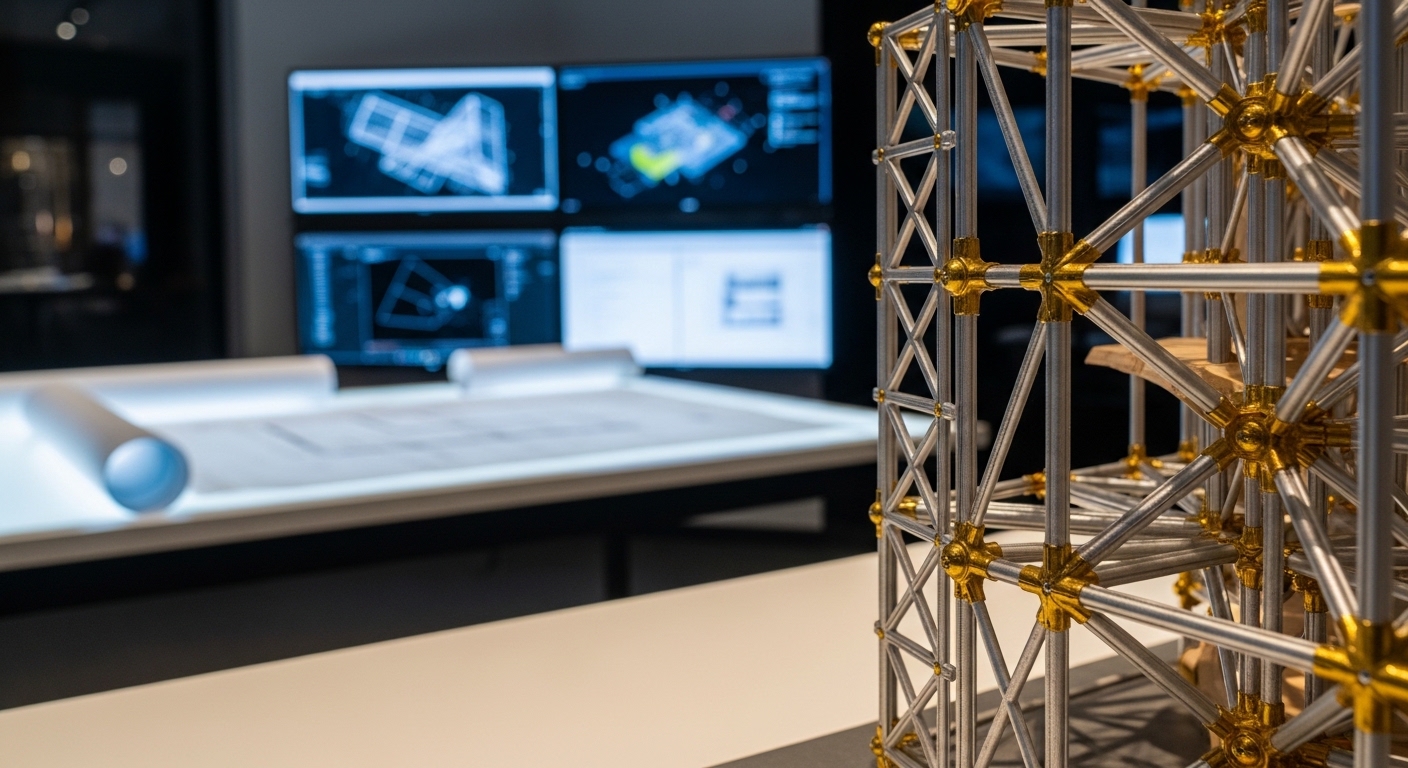
Recognizing that fully replacing all of a building’s steel elements with 3D printing is economically unrealistic, the industry is shifting towards hybrid structures. European research consortiums have demonstrated the future of steel construction, where robotic technology is used to intelligently reinforce standard rolled profiles.

Directly depositing high-strength material onto standard square hollow sections exactly at the critical connection zones increased the overall load-bearing capacity by 300%. Other companies have developed fully engineered facade nodes designed to seamlessly integrate with standard aluminum profiles via visible bolted connections, eliminating the need for any on-site high-altitude welding during installation.

4.3. Material Fatigue, Corrosion, and Surface Treatment

Fatigue failure poses the main risk to architectural nodes exposed to wind, seismic activity, or thermal expansion. Residual micropores and uneven layer cooling can act as initiation points for fatigue cracks.

Studies indicate that the microstructure of printed metals exhibits pronounced anisotropy—mechanical properties vary depending on the print direction. Nonetheless, mechanical surface treatment resolves most of these issues. Milling or grinding removes the outer contour layer, which harbors the highest concentration of defects. Experiments prove that post-machining, the surface roughness metrics actually surpass those of traditional rolled steel, significantly enhancing resistance to both fatigue failure and corrosion.

Metalevyy 3D druk v arkhitekturi 1

5. Horizon 2027: Standardization as a Catalyst for Mass Adoption

Despite technical advantages, mass implementation is hindered by regulatory barriers. However, 2027 will be a pivotal year thanks to two fundamental updates to global standards.

5.1. American Standards (AISC 360-27)

The American Institute of Steel Construction is preparing to release a new edition of specifications, which will officially take effect in 2027. For the first time, specific requirements for metal additive manufacturing will be included in the standard. New appendices will regulate establishing component strength through physical testing, legally permitting engineers to utilize optimized 3D nodes.

5.2. Second Generation of Eurocodes

The European Committee for Standardization aims to finalize and implement all second-generation Eurocode standards by the end of 2027. Dedicated working groups are drafting rules within the update framework to integrate steel structures produced via deposition methods into formal design standards. Consequently, by 2027, architects and structural engineers on both sides of the Atlantic will have the legal foundation to broadly transition away from heavy welded nodes in favor of printed ones.

6. Technology Integration: Parametric Facades and “Smart” Envelopes

Modern facades have evolved beyond mere aesthetics. They have transformed into building envelopes responsible for energy efficiency, acoustics, shading, and ventilation. Metal 3D printing is the ideal tool to realize these objectives.

6.1. Biomimicry and Parametric Design

Using algorithmic modeling, architects can create parametric facades that mimic natural processes. The synthesis of complex design and digital manufacturing allows for facade elements that optimize energy consumption. For example, research into retrofitting residential buildings demonstrated that installing an innovative double-skin facade incorporating 3D-printed modules significantly reduced the energy demand for both cooling and heating, lowering overall carbon dioxide emissions. Apertures in metal facades can be designed to maximize natural light penetration in winter while blocking solar radiation in summer.

6.2. Weather Resistance and Facade Materials

The durability of facades manufactured using cutting-edge technologies is a subject of active research. Extreme weather conditions demand the use of specialized materials.

  1. Weathering Steel (Corten): Alloys based on this material are becoming increasingly popular. Under the influence of sun and rain, a stable patina layer forms on the surface, tightly adhering to the metal and halting further corrosion.
  2. Stainless Steel: Highly resistant to corrosion in urban and marine environments. Its integration enables the creation of structurally sound facade brackets and rails.
  3. Hybrid Coatings: For extreme climates, UV-resistant polymers combined with metal substructures are successfully applied.
Metalevyy 3D druk v arkhitekturi 5

7. Integration into Architectural Elements: Multifunctional Ceilings

Modern multifunctional ceilings must simultaneously solve several engineering tasks: provide aesthetics, absorb sound, and conceal complex mechanical, electrical, and plumbing (MEP) networks.

7.1. Acoustics and Geometric Sound Diffusion

Large open spaces suffer from echoing, as flat metal surfaces are excellent sound reflectors. Instead of masking metal with acoustic tiles, technology allows architects to integrate noise absorption directly into the ceiling’s geometry. Complex three-dimensional curves, cellular structures, and perforations act as diffusers, breaking up sound waves and blocking irritating resonances.

7.2. Integration of Climate Control and Lighting

The greatest breakthrough is the seamless integration of MEP networks into the ceiling, substantially reducing the height of the technical plenum. The technology allows for necessary openings, ducts, and fixtures to be planned during the digital design phase. Light fixture sockets, ventilation channels, fire sprinkler openings, and internal cavities for wiring can be calculated and integrated into the digital model in advance. Furthermore, lighting becomes part of the surface architecture, creating fixtures that blend into the ceiling without seams or joints. By embedding sensors directly into the printed panels, modern ceilings actively manage airflow and lighting.

8. Spatial Zoning and Security: Metal Fences and Enclosures

Metal fences have evolved from primitive, utilitarian barriers into defining elements of an architectural ensemble. Robotic metal printing merges an unmatched level of security with monumental aesthetics.

8.1. Industrial Security and Anti-Climb Engineering

In the realm of infrastructure security, traditional fences often fail to provide adequate protection due to weld seams and horizontal elements that serve as footholds for intruders. Technology now enables the fabrication of 3D curved fences. Using parametric design, engineers can specify hole sizes and shapes to make climbing impossible, while ensuring light passes through and visual monitoring remains unobstructed.

8.2. Luxury Real Estate and Exteriors

For elite residences, enclosures and gates represent a status symbol. Rather than choosing from catalogs of standard forged elements, architects can create entirely unique shapes. Generative design allows the integration of monograms, logos, fractal patterns, or biomimetic structures straight into the gate canvas. Thanks to their seamless structure, such gates lack the joints where water typically accumulates, ensuring their corrosion resistance.

9. Sustainability and Life Cycle Assessment (LCA)

The construction sector generates a significant portion of global carbon emissions. Metal 3D printing is positioned as a decarbonization tool. While the metal melting process consumes high amounts of electricity during production , this is offset by overarching benefits throughout the material’s life cycle:

  1. Raw Material Savings: Topological optimization makes nodes 75% lighter than welded counterparts. This translates into a proportional reduction in emissions from ore extraction and metallurgical processing.
  2. Minimal Waste: Unmelted metal powder is collected and reused, minimizing waste.
  3. Logistics Reduction: The ability to print elements locally or directly on the construction site eliminates the need to transport multi-ton structures across vast distances.
  4. Recyclability: Monomaterial steel structures are 100% suitable for recycling.
Metalevyy 3D druk v arkhitekturi 6

10. Conclusion

Returning to the primary question of the report: will printed metal architectural nodes replace traditional fasteners (welding, bolts) in architecture in 2027?

The answer is nuanced: a complete replacement will not occur in 2027; however, we will witness a definitive transition toward hybrid construction. Standard metal connections will maintain their dominance in typical frame constructions, as assembly-line production remains unparalleled in terms of low cost.

Yet, for premium-class projects, unique envelopes, multifunctional ceilings, and complex structural trusses, printed nodes will become the industry standard. The approval of updated codes in 2027 will remove the final legal barriers, granting engineers the lawful right to utilize such parts in load-bearing structures.

The economics of the process will dictate the shift to hybrid systems, where inexpensive standard rolled beams are joined using unique connectors. This will maximize strength, reduce the overall weight of buildings, and drastically cut the carbon footprint. By 2027, this innovation will evolve into a fully-fledged architectural tool, permanently altering the visual landscape of our cities.

author
Alexander Guk
About the author:

Our expert in fencing structures has over 5 years of experience working at the Mehbud factory. Helps you choose the optimal design and model of fencing according to your needs. Professionally deve...

More
0 0 votes
Article Rating
Subscribe
Notify of
guest
0 Comments
Oldest
Newest Most Voted
Inline Feedbacks
View all comments