Morphology of the Aggressive Urban Environment and the Concept of Videoecology
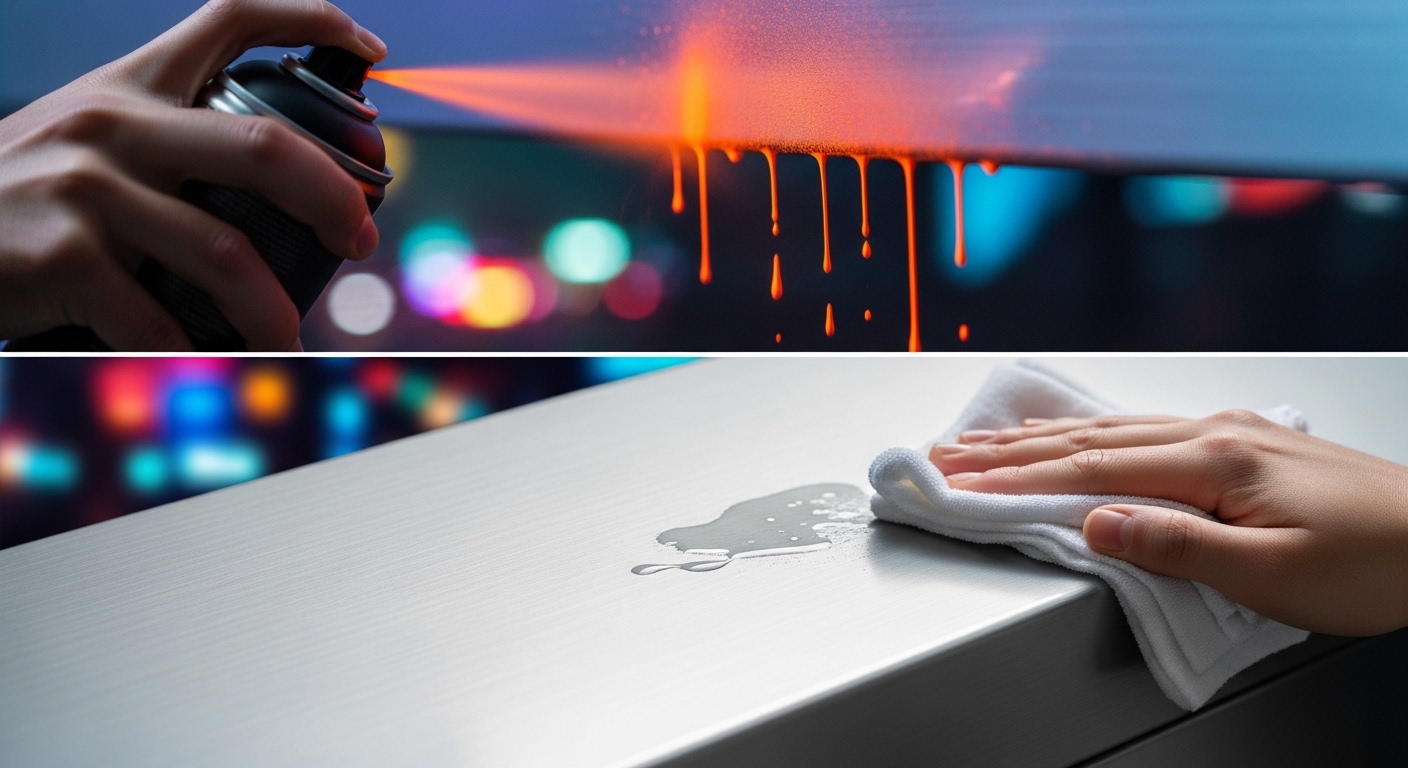
The modern megacity represents a complex ecosystem in which architectural forms and infrastructure objects are under constant pressure from destructive factors. This pressure combines extreme physical and chemical loads (high humidity, temperature fluctuations, ultraviolet radiation, industrial emissions, and winter anti-icing reagents) with unpredictable human impact, the key manifestation of which is vandalism. The integration of metal elements into the fabric of the city requires a rethinking of approaches to their surface protection.
According to the scientific discipline of videoecology, the visual environment directly affects a person’s psycho-emotional state, forming a sense of security or chronic stress. A discomforting, aggressive environment is created by monotonous fences, rows of identical windows, and metal grates that form a rigid visual field. The appearance of vandalism marks on such elements acts as a catalyst for further space degradation. According to the sociological “broken windows theory,” even minor manifestations of neglect provoke a chain reaction of worsening crime rates and declining real estate values.
This problem is particularly acute for premium commercial segment objects, such as modern Class “A” business centers, headquarters of international corporations, elite residential complexes, and flagship boutiques. Any graffiti on such objects causes instant reputational damage. That is why modern urban planning is increasingly integrating a design-for-maintenance strategy, where the choice of protective coatings is made at the blueprint stage.
Economics of Anti-Vandal Solutions and Cost Optimization
The implementation of high-tech systems requires a transition to analyzing the total cost of ownership of an asset over its life cycle. City councils deliberately increase initial capital expenditures on protective coatings during the construction of objects to achieve large-scale savings on operational costs in the long term.
In the private sector, this trend is supported by homeowners’ associations (HOAs) and real estate developers. Collective investments in preventive measures allow avoiding sudden special assessments for facade cleaning, preserving the exterior appeal of the building. The return on investment metrics of such systems are impressive: commercial enterprises report a radical 30–70% reduction in graffiti removal costs and a significant decrease in the frequency of complete facade repainting.
The Cost of Remediating Vandalism Consequences in Ukraine
To grasp the feasibility of preventive solutions, it is necessary to analyze the cost of restoration in the Ukrainian market. Professional contracting organizations estimate comprehensive facade cleaning works starting from 80,000 UAH per object. The use of traditional cleaning methods, such as high-pressure washing or rubbing with aggressive chemical solvents, causes irreparable damage to the base materials. On metal facades, solvents inevitably dissolve the base paint layer, which leads to bare metal and the rapid development of rust.

Fundamental Mechanisms of Anti-Vandal Protection
Protection technologies are based on modifying the material’s surface energy. The market offers two conceptually different categories of anti-graffiti coatings:
- Sacrificial coatings: Form a temporary protective screen on the surface. During the cleaning procedure, this layer is washed away along with the graffiti applied to it. After cleaning, the surface requires the mandatory reapplication of a fresh layer.
- Permanent coatings: These are high-tech polymer matrices designed to withstand multiple cleaning cycles without destruction. They physically prevent polymers from spray cans from creating strong bonds with the facade.
Permanent coatings demonstrate the highest economic return in high-risk zones. These are locations with high pedestrian traffic or easy accessibility: transit corridors, public transport stops, and bridge supports. Under the conditions in Ukraine, where subways serve as shelters during air attacks, the load on the metal elements of transit hubs increases manifold.
Quality Standardization: Analysis of the Certification System
To guarantee the declared durability, architects are guided by strict industry requirements developed by the American Architectural Manufacturers Association (AAMA). Specifications are based on the results of extreme field exposure in regions where the destructive impact of the sun is combined with high humidity and the influence of salty sea air.
| Characteristic | Standard 2603 (Basic Level) | Standard 2604 (High Performance) | Standard 2605 (Highest Level) |
| Application scope | Interior elements | Medium-load facades | Skyscraper exteriors, aggressive environments |
| Material type | Standard polyester resins | Modified polyesters | Fluoropolymers (PVDF or FEVE) |
| Exposure (testing) | 1 year | 5 years | 10 years |
| Allowable color loss | Slight loss | Maximum 5 units (over 5 years) | Maximum 5 units (over 10 years) |
| Minimum film thickness | 20 microns | 30 microns | 30 microns |
Standard 2605 is so strict that, to date, only fluoropolymer-based coatings have demonstrated the ability to stably meet its requirements over decades.
Detailed Analysis of the TOP-5 Architectural Metal Coatings
1. Fluoropolymer Systems: Uncompromising Exterior Protection
Fluoropolymers are recognized as the strongest types of organic materials in the modern industry. Their resistance is due to the presence of a chemical bond between carbon and fluorine atoms, which is one of the shortest and strongest in chemistry.
Two main branches dominate this category:
A. Polyvinylidene Fluoride (PVDF): This is a system that is predominantly applied in the format of liquid paints for coil coating of metal. PVDF architectural systems always require multi-layer application — a special primer must be used. In the Ukrainian market, premium PVDF solutions are represented by Metipol products. Their coating is applied in a thick layer and is specifically developed for use in megacities with a high concentration of industrial emissions. Thanks to low surface energy, PVDF possesses dirt-repellent properties that help facades self-clean under the action of rain.
B. Fluoroethylene Vinyl Ether (FEVE): These systems are most often applied in the form of powder paints. Unlike PVDF, they are thermosetting — an irreversible molecular cross-linking reaction occurs during the baking process. This nature provides FEVE systems with a fundamental advantage in anti-vandal protection: they are significantly harder, more tear-resistant, and more scratch-resistant.
2. Polyurethane Powder Systems: Maximum Wear Resistance
Polyurethane coatings form a barrier that is one of the best choices for infrastructure objects subjected to intense mechanical impact. Polyurethane has no equal when it comes to high abrasion resistance, impact strength, and elasticity. The high density of molecular cross-linking provides incredible surface hardness and excellent chemical resistance.
For anti-vandal applications, polyurethane paints have key advantages:
- Phenomenal smoothness: Allows obtaining an absolutely smooth surface, which reduces the number of micropores where marker pigment could anchor.
- Fingerprint resistance: Polyurethane perfectly hides fingerprints, which is critical for tactile surfaces (door handles or elevator panels).
3. Super-Durable Polyester Coatings: Versatility
Polyester powder coatings are the most widely used type of protective systems in the exterior painting industry. Modern innovations have made it possible to create environmentally friendly formulas without the use of toxic lead compounds.
Advantages of polyester coatings:
- Flexibility: Polyester demonstrates an unsurpassed ability to withstand temperature expansions of the base metal. During a laboratory bend test, the coating easily withstands deformation without signs of cracking.
- Aesthetic variability: No other material offers such a spectrum of colors and gloss levels.
- Economic appeal: Polyester is the most affordable option, offering the optimal price-quality ratio for mass urban infrastructure.
4. Epoxy Barrier Systems: The Foundation of Durability
Epoxy resins are synonymous with uncompromising industrial protection. When epoxy is applied to a surface, it forms an extremely strong bond with the metal, creating a physically impenetrable barrier.
Despite fantastic mechanical properties, epoxy coatings have one vulnerability — absolute instability to ultraviolet radiation. Under the influence of solar radiation, the polymer yellows and disintegrates into dust. Therefore, outdoors they are used exclusively as a reliable primer layer in multi-layer systems, which is covered on top with sun-resistant material.
5. Zinc Metallized Coatings: Electrochemical Protection
The application of zinc is based on the principle of sacrificial electrochemical protection. Since zinc is a more active metal compared to steel, in the presence of water it slowly oxidizes, leaving the steel structure completely intact.
For urban architecture, the process of electric arc metallization is increasingly being used. This method allows forming a dense zinc layer directly on the street, without the need to dismantle structures. Separately in this category, specialized aluminum anti-slip coatings stand out, which provide a military level of grip for pedestrian safety on ramps and stairs.
To protect light alloys in the urban environment, the chemical anodizing process is used. During anodizing, the metal is immersed in a bath with an acidic electrolyte, and an electric current is supplied, initiating an oxidation reaction. This reaction thickens the natural oxide layer, creating a strong porous base for subsequent paint application.
Innovative Technologies: Water-Dispersion Barriers
In addition to classic multi-layer paints that require baking in industrial conditions, infrastructure requires flexible solutions.
Water-dispersion systems are ecological liquid compositions applied with a regular brush. They form a thin transparent film that prevents paint from absorbing into the facade or park bench, and also prevents the gluing of promotional ads.
The special value of innovative nanomaterials lies in the protection of porous historical heritage objects (limestone, old brick). Unlike dense varnishes that seal moisture inside the stone, nanocoatings remain vapor-permeable. They protect buildings from vandalism without changing their aesthetics and allowing the material to “breathe”.
Local Context: Urban Transformations in Ukraine
Technical specifications of materials make sense only provided they are properly integrated into the urban fabric. According to research by Ukrainian urbanists, preserving nature and creating a comfortable microclimate has become a priority. Street space should no longer be mindlessly spent on asphalted lanes; its goal is to improve the quality of life.
This philosophy directly affects the choice of street furniture. In Kyiv, a network of structures integrated with landscaping is actively expanding, which perform an anti-parking function and create recreation zones. To create their frames, the optimal solution is to use ordinary low-carbon steel covered with high-quality polyester or polyurethane paint.
Under martial law, the infrastructure of Ukrainian cities is forced to adapt to security challenges. During an air raid alert, metal public transport pavilions and subway entrance groups become objects of extreme contact load. Their coating must withstand not only attempts to apply graffiti but also prevent the appearance of chips that could injure people during evacuation.
The problem of vandalism is not solved exclusively by the constant allocation of funds for repainting. Choosing the right metal coating is a fundamental investment that pays off quickly by radically reducing operational costs. Systematic implementation of these materials science approaches allows cities to break the vicious cycle of repair and redirect funds to the development of a safe and visually harmonious environment.
Related articles
Top 7 Companies to Buy Gabions in Ukraine: Ranking of Trusted Manufacturers
Rating of reliable manufacturers. Price comparison, expert tips on wire thickness and stone selection for durability.
Warranty for metal structures in Ukraine: Legal regulation, engineering standards, and judicial practice
Metal structure warranties in Ukraine: Legal regulation (10 years), DBN standards, ISO corrosion protection, fireproofing, and how to file defect claims.
Top companies performing foundation works in Kyiv
Rating of TOP foundation work companies in Kyiv 2026. Current prices, contractor comparison, market analysis, and expert advice on choosing a reliable foundation.