
The price of sheet metal depends on the steel base, metallic and polymer coatings, supply format, and order conditions. The cost of a finished cassette, panel, lamella, or flashing element additionally includes processing: cutting, bending, other specified operations, packaging, and delivery. Therefore, the price of a coil per ton cannot be directly compared to the price of a finished part per piece or per square meter.
Below are the parameters you need to compare in suppliers’ offers and how to request a quote without hidden differences in thickness, coating, and configuration. There is no current price list here: the cost of a specific order is clarified based on an agreed specification.
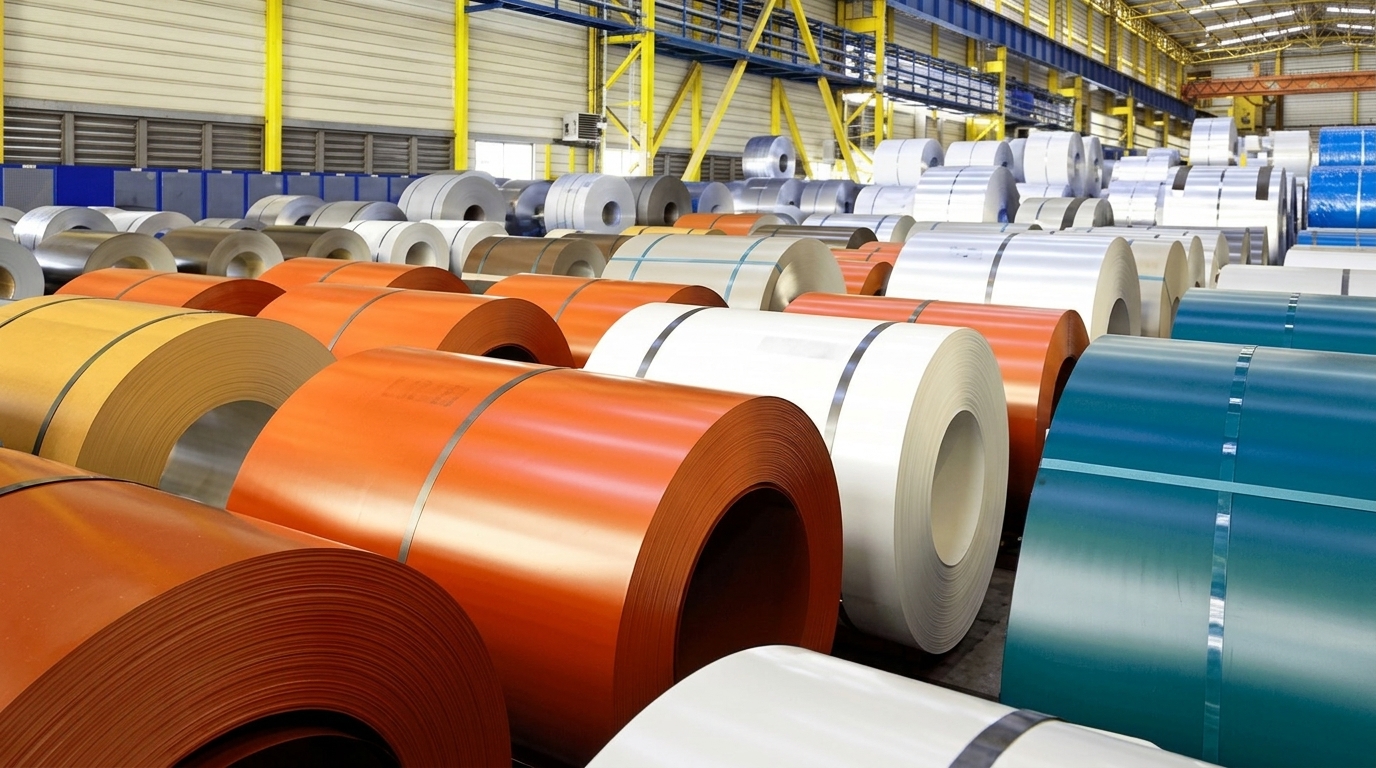
What makes up the price of metal and the finished product
Separate the cost of rolled metal from the price of the part manufactured from it. To evaluate an offer, it is convenient to use the following scheme; this is a list of factors, not a factory costing sheet.
| Component | What affects the calculation |
|---|---|
| Base and coatings | Grade, thickness, tolerances, metallic coating, painting system, and surface condition. |
| Format and layout | Coil, strip, or sheet; width, length, layout scheme, and material consumed per part. |
| Manufacturing | Number and complexity of operations, holes, bends, tooling setup, batch volume. |
| Delivery | Accessories, packaging, delivery, unloading, and other agreed services. |
| Commercial terms | Calculation unit, taxes, offer validity period, availability, and payment terms. |
There are no universal cost shares for all manufacturers and orders. The World Steel Association notes that energy costs depend, among other things, on the energy type and production location. This is one of the cost factors of steel, but not a ready-made price forecast for a specific sheet.
How steel grade and thickness affect the cost
For the same surface area, a thicker steel base contains more metal. However, increasing the thickness does not automatically make any part suitable for any load. Steel grade, profile, dimensions, supports, and fasteners all matter; thickness is selected according to product and project requirements.
A thicker sheet is not necessarily easier to bend. In SSAB’s bending overview, influencing parameters include material properties, thickness, tooling, and bend radius. Recommendations for a specific grade cannot be replaced by the rule “thicker means better formability.”

In an order, you need to agree on the steel grade, nominal thickness, tolerances, and whether coatings are included in the stated size. The label “quality metal” does not replace these details. Read more on how to choose steel for sheet metal products.
Check the applied standard and its revision in the supplier’s documentation. A list of old GOSTs or foreign standards alone does not confirm that the material meets the requirements of a specific order in Ukraine.
How much a square meter of sheet steel weighs
To estimate the weight of an uncoated steel base, you can use the formula:
Weight of 1 m², kg ≈ 7.85 × base thickness, mm.
The calculation assumes a density of 7850 kg/m³ — an approximate value cited by SSAB in their steel reference guide. This is a theoretical calculation based on nominal thickness, not the actual weighing result of a batch.
| Base thickness, mm | Calculated base weight, kg/m² |
|---|---|
| 0.4 | 3.140 |
| 0.5 | 3.925 |
| 0.7 | 5.495 |
| 1.0 | 7.850 |
The weight of a galvanized or painted sheet additionally includes coatings. Actual weight also depends on thickness within tolerance limits. If the rolled metal price is given per ton, converting to price per m² requires the weight of the exact material being compared: price per m² = price per ton × weight of 1 m² in kg ÷ 1000. Clarify whether taxes, delivery, and processing are included.
Metallic coating: why it is important to compare identical designations
For steel with zinc or another metallic coating, verify its type and specified mass. Do not confuse total coating mass on both sides of the sheet with layer thickness on one side.
In SSAB’s description of hot-dip galvanized steel, Z designations refer to zinc coating, and the minimum total mass is specified for both surfaces. When comparing offers, read the specific specification: a single number without a designation system is insufficient.
The amount and type of coating affect material consumption and proposal terms, but they cannot be used to directly calculate the price or service life of the product. Operational durability depends on the environment, design, edge condition, installation, and maintenance. Reduced zinc mass should not be described as an immediate reduction in the strength of the steel base itself.
Polymer coating and additional painting
Polyester, polyurethane, PVDF, and other coating systems differ in composition and stated performance. For comparison, you need the specific trade name, layer thickness and structure, intended use, durability data, and application conditions. A chemical group name alone does not determine equal price and lifespan across all products.
It is incorrect to assume that any polyester is unsuitable for outdoor use. For example, SSAB Polyester is described as a material for profiled building products with stated weather resistance. Its properties apply to this product; selection for a specific project requires verifying conditions. The promise that any PVDF coating “never fades” is also overly categorical.
Coil coating and painting a pre-manufactured part are different technological routes. Post-painting may include surface preparation, hanging, application, and curing. Its cost and necessity are determined for the chosen system. The spraying method itself does not guarantee perfect adhesion or freedom from defects.
Why processing, batch size, and packaging change the final price
The price of a finished part is affected by cutting and material yield, number of bends and holes, surface quality requirements, and precision tolerances. For a small batch, setup and retooling costs are distributed over fewer items. Therefore, an identical price per kilogram of raw material does not mean identical costs for different cassettes or flashing elements.
The need for degreasing depends on the supply condition and the next operation. It cannot be claimed that all rolled metal is necessarily cleaned of protective oil before every cutting or bending process. Surface preparation and processing technology should be confirmed via documentation and the production routing.
Protective film and packaging help reduce the risk of damage during agreed operations and transport, but they are not a permanent replacement for coating. In SSAB Polyester documentation, Protective Film section, film is described as temporary protection with storage and removal limitations. Check applicability and removal deadlines for the specific film and surface; it does not serve as universal UV protection “against all impacts.”
How to compare offers and request a calculation
Send suppliers a single specification: drawing or list of parts, quantity, base grade and thickness, coating type, color, surface requirements, and completeness. Specify delivery address, timeline, and required operations. Ask to highlight items not included in the price.
- Check units. Ton, sheet, m², linear meter, and piece describe different calculation objects. For profiles, clarify total and cover width.
- Verify material. Compare grade, thickness with tolerances, and coatings, not just color and appearance.
- Compare processing. Geometry, holes, bends, painting, and packaging must match in scope.
- Compare total delivery cost. Clarify taxes, delivery, unloading, accessories, and price validity period.
- Check documents and terms. Confirm order scope, deadlines, and quality commitments in writing.
An additional seller verification and acceptance procedure can be found in the online building materials purchasing checklist. To request a cost estimate from Mehbud, prepare the specification for your selected product: a generic price “for metal” does not account for all supply parameters.
Frequently asked questions about sheet metal prices
Why do sheets of the same color cost different amounts?
Base grade and thickness, metallic and organic coatings, dimensions, surface condition, batch size, and delivery terms may vary. Color is not a complete specification.
Can I save money by using thinner steel?
Thickness changes must comply with product and project requirements. First agree on allowable substitutions, then compare costs. The lowest price does not prove material suitability.
Is there a fixed share of zinc and paint in the price?
There is no single fixed share for all products and orders. Data from a specific manufacturer, coating system, and calculation model is required. An archival chart without source data is not a valid cost calculation.
Related articles
Where to buy a plot for building a house
Where to find ads and land auctions, and how to filter out plots that are not suitable for building a house.
Warranty on Metal and Metal Products: Terms and Claim Filing
Breaking down warranties on metal, coatings, and finished products: which terms to check before buying, how to log a flaw, and how to prepare a quality…
How to Choose Building Materials Online: A Checklist
Checklist for buying building materials online: product requirements, documents, seller verification, total delivery cost, and batch inspection.