
Before starting a renovation, you should agree with the contractor on the scope of work, estimate, schedule, payment terms, quality requirements, and liability for damages. The outcome of the initial meeting should be clear written agreements: what exactly will be done, at what cost, when the results will be inspected, and how changes will be documented.
Recommendations from acquaintances and portfolio photos help compile a list of candidates, but they do not replace reviewing a specific proposal. Below are questions to ask before renovating an apartment or house that will help compare contractors and prepare for the project without unapproved expenses.

What to Ask a Renovation Crew: Quick Checklist
- Who signs the contract and who is responsible for the work on-site?
- Which works and materials are included in the quote, and what is billed separately?
- What measurements, drawings, and technical solutions are required before starting?
- Is the estimate fixed or approximate, and how are additional works approved?
- What are the deadlines for individual stages, and what can change them?
- What does the deposit cover, and how are expenses documented?
- Who purchases, delivers, stores, and returns leftover materials?
- When are works inspected before they are covered by finishing layers?
- How are defects and warranty claims recorded?
- What happens in case of a leak, property damage, or work stoppage?
Give all candidates the exact same brief. That way, you will be comparing specific services rather than vague promises of a “turnkey renovation.”
First, Define the Scope of Renovation and Required Solutions
Compile a list of rooms, tasks, and the desired outcome. Separately specify what is to be preserved: flooring, doors, furniture, appliances, radiators, or the finishes of adjacent rooms. Saying “update the bathroom” does not clarify whether tiles need to be removed, pipes replaced, surfaces leveled, or waterproofing installed.
For the estimate, prepare measurements and the necessary diagrams for your renovation: the layout of equipment, lighting, outlets, plumbing, and utility access points. A 3D design rendering shows how the room will look, but it does not always provide enough information for installation.
If you plan to relocate partitions, openings, or equipment, first determine the nature of the intervention with a specialist. Clarification from the Free Legal Aid system regarding construction works links the ability to carry out certain layout changes without construction permits to the absence of interference with enclosing and load-bearing structures and/or shared utility systems. This is not a blanket permission to alter any wall: for your specific list of works, verify the current procedure, co-owners’ rights, and required approvals.
Question #1. How Will We Document Quality and Warranty Obligations?
Request a draft contract before paying a deposit or starting work. Verify who is the party to the contract, who receives the payment, and who makes decisions on-site. Having a foreman’s contact is useful for coordination, but the person legally responsible for obligations must be identified separately.
What Should Be Agreed Upon in Writing
- Result and scope: list of works, quantities, drawings, specifications, and exclusions.
- Materials: manufacturer or agreed specifications, application system, and replacement procedure.
- Quality: inspection method, applicable regulatory standards, manufacturer instructions, and design requirements.
- Organization: schedule, payment, site access, storage, cleaning, and waste removal.
- Defects: procedure for notification, inspection, documentation, and agreeing on repair timelines.
Do not settle for a generic note like “according to building codes”: the document title, edition, and applicability must match the specific task. A demand for “perfectly flat” is also insufficient without an agreed evaluation method. Different parameters are checked for tiling, painting, and suspended ceilings.
Separate the product warranty from installation obligations. Clarify which documents will be handed over for materials and equipment, how to report a defect, and who determines its cause. A single promised number of years does not explain what the warranty actually covers. When purchasing, it is useful to know which documents to verify for construction products.
Question #2. What Deadlines Are Realistic and What Can Change Them?
Instead of a promise to finish “strictly in one month,” ask for a schedule showing task dependencies. Demolition, substrate preparation, utility routing, inspections, and final finishing each follow a strict sequence. Technological drying and curing times depend on specific materials and site conditions, so cutting them short just to meet a calendar date is unwise.
- When does each stage begin, and what is needed for it to start?
- Which materials must be ordered in advance, and who confirms their availability?
- By what date must the client approve colors, fixtures, and drawings?
- How are delays reported, and how is an updated schedule approved?
- How are safe work stoppages, material preservation, and work resumption organized?
When planning in 2026, specifically discuss site access, potential power outages, and protocols during air raid alerts. The circumstances, impact on deadlines, and notification procedures must be described explicitly; not every delay automatically exempts a party from liability.
Question #3. How Is the Estimate Structured and When Can the Price Change?
A renovation estimate is an itemized list of agreed works and expenses showing quantities, units of measurement, unit prices, and line totals. It allows you to see exactly what you are paying for and verify whether two contractor quotes cover the exact same scope.
Article 844 of the Civil Code of Ukraine distinguishes between an approximate and a fixed estimate; unless otherwise specified in the contract, the estimate is considered fixed. Once approved by the client, the contractor’s estimate becomes an integral part of the contract. Therefore, clarify its type and revision rules before agreeing on the total amount.
A fixed price does not mean there are no statutory grounds for its revision. For example, a significant increase in the cost of specific materials, equipment, or services may carry legal consequences. The Supreme Court explains the rules for price adjustments and the need to establish valid grounds. The practical takeaway for the client: require justification and formalize any change in the agreed manner.

Expenses Often Left Out of a Summary Quote
- Demolition, substrate preparation, and protection of existing fixtures.
- Delivery, unloading, hoisting, and on-site movement of materials.
- Primers, fasteners, sealants, consumables, and protective film.
- Collection, bagging, and removal of construction debris.
- Inspections, post-work cleaning, as-built drawings, and document handover.
Billing these items separately is not inherently a sign of bad faith. The problem arises when the client finds out about them after the work is already done. Clarify what is included in the base quote, what is billed separately, and under what rules.
Example of Approving Additional Work
After removing old flooring, a section of weak subfloor is discovered. Before proceeding, the contractor shows its condition, explains the proposed fix, and states the volume, cost, and schedule impact. The client approves the change, it is added to the documentation, and only then is the work executed. This is an illustrative example of workflow organization, not a description of a specific Mehbud project.
Do not treat an automatic percentage price hike as “standard practice.” Your personal contingency budget is not a blank check for the contractor to spend without approval. Material overage allowances should also be calculated based on layout plans, site conditions, and manufacturer recommendations, rather than a single universal percentage across all items.
How to Agree on Payment, Procurement, and Material Substitutions
Tie payments to clear milestones: an approved material purchase, a completed stage, or an inspected deliverable. For any deposit, define its purpose, how expenses will be verified, and the settlement procedure if cooperation ends early. There is no universal “correct percentage” for an upfront payment.
Document who purchases the materials, whose name appears on the receipts, and who inspects quantities, completeness, and damage upon delivery. For leftover materials, agree on inventory tracking, storage, and returns if permitted by the supplier’s policy.
Any material substitution must be approved prior to purchase. A different brand, thickness, coating type, or fastener kit can affect both the appearance and performance of a system. If you are planning a Mehbud metal ceiling, determine the material, suspension system, lighting, and utility access in advance; to compare options, see our comparison of steel and aluminum cubic-shaped ceilings.
How to Inspect Works, Especially Those Later Concealed
Schedule inspection checkpoints before pipes, cables, fasteners, or base layers are covered by finishes. Room-referenced photos and as-built diagrams are helpful for future maintenance, though they do not replace required pressure tests and technical checks.

At each stage, cross-check the completed scope against the estimate, verify the result against the project plans and instructions, log any defects, and agree on how they will be fixed. The general obligation to inspect work and report discovered defects is established by Article 853 of the Civil Code of Ukraine. Do not leave all issues until the final payment.
Upon completion, request a list of completed works, equipment documentation, manuals, warranty terms, and available utility schematics. For complex engineering tasks, decide in advance whether to bring in an independent specialist rather than judging everything solely by appearance.
Question #4. What Do We Do in Case of an Emergency or Property Damage?
Before work begins, document the condition of the premises, hallways, elevator, and remaining belongings. Agree on floor and furniture protection, storage areas, access to water shut-off valves, and emergency contacts.
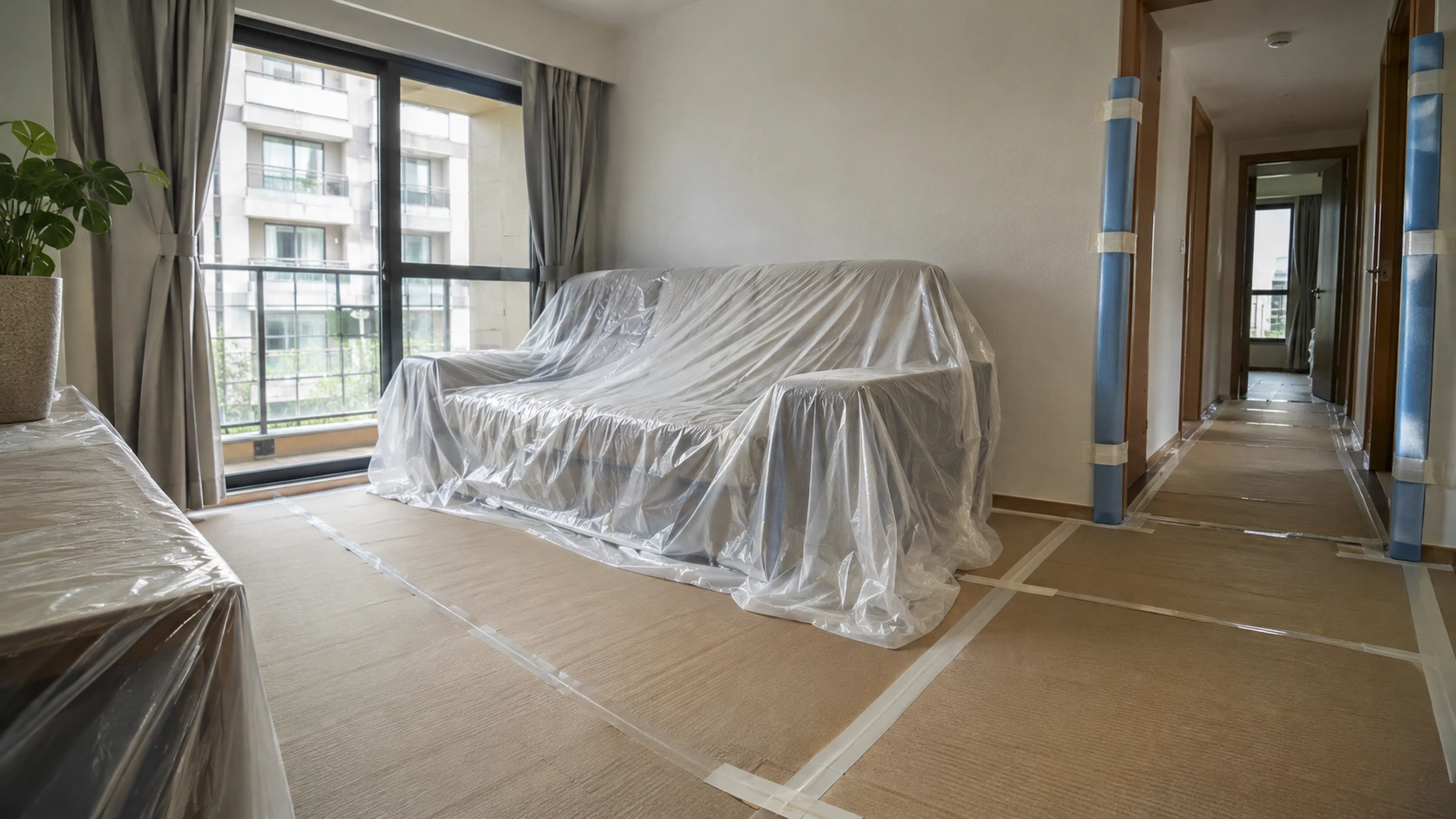
The contract should outline the procedure for notification, inspection, documenting damage, and settling consequences. If insurance is in place, clarify what it covers, its term, and its exclusions. Simply having a contractor liability clause does not guarantee that claims from neighbors or third parties will automatically be directed solely to them: actual circumstances and applicable law determine responsibility.
Red flags that warrant pausing your choice of contractor include refusing to name the contracting legal entity, demanding money transfers without a clear purpose, unwillingness to break down pricing, or refusing to agree on material substitutions. Another major warning sign is promising to execute any layout alteration without first checking structural elements and legal procedures.
What to Prepare Before the Crew Arrives on Site
- A technical brief with measurements, required schematics, and a list of items to be preserved.
- A signed contract, approved estimate, and stage-by-stage schedule.
- Rules for procurement, payments, change orders, and expense verification.
- A schedule of checkpoints for inspecting concealed works before covering them.
- Terms for site access, safe operations, property protection, and debris disposal.
- Contacts of responsible parties and the handover procedure.
To get a better handle on materials and workflows, check out Ukrainian YouTube channels about construction and renovation. Videos are great for preparing your questions, while specific solutions for your property must still be agreed upon individually.
Frequently Asked Questions Before Starting a Renovation
Where should I start when preparing for an apartment renovation?
Start by inspecting the premises, defining the desired result, and listing the required tasks. Next, prepare the necessary measurements and technical solutions, and ask several contractors to price the exact same scope.
Which is more important: the contract or the estimate?
They serve different functions. The contract defines obligations and cooperation rules, while the estimate details the composition and cost of the agreed scope. It is essential that both documents align with each other.
Can the renovation price increase after work begins?
The need for changes may arise, but a contractor has no automatic right to raise any price at will. What matters is the type of estimate, contract terms, and statutory grounds. Always document and approve additional works and expenses in writing.
What percentage of extra materials should I budget for?
There is no single fixed percentage. The allowance depends on room measurements, material format, layout pattern, expected waste, and manufacturer guidelines. A material overage allowance and a financial contingency reserve for scope changes are two separate things.
Is it enough to inspect the renovation only at the very end?
No. Many stages will be hidden beneath subsequent finishing layers. Agree on intermediate inspections, required tests, and photo documentation before finishes are applied.
Can a material be replaced with an equivalent without prior approval?
It is best to agree in advance on the exact product or replacement specifications, price, and installation impact. Visual similarity does not guarantee identical technical suitability.
What should I do if a contractor refuses to put agreements in writing?
Ask for specific reasons and a written proposal. If you cannot verify the contracting party, scope of work, pricing, and payment terms, consider hiring another contractor before paying any deposit.
Which documents should I keep after the renovation is finished?
Keep the contract with all appendices and change orders, approved estimates, payment receipts, handover acts and defect logs, photos of concealed works, schematics, and equipment manuals. These will help with future maintenance and resolving any disputes.
Related articles

7 Ukrainian-Language YouTube Channels for Building and Renovation
Seven Ukrainian-language channels for house design, renovation and tools, with practical video examples and guidance for choosing useful advice.
TOP-5 Swiss Watch and Premium Accessory Salons in Ukraine
Top 5 Swiss watch boutiques in Ukraine: boutique architecture, historic locations, service standards, and 2026 market trends.
Why New Windows Fog Up: Three Places to Check for Moisture
Find out whether moisture is on the room-side glass, between panes or around the window frame. Includes a dew-point example and an installer photo checklist.