Introduction to Architectural Thermodynamics and Modern Construction Challenges
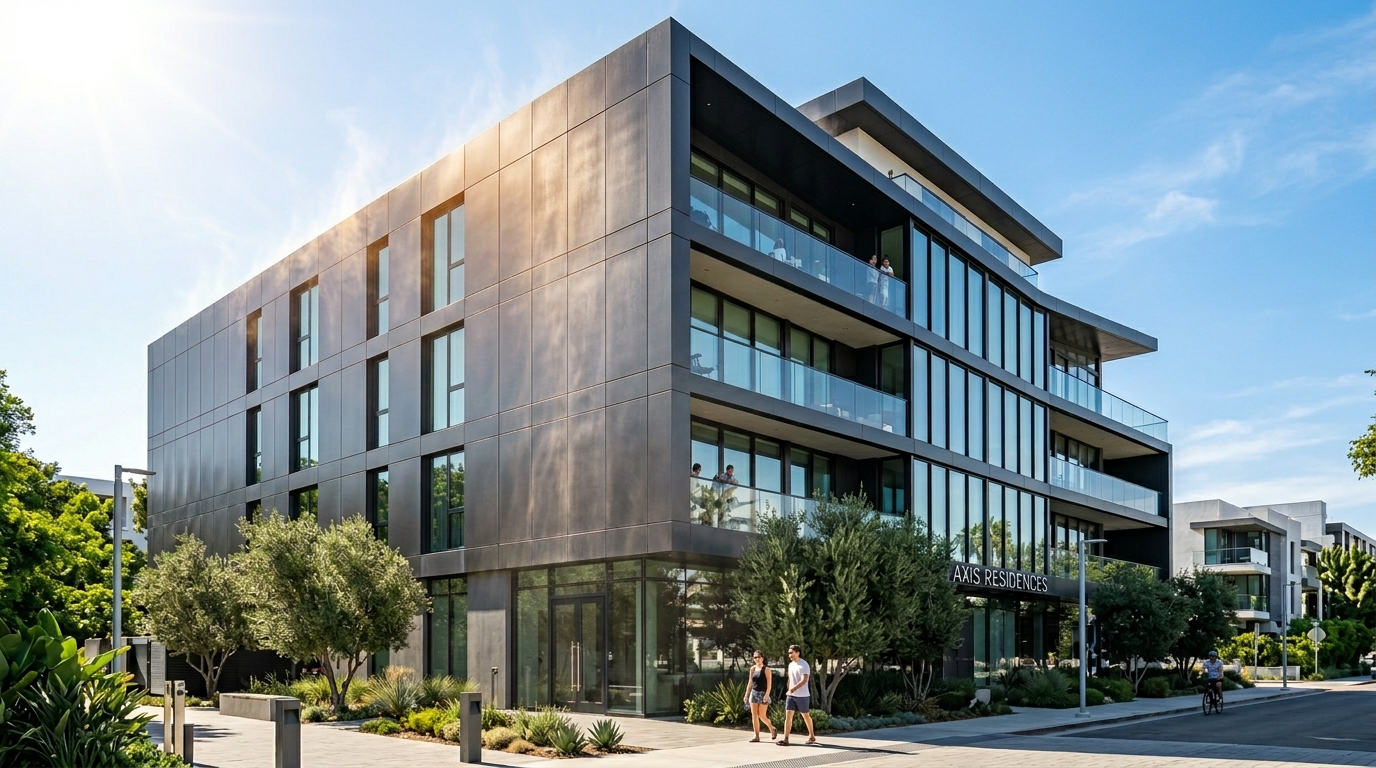
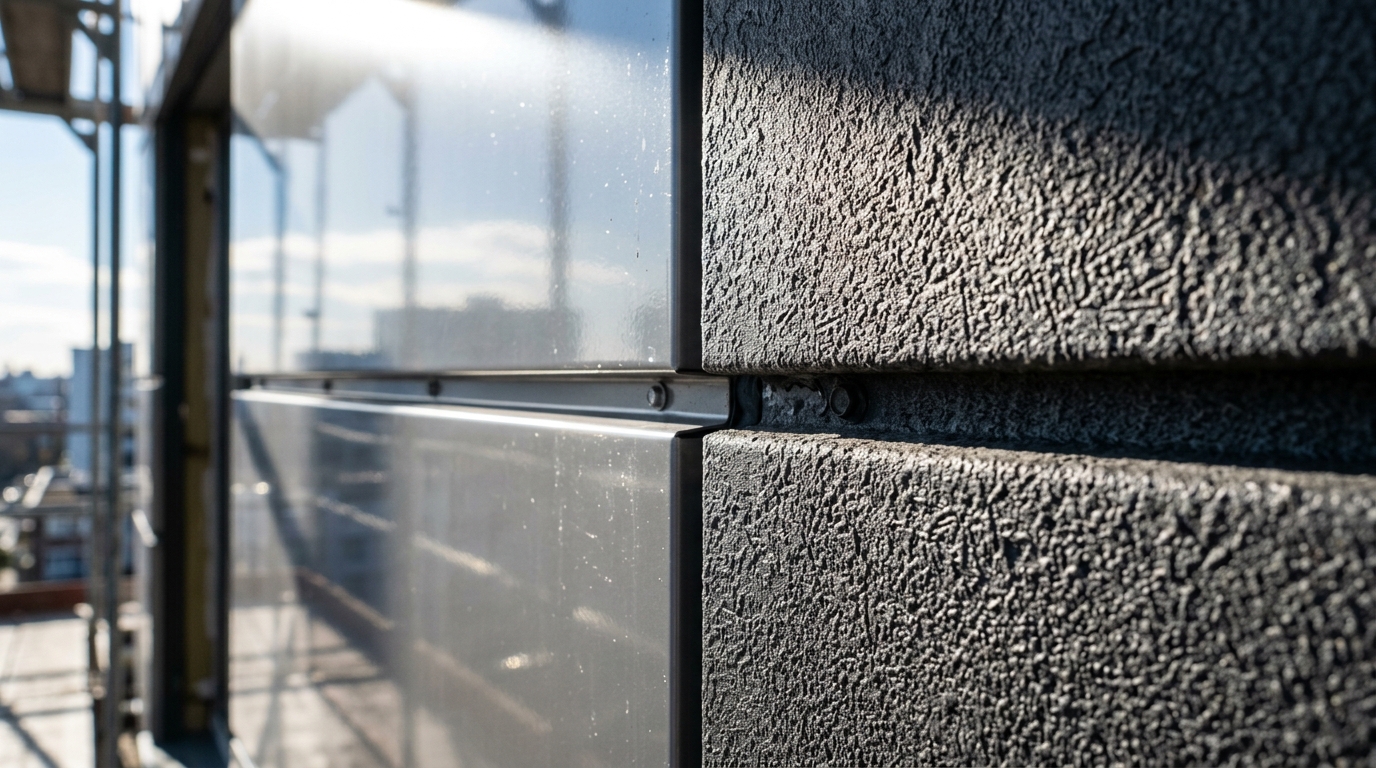
Modern architecture stands at the intersection of aesthetic pursuits, engineering feasibility, and extremely strict energy conservation requirements. The building envelope, particularly its exterior facade, serves as the primary barrier between the fluctuating, often aggressive external environment and the controlled microclimate of the interior. Over the past decades, commercial, industrial, and premium residential construction have seen a steady trend toward using deep, rich, and dark shades for exterior finishing. In particular, graphite and charcoal-grey shades (such as the immensely popular Anthracite) and black metallic facade cassettes have become synonymous with modern minimalistic design. They help structure volumes, pair perfectly with wood or stone, and visually conceal dirt on the lower levels of buildings. However, this visual choice carries profound physical and thermodynamic consequences that require rigorous scientific analysis.
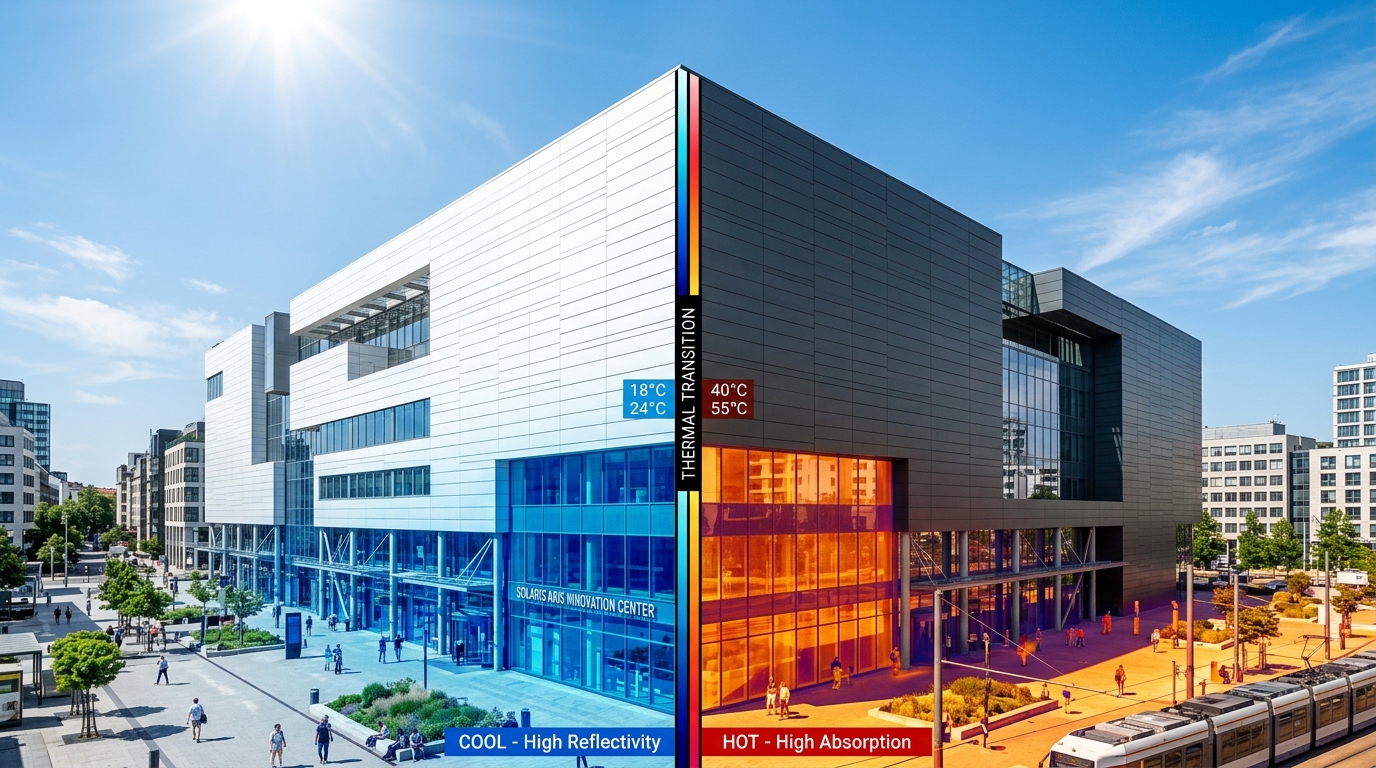
The fundamental problem remains that visually dark surfaces accumulate significantly more solar radiation compared to light ones. In conditions of global temperature rise and intensifying summer heatwaves, this leads to extreme heating of the exterior enclosure structures. In this context, the solar absorption coefficient stands as an absolutely critical parameter, determining exactly what portion of incident solar radiation will be irreversibly transformed into thermal energy directly on the building’s surface. For metallic cassettes, which naturally feature high thermal conductivity and very low heat capacity without a change in their own temperature, high absorption levels mean an instantaneous temperature spike of the metal to critical levels. In the summer heat, this temperature can reach 70–80 degrees Celsius under direct sunlight.
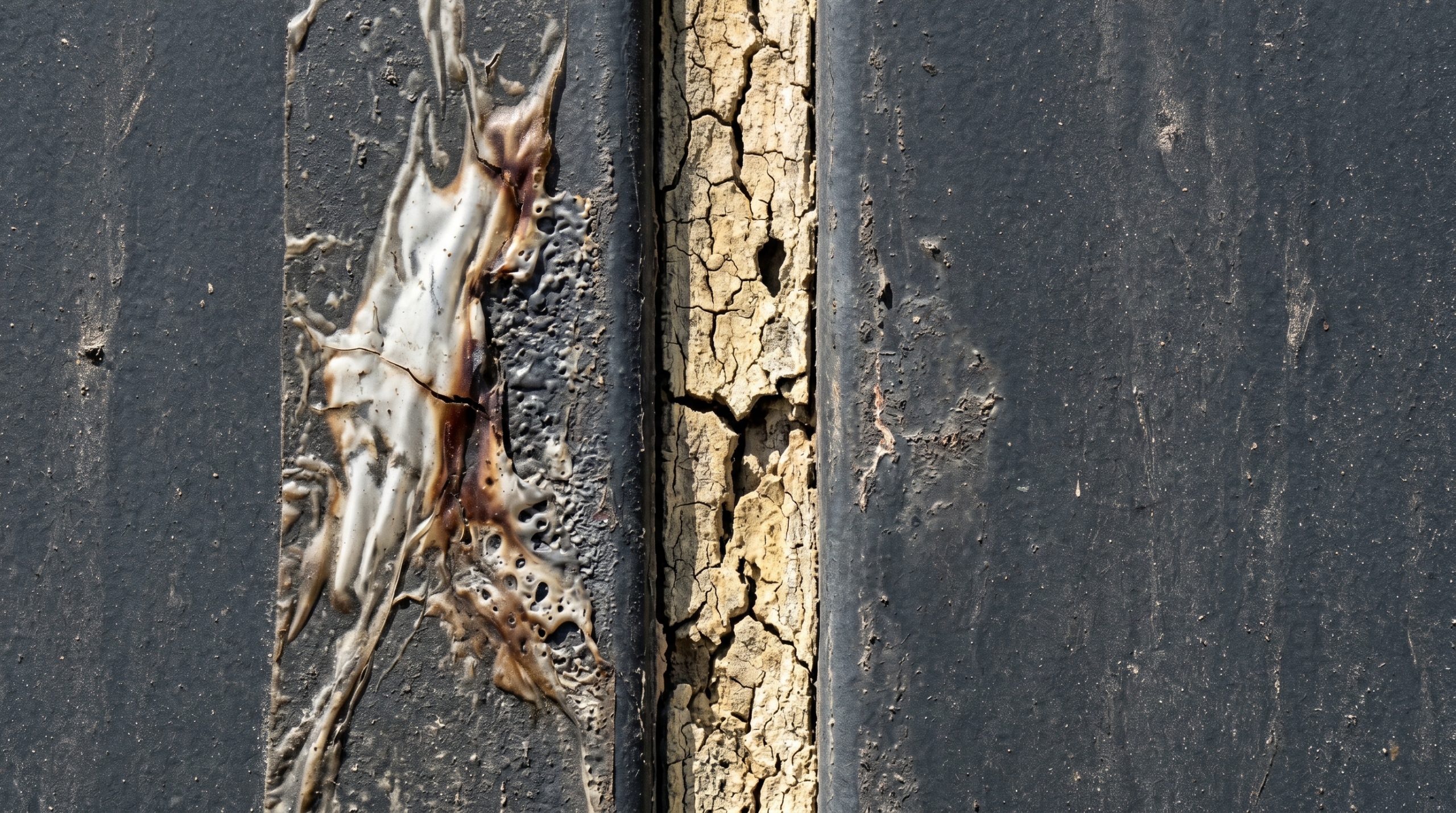
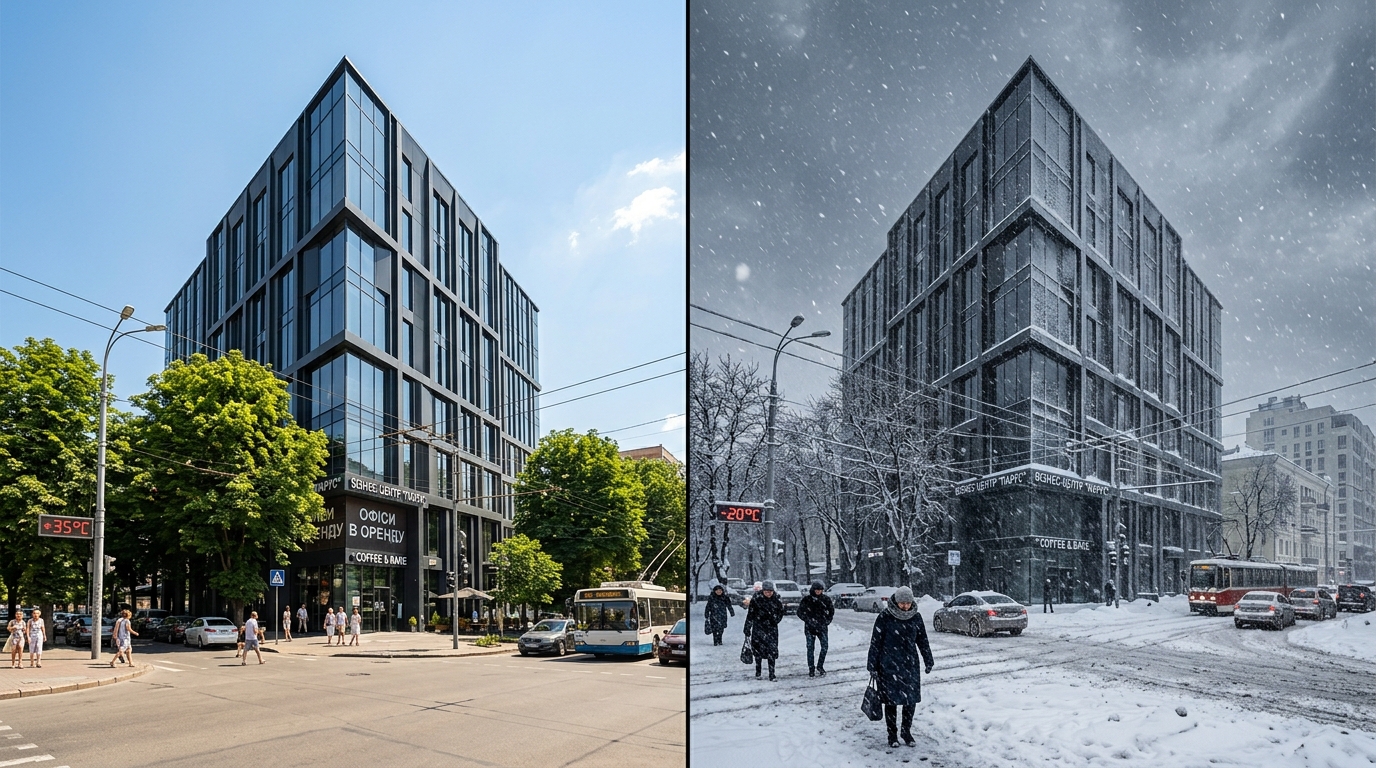
Such extreme temperature regimes not only cause colossal building heating in summer, inevitably increasing air conditioning costs, but also provoke significant thermal deformations of the materials themselves. This, in turn, can lead to the destruction of fastening subsystems, degradation of thermal insulation layers, and waterproofing membranes. This is why, in modern urban planning and construction, it is critically important to analyze the optical and thermal properties of colors as early as the conceptual design stage and to implement technological solutions, such as the ventilated facade, to mitigate the negative effects of massive solar heating.
This comprehensive report offers a deep and multifaceted analysis of solar energy absorption mechanisms by building enclosures of various colors. It examines the physical nature of absorption capacity in detail, the connection between thermodynamic parameters and the standardized RAL palette, the impact of intense heating on the structural integrity of metallic and composite elements, and the mechanisms of heat transfer and convection in curtain wall systems with an air gap within the strict context of Ukrainian climatic conditions and current state building codes.