Integration of Signage: How to Attach Advertising Structures to a Ventilated Facade Without Damaging Sealing
Generic selectors
Exact matches only
Search in title
Search in content
Post Type Selectors

Integration of Signage: How to Attach Advertising Structures to a Ventilated Facade Without Damaging Sealing

May 22, 2026
3  

Introduction to the Problems of Facade Systems and External Identification

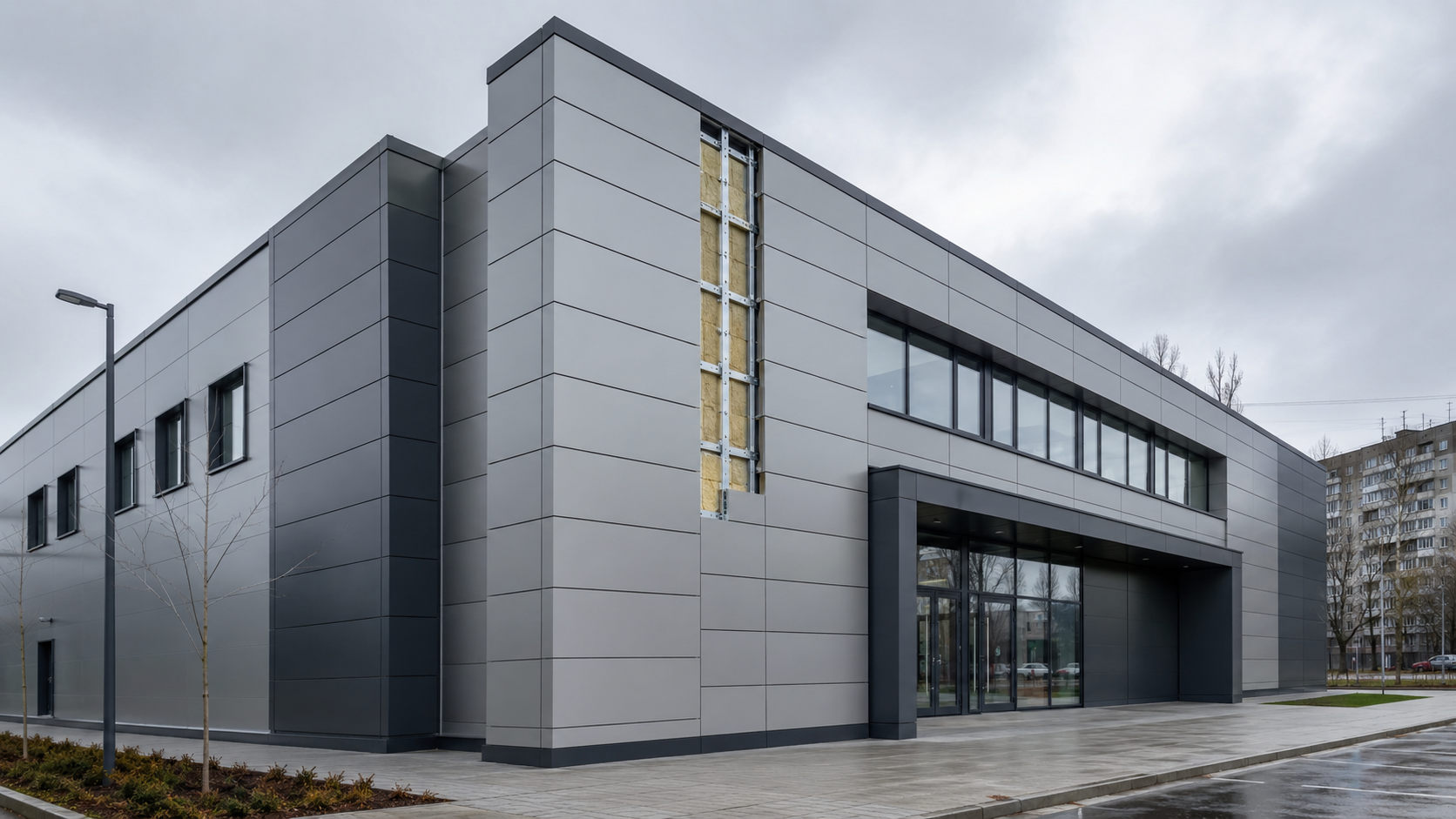
In modern architectural and construction practice, the concept of a building’s outer shell has undergone fundamental transformations. The shift from traditional monolithic walls to multi-layer ventilated systems was dictated by global requirements for energy efficiency, durability, and aesthetic variability of commercial and residential real estate. Suspended ventilated facade systems have become an industry standard as they provide an optimal thermodynamic balance: they protect load-bearing structures from sharp temperature fluctuations, block atmospheric moisture, and, thanks to convection currents in the air gap, freely extract water vapor from interior spaces. However, this engineering perfection faces the harsh realities of commercial building operation, where external visual identification becomes a primary business need.

The successful integration of signage into an already installed ventilated shell is one of the most difficult challenges for engineers, architects, and outdoor advertising installation specialists. The multi-layer structure of the screen, consisting of insulation, wind-proof membranes, guide profiles, and fragile facing, is not designed for accidental interference. The traditional approach, in which installers try to attach advertising structures directly to thin face panels or rigidly screw them through to the load-bearing wall with long metal anchors, leads to catastrophic consequences. Such incompetent interference inevitably causes the formation of through thermal breaches (cold bridges), destruction of external panels under the influence of wind loads and thermal expansion, and most importantly — the sealing of the building is completely compromised. Moisture from the atmosphere gets direct access to the mineral wool insulation, provoking its wetting, loss of thermal resistance, and the development of fungal infections inside the walls.

This report offers a comprehensive, detailed analysis of technologies, protocols, materials science aspects, and engineering solutions that allow visual communication objects to be safely and effectively installed on a ventilated facade, while maintaining the integrity, energy efficiency, and fire safety of all its functional layers.
Intehratsiya vyvisok

Physical and Mechanical Features of Ventilated Facades

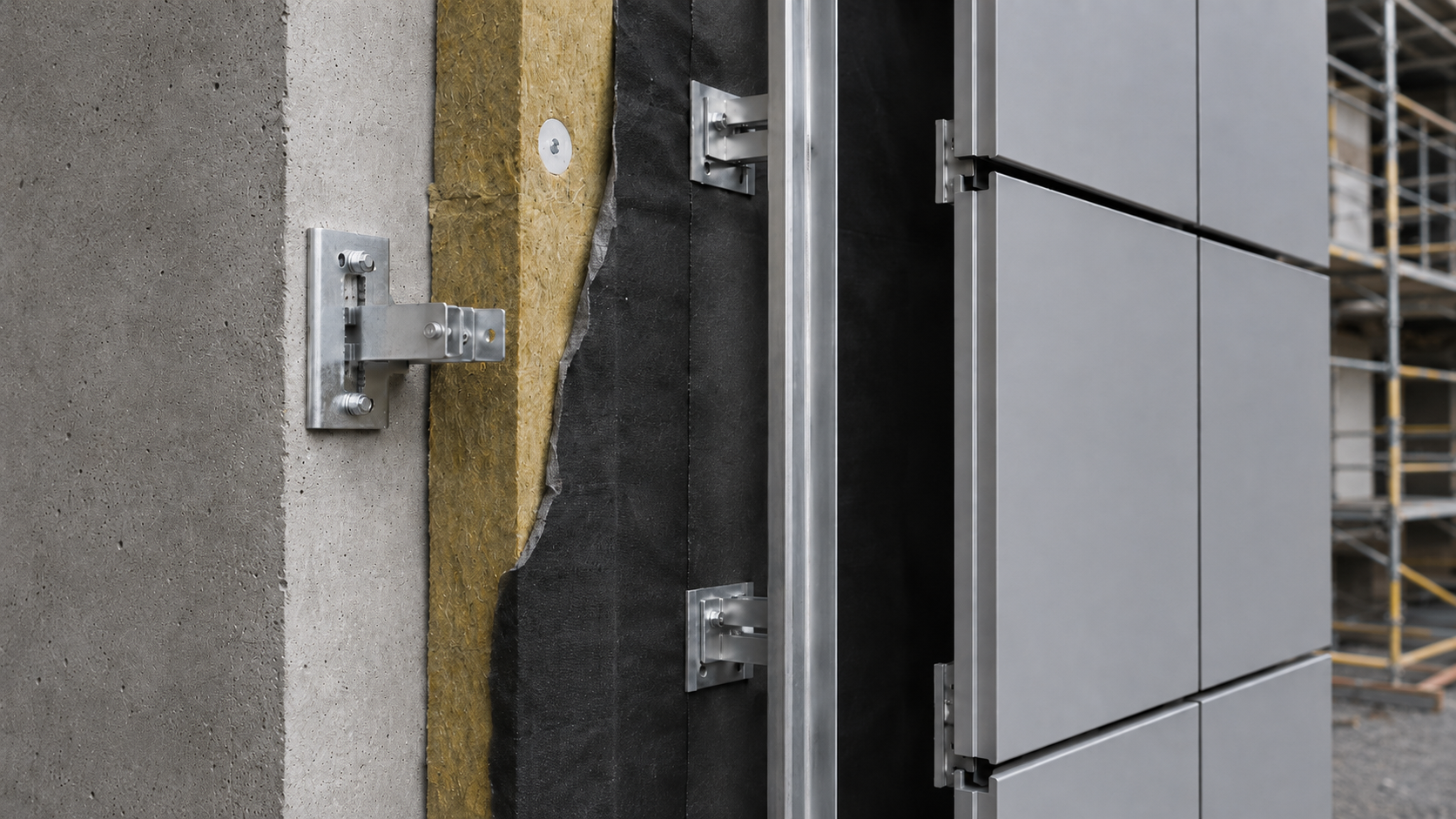
To deeply understand the mechanics of safe intervention in a building’s shell, it is first necessary to analyze in detail the structural anatomy of a ventilated facade system. The structure consists of a strictly regulated sequence of layers, each playing a specific role in the overall thermodynamic and mechanical balance of the building. Any mounted equipment must be considered in the context of interaction with each of these layers.

The foundation of the system is the load-bearing wall (base), which can be made of monolithic reinforced concrete, solid or hollow brick, aerated concrete, or foam blocks. Base metal brackets are attached to this base using expansion or chemical anchors. These brackets — galvanized steel or aluminum consoles — are power elements that pass through the thermal insulation layer and hold a system of guide profiles (vertical and horizontal rails) at a certain distance from the wall. According to regulatory documents, the installation of systems must adhere to a strict sequence: marking of axes, installation of brackets, installation of thermal insulation boards, fixation of guides, installation of abutment elements and fire safety, and only then — installation of the facing material.

An air gap is formed between the thermal insulation layer (which is most often covered with a superdiffusion hydro-windproof membrane) and the external facing screen. According to technical protocols, the size of this ventilation channel between the thermal insulation layer and the screen must be at least 100 millimeters, and the gap between the facing tiles and the profiles is maintained in the range of 8 to 10 millimeters. It is thanks to this space that the “exhaust pipe” principle works: the air heated by the wall or the sun rises, capturing the water vapor that migrates through the walls from the inside of the room. The fibrous structure of stone wool boards has excellent vapor permeability, which promotes the unhindered evaporation of moisture from the structure, keeping the walls absolutely dry and providing a high level of thermal protection. An additional advantage of this structure is its high ability to absorb sound waves, which significantly reduces the level of airborne noise in the building.

The problem arises the moment there is a need to attach advertising structures. Unplanned intervention in this carefully balanced system disrupts its operation on several levels. Puncturing the membrane without subsequent sealing allows drops of driving rain to fall on the insulation. Rigid connection of the external screen to the wall through an advertising frame blocks the natural thermal expansion of the cladding (which can heat up to +70°C in summer), leading to the cracking of the panels. Therefore, any fastening solution must ensure the free movement of the cladding relative to the fasteners, guarantee full waterproofing of the penetration points, and negate the risk of freezing.

1 Intehratsiya vyvisok

Thermophysical Analysis and Elimination of Cold Bridges

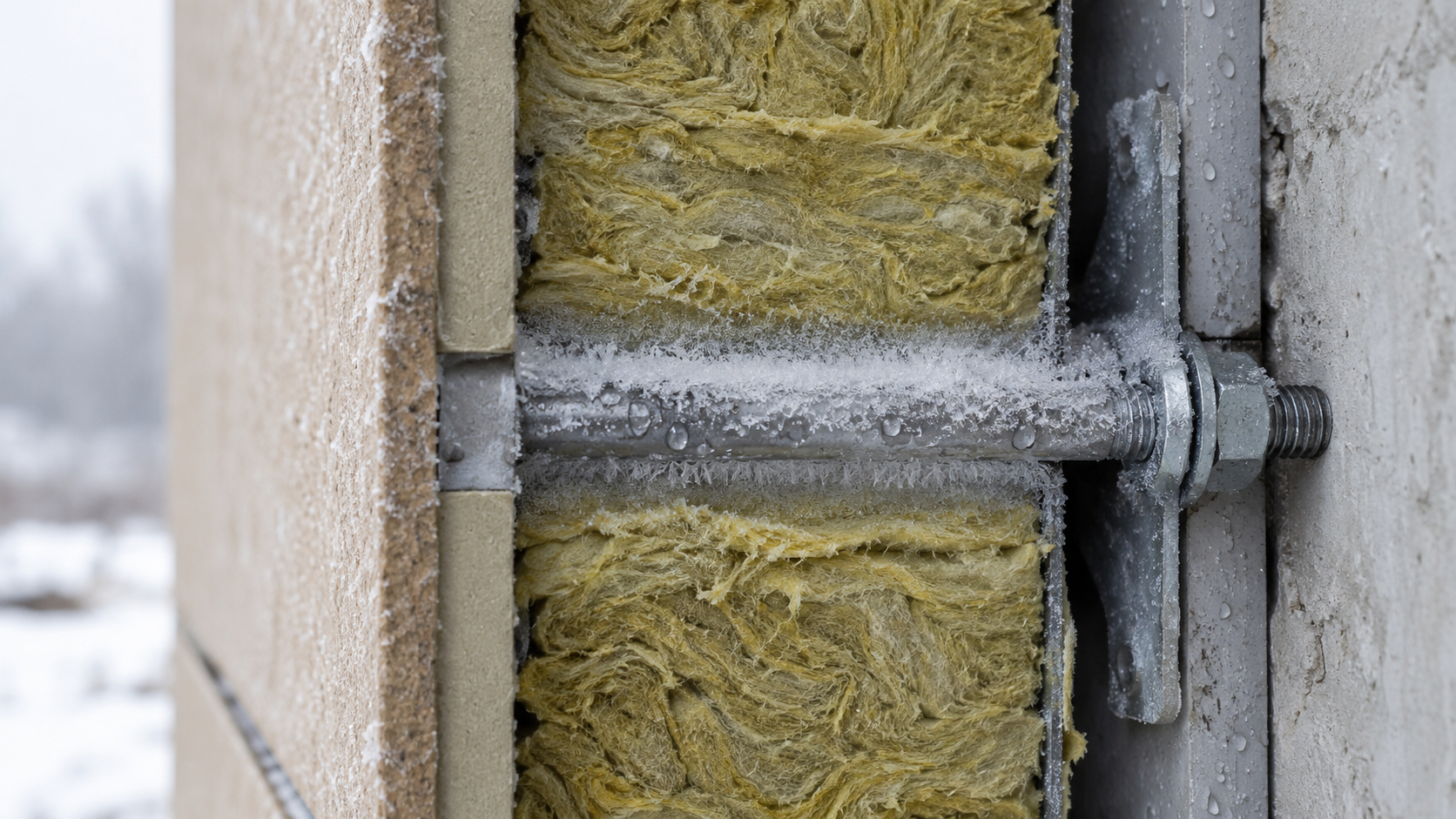
The most critical and hidden consequence of improper installation of external elements on the facade is the formation of cold bridges (thermal breaches). When a steel threaded rod or anchor passes from the external environment through all the layers of the facade and deepens into the load-bearing wall, it acts as a perfect main conductor of thermal energy.

In winter, when the outside air temperature drops below zero, the cold outer end of the metal rod begins to intensively draw heat from the inside of the wall. Since the thermal conductivity of steel is hundreds of times higher than that of mineral wool, a zone of local supercooling forms around the metal anchor inside the wall. When the temperature on the surface of the metal or adjacent wall area reaches the dew point, water vapor, which is always present in the warm indoor air and diffuses outward, instantly condenses, turning into water droplets.

This water is absorbed by the stone wool and the wall material. Water is an excellent conductor of heat, so the wetting of even a small volume of insulation around the anchor leads to an exponential increase in heat loss. Over time, constant humidity provokes the destruction of building materials, the development of black mold on the interior walls of the premises, as well as accelerated galvanic corrosion of the facade subsystem elements. In addition, complex assemblies, such as the abutment of roof windows, ventilation ducts, and bracket attachment points, are always potential freezing points if measures are not taken to eliminate cold bridges.

2 Intehratsiya vyvisok

Classic Thermal Breaks for Base Brackets

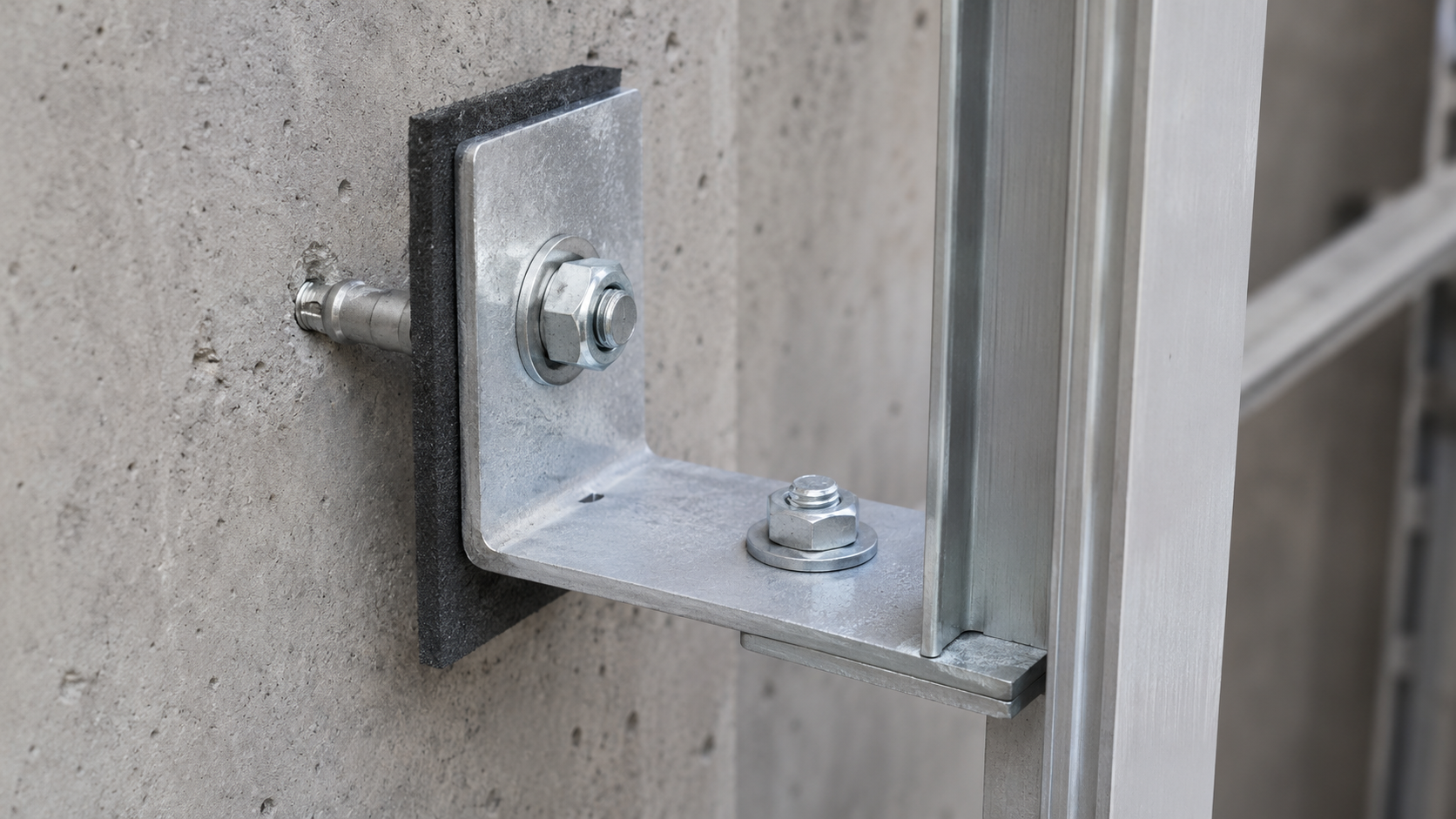
At the stage of initial erection of the facade system, the problem of cold bridges is solved by mandatory installation of thermal breaks (thermal insulation pads) between the heel of the load-bearing bracket and the building wall. The use of such pads is an imperative requirement of building codes for all types of facades and wall materials.

Thermal insulation pads are most often made of paronite or rigid polymer composites. Their main function is to minimize thermal conductivity and prevent the formation of “cold bridges” at the attachment point. In addition, paronite pads perform an important electrochemical function: they isolate an aluminum or galvanized bracket from direct contact with the alkaline environment of concrete or brick, preventing the development of contact corrosion and the appearance of rust. Each type and size of bracket (for example, box-shaped, U-shaped, or L-shaped supporting thermal breaks with dimensions of 75x55x10 mm) is equipped with a correspondingly shaped pad that is installed under the anchors. During installation, it is crucial to adhere to design indents — anchors must be installed at a distance of at least 100 millimeters from the edge of the wall to avoid chipping concrete or brick.

Characteristic Description and parameters
Pad material Paronite, polymer thermocomposites
Main function Blocking heat transfer, corrosion protection
Element thickness From 5 to 10 mm
Standard anchor distance

At least 100 mm from the edge of the wall

Area of application

Any types of ventilated facades, aggressive environments

However, classic brackets with paronite pads are effective only at the construction stage. If the ventilated facade is already fully assembled, installing a new base bracket will require a massive dismantling of facing cassettes, guides, and cutting the windproof membrane, which is economically and technologically impractical.

3 Intehratsiya vyvisok

Stand-off Installation Technologies with Thermal Cones

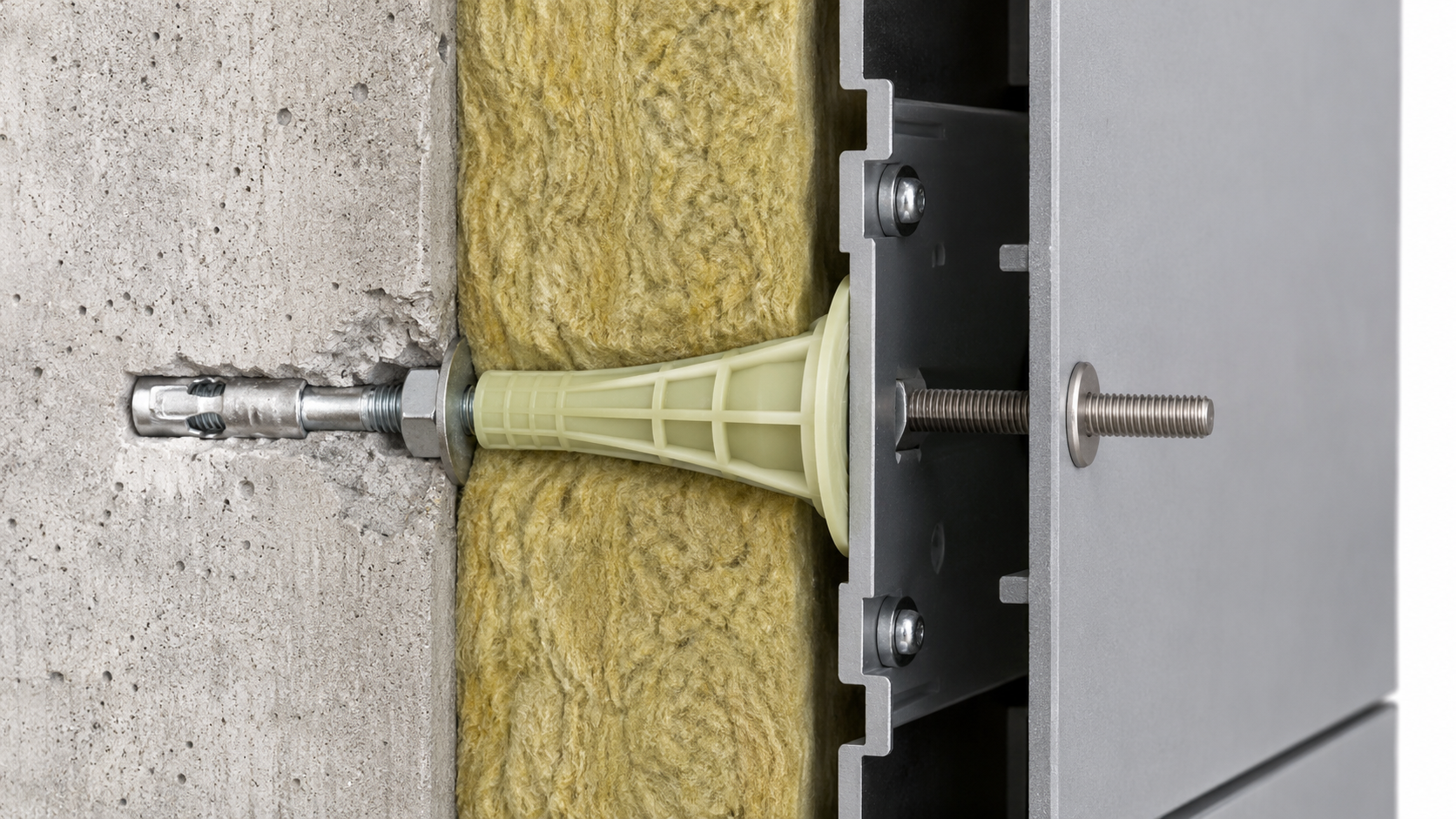
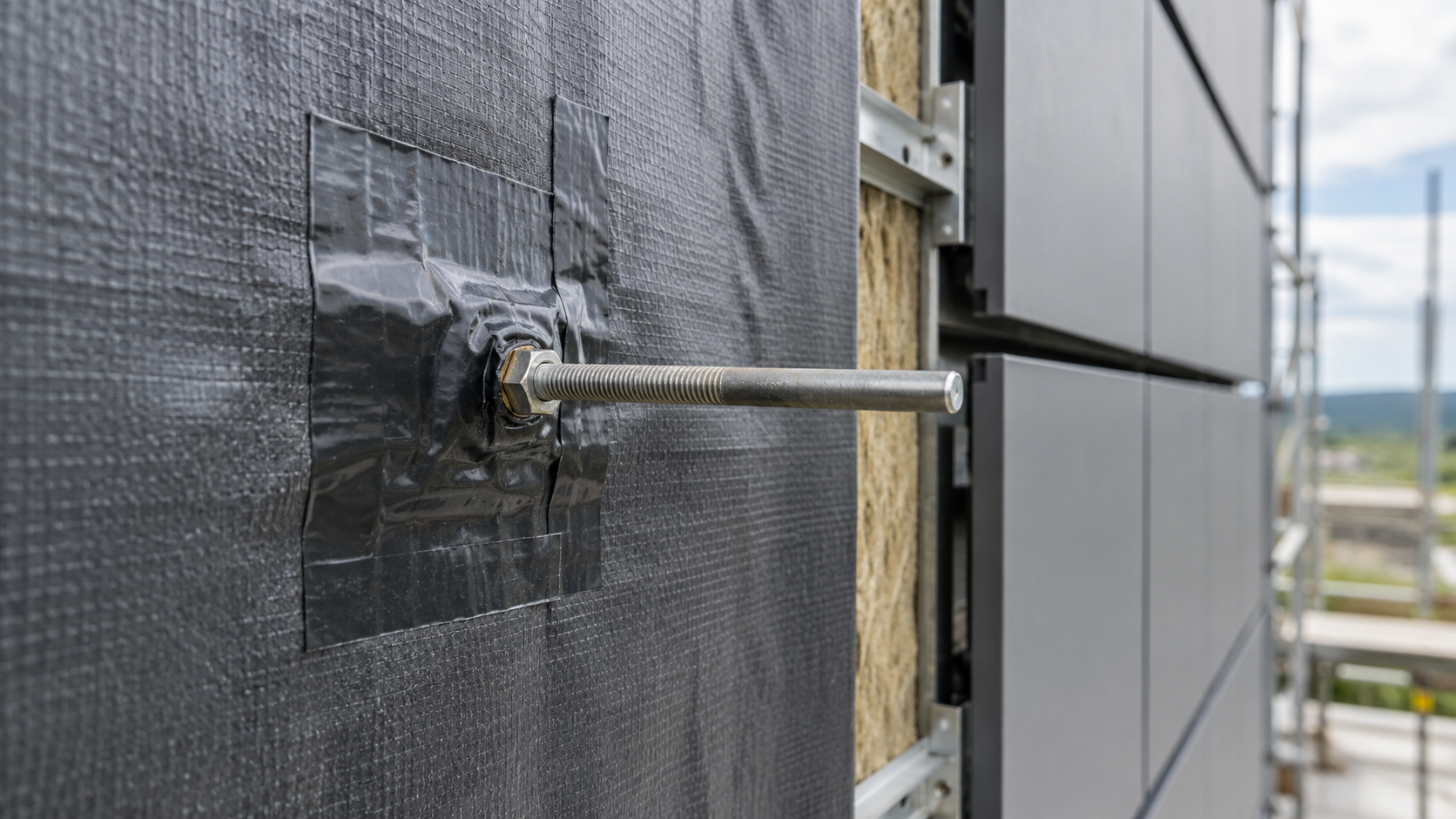
For cases when it is necessary to carry out installation on a finished wall with insulation, leading engineers have developed specialized stand-off anchoring systems that integrate the thermal break function directly into the body of the fastening rod. The most recognized and standard solution in this area are systems known under the fischer TherMax brand. This concept allows for reliable fastening of installation elements through an existing layer of insulation or an external composite thermal insulation system, absolutely without creating a cold bridge and maintaining sealing.

The fundamental difference of this system is the use of a unique threaded rod, which is divided into two parts by a special glass fiber reinforced plastic cone. This highly technical element performs three vital functions during the integration of signage:

  1. Self-milling and geometric accuracy: The fiberglass plastic has such high mechanical strength that during the rotation of the stud it is able to independently cut (mill) a hole in the plaster or soft face screen and plunge tightly into the thickness of the insulating material. This ensures a perfect fit (positive geometric locking) without the need to use special cutters or drills for insulation, saving time and reducing the risk of damaging adjacent layers.
  2. Absolute thermal barrier: The plastic cone is located right in the transition zone between the warm environment (inside the wall) and the cold one (outside). It acts as an anti-cold barrier that physically interrupts the metal bridge between the inner rod (which is anchored in the wall) and the outer fastener to which the structure will be fixed. Thus, heat losses are reduced to almost zero, and the formation of condensation becomes impossible.
  3. Load compensation and adjustment: The stand-off installation system allows for stepless adjustment of the fastener projection. This is critical for leveling the position of a sign on uneven facade surfaces, while avoiding any pressure on fragile facing materials and preventing the formation of dents or cracks.
4 Intehratsiya vyvisok

Classification of Stand-off Installation Systems by Load

Depending on the weight of the advertising structure and predicted wind loads, engineers select the appropriate diameter and fixation type of remote systems.

System type (Diameter) Thickness of non-load-bearing layer (insulation) Wall fixing method Typical objects for mounting
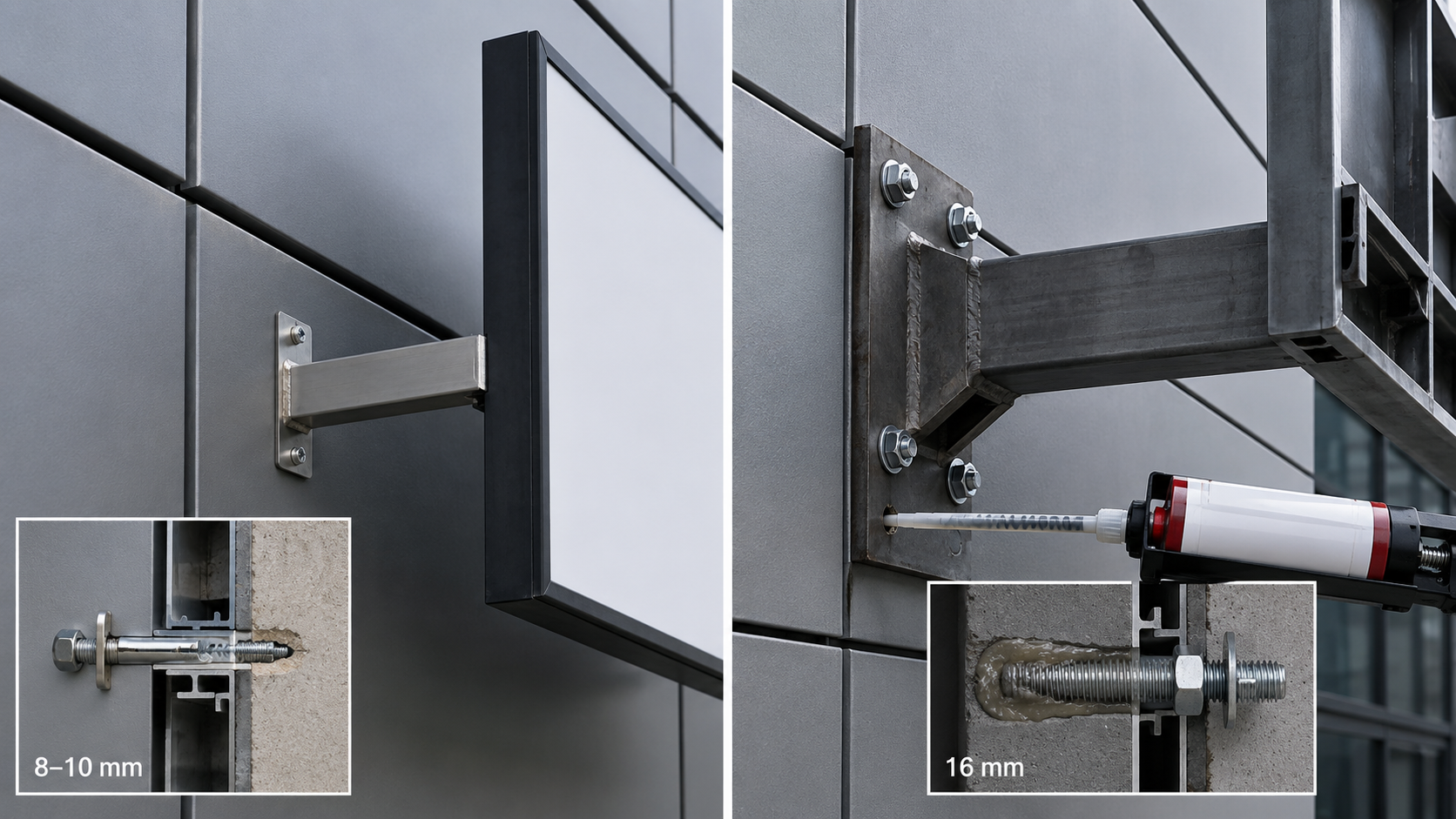
8 and 10 mm From 45 mm to 290 mm Expansion plugs (universal)

Light lightboxes, mailboxes, outdoor lights, lightning rods, navigation signs.

12 and 16 mm From 62 mm to 300 mm Injection polymer compounds (chemical anchors)

Heavy cantilever signs, awnings, air conditioning units, satellite dishes, roof installations.

Smaller diameter systems (8 and 10 mm) are usually installed using classic universal dowels in concrete, aerated concrete, or brick to accommodate light and medium loads. To use them in wooden surfaces, holes of the appropriate diameter must first be drilled. The assortment of such solutions allows the use of M6 metric screws, 6.3 mm self-tapping screws, and various types of chipboard screws.

However, when it comes to large-format outdoor advertising, the situation changes dramatically. Signs protruding beyond the facade plane act as sails. They experience enormous wind loads that transform into pull-out and shear forces at the attachment points. For such tasks, systems with a diameter of 12 and 16 mm are used, which are obligatorily integrated with chemical anchors.

According to the instructions, a massive galvanized steel anchor rod is fixed in the supporting base using high-strength injection resins (such as FIS EM Plus, FIS V, FIS SB, or their eco-friendly analogs). In the case of solid materials (concrete), the resin fills the hole and polymerizes, forming a monolithic joint. If the wall is made of hollow brick or expanded clay concrete blocks, mesh anchor sleeves are additionally used, which allow the chemical composition to be evenly distributed inside the voids, creating a reliable spatial lock. Such a connection guarantees unprecedented safety and the ability to withstand heavy vibrational loads from gusts of wind. On the outer end of the reinforced cone, there is a stainless steel metric stud to which the metal frame of the sign is directly fixed.

5 Intehratsiya vyvisok

Mechanical Preparation and Installation of Embedded Parts for Extra-Heavy Structures

In situations where the placement of extra-heavy advertising installations is planned — for example, large-format LED media facades, massive roof structures partially resting on walls, or volumetric pylons — even reinforced stand-off mounts may not be enough. In such cases, engineering calculation requires the integration of full-fledged load-bearing embedded parts directly into the building’s frame, with subsequent extension of the mounting consoles outward. It is optimal to implement this process at the stage of building erection or during a major reconstruction of the exterior.

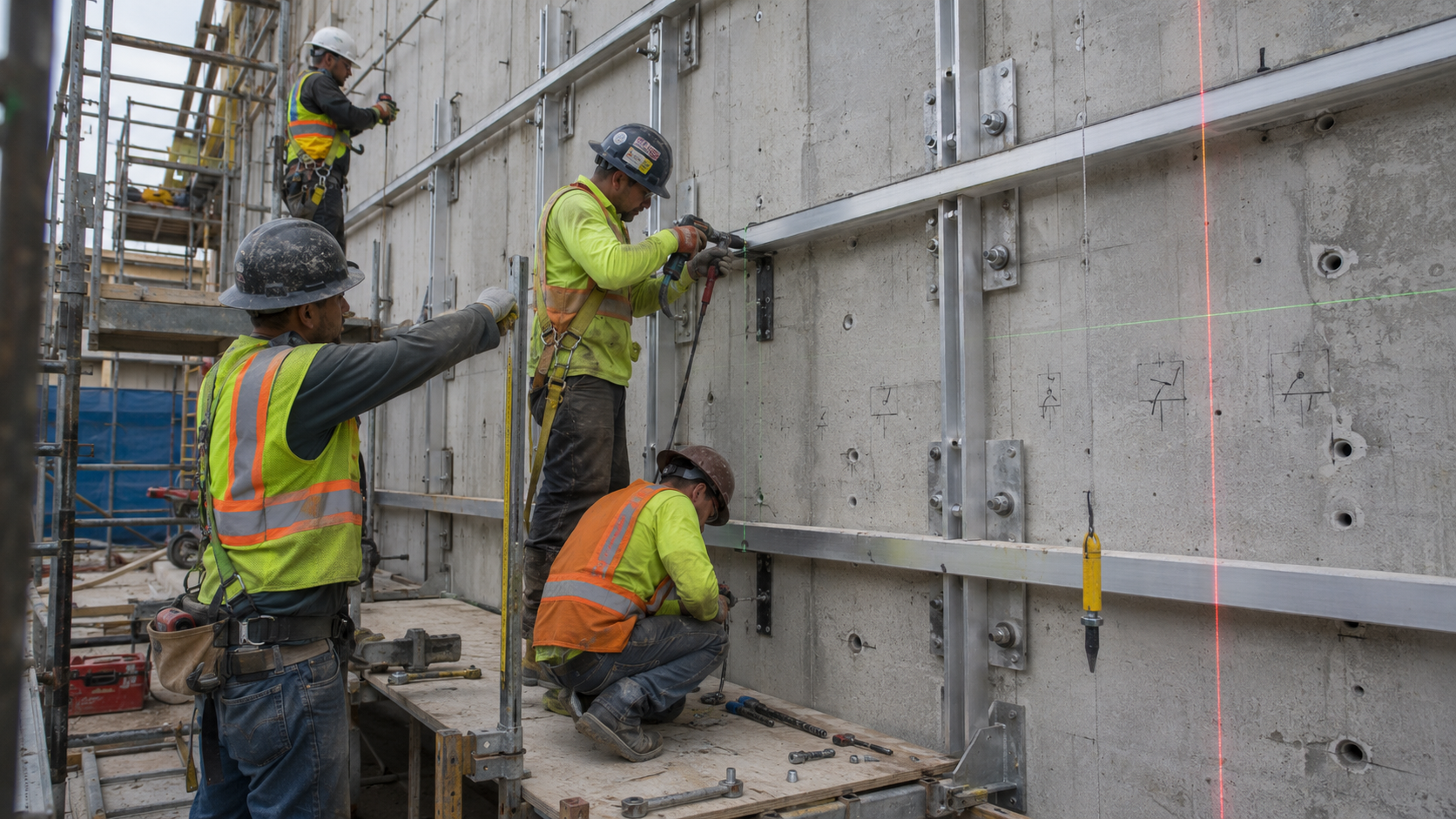
The procedure for arranging the subsystem for such tasks is strictly regulated. The installation of base brackets to mark the facade field begins with precision measurements. Using laser levels or water levels, tape measures, thin cords or a fishing line with a diameter of at least 1 mm, and metal plumb bobs weighing at least 1 kg, surveyors mark the extreme lowest point of installation of the first load-bearing element in accordance with the architectural design.

After determining the initial coordinate, a hole is drilled in the wall to the calculated depth. The first base bracket is installed, which is fixed with a powerful expansion or chemical anchor. As noted earlier, a thermal break paronite pad must be installed under the heel of the bracket, and the anchor itself must be at a safe distance from the edges of the wall. Having determined the second extreme bottom point, a cord (line) is stretched between these base elements, along which the entire bottom row of brackets is installed with the pitch set by the design. A similar procedure is repeated for the extreme top row of brackets over the entire plane of the facade. Subsequently, vertical strings are stretched between the upper and lower rows, forming a perfect geometric grid for installing the remaining support nodes. Thus, the entire wall of the building is tied with power belts of load-bearing consoles capable of withstanding evenly distributed and concentrated loads.

To create embedded parts for advertising structures, reinforced rolled metal products are used. The nomenclature of profiles includes L-shaped aluminum angles (for example, equal-flange 30x30x1 mm anodized, unequal-flange 20×40 mm, or massive 50×50 mm), U-shaped and box guides. The raw material for these elements is usually primary extruded aluminum (for example, alloy AD31) or high-quality galvanized steel with a thickness of 0.7 to 3.0 mm. Such systems are often equipped with reinforced aluminum supporting thermal breaks (for example, modifications PK-55-150 or PKO-55-60), which are designed specifically for construction in coastal regions with a medium-aggressive salt environment, as well as in areas with increased seismic activity and strict fire regulations.

When a metal console or embedded pipe is brought out through the plane of the screen, it is extremely important to follow the rule of compensation gaps. Free space is mandatory left between the metal rod and the edges of the hole in the facing panel (whether porcelain stoneware, fiber cement, or composite). This gap allows the panel to freely expand in summer and contract in winter. If the mount were tightly clamped in the hole, the thermal expansion of a large facade sheet would inevitably lead to the cracking of the material around the fixation point. However, the presence of this gap creates a direct path for the penetration of atmospheric moisture and wind into the system, which brings us to the next critical stage — multi-circuit sealing.

6 Intehratsiya vyvisok

Sealing of Penetration Points: Preserving Hydro and Wind Protection

Ensuring absolute watertightness in places where subsystem elements or mounting studs pass through the facade pie is the main condition for the durability of both the building itself and the suspended sign. The internal structure of the facade is protected by special polymer films — superdiffusion hydro-windproof membranes.

These membranes serve a double function. On the one hand, they protect the insulation from drops of moisture that can get under the cladding during strong driving rains, and also prevent the mineral wool fibers from being blown out by ascending air currents in the ventilation gap. On the other hand, due to their microporous structure, the membrane freely lets water vapor pass through itself (provides diffusion) coming from the premises, allowing the insulation to “breathe” and stay dry. Unlike ordinary polyethylene films, which completely block the movement of steam and create a greenhouse effect, membranes stabilize the temperature and humidity in the structure, which is critically important for retaining heat and preventing the appearance of mold. Practical experience proves that the rejection of the use of high-quality membranes or violation of their integrity leads to the fact that the insulation quickly collapses, “settles,” and becomes covered with fungus.

If during the installation of a sign the membrane is punctured to install a bracket, this breach must be immediately sealed. Technology requires the sealing of seams and puncture sites using specialized acrylic or butyl adhesive tapes, observing the correct overlap of materials (usually 10–15 cm) to ensure a reliable barrier against water. However, for round studs or profile pipes, this is not enough.

7 Intehratsiya vyvisok

Elastic Seals Made of Polymer Rubbers

For physical overlapping of gaps around metal elements penetrating the outer screen, it is most effective to use molded elastic seals made of ethylene propylene diene monomer (EPDM) rubber. This material is distinguished by its phenomenal resistance to the most aggressive atmospheric factors: it does not crack under the influence of harsh ultraviolet radiation, is resistant to ozone aging, and does not lose its elasticity in extreme temperatures.

According to operational characteristics, EPDM rubber is capable of withstanding constant heat exposure up to +90°C, and short-term temperature peaks (for example, heating of black facade panels under direct sunlight) can reach +150°C without destroying the molecular structure of the material. It is also chemically inert and tolerates well the action of dilute acids and alkalis often found in precipitation in heavily polluted industrial areas. The main advantage of flexible EPDM seals lies in their ability to absorb thermal and mechanical vibrations of the structure. When a sign vibrates under the influence of the wind, the rubber collar stretches and compresses together with the metal, maintaining a reliable sealing of the hole and preventing moisture from penetrating inside the facade.

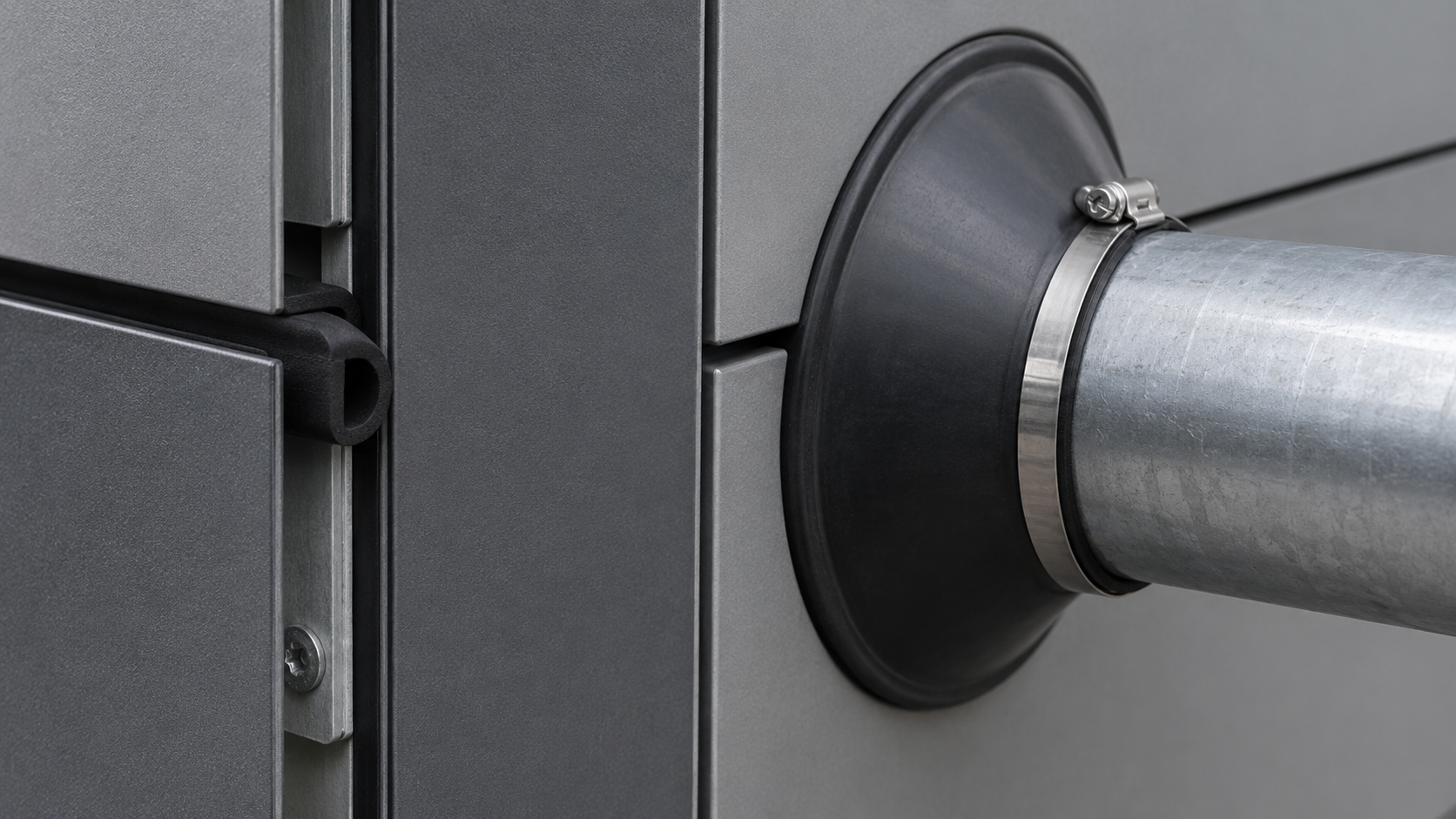
The range of such products allows finding a solution for any task. Self-adhesive profiles are used to seal small linear gaps between panels or around brackets. For example, D-shaped EPDM profiles are produced in various configurations: from miniature sizes (7×6 mm to cover gaps of 2-3.5 mm) to massive industrial cross-sections (21×15 mm, capable of reliably closing a gap of 8 to 12 mm). To seal round pipes of large cross-section (for example, supports for roof advertising installations), special cone seals with a wide flange are used. The width of such a flange can reach 150 mm, which complies with strict European building standards, providing the largest possible surface area for gluing. The cone itself tightly embraces the pipe and is additionally fixed with crimping metal clamps made of stainless steel, creating an absolutely impenetrable barrier.

8 Intehratsiya vyvisok

Application of New Generation Liquid Sealants (Hybrid Polymers)

Even when using rubber sleeves or thermal cones, the final sealing of external joints — directly between the mounting stud, the edge of the hole in the facing panel, and the advertising structure itself — requires the use of liquid sealing mixtures (mastics). In the past, silicone or polyurethane sealants were widely used for these purposes, but in the conditions of modern facades, they have revealed a number of significant drawbacks. Over time, silicone begins to release plasticizers, to which atmospheric dust sticks, forming dirty streaks on the facade; in addition, it is fundamentally unpaintable. Polyurethane, although strong, can break down under prolonged exposure to intense ultraviolet light and requires a perfectly dry surface for application, which makes installation during rain or drizzle impossible.

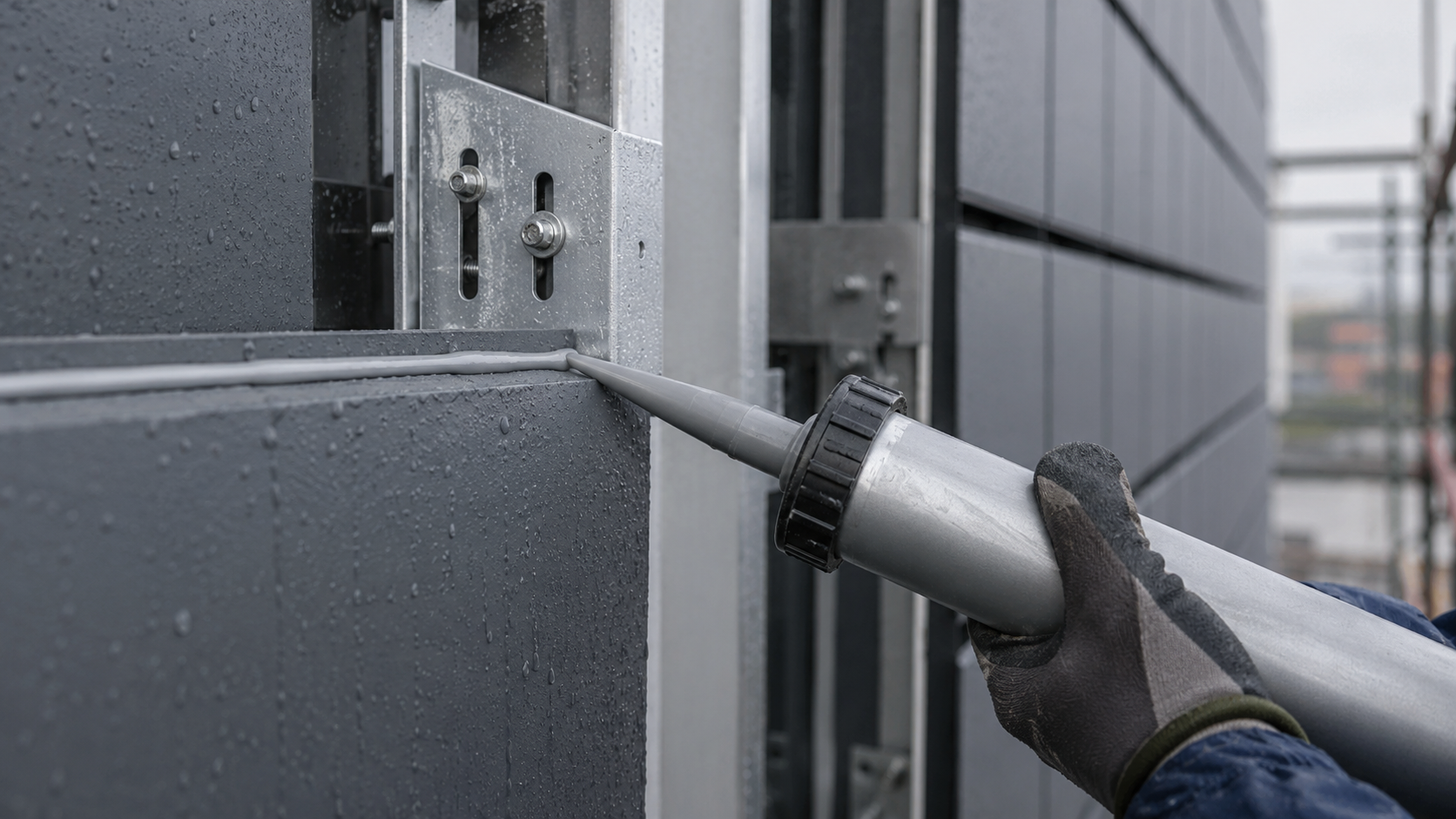
The most technologically advanced, modern solution for facade work is the use of hybrid sealants based on MS-polymers. This advanced construction chemistry combines the best properties of silicones (elasticity, UV resistance) and polyurethanes (high mechanical strength, adhesion).

MS-polymer compounds provide exceptional, primerless adhesion to almost all building materials: porcelain stoneware, aluminum composite panels, fiber cement, steel, glass, and plastics. The most important operational advantage of MS-polymers is the mechanism of their curing: they polymerize due to the reaction with moisture contained in the surrounding air. This means that such sealants can be applied directly to wet surfaces or even underwater, which is an invaluable quality when performing urgent installation work in the autumn-winter period. After curing, these compounds retain phenomenal elasticity for many decades, effectively compensating for shear loads and vibrations from the sign. They are absolutely resistant to solar radiation, do not emit toxic volatile solvents, do not shrink during the drying process, and, which is very important for maintaining the aesthetics of the facade, are easily painted with any facade paints. This allows making the exit points of the mounts visually invisible against the general background of the building.

9 Intehratsiya vyvisok

Attachment Methods Without Compromising Facade Integrity

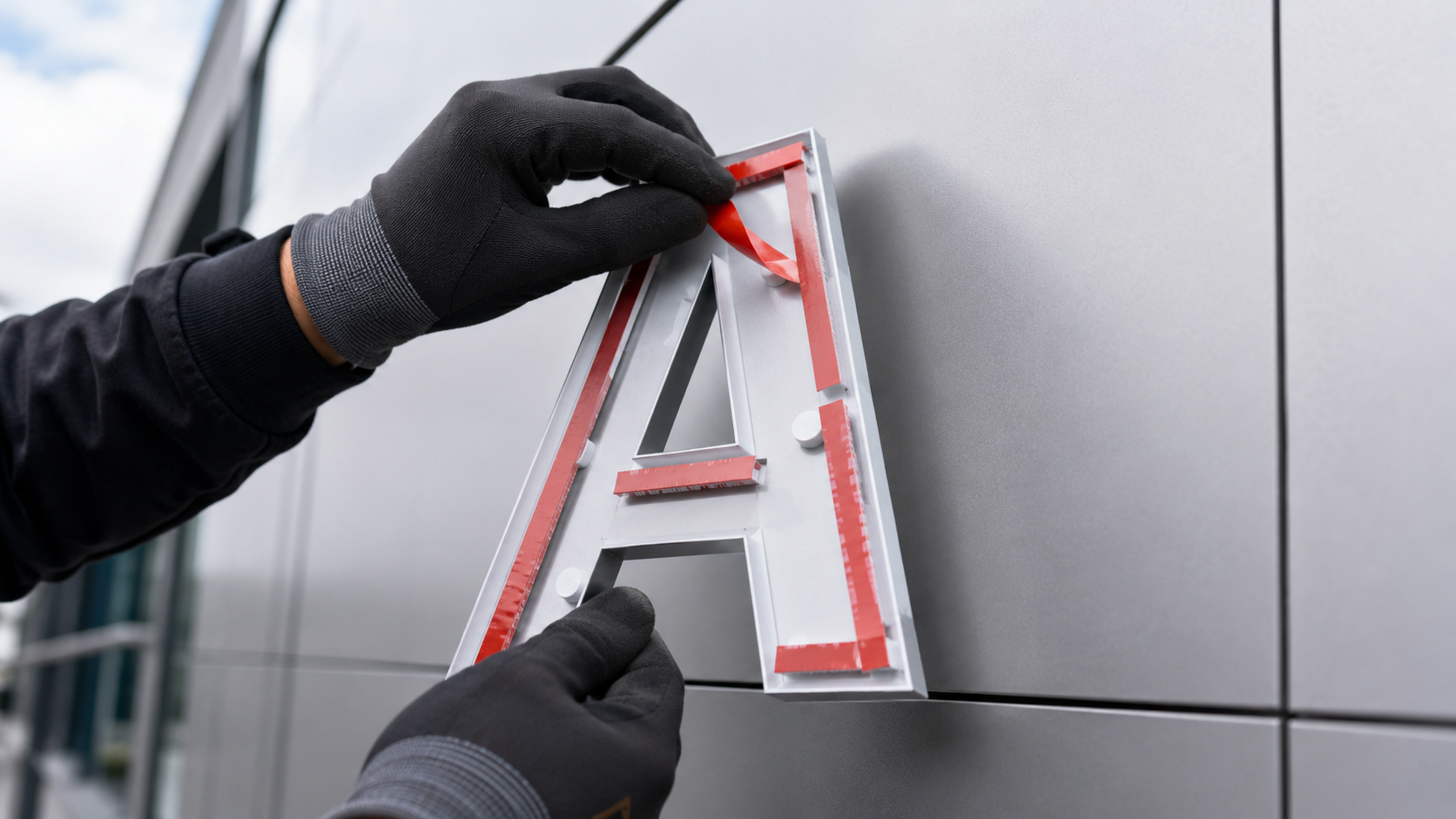
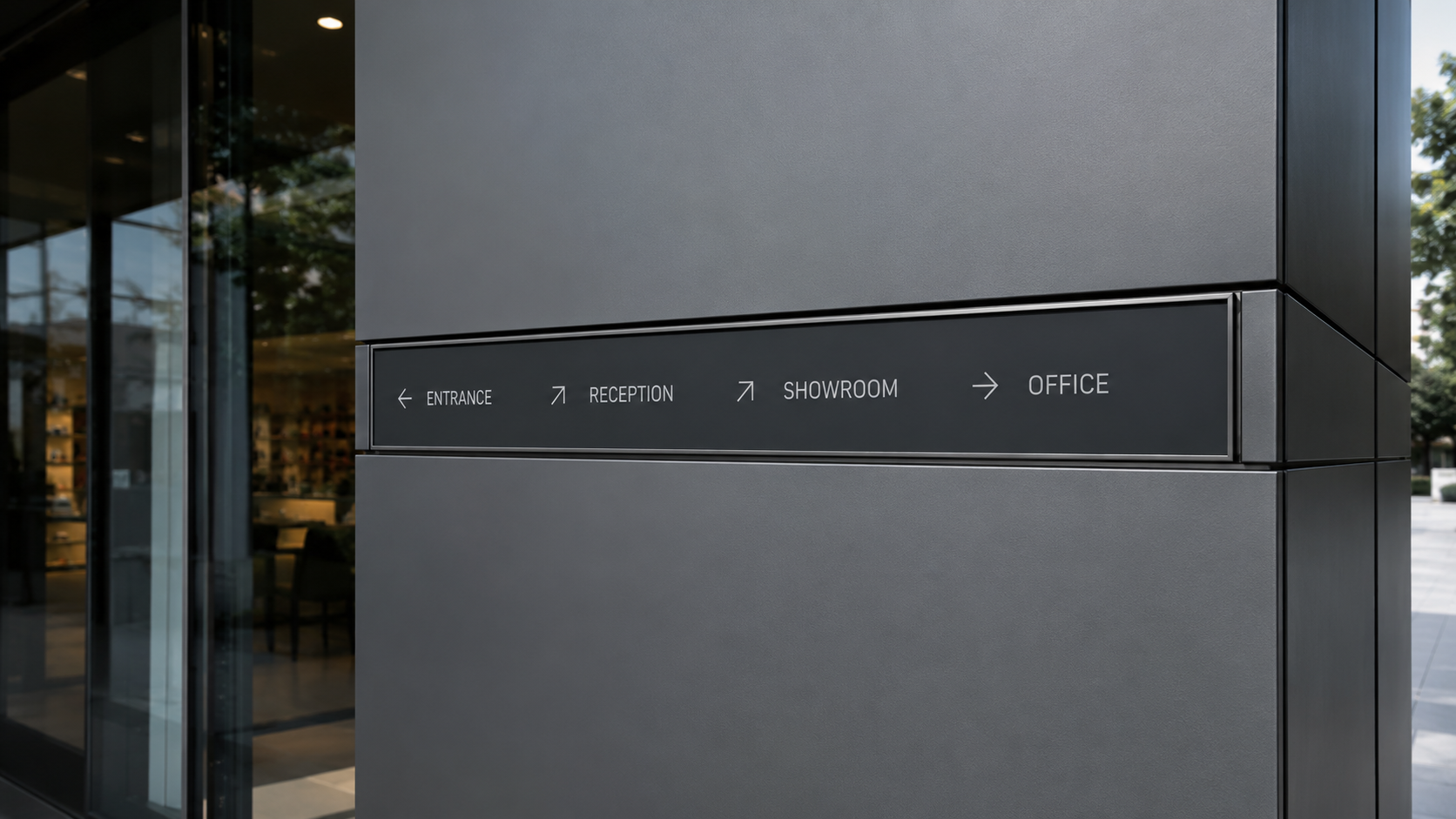
In cases where the goal of the project is to attach advertising structures of small mass and dimensions (for example, navigation plates at the entrance, interior logos made of extruded polystyrene foam, flat acrylic letters, information stands made of PVC plastic), it is advisable for engineers to consider fixation methods that do not require any mechanical penetration (drilling) through the ventilated facade at all. The absence of through-holes completely eliminates the risk of depressurizing the shell and the formation of thermal breaches, retaining all the primary characteristics of the screen.

Industrial Adhesive Tapes and Structural Glazing

For installing light advertising elements on flat, non-porous surfaces of facing cassettes (for example, on aluminum composite panels, smooth-formwork fiber cement, or polished porcelain stoneware), high-strength industrial adhesive systems are most often used. The technology of mechanical-free attachment, utilizing double-sided tapes based on foamed acrylic, allows for the creation of reliable, durable connections that are able to withstand extreme atmospheric influences, constant moisture, and significant temperature changes.

The choice of the right adhesive critically depends on the microtopography (relief) of the facade surface. If the screen surface is perfectly even and smooth, experts recommend using thin acrylic tapes (for example, with a thickness of 0.5 to 1 mm). They ensure the tightest fit of parts and create an almost invisible seam between the sign and the wall, creating a levitation effect. However, if the cladding has a pronounced structural surface (for example, rusticated stone, corrugated clinker, or a fiber cement board imitating the texture of natural wood), thin tapes will not be able to provide a sufficient area of adhesive contact. In such difficult cases, the technology unalterably requires the use of thick foamed tapes. Due to its elastic, visco-elastic nature, the base of such tapes is able to deform under pressure, penetrating all micro-irregularities and filling the relief, which allows achieving a monolithic, strong bond at the molecular level.

An important technological aspect of using acrylic adhesive systems is the strict preparation of the surface and control of environmental conditions during installation. The facade surface must be thoroughly cleaned of organic impurities, dust, and necessarily degreased with isopropyl alcohol or specialized chemical adhesion promoters (primers). In addition, most acrylic tapes require compliance with a certain temperature regime during application. Usually, the temperature of the air and the surface should not be lower than +10°C. At lower temperatures, the acrylic adhesive layer loses its initial tack (becomes stiff) and is unable to properly wet the substrate surface to create initial adhesion.

10 Intehratsiya vyvisok

Alternative Methods of Contactless Display

Besides the rigid adhesive method, for temporary, seasonal, or replaceable exhibitions, other engineering and design approaches can be used.

For signs that require frequent content replacement, profile framing systems (snap frames or click systems) are used. Information media made of foam or plastic are placed in elegant aluminum frames, which provide a professional look and add an additional level of mechanical protection against vandalism or weather conditions, while allowing the poster to be changed in a matter of seconds. The frame itself can be attached to the facade using special hooks or clamps that hook directly onto the technical seams between the facing cassettes, completely without damaging their face plane.

If the sign needs to be mobile or is installed inside premises with complex wall geometry, textile fasteners (Velcro) are often used. One part of the tape is glued to the wall, the other to the sign. This makes it easy to remove the advertising medium for cleaning or repositioning without the use of tools. To display navigation elements, hanging from the ceiling using thin steel cables, using desktop easels, A-frame stands (sandwich boards for advertising on sidewalks), or closed transparent display cases are often used. Installing decorative racks (stand-off holders) that hold the sign at a distance from the wall allows you to create a spectacular three-dimensional volume and play of shadows, which significantly increases the premium appearance.

11 Intehratsiya vyvisok

Fire Safety During the Integration of Advertising Media

A separate, critically important, and strictly regulated stage in designing outdoor advertising on building facades is the unconditional compliance with fire safety standards. A suspended ventilated facade, by its very nature, is a potentially dangerous structure in the event of a fire. The air gap between the insulation and the facing screen, which normally provides ventilation, begins to act like a giant chimney if a flame enters it. The upward flow of hot air creates a super-powerful draft, which contributes to the instant spread of fire along the entire height of the building, turning a local ignition into a large-scale catastrophe.

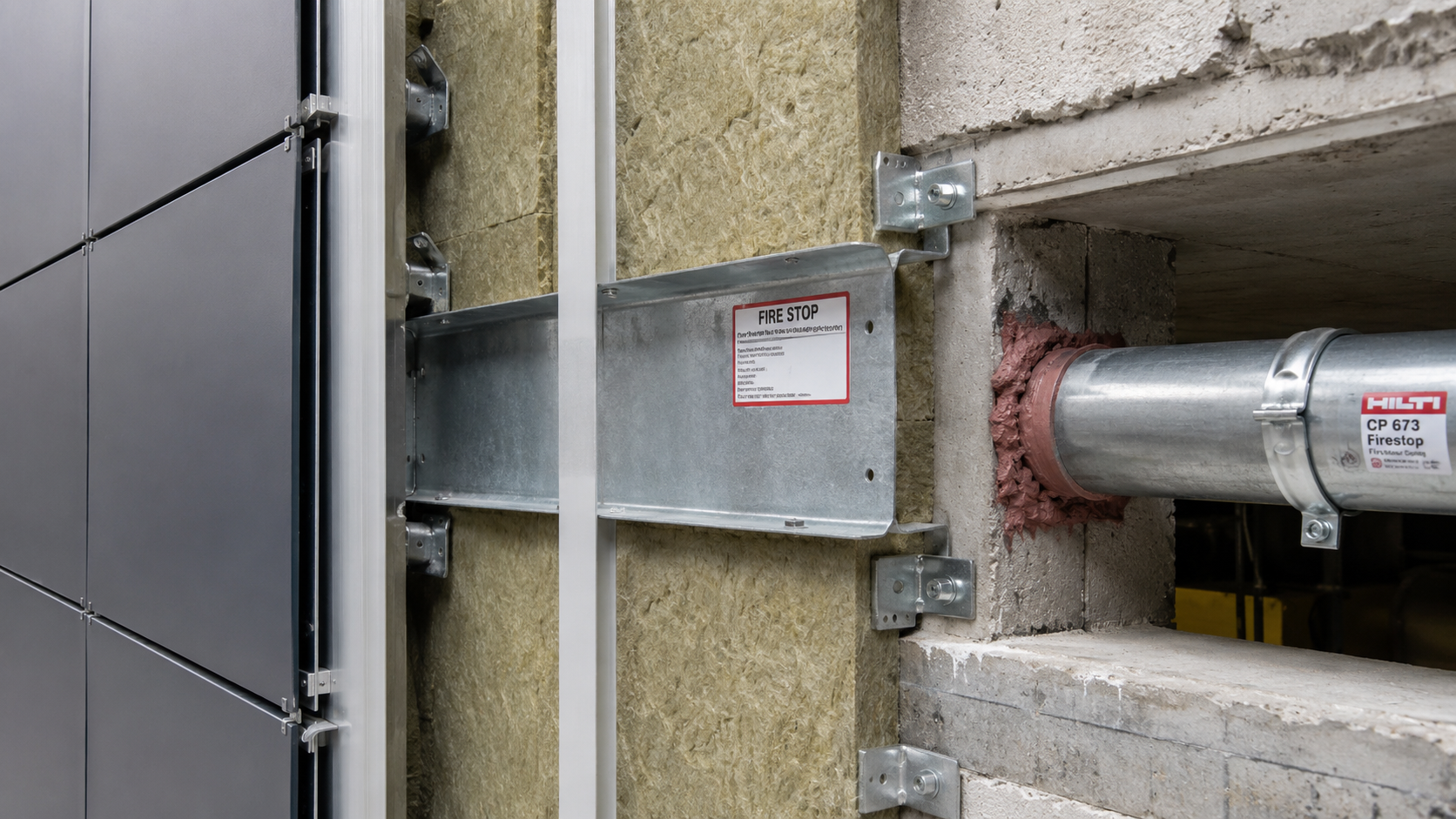
To prevent such a scenario, regulatory documentation requires the mandatory installation of fire boxes and special cut-offs in the facade system. Fire cut-offs are continuous metal plates (usually made of galvanized or heat-resistant stainless steel) installed horizontally in the air gap around the entire perimeter of the building with a strictly defined pitch in height (for example, at the level of each floor). Also, they are mandarily mounted as a frame around all window and door openings. Their sole purpose is to physically block the air draft in the gap and prevent the spread of combustion of the windproof polymer film or accidental debris in the event of an open fire. Moreover, a proper facade subsystem must be equipped exclusively with non-combustible insulation materials, such as stone (basalt) wool boards. The fibrous inorganic structure of mineral wool guarantees the highest fire safety, since this material is capable of withstanding the direct action of fire and melts only at temperatures over 1000°C, serving as a reliable barrier to the flame.

During the integration of signage, especially massive ones, it is necessary to conduct a thorough engineering audit to ensure that the subsystem of the advertising structure or its bulky bodies do not violate the structural integrity of the fire cut-offs. For example, if a large lightbox is projected that overlaps a significant part of the facade, its geometry should not create additional, uncontrolled external channels for air movement that could allow the flame to bypass the existing fire barriers of the building.

Special attention is paid to electrical safety, because most modern signs are illuminated. All electrical communications feeding the sign (trunk cables for powering LED modules, transformers, power supplies) must be laid exclusively in fire-resistant metal pipes or special halogen-free corrugated channels that do not support combustion. The places where cable routes pass through the facade shell into the building should be sealed not with ordinary foams, but with special fire-retardant mastics or seals. These materials have the property of thermal expansion (intumescence) when exposed to high temperatures, instantly blocking the opening, blocking the access of oxygen, and preventing the penetration of toxic smoke into the room. Durable metal or heat-resistant nylon ties with screw fastening are used to reliably secure cable lines and corrugated pipes to the load-bearing elements of the subsystem.

12 Intehratsiya vyvisok

Architectural and Aesthetic Requirements and Dynamic Load Compensation

When designing engineering attachment points, it is important to consider not only mechanical strength and thermodynamic characteristics but also the flawless aesthetics of the facade. Modern commercial cladding (architectural mesh, clinker brick, polished stone) is an extremely expensive material. Rough, protruding fasteners, metal plates, or sealant drips can hopelessly ruin the appearance of premium real estate.

In modern advanced practice, architects and installers try to design junctions in such a way as to conceal the elements of the advertising structure’s subsystem as much as possible, integrating them directly into the technological seams between the facade cassettes or tiles. For example, if decorative clinker tiles imitating English bricks (with typical face dimensions of 65×250 mm, 85×280 mm, or 200×400 mm) are used for facade cladding, engineers calculate the coordinates of the sign brackets so that they exit outward exclusively in the areas where the cement joints between the tiles are pointed. This approach allows entirely avoiding drilling the ceramic tile itself, which often leads to its uncontrolled cracking and material spoilage. Moreover, fastening through the seam makes possible easy and painless dismantling of the sign in the future (when changing the building tenant) with subsequent cosmetic filling of a small hole in the seam with a standard repair mortar, returning the facade to its original appearance.

As for withstanding dynamic loads, it must be understood that any sign installed at a distance from the wall (even at a distance of a few centimeters) works as an aerodynamic sail. The wind load on such a structure is not constant and is calculated taking into account the specific aerodynamic coefficients of the building, the wind rose in the region, and the height of the sign above the ground. The energy of wind gusts transforms into powerful vibrations that are transmitted to the consoles, creating cyclical torques and alternating shear loads at the attachment points.

That is why the use of high-tech thermal cones reinforced with fiberglass (as in the aforementioned stand-off installation systems) is so justified from an engineering point of view. Composite materials based on glass and polymer resins have a high modulus of elasticity and the ability to dissipate energy. This allows them to absorb and dampen fine vibrations from wind gusts, acting as a kind of shock absorber. Because of this, destructive micro-impacts are not directly transmitted to the rigid but fragile materials of the load-bearing wall (such as aerated concrete, foam block, or hollow ceramic brick), protecting them from gradual crumbling around the anchor and loosening of the mount.

main Intehratsiya vyvisok

Conclusions and Comprehensive Engineering Recommendations

The process, the main goal of which is to reliably attach advertising structures to a modern multi-layer ventilated facade, is a complex engineering and architectural task that requires a deep understanding of the laws of building physics, thermodynamics, and materials science. Any ignoring or gross violation of technological protocols at the installation stage inevitably triggers a chain reaction of destruction: from the degradation of the building’s thermal insulation properties due to the formation of through cold bridges and the accumulation of internal condensation, to accelerated galvanic corrosion of metal bearing elements and irreversible damage to expensive facade cladding.

Based on a comprehensive analysis of the provided data, building codes, and physical processes, the following set of key recommendations is formulated, designed to ensure maximum durability of buildings and preservation of absolute sealing of facade shells during operations for the integration of signage:

  1. Minimization of destructive interference: For light and medium advertising elements (such as information navigation, 3D letters made of foam or acrylic, flat logos), contactless fixation methods should be the priority choice. The use of double-sided tapes based on ultra-high-strength foamed acrylic allows reliably mounting signs on smooth or textured panels without a single mechanical puncture of the facade system.
  2. Mandatory use of thermally separated fasteners: All without exception through anchorages must be performed using specialized stand-off installation systems (for example, technologies with glass-fiber-reinforced thermal cones). These systems physically interrupt the bridge of heat conduction from the external metal rod to the anchor in the load-bearing wall. This approach is without alternative for preventing supercooling of walls and the formation of condensation in the thickness of mineral wool.
  3. Application of chemical anchoring for heavy loads: When installing massive advertising installations (large-sized awnings, heavy lightboxes, roof installations, media screens), fixing the support studs in the bearing base must be carried out exclusively with the help of injection polymer mortars. Chemical anchors fill all voids, evenly distribute stress in the wall material, and are able to withstand the highest wind and vibration loads without the risk of pulling out.
  4. Comprehensive restoration of hydro and wind barriers: Every puncture of the outer superdiffusion membrane and every technological hole in the facing screen must be perfectly sealed to avoid wetting the insulation. For round pipes and support consoles, flange collars and flexible D-profiles made of chemically and thermally resistant EPDM rubber, effectively compensating for the thermal expansion of parts, should be used.
  5. Application of new generation elastic joint sealing: For final waterproofing of external junctions between metal fasteners and facade panels, it is necessary to abandon outdated silicones in favor of hybrid sealants based on MS-polymers. They guarantee phenomenal adhesion without primers, retain elasticity for decades, are fully UV resistant, and can be applied without problems even in wet weather conditions.
  6. Preventive planning of the subsystem: For extra-heavy advertising structures, the best solution is the design and installation of reinforced base brackets (with massive paronite thermal breaks) even at the stage of general construction works on the erection of the facade, in compliance with standard indents from the edges of walls and precise output of mounts into the technological seams of the cladding.

Strict adherence to the stated technological regulations and understanding of the physical processes occurring inside suspended systems guarantees that the commercial visual identification of a building will be integrated as safely as possible. Such a professional approach allows businesses to realize their marketing goals without any compromise on energy efficiency, durability, fire safety, and the flawless aesthetic appeal of a modern architectural structure.

author
Alexander Guk
About the author:

Our expert in fencing structures has over 5 years of experience working at the Mehbud factory. Helps you choose the optimal design and model of fencing according to your needs. Professionally deve...

More
0 0 votes
Article Rating
Subscribe
Notify of
guest
0 Comments
Oldest
Newest Most Voted
Inline Feedbacks
View all comments