
1. Introductory Analytics: The Philosophy of Permanent Fencing and the Concept of an Integrated Approach
Building a reliable fence around a private, commercial, or industrial property is a multifaceted engineering and technical process that requires detailed financial planning, an understanding of structural mechanics, strength of materials, and the geodesic features of the terrain. The modern construction services market in Ukraine offers numerous options for project implementation; however, the most rational approach from a risk and financial management perspective is ordering a turnkey service. This format entails a full cycle of work: from initial geodesic surveys, dismantling old structures, and clearing the site, to pouring a permanent foundation, mounting sections, installing gate groups, and fine-tuning electric drive systems.
The main problem investors and landowners face lies in the illusion of initial savings. The desire to minimize direct capital expenditures during the material procurement stage often leads to a catastrophic increase in operational expenses for continuous repairs, straightening support posts, replacing hardware, or completely reconstructing a fence that has corroded or deformed under significant wind loads. It is objectively impossible to calculate the cost without accounting for hidden stages of work, such as the logistics of bulky materials, complex earthworks, structural concrete reinforcement, and multi-layer anti-corrosion treatment of the metal.
The purpose of this report is to provide a comprehensive analysis, detailed down to the smallest technological nuances, of budget formation for erecting fencing structures within the Ukrainian construction market. To ensure maximum relevance, all financial indicators, construction crew rates, and material prices are displayed exclusively in the national currency (UAH). In this study, particular and most extensive attention is dedicated to those aspects of construction where financial optimization is technologically unacceptable, as it guaranteed to lead to irreversible structural failure and loss of investment.
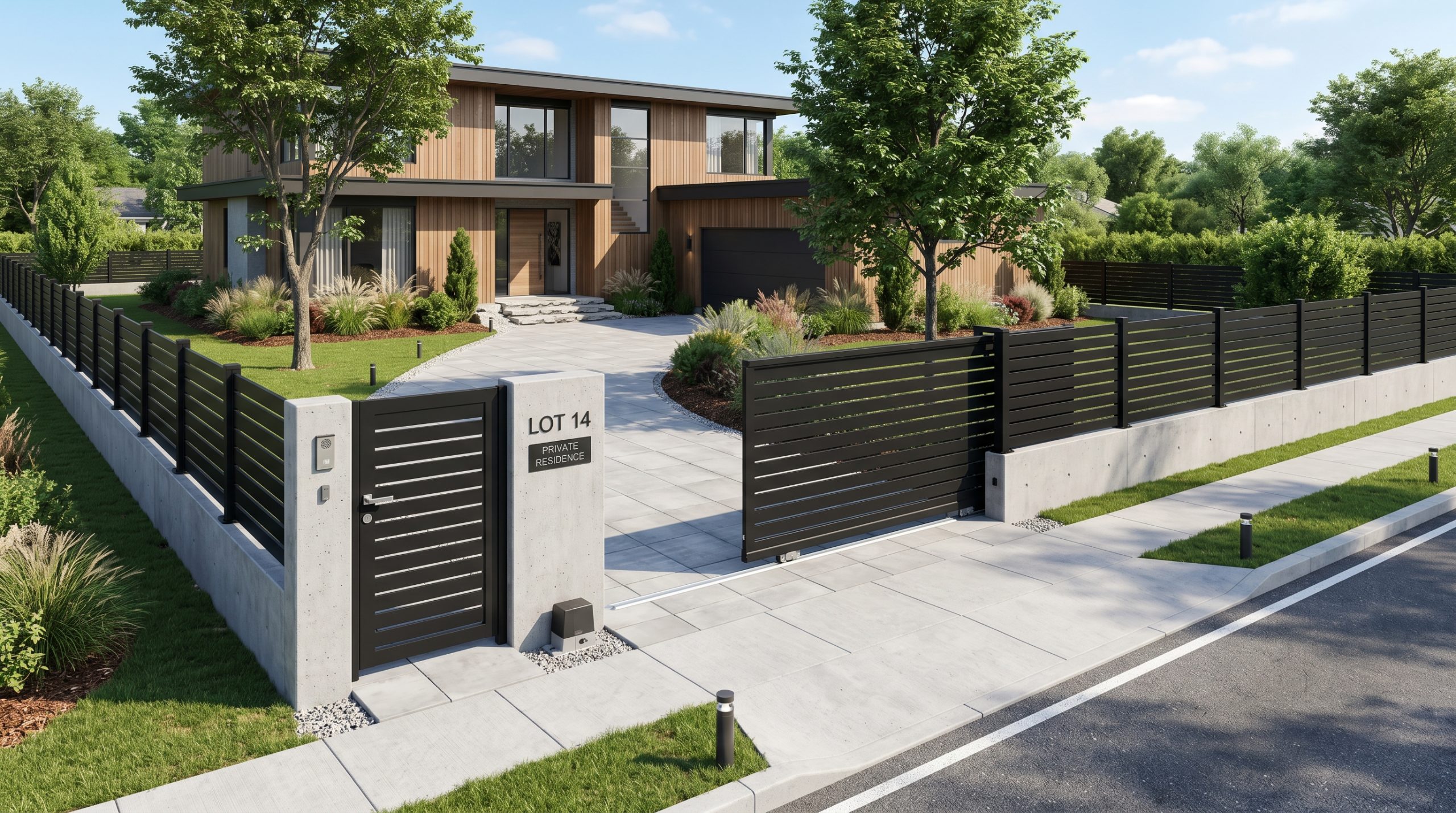
2. Preparatory Stage: Geodesy, Dismantling, and Clearing the Construction Site
Before starting the installation of a new engineering structure, the territory must be properly surveyed and prepared. This stage is critically underestimated in preliminary estimates, yet it can constitute a significant portion of the total fence budget, especially in dense urban environments or on sites with challenging elevation changes. Any professional project begins with a geodesic survey. The absence of a thorough analysis of soils and topography is an unacceptable mistake, because installing support posts without considering soil movement and frost depth will cause the fence line to warp within six months of project handover.
If an old fence is present on the site, its removal requires skilled manual labor or heavy specialized equipment. Dismantling work and site cleanup involve substantial costs that must be factored into the initial financial plan. The cost of dismantling old fences and metal barriers in Ukraine varies widely, ranging from 60 to 344 UAH per square meter, depending on the material, degree of structural degradation, and accessibility issues. The removal of heavy concrete strips or solid brick walls is calculated using a different methodology and can be priced in cubic meters, starting from 275 to 340 UAH per cubic meter of mass. Additionally, dismantling metal structures followed by gas or mechanical cutting into transportable pieces costs from 8 to 20 UAH per kilogram of metal.
Clearing the area of shrubs, remnants of old foundations, construction debris, and primary grading of the landscape also has its market value. The services of professional crews for comprehensive site clearing are valued in the range of 20 to 150 UAH per square meter of area. If the scale of work is significant and requires heavy earthmoving machinery (e.g., an excavator or bulldozer), the cost of one full working shift (8 hours of operator and machine operation) is approximately 18,800 UAH. After collecting the debris, the need for its disposal arises. Removing construction waste to specialized legal landfills will add approximately 680 UAH to the estimate for each cubic meter of waste.

3. Earthworks: Soil Mechanics and Trench Preparation
Creating trenches for a strip foundation or drilling deep holes for localized support posts is the next critical technological step. In conditions of dense development, the presence of existing landscape compositions, or simply the inability of wheeled machinery to access the site, trenching or excavation is performed exclusively by hand. Manual labor in modern construction is expensive. The cost of such earthworks can reach up to 750 UAH per cubic meter of excavated soil. To understand the complexity and labor intensity of the process: according to construction regulations, a worker spends an average of 1.7 hours of continuous labor to excavate one cubic meter of category II complexity soil.
Ukrainian soils are characterized by high moisture saturation and significant frost depth during the winter period. This creates a physical effect of frost heaving, where water in the soil freezes, expands, and exerts massive force to push any objects embedded in it to the surface, including concrete posts. To counteract this effect, additional measures must be taken. Digging up earth for loosening costs around 125 UAH per square meter, while grading and leveling soil with a layer of up to 10 centimeters will cost 149 UAH per square meter. A crucially important step is creating a special sand or sand-gravel cushion at least 8 centimeters thick at the bottom of the trench (work costs around 120 UAH per square meter). This cushion functions as capillary drainage, diverting moisture away from the concrete base and compensating for the pressure of freezing soil. Upon completing all active earthworks, the final cleanup of the territory adjacent to the perimeter will cost another 81 UAH per square meter.
4. Foundation Engineering: Design and Pouring
The foundation is the most critical load-bearing element of any permanent engineering structure. It is within the monolithic concrete that the durability of the entire fence is established. Even visually light metal structures (for example, solid sheets of corrugated board) possess a colossal surface area of resistance to air masses. This windage turns the sections into makeshift sails that transfer a massive turning moment to the support posts during storm gusts, which, in turn, transfer it to the foundation. If the base is weak, the posts loosen, the structure loses its vertical alignment, and ultimately collapses.
In Ukrainian construction practice, a monolithic reinforced concrete strip foundation or a combined strip-and-post foundation—where the strip binds deeply embedded posts into a single rigid structural frame—is most commonly used for permanent fences. The cost of labor for constructing a strip foundation (builders’ wages only, excluding the cost of concrete, formwork boards, and rebar) ranges from 2,200 to 5,000 UAH per cubic meter of poured concrete. When calculating this indicator in linear meters for standard strip cross-sections (which are most frequently used for private households), the average price for craftsmen’s labor is between 440 and 990 UAH per linear meter.
The full cost of forming a heavy-duty reinforced concrete base includes a wide spectrum of materials. To create a truly massive foundation designed for brick walls, with embedding parameters of 0.6 meters deep and 0.5 meters wide (yielding a volume of 0.3 cubic meters of concrete for each linear meter), expenses rise sharply. The estimate must include ready-mix industrial concrete (approximately 2,000 UAH per cubic meter), steel rebar to create a three-dimensional cage (the cost of which is around 27,000 UAH per ton), as well as timber or plywood for constructing the formwork. According to professional calculations for heavy fences, the cost of such a robust foundation on a section only 50 linear meters long can reach up to 178,000 UAH, which translates to about 3,560 UAH per linear meter solely for the base itself.
However, for lighter metal systems, manufacturers and contractors offer optimized engineering solutions. Let’s examine the cost of foundation preparation, which is already included in the budget when ordering a turnkey fence service from leading Ukrainian companies:
| Type of Metal Fence and Height | Strip Foundation Cross-Section (Width x Depth) | Cost of Adding a Foundation to the Base Price (UAH/lin.m.) |
| Picket fence (1.5 m – 2.0 m) | 0.15 m x 0.4 m | 1400 UAH |
| Corrugated metal sheet fence (1.5 m – 2.0 m) | 0.15 m x 0.4 m | 1700 UAH |
| High fences of any type (over 2.5 m) | 0.20 m x 0.4 m | 1500 – 1900 UAH |
Data source based on Ukrainian market analysis:
A mismatch between the physical parameters of the foundation and the mass-dimensional characteristics of the above-ground structure is the most frequent cause of failure for even perfectly welded and painted fences. Cutting the budget by reducing the foundation depth guarantees structural failure. Among the major fatal errors, experts highlight: insufficient base depth, refusal to tie a proper rebar cage (replacing it with scrap metal or omitting it entirely), using low-grade home-mixed concrete (which actively absorbs water and crumbles after several freeze-thaw cycles), and the absence of roll or liquid waterproofing between the concrete and brick or metal.
5. Cost and Aerodynamic Characteristics Analysis of Section Materials
The choice of section infill material directly influences the architectural aesthetics, level of privacy, site light permeability, total system weight, and, most importantly, the fence budget. Let’s look at a detailed breakdown of prices and technical features of the main material categories relevant to the Ukrainian market (calculated for projects at least 50 linear meters long).
5.1. Corrugated Metal Sheet (Profiled Sheeting) Structures
This type of fence remains the undisputed leader in providing absolute visual privacy. Profiled sheeting creates a solid barrier impermeable to onlookers. However, from an engineering standpoint, a solid wall becomes an ideal sail. Air masses colliding with a flat surface generate colossal pressure. This is why the design requires a rigid metal frame (welded tubes) and a continuous strip foundation. Design variations differ by the type of load-bearing frame (closed or open posts), the direction of the corrugated wave (vertical or horizontal), and the presence of decorative elements (for example, top trims or decorative strips).
| Structure Height | Frame Configuration and Wave Direction | Manufacturing Cost Without Foundation (UAH/lin.m.) | Integrated Foundation Cost (UAH/lin.m.) | Total “Turnkey” Price (UAH/lin.m.) |
| 1.5 m | Standard metal posts (vertical wave arrangement) | 2100 UAH | 1700 UAH (0.15×0.4m) | 3800 UAH |
| 2.0 m | Standard metal posts (vertical wave arrangement) | 2200 UAH | 1700 UAH (0.15×0.4m) | 3900 UAH |
| 2.5 m | Standard metal posts (vertical wave arrangement) | 3000 UAH | 1900 UAH (0.2×0.4m) | 4900 UAH |
| 1.5 m | Exposed heavy-duty 80×80 mm posts (vertical wave arrangement) | 3100 UAH | 1900 UAH (0.2×0.4m) | 5000 UAH |
| 2.0 m | Exposed heavy-duty 80×80 mm posts (vertical wave arrangement) | 3200 UAH | 1900 UAH (0.2×0.4m) | 5100 UAH |
| 2.5 m | Exposed heavy-duty 80×80 mm posts (vertical wave arrangement) | 3900 UAH | 1900 UAH (0.2×0.4m) | 5800 UAH |
| 2.0 m | Simplified budget option without additional frame (horizontal wave) | 2000 UAH | 1700 UAH (0.15×0.4m) | 3700 UAH |
| 2.0 m | Option with trim for architectural post imitation | 2900 UAH | 1700 UAH (0.15×0.4m) | 4600 UAH |
Analytical selection of market offers:
Technological imperative: the use of steel sheets with a thickness of less than 0.45 millimeters is absolutely unacceptable for outdoor fencing. Thin metal is extremely vulnerable to mechanical deformations, vibrations, and impacts. Moreover, the zinc coating layer on such budget sheets is usually minimal, and the protective-decorative polymer coating (most often cheap polyester) flakes off after the very first winter or quickly degrades and changes color under the influence of solar UV rays, exposing bare steel to aggressive atmospheric corrosion.
5.2. Aerodynamic Systems: Metal Picket Fence
The metal picket fence (often called an euro-picket fence) is an example of the evolution of classical architecture combined with modern materials. It blends the durability of galvanized steel with the traditional aesthetics of a classic wooden fence. Its fundamental engineering advantage lies in its permeability to air masses. Thanks to the gaps, the kinetic energy of the wind dissipates, which radically reduces aerodynamic drag and the overall load on the foundation. The recommended technological gap between vertical lamellas is 3 centimeters. Section infill can be classic single-sided (providing maximum ventilation) or double-sided (lamellas arranged in a staggered pattern on both sides of the rails, maintaining ventilation while blocking direct visual line-of-sight into the property).
| Structure Height | Spatial Infill Type | Manufacturing Cost Without Foundation (UAH/lin.m.) | Integrated Foundation Cost (UAH/lin.m.) | Total “Turnkey” Price (UAH/lin.m.) |
| 1.5 m | Single-sided lamella arrangement | 2300 UAH | 1400 UAH (0.15×0.4m) | 3700 UAH |
| 2.0 m | Single-sided lamella arrangement | 2450 UAH | 1400 UAH (0.15×0.4m) | 3850 UAH |
| 2.5 m | Single-sided lamella arrangement | 3400 UAH | 1500 UAH (0.2×0.4m) | 4900 UAH |
| 1.5 m | Double-sided arrangement (staggered order) | 3150 UAH | 1400 UAH (0.15×0.4m) | 4550 UAH |
| 2.0 m | Double-sided arrangement (staggered order) | 3500 UAH | 1400 UAH (0.15×0.4m) | 4900 UAH |
| 2.5 m | Double-sided arrangement (staggered order) | 5000 UAH | 1500 UAH (0.2×0.4m) | 6500 UAH |
Analytical selection of market offers:
The steel lamellas themselves are also available for individual purchase if an investor decides to carry out installation using their own resources. The price for one linear meter of lamella depends on the complexity of the profile (for example, semi-circular or trapezoidal), the type of polymer coating (matte, glossy, or a specialized print imitating wood structure), and the structural steel thickness. Lamellas in the popular matte color “Graphite” cost from 46 to 48 UAH per linear meter, whereas products made from premium European-rolled steel (Italy, Poland) with a thickness of 0.45–0.5 millimeters are valued at 64–70 UAH per unit.
5.3. Premium Segment: Louvre Fences
The louvre fence represents the pinnacle of modern architectural solutions for perimeter fencing. The design consists of a massive metal frame and horizontal profiled lamellas fixed at a precisely calculated angle. This engineering solution resolves multiple issues at once: it provides ideal air circulation (creating a favorable microclimate for plants on the property), eliminates wind load, and allows owners to freely view the street from the inside, while maintaining absolute privacy for the territory from the eyes of passersby. Thanks to the use of thick metal and a reliable powder or polymer coating, the lifespan of such a fence confidently exceeds 20 years, with manufacturing plants providing an official warranty on the metal for up to 10 years.
Pricing for louvre systems fundamentally differs from other fence types and is executed based on calculations per square meter of area (m²), since the height and width of sections can vary within very broad limits.
| Model Line (From Basic to Exclusive) | Approximate Cost per Square Meter (UAH/m²) | Features and Positioning |
| Basic models (e.g., “Smart” series) | 870 – 950 UAH | Optimal balance of price and functionality, standard RAL colors. |
| Designer and reinforced (e.g., “Porto”, base “Hi-Tech”) | 980 – 1250 UAH | Increased lamella rigidity, superior acoustic properties. |
| Premium modifications (complex “Hi-Tech” profiles) | 1390 – 1990 UAH | Exclusive design, thick steel, resistance to vandalism. |
| Exclusive large-format series (e.g., XL or Lego) | 3600 – 3800 UAH (equivalent to 90-95 USD) | Maximum protection level and unique architectural style, enhanced galvanization. |
Analytical selection of market offers:
It must be understood that the installation of louvre systems requires surgical precision. Low-quality fastening of lamellas to load-bearing supports or damage to the protective-decorative layer during assembly by inexperienced workers will inevitably invalidate the factory warranty and cause rapid corrosion focal points.
5.4. Mesh Systems: Welded 3D Mesh and Classic Chain-Link
For large-scale areas (warehouses, production bases, agricultural lands) or private lots where architectural codes or landscape design demand maximum transparency and sunlight, various mesh fences are an optimal and financially justified choice.
The classic chain-link mesh remains the most budget-friendly fencing option. Its main operational advantages include: absolute transparency, letting sunlight through, lack of shade, striking cost-efficiency, and rapid installation speed. The total cost of installing a chain-link fence, including materials and labor on average across Ukraine, is only about 533 UAH per square meter. The construction market offers several wire options: basic galvanized mesh (which has an effective service life of about 3 years and is ideal for temporary construction site enclosures), non-galvanized steel, and plasticized mesh, where the metal is additionally coated with a polymer layer, making it completely immune to corrosion.
A more modern, far more rigid, and aesthetic alternative is welded 3D mesh (sectional fencing). Its structural rigidity is provided by the presence of horizontal V-shaped curves (stiffening ribs) and the use of massive steel wire with a diameter of 4 or 5 millimeters. The cost of such systems depends on the panel height (which can vary from 530 millimeters for flowerbeds to 2,030 millimeters for full fences), wire thickness, and the type of anti-corrosion polymer coating.
- The cost of one linear meter of classic 3D fencing (materials only, without installation) starts from 278 UAH.
- The cost of finished welded sections (with a standard width of 2.5 meters) varies from 520 UAH to 760 UAH for each section, depending on its vertical dimensions.
5.5. Monumental Structures: Brick and Decorative Concrete Blocks
For clients who wish to emphasize the status of the property and favor uncompromising monumentality, classic brick and modern decorative dry-pressed concrete blocks remain the alternative-free choice. These structures feature an extremely heavy weight, which places the most stringent demands on the foundation (as detailed in section 4). Any mistake in calculating soil bearing capacity here will lead to deep cracks in the brickwork.
Erecting just one load-bearing brick post (2 meters high, with a cross-section of 0.4 by 0.4 meters, requiring approximately 108 units of high-quality facing bricks) together with professional mason labor, the cost of the bricks themselves (roughly 20 UAH apiece), and cement-sand mortar expenses will cost the client roughly 6,160 UAH. The solid brick walls (sections) themselves cost from 2,400 UAH per linear meter at a height of 1.5 meters, up to 2,900 UAH per linear meter at a height of 2 meters. Delicate brick pillar masonry work by professional masons is valued on average at 1,575 UAH per square meter of completed brickwork.
A powerful alternative to clinker brick is using large-format decorative concrete blocks (for example, with a texture of deep split stone or so-called “torn concrete”). Due to the large block sizes, the installation process accelerates slightly, though it remains technologically complex. The cost of erecting such a monumental fence turnkey—which includes absolutely all materials, cutting durable blocks with diamond blades, decorative joint pointing, complex foundation installation under sections, multi-stage steel row reinforcement, and mounting metal or concrete parapet caps for rain protection—amounts to the equivalent of about 120 USD per square meter (which in current realities translates to roughly 4,800 UAH per square meter of structural mass). If the investor decides to simply upgrade an existing rough fence (e.g., cast from concrete) and face it with facade bricks, such work will cost around 1,025 UAH per square meter, while facing with decorative tiles or natural sandstone starts from 760 UAH per square meter of area.
6. Entrance Groups and Mechanization: Gates, Wickets, and Electronics
A secure perimeter is impossible without the smart integration of entrance groups. Gates and wickets are the most dynamically loaded elements of the entire system. Their trouble-free functionality, smooth travel, and overall reliability depend directly on the quality of welds, frame geometry, hardware used (roller carriages, hinges), and automation parameters. The cost of manufacturing a square meter of metal garage gates or basic gate structures starts from 1,000 UAH (this is only the base factory production cost for the metal structure), whereas manufacturing a high-quality, break-in resistant wicket will cost from 3,500 to 4,000 UAH for the finished product.
Installation labor for welding a massive swing gate frame and its precise mounting onto support hinges by qualified construction crews in Kyiv and its region costs an average of 5,593 UAH, while a similar set of commissioning works for a wicket is valued at approximately 3,180 UAH.
A modern approach to real estate operation dictates equipping entrance groups with remote control systems. Stepping out of a car during a heavy downpour or blizzard to manually open heavy gate leaves has long ceased to be the standard. The market offers both classic sectional automatic gates for built-in garages (prices vary from 6,312 UAH to 11,500 UAH depending on dimensions, condition, and sensor packages) , and cantilever sliding driveway gates. Sliding systems are more advanced since they do not consume useful yard area during opening; however, their cost fully assembled with guide systems, gear racks, and a massive counterweight foundation can easily reach 25,000 UAH. Electronic automation for sliding gates on its own (electric motors, control boxes with radio receivers, infrared safety photocells, and signal lamps) will add from 6,300 UAH to over 10,000 UAH to the overall estimate depending on drive power and manufacturer. Additionally, expenses for reliable electromechanical locks for wickets, which can be integrated into an intercom system, must be factored in (the cost of such a lock is around 1,147 UAH).
7. Engineering Risk Analysis: Where Optimization Turns into Disaster
When putting together a financial plan and a fence budget, the desire to optimize total expenditures is a completely natural and economically sound approach. However, in structural mechanics, there is a hard line beyond which unwise budget cuts convert directly and inevitably into structural failure, risk to residents’ safety, and the necessity for repeated, even larger capital investments. Based on profound engineering analysis and data from leading companies in the domestic sector, we have compiled an exhaustive technical checklist of elements and processes where economizing is a professional taboo.
7.1. Topographical Surveys and Engineering Design Calculations
The most common and painful error of the initial phase is erecting permanent structures “by eye,” ignoring the laws of physics. Refusing a full geodesic site analysis, soil composition study, and topography mapping guarantees critical consequences :
- Errors in metric measurements: Incorrect calculation of the total perimeter length, angles, or elevation changes leads to ordering metal sections of mismatched sizes. Any modification or cutting of factory-made metal sections inevitably damages the factory galvanization, paving the way for rust and creating huge additional financial losses for re-orders.
- Ignoring landscape curvature: Natural landscape slopes are practically impossible to compensate for aesthetically during the installation of support posts. If these geometric features are not taken into account at the factory design stage and during the manufacturing of stepped sections, the fence will have a visually broken, unappealing look with significant gaps underneath the base where stray animals can enter.
-
The hazard of heaving soils: The absence of a thorough engineering-geological soil analysis means building blindly. If concrete pillars are installed without accounting for seasonal frost depth (which in Ukraine ranges from 0.8 to 1.2 meters) and the groundwater table, they will inevitably warp or be physically thrust upward out of the ground by expanding freezing water after the very first winter season of operation.
7.2. Physico-Chemical Properties of Structural Materials
Any compromises regarding the quality of basic building materials quickly manifest as visual aging and a progressive loss of load-bearing capacity in the first few years of use :
- Concrete and timber specifications: Using low-grade concrete (mixed in a portable mixer without respecting the water-cement ratio and without using vibrators for compaction) leads to micropore formation inside it. Water enters these pores and, upon freezing, ruptures the concrete from within, turning it to dust. Similarly, raw lumber that has not been properly kiln-dried quickly succumbs to biological decay, gets infested by fungus, and catastrophically warps (bends) due to changes in atmospheric humidity.
- Metal mass and rolled steel thickness: Employing thin-walled metal (less than 0.4 millimeters for wall sections and thin-walled pipes with a wall thickness under 2 millimeters for support pillars) makes the entire structure critically vulnerable. Thin metal is incapable of resisting torque, it dents easier from accidental impacts, suffers more from vibrational wind loads (generating annoying noise), and loses its structural integrity much faster under oxidation processes (corrosion).
- Chemistry of polymer coatings: Cheap liquid paint or low-quality polymer finishes lack proper chemical adhesion to the steel base. Such coatings quickly peel off in sheets under the cyclic effects of extreme summer and winter temperatures and precipitation, uncovering the metal to rust. Furthermore, cheap colorants lack UV stabilizers, causing them to lose their rich hue in uneven blotches, completely destroying the exterior aesthetic of the property.
7.3. Mechanics of Bases and Load-Bearing Support Nodes
An engineering axiom states: the strength of any fence is equal to the strength of its weakest element, which in the absolute majority of cases is the underground base. Attempts to save money and bypass a continuous strip foundation in favor of a fragmented, shallow pier foundation (especially for heavy sections or solid fences with high windage), ignoring the need for high-quality roll or bituminous waterproofing and structural steel rebar cages—is a direct and short path to the appearance of through-cracks in brick columns and major vertical axis deviation of metal supports.
Crucially important for structural survival is the quality of the vertical support posts themselves. The support post concentrates absolutely all static load from the weight of the fixed sections and dynamic load from wind pressure forces. Short, insufficiently deep posts made from cheap thin-walled pipe, which additionally lack proper bituminous or epoxy anti-corrosion treatment on the portion embedded in concrete or soil, are an absolute guarantee of slow but certain destruction of the entire fence perimeter.
7.4. Kinematics of Components, Hardware, and Automation
Small mechanical details are frequently ignored in a large overall budget, but they are precisely what is responsible for the owner’s daily operational comfort and safety:
- Kinematics of hinges: Saving money on gate hinges is the main and most widespread cause of sagging in heavy gate wings and wickets. Cheap or poorly calculated hinges under heavy load physically deform and stretch. This forces the owner to constantly call technicians for leaf adjustment, and later on—leads to inevitable cutting with a grinder and a full welding overhaul of the load-bearing mechanisms.
- Locking and control devices: Low-quality locks that are not designed for harsh outdoor conditions and are exposed directly to street moisture, frost, and dust, rapidly corrode from within, jam, and severely jeopardize the security of the entire enclosed perimeter.
- Power automation: Installing cheap electric drive systems is a massive engineering mistake. Manufacturers of budget automation typically utilize plastic reduction gears instead of bronze or steel ones, and artificially inflate the maximum leaf mass specifications the motor can handle in their manuals. In practice, even drives purchased with a nominal “reserve” fail to withstand real winter loads (especially during heavy accumulation of wet snow on the gate panel or strong headwinds). Motors overheat quickly and fail, plastic gear parts strip, and the owner has to step out into the rain every single time to manually unlock and pull a heavy metal gate leaf.
8. Logistics, Project Management, and Hidden Transaction Costs
To create a truly objective and honest budget, an investor must always factor an additional contingency fund of 10-15% of the base material and installation costs into the total estimate. These funds will cover unforeseen logistical, depreciation, and organizational expenses that cannot be calculated down to the penny during the sketch phase.
For example, if the construction site is located outside the regional center, the delivery of heavy and bulky materials (six-meter profiles, tons of cement, sand) can significantly and unpleasantly impact the final price. Hiring a heavy crane-manipulator (indispensable for safe unloading of brick pallets, decorative concrete blocks, or delicate and heavy finished louvre sections) in the Kyiv region is priced at around 800 UAH just for the basic dispatch and loading/unloading process, to which mileage fees are added (10 UAH for each kilometer within city limits and 12 UAH per kilometer when traveling outside the city).
Additionally, possible physical damage to delicate components (scratches on metal, chips on bricks) during transport over poor roads or careless unloading must be factored into risk management calculations. An important aspect of risk management: direct installation should be entrusted exclusively to certified and professional crews. The fact is that a violation of the installation assembly strictly regulated by the manufacturer, or the slightest damage to the protective metal layer by unqualified workers when tightening self-tapping screws, instantly and completely voids the factory warranty for expensive materials (this especially applies to premium louvre sections or polymer-coated 3D mesh).
9. Final Engineering-Economic Synthesis and Recommendations
The process of fully budgeting for a permanent property fence requires an integrated engineering and strict macroeconomic approach. Summarizing this extensive study of the current market, along with the analysis of structural physics and technological processes, we can confidently formulate the following strategic and operational recommendations for clients planning to invest in a turnkey fence service:
- The foundation is a long-term investment, not a variable expense. The cost of a reinforced and properly tied strip foundation (around 1,700–1,900 UAH per linear meter for standard metal structures and significantly more for stone ones) is an entirely justified and necessary payment for the multi-year geometric stability of the entire structure. Any compromises on calculated trench depth, concrete grade, or steel reinforcement quality are categorically unacceptable.
- Precise calculation of wind load physics. If your architectural choice leans toward classic fences made of profiled sheeting (which form a blind, solid wall), it is mandatory to budget for reinforced thick-walled support posts (with a cross-section of no less than 80×80 millimeters) and extra-deep concreting below the soil frost line. To radically reduce aerodynamic windage and optimize concrete base costs, it is wise and technically sound to consider using a metal picket fence or premium louvre fence systems.
- Economic assessment of the total cost of property ownership. The louvre fence, while most expensive at initial purchase (with prices ranging from 870 to 1,990 UAH per square meter and higher), features a reliable factory polymer coating that is guaranteed to last over 20 years without any additional maintenance, painting, or repairs. Meanwhile, a visually cheap fence cobbled together from ultra-thin profiled sheets using amateur methods will require major renovation, replacement of buckled sheets, or constant touch-ups of rust spots within just 3–5 years, making it significantly more expensive over a decade-long timeline than premium counterparts.
- An integrated approach to gate group mechanics. Driveway gates and entry wickets are the most vulnerable dynamic components of the entire fencing system. Utilizing exclusively certified hardware designed for elevated loads, an adequate (often excessive) number of reinforced bearing hinges, and field-tested heavy-duty electric automation is the sole guarantee that you won’t find yourself stuck in front of a hopelessly blocked driveway entrance on a freezing winter morning.
Accurately and down to the penny calculating the cost of such a complex engineering object is possible exclusively after a professional on-site visit by a surveyor engineer and an architect. Preparing a detailed, transparent estimate that clearly breaks down every ton of river sand, concrete grade and plasticity, micrometer-verified galvanized steel sheet thickness (which cannot be less than 0.45 millimeters), and justified market labor costs ensures the investor that the agreed financial budget won’t suddenly double right in the middle of project execution. Only strict adherence to these demanding technological regulations and refusing the illusion of short-term savings will make it possible to erect a truly reliable, mechanically safe, and aesthetically flawless permanent fence that will serve for generations while increasing the total market value of the entire property.
Related articles
Fence Installation on Challenging Soils: Foundation Mistakes and Solutions
Installing fences on difficult soils: foundation mistakes, frost heave, pile selection, and drainage. Expert tips for a durable enclosure.
Comprehensive design of metal fencing systems for pet safety: engineering, architectural, and veterinary aspects
How to choose a safe fence for dogs and cats? Analysis of modern metal fencing: reliable protection against climbing, digging, and injuries.
Types of fence posts
An analysis of the most important requirements for fence support posts, and an evaluation of the pros and cons of the most popular options.