

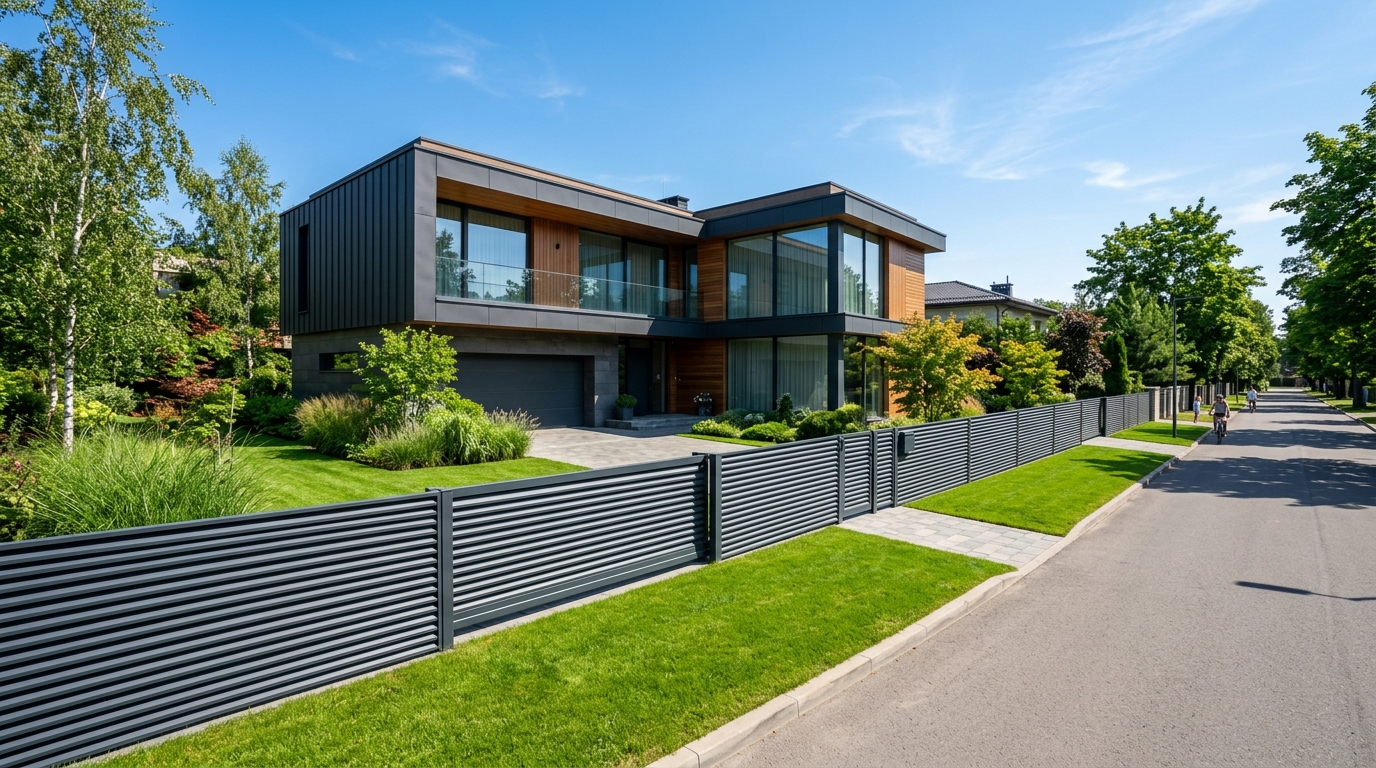
A fence is not just an engineering structure installed on the boundary of a private property to separate it from neighboring territories. It is an important element of security, privacy, and the architectural ensemble of your site. But very often the process of installing or updating such a structure becomes a reason for complaints from neighbors. Violation of insolation (shading) norms, incorrectly defined boundaries, or a solid structure can escalate into serious conflicts and years of litigation.
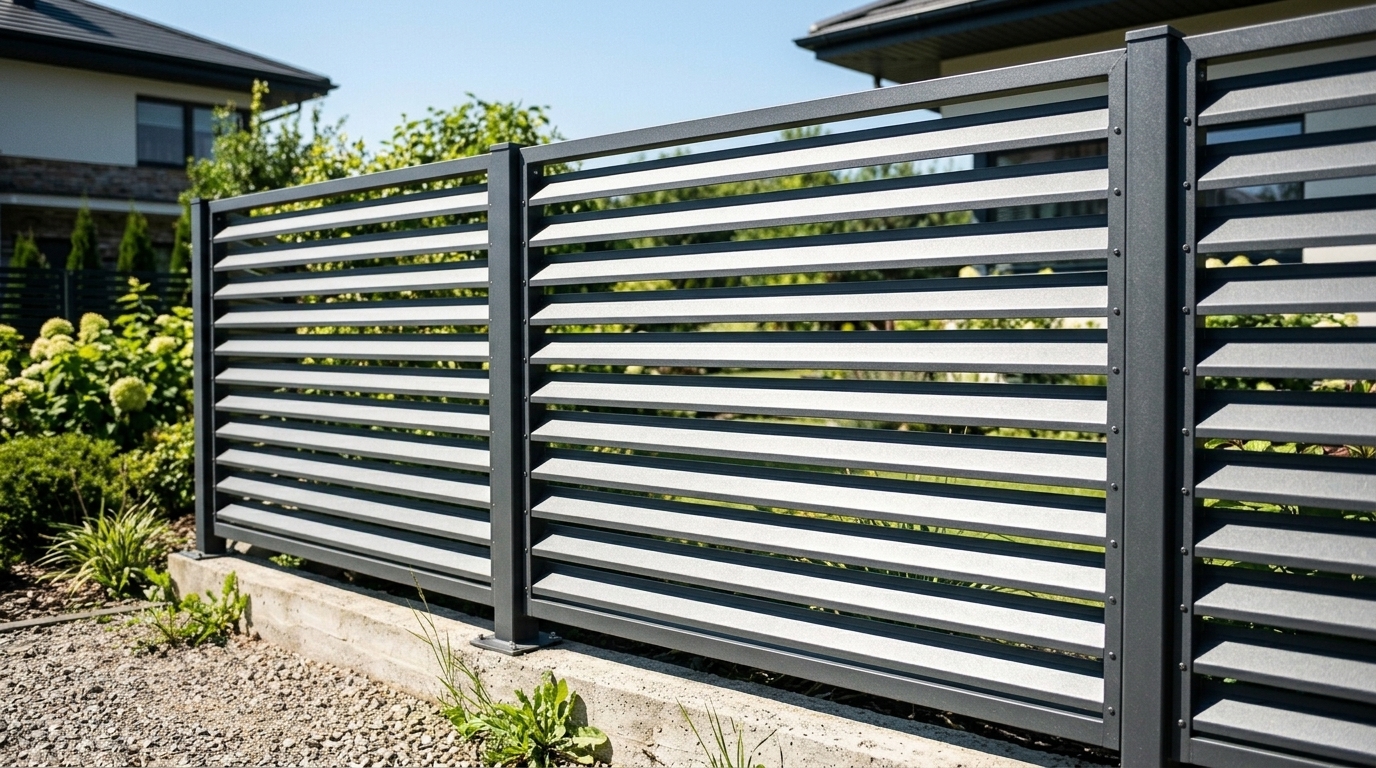
The modern approach to fencing territories involves the use of ventilated metal structures (for example, “Jalousie” (louvered), “Rancho”, or metal picket fences), which not only look aesthetically pleasing but also help to easily bypass legislative restrictions on light transmittance. To minimize the risk of conflicts, it is worth studying the current regulatory framework in advance.
Regulations governing the installation of fences in Ukraine
There is no single “Fence Law” in Ukraine. Requirements are scattered across various codes, state building norms (DBN), and local landscaping rules. Outdated Soviet norms (such as SN 441-72 or DBN 360-92) are no longer valid, so you need to rely on modern documents.
Main sources of legal and technical information:
- Land Code of Ukraine (in particular, articles 103-109, which regulate issues of good neighborliness).
- Civil Code of Ukraine (protection of property rights).
- DBN B.2.2-12:2019 “Planning and development of territories” (the current document that replaced DBN 360-92).
- Law of Ukraine “On Landscaping of Settlements”.
- DBN B.2.2-5:2011 “Landscaping of territories”.
- Landscaping rules of your settlement (adopted by local councils and are the most important document at the local level).
Current nuances of the regulatory framework for fences:
- The sphere of individual construction is mostly regulated by local landscaping rules. In Kyiv, Lviv, or a small village, the requirements for the height and transparency of a fence may differ.
- The judicial system, when considering disputes, always pays attention to the concept of “good neighborliness” (Art. 103 of the Land Code of Ukraine). Landowners must choose ways of using their land that cause the least inconvenience to neighbors (do not create shade, do not obstruct ventilation).
- That is why solid high concrete fences or fences made of cheap corrugated board between plots increasingly become the cause of lost lawsuits. Instead, louvered fences from the Mechbud plant provide the necessary privacy, but formally remain “ventilated” and light-transmitting.
Norms for the distance from the fence to various objects
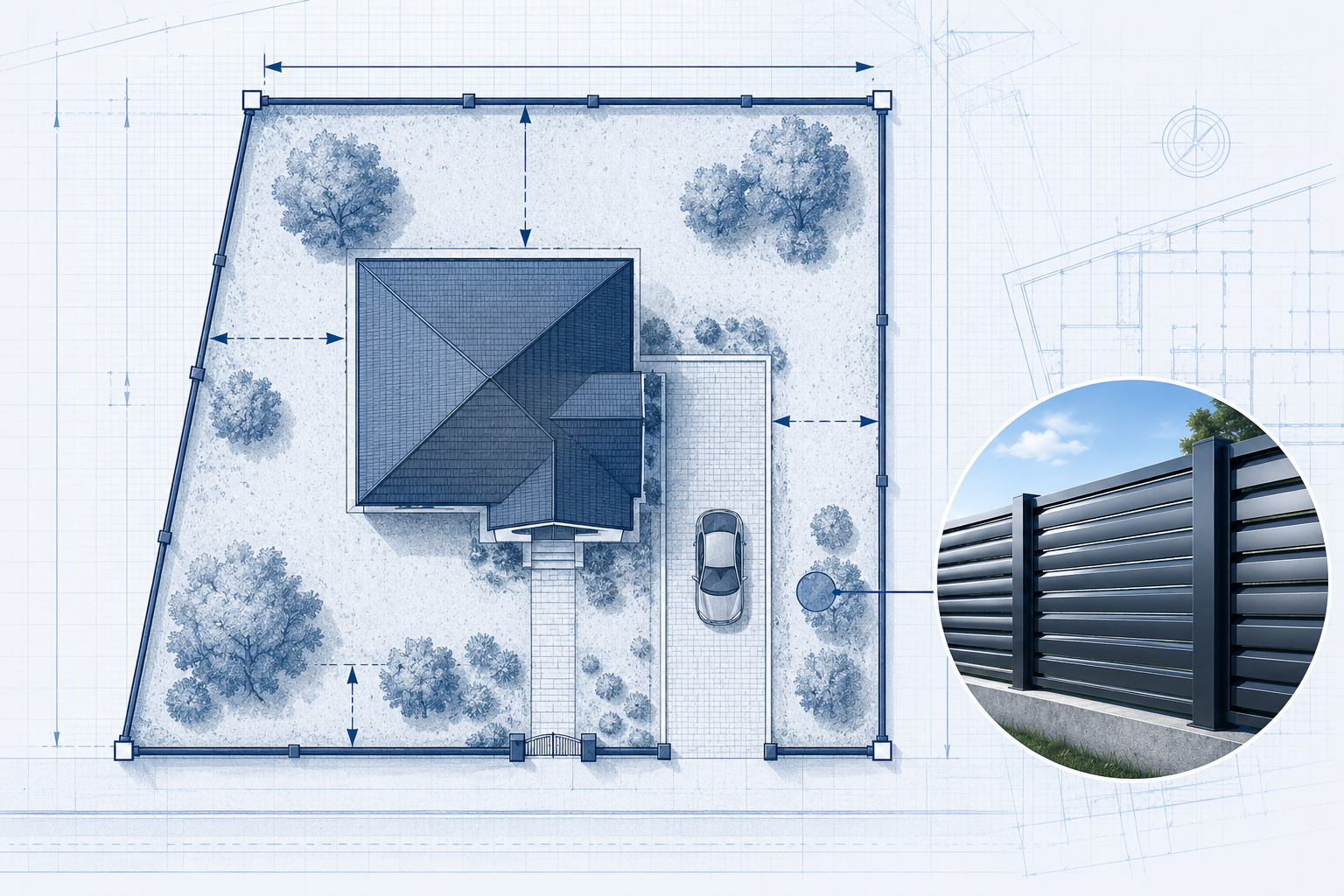
The first group of restrictions relates to the distance from the property boundary (where the fence stands) to various objects. Logically, the fence is installed strictly on the cadastral boundary, so all distances are measured directly from it. According to DBN B.2.2-12:2019, there are strict sanitary and fire safety setbacks.
Minimum distance from the boundary (fence) to:
- Residential building: at least 3 meters (measured from the most protruding part of the basement or wall).
- Outbuildings (sheds, garages, bathhouses): at least 1 meter. Water from the roofs of such buildings must not flow onto the neighbor’s plot.
- Septic tanks and compost pits: at least 5-10 meters (depending on the type of treatment facility and sanitary standards).
- Green plantings: shrubs — 1 meter; medium-sized trees — 2 meters; tall trees — from 4 to 6 meters (so that roots do not destroy the foundation of the fence and neighboring buildings).
Fire safety distances (DBN V.1.1-7:2016)
This is a separate, very strict group of requirements. They regulate the distance between buildings on neighboring plots, which depends on their degree of fire resistance. The minimum distance between stone houses is 6 meters, and between wooden ones, it can reach 15 meters. Although these norms do not directly apply to the fence itself (if it is metal and non-combustible, like at Mechbud), they must be taken into account when planning the development of the plot near the fence.
Maximum height and light transmittance of fences
The most common situation for lawsuits is the installation of a two-meter solid fence by a neighbor, which completely blocks sunlight for the garden or windows of the neighboring house.
What does the law say about height and transparency?
National DBNs provide only recommendations; local authorities dictate the main rules. However, standard law enforcement practice in Ukraine relies on the following average norms:
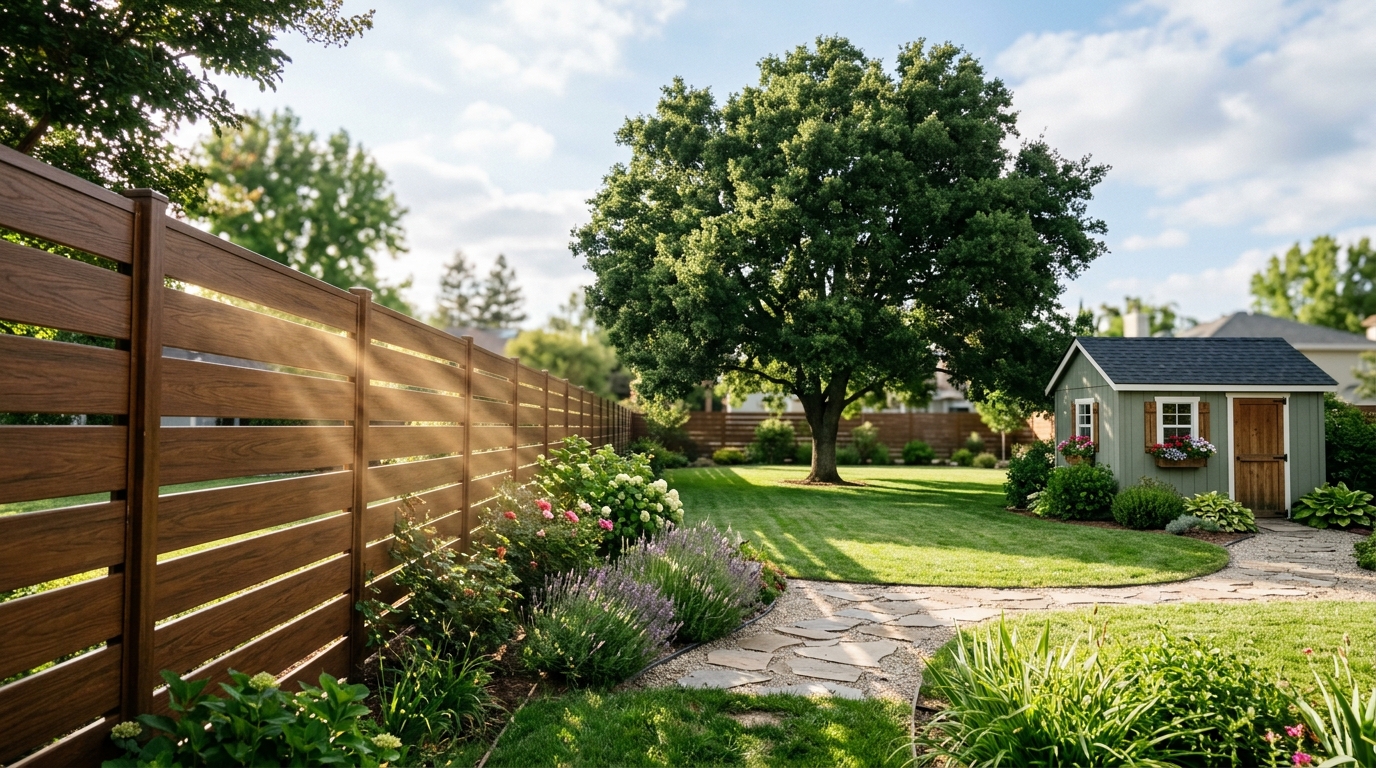
- Between neighboring plots: the fence must be ventilated (transparency from 30% to 50%) and not exceed a height of 1.5–1.6 m. The installation of a solid fence between neighbors (even 2 meters high) is possible only with the written notarized consent of both parties.
- Front fence (facing the street): can be solid, height is usually limited to 2.0–2.5 m, depending on the architectural planning of the street.
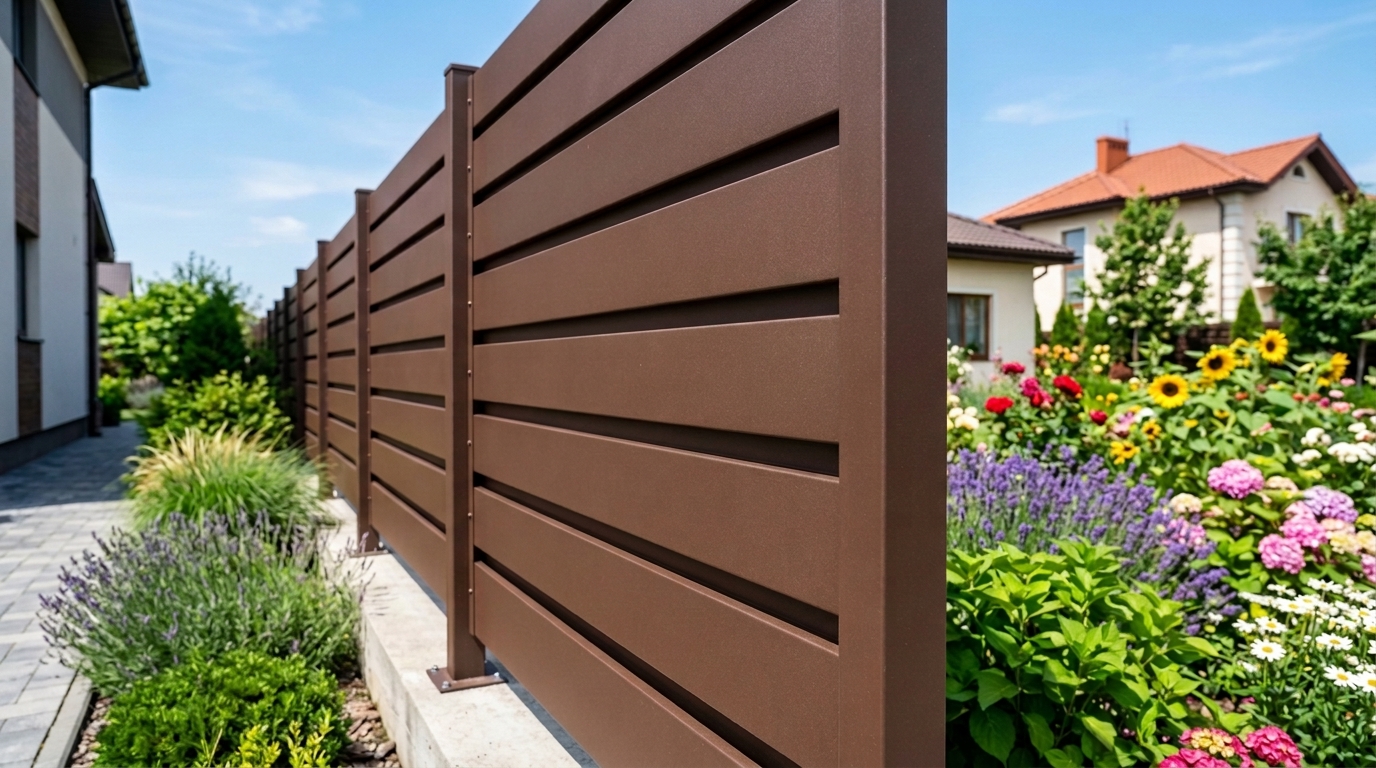
Solution from Mechbud: Metal louvered fences are the perfect compromise. Thanks to the inclination of the slats, they completely hide your yard from the eyes of neighbors, but at the same time freely allow air and diffused sunlight to pass through. This deprives neighbors of any legal grounds to complain about “shading” or “lack of ventilation” on their plot.
Optimal fence installation procedure
Do not rush to drill holes for pillars. Even a 20-centimeter step onto someone else’s territory can lead to the forced dismantling of an expensive structure at your expense.
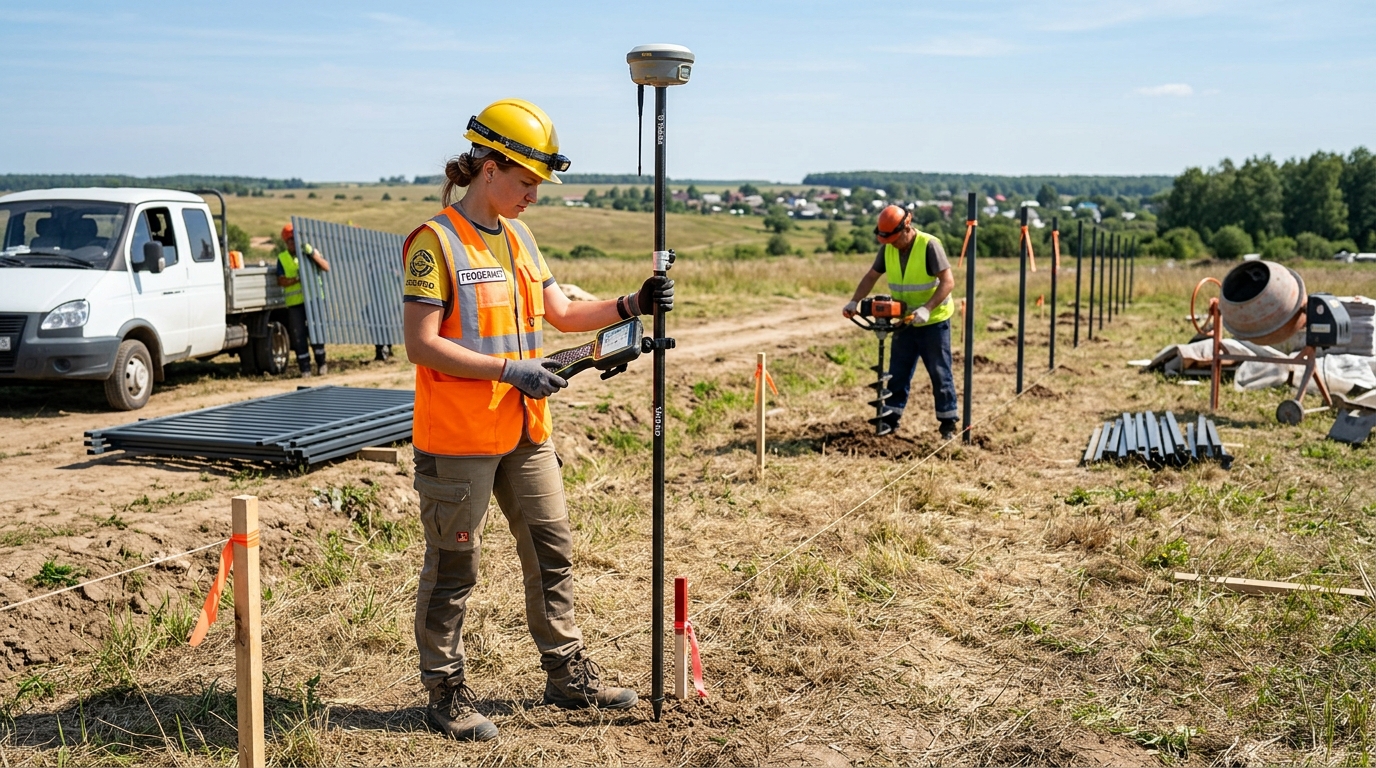
You need to act according to this legally safe algorithm:
- Geodetic works: Invite a certified land surveyor. Using GPS equipment (RTK), they will mark the boundaries of your plot in nature according to the State Land Cadastre data and secure them with boundary marks (pegs).
- Drawing up a certificate: Based on the results of the boundary marking, a “Certificate of acceptance and transfer of boundary marks for safekeeping” is drawn up.
- Coordination with neighbors: Invite neighbors during the surveyor’s work. Sign an act of boundary coordination with them. If you plan to install a non-standard fence (for example, higher than the norm), be sure to sign an additional written consent.
- Installation: The fence is mounted in such a way that its axis or support pillars are strictly on your territory, and not on the neighbor’s territory.
Important nuance: If you have agreed on everything with your neighbors in writing, you are reliably protected. Even if the owner of the neighboring plot changes, the notarized consent of the previous owner will have legal force in court.

Law enforcement practice and dispute resolution
If your neighbor arbitrarily installed a fence that violates your rights (encroached on your territory, installed a 3-meter solid corrugated board fence that kills your plants due to lack of light), Art. 158 of the Land Code of Ukraine defines a clear procedure.
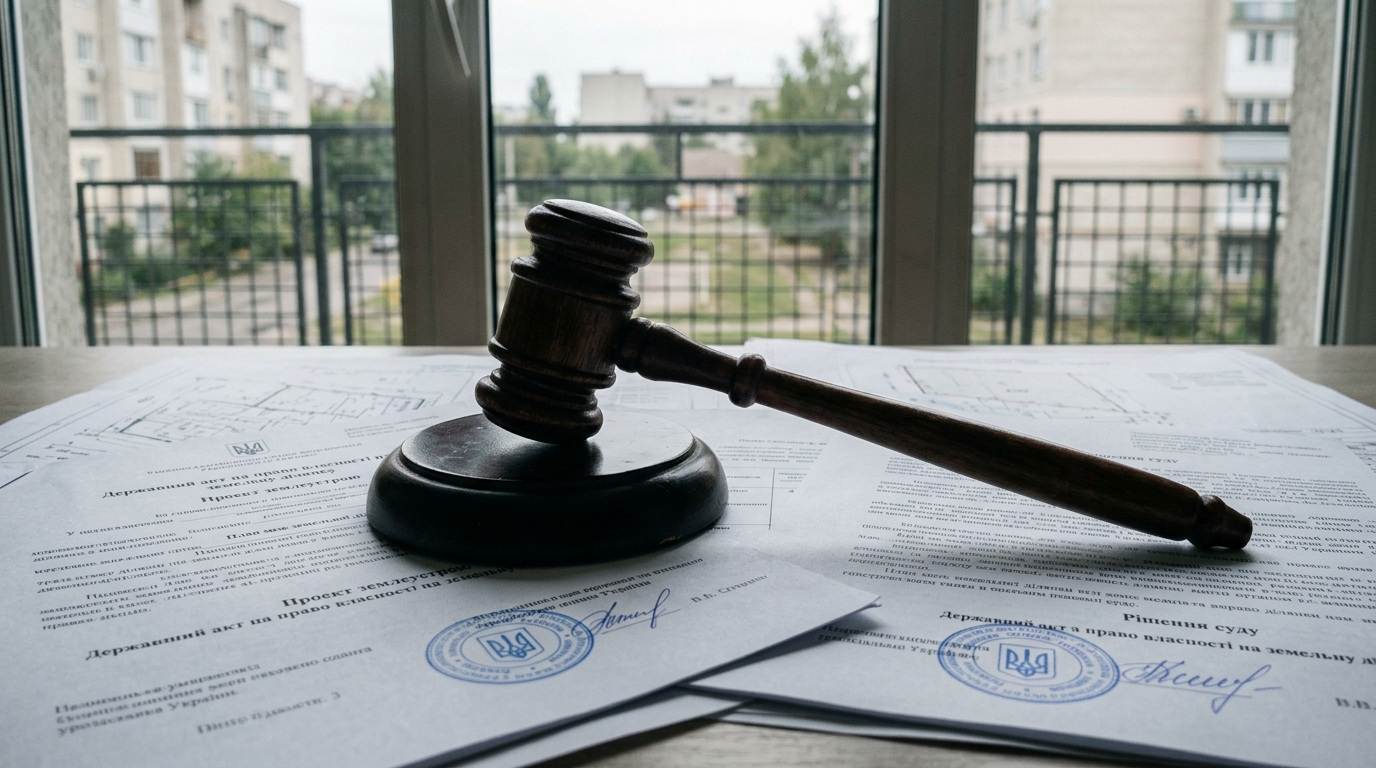
Procedure for resolving a land conflict:
- Stage 1: Peaceful settlement. Try to negotiate. The court will definitely ask if you tried to resolve the dispute pre-trial. Send an official claim to the neighbor by registered mail.
- Stage 2: Appeal to local government bodies. Write an application to the village, settlement, or city council (commission on land use and landscaping). They have the authority to visit the site, draw up an act on the violation of landscaping rules, and oblige the violator to eliminate them.
- Stage 3: StateGeoCadastre or DIAM. If it is a matter of land seizure, contact the agricultural inspection (StateGeoCadastre).
- Stage 4: Lawsuit. If the previous steps have not yielded results, hire a lawyer. For the court, you will need evidence: conclusions of land surveyors (if boundaries are violated) or a conclusion of construction and technical expertise (which will confirm that the solid fence violates the norms of insolation and ventilation according to DBN).
The practice of Ukrainian courts shows: if the plaintiff provides an expert conclusion that a solid fence shades the plot and violates landscaping rules, the court obliges the defendant to dismantle the fence or replace it with a transparent (ventilated) one at their own expense and compensate all legal costs.
Conclusion
Solving problematic issues regarding the boundaries and design of fences in court is a long (can drag on for years), expensive, and emotionally exhausting business. To avoid any claims, act exclusively within the legal framework: call a land surveyor for accurate marking and coordinate the installation with your neighbors.
As for the choice of the fence itself between the plots, the safest and most modern solution is metal fences with a ventilated structure (jalousie, rancho, rombo) from the “Mechbud” plant. Thanks to their design, they fully comply with building codes for insolation and air exchange, do not violate the rights of neighbors, and at the same time guarantee you absolute privacy, security, and a premium appearance of the site.
