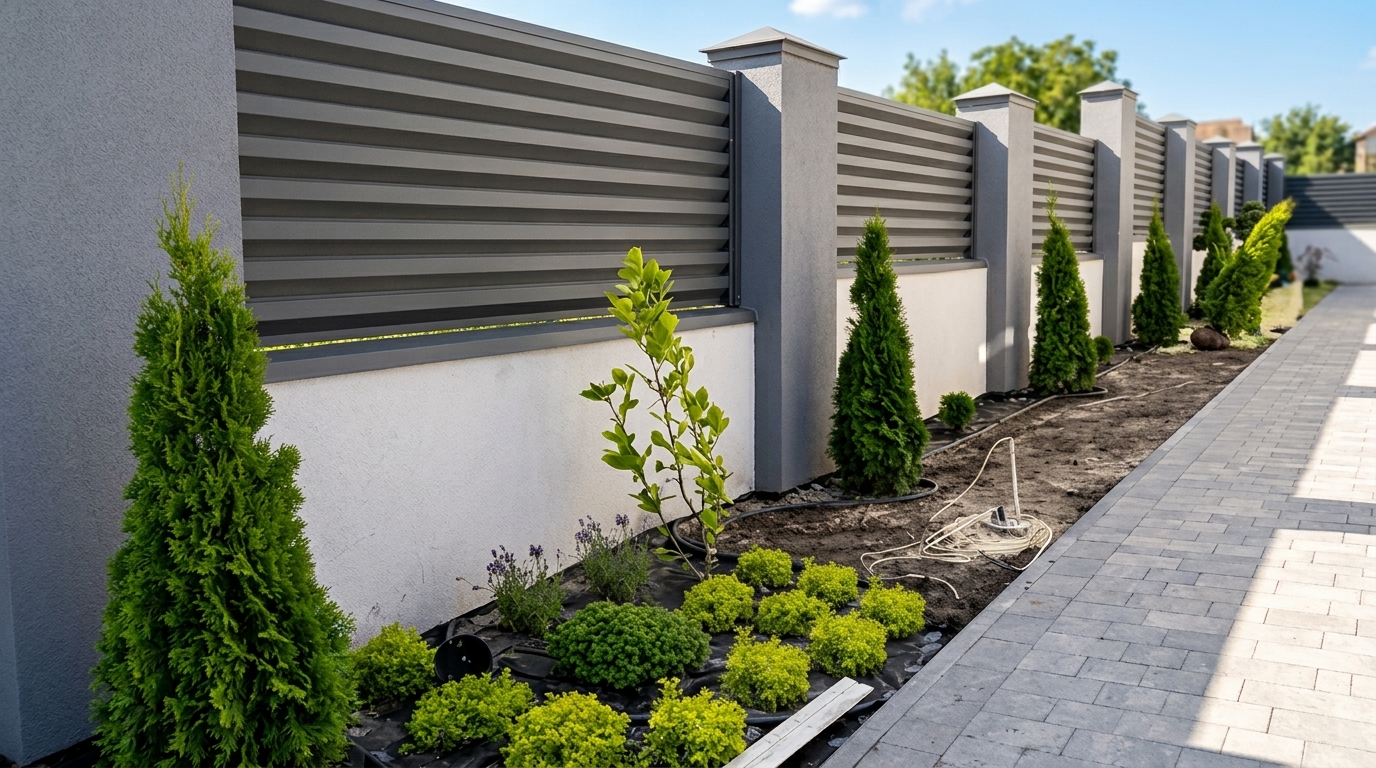
The role of plants in landscape design is hard to overestimate: green spaces shape the look of the plot, soften the geometry of the fence, create coziness, and help unite flower beds, lawns, mixed borders, trees, and shrubs into a single composition.
One of the most difficult areas for landscaping is the space along the fence. Here you simultaneously need to consider lighting, the heating of the fence, air movement, available strip width, soil type, the root system of plants, and the possibility of future fence maintenance.
If you choose the right plant species and take into account the conditions of a specific plot, you can form a beautiful, durable, and relatively easy-to-care-for green strip along the fence.
Planting along the fence: what you need to know?
Before planting, you should consider not only the design but also the rules of good neighborliness. In Ukraine, this issue is specifically regulated by Chapter 17 of the Land Code of Ukraine.
The law requires using the land plot in such a way as to create the least possible inconvenience to neighbors, in particular due to shading or the penetration of branches and roots into the neighboring territory.
Important: you should not take any common internet recommendations like “a bush — 1 m from the fence” or “a tree — 3 m from the fence” as a universal legal norm for every private plot. Specific requirements may depend on the type of development, current building codes (DBN), urban planning documentation, local rules, and the location of other objects.
Before planting large trees or forming a tall hedge, it is advisable to check the current requirements specifically for your plot.
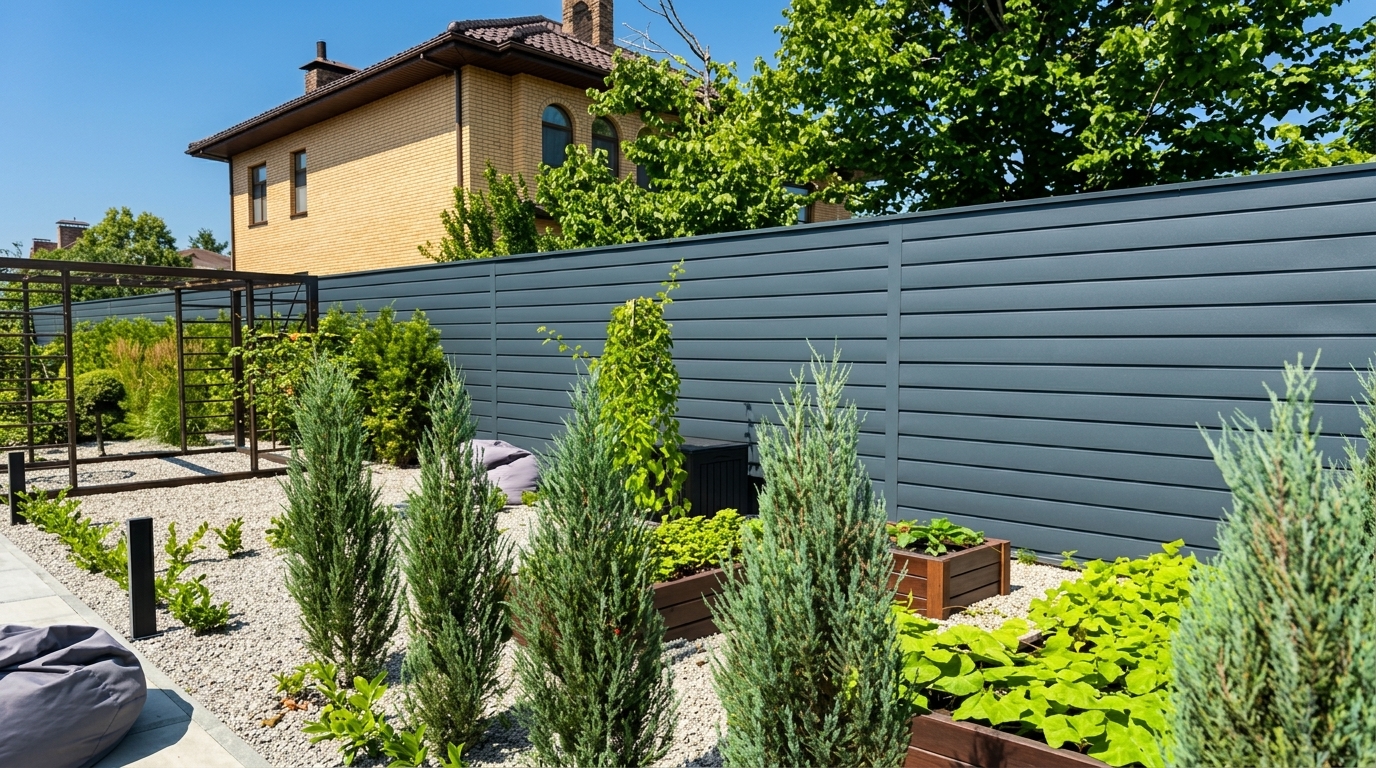
In practice, when planting near a fence, it is important to adhere to several principles:
- Do not allow significant shading of the neighboring plot. This is especially true for tall trees and dense hedges.
- Consider the future size of the plant. You need to evaluate not the seedling at the time of planting, but the approximate crown diameter and height of an adult plant.
- Control branches and roots. They should not create obstacles to the use of the neighboring plot.
- Leave access to the fence. The fence needs to be periodically inspected, cleaned, painted, repaired, and checked for fastenings and foundation. You should not form plantings in such a way that in a few years it will be impossible to approach the structure.
- For tall trees and large shrubs, provide a larger technological passage. For compact perennials, it can be smaller, but access to the structure must still remain.
The exact distance between the plant and the fence is better determined not by a single universal number, but according to the size of the adult plant, foundation type, fence design, and the required maintenance access.
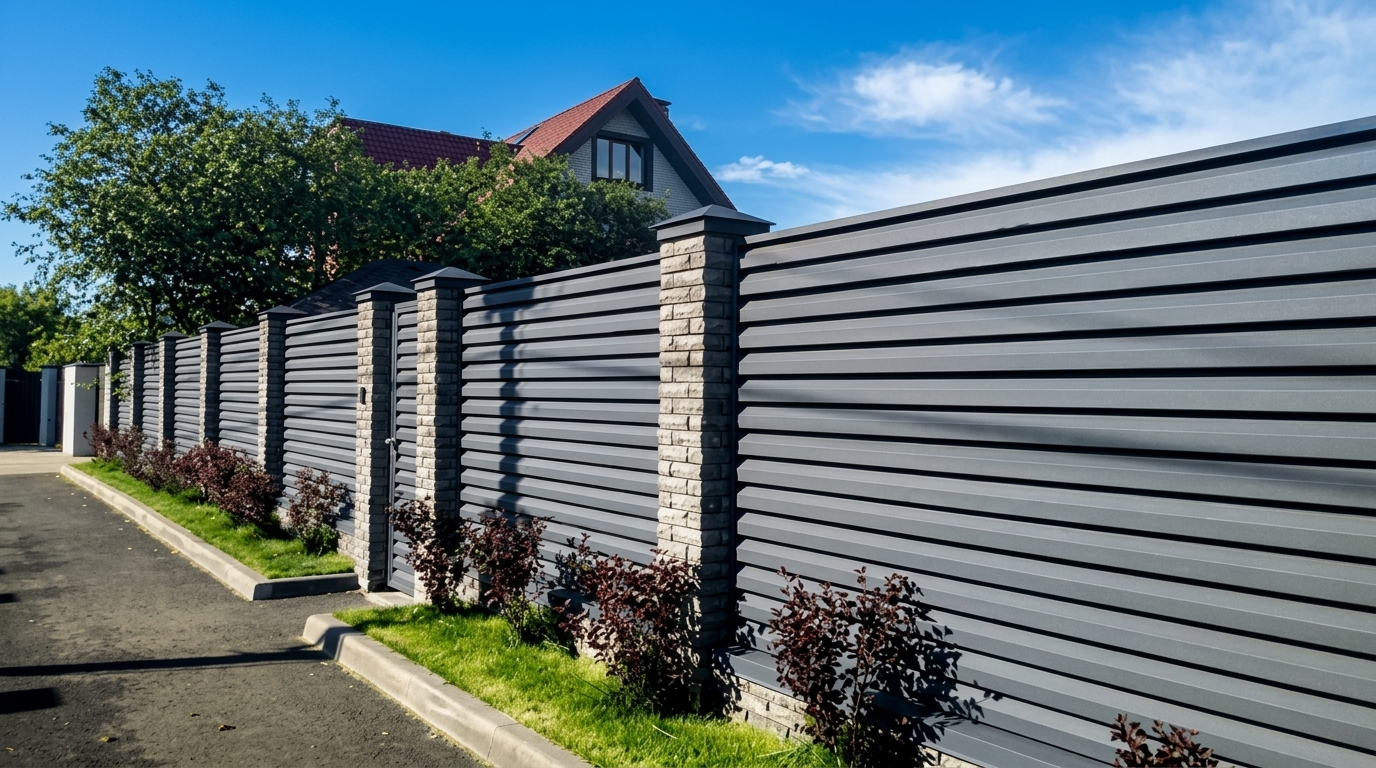
Besides legal and neighborly aspects, practical conditions must be considered:
- A fence on a continuous strip or strip-pillar foundation can limit the root system development of plants planted right next to it.
- Drainage and compacted materials at the base of the fence can create unfavorable conditions for roots.
- The fence can shade the soil, so the amount of sun needs to be evaluated not just for the entire plot, but specifically for the narrow strip near the fence.
- Dark metal fences can get very hot in the summer. Particularly difficult conditions arise on the sunny south or southwest side.
- Excessive watering right next to the foundation is undesirable. It is better to use controlled watering and avoid constant waterlogging of the zone at the base of the fence.
- It is necessary to consider the width of a mature plant. A small seedling can block the passage or start constantly rubbing against metal lamellas in a few years.
An important role in choosing the composition is played by the design of the fence itself. The main types of fences and optimal landscaping approaches are discussed below.
Solid fences
Features of design and conditions along fences
Private households are often protected by solid fences.
Examples of such structures include:
- solid wooden fences;
- concrete slab fences;
- metal fences made of corrugated board;
- fences made of tightly installed metal lamellas — “Vertical”, “Brus”, “Horizont” and their analogs.
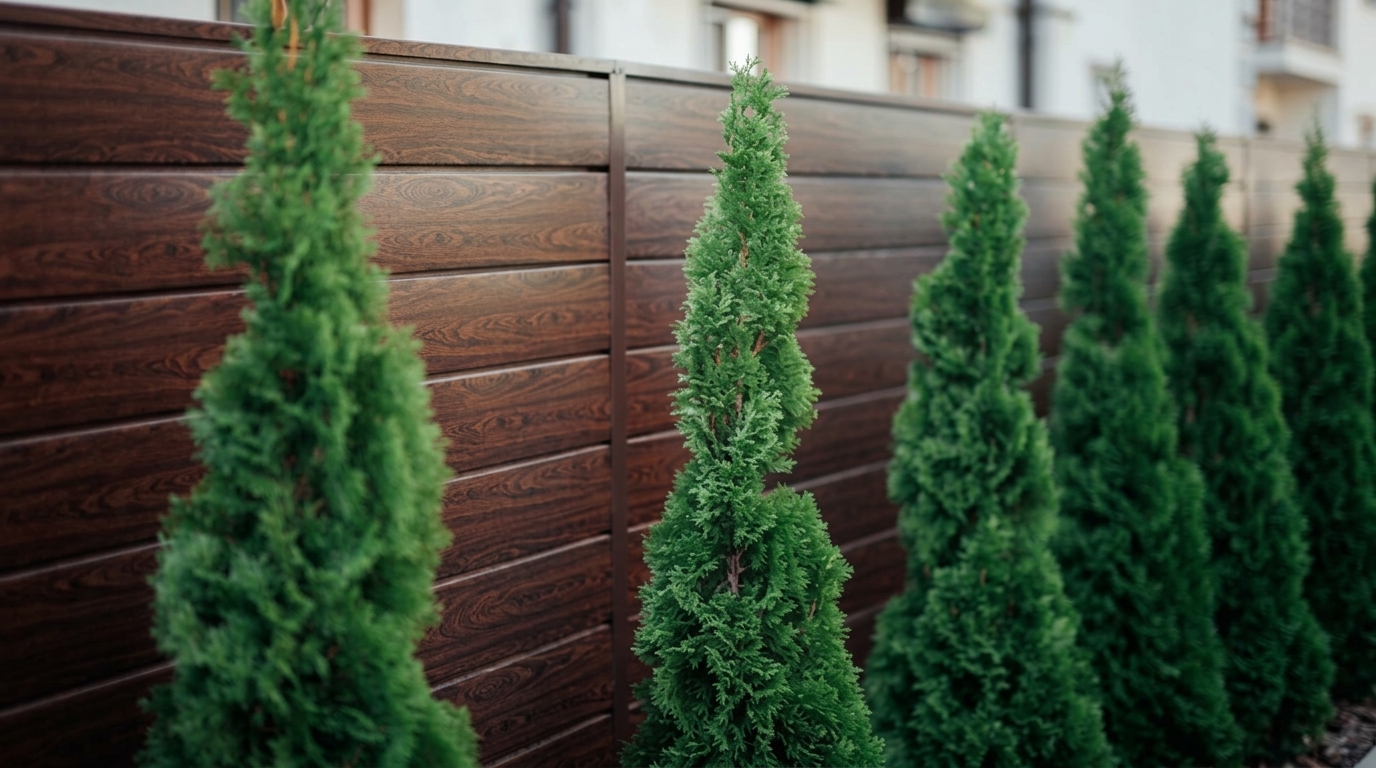
On the one hand, a solid structure protects plants from strong winds and partially creates a more stable microclimate. On the other hand, a tall solid fence can significantly alter lighting.
Depending on the fence orientation:
- the soil may warm up slower in the spring;
- part of the strip may be in shade or partial shade;
- near a dark metal surface, on the contrary, a locally very warm and dry zone may form;
- air exchange directly near the fence panel will be lower.
Therefore, before choosing plants, it is worth observing for at least one day how many hours of direct sun the strip along the fence receives in the morning, afternoon, and evening.
What to plant near a solid fence
Plants that can develop without constant direct sun are well suited for shaded or partially shaded zones.
For forming a tree-shrub tier, you can consider:
- common hornbeam;
- European yew;
- white dogwood;
- smooth hydrangea;
- common privet;
- Virginia creeper — if vertical landscaping is needed.
At the same time, large species, such as hornbeam or yew, need to be shaped by pruning or you should use compact varieties. They should not be planted flush against the fence.
For vertical landscaping: Virginia creeper tolerates different lighting levels well, but it is a vigorous vine. On metal fences like “Brus” or “Horizont”, it is better to provide a separate support or cable system so that the shoots do not complicate the maintenance of the lamellas.
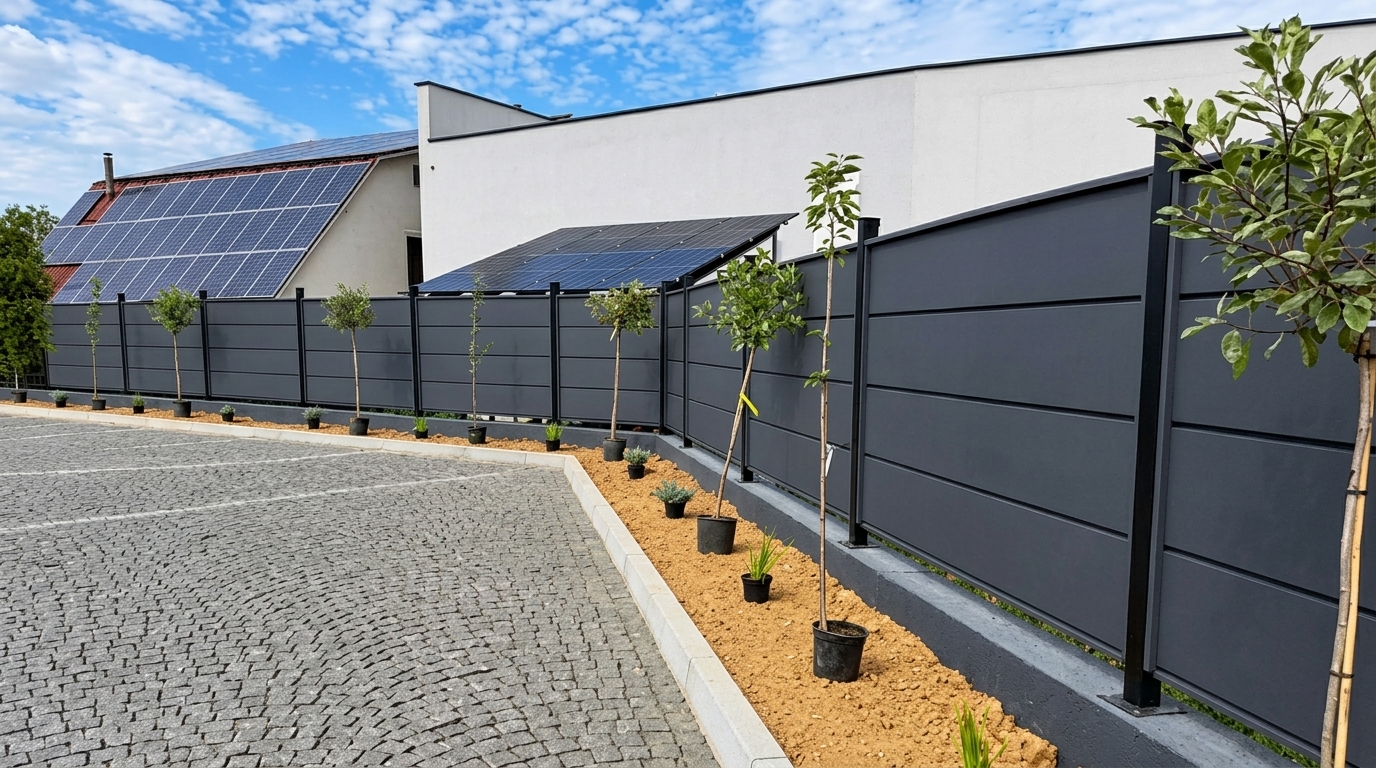
For the lower tier along a shaded fence you can use:
- hostas;
- astilbes;
- heucheras (coral bells);
- periwinkle;
- garden ferns;
- lungwort (pulmonaria);
- brunnera;
- goatsbeard (aruncus) — if there is enough space.
When choosing perennials, it is important to consider not only shade but also moisture. For example, hostas and astilbes feel better in soil that does not dry out completely, whereas a rather dry zone can form near a foundation or under a wide overhang.
Ventilated fences
Features of design and conditions along fences
An alternative to solid fences are ventilated fences. Their design involves gaps between section elements, through which air and some light pass.
Such structures are characterized by:
- better air exchange;
- less enclosed space overheating effect;
- more scattered or direct light;
- depending on the design — stronger wind exposure for plants.
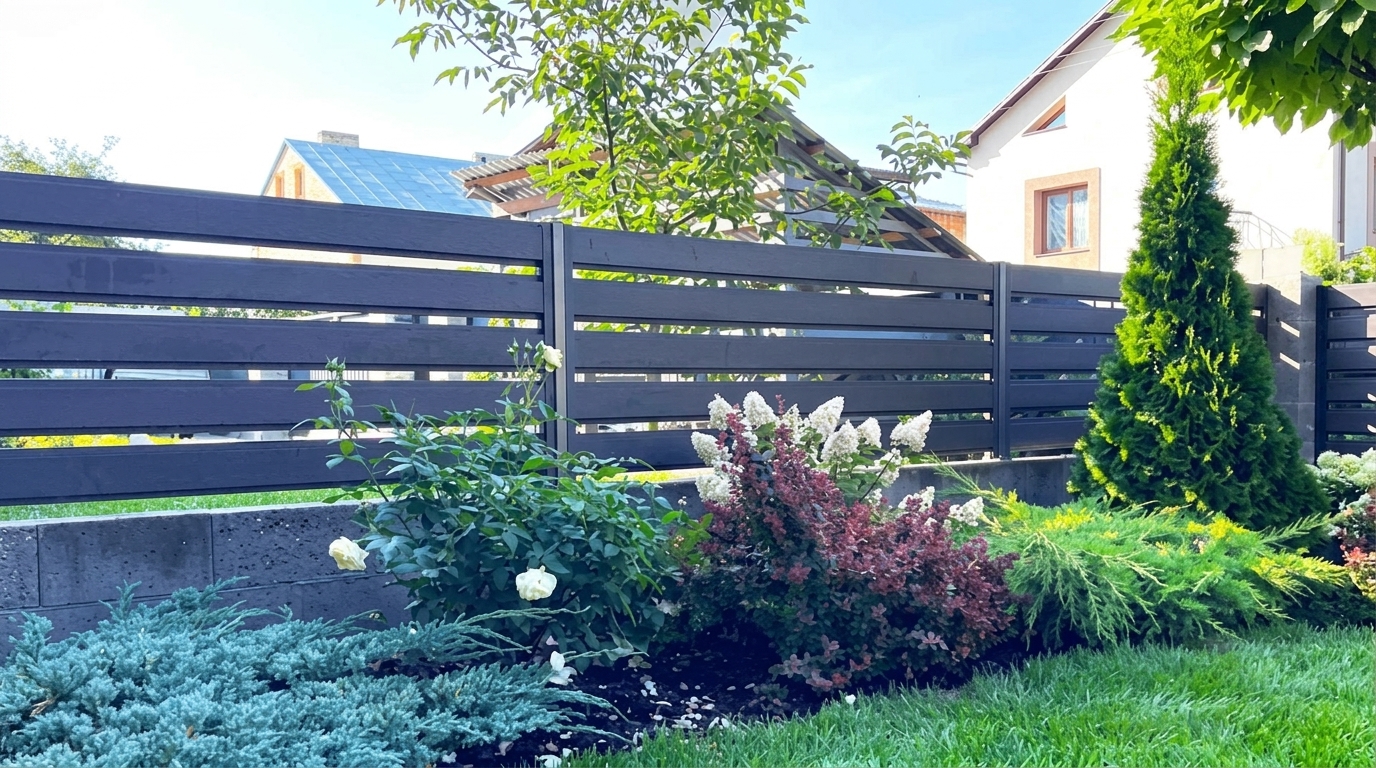
Examples of such fences can be:
- lattice and mesh fences — provide maximum illumination;
- picket fences made of wooden boards or metal panels;
- horizontal fences made of poles or steel lamellas, such as the “Ranch” fence.
At the same time, along with ventilation, the influence of the wind increases. Young seedlings or plants with large soft leaves in an open area may need protection in their first seasons after planting.
A separate group of ventilated fences are blinds fences. Their sections are formed from lamellas set at an angle.
As a result:
- ventilation of the space is preserved near the fence;
- the direct air flow is partially scattered by the lamellas;
- privacy is maintained, but the plot is not completely cut off from air movement;
- lighting depends on the orientation of the lamellas and the cardinal direction, so near such a fence, you can create compositions of both sun-loving and shade-tolerant plants.
What to plant near a ventilated fence?
Along ventilated fences made of mesh, metal grilles, or lamellas, given enough sun, you can plant a much wider range of plants.
Well suited for a sunny strip:
- Japanese spirea;
- common juniper and decorative juniper varieties;
- showy stonecrop (sedum spectabile);
- lavender — in well-drained and protected spots;
- decorative sage;
- catmint (nepeta);
- irises;
- ornamental grasses;
- roses — if there is enough sun and air.
Blinds fences provide more options: depending on the cardinal direction, you can combine sun-loving plants with species that tolerate partial shade well near them.
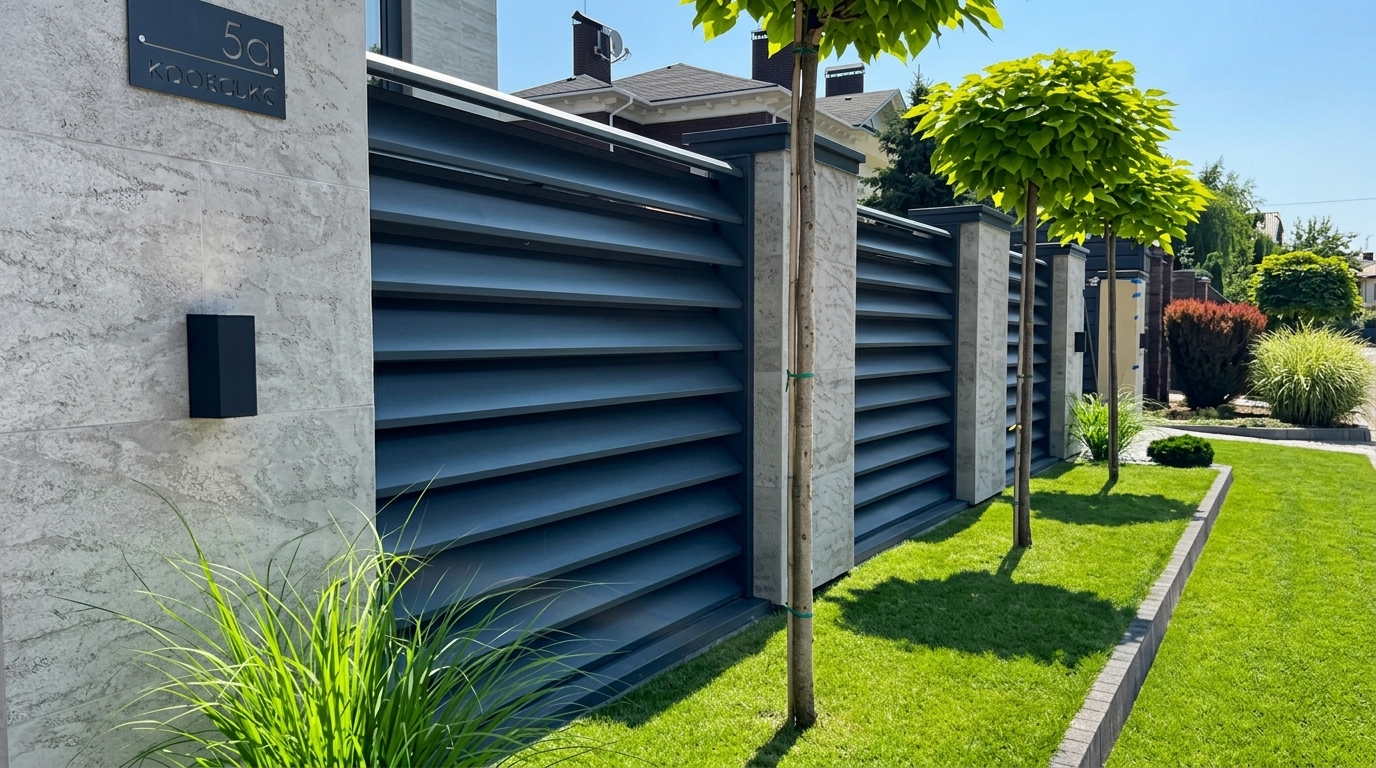
For a tree or tall shrub tier near a ventilated fence, you can use:
- hornbeam — in a shaped form;
- decorative maples of appropriate size;
- white dogwood;
- privet;
- spirea;
- juniper;
- rosehips or park roses where strip width allows.
For the lower tier in the sun you can choose:
- stonecrop;
- irises;
- sage;
- catmint;
- marigolds;
- petunias;
- ornamental onions (alliums);
- low decorative grasses.
When designing a sunny area, faster soil drying must be taken into account. Mulching and drip irrigation often significantly simplify maintenance.
It is especially important to control watering near a metal fence: water should go to the root zone of the plants, and not constantly wet the foundation or the lower part of the metal structure.
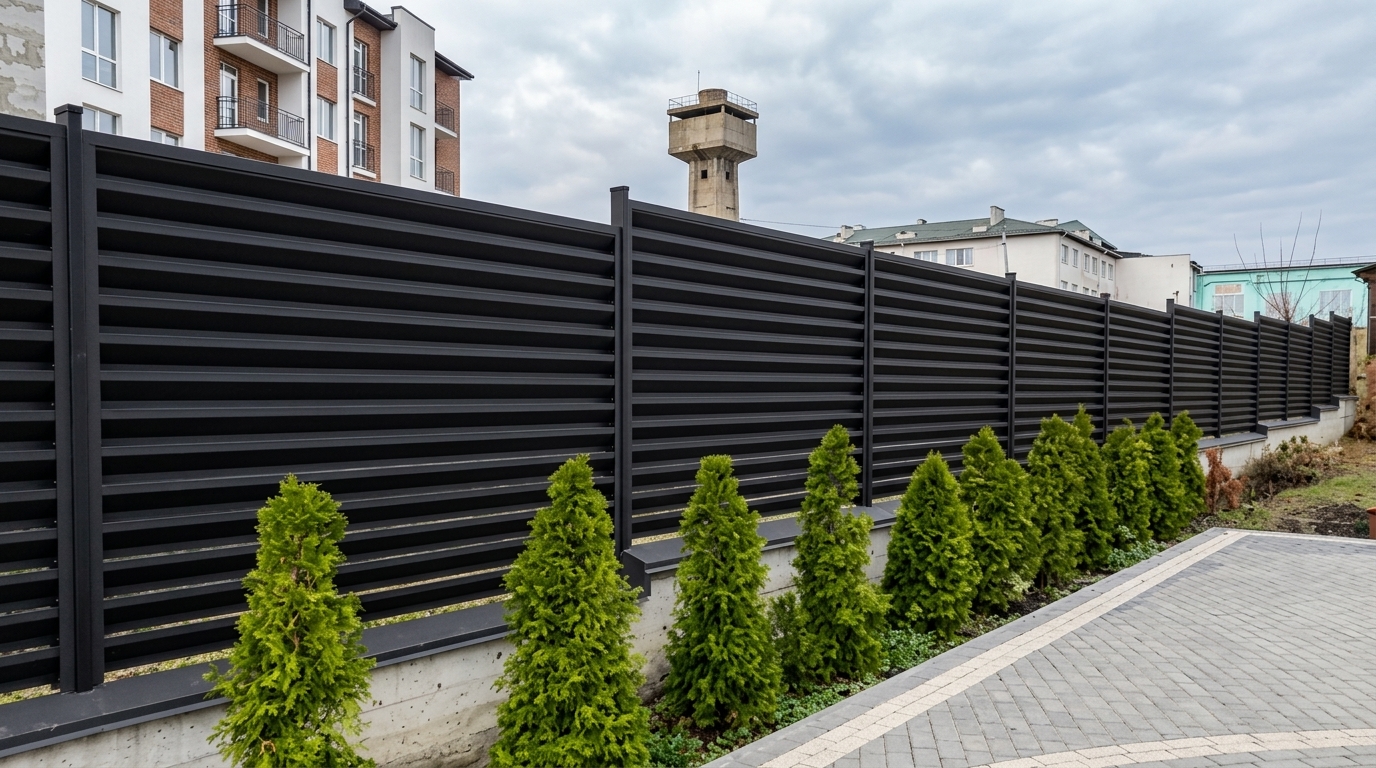
Table of plants for planting near the fence
Below is an indicative table of plants that are well suited for landscaping along fences in the climatic conditions of Ukraine. The final choice needs to be adjusted according to the local microclimate, soil type, humidity, and the specific variety.
| Plant | Lighting | Soil | Final height / width | Care | Seasonality | Suitability for Ukraine |
|---|---|---|---|---|---|---|
| Arborvitae ‘Smaragd’ Thuja occidentalis ‘Smaragd’ | Sun, light partial shade is acceptable | Fertile, moderately moist, well-drained | approx. 1.5–2.5 m / 1.5–2.5 m unshaped | Regular watering after planting, protection of young plants from drying wind, shaping if necessary | Evergreen | High. Frost-resistant species; suitable for most regions of Ukraine with proper care |
| Common Juniper Juniperus communis | Sun, light partial shade | Well-drained; tolerates relatively dry and poor soils | 4–8 m / 2.5–4 m for natural form; decorative varieties are much more compact | Unpretentious, dislikes waterlogging; heavy pruning is undesirable | Evergreen | Very high. Frost-resistant, suitable even for cold regions |
| European Yew Taxus baccata | Sun, partial shade, shade | Well-drained, no waterlogging | Over 12 m / over 8 m in natural form; tolerates shaping well | Suitable for sheared hedges; grows relatively slowly | Evergreen | Good, especially for the west and center; in the coldest open places, a protected position and proven variety are desired |
| Common Hornbeam Carpinus betulus | Sun or partial shade | Loam, clay, sandy soil with adequate drainage | Large tree; hedge size controlled by regular shaping | Tolerates shearing well; requires regular shaping for narrow spaces | Deciduous; dry leaves may partially remain in winter on shaped plants | High. Well adapted to a moderate continental climate |
| Common Privet Ligustrum vulgare | Sun or partial shade | Well-drained, undemanding to soil reaction | 2.5–4 m / 2.5–4 m without pruning | For a neat hedge, sheared 1–2 times a season | Deciduous or semi-evergreen depending on winter | High for most regions of Ukraine |
| White Dogwood ‘Sibirica’ Cornus alba ‘Sibirica’ | Sun or partial shade | Loam, clay or sandy soil; moderately moist | 1.5–2.5 m / 1.5–2.5 m | Responds well to hard spring rejuvenation pruning | Deciduous; decorative red shoots in winter | Very high. Frost-resistant, suitable for most regions |
| Japanese Spirea Spiraea japonica | Sun or light partial shade | Well-drained, from moderately dry to moderately moist | approx. 1–1.5 m / 1–1.5 m; many varieties are lower | Spring shaping; removing old flowers improves appearance | Deciduous; blooms mainly in summer | High. Suitable for most regions of Ukraine |
| Smooth Hydrangea ‘Annabelle’ Hydrangea arborescens ‘Annabelle’ | Partial shade or sun with sufficient moisture | Fertile, moderately moist, well-drained | 1.5–2.5 m / 1.5–2.5 m | Requires watering in drought; can be pruned in spring for shaping | Deciduous; main decorative appeal is in summer | Good. In colder places, mulching the root zone is desirable |
| Virginia Creeper Parthenocissus quinquefolia | Sun, partial shade or shade | Most well-drained garden soils | Over 12 m / 4–8 m | Fast-growing; requires regular pruning and shoot direction control | Deciduous; bright autumn coloring | High. Suitable for most regions, but its aggressive growth needs controlling |
| Hosta Hosta spp. | Partial shade or shade; some varieties tolerate more sun | Fertile, humus-rich, moderately moist | depending on the variety approx. 0.3–1 m / 0.4–1.2 m | Watering during drought; slug control | Perennial; aerial parts die off in winter | High. Winters well in most regions |
| Showy Stonecrop Hylotelephium spectabile | Full sun | Well-drained, moderately fertile; dislikes waterlogging | up to 0.45–0.5 m / approx. 0.3–0.5 m | Minimal; drought-resistant once established | Perennial; blooms in late summer and autumn | Very high. Frost-resistant and well suited for continental climates |
Note: final sizes depend on the specific variety, site conditions, and pruning. For hedges, the actual height and width are usually controlled by shaping. Suitability assessment for Ukraine is a horticultural recommendation, not a wintering guarantee for every microclimate.
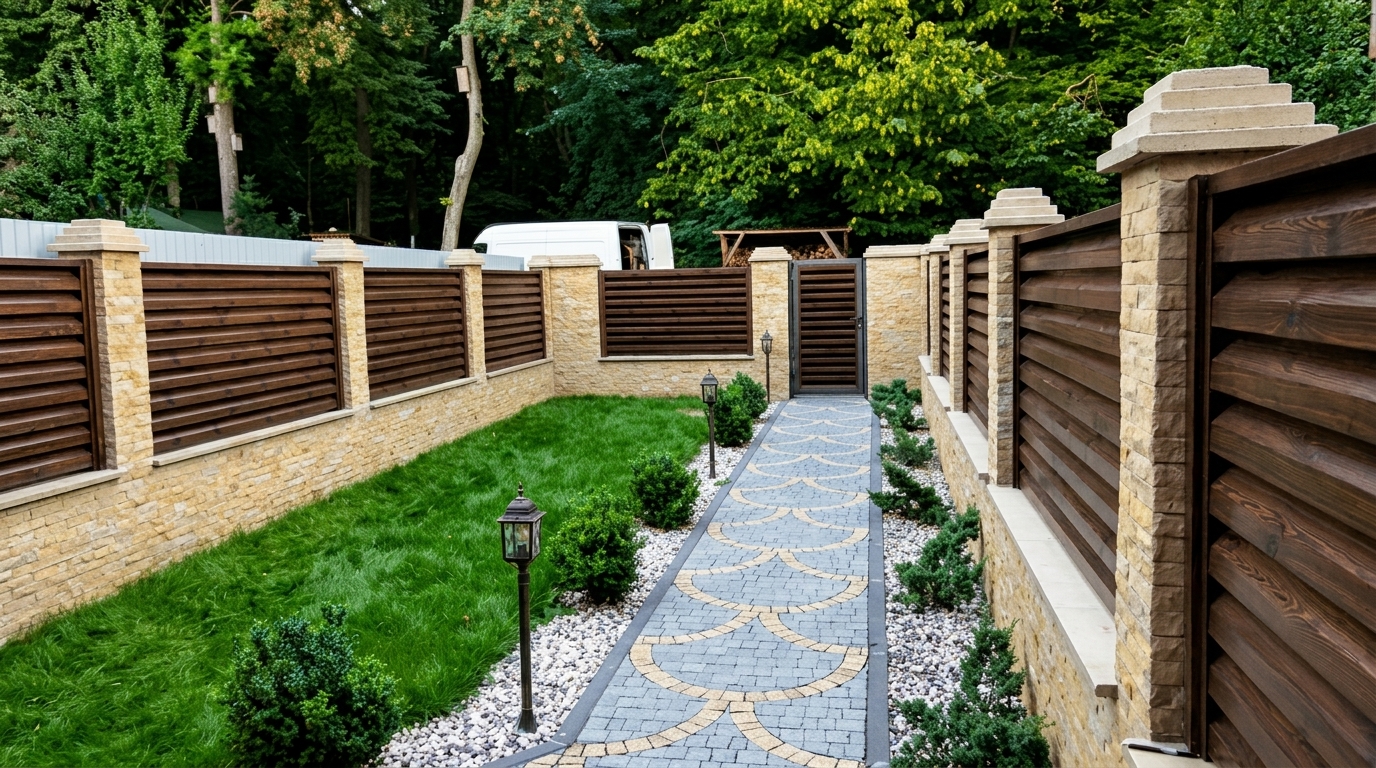
Which plants to choose: 4 practical selections
1. For the sunny side of the fence
If the strip receives about 6 or more hours of direct sun, it is better to give preference to sun-loving and relatively drought-resistant species.
Good options:
- juniper;
- Japanese spirea;
- showy stonecrop;
- sage;
- catmint;
- irises;
- ornamental grasses;
- roses.
For a dark metal fence, it is advisable not to press the leaves of sensitive plants directly against the heated surface.
2. For shade and partial shade
If direct sun appears only for a few hours or the strip is in scattered light most of the day, you can use:
- yew;
- hornbeam;
- smooth hydrangea;
- dogwood;
- hostas;
- heucheras;
- astilbes;
- ferns;
- periwinkle.
In dry shade, plants must be selected especially carefully: “shade-tolerant” does not mean that the plant equally well tolerates a lack of water.
3. For a narrow strip near the fence
If there is little space between the path and the fence, the main task is not to let the plants block the passage in a few years.
Practical options:
- shaped hornbeam;
- shaped privet;
- compact arborvitae varieties;
- narrow juniper varieties;
- low spirea varieties;
- medium or small hostas for shade;
- stonecrops, sage, and catmint for sun.
For a narrow strip, the variety matters more than the species name. For example, different varieties of juniper or arborvitae can vary in adult width by several times.
4. For an evergreen hedge
For a green wall that retains its decorative appeal in winter, you can use:
- western arborvitae (Thuja occidentalis) — one of the most common options for a regular hedge;
- European yew — tolerates shade and pruning well, looks very dense, but grows slower;
- columnar juniper varieties — for sunny and well-drained spots.
For evergreen plants, autumn water-recharging watering, the absence of water stagnation, and the right choice of variety according to the region’s climate are especially important.
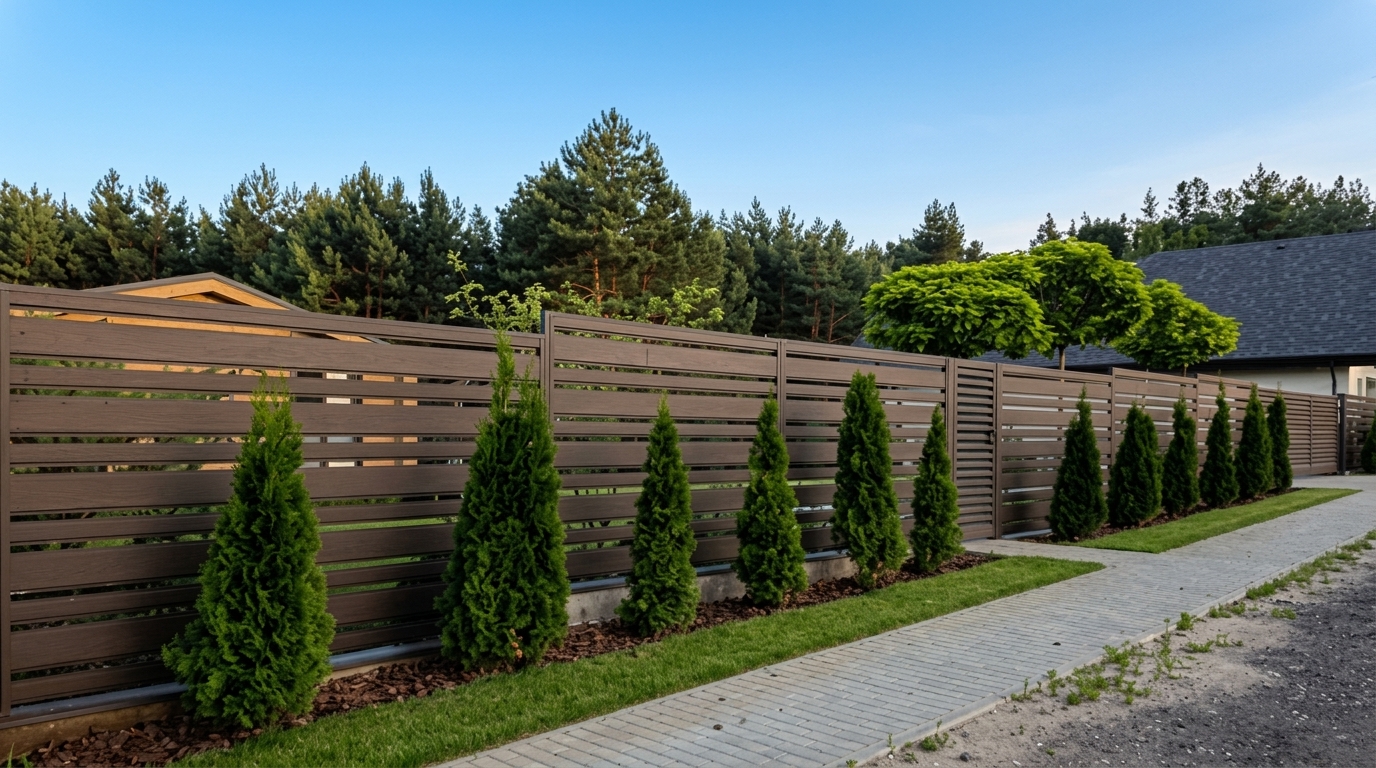
3 simple planting schemes along the fence
Scheme 1. Sunny strip near a ventilated fence
FENCE
│
│   maintenance access
│
│      Juniper / Spirea
│          ●      ●
│
│    Sage    Stonecrop    Catmint
│      ○         ○           ○
│
└──────────────────────────── PATH / LAWN
Logic: taller shrubs form the background tier, lower perennials cover the ground. Access for inspection and repair is left between the plants and the fence.
Scheme 2. Partial shade near a solid fence
FENCE
│
│   maintenance access
│
│      Hydrangea      Dogwood
│          ●              ●
│
│    Hosta     Heuchera     Hosta
│      ○          ○           ○
│
└──────────────────────────── PATH / LAWN
Logic: decorative shrubs create the main volume, while hostas and heucheras form the lower tier.
Scheme 3. Narrow evergreen screen
FENCE
│
│  maintenance access
│
│    Thuja  Thuja  Thuja  Thuja
│      ▲      ▲      ▲      ▲
│
│  low border / mulch
│
└──────────────────────────── PATH
Logic: one species or one variety is used to get a uniform screen. The distance between seedlings is determined according to the width of the specific variety at maturity and the desired hedge density.You should not automatically plant all plants as close to each other as possible. Planting too densely increases competition for water and light, worsens aeration, and complicates maintenance over time.
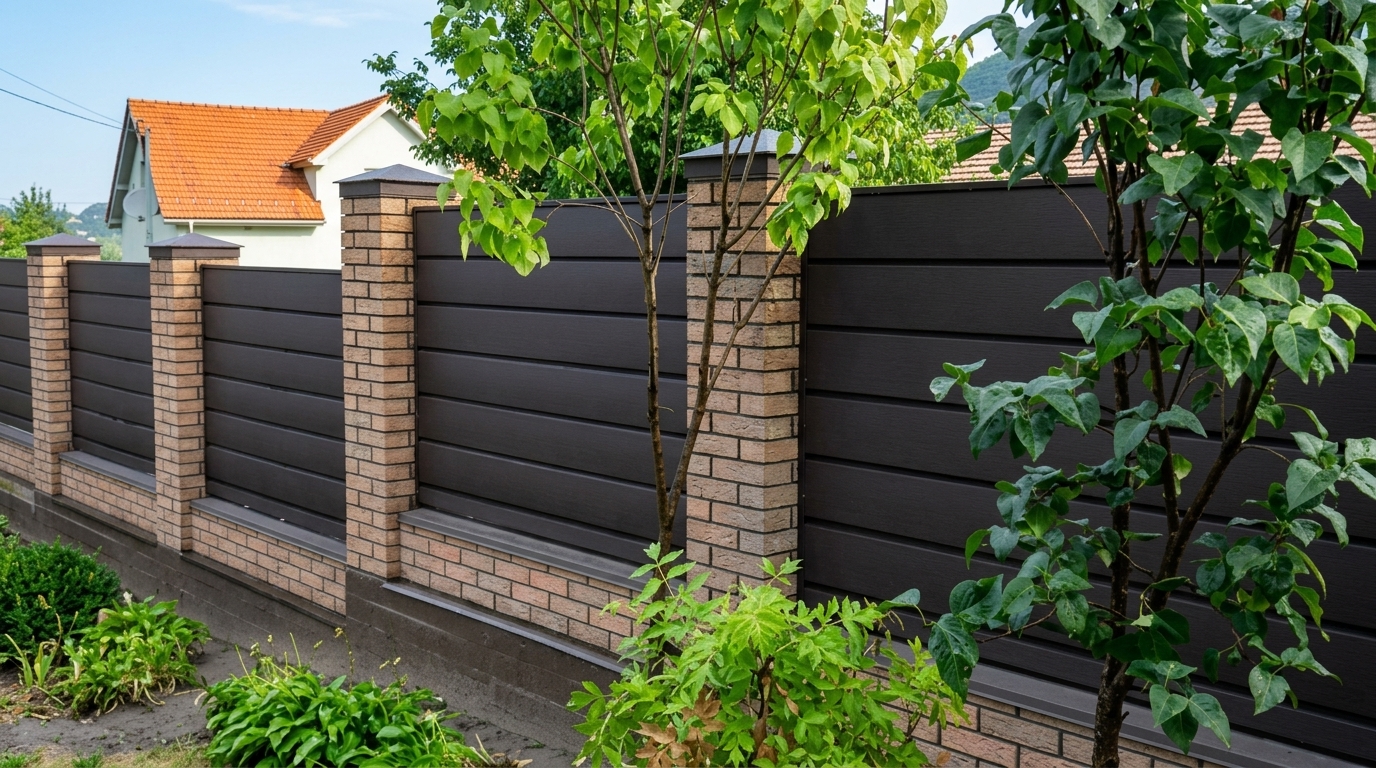
FAQ: what to plant near a solid or ventilated fence
▷What is the best thing to plant near a solid fence?
First, you need to determine if the fence casts shade. Yew, hornbeam, dogwood, smooth hydrangea, hostas, heucheras, and other shade-tolerant perennials are well suited for a shaded or semi-shaded strip.
If a solid fence is positioned so that it’s sunny near it all day, the choice will be different: you can use spirea, juniper, stonecrops, sage, and ornamental grasses.
▷What to plant near a ventilated fence?
If enough light passes through the fence, the choice is almost unrestricted by the fence itself. Spirea, juniper, roses, stonecrop, irises, ornamental grasses, and other sun-loving crops are suitable for a sunny area.
In open areas, you also need to factor in the wind.
▷What to plant between the fence and the path if there is very little space?
It is better to use compact or columnar varieties: narrow junipers, compact arborvitaes, low varieties of spirea, or a shaped hedge of hornbeam or privet.
For the lower tier, you can use stonecrop and sage in the sun or compact hostas and heucheras in partial shade.
▷Can plants be planted flush against a metal fence?
It’s better to leave a gap. It is needed for air circulation, plant development, and access to the fence.
This is especially important for metal structures that may require cleaning, local repair, checking of fastenings, or restoration of the protective coating.
▷What distance should be left from plants to the fence?
There is no universal distance for all plants. You need to consider:
- the final width of the specific variety;
- the root system;
- the presence of a foundation;
- the need for a maintenance passage;
- the neighboring plot of land;
- current regulatory and local requirements.
The larger the plant will be in adulthood, the more space needs to be provided right at planting.
▷What is better for a hedge — arborvitae, yew or hornbeam?
It depends on the task.
- Arborvitae (Thuja) — evergreen, relatively easy to shape, and quickly creates a dense screen.
- Yew — tolerates shade and pruning well, looks very dense, but grows slower.
- Hornbeam — deciduous and tolerates shaping very well; suitable for a classic dense hedge.
▷What plants best tolerate the heat near a metal fence?
For a sunny and dry spot, you should consider junipers, stonecrops, sage, catmint, and other plants that well tolerate sun and brief drought.
Even drought-resistant plants require regular watering in their first season after planting.
▷Can Virginia creeper be grown directly on a metal fence?
You can, but it is more practical to install a separate mesh, cables, or other support at a small distance from the main structure. This makes it easier to control the vine, prune it, and retain access to the fence itself.
Virginia creeper grows very actively, so without regular pruning, it can quickly occupy a large area.
▷When is the best time to plant plants along the fence?
For most trees and shrubs, the optimal periods are spring and autumn, when there is no intense heat.
Plants with a closed root system can be planted for most of the season, but in summer they will require more careful watering.
▷Do I need to leave a passage between the hedge and the fence?
Yes, if the fence structure requires periodic access. This is especially true for metal fences, gates, foundations, electric drives, lighting, and other elements that may need maintenance.
The width of such access should be determined according to the fence design and the size of adult plants.
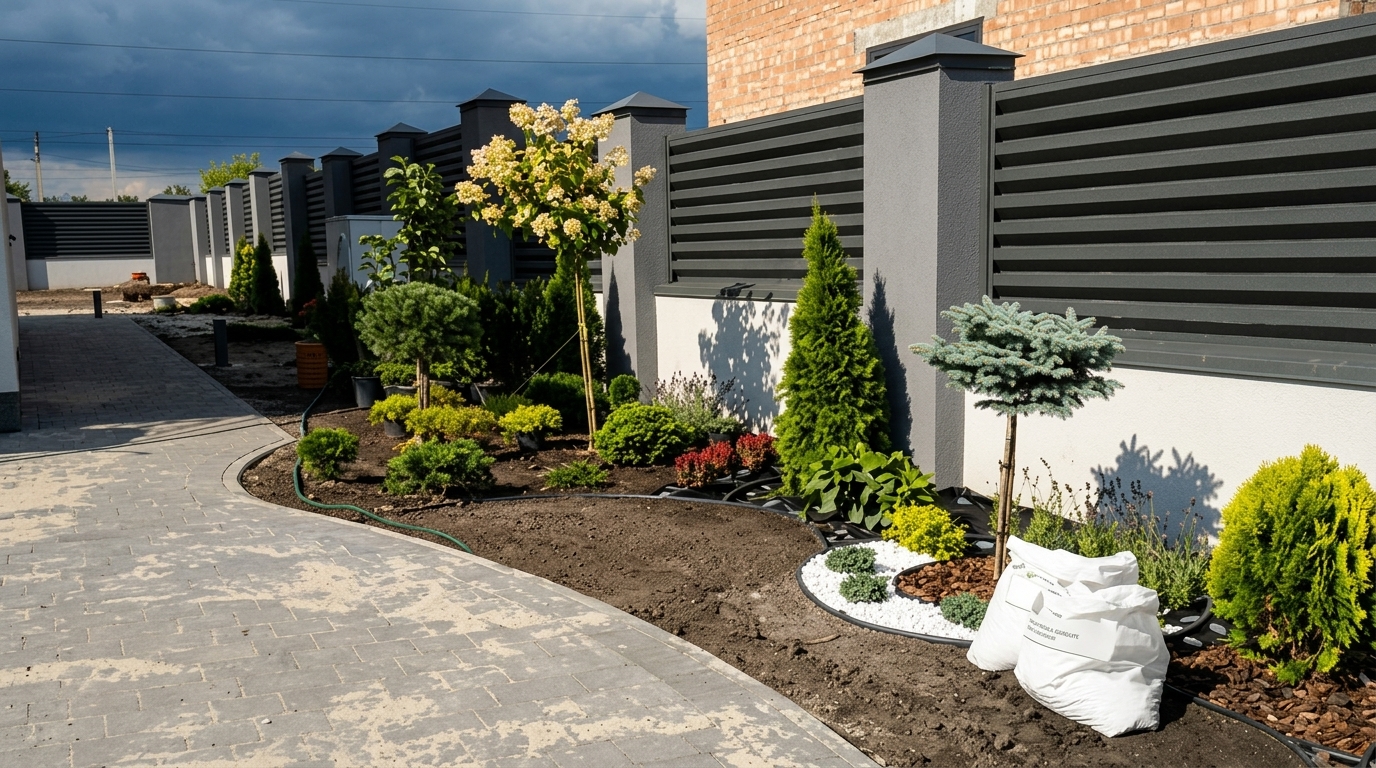
Sources and notes on plant selection
When preparing recommendations on lighting, soil, final size, and winter hardiness of plants, the characteristics of species and varieties from the Royal Horticultural Society (RHS) database were used.
When choosing a specific variety, we recommend additionally checking its characteristics with the manufacturer or nursery: even plants of the same species can differ significantly in height, width, growth rate, and winter hardiness.
Regarding the placement of plantings near the land plot boundary, you should be guided by the current edition of the Land Code of Ukraine, current building codes, and local rules.
Conclusion
A fence is an important part of the landscape, so when planning landscaping, you need to consider not only the appearance of plants but also lighting, ventilation, surface heating, soil, available strip width, and the size of mature plants.
For a solid fence, shade-tolerant plants are often relevant, but this depends on the cardinal direction. Near a ventilated fence, the choice is usually broader, although strong winds must be considered in open areas.
Regardless of which fence you have chosen — solid, ventilated, or a blinds fence — you can select plants for it that will comfortably develop and complement the plot’s design.
The main thing is to pick not just a plant species, but a specific variety for the available spot, leave the possibility for fence maintenance, and take the future size of plantings into account in advance.