
For a standard residential plot, a solid fence around the entire perimeter is not a general requirement. You can leave the yard open or fence off a specific area if plot conditions allow and there is no need to restrict access. Before installation, check boundaries, local regulations, rights of way, and risks to people and animals.
When you can go without a fence · What regulations allow · What to check · Frequently asked questions
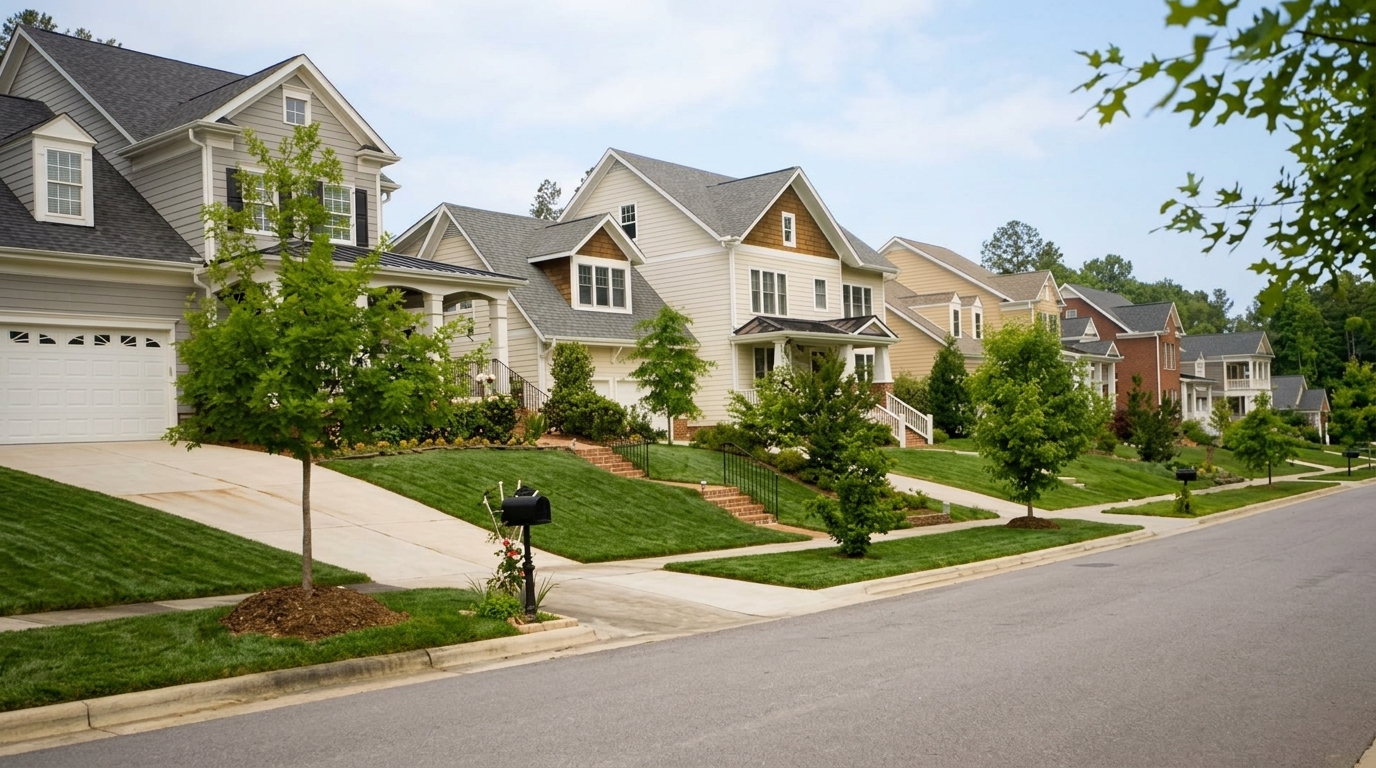
When you can do without a fence
Open yard or shared townhouse territory
If you only need to visually separate an entrance, lawn, or parking space, a pathway, a strip of plants, or a change in paving is often enough. In a townhouse, first clarify where the private plot ends and the shared territory begins. Check land documents, the agreement, and rules for using common property. If a driveway is shared, keep the designated access open.

Two adjacent plots are used together
Between two plots belonging to the same family, you can leave an open passage if it complies with land use terms. Separate cadastral boundaries remain intact. If the owners are different, it is worth agreeing in writing on passage use, maintenance, and the procedure for changing the arrangement.
Adjacent to a forest, slope, or body of water
A natural boundary can visually separate the yard. Verify the legal boundary location against land management documentation. Near water, a steep slope, or a road, assess hazardous areas separately. Sometimes a protective barrier for a specific zone is sufficient, provided such a solution is permissible for that plot.
When the installation location needs clarification
- The boundary is disputed or boundary markers are missing. Postpone earthworks and order an on-site boundary survey from a certified land surveyor. An old fence and online map imagery can help you get oriented. Base your decision on the installation line on official documents and survey results.
- There is already a shared structure on the boundary. Coordinate repairs, replacement, or dismantling with your neighbor. Shared boundary structures are governed by Article 108 of the Land Code. As long as the neighbor has an interest in preserving it, their consent is required for any modification or removal. Also consider good-neighborliness rules, particularly regarding shading of the adjacent plot.
- There is a passage, driveway, or utility lines. Check land easements, red lines, protection zones, and utility access requirements. Verify the placement of posts, foundations, gates, and wickets against these requirements before ordering.
- The plot is near a shoreline. Check whether it falls within a coastal protection strip and whether a fence would restrict shore access for general water use. Article 88 of the Water Code defines access rules and exceptions.
Fence height. For low-rise residential development, Clause 6.7 of DBN B.2.2-5:2011 allows up to 2.0 m on boundaries between neighboring plots and up to 2.5 m on the boundary facing the street. Before designing, check the development type and local community improvement rules. A residential plot fence must stay within its boundaries, accounting for red lines and sunlight (insolation) requirements for neighboring residential buildings.
When permanent installation is better postponed
If grading is still planned, soil is being brought in, or utilities are being laid, first finalize elevation levels, machinery routes, and drainage. For a site where work is already underway, the need for temporary fencing is determined by safety conditions. Soil readiness and the feasibility of concreting in cold or rainy weather are assessed by the contractor according to construction technology.
What to check before making a decision
- Purpose. Determine where you need privacy, physical access restriction, or only visual zoning.
- Documents. Verify boundaries, rights of way, local regulations, and plot restrictions. For a fence with a foundation, clarify required permits with the architectural and construction control authority.
- Layout. Mark gates, wickets, hazard zones, and areas that can be left open on a site plan.
- Section selection. For visual zoning, consider a strip of plants or open sections. For terrace privacy, you can start with a single louvered section and check visibility from the street and the neighboring plot.
Frequently asked questions about fencing a plot
Is it mandatory to put up a fence between neighbors?
For a standard residential plot, there is no general requirement to install a fence between neighbors. Plot boundaries must be defined. If a shared boundary structure already exists, any changes to it must be agreed upon under Article 108 of the Land Code.
Are permits required to install a fence?
For works listed in Item 6 of the List under Cabinet of Ministers Resolution No. 406, construction permits are not required. This item covers temporary structures without a foundation, including fences near individual residential, garden, and dacha houses. For a fence with a foundation or a plot with special restrictions, clarify the procedure for your specific case.
Can a hedge replace a fence?
Yes, if you need to define a space or partially block the view. For protection near water or a road, or to contain animals, consider a separate physical barrier. Before planting, take into account local requirements and the mature width of the plants.
What should you do if an old fence is not on the boundary line?
Before dismantling, order a boundary check from a land surveyor and find out who owns the structure. If there is a dispute, resolve it first, and then agree on the line for the new installation.
Related articles
Neuroarchitecture of Fences: How the Height and Pitch of Fence Lamellas Affect the Anxiety Level of Cottage Town Residents
How fence height and slat pitch affect anxiety in cottage towns. Discover neuroarchitecture, louver fences, and how they balance privacy and safety.
TOP Medical Laboratory Networks in Ukraine: Architecture, Infrastructural Innovations, and Market Leaders Rating
Overview of top medical lab networks in Ukraine 2026: Synevo, Dila, CSD LAB. Architecture, ISO 14644 cleanrooms, accessibility, and energy independence.
Winter maintenance for metal gates and wickets: Comprehensive protection of mechanisms, automation, and coatings
Practical guide to winter care for Mehbud metal gates and wickets. Learn how to lubricate locks, protect automation, and maintain coating.