Strategies for Overcoming Price Objections in Sales of Premium Enclosure Structures: A Comprehensive Analysis Using the Example of Mehbud Plant Products
Generic selectors
Exact matches only
Search in title
Search in content
Post Type Selectors

Strategies for Overcoming Price Objections in Sales of Premium Enclosure Structures: A Comprehensive Analysis Using the Example of Mehbud Plant Products

September 9, 2026
5  

The Evolution of the Enclosure Structures Market and the Nature of Information Asymmetry

The modern market of building materials and enclosure structures is going through a complex stage of transformation, where innovative production technologies clash with a traditional, often outdated approach to pricing and consumption. At the epicenter of this collision is the sales specialist, who daily faces one of the most fundamental barriers in business communication — the price objection. Most often, it is articulated by a potential client in the form of a categorical statement: “But garage makers have the same fence for cheaper.” This phrase is not just an excuse, but a deep symptom of the information asymmetry that prevails in the market. The consumer, lacking specialized engineering or materials science education, makes choices based on superficial visual signs. Seeing two pieces of metal painted in a similar color, they make the false conclusion about their identity, ignoring the hidden microscopic, chemical, and structural differences that determine the durability of the product.

Artisanal workshops, or so-called “garage makers”, actively exploit this cognitive error. They offer the market products that are merely visual imitations of premium models of factory fences, such as blinds fences, Rancho, Horizont, or Brus. Achieving an attractive price in the artisanal segment occurs exclusively through total economy at every stage of the production cycle: from purchasing low-grade raw materials with a critically small anti-corrosion layer to violating temperature regimes for applying paint and varnish materials, and the absence of any engineering calculation for wind loads. As a result of such “optimization”, the client gets not savings, but a delayed problem, the financial burden of which significantly exceeds the initial difference in cost.

Handling such an objection requires the specialist to abandon aggressive strategies of imposition or instantly providing discounts, which only confirms the client’s suspicions regarding an artificial markup. Instead, a deep expert consultation is needed, aimed at transforming consumer perception. The main task is to shift the focus of attention from the absolute cost at the moment of purchase to the total cost of ownership of the structure over decades of its life cycle. This document contains a comprehensive analysis of the technical, economic, and psychological aspects that allow deconstructing the myth of the “same, but cheaper” fence, and offers advanced negotiation techniques for the systemic overcoming of price objections.

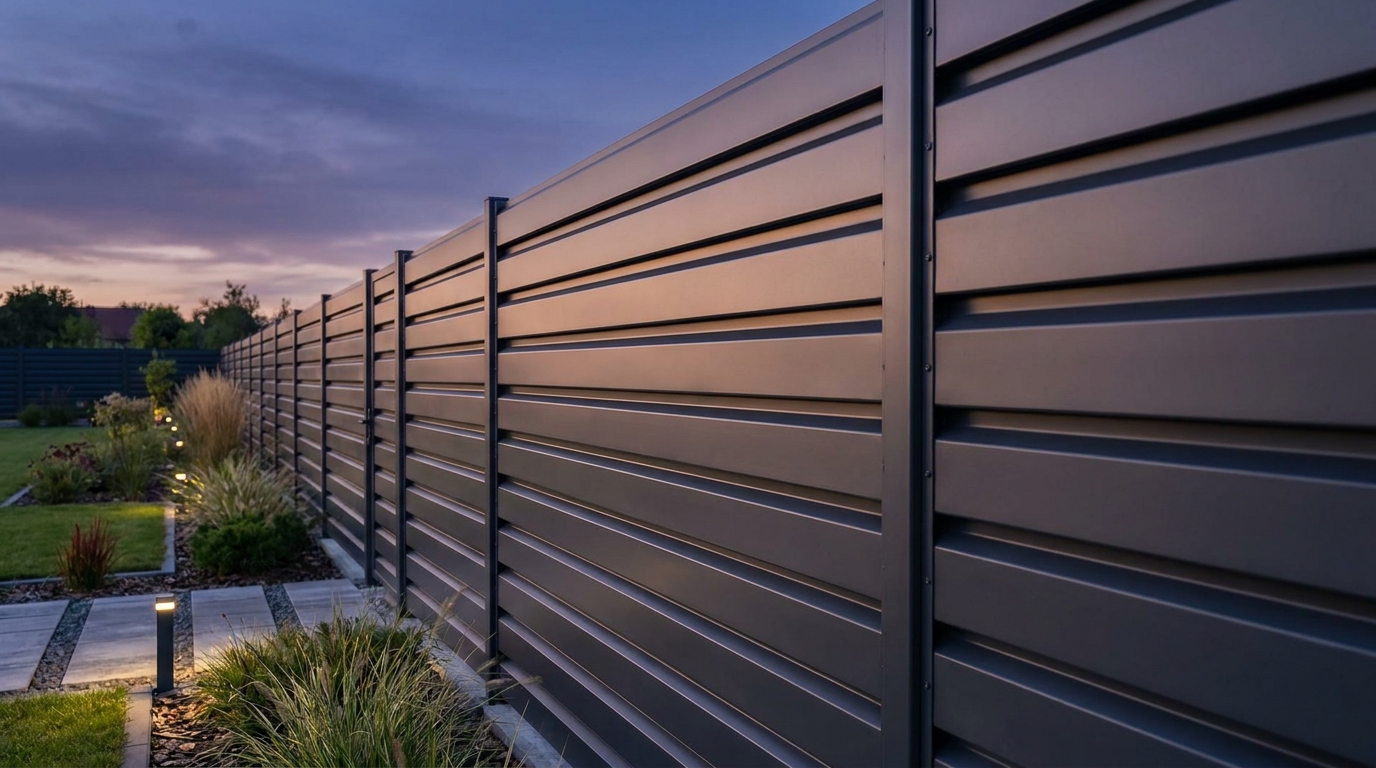
Metal fence bordering landscapin… 202609070802

Materials Science Basis: The Technological Divide Between Industrial and Artisanal Production

The successful neutralization of a price objection is based on the seller’s ability to shift the conversation from the plane of emotions to the plane of exact engineering facts. When a client claims that an artisanal fence is analogous to a factory one, they base their assessment solely on macroscopic geometry. However, the real gap in quality lies at the level of the metal’s crystal lattice and the chemical composition of protective coatings.

Standardization and Quality of the Steel Base

The foundation that ensures the structural integrity of any metal fence is the quality of cold-rolled steel products. Leading industrial manufacturers, such as the Mehbud plant, use exclusively certified steel from global metallurgical giants, including European divisions of ArcelorMittal (Germany, Poland), Italian Arvedi, Slovak U. S. Steel Košice, and Korean Dongbu Steel. According to strict European and national standards, in particular DSTU EN 10346, quality products guarantee stable mechanical properties that ensure the ability for deep cold profiling without the formation of microcracks, the preservation of internal stress, and the prevention of protective layer delamination.

A critical parameter for durability and stability is the thickness of the steel core. The industrial standard for reliable premium fences, such as Horizont or Brus, is the use of steel with a thickness of 0.45 to 0.55 mm. Such thickness is not just a marketing figure, but the result of engineering strength calculations. It guarantees the structure’s resistance to significant wind loads, eliminates resonant vibrations of the profile under the influence of air currents, and prevents deformation of the lamellas both under their own weight and from accidental physical impacts.

Conversely, artisanal enterprises, whose main competitive advantage is a low price, massively purchase budget thin-sheet rolled metal of unknown or questionable origin (for example, Chinese brands like Sutor), the thickness of which varies within 0.35–0.40 mm. Although to an unprepared consumer the difference of a tenth of a millimeter may seem like a statistical error, from the point of view of materials resistance, this difference is colossal. A reduction in thickness radically lowers the section modulus of the lamella, turning the fence into a fragile structure that suffers from deformations during seasonal temperature changes and loses its geometry under the slightest pressure.

Anti-corrosion Barrier: The Physics of Protection Against Degradation

The real test for any steel structure in the open air is the continuous exposure to an aggressive environment, which provokes electrochemical corrosion (the appearance of rust) as a result of the metal’s contact with atmospheric oxygen and water. Since it is visually impossible to assess the quality of internal protection, clients often do not understand the importance of the zinc coating, which acts as the foundation of durability.

Top-level normative documents, such as DSTU EN ISO 14713-1:2022, clearly regulate guidelines for corrosion protection of iron and steel structures, including general design principles and corrosion resistance requirements. Factory products use steel with a high galvanization class — from 140 to 225 g/m², and in some batches, this figure reaches 275 g/m². Thanks to such a high coating density, reliable cathodic protection is realized: zinc, being a more active metal compared to iron, oxidizes first, creating a strong barrier. Even in the case of deep scratches to the metal or on exposed cut edges, a high mass of zinc is capable of “healing” microdamages, protecting the steel from destruction.

In contrast, “garage” workshops primarily work with economy-segment metal, where the zinc content is a miserable 40–100 g/m², or they do without it entirely, using black metal. In real operating conditions, accompanied by constant freeze-thaw cycles, high humidity, and UV exposure, such a minimal zinc layer evaporates and deteriorates within the first few years. The first signs of irreversible corrosion appear in the most vulnerable places — on cut edges, at fastening points, and on profile bends.

Materials Science Differentiation of Factory and Artisanal Fences

Evaluation Criterion Industrial Production Standards Characteristics of Artisanal Analogs
Origin of Raw Materials

ArcelorMittal, Dongbu Steel, U.S. Steel Košice

Uncertified rolled metal (e.g., Sutor)

Steel Base Thickness

0.45 – 0.55 mm (high rigidity)

0.35 – 0.40 mm (prone to deformation)

Zinc Coating Class

140 – 275 g/m² (effective cathodic protection)

40 – 100 g/m² (minimal or absent protection)

Polymer Application Technology

Coil coating (continuous factory application)

Manual spraying, high probability of multiple defects

Adherence to Angles and Geometry

Perfect accuracy thanks to automated lines

High probability of microcracks on bends due to manual machines
Official Warranty

Up to 20 years for structure and protection

Absent or not legally supported

Polymer Coating vs. Artisanal Painting: Process Defectology

Aesthetic appeal and an additional barrier from the environment are provided by a paint or polymer coating. The industrial method involves the use of galvanized steel with a polymer coating (for example, matte polyester PEMA with a thickness of 35 microns), which is applied at the metallurgical plant in a continuous coil coating process. This technology guarantees absolute adhesion at the molecular level, thickness uniformity over the entire area, high resistance to ultraviolet radiation, and perfect matching to the international color palette (for example, deep shades of RAL 7024, RAL 7016, or RAL 9005).

In an attempt to save money, artisanal manufacturers often form profiles from unpainted metal, and then try to paint them in unsuitable premises using manual spray guns or brushes. This process inevitably leads to disastrous consequences, described in the industry defectology of paint and varnish coatings:

  1. Tool marks and a rough texture arise due to the use of excessively thick paint, mismatched solvents, or a violation of the temperature regime during application.
  2. Blisters and swelling of the coating appear due to painting poorly dried surfaces, water or mineral oil getting into organic solvent-based paint, or as a result of the presence of air in the working mixture.
  3. Peeling and hidden corrosion are a direct consequence of ignoring the metal preparation stage. Instead of mandatory hydrodynamic or abrasive blasting (to the state of white metal), artisans often apply paint over the remnants of scale, dust, or lubricants. As a result, moisture is conserved under the layer of paint, provoking the rapid development of rust, which subsequently tears the paint from the inside in the form of rusty and dark spots.

Conveying this expertise to the client allows the sales specialist to turn the abstract concept of “expensive” into a very specific list of physical and chemical characteristics, guaranteeing the absence of problems in the future.


Modern villa behind metal fence 202609070802

Engineering Perfection of Forms: Profiling and Structural Integrity

The advantage of a factory product is not limited just to the chemistry of materials. Modern automated profiling lines allow creating geometrically complex configurations that simultaneously perform aesthetic and engineering functions. The accuracy of bends guarantees that there will be no skewing during the assembly of the fence, and the product itself will not lose its strength.

The products of the Mehbud plant demonstrate how engineering thought is realized in metal:

  1. Horizont Profile uses metal lamellas of rectangular cross-section, which are joined using a reinforced lock. Each profile is equipped with two stiffening ribs. The uniqueness lies in the fact that when using metal with a thickness of 0.45 mm, thanks to a precision bend, the total thickness of the stiffening rib reaches 0.9 mm, which makes sagging of the sections impossible even with large spans.
  2. Rancho Line offers variability in lamella width (S – 85 mm, M – 105 mm, L – 135 mm, XL – 185 mm), where each panel integrates 4 stiffening ribs at once. The Rancho Horizont model has an overall width of 190 mm with a visible part of 105 mm, retaining the shape of a voluminous section (thickness 20 mm), making the structure maximally organic and highly durable.
  3. Brus Model uses a specialized profile with a width of up to 200 mm, which phenomenally accurately imitates solid rounded timber. A reliable lamella connection system forms a solid wall that can reach 12 meters in length without losing load-bearing capacity.
  4. Classic blinds fence is distinguished by the diagonal placement of lamellas (dimensions 15 x 20 cm), which are mounted at a precisely calculated angle. This provides a unique balance: absolute non-visibility of the site from the street, free air circulation (ventilation), and exceptional resistance to deflection thanks to fixation on special combs.

High-quality certified metal, which is processed on industrial equipment, withstands bending deformations much better, preserving the integrity of the polymer and zinc layers. As a result, all factory fences are assembled directly at the site according to the constructor principle, without the need for physical fitting, welding, or trimming on site. Artisanal manufacturers, using primitive manual sheet bending machines and rigid, brittle economy-class metal, inflict microdamages on the material at the bends. It is precisely in these spots of invisible cracks that the rapid degradation of the product begins after the very first contact with moisture.

Hands pointing at architectural … 202609070802

Economics of Operation: Analysis of Total Cost of Ownership (TCO)

Countering a price objection cannot be based solely on listing technical characteristics. An effective seller must change the client’s financial paradigm, expanding their time horizon. When a consumer uses the “expensive” argument, they operate exclusively with indicators of initial capital expenditures (CAPEX). Shifting to the concept of Total Cost of Ownership (TCO) allows proving mathematically that a factory fence is not an expense, but a long-term investment.

An industrial fence provides a predictable and guaranteed service life. The premium-class polymer coating retains its aesthetic properties for at least 15 years, and comprehensive electrochemical corrosion protection is designed to function for up to 30 years. The Mehbud plant backs these operational indicators with an official warranty for a period of 20 years, which is an unprecedented level of responsibility in the market.

In contrast, purchasing an artisanal product with a 20–30% discount from the market price is a hidden financial trap that entails significant deferred operational expenses (OPEX):

  1. Costs of restoration work: The degradation of a cheap coating forces the owner to carry out periodic renovations. Simple repainting does not stop rust. It is necessary to perform a complete removal of the old paint, mechanical cleaning down to the metal, and the application of special primers or expensive mixtures for cold galvanizing (which requires multi-layer application with a long polymerization time). The cost of these materials and the craftsmen’s labor often exceeds the saved funds.
  2. Costs for re-installation: If the thin metal cannot withstand the wind load or snow weight, the deformed sections will have to be dismantled and replaced. The cost of professional installation starts from 20–35 USD per square meter for base options and can reach 80–130 USD for premium modifications with hidden fasteners. Thus, the client will be forced to pay for installation work twice.
  3. Loss of market appeal of the property: The fence is the facade of a home ownership. A rusty, leaning fence significantly lowers the overall estimated value of the real estate, causing indirect but tangible financial losses in a potential sale.

The client must realize: by choosing a product of dubious quality, they take on all financial risks associated with its subsequent maintenance and inevitable replacement, whereas a factory structure guarantees decades of trouble-free operation.

Metal fence longevity timeline view 202609070802

Psychological Architecture of Negotiations: Deconstructing the “Expensive” Objection

Handling objections in the premium segment is fundamentally different from aggressive sales. It is not a battle of arguments where the seller tries to intellectually “crush” the client, but a process of deeply empathetic listening and collaborative search for an optimal solution. The expert acts as a reliable advisor who is on the same side as the consumer, helping them avoid hidden threats.

A critical stage is diagnosing the true nature of the objection. The phrase “garage makers have it cheaper” can be both a true reason (cash gap, tight budget, lack of understanding the difference in quality) and a false excuse (desire to end an unpleasant conversation, lack of authority to make decisions, hidden doubts about another aspect of the deal).

Isolating the Objection as a Verification Instrument

To weed out false excuses, the isolation technique is used. The seller asks a hypothetical question: “Suppose we find a way to adapt the project to your budget or split the payment. If the price issue is resolved, is there anything else preventing us from starting our cooperation?”. If the client starts generating new excuses (“I still need to consult with the foreman”, “I need to think about it”), the initial objection was just a smokescreen. If the client confirms that the budget is the only obstacle, the specialist proceeds to the algorithm for working out the true objection.

Ecological Algorithm for Overcoming Doubts

Modern sales techniques require a sequential completion of five mandatory stages:

  1. Active listening without interrupting: Allow the client to speak completely. Often, at the end of a long tirade, the consumer themselves reveals their true pains: “It’s cheaper there, although a neighbor installed one and was already touching up the paint the next year”.
  2. Joining and empathy: It is strictly forbidden to start a response with the word “No” or to make excuses. Using phrases like “I absolutely understand your position, the budget issue is key in such large-scale construction” removes defensive barriers and shows the client that they are heard.
  3. Asking open clarifying questions: At this stage, the seller seizes the initiative. Questions like “With what exact parameters are you comparing our offer?” or “What, besides the initial price, is an important criterion for you when choosing a fence?” force the client to turn on analytical thinking.
  4. Expert argumentation: Providing facts, comparative characteristics, and using specialized techniques (described below), based on previously identified needs.
  5. Verification and closing: Fixing the result with a control question: “Given the warranty of durability and savings on maintenance, does this alleviate your concerns regarding the difference in cost?”.
Figures discussing material samp… 202609070802

Extended Arsenal of Techniques for Neutralizing Price Objections

A simple broadcast of technical characteristics is rarely effective. Information about zinc and metal thickness must be masterfully “packaged” into rhetorical forms that stimulate the client to draw their own conclusions.

1. SPIN Method (Situation, Problem, Implication, Need-payoff)

This fundamental technique shifts the focus of the conversation from the cost of the product to the client’s realization of the scale of a potential problem and the value of avoiding it. The conversation is structured as a series of consecutive questions:

  1. Situational: “Have you previously been involved in the installation of long metal fences?
  2. Problem: “Are you familiar with the situation when, due to the use of thin metal, the lamella joints begin to separate, and corrosion appears on the cuts after winter?
  3. Implication (Consequences): “If the fence begins to rust and peel in just a couple of years, how many resources, time, and nerves will you have to spend finding craftsmen, dismantling, and undergoing a costly restoration procedure with cold galvanizing?
  4. Need-payoff (Directional): “Considering these risks, would it make more sense for you to invest a little more today in a factory ‘Horizont’ made of 0.5 mm thick steel with a zinc content of 225 g/m² to get a 20-year warranty and never return to this issue again?” The method proves: the arguments that the client comes to independently in the process of answering are the most convincing.

2. “Salami” Technique (Decomposition of Cost Over Time)

It is psychologically difficult to accept a large price difference. The “Salami” technique allows breaking down this difference into minimal, imperceptible fractions over the product’s operating period. Practical application: “I agree that our estimated cost is 20,000 hryvnias higher than at the workshops you considered. However, let’s look at this amount through the prism of time. Our fence is guaranteed to serve for at least 20 years without any intervention. If you divide the difference of 20,000 UAH by 20 years, you get only 1,000 hryvnias per year. That’s about 83 hryvnias a month. Is your absolute peace of mind, an ideal facade appearance, and the absence of problems with rust and profile deformation worth 83 hryvnias a month?”.

3. Technique of Contrast Comparisons and “Future Projection”

Instead of a dry list of characteristics, the specialist creates a powerful emotional anchor, visualizing the desired future and comparing alternatives. Argumentation: “Imagine your property in 5 years. You have completed the landscape design, the house facade is perfect. The fence is the first thing your guests see. What will it look like if the paint starts bubbling and the thin metal deforms from the wind? The Mehbud plant uses a 35-micron polymer coating applied by industrial means, which does not fade in the sun for years. By giving preference to an uncertified artisanal product, you are actually playing the lottery: you do not know how much zinc is on the metal and in what conditions it was painted. Our cost is an investment in your status, safety, and 20 years of carefree operation”.

4. Transformation Trick: “That is exactly why…”

This elegant technique turns the client’s objection into the most weighty argument in favor of the seller, eliminating confrontation.

  • Client: “It seems to me this is too expensive compared to other offers”.
  • Seller: “That is exactly why we abandoned the use of cheap metal with a zinc layer of 40 g/m² in favor of certified ArcelorMittal steel with a thickness of 0.5 mm; our price is different. That is exactly why we do not spray-paint parts in a dusty garage, but use a factory polymer coating, so we can confidently provide a warranty for up to 20 years. Our goal is to save you from problems in the future. Let’s compare metal samples by touch, and you will feel the difference in rigidity yourself”.

5. Socratic Rule (“Three Yeses” Technique)

Aimed at forming a pattern of agreement. Having received several affirmative answers in a row, a person is psychologically inclined to agree with the final proposal as well.

  • “Do you agree that the fence should harmoniously highlight the architecture of the house?” (Yes).
  • “Is it important to you that a structure, for example a blinds fence, be rigid enough, not rattle from the wind, but at the same time well ventilate the territory?” (Yes).
  • “Are you interested in ensuring that a decade later you won’t have to hire a crew to clean off rust and repaint the facades?” (Yes).
  • “Excellent! These exact parameters are provided by high-tech factory profiling and the use of metal with a high galvanization class. And it is they that make up the cost we are discussing. So what is the determining factor for you right now — a quick economic illusion or a guaranteed long-term result?”.

6. Generation of Alternative Solutions Without Dumping

A fundamental mistake of managers is readiness to provide a discount at the first request. A groundless discount automatically devalues the product and accustoms the client to continue applying pressure, destroying trust. Instead of lowering the price, the specialist should offer to maintain quality by changing the configuration or adding value:

  1. Revising the model range: Suggest a more optimized line, for example, the basic “Blinds Standard” option instead of the premium “Rancho XL”, while preserving the same metal quality and warranty.
  2. Flexible financial instruments: Staggered payments, installment plans, or phased supply of materials.
  3. Additional service: Instead of a discount, one can offer a free detailed calculation of non-standard abutment nodes, priority delivery, or an installation supervision service, which increases the overall value of the offer in the eyes of the client.
Analyst presenting corporate das… 202609070802

Institutionalization of the Process: Systemic Control and the Role of CRM

Mastery of negotiation techniques by individual “stars” in the sales department does not guarantee a stable result for the company as a whole. Work with price objections should be transformed from an art into a manageable, measurable, and systematized business process. A modern approach to sales management requires the implementation of deep analytics and constant quality control of communications.

To ensure uninterrupted and effective handling of refusals, experts recommend implementing the following system of corporate standards:

  1. Creation of a unified corporate “Objection Bank”: All formulations of client doubts (regarding metal thickness, deadlines, guarantees) are collected in a centralized document. For each typical objection, 2-3 response algorithms are developed and tested, which are constantly updated based on actual experience.
  2. Mandatory classification of refusals in CRM: Every unrealized deal must have a clearly recorded reason in the CRM system. If a significant percentage of refusals (for example, 35%) is caused by the client turning to artisanal manufacturers due to price, this is a direct signal for management to revise the marketing strategy and strengthen communication regarding the product’s value at the advertising stage.
  3. Systematic audit of communications: Audio control of conversations is critically important. The head of the sales department regularly listens to recordings to identify deviations from scripts: instances when managers break out in aggression, argue, take a defensive stance, or unjustifiably give out discounts. Joint debriefing of these mistakes with the team allows for swift correction of behavioral patterns.
  4. Workshops and role modeling: Knowing techniques in theory and being able to apply them during a stressful conversation are different things. Regular role-playing games, where one employee imitates a tough client demanding a cheap fence, and the other practices argumentation skills, allow forming “muscle memory” in negotiations.
  5. Automation of Follow-up algorithms: The largest number of deals is lost after the client takes a pause “to think”. A systemic approach requires that no conversation ends without a clear plan of subsequent actions. The CRM should automatically generate tasks for a repeated contact at a designated time, ensuring that the client receives additional materials, calculations, or an invitation to a showroom for a sample demonstration.
Modern suburban house with fence 202609070802

Strategic Outcomes

Transforming the client’s paradigm from focusing on the lowest price to realizing the concept of total cost of ownership is the main challenge for sales specialists of premium building materials. The objection “But garage makers have the same fence for cheaper” is based on a deep information vacuum regarding the physicochemical properties of materials. It is proven that industrial fences, similar to those produced by the Mehbud plant, have an undeniable technological advantage: the use of certified steel 0.45–0.55 mm thick, a high class of zinc protection (from 140 to 275 g/m²), ideal geometry thanks to automated profiling, and a flawless polymer coating applied by the coil method. These characteristics eliminate deformations, wind resonances, and premature corrosion, which are typical diseases of artisanal products.

Effectively overcoming the price barrier requires the seller to abandon the role of a mere informer and transition to the position of an expert consultant. Applying active listening techniques, SPIN techniques, contrast comparisons, and the cost decomposition method (“Salami”), the specialist helps the client realize that a one-time saving of 20% will inevitably lead to significant financial and emotional losses on dismantling, restoration, and repainting the structure in the near future. Only systemic work with objections, reinforced by CRM analytics and regular training, allows consistently converting client doubts into successful, high-margin deals, forming a culture of conscious and rational consumption in the market.

author
About the author:

A marketing and communications expert at the Mehbud factory. Develops the brand, showcasing all the advantages of Mehbud products to clients. Helps you make the right choice by providing consultat...

More
0 0 votes
Article Rating
Subscribe
Notify of
guest
0 Comments
Oldest
Newest Most Voted