
On the Monday after a deadline, one architect wants a full night’s sleep. Another hasn’t been able to plan an evening for months. A third used to take pride in looking through finished drawings but now puts off even the projects they once wanted. All three may look tired from across the room. Each conversation should start somewhere different.
Fatigue can follow a period of effort. Stress relates to the demands people face and the conditions in which they work. The World Health Organization describes burnout as an occupational phenomenon associated with chronic workplace stress that hasn’t been successfully managed. Its description brings together exhaustion, increasing distance or cynicism about work, and a reduced sense of professional effectiveness. WHO definition

Three situations that can look alike
These examples are fictional. Use them to ask better questions about workload and recovery.
| Situation | What happens | What to discuss |
|---|---|---|
| A single hard deadline | The team issues a drawing package, then returns to its usual workload. | Is there time to recover? What made the last few days particularly difficult? |
| A few months under sustained pressure | Three submissions land on the same people. Their priorities change daily. | Who can move a deadline, narrow the scope or assign help? |
| Work feels draining and distant over time | A colleague remains exhausted, grows detached and feels less effective. | What demands keep recurring? What support is available? If it affects daily life, speaking with a qualified professional may help. |
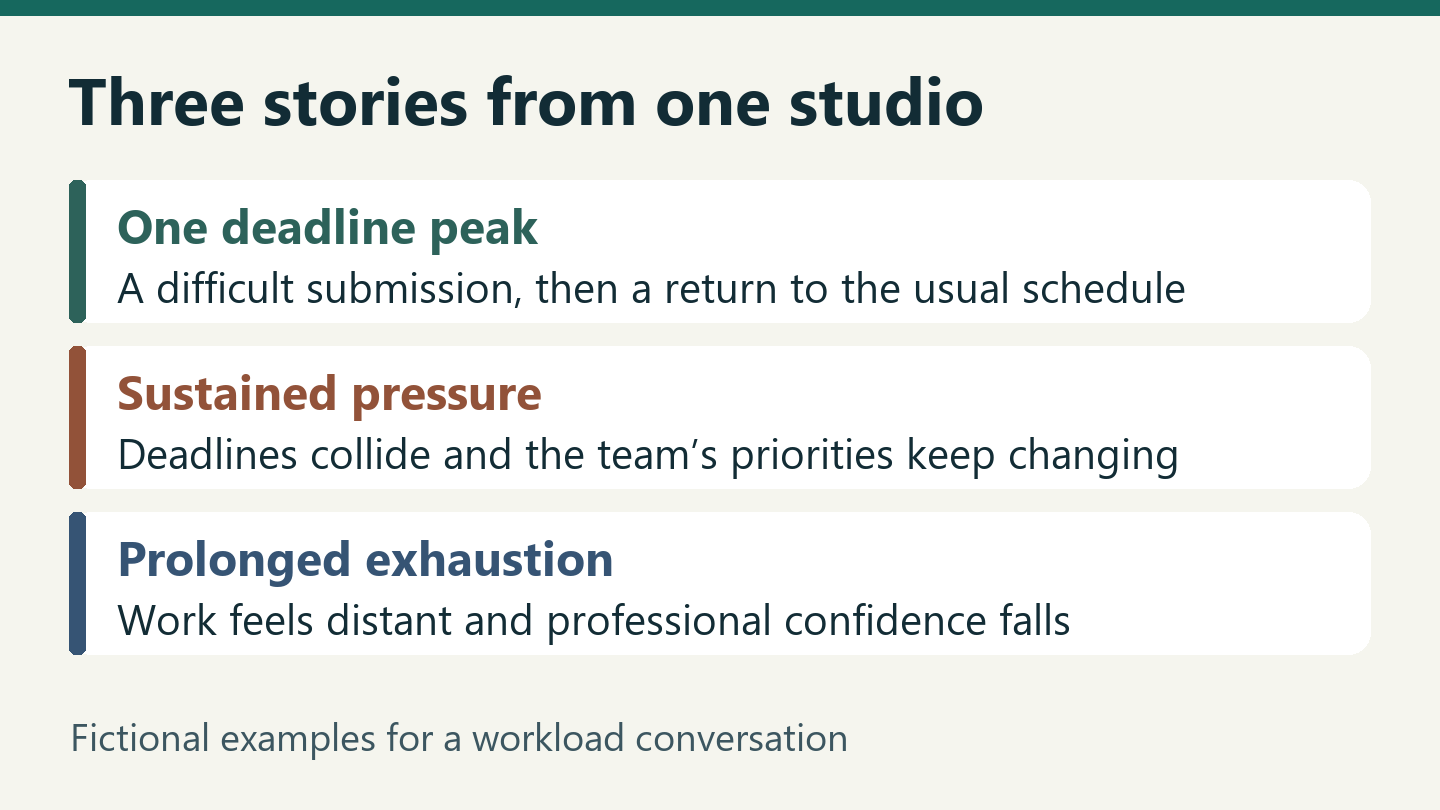
A calendar can reveal repeated late nights and deadline collisions. It cannot tell you how everyone is feeling or whether someone is experiencing burnout. Ask what happens when deadlines ease or responsibilities change.
What the architecture surveys found
More than 1,450 professionals responded to RIBA’s voluntary survey in summer 2024. 90% of surveyed practice employees reported regular overtime, and 54% said their work was harming their mental health. These are reported experiences in a self-selected sample. They do not measure how many architects have burnout or a medical condition. RIBA findings, survey method
In Australia, The Wellbeing of Architects looked at practitioners’ experiences across career stages. Respondents in its first survey reported psychological distress and work-related exhaustion. The researchers also asked what people valued about their work. Someone can care deeply about architecture and still need different working conditions to stay in practice. Australian practitioner report

Where the schedule breaks down
A client changes an agreed detail. The issue date stays fixed, so the team loses drawing review time. Another project then needs a submission in the same week. Looking down a list of deadlines, a project leader can miss that one person has to review all three packages.
Look back over two recent weeks. Record actual issue dates, review time, unexpected requests and the tasks that moved. Mark who could change priorities. Keep the record focused on work and avoid collecting private health details. You may find a coordination problem that never appears in the headline project schedule.
What a studio leader can change this week
The UK Health and Safety Executive groups work-related stress risks under demands, control, support, relationships, role and change. WHO guidelines on mental health at work also cover interventions that change how work is organised. HSE Management Standards, WHO guidelines
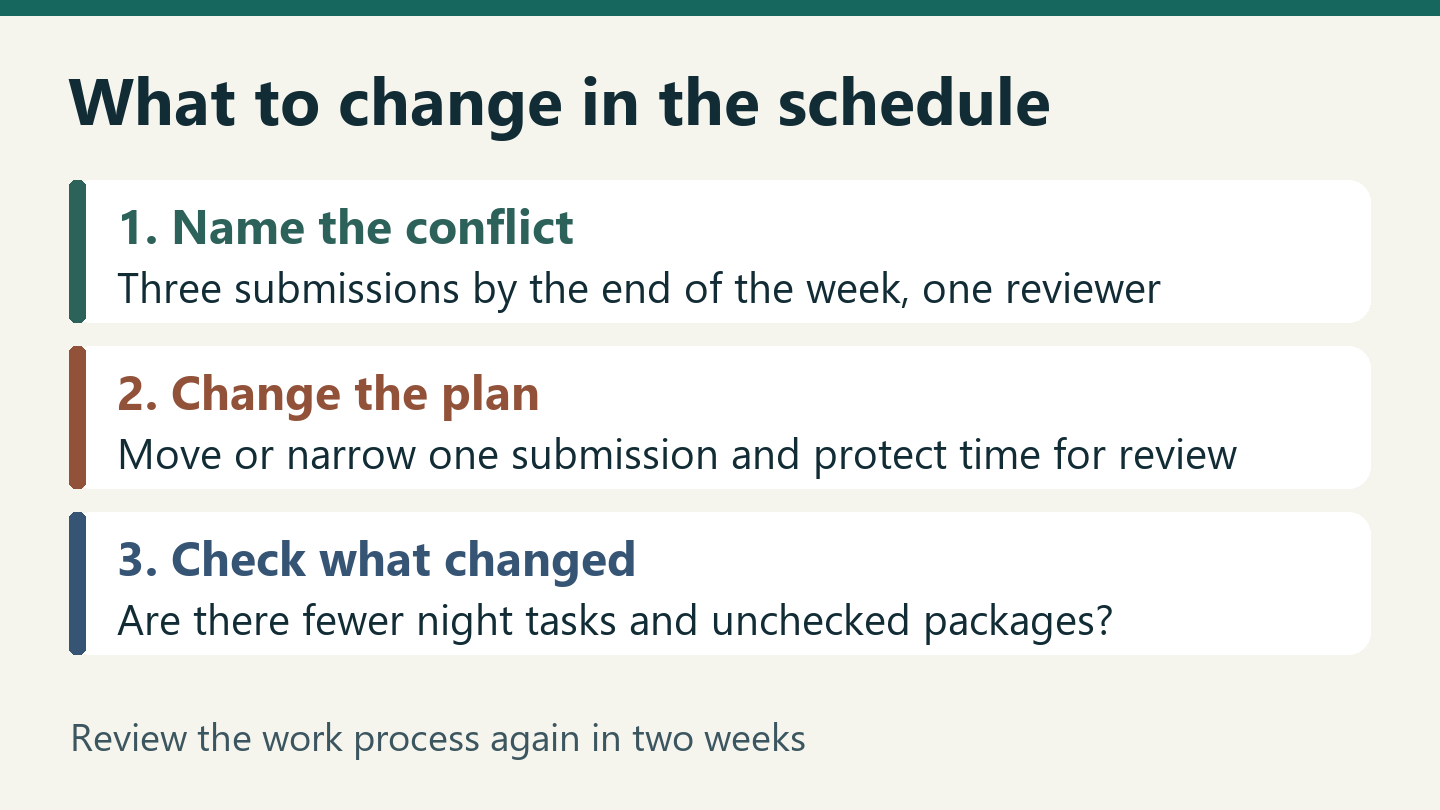
Start with one identifiable conflict. Move or narrow a submission, set aside time for review and tell the client which decisions remain open. Make clear who can resolve competing priorities. If approvals arrive through several channels, use one agreed decision record so people can see what changed and what is ready to issue.
How to start a workload conversation
A manager might say, “There are three submissions and one reviewer this week. Which one can we move or assign elsewhere?” A team member might say, “I can check one of these two packages by Thursday. Can we agree which takes priority?” Record the decision and a date to follow up. If difficulties persist or interfere with daily life, consider discussing them with a primary care or mental health professional. WHO guidance on mental health at work
How to tell whether the change helped
After two weeks, compare unplanned evening tasks and packages issued without time for review. Ask whether the team can now raise a conflict before sacrificing the review period. These measures help evaluate the work process. They do not assess any individual’s health.
Frequently asked questions
Does feeling exhausted after a deadline mean burnout?
A tough deadline can leave someone exhausted. The WHO description concerns chronic stress at work and a combination of characteristics. WHO
Is a break enough?
Time off can help with recovery. When the same deadlines, workload or role conflicts return, review the conditions that create repeated pressure. HSE
What should studio managers keep track of?
Check concurrent deadlines, review time and after-hours requests. Pair those measures with a private discussion about what makes the workload manageable.
Related articles
“Nothing Happened.” Why Crews Stay Quiet About Construction Near Misses
What a construction near miss is, why a crew may stay quiet and what to put in a report. Includes a fictional example and follow-up steps.
Render No. 17: Why Interior Design Revisions Get So Tiring
Why interior design feedback gets tiring. Compare lighting and paint, read the research on choice overload, and use a sample revision note.
Can a Construction Job Replace the Gym? What the Research Says
How a construction shift differs from a workout, what researchers measured in builders, and why heart-health findings from Denmark and the UK differ.