
A cart comes out from behind a temporary partition just as someone walks past. The installer steps back in time. A colleague says, “Good catch.” Another says, “Nothing happened.” If a new crew takes over in an hour, what will they know about that crossing? The scene is fictional, but it shows how quickly an alert can disappear.
A near miss is an event in which nobody was injured but someone could have been hurt under slightly different circumstances. An internal report should tell the next crew what happened, what was done at the time and how the team will check whether it can happen again. OSHA on incident investigation
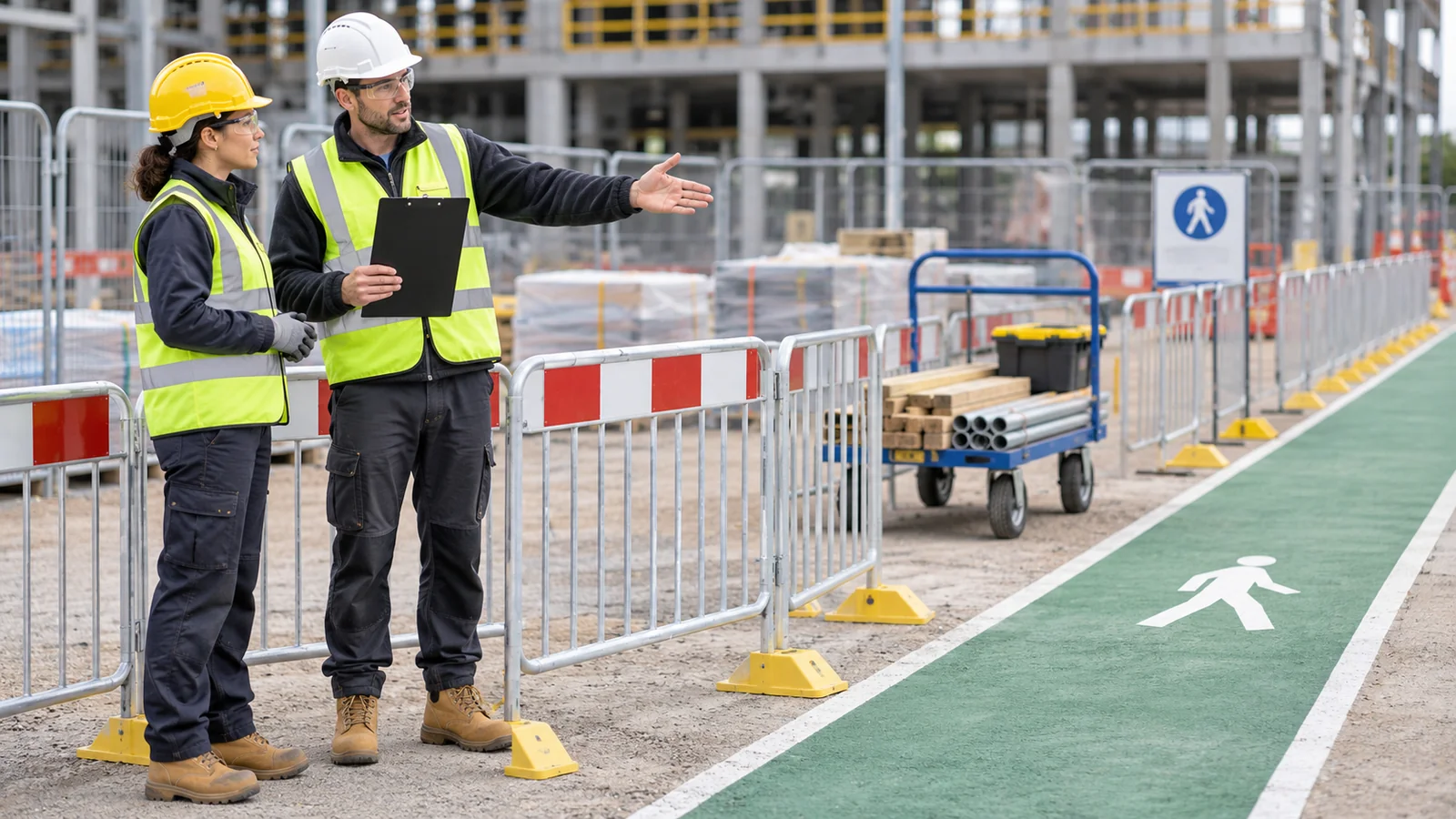
What happened if nobody was hurt?
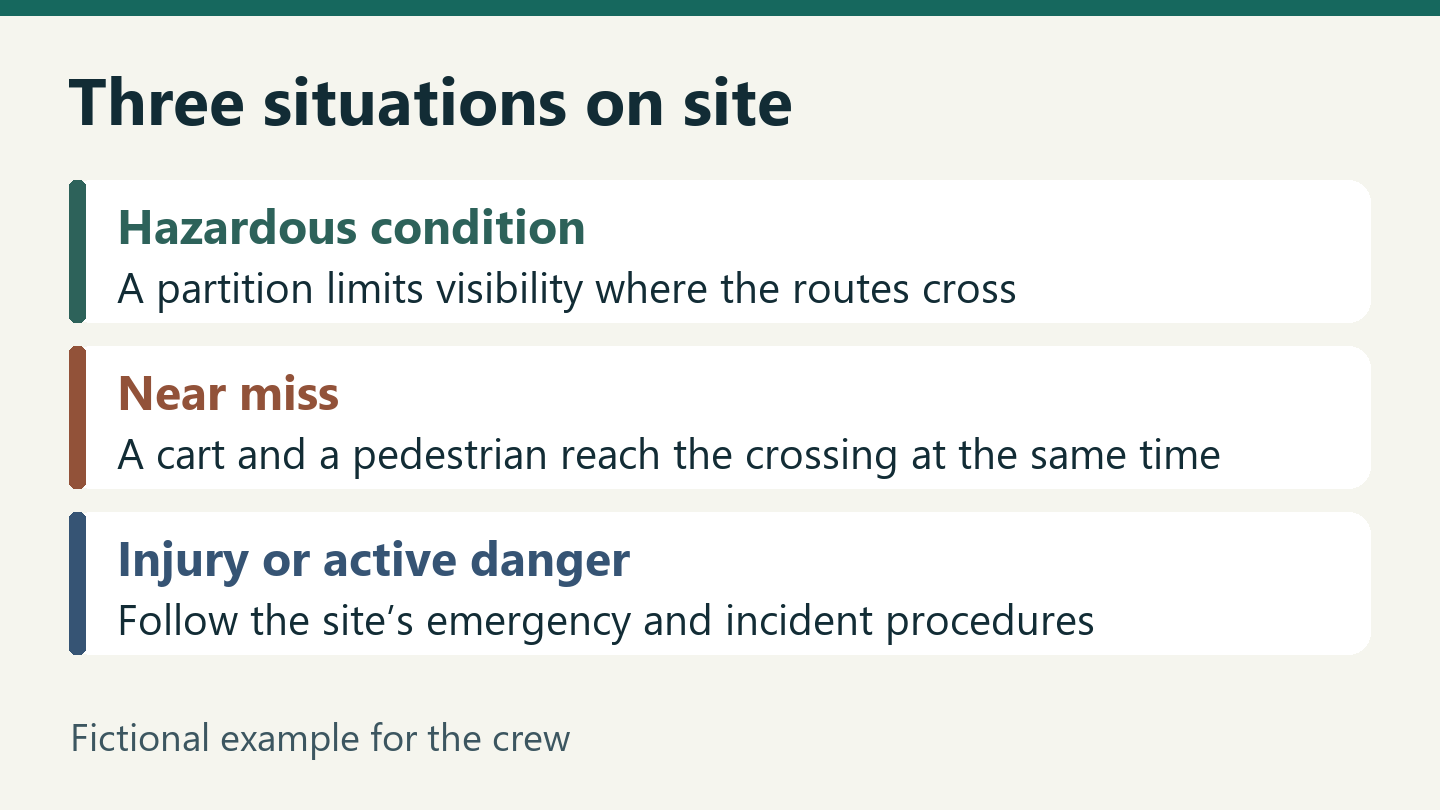
A hazardous condition can be noticed during a routine inspection. A near miss is an event that has already taken place. It gives the crew a sequence to review.
| Observation | What it means for the crew |
|---|---|
| A temporary partition limits visibility where two routes cross. | A hazardous condition. Record the location and alert the designated person. |
| A cart and a pedestrian reach the crossing together, and the person steps back. | A near miss. Record when it happened, the task and the sequence. |
| Someone reports an injury or the hazard is still active. | Follow the site’s emergency and incident procedures. The internal note alone is insufficient. |
Why people might say nothing
Researchers in South Florida held six focus groups with 43 construction workers employed through temporary staffing agencies. The seriousness of the outcome influenced decisions about reporting. Participants also described how relationships on site helped workers look out for each other. This was a qualitative study of a specific group. It explains some of the reasons a worker might speak up or stay quiet. It does not estimate a reporting rate for the industry. Santiago et al.
Another study analysed survey responses from 240 young construction workers in China. Speaking up about safety was associated with different combinations of job control, psychological safety, supervisor support and other conditions. The survey looked at patterns in the responses. It did not test how a particular reporting form performs. Jia et al., 2026
A worker might assume a supervisor already saw the event, worry about being blamed for a delay, or expect that a report will go unanswered. With several contractors on site, even the contact person can be unclear. At the next briefing, ask whether everyone, including temporary staff, knows where to report a concern and how they will hear what happened next.

One close call, two crew responses
In the first version, the supervisor hears the joke and everyone goes back to work. The next crew uses the crossing under the same conditions. In the second, the designated person thanks the worker, restricts access under the site’s procedure and asks the crew why two routes came together there. The team member responsible for the work decides on the change. The crew hears what was checked before the route returns to normal use.
“At 10:20, a cart and a pedestrian reached the crossing at the same time” gives the team a fact to investigate. “People weren’t paying attention” says little about visibility or how traffic was organised. OSHA guidance asks employers to investigate the conditions that allowed the event and identify measures to prevent a recurrence. OSHA hazard identification and assessment
What to put in a short report
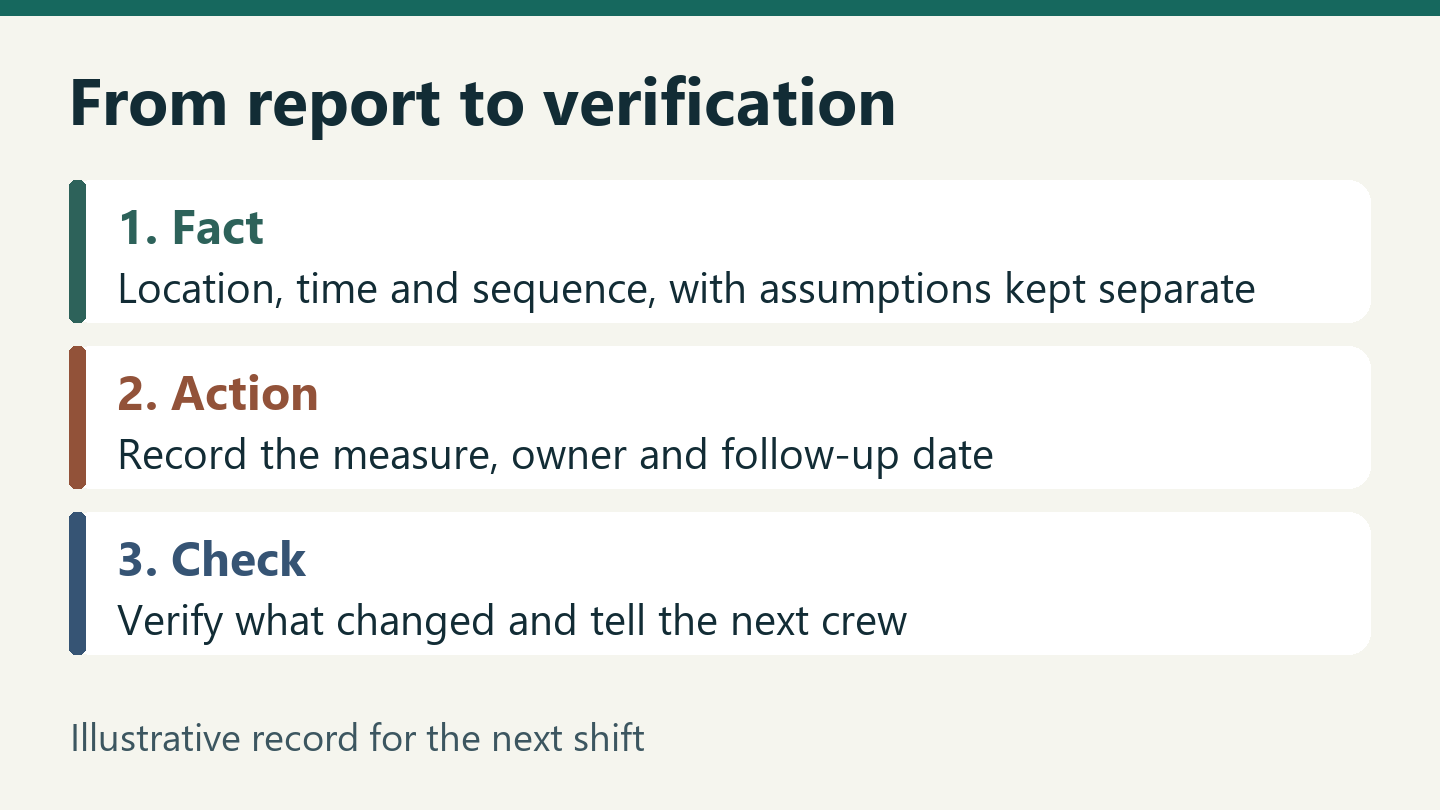
Illustrative entry. 10:20, crossing by the temporary partition. A cart came out of the delivery area. An installer stepped back to avoid a collision. No injury reported. Site lead to review visibility and pedestrian separation before returning the route to normal use.
Add witnesses or the task, any immediate action, a named owner and a follow-up deadline. Take pictures only from a safe location and under the site’s procedures once the immediate risk is controlled. Keep possible causes separate from what someone saw. For related high-risk tasks, compare the blog’s guide to managing work at height.
How to close the loop
A useful record shows who received a concern, which change was assigned and who verified it. Give the crew a short update while the work is open. Review repeated concerns about the same location and look for measures that were assigned but never checked. Report counts can rise as people become more willing to speak, so a count alone gives limited information about site safety. OSHA program guidance
When formal reporting applies
Requirements depend on where the work takes place and on the type of event. If there may have been an injury, an emergency or a reportable occurrence, follow the applicable site and regulatory procedures. In the U.S., OSHA discusses serious injury and fatality reporting separately from internal incident investigation. OSHA reporting rules
Frequently asked questions
Is it worth reporting a near miss with no injury?
Yes, when someone could have been hurt under slightly different circumstances. A report creates a chance to address that hazard before a recurrence. OSHA
Who should review the report?
The person responsible for site safety or work organisation should involve people familiar with the task. Assign someone to make the change and verify it.
What if the cause is unknown?
Record what can be confirmed. Keep untested explanations in a separate list of questions to check.
Related articles
Tired, Stressed or Burned Out? Three Stories from an Architecture Studio
Three stories from an architecture practice, WHO guidance and RIBA survey findings. Spot recurring workload conflicts and make a practical change.
Render No. 17: Why Interior Design Revisions Get So Tiring
Why interior design feedback gets tiring. Compare lighting and paint, read the research on choice overload, and use a sample revision note.
Can a Construction Job Replace the Gym? What the Research Says
How a construction shift differs from a workout, what researchers measured in builders, and why heart-health findings from Denmark and the UK differ.