
“Could it feel a little warmer?” The designer opens the seventeenth render of the same living room. Warmer lamps? A warmer paint colour? A cosier corner by the sofa? Each interpretation calls for a different revision. Three new images can arrive tomorrow, and the original question can still be unanswered.
To make feedback on an interior design project actionable, identify the decision that is still open. Tie the comment to a specific view and version, agree on the criterion, and name the person who will approve the change. The next render can then test a specific idea.
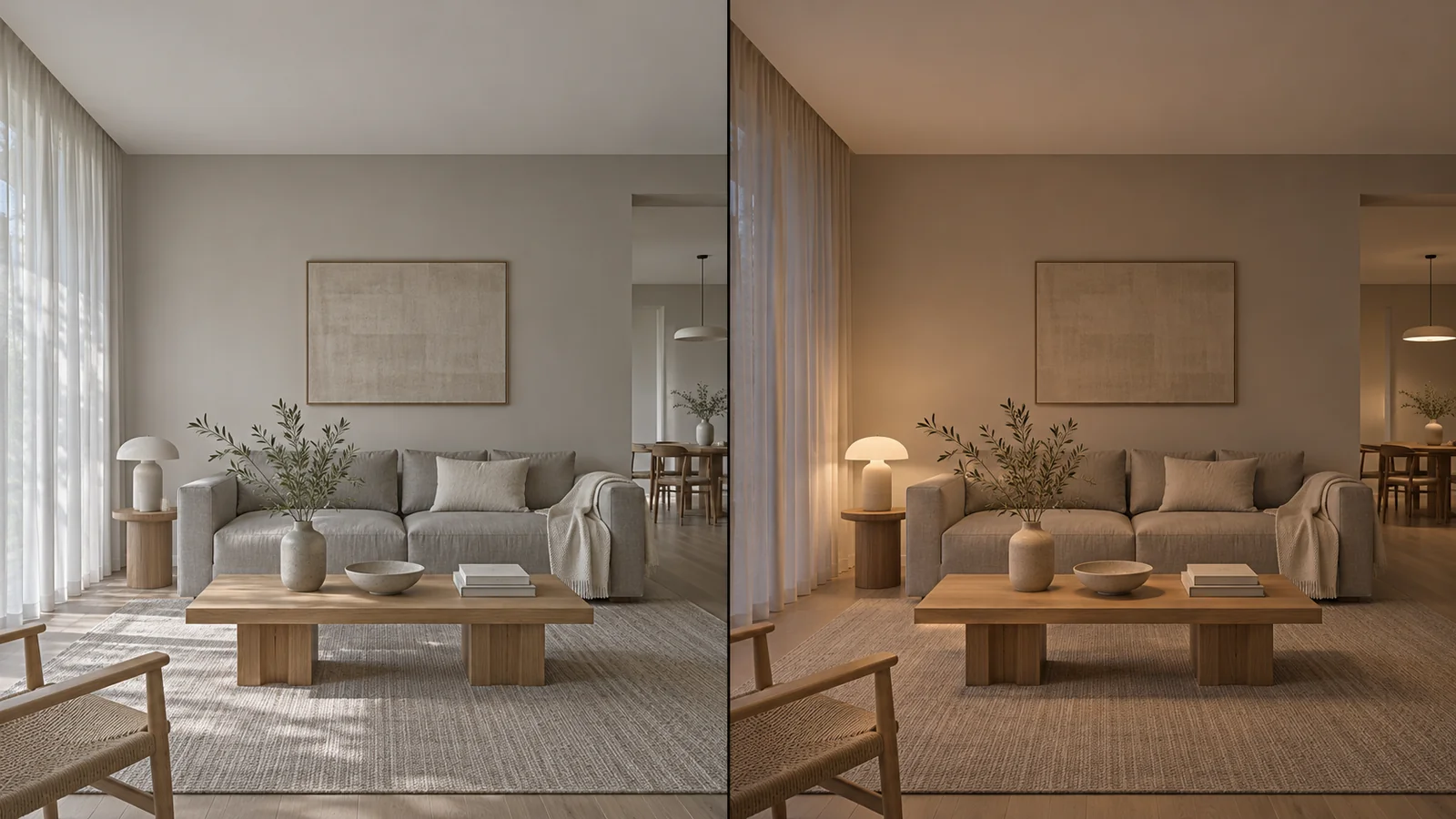
What does “warmer” actually mean?
Imagine an apartment with a pale living-room wall and an oak floor. This is a fictional example. The owners might want softer light in the evening, a less cool paint colour, or a room that feels more inviting. Ask where and when the problem shows up. Does it happen in daylight by the window, in the evening on the sofa, or only in the image they viewed on a phone?
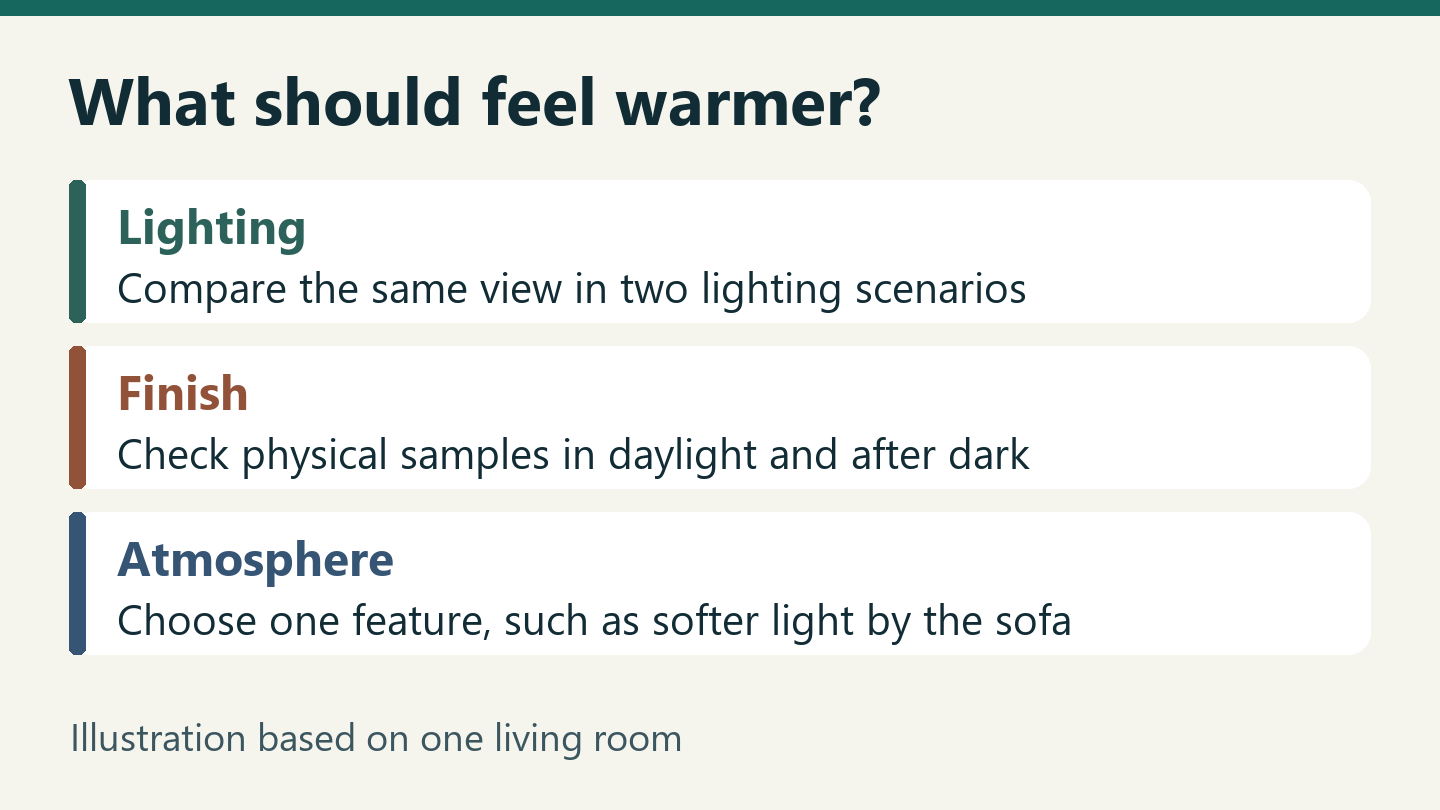
| What the client wants to change | How to check | What to record |
|---|---|---|
| Cool lighting after dark | Compare the same view under two lighting scenarios. | The selected scene and time of day. |
| The paint colour | View physical samples in the actual room in daylight and after dark. | Sample reference, location and specification version. |
| The feeling of the room | Name an observable feature, such as softer local lighting near the sofa. | What changes and what has already been approved. |
Renderings help people compare intentions. Confirm the final finish with a physical sample under the intended lighting. If the feedback is about overall atmosphere, pick one view and name the feature that will drive the comparison.
When more options help people choose
Choice studies have produced mixed results. A meta-analysis of 50 experiments found an average effect of choice overload close to zero, with substantial variation across studies. A separate meta-analysis found that the complexity of the options and the task, uncertainty about preferences, and the goal of the decision all mattered. These are studies of consumer choice. In a design review, they offer a reason to agree on the criteria before debating the number of options. Scheibehenne et al., Chernev et al.
Three paint samples under the same light may be easier to compare than two renderings with different floors, lamps and furniture. Early in a project, several distinct directions can help a client discover what they like. Before ordering materials, a narrower comparison makes it easier to see what changed.
What designers said about speaking up at work
In a U.S. industry survey by Cameron MacAllister Group and LENS, 71% of interior designers and 84% of architectural professionals reported feeling comfortable raising difficult issues within their teams. The survey measured how respondents perceived their own workplaces. It did not test whether client revisions cause fatigue. It does raise a question for a practice. Can someone say the sample is still pending before a deadline is promised? Survey report, figure 29

Two stories about the very same rendering
In one scenario, the contractor sends a message, the client marks up an old PDF, and their partner sends a voice note. The designer sorts out which comments still apply and holds the order. In the other, everyone comments on version 17 and one person confirms the decision. The designer changes a single variable and knows who approves it.
These are illustrative scenarios without measured time savings. The RIBA Plan of Work recommends formal change control during spatial coordination. A smaller residential project may use a simple agreed record of decisions. RIBA Plan of Work
What an actionable revision looks like
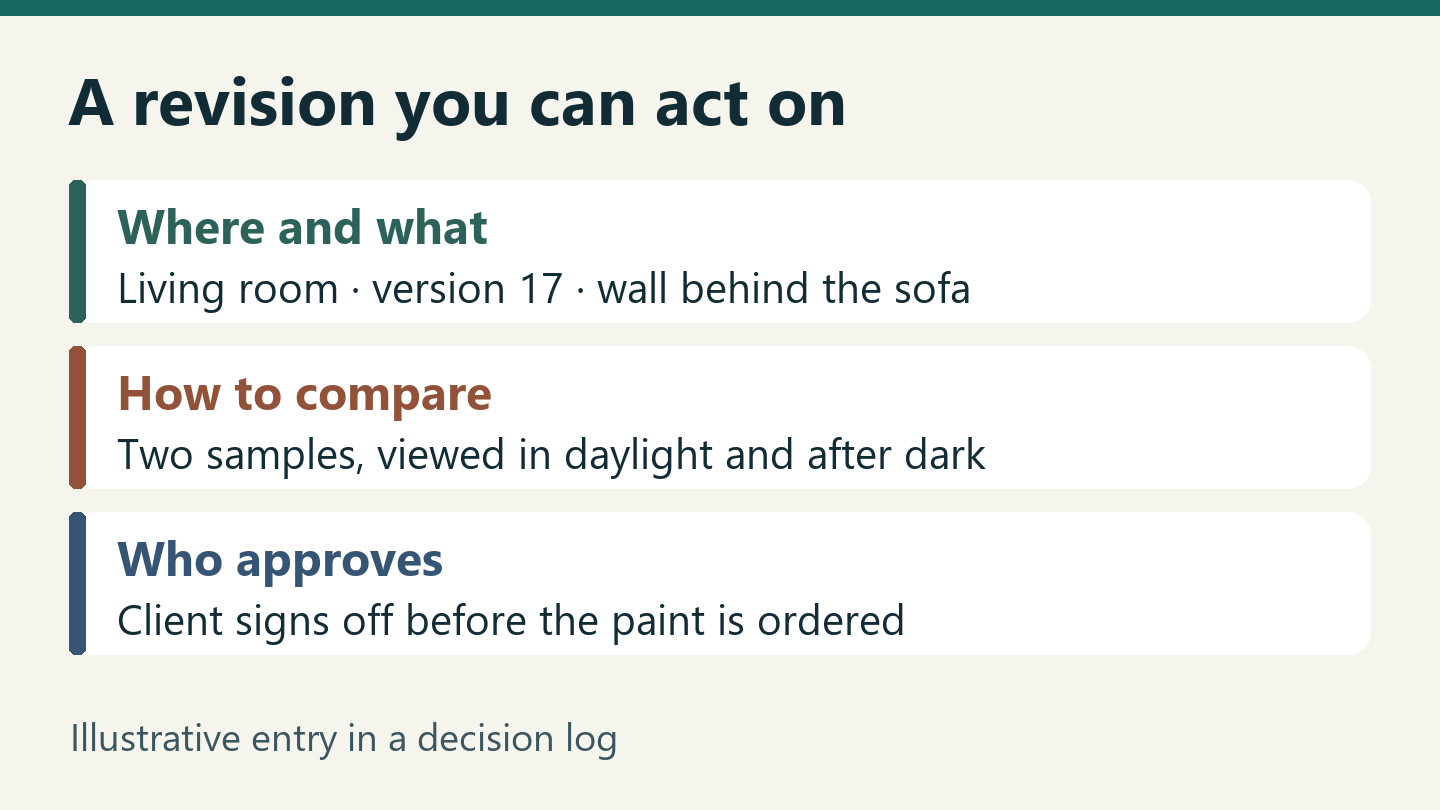
Living room · v17 · wall behind the sofa. Compare two paint samples in the room in daylight and evening light. The approved floor and furniture stay in the scheme. The client signs off on a sample before paint is ordered.
For changes after approval, record which drawings, purchases or dates are affected. Once the decision is made, share the updated version and withdraw the old one from active circulation. For more on images and plans, see the guide to AI in architecture and design.
What to do when everyone is tired of reviewing
At the next meeting, put the agreed version on screen and state one open question out loud. Ask which points are requirements and which are preferences. If the decision needs a sample or a coordination check, agree when that check will happen. People can then make the decision with better information.
Frequently asked questions
How many interior renderings are enough?
The number depends on the decisions still open. For final approval, compare options under like-for-like conditions.
Can I choose the final paint colour from a render?
Use a render to narrow the direction. Confirm the physical sample in the actual room under the intended lighting.
Who should collect revision requests?
Give the team one current version, one place to record feedback, and a named person with approval authority.
Related articles
“Nothing Happened.” Why Crews Stay Quiet About Construction Near Misses
What a construction near miss is, why a crew may stay quiet and what to put in a report. Includes a fictional example and follow-up steps.
Tired, Stressed or Burned Out? Three Stories from an Architecture Studio
Three stories from an architecture practice, WHO guidance and RIBA survey findings. Spot recurring workload conflicts and make a practical change.
Can a Construction Job Replace the Gym? What the Research Says
How a construction shift differs from a workout, what researchers measured in builders, and why heart-health findings from Denmark and the UK differ.