
Iron (Fe) is a chemical element and the basis of steel and cast iron. In everyday life, a wide variety of metal products are called “iron”, but for choosing a building material, this definition is not enough: the alloy grade, rolled shape, and protective coating are important. Let’s break down how iron differs from its alloys, how it is produced, and why steel products need protection against corrosion.
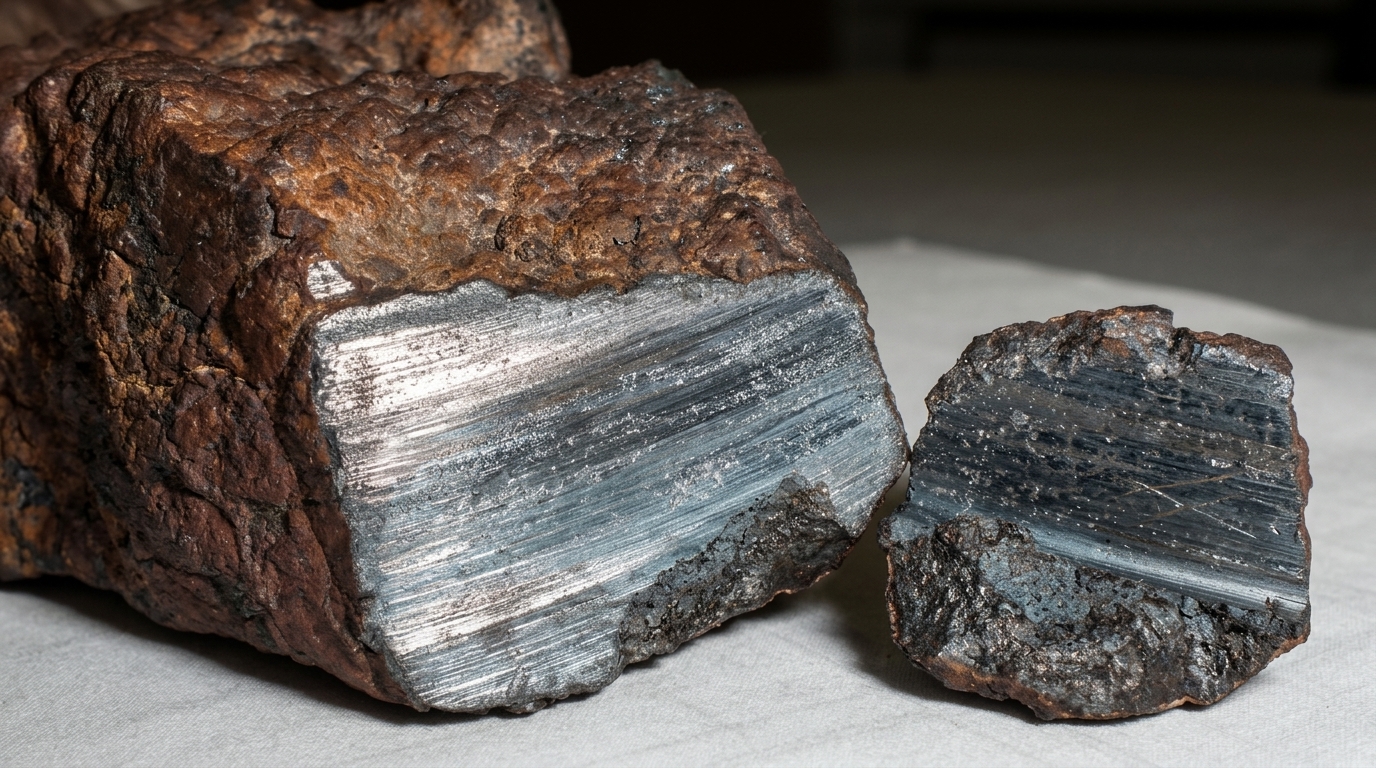
Properties of iron: main facts about the metal
Iron has an atomic number of 26. It is a gray metal with a density of about 7.87 g/cm³ and a melting point of 1538 °C. These values apply to the element Fe: they cannot be transferred without clarification to any steel or cast iron. Reference characteristics are given in the Royal Society of Chemistry (RSC) periodic table.
In nature, iron is part of minerals, including hematite and magnetite. Obtaining metal from ore requires reduction — the removal of oxygen bound to iron. Ordinary melting and chemical reduction do not mean the same thing.
From ancient iron to modern steel production
People used iron even before mastering its extraction from ore. Among the early finds are objects made of meteorite material. However, meteorite iron cannot be considered a pure metal without impurities: it is primarily an iron-nickel alloy, as explained by the American Museum of Natural History.

In early bloomery furnaces, an iron-bearing bloom with slag was obtained, which was then processed. This principle is described in Historic England’s materials on bloomery production. The history of metallurgy cannot be reduced to a single date that is the same for all regions. The mastery of smelting, the development of furnaces, and the improvement of processing happened gradually.
In the mid-19th century, the Bessemer process became an important milestone in the mass production of steel. Today, two main technological chains are used: blast furnace — basic oxygen furnace and electric arc furnace. The first is primarily associated with raw ore materials, the second — with scrap metal remelting; direct reduced iron can also be used in electric arc production. An overview of the processes is published by the World Steel Association.
How iron, steel, and cast iron differ
Iron is an element, while steel and cast iron are groups of alloys based on it. According to the general definition by worldsteel, steel contains less than 2% carbon. This does not mean its content starts at 0.6%: low-carbon steels are also steels. For a specific product, the composition is determined by the grade and material documents.
| Material | What is important to distinguish |
|---|---|
| Iron Fe | Chemical element; its reference properties do not describe all alloys. |
| Steel | An iron-based alloy with carbon and other elements. Properties depend on composition and processing. |
| Cast iron | An iron-carbon alloy with a higher carbon content. The RSC handbook indicates a typical range of 3–5%; this is not a specification for any grade. |
It cannot be claimed that any steel is equally flexible, and any cast iron is equally brittle: you need to compare specific grades and material states. The universal rule “there must be at least 45% iron” also does not replace defining the alloy and checking its composition.
There are also special iron-bearing alloys. For example, iron-chromium-aluminum (FeCrAl) alloys are used in electrical heating elements. This application is described in the Kanthal materials catalog. Operating temperature and suitability are determined by a specific grade, not by the promise of “maximum heat resistance” of the entire group.
Where iron is used and types of rolled metal
The main construction connection to iron is steel materials: sheets, coils, profiles, pipes, rebar, and fasteners. Steel is also used in machines, equipment, and household products. The name “metal” itself does not tell whether the workpiece is suitable for bending, welding, or manufacturing an exterior panel.
- Flat rolled products — sheets and coils from which flat and profiled parts are made.
- Long products — for example, round or square bars.
- Structural shapes — angles, channels, I-beams, and other profiles.
- Pipes — a separate group of hollow products with various manufacturing methods.
A slab is an intermediate workpiece for further processing, not a finished sheet. When choosing thin-sheet material, it is useful to separately study steel for thin-sheet metal.
Iron compounds and its biological role
Metallic iron and its chemical compounds have different properties and purposes. For example, iron sulfate is used in agriculture and water treatment; applications are described in the EPA fact sheet on ferrous sulfate. This is not a manual for dosing or treating plants.
In the body, iron is part of hemoglobin, which is involved in oxygen transport. Its biological role is discussed in the NIH reference. Dietary iron and industrial metal cannot be considered interchangeable materials.
Alloying, galvanizing, and polymer coating
Ordinary carbon steel can rust when exposed to water and oxygen. Changing the alloy composition and applying protective coatings help increase the material’s resistance, but these are different approaches.
- Alloying changes the composition and properties of the alloy itself. For example, chromium is included in stainless steel. Not all alloyed steel is stainless.
- Galvanizing creates a protective layer on the surface of the steel. Zinc serves as a barrier and is consumed, protecting the steel base.
- Paint or polymer coating forms an additional surface layer. Its purpose and compatibility with the base are checked according to the coating system documentation.
According to the explanations of the American Galvanizers Association, the durability of the zinc layer depends on its thickness and the aggressiveness of the environment. Therefore, galvanized steel cannot be considered protected forever. “Cold galvanizing” is often used to describe the application of zinc-rich paint; it is not identical to hot-dip galvanizing. More details about the metal itself can be found in the article “Zinc: everything you should know about this metal”.
What to check when choosing metal for a construction product
To order a sheet, profile, or finished panel, prepare the product’s purpose and operating conditions. Then match the project requirements with the supplier’s documents:
- Grade and condition of the steel, not just the general name “iron”.
- Thickness, geometry, and agreed tolerances.
- Type of metallic and organic coating, if provided.
- Requirements for edge processing, fastening, storage, and maintenance.
- Documents for a specific batch and application limitations.
This is a list of questions for selection, not a bearing capacity calculation or a universal specification. For a specific facade, fence, or ceiling system, the project and the technical data of the product remain decisive.
Short answers about iron
Are iron and steel the same thing?
Iron is the chemical element Fe. Steel is an alloy based on it. In everyday speech, these names are mixed up, but when ordering material, a specific grade is needed.
Does a galvanized sheet consist of zinc?
No. A galvanized steel sheet has a steel base, and the zinc forms a surface coating.
Does a coating replace checking the steel grade and thickness?
No. The base composition, geometry, and protective layers solve different tasks. They are checked together with the requirements for the finished product.
Related articles
How to Choose Building Materials Online: A Checklist
Checklist for buying building materials online: product requirements, documents, seller verification, total delivery cost, and batch inspection.
How to Fix Dents in Metal: Repair or Replacement
Dents on metal not only degrade its aesthetic appearance but also trigger the gradual peeling of the protective coating from the steel base — which is…
Laser Metal Cutting: Principles, Capabilities, and Quality
The principle of laser cutting, material and assist gas selection, equipment limitations, and edge inspection. We explain what needs to be confirmed before cutting and subsequent…