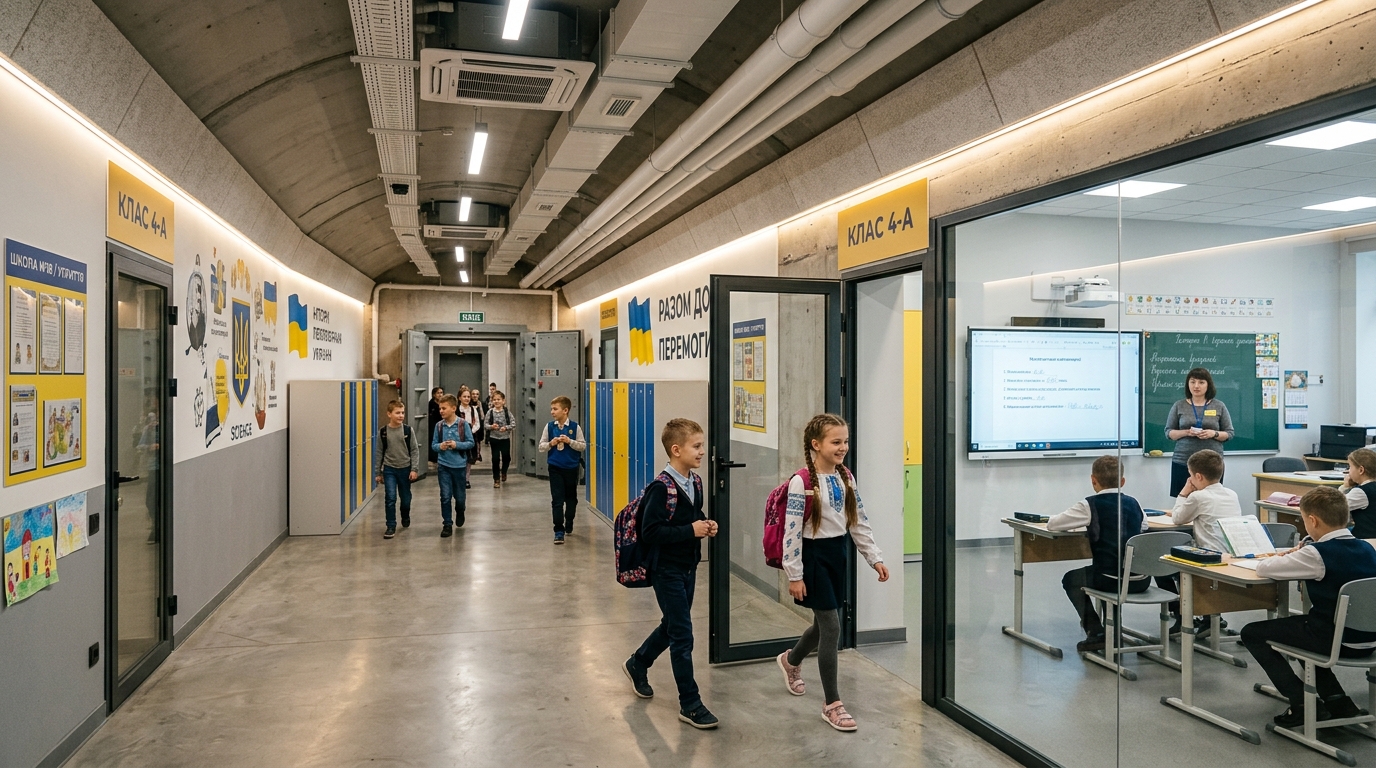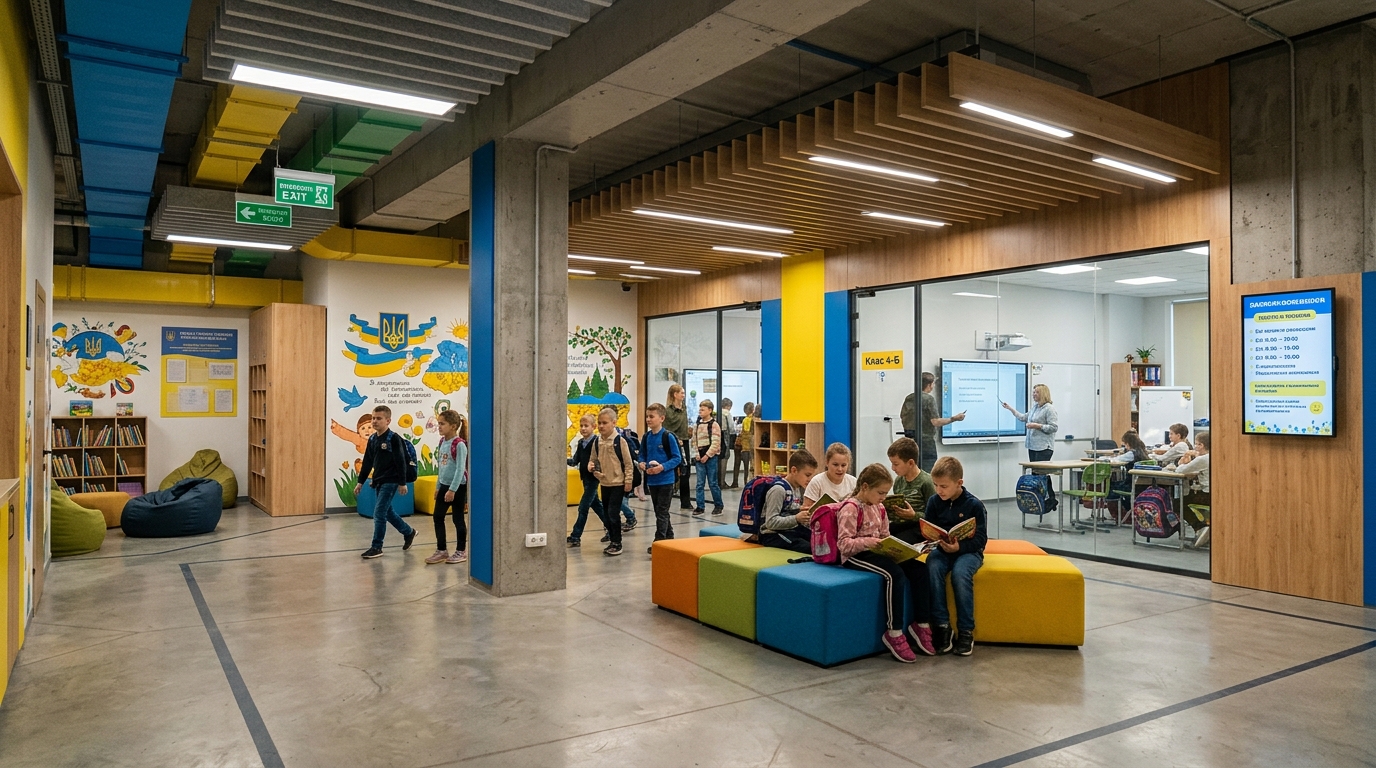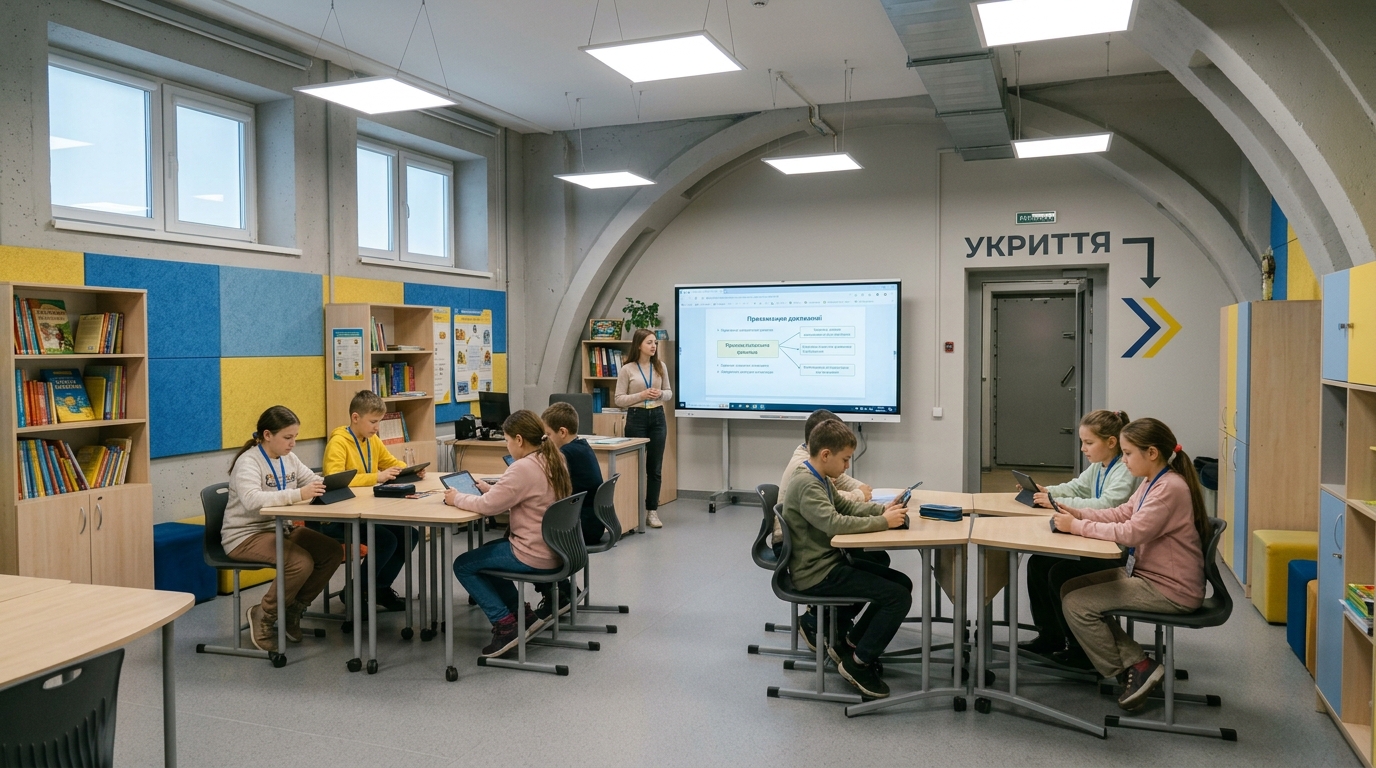
Analytical Report: Transformation of Educational Space and Top 5 Underground Schools in Ukraine
Generic selectors
Exact matches only
Search in title
Search in content
Post Type Selectors

Analytical Report: Transformation of Educational Space and Top 5 Underground Schools in Ukraine

June 29, 2026
6  

Introduction to the issues of underground education in the face of existential threats

Conditions of constant threat and systematic destruction of ground infrastructure have forced the Ukrainian educational system to seek unprecedented ways to preserve children’s access to knowledge. Starting from 2022, the evolution of protective structures has come a long way from temporary shelters in ill-suited basements of apartment buildings to the creation of full-fledged autonomous underground complexes, which are capable of functioning under the highest levels of danger. As of today, the concept, known as an underground school, has become not just a forced step, but a new architectural, engineering, and pedagogical standard, which allows for in-person learning in a safe environment, completely independent of external threats, air raid alerts, and the state of ground energy or utility infrastructure.

This report offers a comprehensive, in-depth analysis of five of the most significant underground school projects in Ukraine. The selection of these specific facilities is based on their scale, the innovation of their engineering solutions, unprecedented volumes of funding, and deep social impact on local communities. The research covers cities that are under the greatest pressure and are in immediate proximity to combat zones or subject to regular air attacks — Kharkiv, Zaporizhzhia, and Dnipro, where the creation of such spaces has turned into a fundamental issue of survival for entire territorial communities and the prevention of an irreversible demographic catastrophe, associated with the mass exodus of families with children.

An analysis of available data indicates, that the construction of such facilities goes far beyond purely construction or architectural tasks. It forms a fundamentally new reality of youth socialization, requires the development of new pedagogical methods for closed spaces, and needs colossal state and donor investments, which, in turn, require strict anti-corruption control. The transformation of the educational process, moving it underground, and creating inclusive spaces within the soil — is a unique global experience, which is being formed in Ukraine today and requires detailed scientific and analytical reflection.
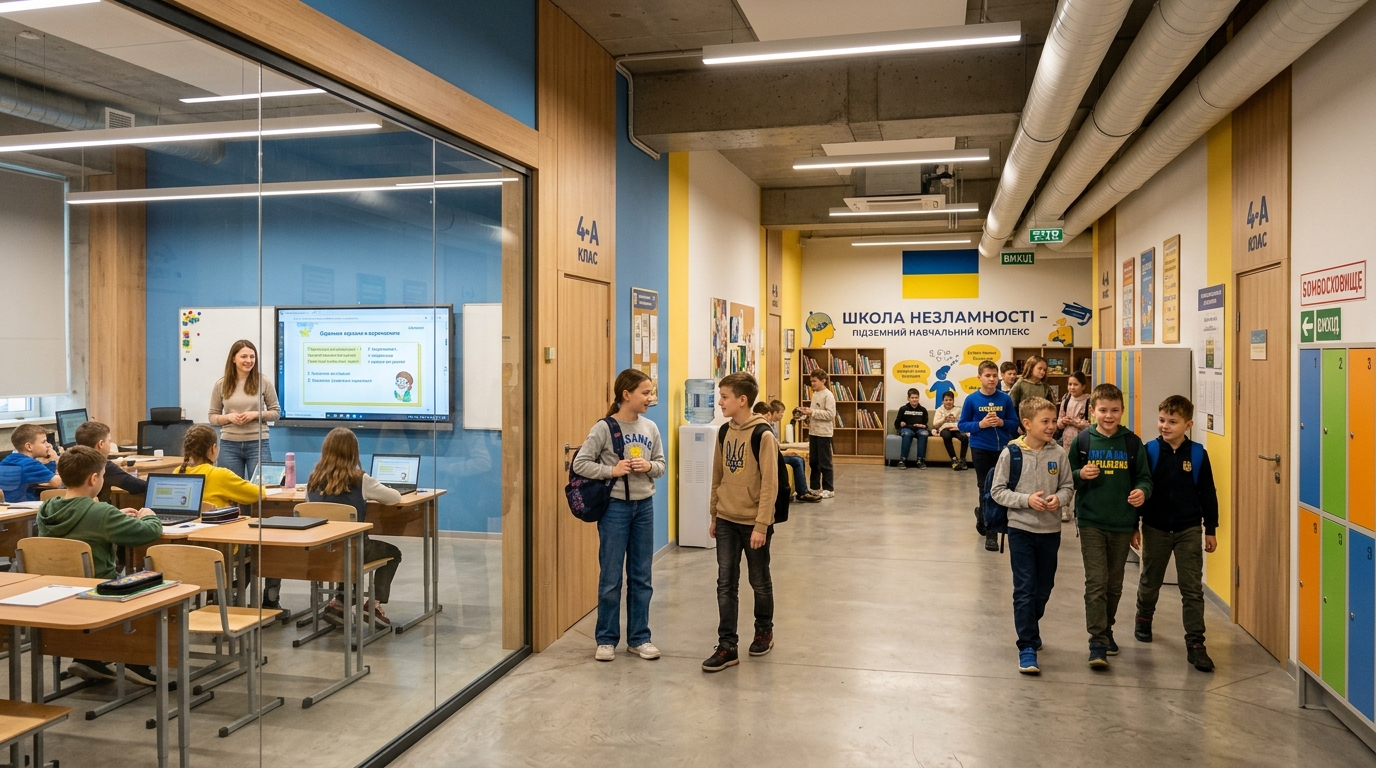
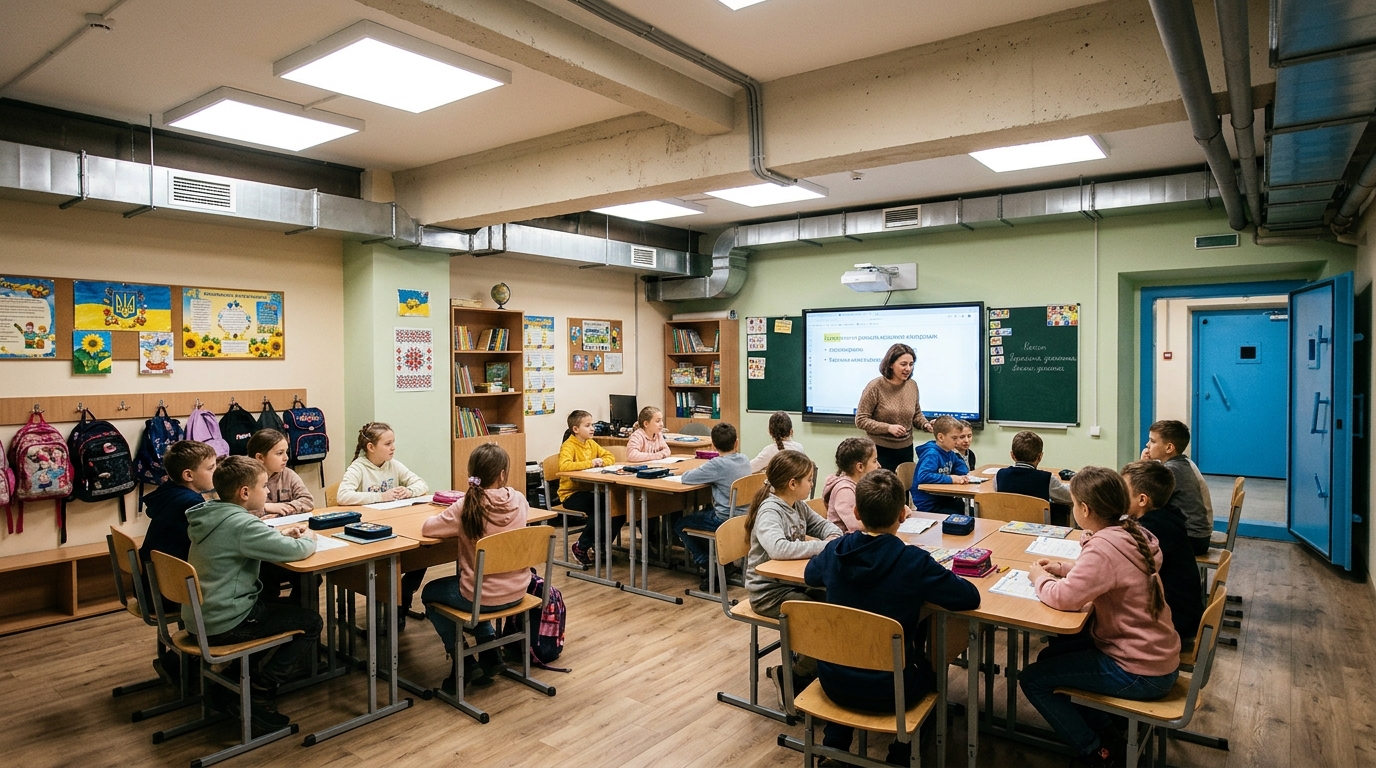
Modern underground school Ukraine 202606250857

Methodology of selection and criteria for evaluating leaders of infrastructure transformation

To form an objective list of the most prominent projects, a comprehensive evaluation methodology was developed and applied. This methodology is based on multi-factor analysis, which goes beyond simple budget comparisons. Not only the stated cost of construction was taken into account, but also the actual capacity of the facility, the level of implementation of inclusive solutions for children with special educational needs, the speed of construction from the foundation stage to the ribbon-cutting, engineering complexity (including depth of placement and level of protection), and public resonance.

The table below presents summarized analytical data on the five selected institutions, which represent different conceptual and financial approaches to solving the problem of a safe educational space in various regions of the state.

Facility Name / Location Estimated Cost (million UAH) Design Capacity (persons) Learning Format (shifts) Key Engineering and Social Features Sources of Funding and Strategic Partnership
First Underground School (Kharkiv, Industrial District) ~58.8 900 2 shifts 20 autonomous classrooms, use of 3D printing equipment, psychological relaxation rooms

Local budget of Kharkiv, USAID

Shelter of Lyceum No. 144 (Dnipro) 174.8 500 Not regulated Dynamic contract price, advanced life support systems, smoke protection, high-cost materials

State funds, European infrastructure recovery funds

Shelter-Lyceum in Korotych (Kharkiv Oblast) ~80.0 472 2 shifts 6 inclusive classrooms, availability of specialized school buses, powerful center for extracurricular activities

Fund for Liquidation of Consequences of Armed Aggression, regional budget

“Sich Collegium” (Zaporizhzhia) 116.9 1000 2 shifts Educational hub for evacuated children from frontline zones, change of primary location due to complex geology

Zaporizhzhia regional budget, UNICEF

School on Saltivka (Kharkiv, Hvardiytsiv Shyronintsiv St.) 160.7 Not regulated Not regulated Most expensive project in the city of Kharkiv, use of premium European materials, sole bidder

City budget, state educational subvention

These objects are not just a list of construction sites; they demonstrate the evolution of engineering thought and management decisions under conditions of crisis management. Further, each of these projects will be analyzed in maximum detail in terms of its architectural significance, technical execution, social function, and financial transparency.

Evolutionary transition: from metro school improvisation to permanent underground complexes

To fully grasp the scale and significance of the emergence of specialized underground schools, it is necessary to turn to the history of this process. For a long time, the only alternative to distance learning in large cities suffering from shelling remained the so-called “metro school”. Kharkiv was the first city to implement this approach, deploying an educational space directly at the stations of the operating metro system.

Analysis of the operation of the metro school in Kharkiv shows that it covered over 2,000 children who studied daily at five metro stations. Organizing this process required colossal logistical efforts: children from all over the city were centrally and free of charge transported by special buses accompanied by patrol police crews. Free meals were organized directly at the stations, uninterrupted Internet access was provided, video surveillance systems were installed, and constant duty of medical workers and enhanced security was organized.

However, despite the undeniable success of this temporary solution in maintaining live contact between teachers and students, the metro by its nature remains a transport hub. Acoustic discomfort, vibrations from train traffic, the lack of natural daylight, and limited sanitary zones did not allow the metro school to be considered as a long-term strategy. This exhausting, albeit heroic, stage crystallized the urgent need to create separate, quiet, specifically designed underground spaces for pedagogical needs. It was this request from society and educators that became the catalyst for the development and funding of those five outstanding projects, which are the subject of this study.

Modern underground school Ukraine 202606250857 2

Analysis of project 1: The first specialized underground school in Ukraine in the Industrial District of Kharkiv

This project has gone down in the history of Ukrainian educational infrastructure as a pioneering step that set the tone and established basic standards for all subsequent initiatives across the state. Officially opened and commissioned in May 2024, the facility in the Industrial District of Kharkiv demonstrated that the construction of a radiation shelter of the highest class can be completed in extremely tight timeframes and at relatively moderate costs.

The estimated cost of this school was about 58.8 million UAH. When comparing this indicator with later projects implemented in other regions or even in other districts of Kharkiv itself, this sum seems extremely optimized and cost-effective. The architectural and spatial organization of the facility allows for 900 students. To maximize throughput and ensure access to in-person education for as many children as possible, training was organized in two full shifts. Thanks to this approach, 600 children were able to sit at their desks in the first year after opening, which was a huge relief for families in the Industrial District.

Structurally, the premises consist of 20 separate classrooms, which provide the necessary soundproofing and privacy during the learning process. In total, 21 classrooms of various purposes have been equipped in the school. The project was implemented on the direct initiative of the Mayor of Kharkiv and received powerful technical and financial support from USAID, which allowed the space to be saturated with advanced technologies.

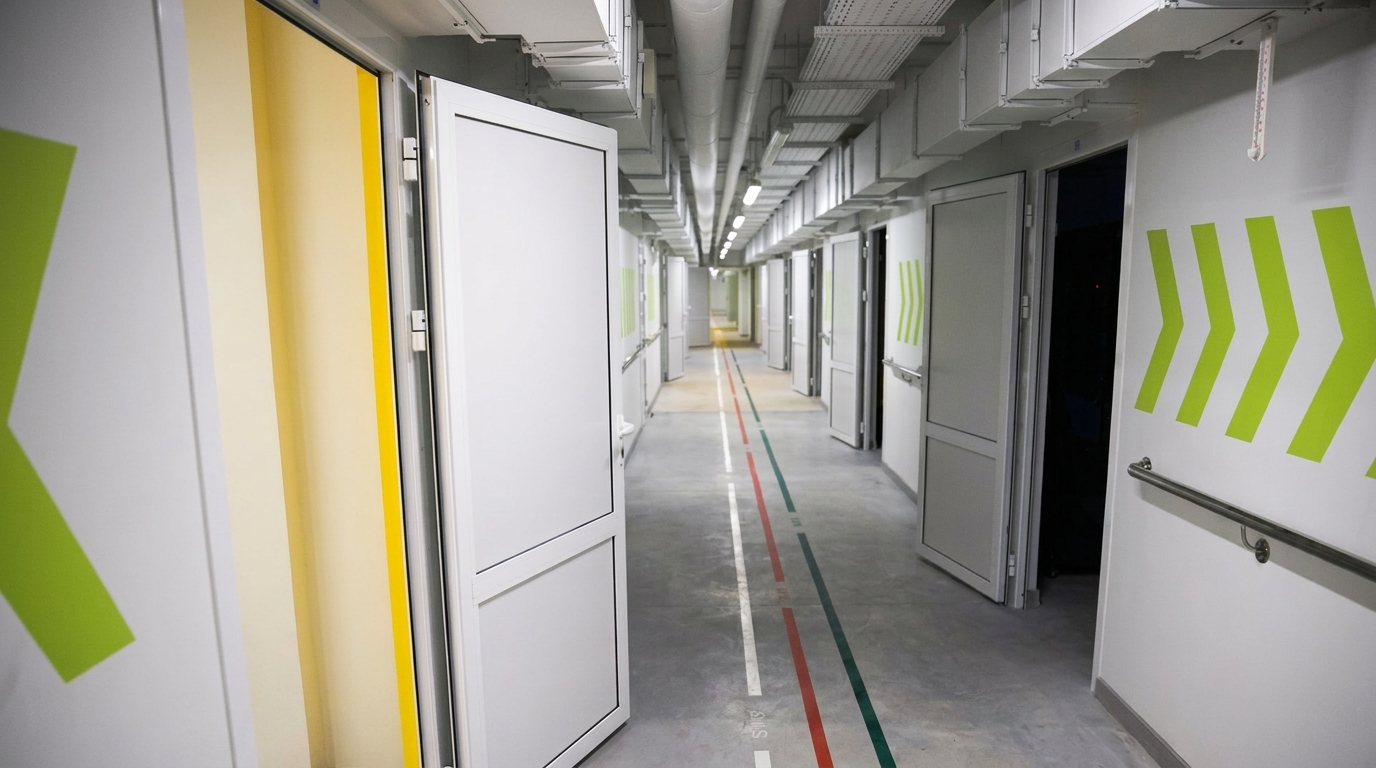
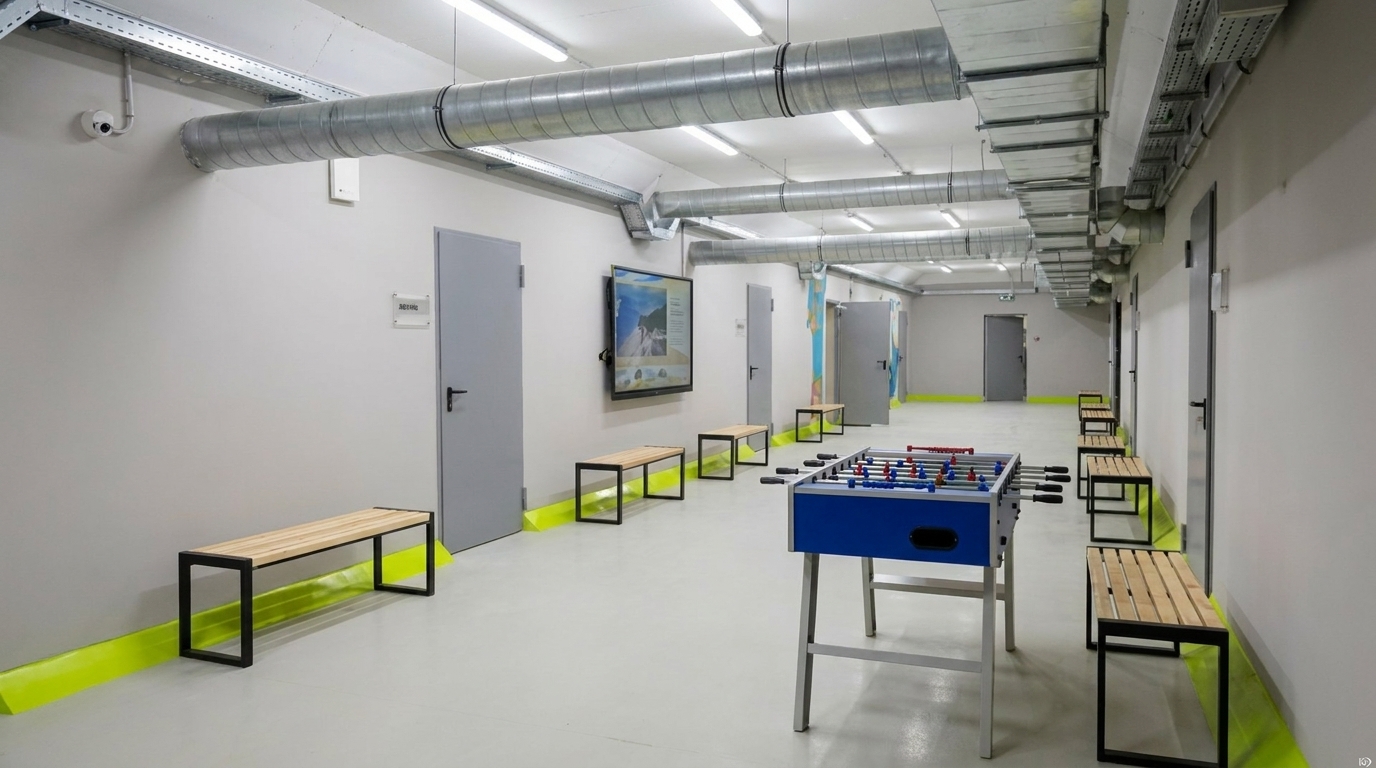
The uniqueness of this institution lies not only in the thickness of its concrete walls but also in the unprecedented level of technological and social equipment. The underground school has a full-fledged canteen, a professionally equipped medical office, a relaxation room, and a specialized room for psychological support, which is critical for the psycho-emotional recovery of children who face the traumatic experience and challenges of war daily. Thanks to a well-thought-out ventilation system and imitation of daylight, staying underground does not cause claustrophobia.

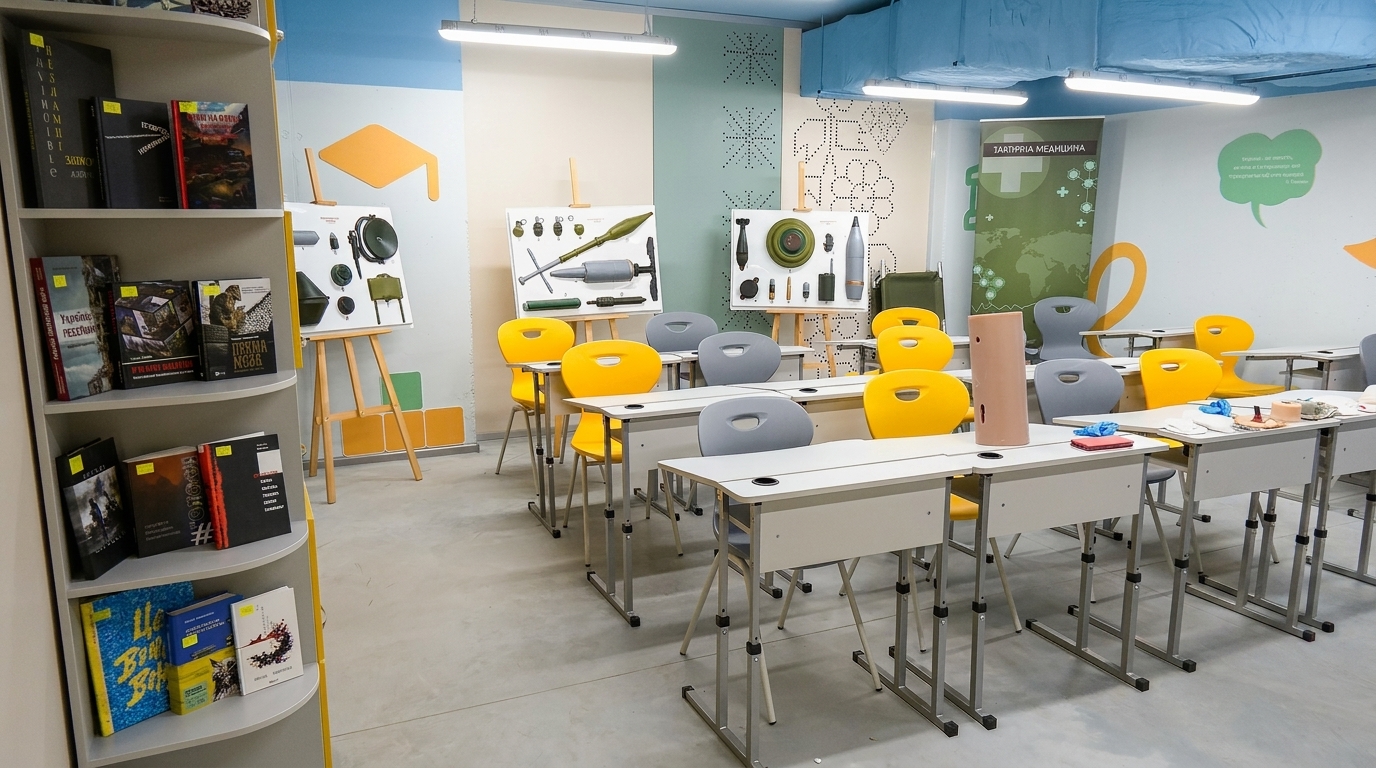
The educational process here is raised to the highest modern level: students have the opportunity to use interactive whiteboards for presentations and even create and print their own projects on 3D printers. This forms practical skills needed in the modern world. It is because of such striking contrast between the harsh external reality of the destroyed city and the high-tech, cozy space underground that this institution received an unofficial status and the metaphorical name “almost Hogwarts” in society. Children perceive this space not as a bomb shelter, but as a magical, safe environment where they can be just schoolchildren again.

Analysis of project 2: A symbol of massive funding and premium solutions — Lyceum No. 144 in Dnipro

Dnipropetrovsk Oblast, acting as a powerful industrial and financial center, has launched one of the most expensive and large-scale campaigns for the construction of safe educational spaces in Ukraine. According to analytical systems, the region has concluded at least 13 contracts for a total amount of over 1.2 billion UAH. In this context, the most striking and significant example of unprecedented funding is the construction of a shelter for Lyceum No. 144 named after Levi Yitzchak Schneerson in Dnipro.

The expected cost of this facility, according to the tender documentation, is 174.8 million UAH. In terms of per student, this project is one of the most expensive in the state, as the design capacity of the structure is calculated for only 500 people. Construction is carried out practically “from scratch,” involving the laying of all new engineering networks, life support systems, and comprehensive improvement of the adjacent ground territory. Funding partly relies on support instruments from European partners.

The high cost of the project is partly explained by unprecedented requirements for structural strength and logistical challenges. The design documentation provides for the use of colossal volumes of heavy concrete class B.10 (M150) and hydrotechnical concrete C25/30 (W10), as well as periodic profile reinforcing steel of increased strength class A-III and laminated waterproof plywood for forming ideal formwork geometry. Excavation work involves the development of soil by tracked excavators with subsequent removal of tens of thousands of tons of soil to a distance of 30 kilometers, which creates a huge financial burden on the logistical component of the estimate.

The engineering systems of the shelter of Lyceum No. 144 are impressive in their complexity and duplication of safety levels. In addition to standard heating, ventilation, water supply, and sewage systems, the latest smoke protection systems, an extensive network of fire and burglar alarms, as well as a comprehensive video surveillance and reliable communication system are being installed here. The space will contain a medical unit and shower cabins, ensuring the possibility of long-term autonomous stay.

However, this project also sharply highlights the problem of pricing and anti-corruption monitoring in the context of the functioning of a closed military economy. Analysis of estimates by independent experts revealed a probable overpayment for building materials in the amount of 3.4 million UAH. The use of contracts with a so-called dynamic price leaves room for constant adjustment of the final cost of work in the process of their execution. In addition, the contractor is a structure whose owner is associated with the former management of the regional administration and which previously appeared in investigations into other large-scale infrastructure projects. This requires increased and continuous control by audit bodies and the public over every hryvnia spent.

For comparison, in the city of Samar (formerly Novomoskovsk) of the same region, a similar capacity project is being implemented — a shelter for Lyceum No. 6 for 500 people worth 175 million UAH, which has more than 30 rooms with a total area of almost 2000 square meters. Analysts there record a probable overestimation of the cost at the level of 25.7 million UAH, which underscores the systemic nature of the pricing problem in the region.

Analysis of project 3: Inclusivity, social integration, and multifunctionality — Underground Lyceum in Korotych

The project in the settlement of Korotych in Kharkiv Oblast is a brilliant example of how the concept of an underground school is successfully adapted and scaled to the needs of smaller territorial communities in rural or suburban areas, where educational infrastructure plays the role of a main cultural hub. The cost of building this facility was about 80 million UAH, which is a balanced average for regional projects of this level. Funding was carried out with the involvement of the Fund for Liquidation of Consequences of Armed Aggression and regional budget funds.

The new school year in this underground lyceum was started by 472 students, among whom 50 first-graders give special hope, whose first school experience began in the most modern secure environment. Learning is organized in two shifts using an effective blended format, which allows combining the safety of the underground space for key subjects with the flexibility of distance learning for additional disciplines.

The fundamental difference of the lyceum in Korotych is its unprecedented focus on inclusive education. Analysis shows that six inclusive classrooms have been created and successfully operate in the institution, where nine children with special educational needs are taught. To ensure their convenient and absolutely safe access to the educational institution, the community purposefully received special school buses, which are technically equipped with lifts and inclusive seats. This demonstrates an extremely deep and mature understanding that the right to quality education in a crisis state must be unconditionally guaranteed for all categories of the population without exception.

Furthermore, this space brilliantly solves the problem of social isolation and stagnation of youth. The underground school premises are used much more intensively than a regular educational institution. In addition to the first and second shifts, where programs specifically aimed at overcoming educational losses are implemented, the lyceum serves as a powerful center for extracurricular leisure. On the basis of the shelter, sections of the sports school, various creative circles, and full-fledged art groups of the local palace of culture operate. This approach unequivocally confirms the thesis that multifunctionality and maximum occupancy of premises are the key to the social and economic justification of such massive capital buildings in small communities.

Analysis of project 4: A hub for saving the future of frontline territories — “Sich Collegium” in Zaporizhzhia

Zaporizhzhia Oblast, a significant part of which is constantly under intense fire, chose the strategy of creating large, anchor educational hubs. The regional authorities set an ambitious goal to build at least 21 safe schools to return more than 30,000 children to in-person learning. The third underground school opened in the city was a large-scale project for students of the “Sich Collegium” specialized boarding school. Its opening in February 2025 was accompanied by the attention of the highest leadership of the state and international partners, which underscored the strategic, national importance of this facility.

The project, the concept of which was developed jointly with specialists of the relevant ministry and UNICEF, cost the budget 116.9 million UAH. It is worth noting that at the initial stage, a cost of 112.6 million UAH was announced, meaning that in the process of complex construction, which lasted a little over half a year (from June 2024), the estimate objectively grew by 4.3 million UAH.

This powerful institution is designed for the simultaneous presence of a large number of people and is capable of serving 1,000 children in two shifts. The most important socio-demographic aspect of this project is that exactly half of the students (500 people) are children who were forced to evacuate from the frontline and temporarily occupied territories of Zaporizhzhia Oblast. For them, this school became the first real opportunity to return to normal in-person learning, see peers and teachers in person after years of forced isolation, which is destructive to the child’s psyche.

An interesting engineering and management case was the problem of location. Historically, the “Sich Collegium” (opened back in 1992) is located in the Khortytskyi district of the city. However, thorough geological and geodetic surveys on the territory of the institution itself showed that complex soil conditions make the safe construction of a massive underground object impossible. Instead of canceling a vitally necessary project, a flexible decision was made to move construction to another district of the city, ensuring student logistics.

The interior design of the space is impressively thoughtful: 14 spacious classrooms, a medical office, specialized recreation areas, and sports corners, equipped with modern multimedia complexes and ergonomic furniture. This completely negates the psychological discomfort of the lack of windows and being under the thickness of the earth. To understand the scale of the transformation in Zaporizhzhia, it is also worth mentioning the first open school in the Komunarskyi district (based on gymnasium No. 106), where 1,000 students also study. It became a model of creating comfort: from providing schoolchildren with favorite dishes in the underground canteen to organizing safe training for young rescuers and conducting student self-government events.

Analysis of project 5: The most expensive infrastructure complex in the metropolis — School on Saltivka in Kharkiv

The Saltivka residential area in Kharkiv, which went down in history as one of the areas of Europe most affected by artillery shelling, required a radical, special approach to restoring destroyed educational infrastructure. Given the colossal population density, which remains despite the destruction, the city authorities announced the opening of three underground schools here before the start of the new school year. The object located on Hvardiytsiv Shyronintsiv Street attracted the most attention from analysts, journalists, and auditors.

This protective structure officially became the most expensive underground school both in the city of Kharkiv itself and in the entire Kharkiv Oblast. A contract for the impressive sum of 160.7 million UAH was concluded with a private enterprise, which turned out to be the sole participant in the electronic auction. The expected initial cost was 163.89 million, but during the procurement procedure, the price was slightly reduced.

This project sparked extremely lively, and sometimes acute, discussions among representatives of anti-corruption centers due to significant, difficult-to-understand anomalies in the estimated documentation. For example, the financial plans included the use of specialized Belgian artificial grass (likely for equipping an indoor or enclosed sports field) at a price of 877 UAH per square meter, whereas market analysis shows similar materials available from 200 UAH. A similar situation arose with high-tech Swiss waterproof PVC membranes (prescribed at 852 UAH/sq.m with a market price from 350 UAH) and elite repair mixtures, whose cost in the estimate (151 UAH/kg) was twice as high as the retail price (74 UAH/kg). Even the price of the basic building material — ordinary cement grade M400 — was inflated to 8 UAH per kilogram against a market price of 5 UAH.

Despite serious financial contradictions and questions about the transparency of pricing, the architectural scale and engineering complexity of this project are impressive. Expenses of 160.7 million UAH are almost 2.5 times the cost of the first historical school in the Industrial District of Kharkiv (58.8 million UAH), which indicates the use of fundamentally different, significantly more expensive construction technologies, the use of imported premium-class materials, and, likely, a significantly larger area and depth of placement of the facility. Demand for safe places for learning in the Saltivka district remains extremely high, and the authorities’ strategy is aimed at creating facilities of the highest class of reliability, which would guarantee absolute safety in one of the most urbanized and vulnerable sectors of the city. In general, new locations continue to be opened in Kharkiv, including in the Slobidskyi and Kholodnohirskyi districts, forming a network of autonomous bunker schools.

Architectural, engineering, and safety standards of the latest underground spaces

The construction of specialized protective structures for educational purposes requires strict adherence to the strictest state building codes, which were urgently adapted to the realities of modern war. Analysis of the published technical specifications shows that modern underground schools are designed exclusively according to the A-4 protection class. This is the highest state standard for non-military civil protection facilities, which means a full-fledged, autonomous radiation shelter (RS).

Constructive features and dimensions

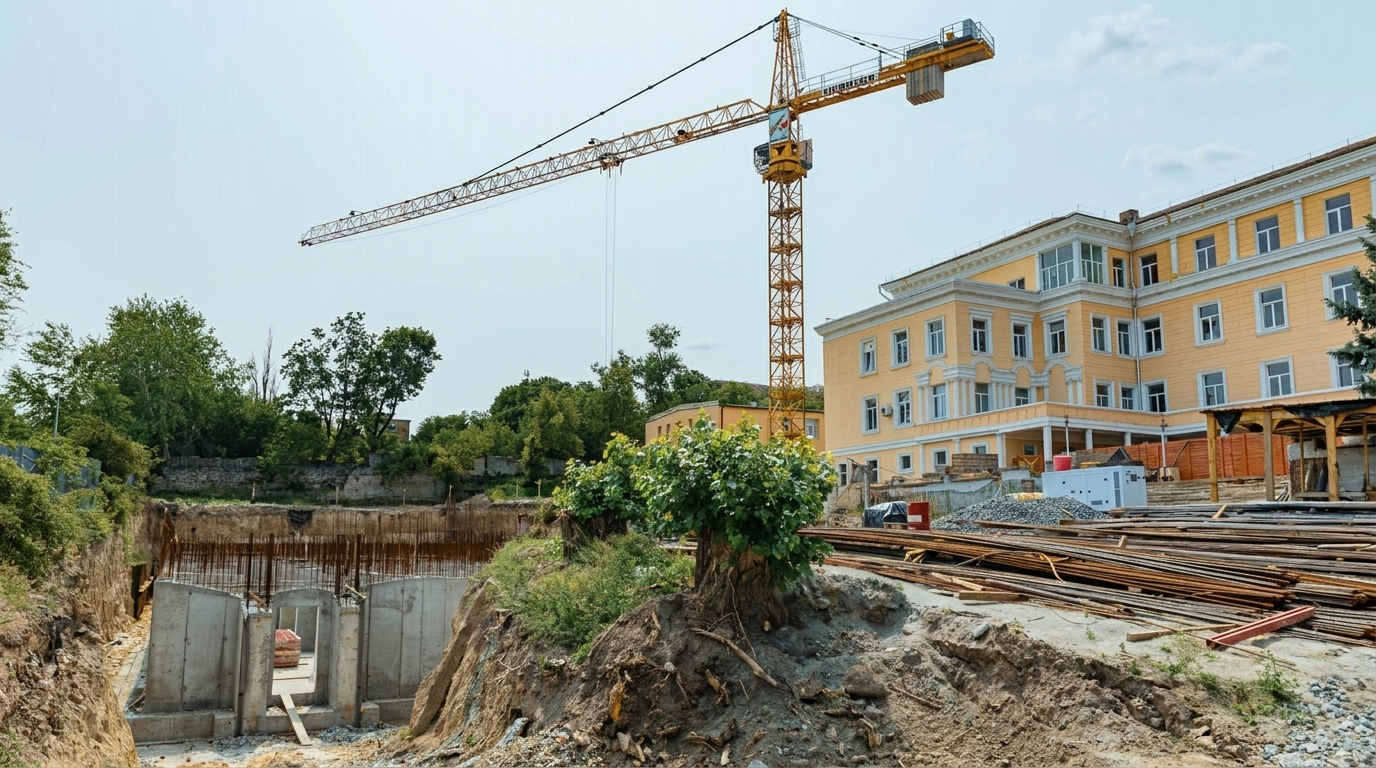
The depth of laying such massive structures varies from 2 to 4 meters below the zero level of the ground. This indicator is calculated individually and depends on local geological conditions, terrain changes, and the groundwater level (which was described in detail in the expertise of the Kozatskyi Lyceum in Zaporizhzhia). The overall dimensions of the underground parts are impressive: for example, the RS of the Kozatskyi Lyceum has dimensions in axes of 45.9 x 31.5 meters , and the project in the city of Samar (Lyceum No. 6) occupies an area of almost 2000 square meters (63 x 33 meters).

The thickness of the external monolithic walls of reinforced concrete is at least 400 millimeters. To achieve maximum tensile and compressive strength, heavy concrete of special hydrotechnical grades with hydrophobic additives is used. To protect against flooding, high-tech polymer membranes (e.g., Sikaplan type) are used, which guaranteed to prevent the penetration of groundwater into the premises.

Autonomous life support systems

A critical, non-alternative element of every project is the absolute autonomy of the facility. Modern shelters are designed for the continuous stay of hundreds of people for at least two days in complete isolation from the outside world. To ensure this standard, they are equipped with:

  1. Complex, multi-level filter-ventilation systems that can clean intake air not only from carbon dioxide but also from radioactive dust, biological agents, and chemical warfare agents.
  2. Sources of uninterruptible and autonomous power — ultra-powerful diesel generators (from 10 kW and above, depending on the area), which automatically switch on in fractions of a second in case of power failure of the external network.
  3. Special water supply entry rooms with tanks for storing a strategic supply of drinking water, as well as fully autonomous forced drainage and sewage systems.
  4. Climate and temperature control, including powerful electric convectors for heating massive concrete rooms during the winter period.

The spatial organization inside is regulated with military precision. In large-scale projects, such as Lyceum No. 6 in Samar for 500 people, architects provided for more than 30 separate rooms of various functionality. Besides learning halls (which are clearly zoned for junior school of 608 sq.m and senior school) , the presence of a medical unit, shower cabins, several isolated sanitary units, pantries for storing food, rooms for safe storage of contaminated outdoor clothing (in case of chemical threat), and a protected point for controlling all electronic systems of the facility is mandatory. All objects are designed with accessibility in mind — lifts and ramps for people with disabilities are installed.

підземні школи в Україні 202606250857 2

Psychological dimension and overcoming the distance learning crisis

Moving a complex learning process underground creates unique, unprecedented challenges for pedagogy and child development psychology. Analysis of the sociological situation in the frontline regions (Zaporizhzhia, Kharkiv, Dnipro) convincingly shows that prolonged, multi-year remote (distance) learning has led to critical, and sometimes catastrophic, educational losses, reduced concentration, and deep disruption of socialization skills among young people. The opening of the first underground objects in the Komunarskyi and Khortytskyi districts of Zaporizhzhia demonstrated a colossal, accumulated public request for a return to normal, live communication.

Studies record a striking positive psychological shift: instead of the expected fear of the enclosed bunker space, children and teenagers perceive these objects as saving islands of stability. The reflection of the students themselves is the best indicator of the success of these projects. For example, thirteen-year-old Anna notes that she last truly sat at a school desk at the beginning of 2022, and receiving information “one-on-one” remotely from a screen does not replace fun lessons with new equipment and communication with peers. Younger students miss simple joys, such as fresh buns from the school canteen, and high school students motivate their return to the desks with a desire to gain quality knowledge for the future reconstruction of the country as architects or engineers.

As practicing junior school teachers note, the ability to conduct lessons without chaotic interruptions for constant air raid signals fundamentally changes the level of concentration and material absorption. Teachers get the opportunity to timely identify the psychological needs of children and provide them with emotional support “here and now,” which was absolutely impossible to implement via computer monitors.

Due to the objectively limited capacity (on average from 400 to 1000 people per one infrastructure object), educational institutions are forced to optimize their schedule and work in two shifts. This requires strict time management from school administrations. Significant attention is paid to extracurricular activities to compensate for the lack of physical activity. Understanding that children spend hours underground, architects masterfully integrate sports corners, relaxation zones with soft furniture, and play locations into the strict concrete spaces.

сучасні школи україни 202606250857 2

Economic dynamics, tender risks, and anti-corruption control

The large-scale implementation of the program for creating a network of underground educational spaces has become a serious stress test for state, regional, and local budgets, as well as for the public procurement system. The scale of funding is unprecedented: only on the territory of Dnipropetrovsk Oblast, electronic procurement system analysts recorded the signing of 13 large contracts for a total amount of over 1.2 billion UAH.

The table below provides a comparative analysis of economic anomalies and potential financial risks identified by auditors during the construction of key facilities:

Infrastructure Facility Estimated Project Cost Potential Overpayment Identified / Risks Character of Price Inflation and Problematic Positions
Lyceum No. 6 (city of Samar) 175 million UAH

~25.7 million UAH

General systemic inflation of rates under the condition of a dynamic contract price
“Sich Collegium” (Zaporizhzhia) 116.9 million UAH

~17.0 million UAH

Polystyrene concrete (overpayment over 1.5 million), crushed stone, hot asphalt concrete mixtures, metal fencing
Lyceum No. 144 (Dnipro) 174.8 million UAH

~3.4 million UAH

Basic building materials; contractor company appears in cases from previous years
School on Saltivka (Kharkiv) 160.7 million UAH

Significant (exact sum requires deep audit)

Belgian artificial grass, Swiss PVC waterproofing membranes, Sika repair mixtures, M400 cement
Gymnasium No. 29 (city of Dnipro) 120.9 million UAH

~2.3 million UAH

General capital construction materials

The specifics of the functioning of the economy during martial law legislatively allow customers to conclude contractual agreements using significantly simplified procedures. In Kharkiv Oblast, a significant portion of monopoly contracts was obtained by the “Trest Zhytlobud-1” enterprise without conducting classical, open competitive auctions. On one hand, this approach is logically explained by the urgent need for the fastest possible construction of vital facilities before the start of the new school year (as happened in Kharkiv and Zaporizhzhia). On the other hand, the complete absence of market competition creates fertile, uncontrolled ground for manipulation with estimate documentation.

The analysis of tender documentation conducted by investigative centers points to a systemic, nationwide problem: contractors often write into projects the use of premium-class materials at prices that do not correspond to the realities of the retail or wholesale market. The most egregious example is the school on Saltivka, where, despite general economic distress, the cost of a special repair mixture was artificially doubled (151 UAH per kilogram instead of an objective 74 UAH), and decorative artificial grass was valued at 877 UAH per square meter instead of the market price of 200 UAH. A similar alarming situation was observed in Zaporizhzhia during the construction of a powerful shelter for the “Sich Collegium,” where the total amount of overpayments reached 17 million UAH (or 40% relative to the studied volume), including overpayment for crushed stone (486 thousand UAH) and road mixtures (over 680 thousand UAH).

This complex economic dimension requires the immediate implementation of stricter independent oversight over pricing mechanisms, since the absolute majority of multimillion-dollar contracts (as in the lyceums of Dnipro and Samar) are concluded with a so-called dynamic price. A dynamic price means that the final cost of a facility can be legally adjusted (usually upwards) in the process of performing work under the pretext of inflation or logistical complexity. The involvement of funds from international donors and European partners (such as support initiatives from the EU, UNICEF programs, or USAID) puts the issue of transparency at the level of national security, because any loud corruption scandals could instantly put future international funding for critical infrastructure projects at risk.

сучасні школи україни 202606250857

Urban integration strategy and prospects for post-war use

The study of technical documentation convincingly confirms that underground schools are designed from the start not as temporary modular container structures, but as extremely complex capital objects calculated for multi-year, long-term operation. Given the colossal investments, a strategic question logically arises regarding their rational functional purpose in the peaceful, post-war period.

Technical specifications (specifically the detailed project of Lyceum No. 6 in the city of Samar) clearly articulate that in peacetime these titanic structures could and should be used for an extremely wide range of economic, cultural, sports, and social-domestic needs of the community. Given the presence of powerful filter-ventilation systems, a stable, weather-independent temperature regime, high soundproofing of massive concrete walls, and large open areas (such as 608 and 546 square meters in separate blocks) , such underground areas are ideal for transformation into:

  1. Multifunctional specialized sports halls (for martial arts, weightlifting, gymnastics, or choreography).
  2. Innovative youth hubs, robotics centers, and advanced scientific laboratories (especially considering the already existing base of high-tech equipment such as 3D printers and interactive panels).
  3. Professional recording studios, rehearsal bases for large creative groups, or even modern underground cinemas and art galleries.
  4. Use of areas as reliable, protected from external interference server centers for storing municipal digital databases.

No less important is the strategy for restoring the ground space. The construction of an underground school involves digging giant foundation pits, which temporarily destroys the school yard ecosystem. However, most modern projects include comprehensive reconstruction and modernization of the ground territory according to the highest urban standards. After the completion of heavy earthworks and the roofing of the shelter, high-quality landscaping is restored on top: new basketball and football fields are built, professional running tracks are laid, relaxation zones are mounted, jumping pits are reconstructed, and large-scale landscaping of the territory is carried out.

Thus, instead of a gloomy, concreted wasteland around a gloomy protective structure, the educational institution and the entire local community ultimately receive a fully updated, aesthetically attractive ground sports and recreation complex. This not only compensates for temporary discomfort and the psychological burden of radical urban changes but also significantly improves the quality of life in the surrounding residential quarters.

Final synthesis and strategic conclusions

An in-depth analysis of the evolution, technical characteristics, economic aspects, and current status of five of the most significant underground school projects in Ukraine allows for a number of fundamental conclusions regarding the viability and future of the domestic educational infrastructure in the face of global challenges.

First, the construction of massive, multifunctional underground objects has turned into a completely separate, high-tech industry of capital construction. Civil protection standards of class A-4 require architects and engineers to instantly apply solutions that were previously used exclusively in closed-type military or strategic industries. The state’s and contractors’ ability to fully ensure the autonomous, comfortable, and safe functioning of thousands of people underground is an unprecedented indicator of infrastructure resilience and engineering adaptability in global practice.

Second, the transition from spontaneous, temporary shelters (basements or metro stations) to specialized, ergonomic learning spaces has a colossal, proven in-practice positive impact on the psycho-emotional state of youth. The pilot and subsequent projects in the Industrial District of Kharkiv, in Korotych, and in Zaporizhzhia have empirically proven that systematic in-person learning, even under conditions of being underground, is dozens of times superior to any distance equivalents in terms of level of engagement, quality of socialization, and depth of academic material absorption. The integration of inclusive classrooms, provision of school buses with lifts (as in Korotych), and providing access to evacuated children guarantee the observance of the fundamental democratic principle of equal access to quality education regardless of external circumstances.

Third, the economic and management aspect of construction remains the most controversial, complex, and vulnerable part of the entire reconstruction strategy. Accumulation of billions of budget funds around a narrow circle of general contractors (often through procurement procedures with a single participant) and regular identification by auditors of multimillion-dollar overpayments for basic building materials (which is clearly visible both in Kharkiv and in industrial cities of Dnipropetrovsk and Zaporizhzhia oblasts) point to the critical need for implementing stricter, multi-level independent price monitoring. Maintaining citizens’ trust in state institutions, as well as the trust of key international donors (European institutions, US agencies, and UN structures), who generously co-fund these vitally necessary humanitarian projects, requires absolute, uncompromising transparency at every single stage — from the development of initial project documentation to the signing of the final act of work performed.

Ultimately, the top 5 underground schools analyzed in this report are not only an impressive symbol of society’s unprecedented adaptation to critical survival conditions, but also the most powerful strategic tool for preserving the human and intellectual capital of the state. They create real conditions under which young families can remain in their home cities and regions, not facing a terrible choice between the child’s physical safety and their intellectual development. In the long term, after the situation stabilizes, these massive architectural complexes have all technical prerequisites to transform into ultra-modern community, sports, and scientific centers, leaving behind a historical legacy not as gloomy reminders of bomb shelters, but as bright technological hubs of development, resilience, and rebirth of post-war society.

author
About the author:

A marketing and communications expert at the Mehbud factory. Develops the brand, showcasing all the advantages of Mehbud products to clients. Helps you make the right choice by providing consultat...

More
0 0 votes
Article Rating
Subscribe
Notify of
guest
0 Comments
Oldest
Newest Most Voted
Inline Feedbacks
View all comments