Top 8 Networks in Ukraine: Architecture, Construction Innovations, and Design Solutions for Self-Service Car Washes in 2026
Generic selectors
Exact matches only
Search in title
Search in content
Post Type Selectors

Top 8 Networks in Ukraine: Architecture, Construction Innovations, and Design Solutions for Self-Service Car Washes in 2026

May 6, 2026
5  

Evolution of Commercial Infrastructure: From Utility to Architectural Dominance

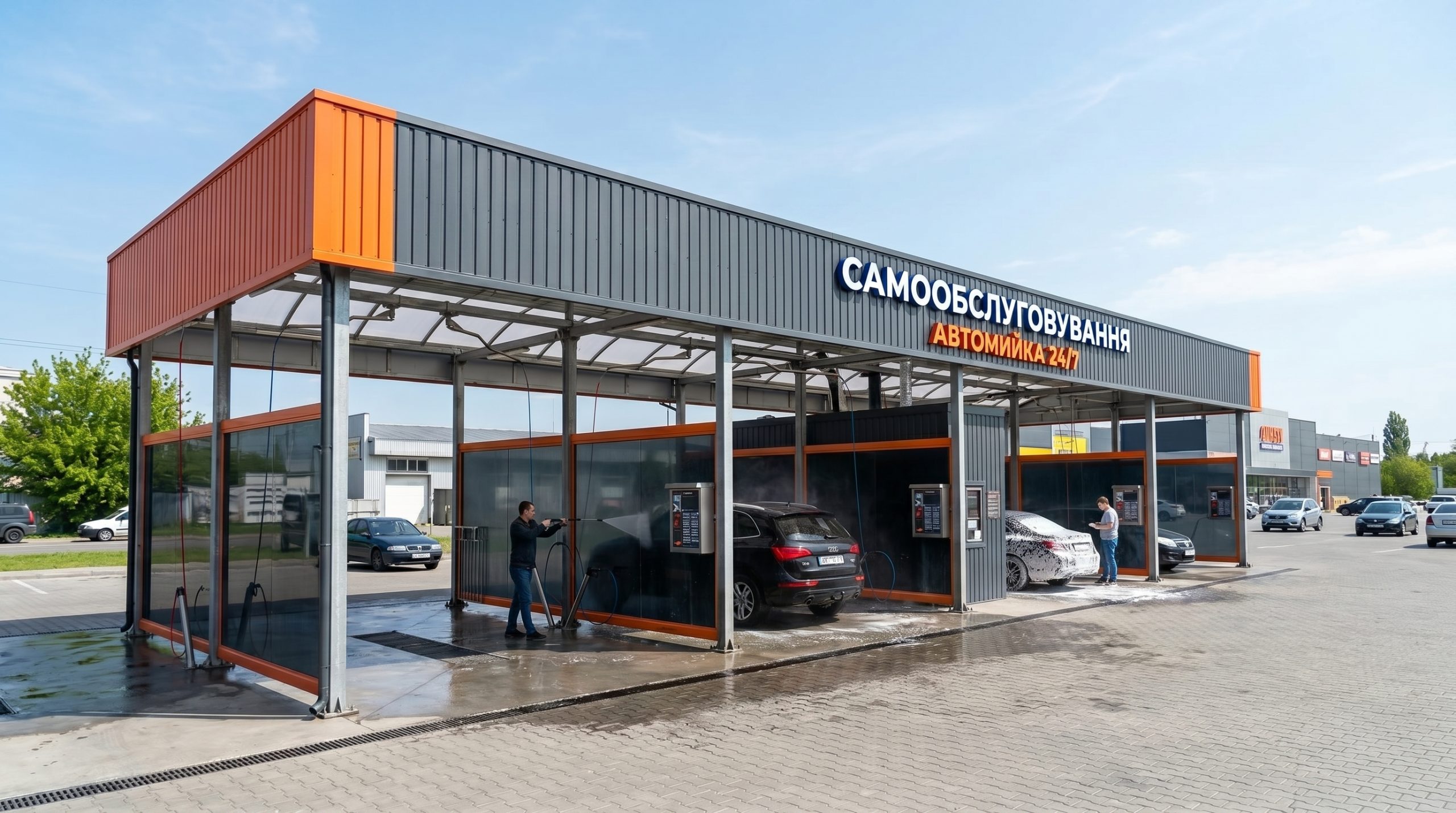
Over the past decade, the market for commercial vehicle maintenance infrastructure in Ukraine has undergone unprecedented transformations, evolving from a purely technical industry into a full-fledged direction of urban and architectural design. Modern construction innovations in the design of self-service car washes demonstrate a conceptual shift: these complexes are no longer perceived exclusively as engineering structures with metal frames and pumping equipment. Today, they are high-tech architectural ensembles that harmoniously integrate into the visual landscape of modern cities, combining engineering perfection, spatial ergonomics, environmental responsibility, and premium aesthetic design.

A fundamental prerequisite for such an architectural renaissance was macroeconomic stabilization and structural changes in the automotive and construction markets of Ukraine. According to industry statistics, in 2024, the new passenger car market showed steady growth, with Ukrainians and local businesses purchasing 68.8 thousand new vehicles, recording a 9.2% increase in trading compared to the previous year. This positive dynamic continued in 2025, where in July alone, an additional 1% increase in sales volumes was recorded. The structure of the car fleet has also undergone radical changes, directly affecting the design of the service infrastructure: the share of electric vehicles (EVs) reached an all-time high of 25.5% of the market, hybrid powertrains accounted for 21.5%, while classic gasoline versions hold 33.1%, and diesel dropped to 19.6%. The increase in the number of high-tech and expensive cars creates a demand among consumers for an appropriate level of service, where architecture and cleanliness of the space play a key role in choosing a service location.

Parallel to the development of the automotive sector, Ukraine’s construction industry shows signs of confident recovery and adaptation to new conditions. After a sharp drop in construction volumes in 2022 by 52% (to 5.2 million m²) and a further decline in 2023 to 3.17 million m², the market stabilized in 2024 at 2.96 million m², and forecasts for 2025 indicate strong growth to 4.4 million m². The commissioning of new facilities stably remains at the level of about 79 thousand units. In this context, commercial development, in particular the construction of self-service car washes, is one of the most dynamic drivers of the metal structures and industrial design market.

Macroeconomic Indicators of Related Industries Development (2024-2025) Data and Statistics
Sales volume of new passenger cars (2024) 68.8 thousand units (+9.2%)
Share of electric vehicles in the new car market (2025) 25.5%
Share of hybrid vehicles in the market (2025) 21.5%
Forecast of total construction area (2025) 4.4 million m²
Stable commissioning of buildings (2024-2025) ≈ 79,000 facilities annually

Marketing and urban studies convincingly prove that, given identical technological and engineering provisions, 40% more customers prefer complexes with the latest, attractive design, which increases the overall competitiveness index of such a facility to an unprecedented 163%. Modern architectural solutions in commercial construction are based on a deep understanding of the psychology of space: the use of high-quality materials (tempered glass, composite panels, food-grade stainless steel) creates an atmosphere of safety, high technology, and cleanliness. The integration of eco-consciousness principles and 3D modeling allows for developing ideal proportions at the sketch design stage and ensuring harmony between engineering functionality and aesthetics.

This comprehensive report presents the top 8 in Ukraine: architecture and construction innovations of leading companies operating in the market, focusing on their design concepts. Special attention is paid to the possibilities of synergy between advanced architectural projects and the products of a leading Ukrainian manufacturer — the “Mehbud” factory, whose facade systems, metal slatted and cube-shaped ceilings, as well as designer fences can elevate the visual component of commercial properties to the highest international level, while providing flawless anti-corrosion protection (a double barrier: zinc coating and polymer layer).
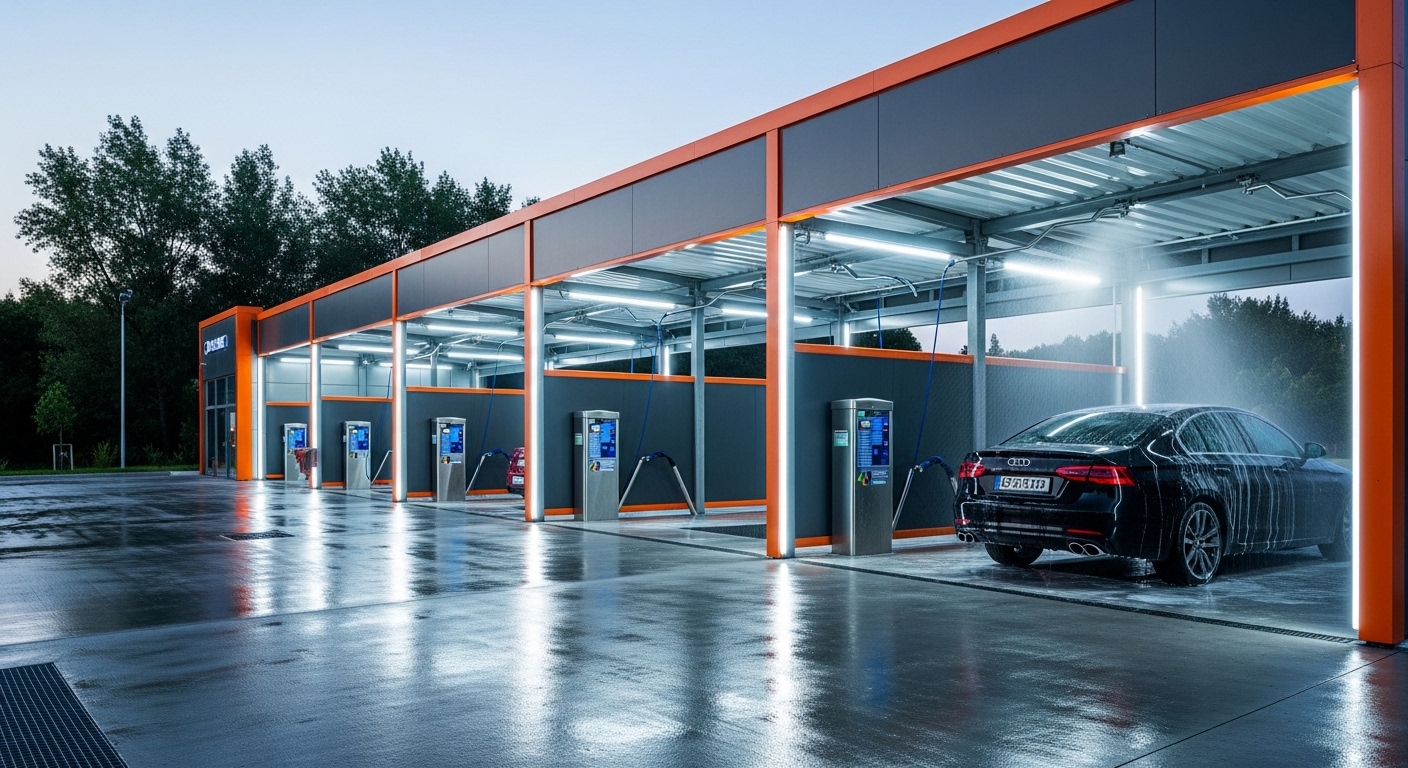
2

Top 8 in Ukraine: Architecture and Construction Innovations of Leading Networks

No. 1 – Premium Wash

Architectural Profile: Premium Wash has revolutionized the perception of commercial properties, positioning architectural design not as an add-on, but as the fundamental “face” of the business that directly generates profit. The brand’s conceptual approach is based on the realization that clients remember the visual picture and space ergonomics much better than dry technical specifications. The uniqueness of the company’s architectural developments lies in creating author’s designs for roofing, equipment, and infrastructure accessories, which are extremely difficult for competitors to copy. The architectural line is differentiated into two large-scale project packages: “STANDART” and “PREMIUM”, allowing the car wash’s appearance to be perfectly adapted to the specifics of a particular urban landscape while maintaining corporate identity.

The formation of bays is based on the use of innovative partitions: the customer is offered solutions made of premium polycarbonate, heavy-duty glass, or high-quality banners resistant to ultraviolet light. The columns of the load-bearing frame are covered with specialized decorative materials or made of polished stainless steel, giving the structure a futuristic, technological look. A prominent design innovation is the technology of completely hidden installation of all water lines, high-pressure hoses, and power cables inside the structural elements. This solution not only radically improves the visual cleanliness of the space but also protects the engineering networks from critical temperature drops (down to -30°C) and mechanical damage.

Construction Achievements: The Premium Wash construction division demonstrates impressive expansion rates, having implemented complex engineering facilities throughout Ukraine. Among the most significant achievements are the Crist portal wash in Irpin, the Platinum WASH 4-bay car wash in Rivne, and large-scale self-service facilities in Pidvolochysk, Iza, Vynohradiv, Bar, Kovel, Shehyni, Vasylkivka, and Bucha. Particularly noteworthy are projects of increased complexity: a 7-bay complex in Lutsk (with a dedicated open bay for large vehicles) and an innovative 6-bay facility in Radekhiv equipped with an integrated tower and a unique control system. The standard module has dimensions of 5.5 x 7 meters (plus 6 meters for entry/exit zones), which requires high-precision earthworks and the installation of massive foundation slabs to ensure the geometric stability of the frame.

Engineering Systems: The reliability of the structures is ensured by their full compliance with the strict State Building Norms of Ukraine (DBN) and DSTU standards. The frames are made of high-quality galvanized metal, guaranteeing more than two decades of flawless operation without signs of corrosion. Engineering calculations include significant safety factors for wind and snow loads: the roof is designed to withstand extreme snowfalls, and the columns can maintain the integrity of the structure even in the event of a direct collision with a vehicle. The technological heart of the complexes is modular equipment from leading global brands (Mosmatic, Interpump, Hawk, R+M Suttner, Cat Pumps), ensuring 24/7 uninterrupted operation with a consumption of about 4 cubic meters of water per day per bay.

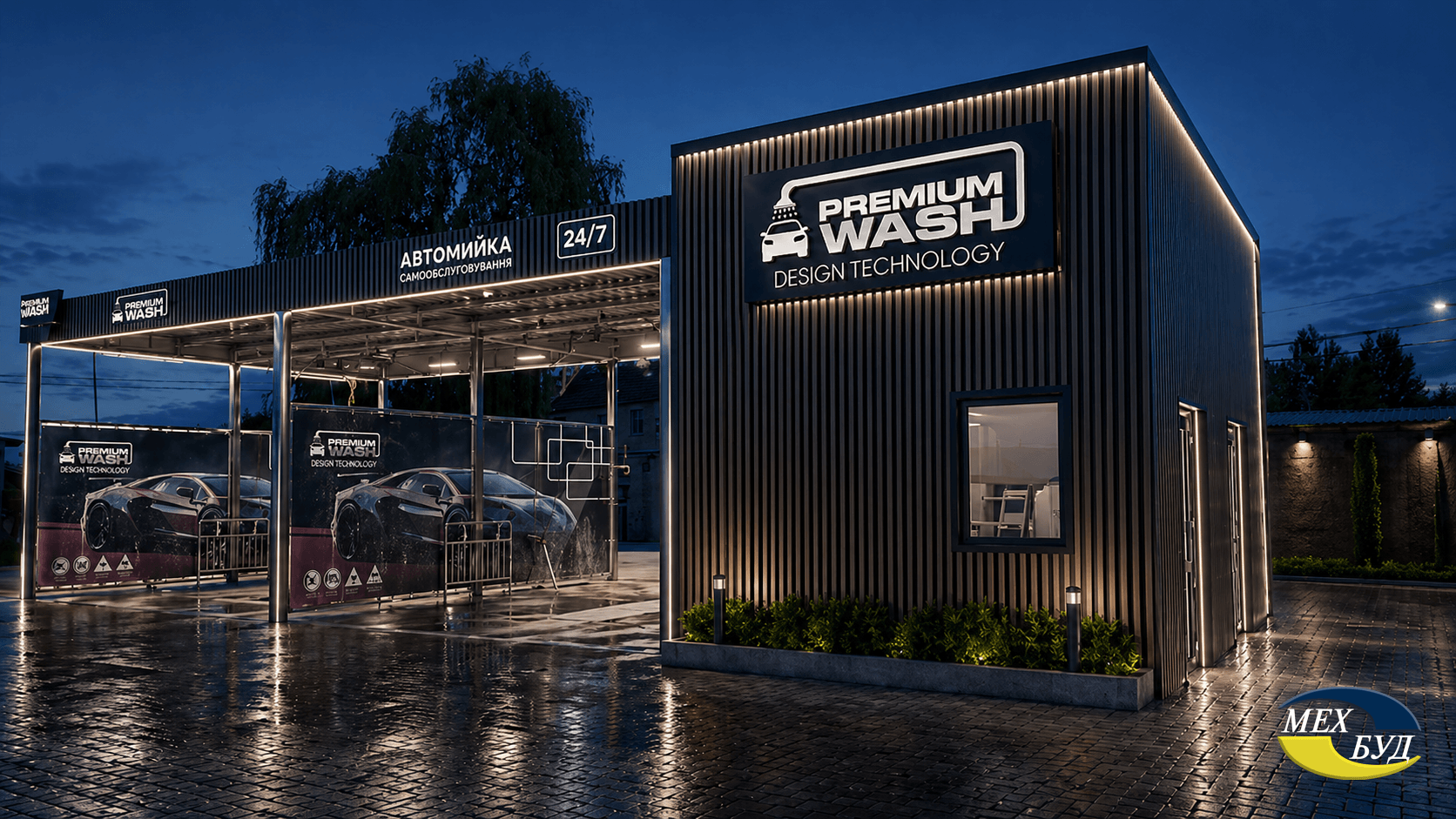
Conceptual Design by Mehbud for Premium Wash

Description: Visualization of the integration of metal cube-shaped facades from the Mehbud factory into the architectural concept of Premium Wash facilities. To emphasize the premium status of the “PREMIUM” series, it is proposed to use the cube-shaped facade by Mehbud for cladding attics and technical blocks. Made of galvanized steel with a thickness of 0.45–0.7 mm and a wear-resistant polymer coating, these panels create a deep relief pattern that perfectly harmonizes with the stainless steel columns. Thanks to the G1 flammability class and absolute resistance to aggressive automotive chemicals, Mehbud facades provide not only a flawless aesthetic appearance with hidden fastening but also guarantee safety and durability, making the car wash a true architectural gem of the evening city when using contour RGB lighting.

1 Premium Wash

No. 2 – SamWash

Architectural Profile: SamWash, with a history dating back to 2008 and a head office in Lviv, presents one of the most diverse architectural portfolios on the Ukrainian market. The company’s design philosophy is extremely adaptable, offering solutions that organically fit both into strict minimalist developments of residential areas and the eclectic space of modern business centers. The pinnacle of the company’s architectural thought is the Ufo model — a unique concept based on the use of a round frame made of polished stainless steel and a roof made of cast polycarbonate, creating the visual illusion of a levitating object.

For monumental objects, the Marchello line was developed, where the structure is totally clad in A-304 stainless steel sheets, the partitions are formed of 10 mm tempered glass, and the 70 cm high attic is made of a 4 mm high-tech Alubond composite with built-in LED lighting. The Marco Glass line relies on the transparency and weightlessness of the structure, using glass from the world leader Pilkington, while the Smart, Pixel, and Marco Banner models offer optimized yet visually appealing solutions using high-quality lacquered banners and cellular polycarbonate with UV protection.

Construction Achievements: Depending on the geological conditions of the site and the investor’s business model, SamWash designs and builds both modular and container-type buildings for technical needs. The company has introduced the advanced practice of using 3D space configurators, allowing perfect planning of bay placement (standard booth size is 5 x 6 meters, clearance height up to 3.5–4 meters) and optimization of vehicle turning radii at the zero-cycle stage. A wide portfolio of implemented projects is backed by a robust service base and the ability to deeply modernize already existing outdated competitor facilities.

Engineering Systems: Every element of the SamWash steel structure undergoes a mandatory hot-dip galvanizing procedure in accordance with the European standard EN ISO 1461, creating a monolithic protective barrier at the molecular level and completely eliminating the need for operational painting. Roof ceilings in premium models are made using energy-efficient sandwich panels 100 mm thick or trapezoidal sheet metal (250 g of zinc per m²), providing excellent thermoregulation. The complexes are managed using industrial SCADA systems based on SIEMENS controllers, making it possible to integrate complex water softening (60,000 l/day) and osmotic preparation (6,000 l/day) systems into a single digital ecosystem. Drainage is designed in a vandal-proof version taking into account peak volley water discharges.

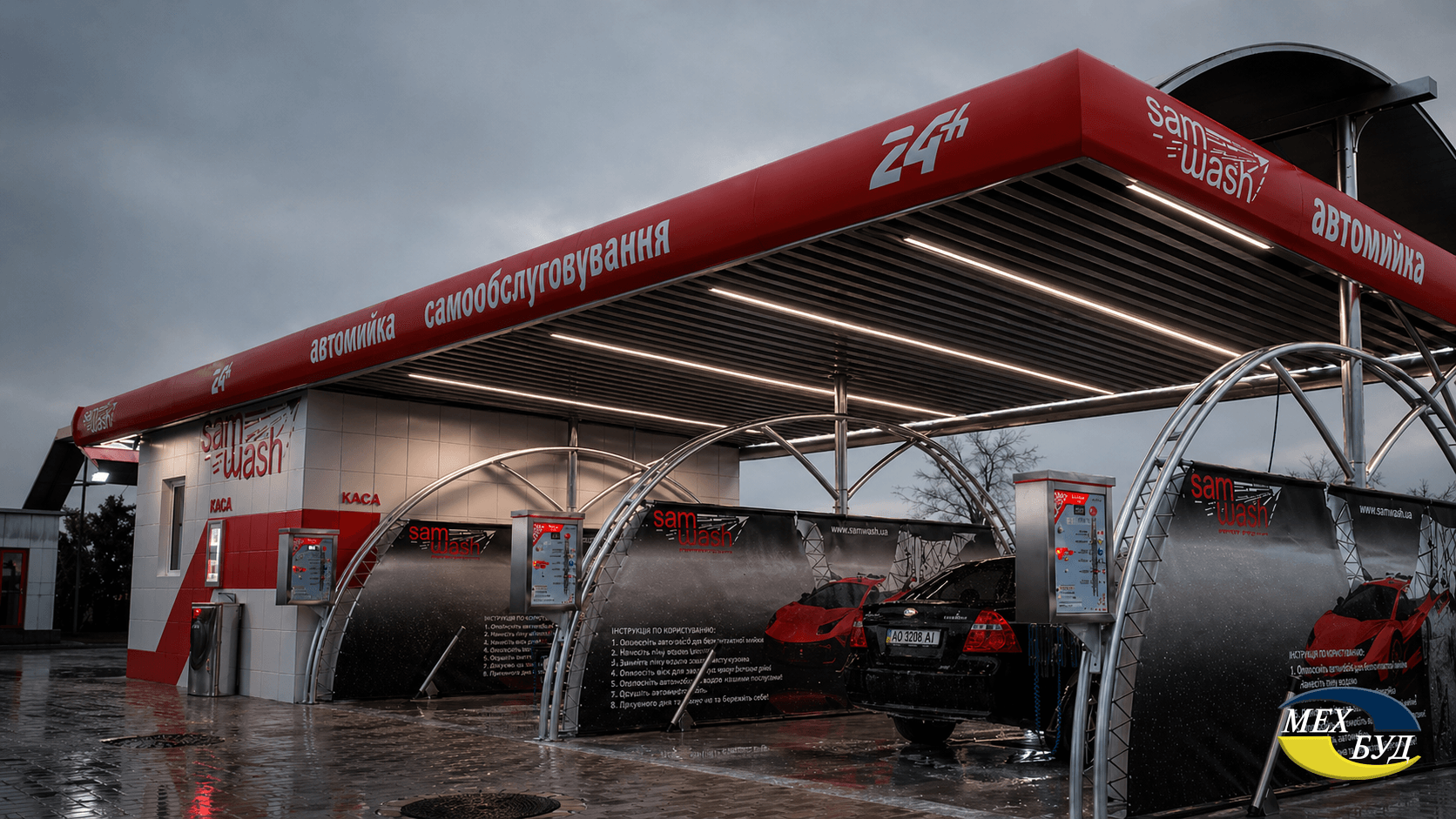
Conceptual Design by Mehbud for SamWash

Description: Visualization of the application of a cube-shaped slatted ceiling from the Mehbud factory to improve the futuristic interiors of SamWash models (in particular, Ufo and Marchello). The use of a metal slat with a rectangular cross-section (for example, 35×100 mm) under the main canopy creates an unsurpassed effect of spatial depth. Lightweight aluminum or steel Mehbud slats, covered with a durable polymer, perform a dual function: they aesthetically mask high-pressure lines and SIEMENS SCADA system cable routes while leaving quick access for maintenance. Additionally, the profiled ceiling effectively scatters acoustic waves from the operation of pumps and water flows, significantly increasing acoustic comfort for customers.

2 SamWash

No. 3 – LuxWash

Architectural Profile: LuxWash is the undeniable giant and trendsetter of the Ukrainian market, the scale of which is impressive: more than 619 successfully launched complexes and 2472 active bays form the architectural appearance of hundreds of settlements. The concept of the network’s main branches and flagship facilities is based on the principles of monumentality, reliability, and dominance in the urban environment. The exterior design features massive support columns, strict, uncompromising line geometry, and accentuated use of contrasting corporate colors, making the facilities recognizable from afar. The architecture of the LuxWash space aims to create full-fledged “automotive spa centers,” where intensive washing zones logically and smoothly transition into spacious, specially equipped areas for using vacuum cleaners, interior dry cleaning, and driver recreation.

Construction Achievements: The scale of the company’s construction innovations is best illustrated by the implementation of a 10-bay VIP complex (8 closed bays + 2 open bays for trucks) on the ring road of Lviv in Vynnyky. This project was a challenge for engineers: due to the complex topography, the land plot was artificially raised using colossal volumes of imported soil, which required unique slope stabilization solutions. A multi-stage storm sewer system with a cascading septic tank system was designed and implemented, and massive monolithic concrete foundation slabs were poured, capable of withstanding a continuous flow of heavy transport. The company also constructs technical rooms as permanent structures using gas blocks, ensuring ideal temperature conditions for the equipment. Logistic capacity is supported by its own 1200 m² warehouse , and the geography of the facilities covers all of Ukraine, including a dense presence in the Kyiv region (Bucha, Boyarka, Borshchahivka, Hryhorenko Avenue).

Engineering Systems: The company integrates high-tech equipment manufactured in Germany and Italy, which requires stable microclimatic conditions. Particular attention is paid to engineering ecology: complex systems of septic tanks and treatment facilities minimize the ingress of chemical surfactants into city sewer networks, meeting the strictest environmental standards. Roof structural solutions include reinforced metal trusses capable of carrying significant snow loads, with well-thought-out meltwater drainage systems.

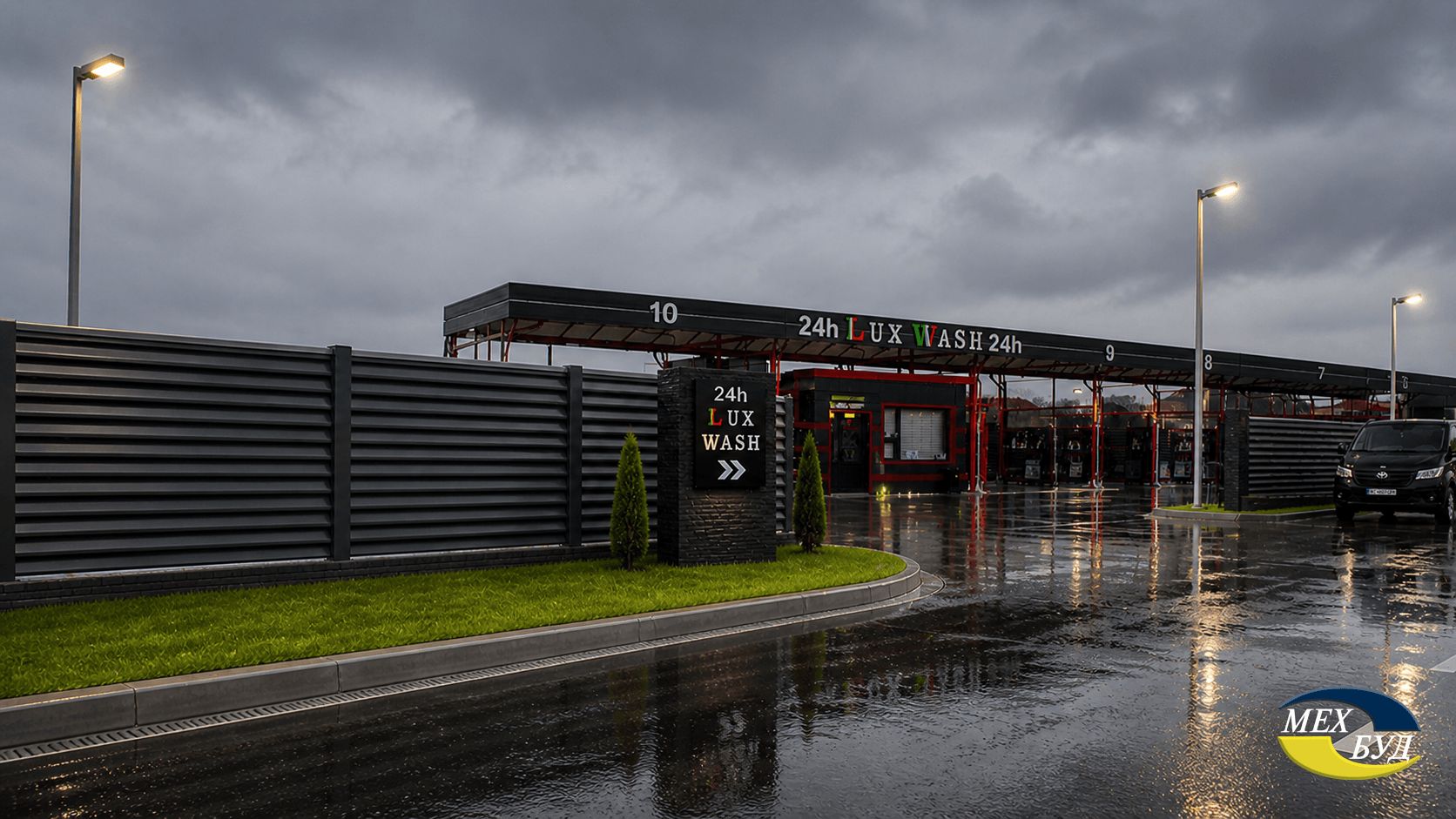
Conceptual Design by Mehbud for LuxWash

Description: Visualization of the use of the innovative “Blinds Exclusive” fence from the Mehbud factory for large-scale LuxWash infrastructure complexes. Given the huge areas of VIP projects (such as the 10-bay complex in Lviv), the “Blinds Exclusive” fence with a slat fastening pitch of 90 to 170 mm transforms from a simple barrier into a powerful architectural element uniting various zones into a single stylistic ensemble. Made of galvanized steel with a double-sided polymer coating (0.45–0.7 mm thick), these sections provide reliable protection against corrosion. An important advantage for LuxWash is the unique design of the volumetric slats of Mehbud fences: it provides ideal ventilation of the site, accelerating the drying of the territory and scattering noise from high-pressure washers, while simultaneously reliably hiding the washing workflows from prying eyes.

3

No. 4 – Wash and GO

Architectural Profile: The Wash and GO network (a franchise from the innovative manufacturer WasherCAR) is a vivid embodiment of the digitalized architecture or “Smart City” concept. The aesthetics of the facilities are based on the ultramodern “high-tech” style, where every line and structural element carries a maximum functional load. The dominant material in the exterior and interior design of the bays is food-grade stainless steel AISI 304, from which rotary consoles, control panels, and gun holders are made. This creates a “medically clean”, radiant look for the facilities, preserved for years despite constant exposure to water and alkaline chemicals. Architectural planning of the territory involves strict, intuitively understandable zoning: adjacent to the washing bays (where elegant tempered glass or special polycarbonate partitions are used), ergonomic “additional service islands” are designed for vacuuming, tire blackening, and windshield washer fluid refilling.

Construction Achievements: The Wash and GO network operates a pool of high-quality complexes that have become architectural accents in many cities: in Kharkiv (landmark locations near French Boulevard Mall, Dafi Mall, VOLVO), Kamianske, Poltava, Sumy, Chernivtsi, and also has a successful experience of international expansion (a modern facility in Ploiești, Romania). Construction solutions are based on the use of optimized options for metal structures and canopies of the author’s Spider, Spider Individual, and Lite series. This allows for creating complex geometric facilities that easily fit into non-standard urban plots. The project documentation development process is brought to automation, enabling full-fledged construction to begin in record time (up to 2 months for approval).

Engineering Systems: The network’s innovativeness lies at the intersection of complex hydraulics and IT architecture. Physical objects are inextricably integrated with the PAYCar mobile application and central payment terminals (CPT), managed by Smart PCs with LED displays. The hydraulic system is designed for extreme loads: water lines withstand “Turbo pressure” up to 175 bar and supply warm water (30°C) for winter washing. An outstanding innovation is the NO FROST thermal systems integrated directly into the metal gun holders, guaranteeing uninterrupted operation of the equipment even in the most severe frosts. Massive reverse osmosis systems are hidden in specially designed technical modules that provide a stable temperature and vibration isolation.

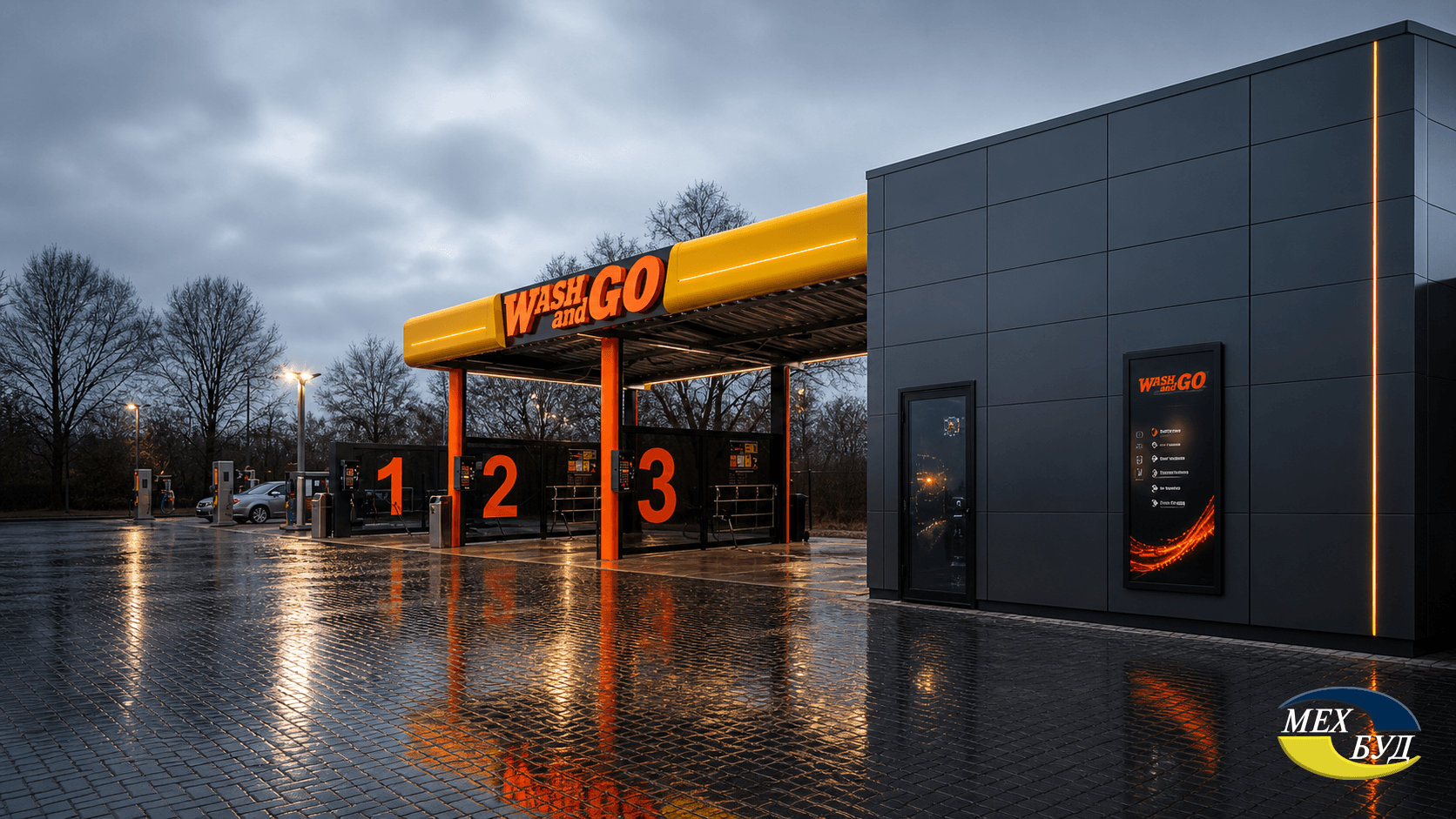
Conceptual Design by Mehbud for Wash and GO

Description: Visualization of the use of cassette facades from the Mehbud factory for cladding technical and digital central control blocks of the Wash and GO network. Mehbud metal cassettes with perfectly calibrated seam geometry flawlessly emphasize the high-tech style of “Smart” car washes. Thanks to the hidden fastening system, the cassette facade creates a monolithic, absolutely flat surface that becomes an ideal background for bright digital LED displays and network branding. The resistance of galvanized metal with a polymer coating to 100% humidity and concentrated “Premium foam” solutions guarantees that the facade will retain its rich color and structural integrity, reflecting an intellectual approach to business.

4 Wash and GO

No. 5 – Green Wave

Architectural Profile: The Green Wave company is an ambassador of environmentally conscious architecture in the car wash segment, reflected in every detail of their projects. The design of the objects features smooth, bionic lines, the use of signature green shades, and the erection of massive, reliable canopies that give customers a feeling of complete protection from the weather. The architectural department offers two fundamental spatial solution packages: basic “SMART” and expanded “PREMIUM,” each including a combination of open and closed bays. A distinctive feature of the premium segment’s exterior is the presence of specific architectural forms, such as the multifunctional “Seagull” island, which integrates waiting areas, accessory vending machines, and payment terminals, forming a center of attraction for visitors. The design intensively uses composite cladding materials, making Green Wave complexes easily recognizable.

Construction Achievements: Green Wave implements a full-cycle concept — turnkey construction. The process covers all stages: from deep topographic surveys of the site, full project documentation development, and obtaining construction permits, to the installation of complex metal structures. The company’s construction teams erect permanent canopies with reinforced spatial roof trusses capable of withstanding significant wind and snow loads. The design also involves large-scale earthworks to integrate large water treatment systems and reverse osmosis tanks into underground or specially isolated above-ground bunkers.

Engineering Systems: The pride of the company and its main engineering advantage is a comprehensive “antifrost” system, requiring specific construction solutions even at the foundation-laying stage. Specifically, a powerful floor heating system (water or electric) is integrated across the entire area of the washing bay’s concrete screed, preventing ice formation. Each bay is equipped with two swivel arms (pantographs) made of food-grade stainless steel, guaranteeing no oxidation and smooth mechanism movement for decades. Hydraulic perfection is backed by the use of legendary Cat Pumps 350 and premium equipment from global brands Burkert, Camozzi, and Nicolini, minimizing the vibration load on foundations and bearing supports.

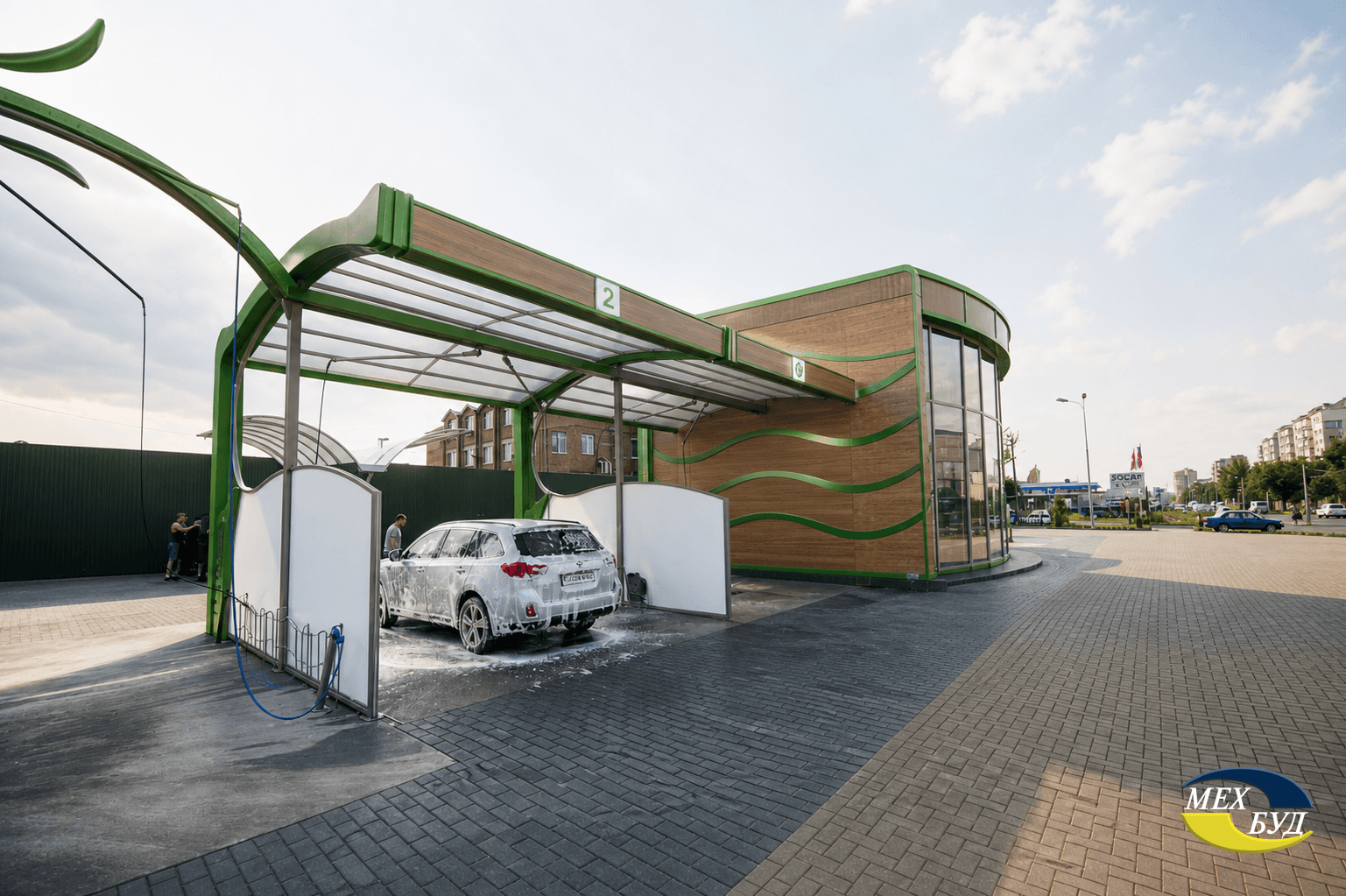
Conceptual Design by Mehbud for Green Wave

Description: Visualization of the use of panel facades from the Mehbud factory in Green Wave projects. To deeply emphasize the ecological paradigm of the “Green Wave”, Mehbud facade panels can be made with a natural wood texture application (using advanced Printech technology). This preserves the physical strength and durability of galvanized steel while visually bringing technical buildings and bays closer to nature. Thanks to the high quality of the coating, such panel facades harmoniously blend into the environment and guarantee absolute compliance with high sanitary, hygienic, and operational standards.

5 Green Wave

No. 6 – ICW (International Car Wash)

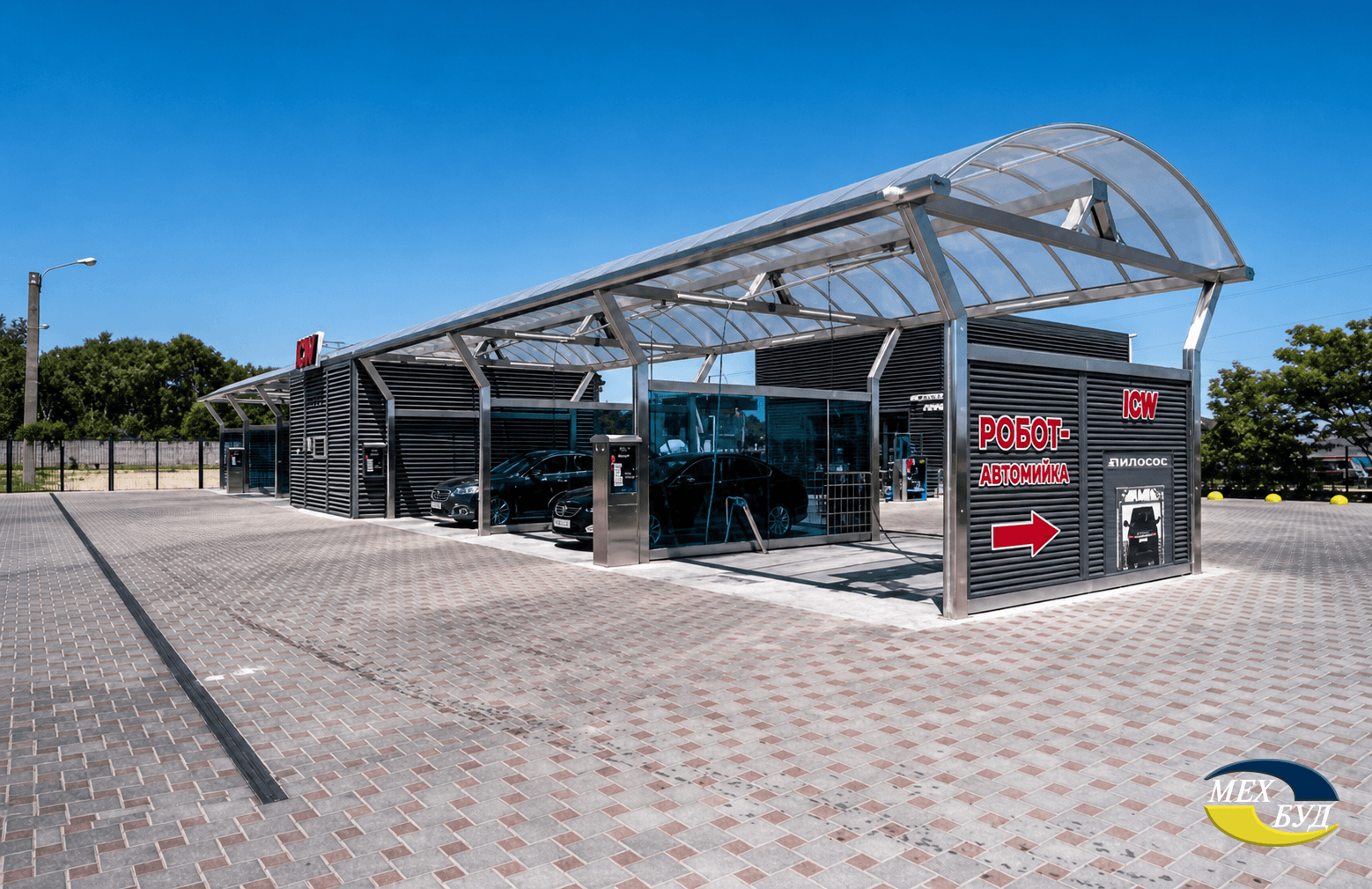
Architectural Profile: ICW relies on architectural lightness, grace, and visual transparency of structures. Their signature OPTIMUM S canopy series, designed for 2 to 8 bay objects, is a model of modern industrial minimalism. The lightweight canopy structures are designed as open, spacious volumes that do not overload the urban landscape and visually expand the site’s space. ICW’s architectural division develops customized solutions depending on the location: from strict, pragmatic structures for developing areas to luxurious premium complexes for metropolis business centers. The key to successful integration into the urban environment is creating a detailed 3D visualization of the self-service car wash for each client, allowing them to evaluate the ergonomics of the future object before work begins. The frames are made of high-quality food-grade stainless steel, which not only provides unprecedented durability but also reflects light, giving the structure a prestigious shine.

Construction Achievements: ICW’s main construction achievement is brilliant time management and production process optimization: the full cycle of creating a car wash takes only 3–6 months. This process is divided into clear stages: fast geology analysis (1:500 plan, 5-7 days), accurate design with all permits obtained (30–45 days), high-quality frame installation (60–90 days), and rapid launch with system testing (10-15 days). Since the company is the largest manufacturer and owns its own metal structure manufacturing plant in Ukraine, this eliminates contractor errors and guarantees millimeter accuracy in assembling the frames directly on the construction site.

Engineering Systems: ICW uses pump groups of its own design, ICW Italy, with a capacity of 15 l/min, operating in synergy with powerful OSMOS filtration units and water softening systems (in Standart and Aura trim levels). Metal frame engineering provides for reliable thermal insulation of pipes, allowing Antifrost systems to be integrated for stable equipment operation at temperatures down to -30°C. A striking design and engineering feature is the use of color or basic displays mounted directly into stainless steel racks and controlled by powerful computers, forming an intuitive interface for drivers.

Conceptual Design by Mehbud for ICW

Description: Visualization of Blinds facades from the Mehbud factory (e.g., Standard on Comb or Exclusive models) for decorating and protecting technical blocks of ICW complexes. The lightweight and transparent aesthetics of the OPTIMUM S stainless steel frames are perfectly complemented by a system of metal facade blinds. These systems provide unimpeded natural ventilation of compressor and pumping stations while elegantly concealing complex engineering nodes from customers’ eyes. The aerodynamic tilt angle of Mehbud slats is calculated to prevent driving rain and snow from getting inside the room, ensuring optimal thermoregulation of equipment in summer. The durable polymer coating of the louvers creates a stylish contrast with the stainless steel frame.

6 ICW

No. 7 – De-Wash

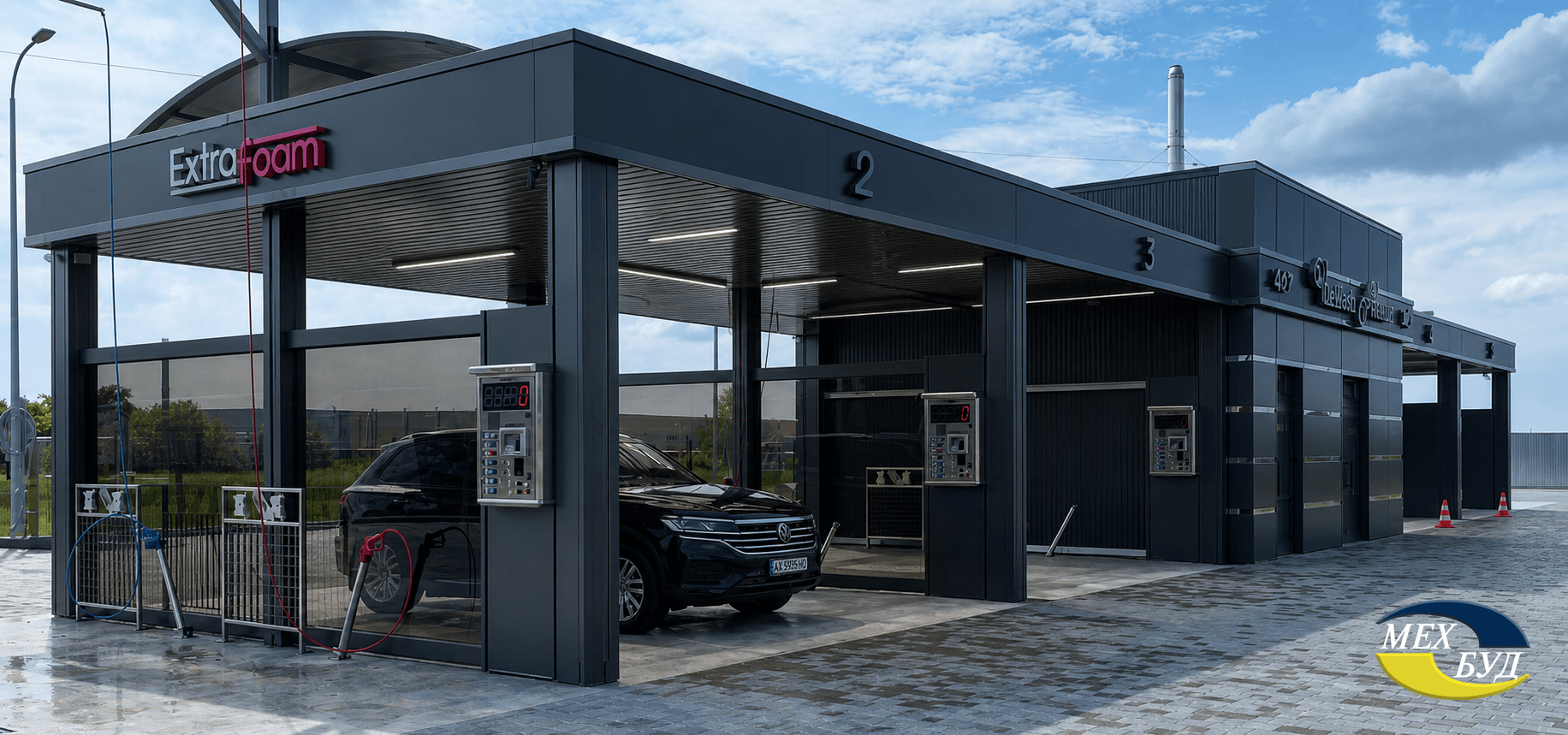
Architectural Profile: The architecture of the De-Wash network embodies strict engineering logic and the pragmatic concept that “form follows function.” The main advantage of their architectural solutions is unprecedented spatial flexibility: projects of 2, 5, or 10-bay complexes are developed considering the possibility of future scaling or redevelopment. Thanks to well-thought-out architecture, an investor can expand the object’s area without tearing down load-bearing walls or radically rebuilding deep engineering communications. The De-Wash design focuses on maximizing throughput capacity: the layout of structures, turning radii, and access roads are designed based on meticulous mathematical traffic analysis, ensuring no transport collapses on the territory. Clients are offered both proven standard designs and custom solutions for sites with complex terrain.

Construction Achievements: De-Wash approaches the construction process from a position of fundamental engineering reliability. Before starting work, the company’s engineers conduct complex calculations of loads on the foundation and load-bearing structures. Based on geological surveys, solid monolithic reinforced concrete slabs 300 mm thick are designed and poured (using concrete class C25/30, water resistance W10, frost resistance F200, reinforced with A500C class bars). Such a massive base guarantees the absence of microcracks and soil subsidence even in conditions of a high groundwater level and constant dynamic impact from heavy vehicles. Detailed drawings and estimates ensure absolute transparency of the construction budget.

Engineering Systems: The company applies a scientific approach to resource consumption optimization. Water purification and energy consumption systems are optimized at the sketch design stage, significantly reducing the facility’s operating costs. The load-bearing steel frame consists of posts and crossbars united into a rigid spatial disc using a system of purlins. This structure can resist not only wind but also severe seismic loads. The implementation of special water purification technologies (thanks to which cars dry without spots and streaks) requires the installation of precision chemical dosing systems in climatically stable, isolated technical rooms.

Conceptual Design by Mehbud for De-Wash

Description: Visualization of the integration of suspended slatted ceilings from the Mehbud factory into the pragmatic engineering architecture of De-Wash facilities. In the washing boxes, the use of a moisture-resistant metal slatted ceiling reliably protects complex electrical networks and engineering communications from direct water jets (at a pressure of over 150 bar). Thanks to a special polymer coating, these structures absolutely do not succumb to corrosion even in constant contact with aggressive automotive chemicals. In addition to functional protection, the use of a profile slat (e.g., type 150 or 190 mm) gives the space of technical zones and bays a geometrically correct, visually complete, and neat look, which perfectly corresponds to the “form follows function” concept inherent in this network.

7 De Wash

No. 8 – ProfiWash

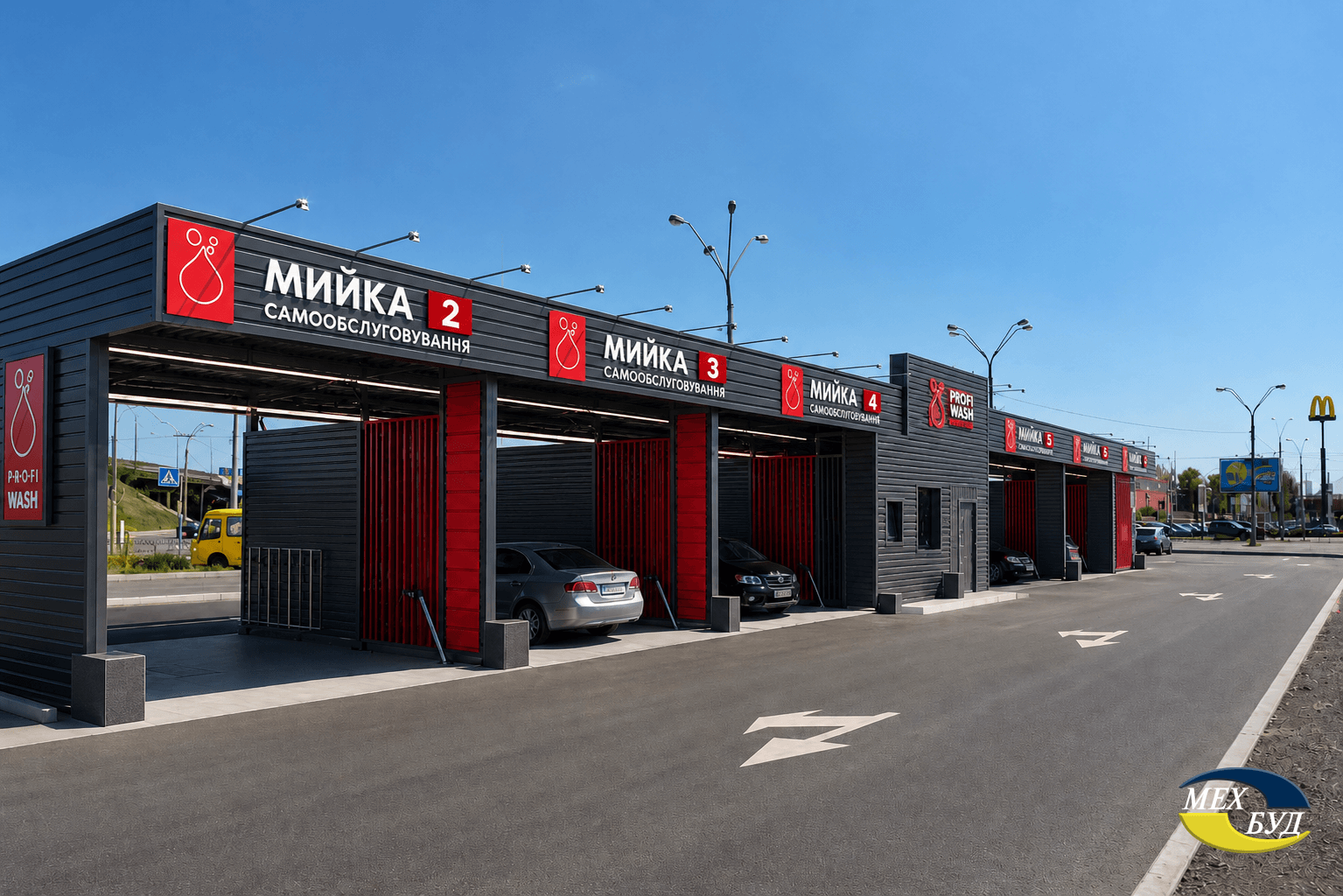
Architectural Profile: ProfiWash offers a variable approach to the architectural shaping of car washes, focusing on roof structure geometry and partition types. The company’s architectural profile allows investors to choose between a strict classic design (flat roofs made of high-quality corrugated board) and more dynamic, lightweight forms (arched “ARC” roofs made of special reinforced high-strength polycarbonate with UV protection). Particular attention is paid to the ergonomics of partitions between bays. Depending on the budget and design code, banner fabrics, painted corrugated sheets, light-transmitting polycarbonate, or safe tempered glass are used. ProfiWash architects have developed unique spatial forms of boxes: the “GOOSE” variant and a “U-shaped” variant with an additional external partition effectively protecting customers from the splashes of passing cars when using an open bay.

Construction Achievements: The company has launched robust construction activities in various regions of Ukraine, having official representative offices in Kyiv (2 Pukhivska St.) and Rivne (25 Vidynska St.). Among landmark implemented facilities are complexes in Shostka (Sumy region, 2 washing bays + 2 vacuum bays), a large-scale object in Chernivtsi (Pivdennokiltseva St., 6 washing bays + 2 vacuums), and a facility in Khmelnytskyi (2 bays). The company offers flexible turnkey construction conditions, providing the erection of both compact two-bay objects for small-population towns and large stations for transit highways.

Engineering Systems: The engineering strength of ProfiWash structures is calculated for long-term vibration and wind loads. Using the arched “ARC” roof not only fulfills an aesthetic function but also improves the building’s aerodynamic characteristics and facilitates the natural shedding of snow in winter, reducing static loads on the bearing supports. Partition materials (in particular, safe tempered glass) are mounted using special damper fasteners, which prevents their destruction from the vibrations of high-pressure washers.

Conceptual Design by Mehbud for ProfiWash

Description: Visualization of the use of a slatted facade from the Mehbud factory for exterior decoration of ProfiWash facilities. The use of slatted facade systems allows creating a modern, dynamic architectural plane that perfectly matches the arched and flat roofs of the network. Galvanized metal with a polymer coating reliably protects technical blocks from corrosion in the high-humidity conditions of a car wash. Vertical or horizontal arrangement of the metal slats of the slatted facade gives the structure additional visual volume and emphasizes its innovative status, making the object as attractive to customers as possible.

8 ProfiWash

Strategic Role of Domestic Manufacturers in Architecture: Focus on “Mehbud”

An analysis of the leading self-service car wash networks clearly demonstrates that the quality of construction materials is the foundation of profitability. The operation of car washes takes place in extreme conditions: 100% humidity, constant temperature drops, aggressive alkaline and acidic chemical aerosols (“active foam,” “wax”), as well as high vibration loads from pumps. In this context, using conventional construction materials for the exteriors and interiors of technical zones leads to rapid facility degradation.

The “Mehbud” factory acts as a strategic partner for architects and commercial real estate investors, offering products that, due to their physicochemical properties, perfectly meet the requirements of car washes. The main innovation is reliable anti-corrosion protection: every metal part (whether it is a slat of the “Blinds Exclusive” fence or a cassette facade panel) is made of high-quality steel with a mandatory dense zinc coating, over which a wear-resistant polymer layer is applied. This double barrier blocks the access of oxygen and aggressive chemicals to the metal, making corrosion impossible.

Furthermore, all “Mehbud” products belong to the class of low-combustible materials (G1), which is a critical fire safety factor when designing technical rooms where powerful electrical equipment (compressors, SCADA system servers, boilers) is concentrated. Aesthetic variability (from RAL colors to wood imitation using Printech technology) allows architects to uncompromisingly embody any concepts — from the eco-design of Green Wave to the high-tech of Wash and GO, providing facilities with durability and a premium look.

2 scaled

Conclusions: The Future of Commercial Architecture in Ukraine

A detailed analysis of the top 8 self-service car wash networks in Ukraine (Premium Wash, SamWash, LuxWash, Wash and GO, Green Wave, ICW, De-Wash, and ProfiWash) convincingly indicates a fundamental evolution in commercial construction. Architectural solutions in this highly competitive segment have ceased to perform an exclusively utilitarian role; today, industrial design, spatial ergonomics, and impeccable quality of building materials are the main drivers of customer loyalty and financial investment profitability.

Key construction innovations in 2026 are focused on three vectors:

  1. Capitalization of Architectural Aesthetics: The integration of premium materials (stainless steel AISI 304, tempered glass, Alubond composite) combined with complex architectural elements (cube-shaped and cassette facades, metal slatted ceilings from the “Mehbud” factory) forms the “face” of the business, capable of increasing the facility’s competitiveness up to 163%.
  2. Climate Resilience and Energy Saving: The application of monolithic reinforced concrete foundations (class C25/30, W10), integrated floor heating systems (NO FROST), heat-insulating sandwich panels, and hot-dip galvanizing technologies transforms car washes into highly stable infrastructure units operating uninterruptedly even at -30°C.
  3. Digital Urbanism (Smart City): Modern self-service car washes are complex IT objects with telemetry, SCADA systems, and mobile application integration (PAYCar). The exterior of these complexes must visually match their intellectual content, requiring clean lines, hidden communications, and modern LED lighting.

The involvement of domestic manufacturers, such as “Mehbud,” in the creation of architectural concepts for national networks proves that the Ukrainian construction industry can provide global standards of quality, reliability, and design. The synergy of advanced engineering solutions and aesthetic building materials will continue to shape the new, modern architectural code of Ukrainian cities.

author
Alex Z
About the author:

Oleksandr — Digital Marketing Expert for Construction & Manufacturing Industries Oleksandr is a seasoned digital marketing specialist, delivering powerful results for the construction and manuf...

More
0 0 votes
Article Rating
Subscribe
Notify of
guest
0 Comments
Oldest
Newest Most Voted
Inline Feedbacks
View all comments