Metal Ceilings in Michelin Restaurants: How Architectural Design Impacts the Customer’s Bill
Generic selectors
Exact matches only
Search in title
Search in content
Post Type Selectors

Metal Ceilings in Michelin Restaurants: How Architectural Design Impacts the Customer’s Bill

May 20, 2026
5  

The Evolution of Gastronomic Space and the “Fifth Wall” Concept

In the modern haute cuisine industry, gastronomic excellence is merely one of the components of a holistic experience that shapes the visitor’s perception. Studies on consumer motivation prove that in premium establishments, the overall atmosphere and level of service influence the willingness to pay a high price even more than the direct quality of the dishes. In this context, restaurant design becomes a powerful instrument of commercial strategy, where every detail of the space fulfills a distinct psychological and functional role.

Historically, the ceiling was considered a strictly utilitarian element, whose main task was to conceal engineering communications, ventilation systems, and wiring. However, in the modern architecture of haute cuisine spaces, it has undergone a fundamental transformation, turning into a full-fledged “fifth wall” — a massive canvas that sets the tone for the entire establishment, forms its identity, and serves as a powerful tool to influence consumer behavior. Due to its large surface area, the ceiling gives architects significant freedom to work with color, lighting, and scale.

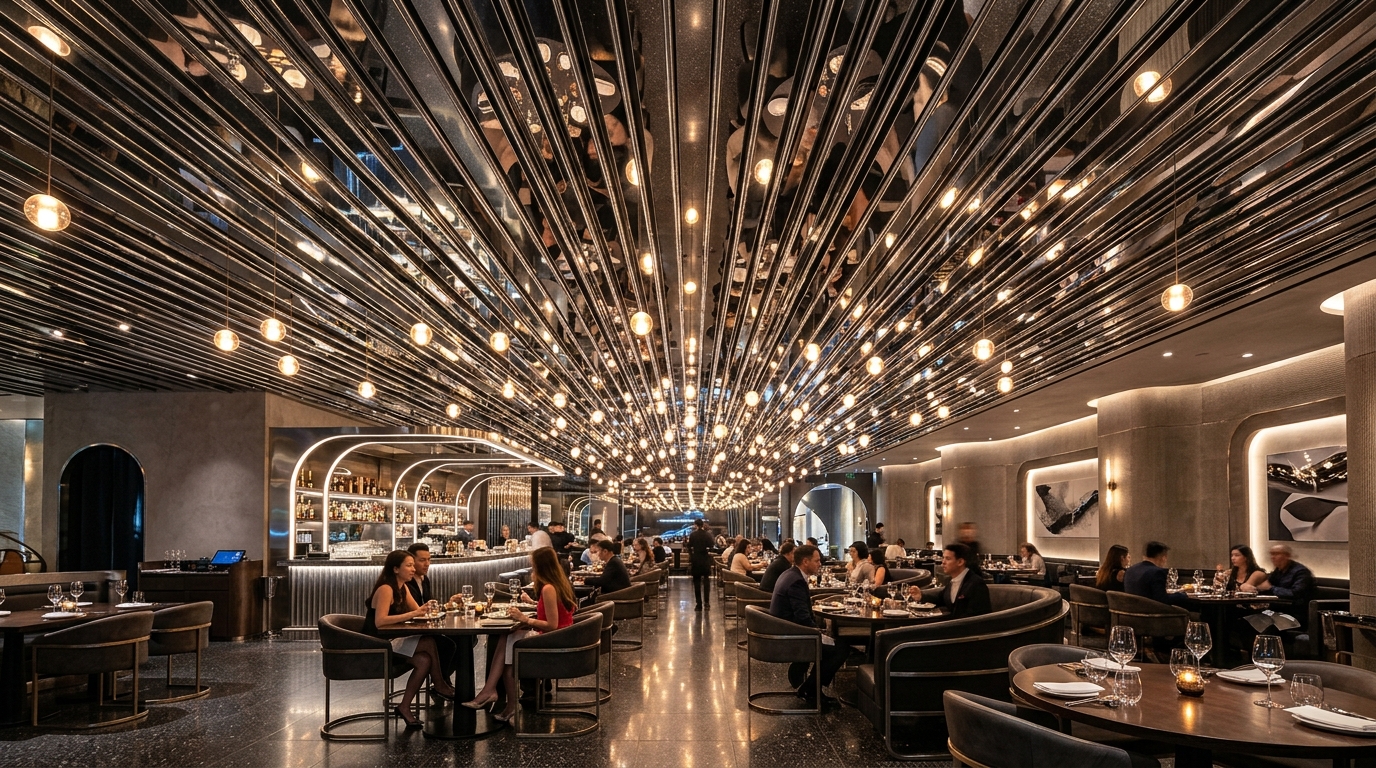
Metal ceilings, which were previously associated mainly with industrial or purely commercial styles, are now deeply integrated into the exquisite interiors of Michelin-starred establishments. They have become a symbol of an innovative approach to design, offering a unique combination of durability, visual flexibility, and most importantly, the ability to control the acoustic and lighting environment of a space. The design of a modern restaurant has evolved from a simple place to satisfy hunger into a complex mechanism for entertainment and multisensory pleasure. In the twenty-first century, dining out is closely tied to an aesthetic experience, where a luxury establishment must offer not only signature dishes but also a curated selection of atmospheric details, cooking techniques, and impeccable service.

The choice of metal as the dominant material for the ceiling has a deep psychological basis. Different textures and alloys evoke a wide range of subconscious emotional responses: from a profound sense of historical heritage to the perception of ultra-modern minimalism. At the same time, architectural decisions related to geometry, ceiling height, and its sound-absorbing capacity directly correlate with the duration of the guest’s stay in the establishment, which is a defining factor in increasing the average check and overall business profitability.

An analysis of data from prestigious rankings, particularly the results of Zagat surveys covering thousands of restaurants, confirms that atmosphere has the most dramatic positive impact on pricing in high-budget restaurants. Consequently, investments in designing innovative metal ceiling systems should be viewed not as decorating expenses, but as a fundamental economic strategy aimed at maximizing profit by managing the client’s sensory experience.
Metalevi steli v restoranakh Mishlen 6

The Neuroarchitecture of Space: The Subconscious Impact of Geometry and Height

Human perception of architectural space is formed at the complex intersection of physiology, evolutionary biology, and psychology. The ceiling’s height, shape, color, and material can directly activate different areas of the brain, stimulating specific cognitive states and behavioral patterns. Understanding these processes, known as neuroarchitecture, allows designers to create environments that naturally encourage guests to take certain actions — for example, to enjoy a prolonged and relaxed rest.

The Cognitive Dimension of Ceiling Height and Conceptual Priming

Empirical studies in consumer psychology and neuroaesthetics demonstrate that variations in ceiling height serve as cognitive priming — a subconscious mechanism that activates specific conceptual associations, which later influence how people process information. High ceilings (typically over three meters, or those significantly exceeding the standard 2.44 meters) subconsciously activate the concepts of freedom and space. This activation stimulates relational (abstract) information processing, prompting visitors toward more creative thinking, a broader perception of the situation, and an overall sense of grandeur.

According to functional magnetic resonance imaging (fMRI) data, being in rooms with high ceilings activates brain structures responsible for visuospatial exploration, and such spaces are much more frequently rated by respondents as aesthetically appealing. Furthermore, spacious rooms that provide a sense of visual and locomotive permeability stimulate the areas underlying motion perception, creating a dynamic yet comfortable environment.

For restaurants in the highest price segment, this holds direct commercial value. High metal ceilings create a monumental sense of luxury, encouraging guests to stay longer and engage in unhurried, deep conversation. It is in this state that clients are prone to expand their orders, adding tasting menus, collectible alcohol, signature cocktails, and exquisite desserts to their main course.

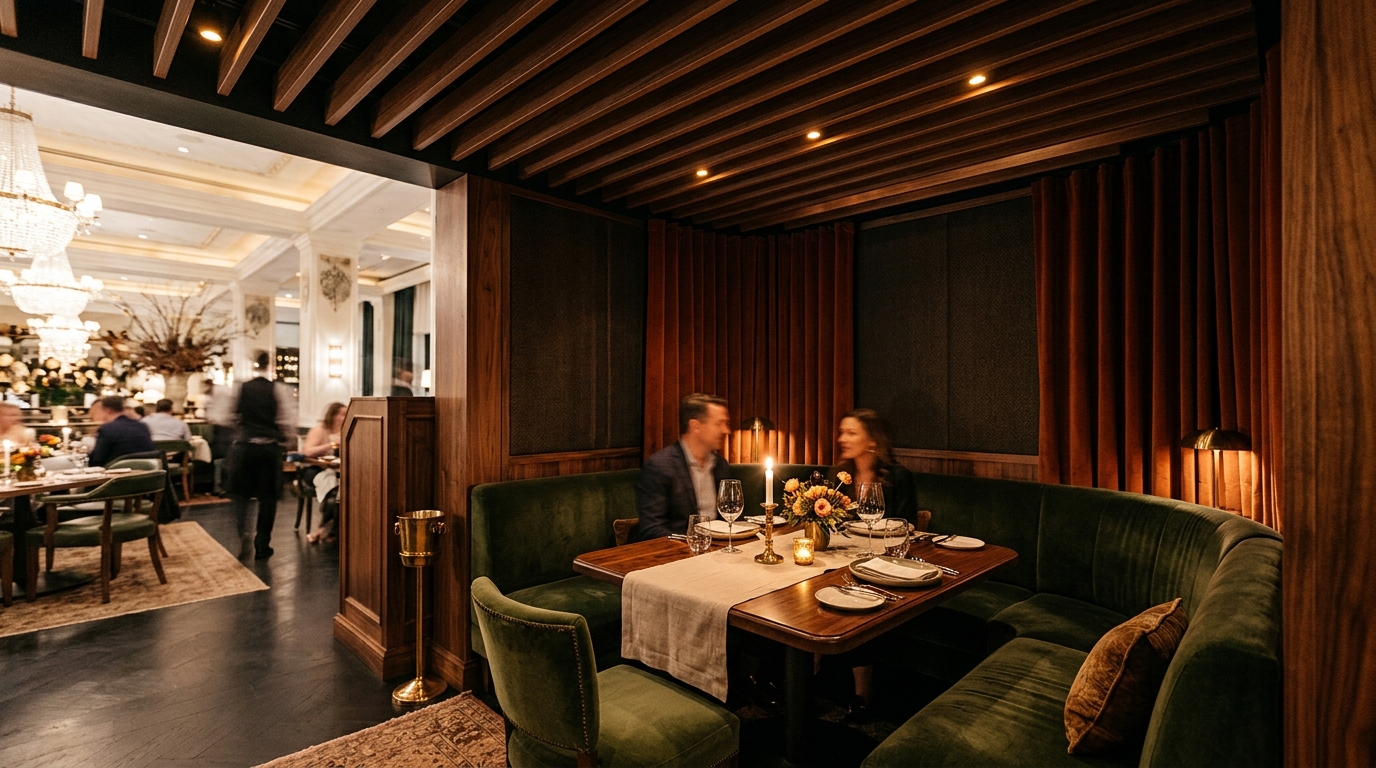
On the other hand, research shows that enclosed spaces with artificially lowered ceilings activate the anterior midcingulate cortex — an area with direct neural connections to the amygdala. A reduced sense of visual freedom can trigger an emotional response of anxiety, accompanied by a subconscious desire to quickly leave the premises. However, architects skillfully manipulate these effects: lowered ceilings are deliberately used in specific zones to create an atmosphere of extreme intimacy and confidentiality, making them perfect for romantic dates or closed private dinners. The main challenge is finding the balance where a low ceiling creates coziness rather than claustrophobia.

Optical Illusions and the Color Palette of Ceiling Surfaces

The color and texture of a ceiling can visually alter the perception of its height, allowing designers to correct architectural flaws in a room without major reconstruction. Scientific experiments confirm that a dark ceiling always appears visually lower than a light one. In this aspect, metal surfaces offer unique advantages. The use of polished or textured light metal (such as polished steel or aluminum) not only physically reflects light but also creates an optical illusion of additional volume, making the space feel lighter and larger.

Through suspended metal structures, designers can form false volumes or domes that disorient the linear perception of space, drawing attention to details and making the guest forget about the passage of time. This creates the perfect conditions to form that “world outside of time” which the world’s best chefs strive to achieve when showcasing their culinary masterpieces.

Metalevi steli v restoranakh Mishlen 13

Acoustic Architecture: Overcoming the Main Enemy of Comfort

One of the most critical, complex, and yet frequently underestimated aspects of designing gastronomic spaces is acoustics. Interior aesthetics lose all meaning if a guest cannot hear their dining companion. Excessive noise consistently ranks as one of the primary reasons for negative reviews and decisions never to return to an establishment, moving the issue of sound control from a technical maintenance category to revenue management. According to surveys, noise is the number one complaint for a quarter of all restaurant-goers.

The Physics of Sound and the “Lombard Effect” Phenomenon

Modern minimalist trends in restaurant design, as well as loft concepts, involve the massive use of hard surfaces. Tile, glass, polished concrete, exposed brick, and standard flat metal panels reflect sound waves rather than absorbing them. A standard smooth metal ceiling or painted drywall can reflect up to 95% of sound energy back into the room.

When sound lacks pathways to dissipate or be absorbed, the voices of patrons reflect off the ceiling, pour downward, and collide with background music, the noise of an open kitchen (which is extremely popular in Michelin establishments), the clatter of dishes, and the operation of the bar. Sound energy naturally rises, and in the presence of high but reflective ceilings, this effect is only amplified, turning the room into a kind of echo chamber.

In such an environment, a psychoacoustic phenomenon known as the “Lombard effect” emerges. This is an involuntary human reaction in which a person begins speaking louder to be heard and understood over intense background noise. When every guest in the dining room subconsciously raises their voice, a continuous feedback loop is created, rapidly leading to a loud roar. The overall noise level surges and often hits a critical mark of 75–80 decibels. At this volume, speech intelligibility drops sharply, forcing people to strain their vocal cords and hearing.

For visitors, this translates to an instant spike in physiological stress, an increased heart rate, and acoustic fatigue. In a state of discomfort, clients subconsciously speed up their eating process to escape the irritating environment faster, leading to a refusal to order highly profitable desserts, digestifs, and coffee. In premium restaurants, where the ideal background sound level must be maintained within a comfortable range of 60 to 70 decibels , uncontrolled reverberation can entirely ruin a carefully crafted dining experience. Moreover, excessive noise makes the environment inaccessible for people with hearing impairments, violating inclusivity standards. Owners of the best restaurants clearly emphasize this aspect: modern guests want much more than just delicious food; if the acoustics are poor, nothing else matters.

Perforated Metal Systems as an Engineering Solution

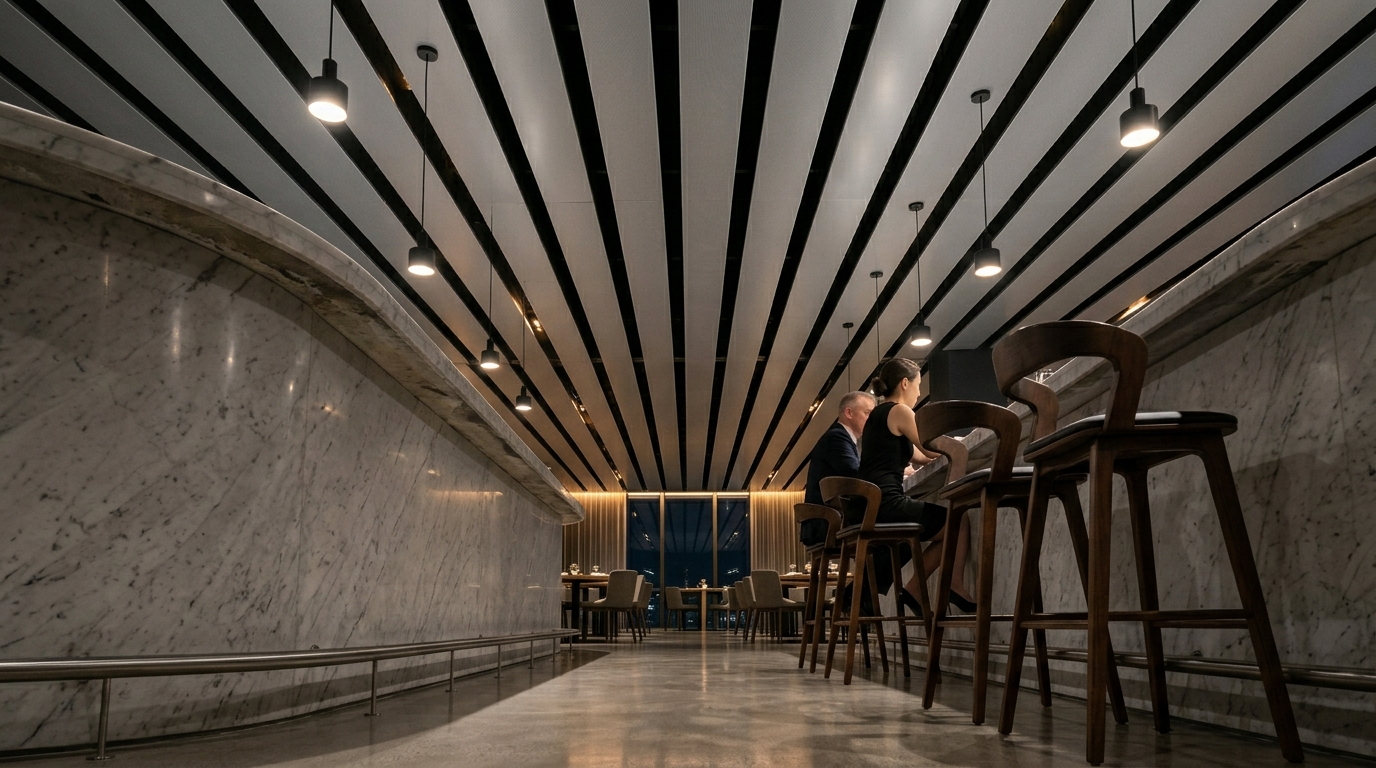
To overcome acoustic issues in high-end establishments, innovative suspended systems made of perforated metal integrated with sound-absorbing backings are employed. The effectiveness of such systems relies not on the metal itself, as the percentage of the void (hole size) has a relatively minor impact on direct sound absorption, but on a thoughtful synergy of materials. Thousands of micro-perforations allow sound waves to pass freely through the solid metal panel and enter a hidden acoustic layer, which typically consists of mineral wool, fiberglass, or modern eco-friendly acoustic fleeces.

Why do top-tier restaurants prefer metal over traditional fibrous or gypsum acoustic tiles? The answer lies in the harsh operational realities of commercial kitchens and dining halls. Traditional fibrous tiles simply cannot withstand restaurant conditions. High humidity from cooking and dishwashing, the inevitable migration of grease vapors, accidental leaks from the roof or fire suppression systems, and strict health inspection requirements for regular cleaning quickly destroy the structure of fibrous materials. They sag, change color, and become breeding grounds for bacteria.

Conversely, acoustic metal ceiling panels solve both problems simultaneously. In terms of performance, modern metal systems provide a Noise Reduction Coefficient (NRC) between 0.65 and 0.85. This means the ceiling successfully breaks the feedback loop and prevents the Lombard effect. Operationally, the metal surface is absolutely impervious to moisture, does not deform, can be easily washed with standard degreasers, and retains its original appearance for decades, all while meeting the highest fire safety standards.

Using solutions like acoustic clouds (suspended islands) or multi-level stretch acoustic structures allows designers to organize large open spaces. This ensures the creation of designated lower-noise zones for private conversations while maintaining a livelier atmosphere near the bar, guaranteeing uniform acoustic comfort throughout the establishment. Controlling sound waves from above creates an atmosphere of social closeness below, encouraging clients to keep conversing and increasing the average check.

Metalevi steli v restoranakh Mishlen 12

The Psychology of Materials: The Semantics and Emotional Language of Metal

In luxury interior architecture, materials act as non-verbal communication, conveying the brand’s values and the space’s exclusivity level to the client. Every surface shapes the establishment’s emotional language. In this context, the choice of a specific metal or alloy for the ceiling is dictated by its ability to program the consumer’s emotional state and create a unique atmosphere.

The texture and color of metal operate on a deep subconscious level since they are historically tied to specific eras, status, and cultural codes. According to research in design psychology, various metals generate the following emotional responses:

  1. Brass and Gold: These materials are absolute symbols of success, timeless elegance, and classic luxury. Golden and brass hues introduce a sense of warmth into a room, creating a soft, radiant atmosphere. The use of brass in premium interiors evokes a feeling of grandeur and wealth, making the guest feel special and privileged. It is the perfect choice to establish a sense of traditional yet refined hospitality.
  2. Copper and Bronze: These metals are associated with the earth, nature, tradition, and craftsmanship. Unlike flashy gold, copper and bronze offer a more muted, profound warmth. They create a sense of organic authenticity. Copper ceiling surfaces or meshes are often used by chefs to emphasize the establishment’s philosophy, which relies on local farm ingredients, respect for historical recipes, or a deep dive into the roots of a specific culture.
  3. Rose Gold: A blend of gold and copper boasting a soft, romantic appeal. This metal infuses the space with a subtle femininity and contemporary warmth, establishing a highly soothing atmosphere.
  4. Steel and Aluminum: The sleek, polished surfaces of these silver metals project strength, purity, clarity, and innovation. Their cool, sophisticated appearance fosters a sense of order, minimalism, and hygienic perfection. They are ideally suited for avant-garde culinary spaces focusing on molecular gastronomy, technical flawlessness, and a futuristic approach to food. Steel balances the space, lending it an industrial yet luxurious undertone.

Tactility and Visual Complexity of Textures

The perception of a material depends not only on its chemical composition or color but also on its surface finish. Smooth, mirror-polished metal surfaces are associated with high energy, glamour, and luxury, making them an excellent choice for active restaurant areas like the bar or lobby. Conversely, matte or textured finishes (e.g., patinated bronze or brushed brass) create a calmer, grounded atmosphere that promotes relaxation.

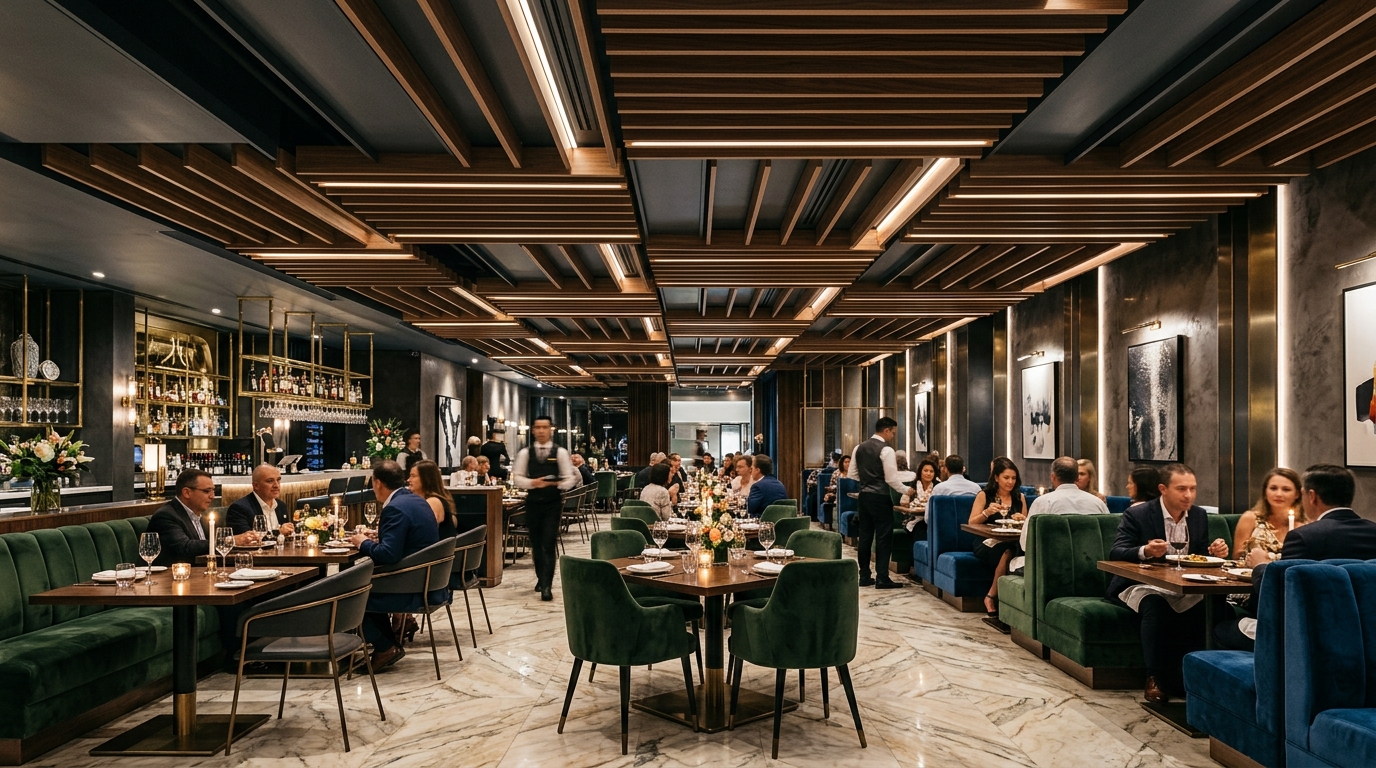
A modern trend in design is the blending of textures—for example, pairing cool metal with warm wood, marble, or soft velvet. Such sensory contrast generates visual intrigue that holds the guests’ attention, making the space multi-layered. The sense of tactile and visual complexity in the surrounding materials subconsciously elevates the perceived value of the establishment for the client. The consumer sees that a colossal amount of attention to detail has been invested in creating the space, serving as an undeniable psychological justification for premium pricing.

Metal panels with a water ripple effect are particularly popular in the luxury segment. Their uneven, wavy surface breaks up reflections, creating a dynamic interplay of light and shadow. This lends an exquisite look to the space, visually enlarges the room, and fills the atmosphere with vital energy that stimulates the patrons’ appetites and moods.

Metalevi steli v restoranakh Mishlen 11

Light Scenography and Interaction with Metal Surfaces

Light is one of the most potent invisible modulators of consumer mood and behavior in the restaurant business. Properly designed lighting can influence physiological processes, decision-making speed, and even how the brain interprets the taste of food. When working in synergy with metal ceilings, the impact of lighting multiplies, generating complex lighting scenarios.

The Psychology of Light Intensity and Temperature

Color temperature and lighting levels directly dictate the dynamics of a restaurant’s operation. Warm lighting (featuring yellow, amber, or red tones) activates the parasympathetic nervous system, facilitating deep relaxation, reducing stress levels, and fostering a feeling of safety and coziness. Scientific studies and practical experience prove that warm, dim lighting slows down the guest’s pace, extends their time at the table, and stimulates the ordering of high-margin items—collectible wines, complex desserts, and extra appetizers.

In contrast, bright, cool light (white or blue hues) has a stimulating effect. It speeds up the metabolism, boosts energy, and prompts clients to act faster, leading to a quick turnover of tables. Such an approach is financially sound for breakfast cafes or fast-food joints, but completely unacceptable for luxury dinner formats where the main product is the very time spent in the venue.

Interestingly, scientific research conducted in haute cuisine settings revealed a phenomenal link between light and taste: guests rated food as more aromatic and delicious under bright, targeted task lighting directly over the plate, compared to entirely dim conditions. This suggests that light should work locally, highlighting culinary details, while the overall background remains subdued.

Reflective Properties of Metal as a Design Tool

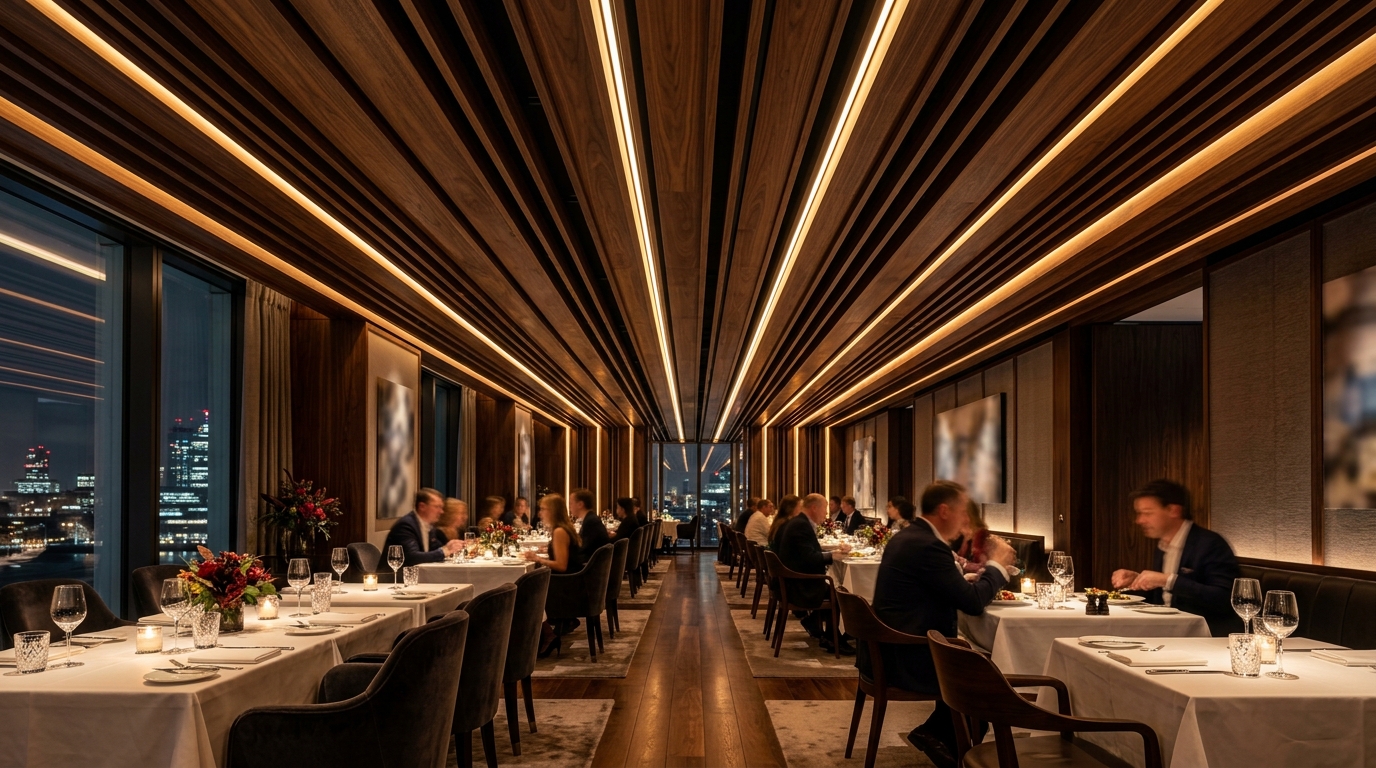
This is where metal ceilings showcase their unique advantages. They act as massive architectural reflectors. If bright light is aimed directly into the eyes or at the table with standard downlights, it casts harsh, unpleasant shadows on the guests’ faces, making them look tired, which causes subconscious discomfort and a desire to end the evening. However, if the light source is hidden or directed upward onto a textured metal ceiling, the metal diffuses the rays, producing a soft, enveloping, and complimentary glow.

As a result, guests look more attractive, feel more confident, and consequently, enjoy the evening longer. Additionally, the color of the metal itself acts as a natural light filter. Bronze, gold, and brass ceilings absorb cool spectrums and enrich the reflected light with warm harmonics, making the visual presentation of dishes more appetizing and the interior colors deeper and richer. Combining suspended systems with integrated light sources allows for accents to be placed precisely where needed, eliminating visual chaos.

Metalevi steli v restoranakh Mishlen 9

Architectural Mastery: Michelin-Starred Restaurant Case Studies

The global Michelin Guide awards restaurants based on five universal criteria: the quality of the ingredients, mastery of flavor and cooking techniques, the reflection of the chef’s personality in the dishes, harmony of flavors, and consistency of quality over time. Although the guide’s inspectors officially state that decor and service do not affect the awarding of stars , in the real world of premium gastronomy, the context in which these dishes are served is inseparable from the final perception of the product by critics and clients. The world’s most outstanding establishments use metal ceiling structures as a key element of their narrative and commercial strategies. All the establishments listed below do indeed have verified architectural implementations using metal. Let’s look at the most iconic examples.

Ikoyi, London

This British restaurant, awarded two Michelin stars, is located on the ground floor of 180 The Strand, a building famous for its brutalist architecture. The task for Copenhagen-based architect David Thulstrup was to create a space that would reflect the unique gastronomic concept of the establishment, which is based on seasonal British products and intense spices from West Africa.

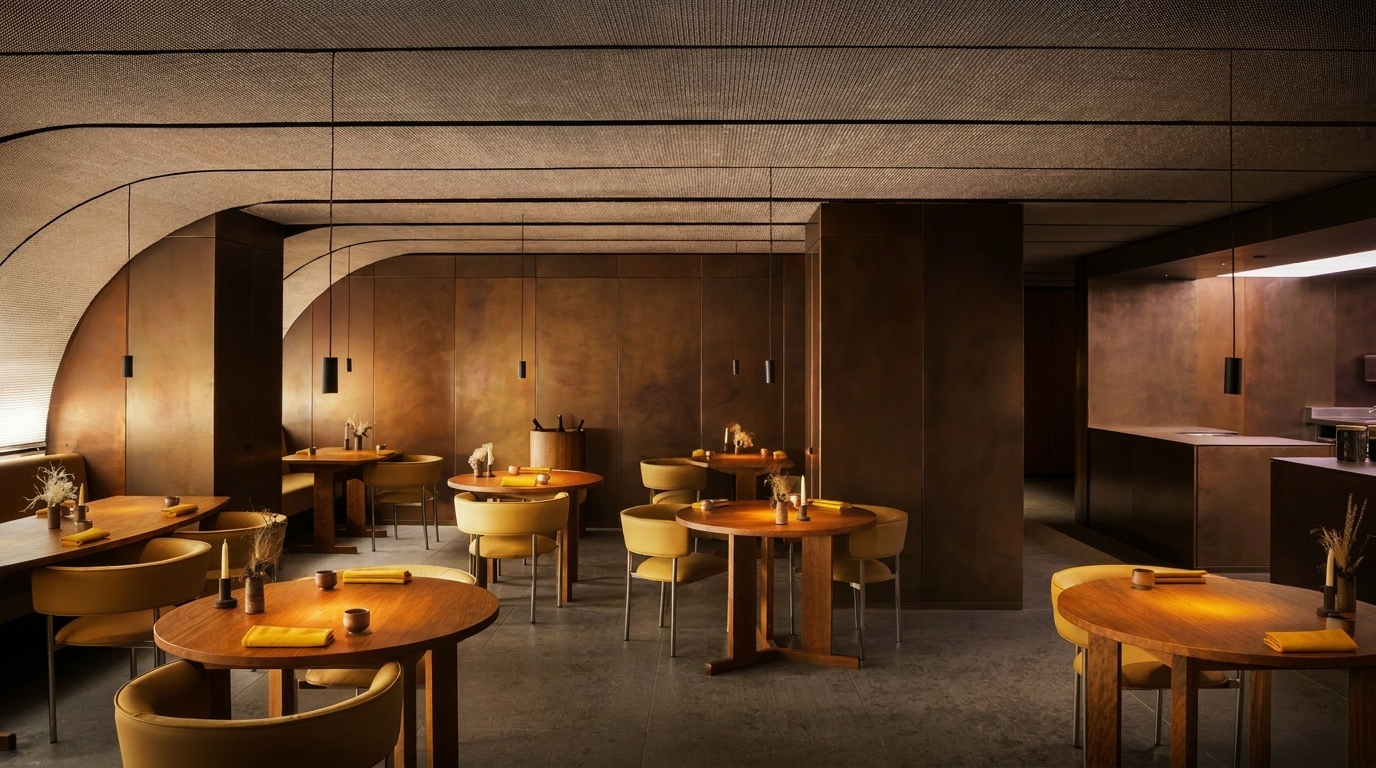
The restaurant’s interior is built on a deep contrast of materials, where copper and oak surfaces dominate. The main visual and conceptual focus of the venue is a monumental metal-mesh ceiling that smoothly curves up from the windows and completely covers the dining hall. Conceptually, this element symbolizes the process of sifting exotic spices through a sieve, acting as a direct reference to the chef’s culinary philosophy.

From an engineering and psychological standpoint, this metal mesh performs complex work with light. It captures natural daylight from the street, refracting it into the room during the day, and delicately sifts internal warm light outwards in the evening. The copper tones of the metal fill the cold brutalist space with an earthy, rustic warmth, stimulating a sense of coziness in the guests and preparing their receptors to experience complex, spicy dishes.

Metalevi steli v restoranakh Mishlen 1

IYO Aalto, Milan

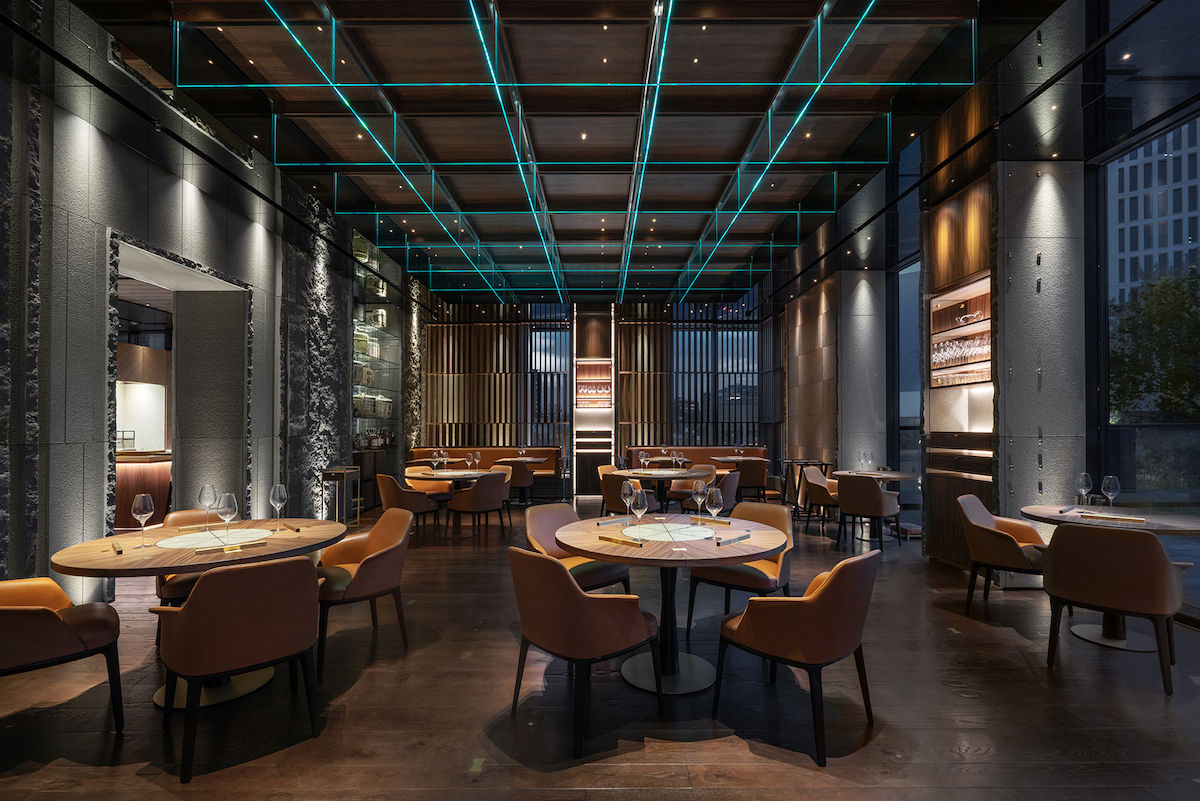
IYO Aalto is the only Japanese restaurant in Italy to be awarded a Michelin star. Architect Maurizio Lai designed an interior that embodies the Japanese aesthetic philosophy, reinterpreted through the lens of European luxury. The design relies on the use of flawless natural materials: walnut, grey porphyry stone, smoked glass, leather, and polished brass.

Brass does not dominate massively here but is integrated into the space with jewel-like precision. It is present as elegant inlays on the tables and serves as a key material in the exposed ceiling structure where lighting systems are integrated. The interior extensively uses smoked mirrors, where the reflection of light from brass details and glass multiplies to infinity. This creates a sense of visual boundlessness and the ephemerality of the space. Such a perfectionist approach to materials perfectly aligns with the perfectionism required by a Michelin sushi menu, allowing the establishment to justify its status as one of Milan’s most prestigious venues.

01 MaurizioLai IYOAalto DSC1633 phAndreaMartiradonna LR.1579024778.9251

Alchemist, Copenhagen

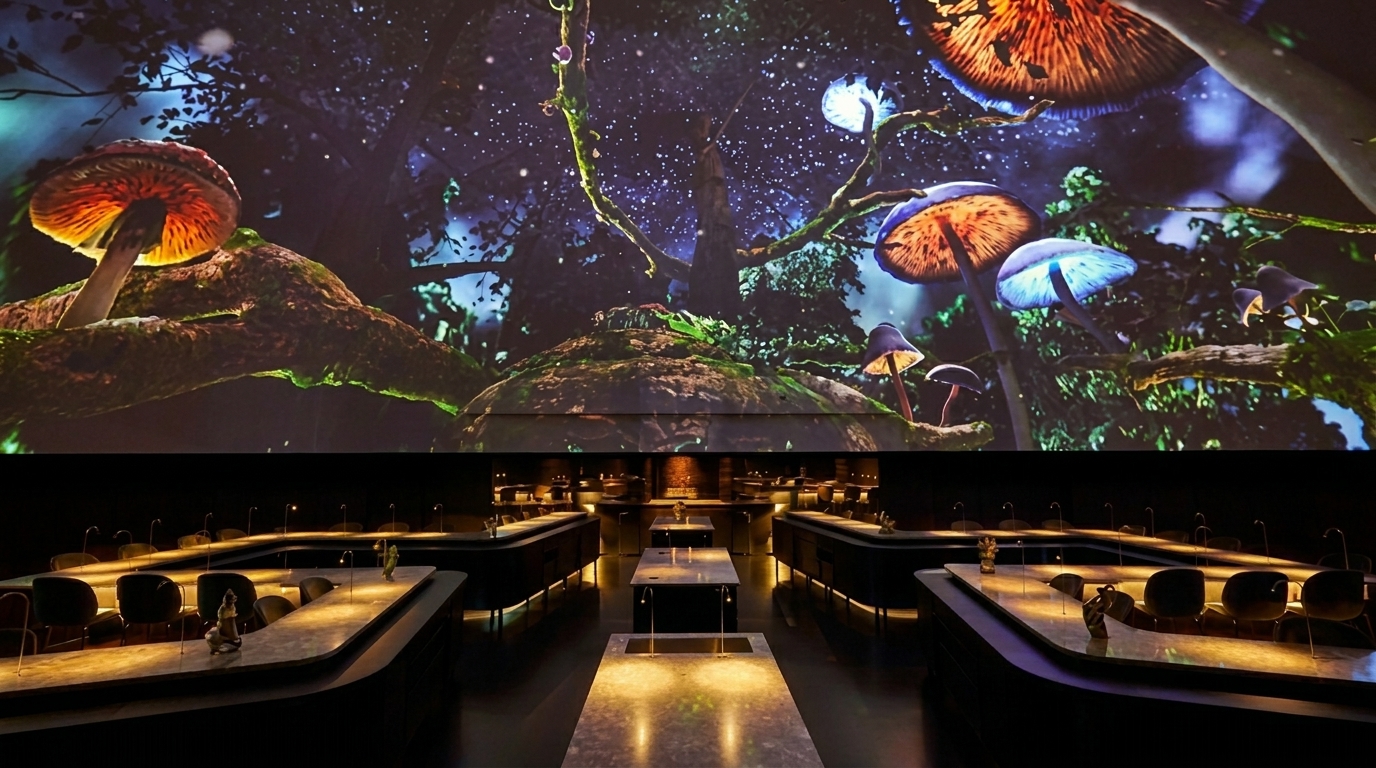
The Alchemist restaurant, which holds two Michelin stars and boasts a waiting list of about 7,000 people, is the absolute pinnacle of theatrical gastronomy in the world. Chef Rasmus Munk created not just a restaurant, but an immersive journey lasting over six hours and consisting of 50 dishes. The venue’s space is divided into various locations featuring actors and dramaturges, and the menu addresses pressing social issues—from ocean plastic pollution to climate change.

The architectural climax of this experience is the main dining room, located beneath a giant planetarium dome over 17 meters in diameter. The dome’s metal structure, constructed using perforated aluminum and metal plates to ensure flawless acoustics during prolonged stays, serves as a continuous 360-degree projection screen. On this ceiling, guests are shown highly detailed moving images: from the glowing northern lights to the eerie depths of the ocean with giant jellyfish. This architectural trick transforms the dinner into an existential art experience, for which clients are willing to pay an exceptionally high premium price.

Metalevi steli v restoranakh Mishlen 2

The Ledbury, London

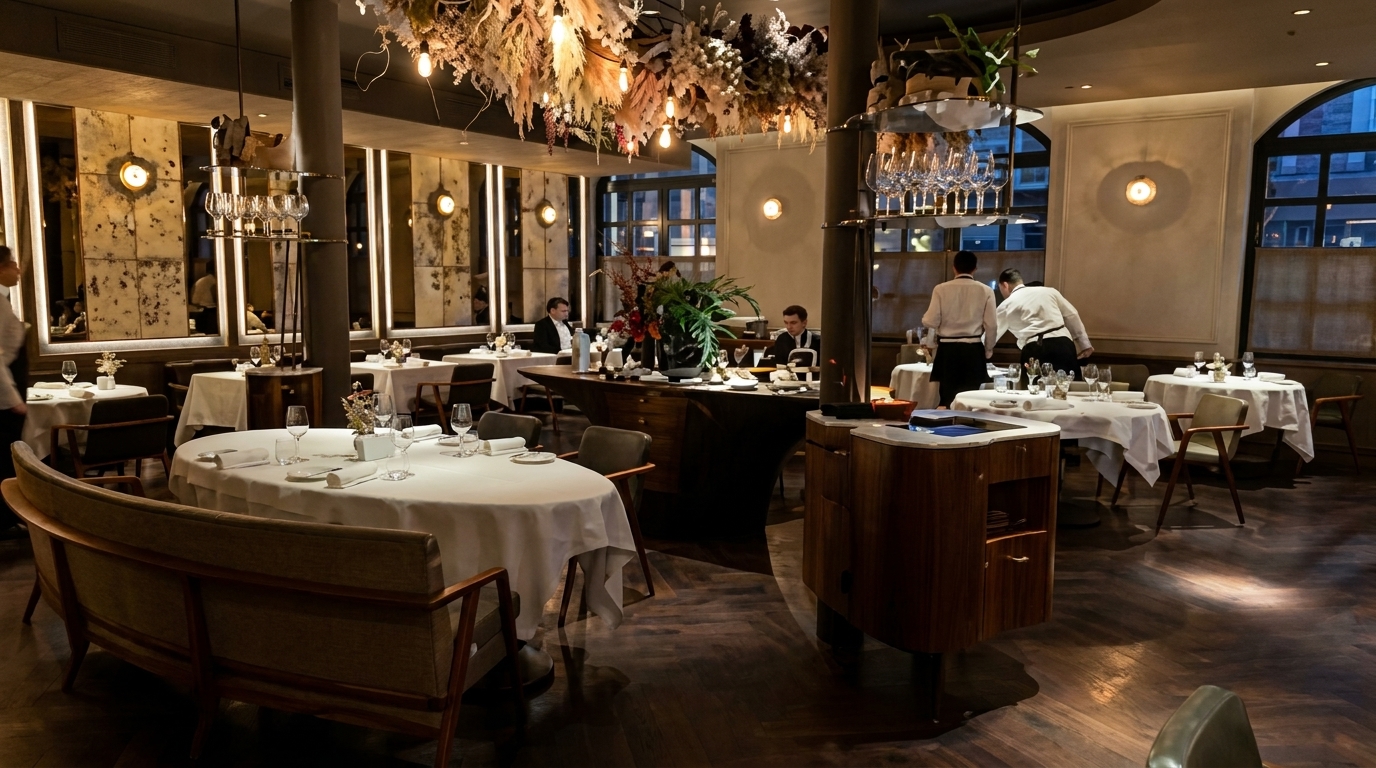
After a forced two-year closure, the London haute cuisine institution The Ledbury (now a three-Michelin-star holder) reopened with a radically revamped interior by London design studio These White Walls. The goal was to align the design with chef Brett Graham’s bold new menu concept, which focuses on a deep connection to wildlife and primal ingredients.

The designers abandoned the rigidity of a traditional square dining room, creating new curved ceiling voids that improve the movement of sound and air. Masterfully integrated into this natural symphony of organic materials are bronze mirrors and metal lighting accents on the ceiling and walls. The warm bronze reflections of the metal add textural complexity and luxury to the space, creating a beautiful tension between the refinement of formal etiquette and the wild nature of the culinary ingredients.

Metalevi steli v restoranakh Mishlen 3

Frantzén, Stockholm

The first restaurant in Sweden to earn three Michelin stars is designed for only 23 seats and focuses on creating absolute intimacy and perfection. Design studio Joyn Studio prioritized the room’s acoustics above all else.

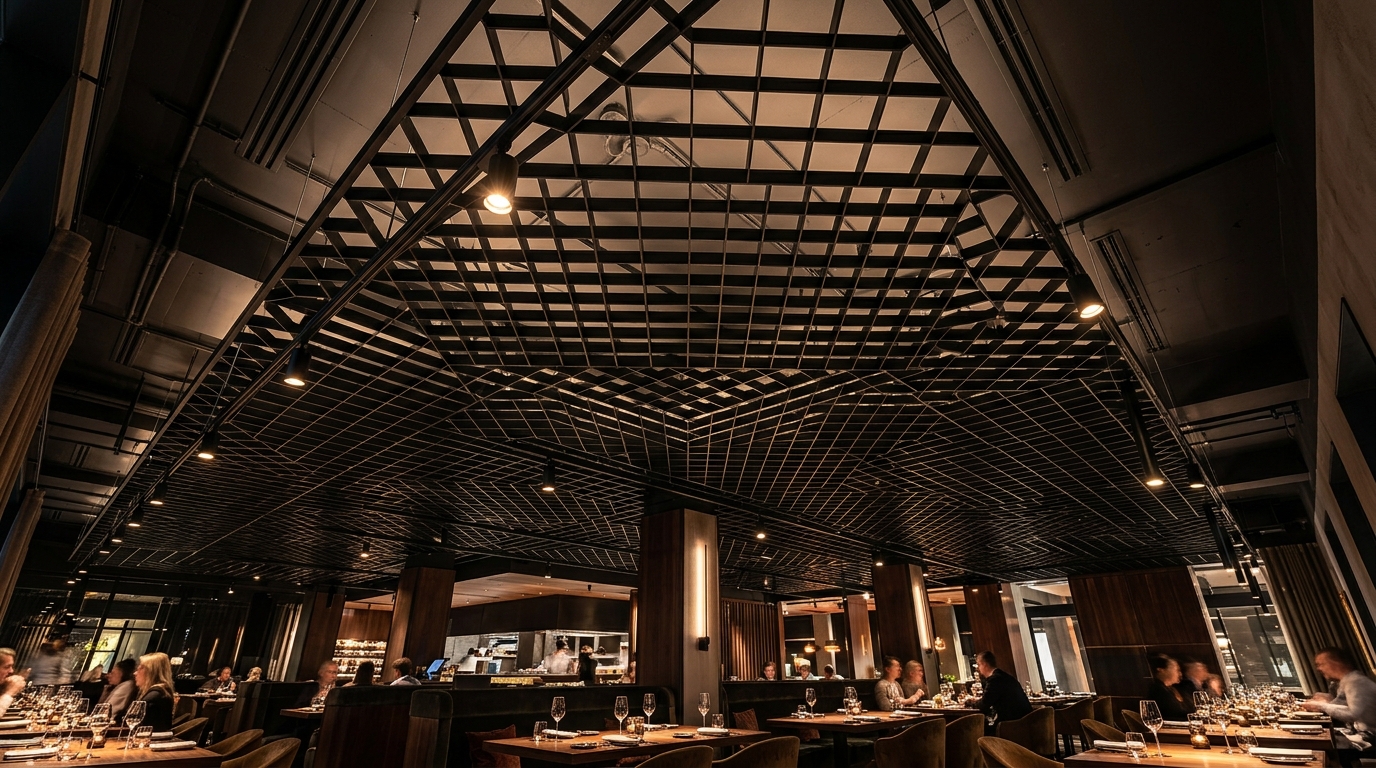
The restaurant’s interior combines Scandinavian simplicity with a Japanese understanding of materials: exposed metal grids cover the ceiling here, hiding state-of-the-art sound-absorbing systems. Eliminating echoes and establishing a controlled audio environment allows every guest to hear the chef’s subtle intonations during dish presentations without being distracted by background noise, confirming the establishment’s status as one of the best in the world.

Metalevi steli v restoranakh Mishlen 4

The Experience Economy: Analyzing Architectural ROI

All the aforementioned psychological, acoustic, and visual effects created by correctly selected ceiling materials and lighting directly correlate with the restaurant’s financial metrics. Investments in architectural psychology yield measurable returns to the owner by optimizing consumer behavior.

The Link Between Comfort, Dwell Time, and the Bill Amount

A guest’s psychological and physical comfort directly governs their willingness to spend money. Global research in behavioral economics for the hospitality industry shows that clients in an environment with optimal acoustic and visual comfort (which includes seating convenience, the absence of irritating noise, and pleasant lighting) spend on average 15–25% more per visit compared to those dining in basic or uncomfortable conditions.

This jump in spending is easily explained: a comfortable, warm, and acoustically balanced environment significantly prolongs the guest’s dwell time in the establishment. When a client feels relaxed and is not rushed by the physiological stress of excessive noise or bright light, they are highly likely to order things they might have skipped if in a hurry: pre-dinner aperitifs, additional tasting courses, expensive bottles of wine, a cheese board, desserts, and digestifs to conclude the evening. It is precisely these product categories that traditionally yield the highest profit margins in the restaurant business.

According to a large-scale survey involving nearly 2,500 diners worldwide, the impact of atmosphere on customer loyalty rises dramatically depending on the venue’s price segment. For visitors to casual cafes, atmosphere becomes a deciding factor in only 15% of cases, whereas for clients of upscale and luxury restaurants, this figure reaches 28% and 38%, respectively. This proves that in the Michelin segment, flawless visual-acoustic engineering is a vital necessity. Respondents named overcrowded seating, noise, and poor lighting as the primary negative factors that destroy the atmosphere and guarantee the loss of word-of-mouth recommendations. Restaurants that resolve these issues during the architectural planning stage (thanks to acoustic metal ceilings and proper lighting) secure a steady stream of loyal customers.

Balancing Spatial Density and Psychological Safety

Another crucial factor in the economic balance is optimizing table placement. If tables are located too close to one another, clients experience anxiety due to the invasion of their personal boundaries and the potential for their conversations to be overheard. This triggers a defensive desire, leading them to rarely order additional dishes.

However, spacing tables too far apart is economically unviable, as it reduces the hall’s overall capacity and can create the effect of an “empty and unsuccessful” establishment, which also deters the audience. Experienced architects resolve this conflict of interest using ceiling structures. By installing suspended metal panels (clouds) or altering the level and lighting over specific tables or booths, they create visual anchors — invisible psychological barriers. The client subconsciously perceives the space beneath such a structure as their protected, intimate zone. This enables restaurateurs to arrange tables relatively compactly, preserving the overall energy of a lively venue, while simultaneously guaranteeing every guest a sense of privacy that stimulates spending.

Systematizing the Impact of Architectural Decisions on Commercial Metrics

To better understand the mechanisms by which architectural and design decisions translate into specific psychological and financial outcomes, a structured relationship table is provided below:

Type of Architectural Solution (Metal Ceiling) Visual and Sensory Effect Client’s Psychological Reaction Acoustic and Lighting Control Commercial Result (Impact on the Bill)
Brass and gold alloy systems

Classic luxury, timeless elegance, warm glow.

Sense of high status, exclusivity; relaxation of the nervous system.

Effective softening and diffusion of the cold light spectrum.

Willingness to pay a premium price without objection; check increase by 15-25%.

Perforated metal panel with acoustic backing

Modern restraint, minimalism, a sense of hygiene and order.

Reduced stress levels, focused attention on taste receptors and conversation partners.

Sound absorption from 65% to 85%; elimination of the Lombard effect.

Significant prolongation of the visit; maximized sales of desserts and coffee; high loyalty.

Copper or bronze mesh / texture

Organic feel, connection to tradition, visual complexity.

Sense of intimacy, warmth, immersion in the chef’s craft philosophy.

Formation of micro-zones, soft sifting and refraction of light rays.

Growth in demand for signature dishes made from local farm products and craft alcohol.

Steel with a “water ripple” effect

Dynamics, ultra-modernity, optical expansion of space.

Activation of energy, a sense of innovation and excitement.

Complex multi-directional light reflection; elimination of harsh shadows on faces.

Stimulates guests to take photos (social media marketing); shifts focus to avant-garde tasting menus.

Dome metal immersive structures

Absolute immersion, a multisensory surrealistic experience.

Psychological disorientation, disconnection from everyday life, catharsis.

Controlled multidimensional acoustics (surround sound) for massive halls.

Ability to set ultra-premium pricing; ticket sales booked months in advance.

Metalevi steli v restoranakh Mishlen 7

Future Directions: Sustainability and Hidden Technologies

The premium restaurant design industry is constantly evolving, adapting to global macroeconomic trends and the changing values of new consumer generations. Expert forecasts indicate that in the coming years, restaurant design will focus on three key areas where metal structures will play a decisive role.

First, there is a radical shift in focus from ostentatious, superficial luxury toward conscious and ethical consumption. Haute cuisine restaurants are increasingly turning to sustainable development principles. Utilizing recycled metals, such as secondary aluminum, copper, or steel, to create ceiling architectural forms is becoming not only an aesthetic but a deeply ethical choice. This choice powerfully resonates with the values of the modern conscious elite, who form the core client base of Michelin restaurants. Such materials are nearly 100% recyclable and meet the strictest international green building certifications, all while retaining their premium visual and functional properties.

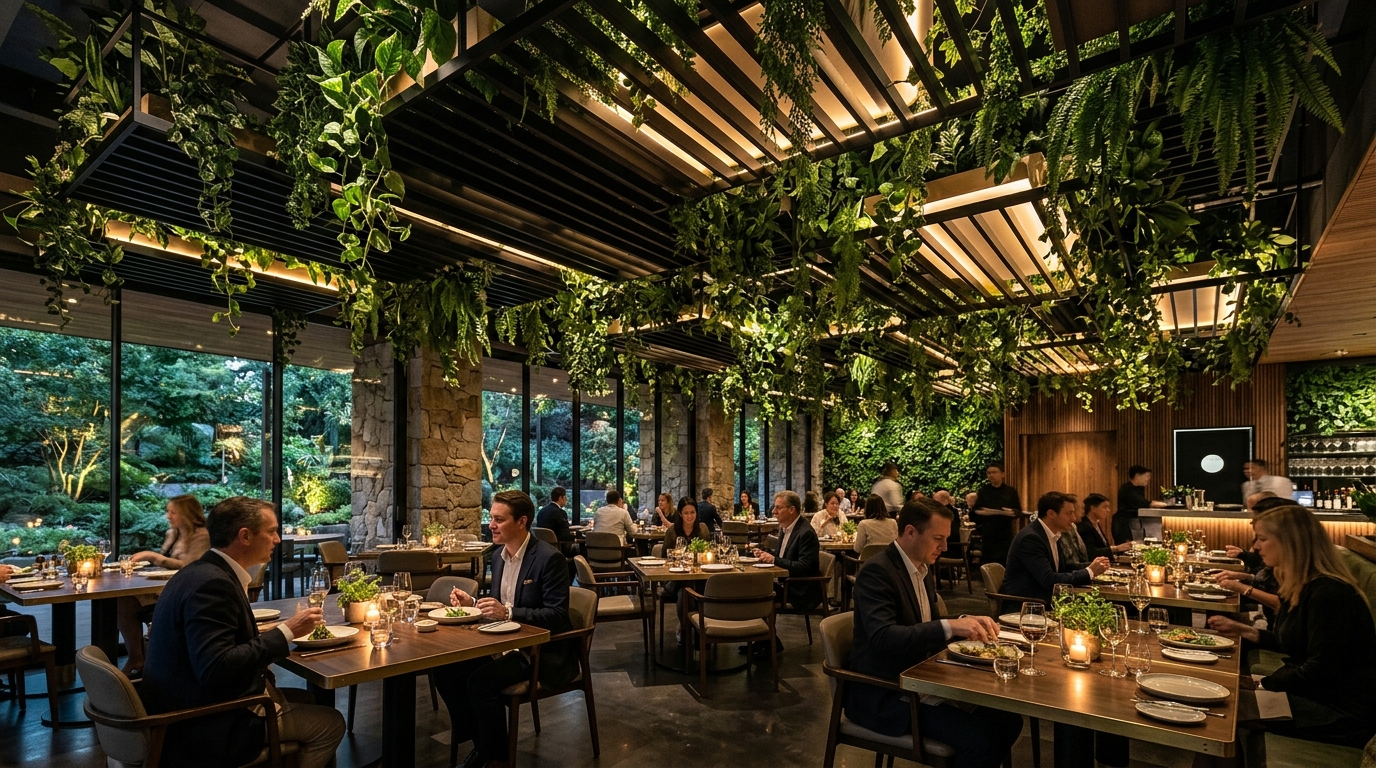
Second, there is a massive integration of biophilic design principles. The artificial and cool environment of metal is increasingly being combined with living organic elements or designed to mimic them. Metal ceilings are being designed as sturdy frameworks for cascading greenery or as surfaces whose geometry replicates natural patterns (such as leaf fractals or ocean waves). This contrast between the industrial strength of metal and the life-affirming power of nature creates an emotionally potent architecture that satisfies the urban dweller’s subconscious need to reconnect with nature, significantly reducing psychological tension.

Third, advancements in manufacturing technologies allow for the creation of so-called “hidden” or adaptive acoustics. Micro-perforations on acoustic metal panels are becoming so microscopic that, from human height, the ceiling surface appears completely smooth and monolithic. This grants architects unprecedented freedom to create seamless, minimalist, and futuristic interiors with zero compromises on sound absorption efficiency. When combined with sound-insulating wallpapers and fabrics, this achieves laboratory-level sound purity in dining halls packed with dozens of patrons.

Metalevi steli v restoranakh Mishlen 10

Conclusions

A deep analysis of the interaction between architectural design, neurobiology, spatial psychology, and the economics of premium restaurants irrefutably proves that thoughtful design is a direct driver of commercial success and business profitability. In top-echelon establishments, where Michelin culinary excellence is not a unique advantage but merely a basic, mandatory standard for market entry, it is the physical environment and emotional atmosphere that generate additional financial value.

Metal ceilings have evolved from ordinary utilitarian structures into a strategic tool for shaping the customer experience. Thanks to their ability to effectively manage the acoustics of large spaces and neutralize the uncomfortable Lombard effect through perforations and mineral backings, they create ideal conditions for unobstructed, quiet conversation, protecting guests from the stress of sensory overload. The optical and tactile properties of various metals — from the historically rich, warm glow of brass and copper to the soothing, innovative reflections of textured steel — allow chefs and designers to flawlessly calibrate the lighting scenario, optimizing food presentation and tuning the clients’ nervous systems for total relaxation.

This psychological tranquility and guaranteed physical comfort directly and predictably convert into a longer visit duration. In turn, an extended stay by a relaxed client who feels safe in a prestigious atmosphere leads to a substantial — between 15–25% — increase in the average bill amount, driven by orders for additional high-priced menu items.

Therefore, capital investments in the design of innovative, multifunctional, and visually flawless metal ceiling systems should be classified not as an aesthetic whim, but as a mathematically sound business strategy. This strategy guarantees a restaurant not only the highest accolades from global culinary critics and the admiration of the audience, but also maximized, stable economic profit. In the twenty-first century, true gastronomic luxury goes far beyond what is skillfully plated; it is a deeply considered, multidimensional immersive space where absolutely every element of the interior, from the floor to the highest point of the ceiling, works synchronously to forge a flawless experience and an emotional bond with the consumer.

author
About the author:

A marketing and communications expert at the Mehbud factory. Develops the brand, showcasing all the advantages of Mehbud products to clients. Helps you make the right choice by providing consultat...

More
0 0 votes
Article Rating
Subscribe
Notify of
guest
0 Comments
Oldest
Newest Most Voted
Inline Feedbacks
View all comments