
Glass wool is a type of mineral wool made from glass fibers. It traps air between the fibers, thereby slowing down heat loss. In a frame partition, the fibrous filling also helps absorb sound. For pitched roofs, partitions, and ventilated facades, products are selected based on their purpose, thermal conductivity, and installation requirements.
Where to use · How to choose · Installation and protection · Frequently asked questions
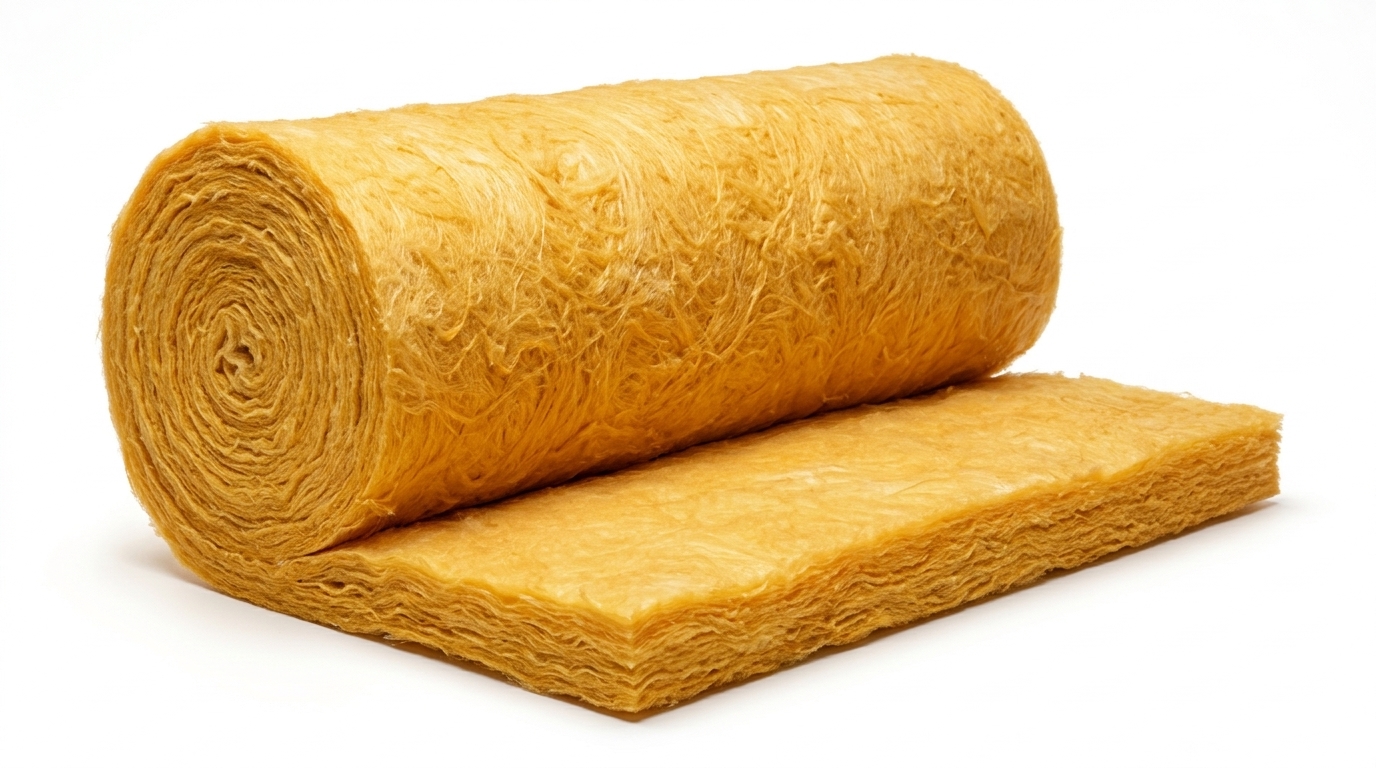
What glass wool is made of
The raw materials are components for glass production, in particular quartz sand, as well as cullet (broken glass). The melt is drawn into thin fibers, formed into a layer, and, depending on the technology, bound with a binder. The material is produced in rolls, mats, and slabs. The composition and properties of the finished product depend on the technology, binder, and facing.

Where glass wool is used
- Pitched roof and attic. Resilient rolls or slabs designed for this assembly are used to fill the space between the rafters. If the attic remains cold, the insulation is usually placed in the plane of the floor above the heated story. The passage for ventilation air must remain free where provided by the design.
- Frame walls and partitions. Resilient mats or slabs fill the frame cavity. The sound insulation of a partition also depends on the cladding, frame, tightness of joints, and utility penetrations. To compare solutions, look for the sound insulation index of the entire tested assembly.
- Ventilated facade. Choose slabs for which the manufacturer explicitly indicates such an application. The type of fastening, the protection of the insulation from the side of the ventilation gap, and the gap itself are determined by the facade system design. For plastering and under loaded floor layers, products designed specifically for these structures are required.
How to choose glass wool and determine the thickness
- Check the scope of application. Start with the technical data sheet and the declaration of performance for a specific product. Compare its format, thickness, and characteristics with the requirements for the roof, partition, or facade.
- Compare thermal conductivity by the same indicator. The declared thermal conductivity λD is measured in W/(m·K). With the same thickness, a lower value means a higher thermal resistance of the layer. Compare values determined under the same conditions.
- Consider the entire assembly. For a homogeneous layer, the approximate thermal resistance can be estimated as R = d / λ. For example, 100 mm at λ = 0.035 W/(m·K) gives about 2.86 m²·K/W for the insulation itself. For a wall or roof, a calculation is needed taking into account other layers, rafters, brackets, and thermal bridges. DBN V.2.6-31:2021 in the state register.
- Check fire characteristics. In the declaration, check the reaction to fire class specifically for the purchased product, including the facing, if any. The fire resistance of a wall, roof, or ceiling is evaluated for the assembled structure.
Comparing glass wool with stone wool should be based on the requirements for the assembly, λ, mechanical, and fire characteristics.
How to install glass wool and protect yourself during installation
Store packages in a dry place. Measure and cut the material according to the manufacturer’s instructions. Fill the cavities tightly at the edges, without gaps or excessive compression. In a multi-layer structure, stagger the joints if this is provided for by the layout. Before closing the cladding, check whether the areas near the corners, frame, and utility penetrations are filled.
During cutting and installation, fibers and dust can irritate the skin, eyes, and respiratory tract. Wear closed clothing, gloves, and safety goggles. Ventilate the work area and select respiratory protection according to the manufacturer’s instructions and working conditions. Clean up dust with a vacuum cleaner suitable for such dust.
Frequently Asked Questions about Glass Wool (FAQ)
Are glass wool and mineral wool the same thing?
Mineral wool is the general name for a group of insulation materials. Glass wool is made from glass fibers, and stone wool is made from molten rock. To make a choice, compare the characteristics of products intended for the same assembly.
What thickness of glass wool is needed for a roof?
The thickness is determined by a thermal engineering calculation for a specific roof. The region, thermal conductivity of the insulation, rafters, and other layers are taken into account. If the insulation must be thicker than the height of the rafters, the design may include an additional continuous layer.
Is a vapor barrier needed with glass wool?
The need for, type, and location of the layer to control water vapor are determined for the entire assembly. Climate, room humidity, and the vapor permeability of other layers are important. If the design includes a membrane, its joints and penetrations are sealed according to the system’s instructions. Information on water vapor control.
What to do if glass wool gets wet?
First, find and eliminate the source of moisture. Inspect the insulation and adjacent materials before closing the structure. Evaluate wet, deformed, or contaminated areas according to the manufacturer’s recommendations. Replace severely damaged material.
Does glass wool burn?
Certain glass wool products have an A1 class. Check the reaction to fire class in the documents of a specific product, especially if there is foil or other facing. The maximum allowable operating temperature is checked separately against the technical data sheet.
Can I squeeze 100 mm of glass wool into a 70 mm cavity?
Choose the thickness based on the cavity size and design. Compression reduces the actual thickness of the layer, so its thermal resistance may be lower than stated for 100 mm. If higher resistance is needed, consider an additional layer or a deeper frame.
Will glass wool help reduce noise in a partition?
Yes, as a sound-absorbing filling of the cavity. To predict sound insulation, focus on the tested assembly with the appropriate frame, number of cladding layers, and sealing of junctions.
Video about ventilated facades
The “Mehbud” video shows hinged ventilated facades. To select insulation, verify the requirements of a specific facade system against the product documentation.
Related articles
Rainscreen Ventilation Gaps at Windows, Wall Bases and Parapets
Three rainscreen sections show how trims can obstruct cavity ventilation at windows, wall bases and parapets, with drainage checks and references to Ukrainian DBN V.2.6-33:2018.
Suppliers of thin sheet metal in Ukraine
Where to look for galvanized sheet, coil, and strip. Overview of suppliers and a list of parameters for requesting a price and checking a batch.
Architectural trends in medical facility facade design
Modern medical facility facade trends: ventilated metal systems, infection control, fire safety, and patient psychological comfort.