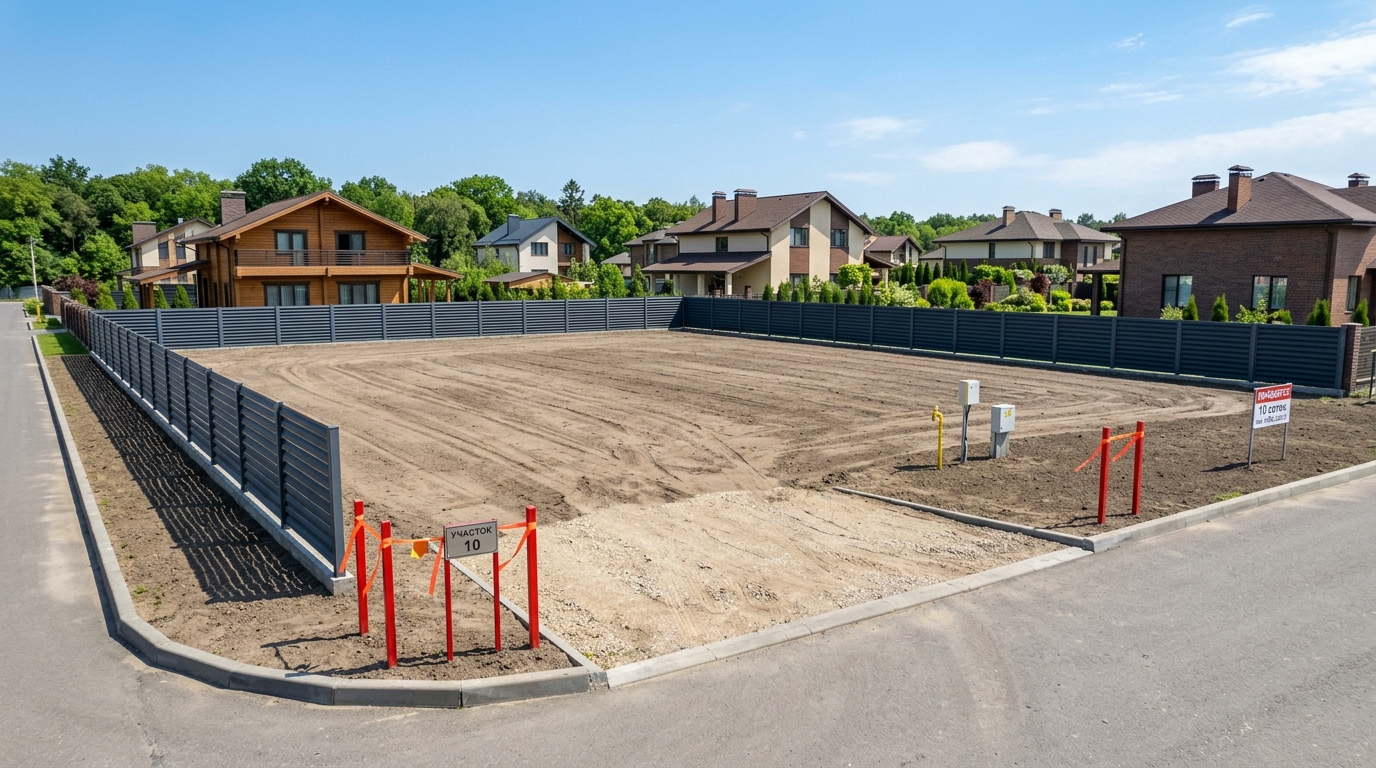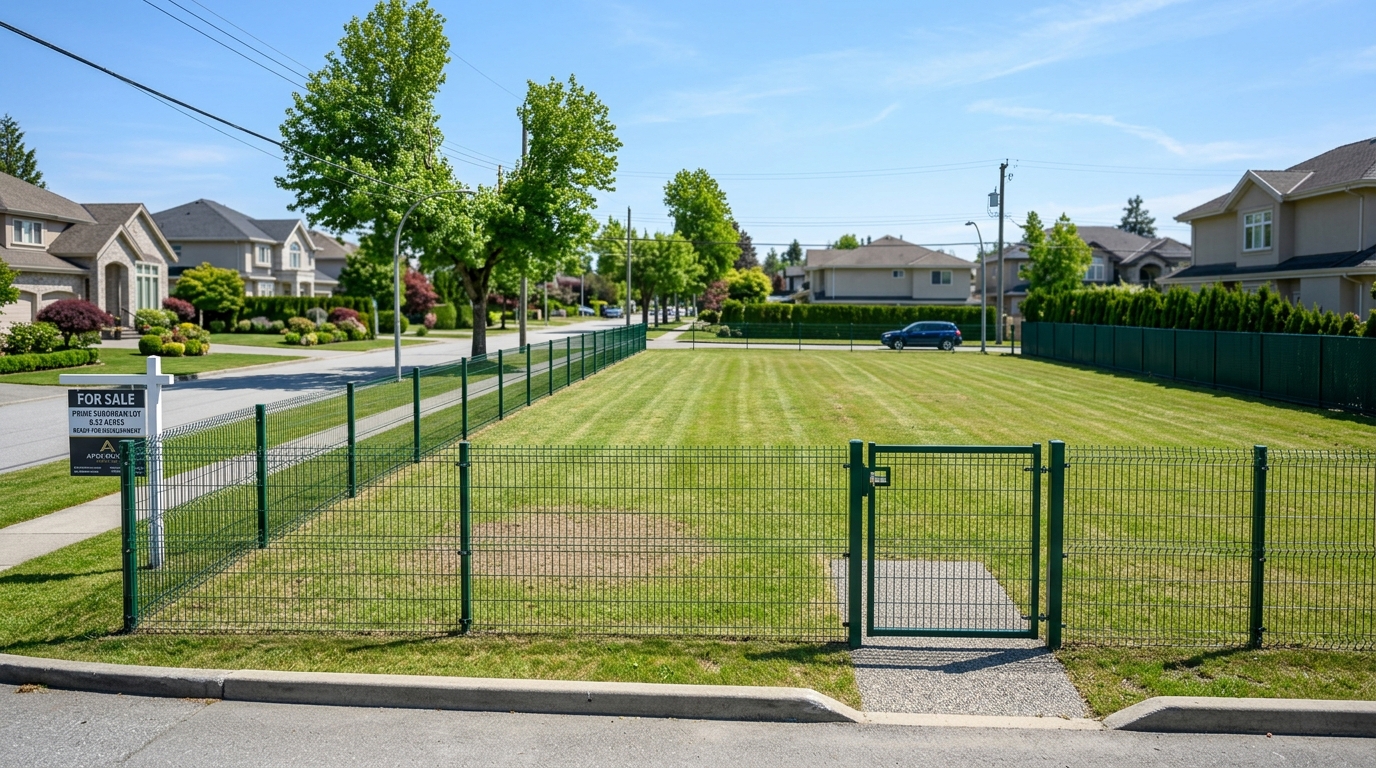

When buying and selling land plots and suburban real estate, it is extremely important to objectively evaluate all factors that can affect the final value of the land and the liquidity of the property. One of these primary factors is the presence, quality, and appearance of the fence. A fence can be installed even on a completely empty plot designated for construction. And if you are buying (or selling) a developed territory with an already finished house, a capital fence must be present there with a 99% probability, otherwise the property will seem “unfinished.”
Let’s take a detailed look in our updated article at how exactly a fence affects pricing, whether it increases the attractiveness of the property in the eyes of potential buyers, and how to sell or buy a plot with maximum financial benefit.
A Plot with a Fence or Without: A Deep Analysis of Arguments
When it comes to selling a simple land plot (without buildings), the question of installing a fence often becomes the subject of heated discussions between realtors, sellers, and buyers. Moreover, the arguments, motivation, and financial calculations will be fundamentally different for the seller and the buyer.
From the Seller’s Perspective: Is It Worth Investing Before the Sale?
On the one hand, the owner of an empty plot is logically interested in minimizing any pre-sale expenses. It seems easier to leave the plot without any fencing at all or to limit it to a primitive “marking” of boundaries — for example, by stretching construction cords between wooden or rebar stakes at the corners of the territory. However, in modern real estate market realities, this approach often leads to delayed sales periods and a forced price reduction.