An Alternative to Corten: How Powder Coating Imitates Rusty Steel
Generic selectors
Exact matches only
Search in title
Search in content
Post Type Selectors

An Alternative to Corten: How Powder Coating Imitates Rusty Steel

September 4, 2026
3  

The Evolution of Architectural Surfaces and the Phenomenon of Weathering Steel

Modern architecture and industrial design are in constant search of materials capable of combining industrial aesthetics, durability, and organic integration into the environment. One of the most striking trends of recent decades has been the use of materials that demonstrate the passage of time, natural aging, and a fusion with nature. The aesthetics of wear, natural oxidation, and multifaceted texture have become a symbol of authenticity. In this context, weathering steel, known commercially as corten, has gained colossal popularity among leading architectural firms. Originally developed for the needs of the American railway industry to create reliable freight cars, this specific grade of steel is distinguished by its unique ability to form a dense, self-healing layer of patina on its surface under the influence of atmospheric moisture. This layer of oxides stops further corrosion, turning the chemical flaw of iron into its main protective mechanism and an undeniable aesthetic advantage that creates a unique visual effect.

However, the prolonged practical operation of corten steel structures in modern urban environments has revealed a number of significant engineering, environmental, economic, and architectural limitations. The most prominent among them is the lengthy process of patina formation, which can take from six months to several years and is accompanied by intense leaching of iron oxides by rainwater. This inevitably leads to deep, practically irreversible staining of adjacent architectural elements, concrete plinths, glass storefronts, and sidewalks with rust spots, causing constant dissatisfaction among municipalities and building owners. In addition, architects face the absolute impossibility of controlling the final shade of the material, which forms chaotically and depends on the local microclimate, wind direction, amount of sunlight, and moisture.

In response to these complex challenges, the global metal surface treatment industry has developed a high-tech and sustainable alternative — architectural powder coating with a rust effect. This innovative technology allows for the perfect imitation of the visual characteristics of oxidized metal with photographic and tactile accuracy, while simultaneously eliminating all the functional disadvantages of natural corten steel. The application of specialized multicomponent polymer powders to light alloys, such as aluminum, creates an entirely new paradigm in facade design. This provides designers with a combination of flawless, warm aesthetics with absolute predictability, environmental safety, extreme durability, and significant economic efficiency at all stages of the object’s lifecycle.
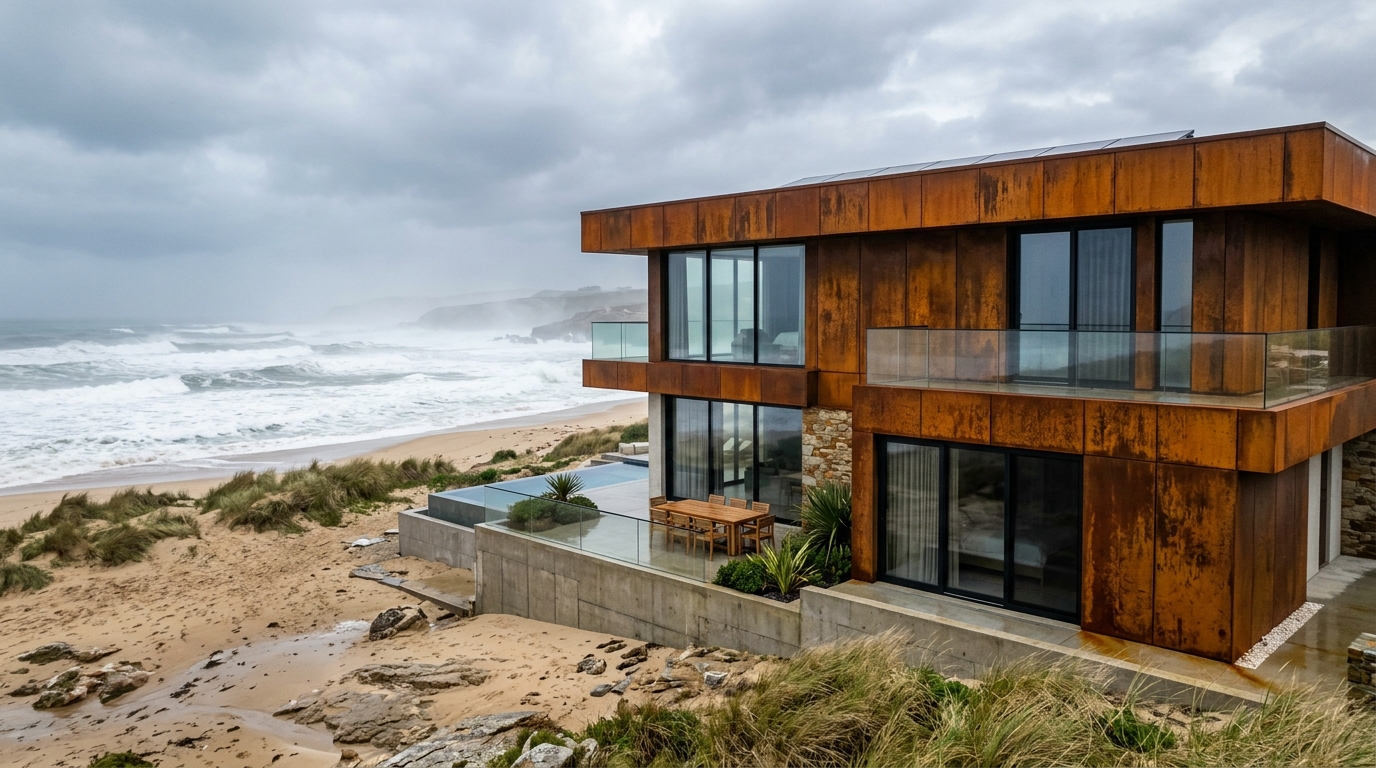
Modern villa on sea beach

Physicochemical and Operational Limitations of Natural Metal

The fundamental mechanism of weathering steel is based on an extremely complex chemical balance of alloying elements, among which copper, nickel, chromium, and titanium play a key role. During cyclic natural wetting and drying under the influence of the sun, these elements catalyze the formation of a dense crystalline layer that physically isolates the base metal from the aggressive effects of atmospheric oxygen and moisture, halting the deep destruction of the material. However, this process is not instantaneous. During the patina maturation stage, which is the most vulnerable and prolonged period of the material’s lifecycle, the active dissolution of primary loose oxides occurs. Any rainwater instantly turns into a concentrated suspension of rust that flows uncontrollably down the facade. From an engineering perspective, architects are forced to implement complex hidden drainage systems, additional drip edges, and special gutters to try to divert this runoff away from pedestrian zones, which significantly complicates the design of facade junctions and unjustifiably increases the cost of general construction work.

In addition to the problem of visual pollution, the process of forming a protective patina requires strict and quite specific climatic conditions, namely — a regular alternation of wet and completely dry periods. If the metal structure is located in a consistently humid climate, in deep shade where water constantly stagnates in joints and microcracks, or near the sea coast where the air is saturated with aggressive marine salts, the chemical reaction goes completely wrong. Chlorides contained in sea air or in urban de-icing agents used on roads in winter provoke the formation of a specific type of rust — akaganeite. This type of oxide does not have proper adhesion to the base metal, does not form a protective film, and flakes off in large pieces, constantly exposing fresh metal to further aggressive corrosion. Ultimately, this leads to complete structural failure of the product, which is precisely why the use of corten steel is strictly discouraged by regulatory documents within a radius of less than two thousand meters from saltwater bodies or in areas with intensive use of road salt.

Another critical structural factor is the massive weight of the material. Steel has an extremely high specific gravity, creating a colossal static load on the building’s load-bearing structures. The use of heavy thick-plate steel for large-scale facade cladding requires massive substructures, reinforced anchoring systems, and a powerful foundation, leading to a snowballing increase in concrete and reinforcement costs across the entire project. Attempts to stop rust runoff or accelerate its formation using special chemical sealants or acidic patination accelerators are merely temporary, compromise measures. They require regular, expensive renewal, contain toxic volatile components, and often provoke dangerous hidden corrosion under the varnish layer that is impossible to spot in time.

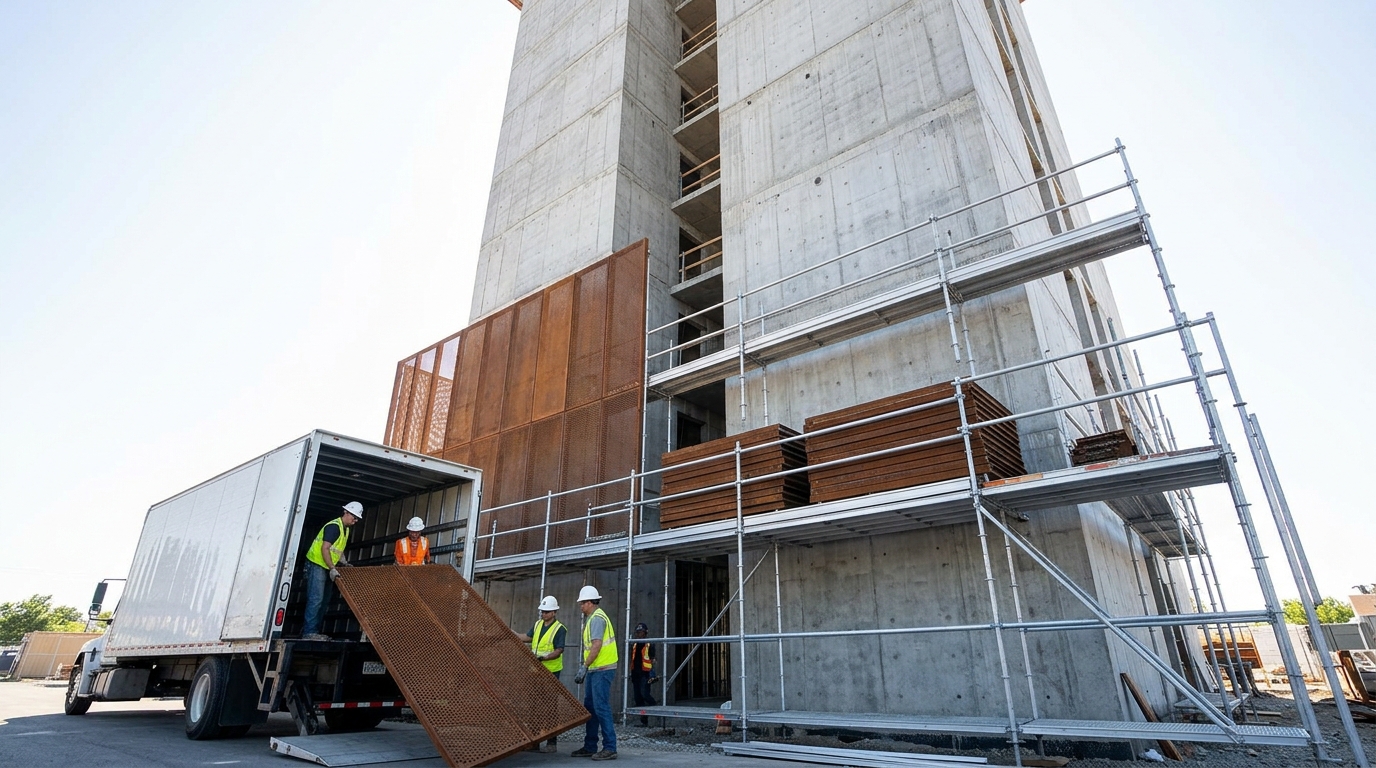
Industrial office building facade

Powder Coating: The Chemistry and Physics of a Perfect Imitation

An alternative that completely eliminates the physical and chemical limitations described above is metal powder coating. This advanced industrial method involves applying dry, finely dispersed polymer powder to a pre-meticulously prepared metal base, followed by its melting and thermosetting polymerization in a special high-temperature oven. Modern chemical laboratories of global paint manufacturers have developed specific powder formulations based on complex polyester resins that are capable of replicating the properties of corten steel with phenomenal optical and structural accuracy.

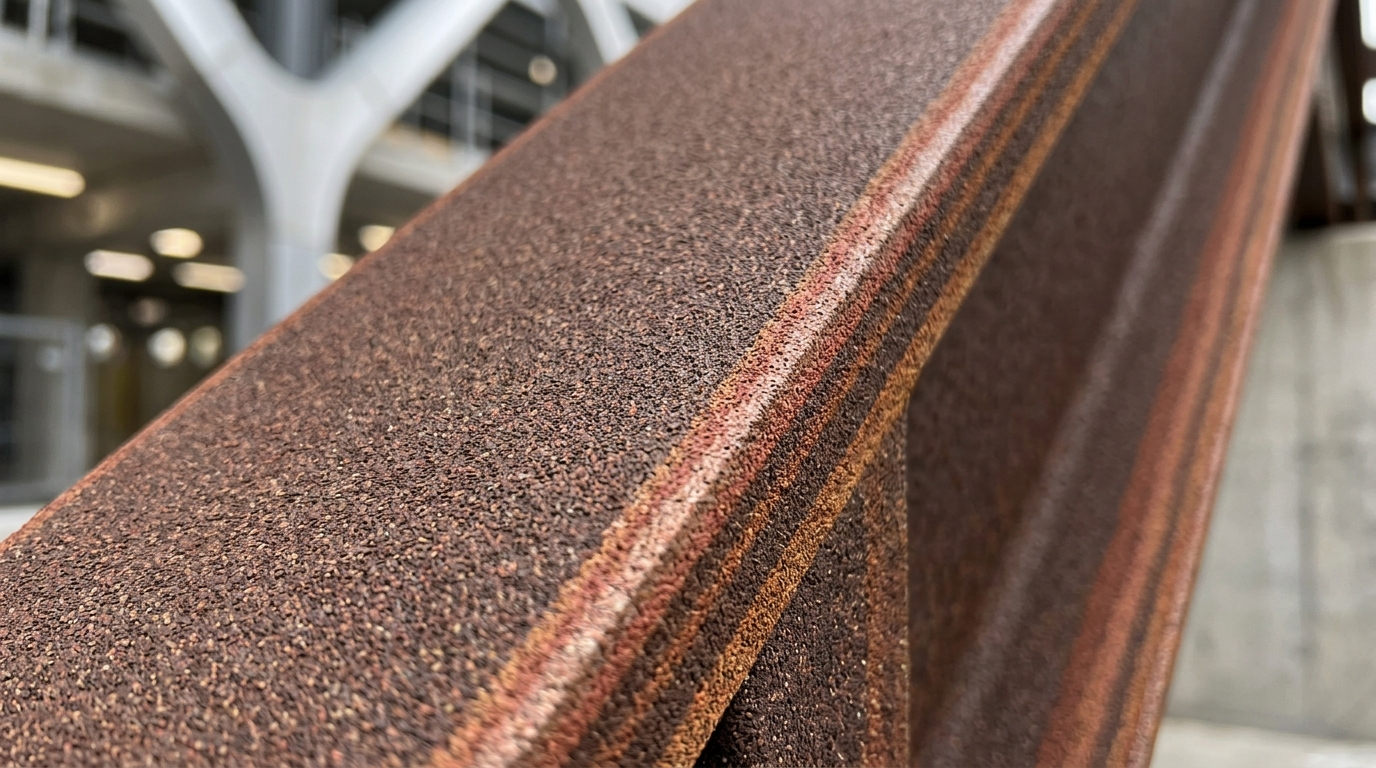
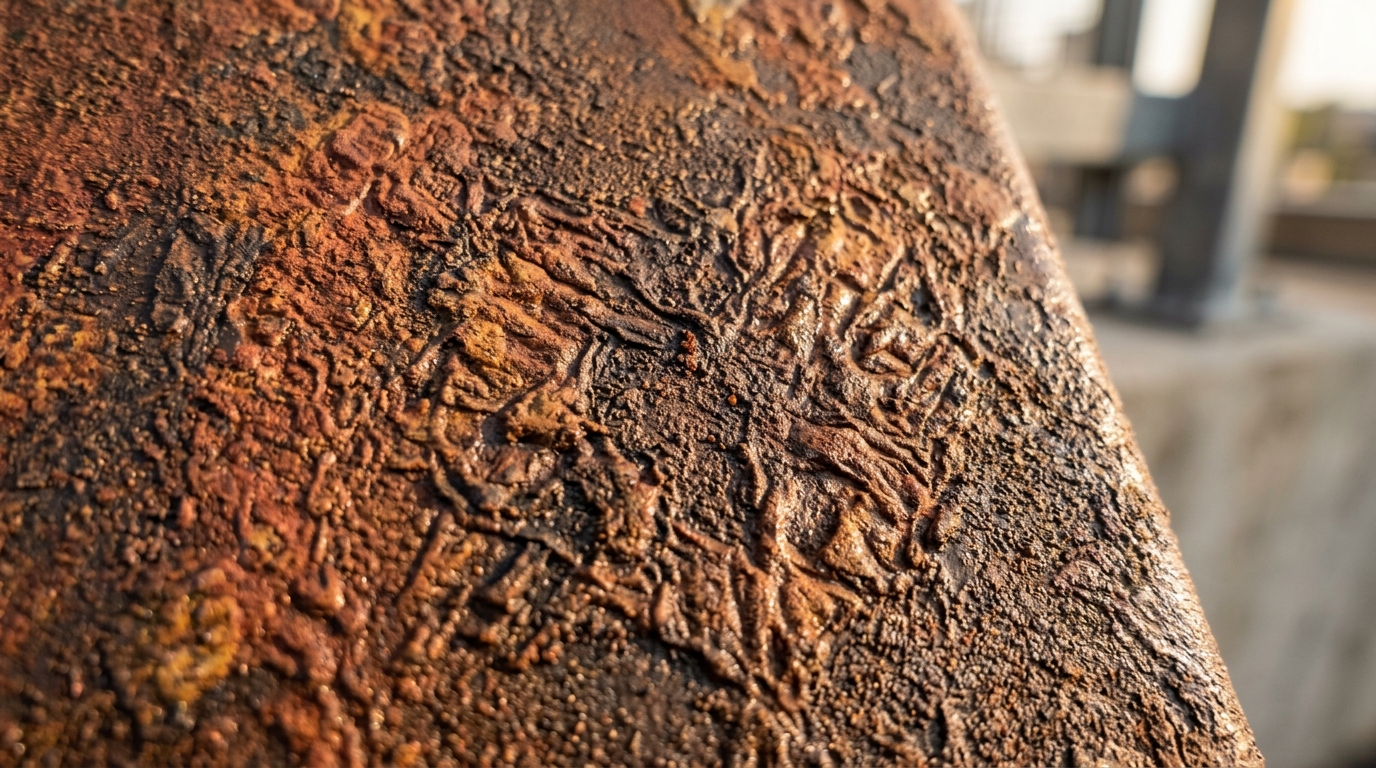
The secret to the most authentic imitation lies not only in the mathematically precise selection of color pigments but also in the use of special texturizing additives, matting agents, and metal dust. Unlike conventional liquid paint, which, under the action of gravity and surface tension, creates a flat, uniform, and artificial-looking film, powder coating with a rust effect forms a micro-relief, multi-tone surface with pronounced tactility. Thanks to the microscopic mixing of polymer particles with different melting temperatures, a complex, wrinkled texture forms during baking, which reflects and scatters sunlight differently at different viewing angles, imitating the natural chaotic nature and unevenness of an oxide film.

The fundamental technological advantage of this innovative approach is that the rust effect is completely controlled, stable, and chemically inert. The building material is delivered to the site in its final, pre-“aged” state. This deep color will never change again under the influence of ultraviolet light, will not be washed away by aggressive autumn rain, and will not stain expensive surrounding marble or concrete surfaces. The project’s chief architect gets exactly the visual result approved at the sketch stage, without unpleasant surprises after a few years of operation. Moreover, this technology allows the customer to independently choose a specific visual stage of “oxidation” — from light orange, bright young rust to deep, noble dark patina, which is an absolutely impossible task when using natural metal.

Strict Technological Regulations for Coating Application

The quality, reliability, and decadal durability of architectural powder coating critically depend on strict, uncompromising compliance with a multi-stage technological process. Even the most expensive, innovative polymer powder cannot protect the metal if the basic principles of substrate preparation are violated at the plant. The industrial process is mandatorily divided into three critical stages: deep chemical surface preparation, electrostatic spraying, and thermal polymerization.

The first stage — surface preparation — is the unshakable foundation for adhesion and durability. Any metal part coming from the rolling mill goes through a multi-stage series of baths for cleaning, alkaline degreasing, and acidic removal of oil traces, dust, oxides, or mill scale. After perfect cleaning, the chemical conversion process of the material’s surface takes place. In modern eco-friendly production facilities meeting strict standards, instead of obsolete and toxic chromating, exclusively chrome-free systems based on titanium or zirconium (when working with aluminum) or phosphating with iron or zinc salts (for steel alloys) are used. This nanoscopic layer, a few molecules thick, creates an ideal microporous base for the strong chemical bonding of the polymer to the metal, preventing dangerous under-film corrosion even in the event of deep mechanical damage to the coating by a sharp object. After thorough rinsing with deionized water, the part must be completely dried, because any, even microscopic remnants of moisture in the metal pores will turn into water vapor during subsequent baking, which will inevitably tear the paint and lead to the formation of unattractive craters.

The second stage — application of pigmented powder. Completely dried parts are fed by conveyor into a special sealed spraying booth, where the dry mixture is applied using robotic or manual sprayers. In the industry, the corona method of electrostatic spraying is the most common. Exiting the gun, dry powder particles fly through a powerful high-voltage electric field, acquiring a strong negative charge. At the same time, the part itself on the conveyor is reliably grounded (has a positive potential). Thanks to the laws of physics and the potential difference, the powder cloud is magnetically drawn to the metal, evenly enveloping the product from all sides, including invisible zones. For architectural parts with highly complex geometric shapes, where strong electrostatic repulsion inevitably occurs in internal corners (a phenomenon known in physics as the Faraday cage effect), experienced operators use special gun spray pattern settings or apply the tribostatic application method, where the charge is generated solely through intense friction of the particles against the walls of the teflon gun channel.

The third and final stage — thermosetting polymerization. The product, densely covered with a layer of dry powder, moves smoothly into a long conveyor oven, where it is heated to a temperature of one hundred and eighty to two hundred degrees Celsius. Under the influence of high temperature, solid particles of polyester powder first melt, merging into a continuous viscous liquid that fills all the metal micro-irregularities, and then a chemical reaction of cross-linking long polymer chains begins. After leaving the oven and cooling in the air, an extremely durable armor is formed, resistant to ultraviolet rays, aggressive chemicals, and mechanical impacts, structurally inseparable from the surface of the metal itself.

Table 1: Analysis of the advantages and vulnerabilities of technological processes of architectural surface formation

Characteristic Natural corten steel Powder coating (imitation)
Texture formation principle Natural atmospheric oxidation under moisture exposure Electrostatic application of polymers and thermal baking
Effect readiness time From 6 to 24 months (process is continuous) Immediately upon cooling after leaving the oven (about an hour)
Chemical adhesion to base Unstable (flaking off is possible) Maximum (chemical cross-linking at the molecular level)
Local ecology requirements Incompatible with salty sea air and chlorides Withstands any aggressive environment provided proper preparation
Final shade control Absolutely none (depends on nature) Full (set by engineers at the plant via catalog)
архітектурного профілю

Material Synergy: Aluminum as a Flawless Base

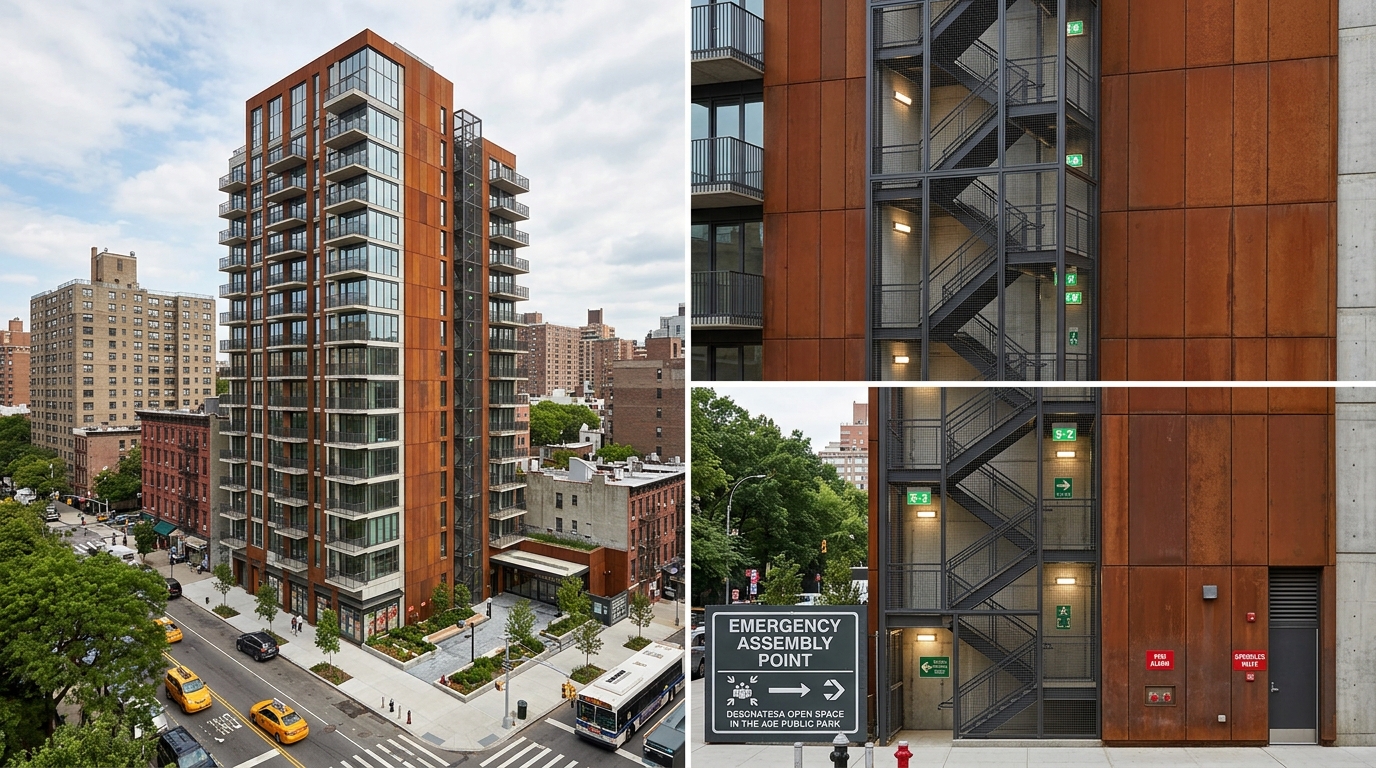
Although modern powder paints can successfully cover any conductive material, the greatest engineering and synergistic effect in modern architecture is achieved by applying rust imitation specifically to aluminum alloys. The combination of the visual and psychological massiveness of “rusty” metal with the real, physical lightness of aluminum simultaneously solves a number of fundamental building problems.

Firstly, aluminum weighs approximately sixty to seventy percent less than structural steel of similar thickness. This radically reduces the constant static load on load-bearing columns and building floors, allowing engineers to use much lighter facade substructures, simplify foundation bearing capacity calculations, and save significantly on transport and logistical costs. For complex modular open-type facade systems or continuous glazing of high-rise buildings, where every kilogram matters, this factor becomes absolutely decisive in choosing the cladding material.

Secondly, unlike ferrous metals, aluminum has outstanding natural corrosion resistance. At the slightest contact with atmospheric oxygen, a transparent, extremely dense oxide film forms almost instantly on its surface, reliably isolating the metal and stopping any further chemical reaction. In practice, this means that in the event of a deep mechanical scratch on the facade (e.g., from a tree branch or vandalism) cutting through the polymer powder coating down to the metal, aluminum will not begin to rust. Ordinary steel in such a case would inevitably start oxidizing, rust would penetrate deep beneath the protective paint layer, causing its massive blistering and subsequent large-scale delamination. Thus, the use of an aluminum base for a “rusty” architectural coating is a guarantee that the product will retain its perfect aesthetic appearance for decades, even under intensive use and minor damage.

Thirdly, aluminum is extremely plastic and easy to machine. It is simple to manufacture modern perforated panels with any hole pitch, complex 3D shapes, ventilation louvers, curved cornices, and decorative elements out of it, which are then uniformly powder-coated in their finished form. Trying to produce similar thin-walled perforated or small decorative parts from authentic corten steel is much more difficult and risky, since aggressive rust continuously thins the metal, and after a few years, small elements or bridges between perforations can be completely destroyed, losing structural integrity.

International Standardization and Quality Control: The Qualicoat System

To reliably guarantee customers that a thin polymer coating will effortlessly withstand decades of continuous exposure to aggressive sun, acid rains, and sharp temperature fluctuations, the global architectural community unquestionably relies on independent international certification systems. The most authoritative and widespread system in the world is the European Qualicoat specification, which strictly regulates the entire process: from the chemical production of the paint itself to the final laboratory quality control at the applicator plant applying the coating.

The Qualicoat system clearly divides powder paints for outdoor architectural application into several technical classes based on their proven resistance to destructive atmospheric influences. The most common in the industry are Class 1 and Class 2. Class 1 is traditionally considered the standard, economically justified choice for construction in temperate climate regions. To receive this certification from the commission, powder paint samples must successfully pass a full year of intensive field testing in the extremely harsh climatic conditions of the Florida peninsula. This region was selected as a baseline benchmark due to its destructive combination of extreme ultraviolet radiation, high air temperature, and maximum ocean humidity. After a full year of outdoor exposure under such conditions, the test coating must retain at least forty percent of its original gloss level and must not exceed strictly established norms for color change.

However, for premium high-rise facade systems, as well as for geographical regions with very intense solar radiation (such as Southern Europe or the Middle East), Class 2, known as super-durable powders, is mandatory. These materials are synthesized on the basis of special high-tech resins with significantly stronger molecular bonds. Florida field tests for paints of this class last continuously for three years. And even after this long period, they must retain at least fifty percent of their gloss and show half the color deviation (a parameter measured as Delta E) compared to standard first-class powders. Leading architects increasingly demand the use of Class 2 paints in specifications to create a rust effect on critical projects, as this documents and guarantees the preservation of a deep, rich patina shade for fifteen to twenty years without the slightest visual signs of fading or surface chalking.

In addition to climate aging tests, stringent Qualicoat standards require rigorous daily technical control directly on factory painting lines. This internal control mandatorily includes accurate verification of polymer film thickness (which according to regulations must be from sixty to one hundred microns), a complex mechanical adhesion test via deep cross-cut hatching, impact strength testing by dropping a weight on the reverse side of the plate (with impact energy of not less than 2.5 Joules), as well as prolonged salt spray chamber testing to verify the system’s anti-corrosion properties for a thousand, and sometimes two thousand hours. The electrical conductivity of water during the final rinsing of parts before painting is also strictly monitored — it must not exceed thirty microsiemens per centimeter. Such an unprecedentedly comprehensive scientific approach guarantees that the facade imitation of corten will not only look completely authentic but also function flawlessly in any environment.

Table 2: Technical comparison of Qualicoat standard requirements for architectural powder coatings

Material Testing Parameter Class 1 (Standard Coating) Class 2 (Super-durable Coating)
Artificial accelerated aging (Xenon arc) 1000 hours, mandatory gloss retention ≥40% 2000 hours, mandatory gloss retention ≥50%
Harsh natural exposure tests (Florida) 1 year of exposure 3 years of exposure
Tolerable color change (Delta E) High tolerance (noticeable fading allowed) Strictly limited tolerance (Delta E ≤ 2, minimal fading)
Minimum average layer thickness 60 microns 60 microns
Adhesion test (boiling water resistance) Without any blistering or flaking (2 hours at 100°C) Without any blistering or flaking (2 hours at 100°C)
Macro photography of architecture

Uncompromising Fire Safety of Modern Architectural Systems

Following a series of catastrophic and tragic high-rise fires globally over the past decade, international building codes and fire safety requirements for facade cladding materials have become unprecedentedly strict. In this critical aspect, powder-coated aluminum systems demonstrate a colossal advantage over many other types of popular decorative panels (such as cheap aluminum composite panels with a highly flammable polyethylene core or high-pressure laminate architectural panels).

According to the basic European standard for reaction to fire classification (13501-1), solid aluminum architectural systems with a proper, technologically sound powder coating can obtain the highest possible safety rating for organically coated materials: A2-s1, d0. This alphanumeric code is extremely informative for designers and fire safety engineers:

  1. A2 means that the building material is practically non-combustible and completely prevents the spread of flames across the facade. The aluminum base itself does not burn or support combustion, and the extremely thin layer of polymer powder (usually around sixty to eighty microns thick) is physically incapable of generating enough thermal energy to support continued burning.
  2. s1 indicates minimal, practically non-existent smoke production. Toxic smoke, rather than high heat, is often the main cause of fatalities during fire evacuations. Thanks to the complete absence of liquid solvents in their composition, architectural powder coatings do not emit thick, black toxic gases when heated to extreme temperatures.
  3. d0 guarantees the complete absence of flaming droplets. During a fire, the high-tech thermosetting polymer does not melt to produce flaming droplets that could drip down, igniting lower floors or causing severe burns to rescuers and people evacuating the building.

Achieving such a high fire safety rating requires the manufacturing plant to exercise pinpoint control over the thickness of the paint layer on each part. If too much powder is applied in an attempt to make the color richer, the combustible fuel load of the facade system increases significantly, which can instantly downgrade the fire resistance rating and violate modern building safety codes. Certified applicators constantly calibrate spraying equipment to ensure consistently uniform coverage that simultaneously protects the metal from corrosion reliably, perfectly reproduces the complex rust texture, and remains within strict fire safety standards. Original massive corten steel, of course, is also a non-combustible material, but it completely lacks the operational advantages of lightweight aluminum, and architects’ common attempts to protect it from dirty streaks with acrylic varnishes automatically negate its initial fire resistance by adding a thick layer of combustible organic chemistry to the facade surface.

інтерєру стильного лофту

Eco-friendliness, Health, and the Concept of Sustainable Development

The modern paradigm of sustainable development requires the construction industry to conduct a deep analysis of material eco-friendliness throughout their entire lifecycle — from raw material extraction to building disposal. Although original corten steel is often quite aggressively positioned by marketers as a supposedly fully eco-friendly material due to the absence of synthetic paint and inherent recyclability, in-depth chemical analysis reveals serious problems. The regular washing away of iron oxides and heavy alloying metals by rain into groundwater, urban storm drains, and lawns creates dangerous long-term local toxic soil contamination. Furthermore, the application of special accelerated patination stimulators or clear protective varnishes, which architects are inevitably forced to use to stop destructive rust runoff onto sidewalks, involves massive use of liquid construction chemicals with a very high content of dangerous volatile organic compounds.

Dry powder coating technology is today objectively recognized as one of the most environmentally safe, clean, and innovative methods of metal surface treatment in the world. Polymer powders consist exclusively of solid resins, pigments, and chemical hardeners, completely free of water or harmful organic solvents. Therefore, during electrostatic spraying in the booth and subsequent polymerization in a hot oven, absolutely no toxic vapors or volatile organic compounds are released into the shop atmosphere or the environment, making this process safe for personnel health and city ecology. Leading modern manufacturers of corten-effect powder materials have gone even further in their developments, completely eliminating perfluoroalkyl and polyfluoroalkyl substances from architectural paints — extremely dangerous “forever chemicals” that do not degrade in nature and accumulate in ecosystems and living organisms for decades.

Extremely important for production economics is also the unprecedented efficiency of paint material usage. During traditional liquid spray painting, up to half of the expensive material is irretrievably lost as a toxic aerosol settling on filters and exhausts. In powder coating technology, a closed recovery system is successfully used. Powder particles that fail to settle on the metal part due to its shape are effectively captured by powerful cyclones and filtration units, automatically cleaned, and instantly returned back into the production cycle for reuse. This technological solution achieves a fantastic dry material utilization rate of ninety-five to ninety-eight percent, reducing industrial paint waste to practically zero. At the end of a building’s long lifecycle, the lightweight aluminum base of the panels itself can be melted down and recycled one hundred percent without the slightest loss of its original physical or mechanical properties, which perfectly matches the global concept of a circular economy.

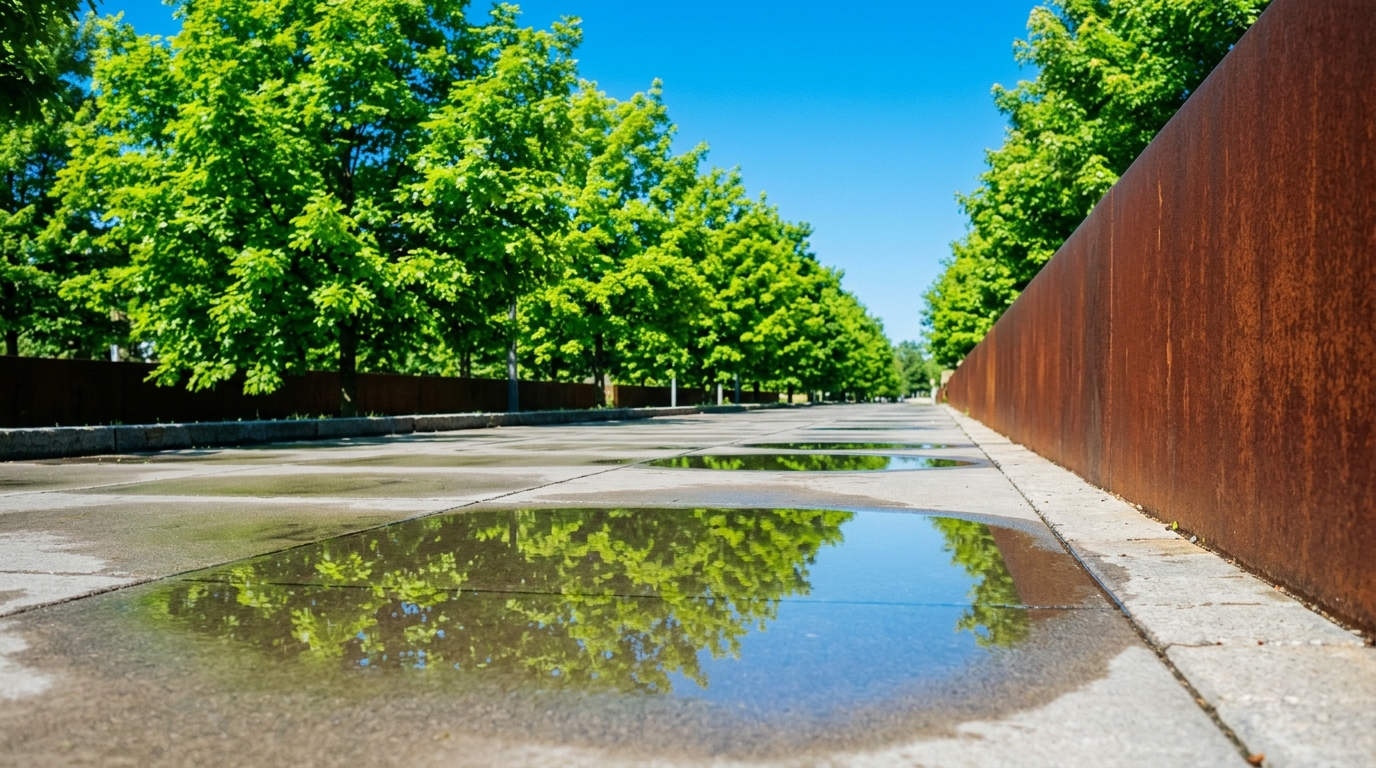
Trees reflected in puddles

Multi-level Economic Analysis and Total Lifecycle Cost

Professional assessment of the total cost of any facade solution should never be limited to merely a superficial comparison of initial procurement costs for one square meter of raw material. For an objective calculation, engineers and economists mandatorily factor in the cost of complex installation, volume of substructures, logistics, costs for lifting mechanisms, and, most importantly, the cost of decades of subsequent operation and maintenance.

Real corten steel requires extremely significant capital investments already at an early construction stage. Its enormous weight (which often stands at about forty kilograms per square meter of facade for a standard five-millimeter-thick sheet) inevitably dictates to designers the necessity of using heavy, expensive steel substructures and massive, reinforced concrete anchoring. Transporting such heavy panels from a metal depot to a construction site costs significantly more, and for direct installation at heights, it is imperative to rent expensive heavy-duty construction cranes and engage a larger number of qualified installers. The cost of long-term maintenance of a natural steel facade is also consistently high due to the constant need for regular, complex chemical cleaning of adjacent light-colored glass, concrete, and stone surfaces from deeply ingrained rust streaks. And if special sealing varnishes are applied to the steel to stop rust runoff, the building owner will be forced to renew this coating every few years, an extremely costly and complex procedure when performing work at high altitudes using industrial alpinism.

In sharp contrast, modern powder-coated aluminum facade panels have a mass of only four to eight kilograms per square meter, depending on thickness and profile. They are easily, quickly, and safely mounted onto standard lightweight aluminum rails by quite small installation crews without the need for heavy machinery. The cost of the powder coating process itself is quite democratic and competitive compared to applying multi-layer liquid enamels or special expensive galvanic surface treatments; this is especially noticeable in large-scale serial production of standard architectural modules. Thanks to the waste-free process (powder recovery) and incredibly high application and baking speed (the entire production cycle from bare metal to a finished warm panel takes less than an hour, compared to days of multi-layer drying of liquid paints or years of agonizing wait for natural patina to appear), the overall cost of a finished facade product for the customer is significantly reduced. In the modern market, the average price of fully finished modular glass facades with powder-coated profiles ranges from two hundred fifty to four hundred dollars per square meter, making it a highly attractive economic indicator for commercial real estate.

In the long-term, multi-year perspective, a painted aluminum facade requires only inexpensive periodic washing with plain clean water and a mild neutral detergent to remove ordinary urban dust and smog. Class 2 polymer coatings will not require any repainting, restoration, or cosmetic repairs for decades, making this technological choice the absolute winner in strict calculations of the total lifecycle cost of a modern building. It is worth noting that premium super-durable Class 2 powders cost fifteen to thirty percent more than ordinary Class 1 paints, but this slight difference in material cost fully pays off by extending the facade’s perfect operational lifespan without color loss by an additional five to ten years.

Table 3: Summary comparative analysis of lifecycle economic parameters

Economic Expense Item Natural Weathering Corten Steel Aluminum with Architectural Powder Coating
Initial material procurement cost High (due to metallurgy specifics) Average (high competition in the aluminum market)
Cost of load-bearing frame structures Very high (heavy, massive metal) Low (light metal, thin profiles)
Installation execution costs High (mandatorily requires heavy machinery) Low (light weight, fast modularity)
Adjacent area cleaning costs High and regular (washing away chemical rust runoff) Completely absent
Long-term technical maintenance Expensive varnish restoration (if applied against runoff) Only basic facade washing with water
алюмінієвих панелей на фасад

Expanded Architectural, Design, and Interior Possibilities

The creative freedom of a talented architect is often strictly limited by the physical properties of chosen materials. Real rust is absolutely not amenable to human creative control: it may turn out too bright orange and glaring in an arid urban climate, or turn into an unattractive dark brown mass with dirty black spots in humid, rainy zones or on the shaded side of a building. In addition, using it in interior spaces is an almost impossible task, because natural, live rust continuously sheds, leaving dirty reddish marks on expensive clothes, human hands, and soft furniture upholstery, making the space uncomfortable.

The massive transition to innovative powder paints with a natural oxidized metal effect radically expands the horizons and boundaries of modern design. Leading European manufacturers today offer architects entire extensive catalogs of textures and shades. A designer can independently, with jewelry precision, choose a specific shade for their project: dominated by a copper-red, warm tone, deep chocolate, or the earthy-black hue of ancient patina. A wide variety of gloss levels are also available, from a completely flat, matte finish to a slight silkiness that softly reflects evening lighting. Thanks to perfectly uniform electrostatic powder distribution on automated factory lines, facade panels installed on the west and east facades of the same building will look absolutely identical from the very first day of installation. By contrast, natural metal will oxidize extremely unevenly due to drastically different amounts of sunlight, prevailing wind directions, and precipitation hitting different walls.

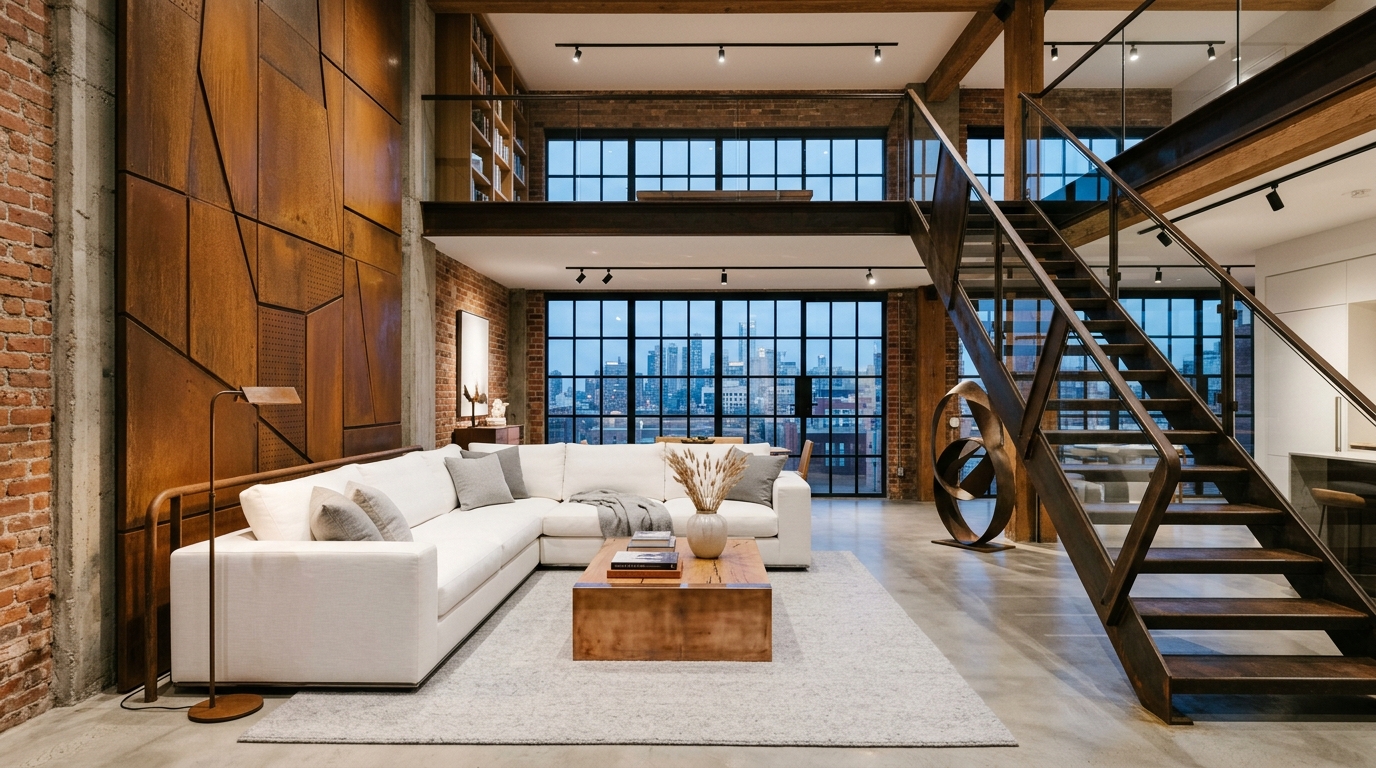
Another extremely significant engineering advantage is the possibility of seamlessly applying this rust effect on complex architectural elements for which heavy natural steel is simply technologically unsuitable. These can include thin-walled window and door profiles, light aluminum sunshades on windows, complex 3D letters for commercial signage, decorative ventilation grilles for outdoor AC units, elegant outdoor park furniture, planters, and modern lighting fixtures. The integration of industrial, brutalist aesthetics into the interiors of premium restaurants, modern hotels, and expensive private apartments in an industrial style has finally become completely safe and hygienically clean. The painted polymer surface is pleasant to the touch, it never sheds, does not stain clothing, and is easily wiped clean of everyday household dust with a damp cloth, fully complying with all sanitary norms for residential spaces.

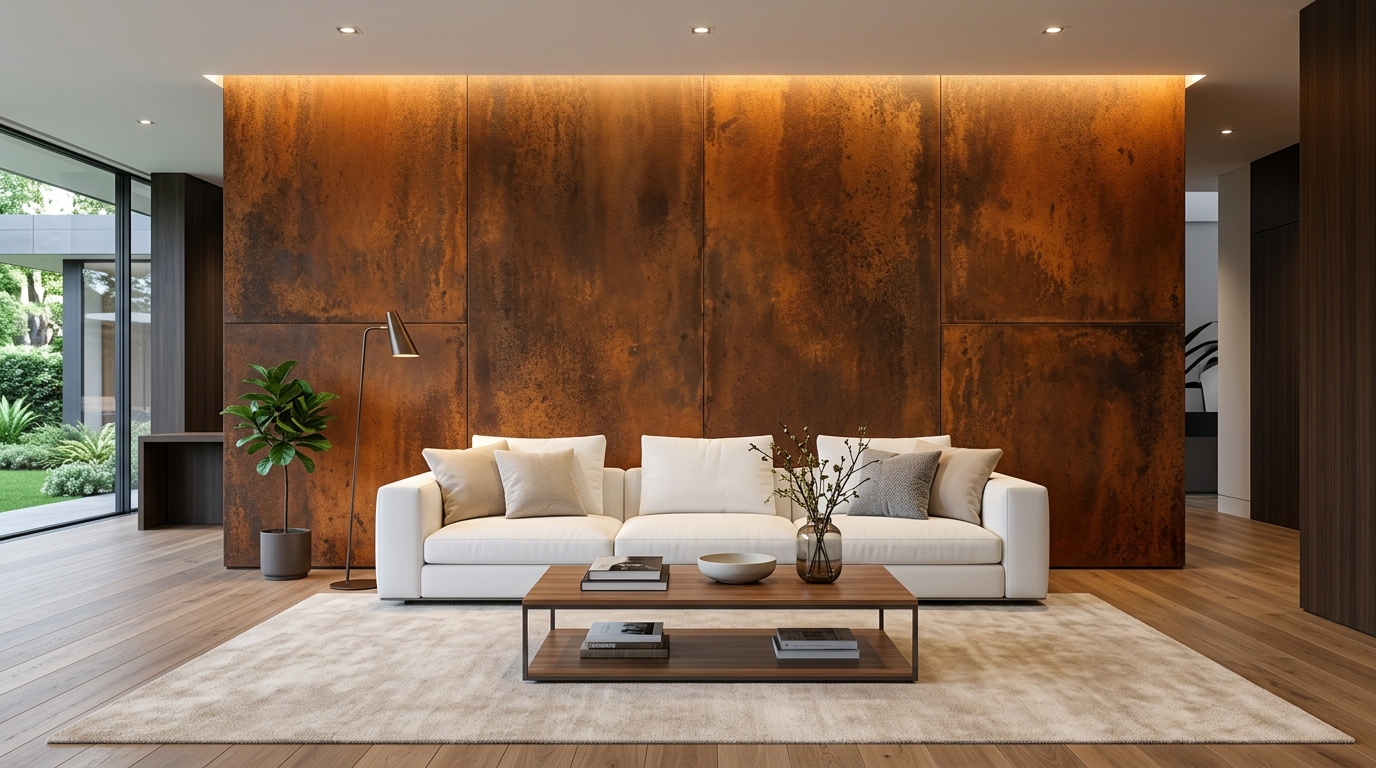
Modern lounge interior design

Conclusions

The continuous evolution of building materials always moves along a single logical path — eliminating the physical shortcomings of natural raw materials through the implementation of deep technological innovations. Weathering corten steel will undoubtedly remain forever in the global history of architecture as a unique, breakthrough material that shattered established stereotypes of beauty and forced society to see incredible aesthetics in the process of metal corrosion, aging, and decay. However, the strict demands of modern construction engineering, urban ecology, fire safety, and economic feasibility unalterably require more predictable, controllable, clean, and lightweight building solutions.

The large-scale use of high-quality powder coating to create a perfect architectural imitation of rust, especially when applied to lightweight aluminum bases, is not just a temporary alternative, but a significant technological and philosophical step forward in facade engineering. This advanced industrial method preserves all the emotional depth and aesthetic appeal of naturally aged metal, while guaranteeing absolute stability of the specified color, complete absence of destructive chemical streaks on pavements and facades, and the highest level of fire safety for people. Thanks to strict compliance with European quality standards, the absence of toxic environmental emissions at the production stage, and the possibility of complete recycling of the metal in the future, powder architectural coating today is the only correct and optimal choice for developers, investors, and architects seeking to combine bold, emotional industrial design with the most responsible, safe approach to construction. This innovative technology allows for the creation of monumental, expressive facades that will look just as flawless and fresh as on the day the building opened, even after decades of the harshest outdoor exposure.

author
Alex Z
About the author:

Oleksandr — Digital Marketing Expert for Construction & Manufacturing Industries Oleksandr is a seasoned digital marketing specialist, delivering powerful results for the construction and manuf...

More
0 0 votes
Article Rating
Subscribe
Notify of
guest
0 Comments
Oldest
Newest Most Voted