Two main ways of deception in 2026
The first way of deception that a buyer may face when choosing a metal fence, ceiling, or facade finishing is a “fake” digital profile of a company (clone websites and fake social networks). Small “garage” manufacturers without real production facilities are guilty of this.
Usually, such resources feature:
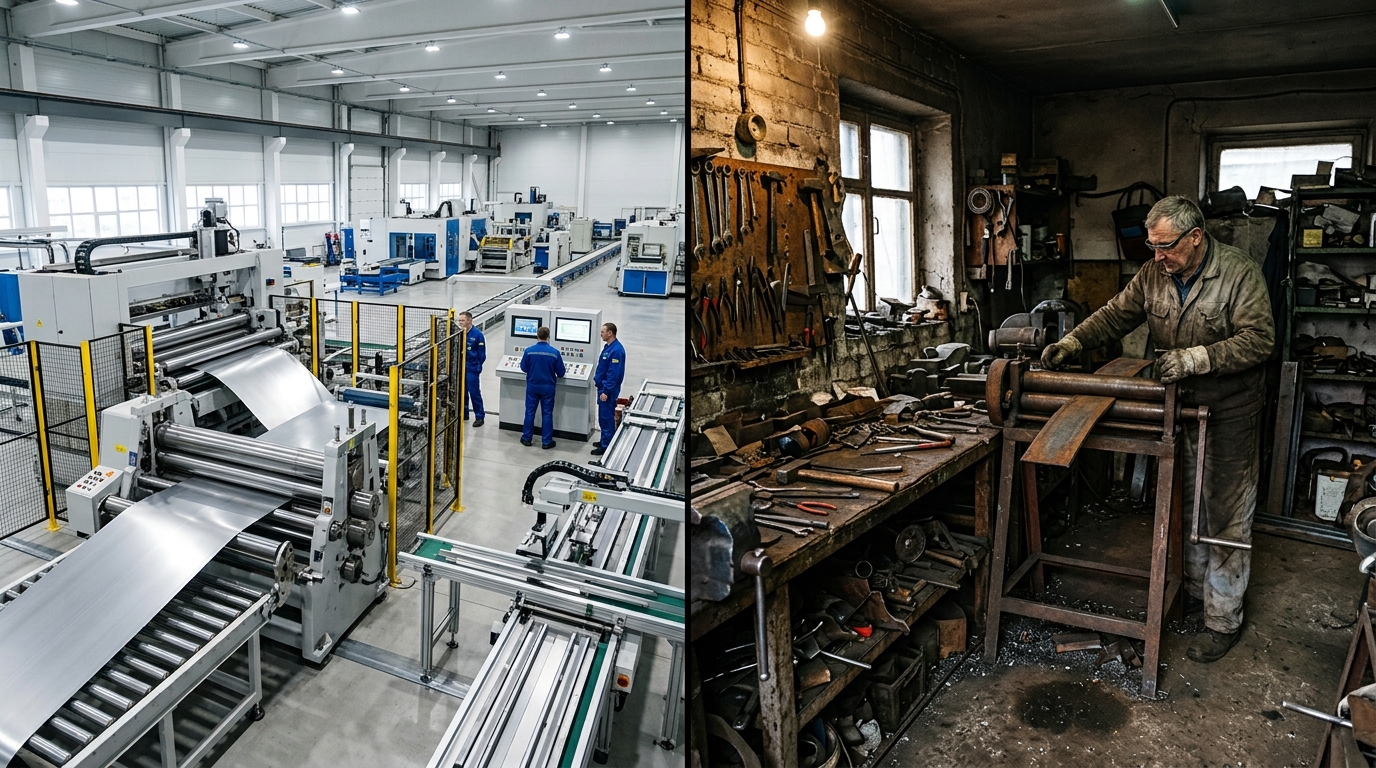
- False information about production: mentioning the presence of non-existent automated lines, although in fact the profile is bent manually on primitive bending machines.
- Generated reviews: dozens of perfect reviews written by bots, and the absence of the company on independent maps (Google Maps) at the specified address.
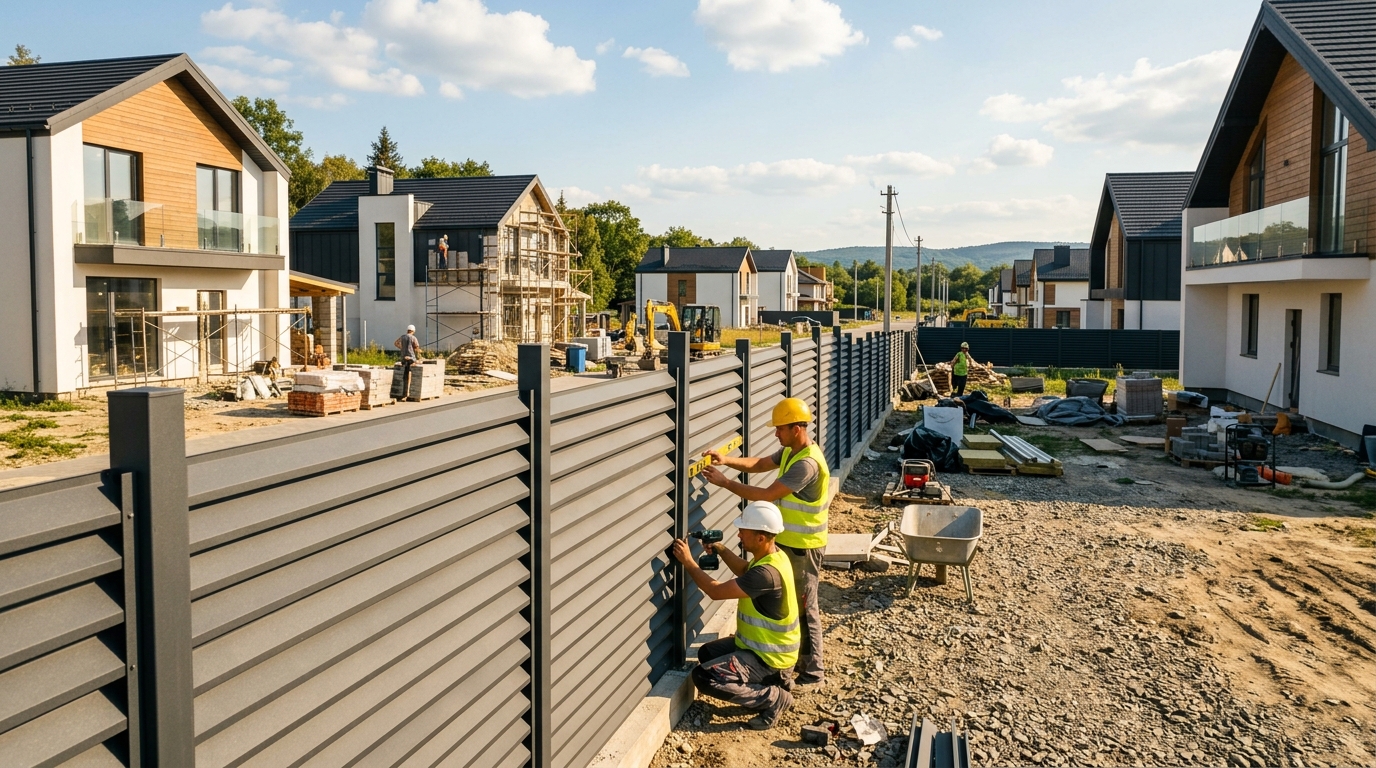
- Stolen photos and 3D renders: the main weapon of scammers. Photos of complex fences (louvered, ranch), facades taken at the sites of large factories are copied. The customer looks at someone else’s perfect photo and believes that the artisan will do the same.
The second way of deception is a critical reduction in the cost of structures while hiding the real technical characteristics.
The reduction is achieved through total savings:
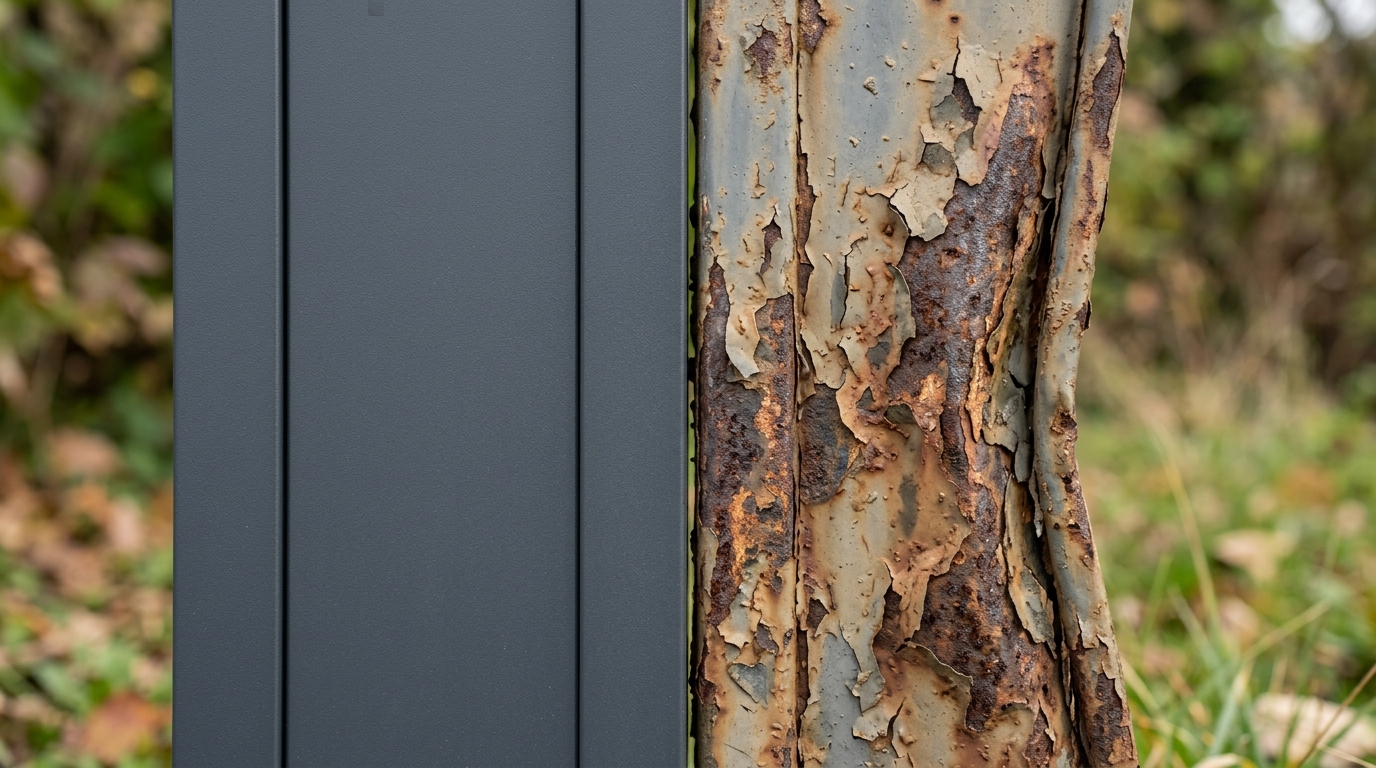
- Substitution of the galvanization class: 225-275 g/m² is declared, but in fact, metal with zinc up to 100 g/m² is sold, which will begin to rust after the first winter.
- Savings on geometry: the use of simple manual machines does not allow making a perfect bend (rolling) on long lamellas. Because of this, gaps appear during installation, the metal “warps” and deforms.
If the cost reduction is honestly announced to the buyer (as an economy segment), this is normal. But it is profitable for an unscrupulous manufacturer to sell “economy” at the price of “standard” or “premium,” earning super profits on the client’s credulity.