
In the production of goods used in construction and exterior or interior finishing, the issue of objective and independent confirmation of their quality becomes critically important. Modern architectural projects and operating conditions impose extremely strict requirements on materials.
As a rule, the end consumer (or even the contractor on the site) has neither sufficient specific knowledge nor high-precision metrological instruments for complete incoming inspection. Evaluating quality “by eye” in the case of metal products is a huge risk, as it is impossible to visually determine the metal thickness, galvanization class, or chemical composition of the polymer coating. This creates a number of difficulties, since the safety, reliability, and durability of the entire building or structure depend on these hidden characteristics.
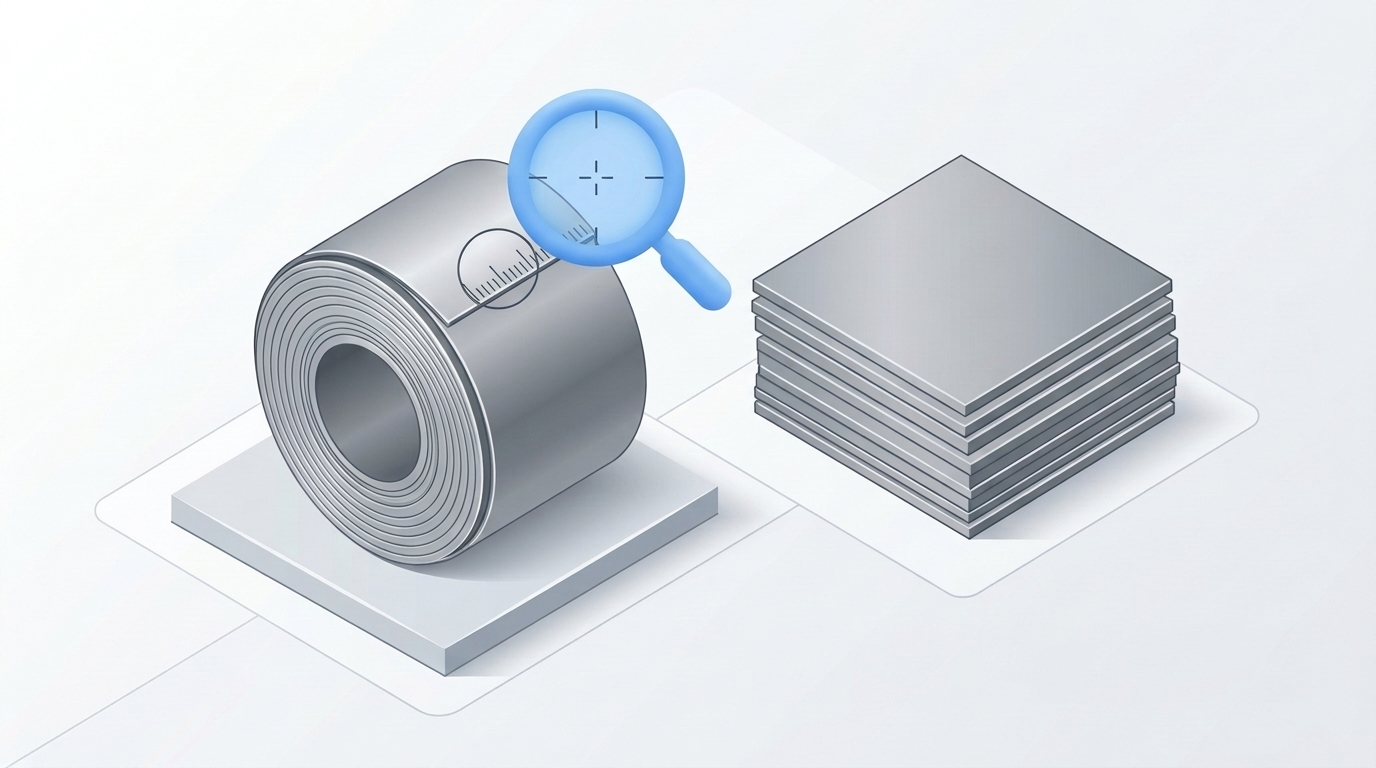
Today, there are several comprehensive mechanisms on the market to solve this problem and guarantee quality:
- First — reputational confirmation and brand history. The company itself, or rather its long-standing reputation in the market, acts as a guarantor of quality. Working in a highly competitive environment allows manufacturers to earn a certain authority, so their public statements about the high quality of products are backed by hundreds of successfully completed projects. Strict internal quality control (FPC – factory production control) is in the company’s own interest: in the digital age, any motivated negative reviews instantly cause serious damage to the image, which means catastrophically reducing sales.
- Second — independent conformity assessment (certification and declaration). In this case, quality control and production audit are carried out not by the manufacturer itself, but by a third-party accredited organization (a designated conformity assessment body) with the appropriate national or international status. The presence of certificates of conformity and a Declaration of Performance confirms that the manufacturer uses standardized raw materials, follows the technology, and produces goods that comply with DSTU, EN standards, or individual Technical Specifications (TU).
- Third — the implementation of quality management systems (ISO 9001). This proves that all processes at the enterprise are standardized: from raw material procurement to the shipment of finished products to the client.
In practice, market leaders use all these mechanisms simultaneously. This means that passing official conformity assessment procedures increases the manufacturer’s reputational level and serves as indisputable legal proof of their integrity for customers of any level — from private developers to state corporations.
Why and who needs conformity assessment (certification)?
Conformity assessment (certification) is an official procedure that proves that products, processes, or services meet established legislative or regulatory requirements.
Today, Ukraine is fully integrated into the European regulatory space. The old Soviet and post-Soviet system (such as UkrSEPRO) was finally abolished. Currently, the European approach operates based on the Law of Ukraine “On Providing Construction Products on the Market” (implementation of EU Regulation No. 305/2011).
According to modern legislation, the manufacturer is obliged to draw up a Declaration of Performance and affix the mark of conformity to technical regulations on products that fall under harmonized standards.
Particularly strict requirements are put forward for:
- Products on which the mechanical resistance and stability of buildings depend (load-bearing frames, floor beams, steel trusses — certified according to the EN 1090 standard).
- Products affecting fire safety (facade cassettes, sandwich panels, metal ceilings).
- Elements of enclosing structures used at high altitudes or in crowded places.
Using a non-compliant or untested product on a construction site today entails colossal legal consequences, fines from State Market Surveillance authorities, and the inability to put the building into operation.
But in addition to mandatory requirements, there is a voluntary certification of additional parameters. Reliable manufacturers undergo it for the following reasons:
- A powerful marketing tool. From the point of view of an architect, developer, or even the end consumer, it is much safer to purchase a fence, a set of ceiling panels, or facade systems with a quality certificate and test reports than a “pig in a poke” at a similar or slightly lower price.
- Participation in tenders. No serious commercial or state procurement is complete without the requirement to provide a full package of documents for the products.
- Legal protection. When resolving any disputes (for example, claims regarding paint fading or the appearance of rust), the presence of a certificate and laboratory test reports allows proving that the products met the declared criteria at the time of sale.

How the certification system has changed: from UkrSEPRO to EU standards
To better understand the modern realities of the construction materials market in Ukraine, it is worth looking at the evolution of quality control.
| Criterion | Old system (UkrSEPRO until 2018) | Modern system (Technical regulations / EU standards) |
|---|---|---|
| Main document | Certificate of conformity (often issued for a batch without production inspection). | Declaration of Performance + Factory Production Control Certificate. |
| Responsibility | Blurred between the manufacturer and the certification body. | Full personal and criminal liability of the manufacturer (or importer). |
| Focus of control | Inspection of the finished sample. | Audit of the entire production process (quality system, raw materials, production stability). |
| World recognition | Valid only in the territory of Ukraine and some CIS countries. | Mutual recognition with EU countries (allows exporting products). |
Requirements for metal and metal products
In the case of metal (especially thin-sheet rolled metal with zinc, aluzinc, or polymer protective and decorative coating), as well as products made from it, the manufacturer must confirm a whole range of characteristics.
During testing in independent accredited laboratories, the following are subject to mandatory strict control:
- Chemical composition of the metal and steel grade (load-bearing capacity and plasticity depend on this).
- Galvanization class (zinc mass in grams per square meter, for example, 220 g/m² or 275 g/m² — a key factor for durability).
- Characteristics of the protective and decorative coating (polymer type, layer thickness in microns, adhesion to the base).
- Geometric parameters (actual thickness of the metal base, thickness variation, tolerances for profiling geometry).
- Resistance to mechanical impacts (tests for bending, impact, coating hardness).
- Corrosion resistance (salt spray chamber test).
- Resistance to UV radiation (test for color retention and absence of chalking under the sun, RUV class).
- Fire safety class (flammability, flame spread, smoke generation).
Based on modern European standards, almost any architectural metal products are certified and checked in Ukraine:
- Metal ceiling panels (cube-shaped, linear, grigliato).
- Metal facade panels (cassettes, slats, linear panels).
- Elements of metal fences (slats for louvered fences, picket fences).
- Assembled metal fence sections, support pillars, sliding and swing gates.
The products of the “Mehbud” plant successfully pass conformity assessment according to the highest modern European standards. The introduction of innovative metal processing technologies (automated lines, laser cutting), the use of exclusively premium raw materials from European metallurgical plants, and multi-stage internal control of product parameters at all production stages — all this allows the plant to confidently issue the relevant Declarations of Performance and guarantee clients impeccable quality with a service life of decades.
Why do some manufacturers avoid inspections? (Risks for the buyer)
Given that the building materials market is highly saturated, many small or unscrupulous manufacturers strongly avoid any quality confirmation procedures. There are several reasons for this:
- Artisanal production. Beginner manufacturers who launch a line for the production of fences or profiles literally “in a garage” on used equipment physically cannot ensure the stability of geometry and quality.
- Financial savings. Conducting laboratory tests and maintaining a dedicated quality control department (QCD) requires investments. Companies focused on “quick and cheap sales” are not ready to bear these costs.
- Deliberate deception and the use of substandard raw materials. This is the most common and dangerous reason. To offer a low price, such a manufacturer buys the cheapest metal with a critically underestimated thickness (for example, 0.35 mm instead of the declared 0.45 mm) and minimal zinc content (or none at all).
The modern market surveillance system in Ukraine today works quite strictly. This means that it is impossible to obtain test reports or an official Declaration for low-quality products (the parameters of which do not meet the standards). Therefore, manufacturers who save on raw materials and do not follow technologies simply hide the lack of documents behind marketing slogans.
Conclusions: In the highly competitive Ukrainian market, the availability of up-to-date test reports and conformity assessment documents is the only objective evidence in favor of product quality and high manufacturer responsibility. But ordering a fence, ceiling panels, or facade finishing from a company that cannot documentally confirm the characteristics of its metal is a dangerous lottery with an almost guaranteed loss, resulting in a rusty facade or a peeling fence right after the first winter.
Related articles
Top 7 Companies to Buy Gabions in Ukraine: Ranking of Trusted Manufacturers
Rating of reliable manufacturers. Price comparison, expert tips on wire thickness and stone selection for durability.
Warranty for metal structures in Ukraine: Legal regulation, engineering standards, and judicial practice
Metal structure warranties in Ukraine: Legal regulation (10 years), DBN standards, ISO corrosion protection, fireproofing, and how to file defect claims.
Top companies performing foundation works in Kyiv
Rating of TOP foundation work companies in Kyiv 2026. Current prices, contractor comparison, market analysis, and expert advice on choosing a reliable foundation.