
Sheet metal processing relies on guillotine shears, corner notching and punching machines, folding machines, press brakes, and roll forming lines. The choice depends on the operation: cutting a sheet to size, preparing holes and corners, bending an individual part, or mass-producing a profile. Laser cutting is also used for complex contours.
This refers to manufacturing products from flat sheets and coils, particularly galvanized steel and polymer-coated metal. Equipment for shredding and recycling scrap metal serves a different purpose. In construction, sheet metal is processed to produce facade cassettes, siding, fence slats, rack profiles, window flashings, cover strips, and abutment trims.
What Equipment Is Needed for Different Operations
A single product often passes through several machines. Therefore, an equipment set is selected based on technical drawings and the production routing rather than just the maximum metal thickness listed in a catalog.
| Task | Equipment and Application |
|---|---|
| Straight cutting | Guillotine shears — blanks from sheets; slitting and cut-to-length lines — preparing material from coils. |
| Complex contours and holes | Laser cutting or punching machine — depending on geometry, material, coating, and batch size. |
| Corner cutouts | Corner notching machine — preparing blanks for cassettes and box-shaped parts prior to bending. |
| Individual bends and flanges | Swivel-beam folding machine or press brake — flashings, abutment trims, cassettes, brackets. |
| Series profiles | Roll forming line — sequential forming of a uniform cross-section. |
Metal Cutting: Guillotine, Coil Line, or Laser
Guillotine Shears for Straight Cuts
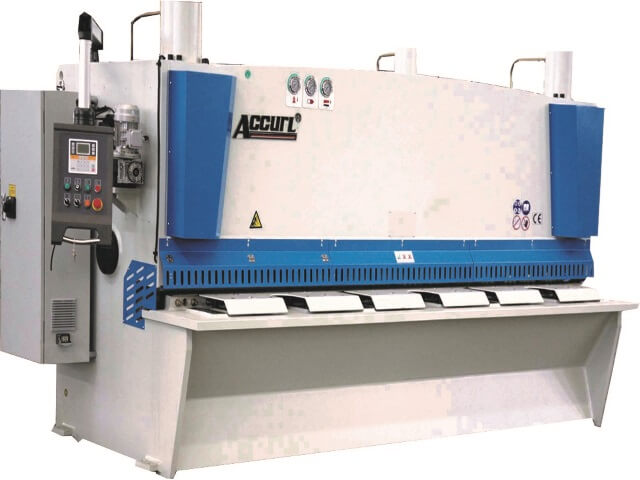
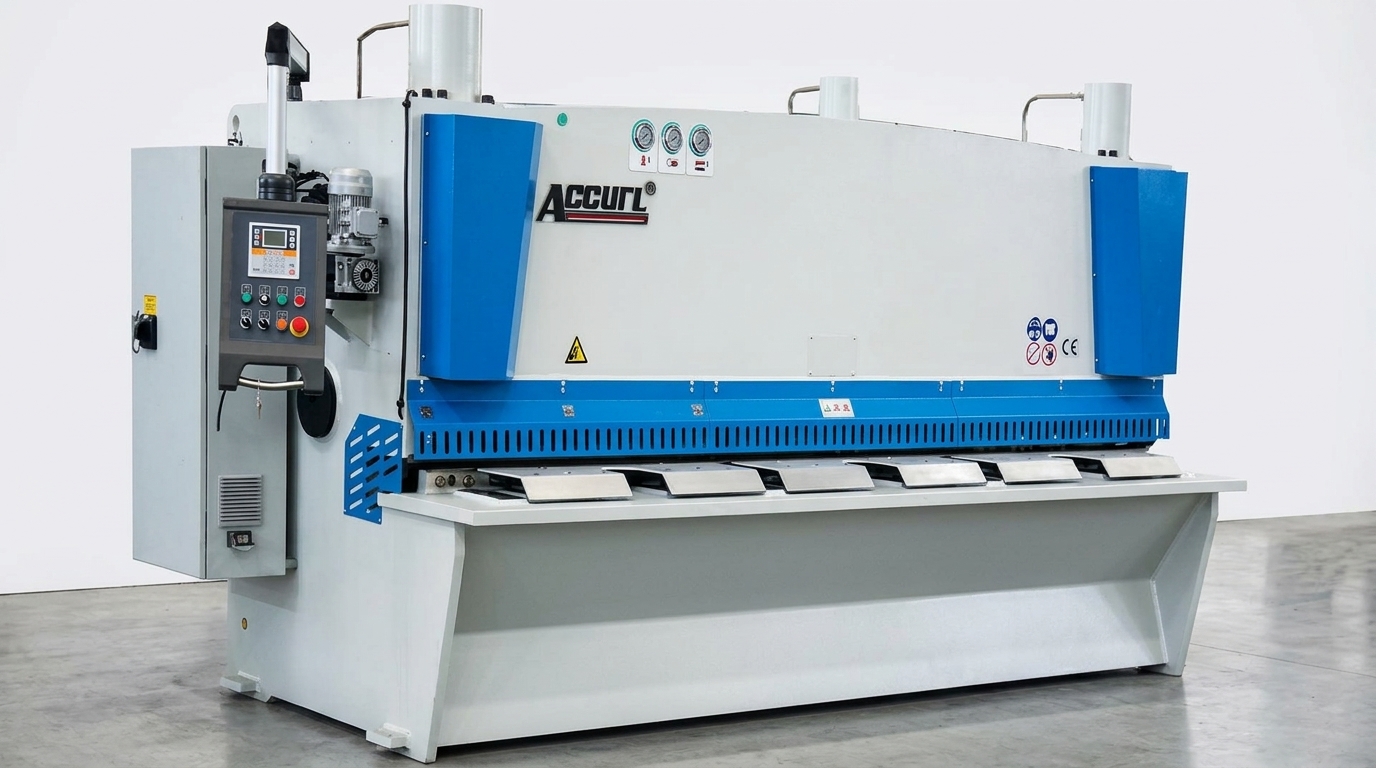
A guillotine cuts a sheet along a straight line using blades. It is appropriate when rectangular blanks or strips are required. The sheet position is set by backgauges, hold-downs secure it during cutting, and sheet supports help handle large and thin blanks.
Manual, electromechanical, and hydraulic versions are available with varying levels of automation. For industrial operations, blade gap adjustment, cutting edge condition, sheet support, and positioning repeatability are critical. The overview of LVD shearing machines illustrates how blade gap and rake angle adjustments relate to the material type and thickness.
There is no universal cutting length or allowable thickness for all guillotines. Always check the datasheet of the specific model: which material the limit applies to, what working length is available, and under what conditions the required quality is achieved. Parameters for mild steel should not be automatically applied to stainless steel or other alloys.
Coil Processing and Complex Contours
When raw material arrives in coils, the production line may include an uncoiler, straightener, feeder, and slitting or cut-to-length units. It is important to match the strip width to the subsequent operation: a blank for bending requires a flat pattern development, whereas a roll forming line requires a strip calculated for a specific cross-section.
For shaped blanks, cutouts, and a diverse product mix, laser metal cutting is considered. It is not a universal replacement for a guillotine: you need to compare requirements for contour accuracy, edge quality, coating preservation, processing time, and batch cost. For pre-painted sheets, the suitability of the coating and protective film for the chosen technology must be verified separately.
Corner Notching and Punching Machines
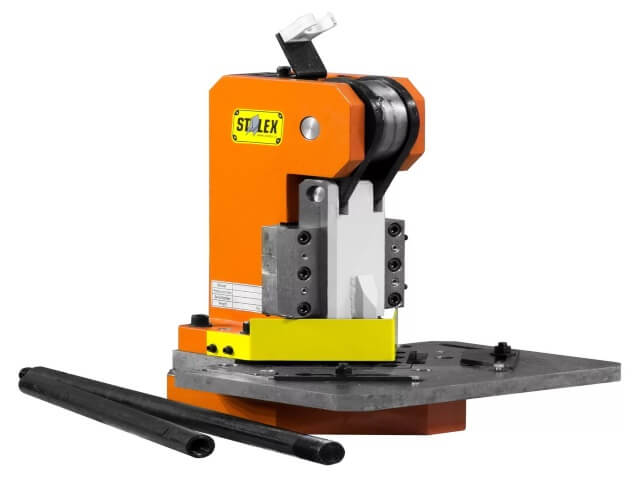
A corner notching machine removes sections from the corners of a blank before forming flanges. For example, in a box-shaped facade cassette, corner notches allow adjacent flanges to be bent upward according to the drawing layout. Their shape must match the flat pattern and bending sequence.
A simple manual unit may be suitable for a small number of repetitive operations. For heavier workloads, powered models are considered. Quality is determined by tooling condition, setup, blank referencing, and dimensional control, so the drive type alone does not guarantee a superior finished part.
Holes, slots, and repetitive cutouts are also produced using punching equipment with matching punches and dies. Before selecting the technology, verify distances to edges and upcoming bends, tooling availability, and potential blank deformation. Complex geometries should be evaluated by a process engineer based on the technical drawing.

Manual Folding Machines and Swivel-Beam Folders
In a swivel-beam folding machine, the sheet is clamped in place while the protruding section is folded by a swinging beam. This method forms flanges, window flashings, simple angles, and trim elements. Manual operation is convenient for straightforward parts and small batches where frequent changeovers on an automated line are impractical.
A manual folding machine does not inherently mean low quality. However, the result depends on clamping integrity, frame rigidity, backgauges, and operator skill. For long parts, it is necessary to check angle consistency along the entire length and ease of sheet support. Datasheet limits apply to a specific material and working length.
For small-batch orders, powered swivel-beam folding machines are also compared. You must ensure the machine can execute all required bends and allow removal of the finished part: a complex seam lock or closed cross-section may require different tooling or production routing.

Press Brakes: When a Punch and Die Are Required
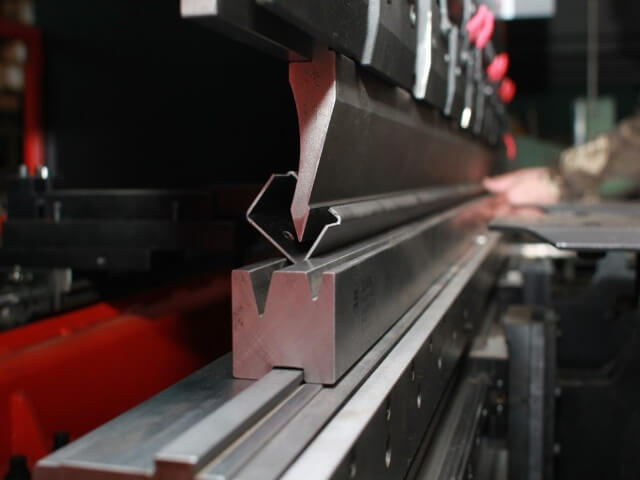
A press brake forms a bend by pressing a punch into a blank positioned over a die. This is a versatile technology for parts with varying flanges and angles, provided the geometry is accessible to the tooling. CNC controls help program bend sequences and backgauge positions for repeatable operations.
Tonnage is selected based on material type, thickness, bend length, tooling, and bending method. For example, TRUMPF distinguishes between air bending and bottoming in its guide to bending methods. A single press tonnage figure without these parameters does not determine its suitability for a given job.
Hydraulic drives are common, though not the only modern option: the TRUMPF press brake lineup also includes electric-drive models. Selection should be based on part requirements and production workload, accounting for changeover times, tooling, energy consumption, and maintenance.
CNC does not eliminate first-article inspection. Before running a batch, you must verify the flat pattern, bend sequence, springback compensation, and actual dimensions after forming. A program helps repeat settings, but it cannot eliminate tool wear or raw material variations.
Roll Forming Lines for Series Production
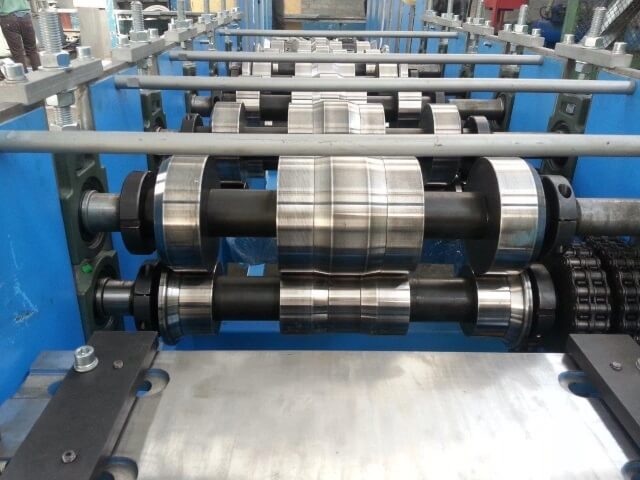
During roll forming, a strip or blank passes sequentially through multiple pairs of rollers, gradually taking on the desired cross-section. This technology is ideal for repetitive profiles: rack profiles, slats, cladding elements, and other products with a constant cross-section.
The primary criterion is the combination of geometry and batch volume. Long product length alone is not enough to justify a roll forming line: long parts can also be bent on appropriately sized folding machines or press brakes. For a roll forming line, it is essential to evaluate the roller tooling set, material range, changeover time to another profile, and volume of repeat orders.
Cutting does not always occur first. The Formtek roll forming configurations include lines with post-cut systems, pre-punching stations, and precut blank feeding. Therefore, the composition and sequence of line stations are tailored to the specific product.
For sheets with decorative coatings, the cleanliness of contact surfaces, roller condition, and finished profile appearance are closely monitored. Line speed must maintain acceptable quality across the entire process, including cutting and stacking. The rated maximum line speed does not equate to actual shop throughput on every order.
How to Choose Equipment for Real-World Orders
Start with a set of typical drawings and material samples. An equipment supplier needs more than just sheet thickness and budget—they need to know the expected output.
- Material and surface. Specify the metal grade, thickness range, coating, and cosmetic surface requirements. The properties of polymer coatings for sheet metal must be accounted for prior to test bending.
- Geometry. Provide lengths, angles, bend radii, holes, short flanges, and tolerances. Verify tool access for every operation and the ability to unload the finished part.
- Batch size and product mix changes. Compare setup time, test runs, changeover time, and total batch processing time.
- Tooling. Clarify which blades, punches, dies, or rollers are included in the quote and how much a tooling set for a different product costs.
- Workflow and floor space. Assess storage space for sheets and coils, material feeding, support for long parts, operator training, and service availability.
- Acceptance testing. Agree on producing a sample from your own material, quality criteria, and measurement conditions.
Two Production Routing Examples
Custom-drawn facade cassette: flat pattern verification → cutting → corner notching and punching → sequential flange bending → dimensional inspection. For complex contours, a single suitable machine can perform multiple preparatory operations.
Series of identical cross-section slats: strip preparation → roll forming → cutting according to line configuration → inspection and packaging. These are illustrative examples; actual routing is determined by part design and shop tooling.
If you need finished construction elements, start with the installation assembly detail. For Mehbud bent facade profiles, prepare a sketch specifying flange dimensions, length, quantity, material, and the exposed face. Requirements for abutments and trim packages are detailed in our guide on custom sheet metal flashings and trims.
What to Check Before Starting a Production Run
A high-quality machine does not automatically compensate for substandard raw material. First, verify that the material matches the order specifications, check surface condition, and ensure there is no damage that could affect the finished product. Next, produce and measure the first article.
- After cutting, check length, width, squareness, and edge condition against agreed criteria.
- After notching or punching, check the dimensions and positions of holes and cutouts.
- After bending, check flange dimensions, angles, relative surface alignment, cracking, and tooling marks.
- On roll-formed profiles, check cross-section, length, straightness, and twist within agreed tolerances.
- Establish in-process batch inspections and packaging standards to preserve part quality during handling and delivery.
Operations must follow the machine manufacturer’s manual: with a trained operator, intact guards, and functioning safety devices. Sheet support and finished part handling must also be built into the workflow. Bypassing safety guards is never an acceptable way to increase productivity.
Frequently Asked Questions
Which machine is needed first for sheet metal processing?
It depends on the product. A simple window flashing requires cutting and bending, whereas a facade cassette also requires corner notching and hole punching. Select your equipment set based on the part drawing and batch size rather than just the generic material name.
How does a swivel-beam folding machine differ from a press brake?
A folding machine bends the protruding portion of a clamped sheet using a swinging beam. A press brake forms the bend using a punch and die. Both solutions have geometric limitations and require appropriate tooling.
Can galvanized sheet metal with a polymer coating be processed?
Yes, provided the material, tooling, and machine settings are compatible. Confirm minimum bend radii and cosmetic surface requirements with your material supplier and inspect a test piece. Laser cutting requires a separate evaluation of the coating and protective film.
Does CNC guarantee identical dimensions across all parts?
CNC helps repeat machine movements, but the final result depends on material consistency, tooling, referencing, and setup. An approved first article and ongoing batch inspection are still required.
When is roll forming more practical than bending?
When you have a uniform cross-section and order volumes justify dedicated roller tooling and changeover times. For varied small batches, alternative routings should be compared on specific parts.
Why can’t a machine be chosen based solely on metal thickness?
You must also account for the metal grade and tensile strength, operation length, geometry, tooling, and tolerances. The same thickness in two different materials does not mean identical cutting or bending requirements.
Related articles
Metal Galvanizing: Technologies, Differences, and Coating Selection
How hot-dip galvanizing, electrogalvanizing, coil sheet coatings, and zinc-rich paints differ. Comparison, technology selection, and quality inspection.
Why a Funnel Is Cut from a Sector: Three Sheet Metal Flat Patterns
See why a funnel develops into a sector, a mitered pipe makes a wavy edge and a square-to-round duct transition uses triangulation. With video and a…
How to Choose Gates for a House: 6 Practical Tips
How to choose gates for a private house: materials, sliding vs. swing designs, infill, automation, and backup power. Six practical tips, measurement guide, and FAQ.