

The need to purchase and install a ceiling with high fire resistance arises much more often than it might seem at first glance. The fire resistance of finishing materials is not just a designer’s whim, but a strict requirement of fire codes and life safety. Statistics show that the correct choice of a ceiling system can significantly slow the spread of fire, reduce smoke, and provide invaluable time for evacuation.
Where does the law and common sense require a non-combustible ceiling, how to understand fire safety classes, and which materials should be chosen for reliable finishing — we will explore all of this in detail in our article!
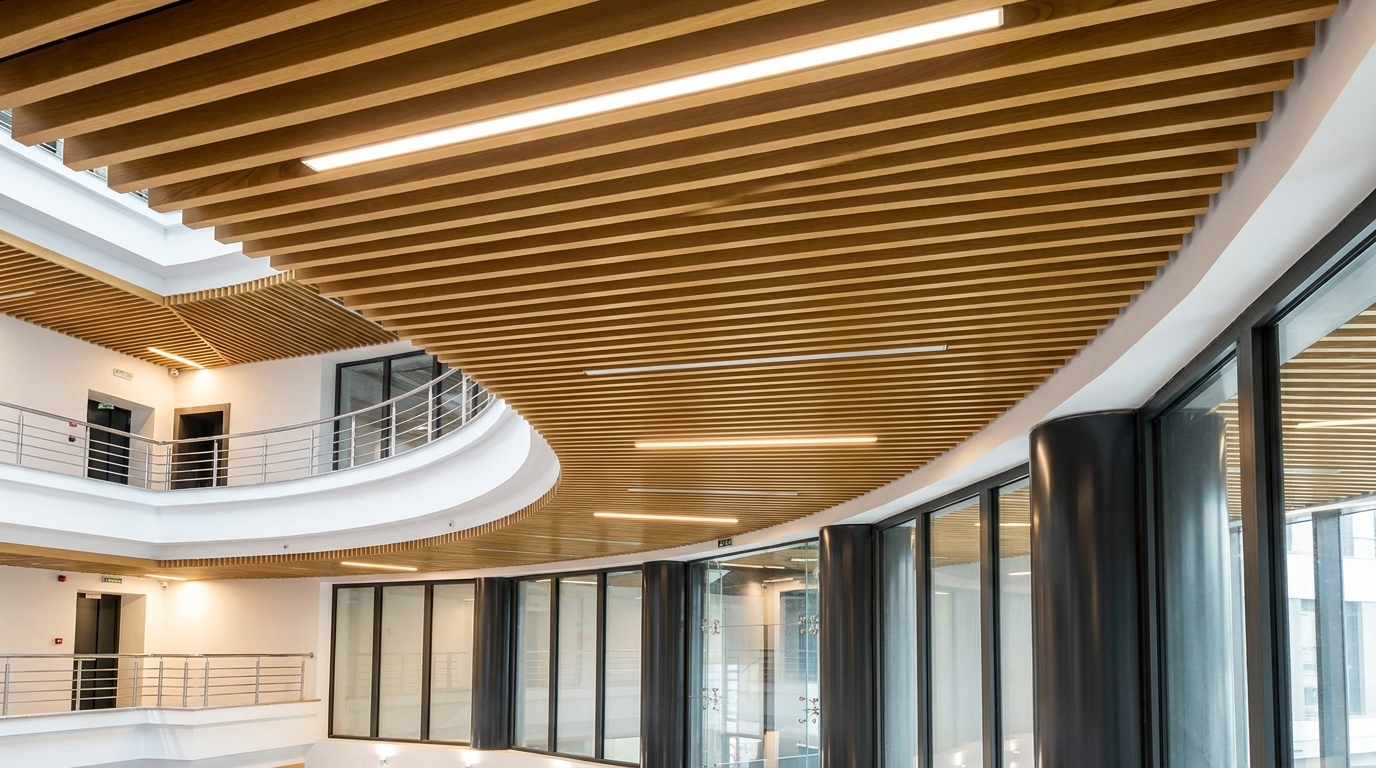
Where are fire-resistant ceilings required?
The use of a fire-resistant ceiling is justified in almost every case — fire protection can never be redundant, as lives and property depend on it. However, in many instances, the presence of a non-combustible ceiling is strictly regulated by building codes and regulations (DBN/SNiP). Without meeting these standards, a facility simply will not pass a fire inspection.
So, where is the installation of non-combustible ceilings mandatory?
- First and foremost — in public assembly areas. Office centers, shopping and entertainment malls, cinemas, cafes, restaurants, medical facilities, schools, universities, and kindergartens — these are all objects with increased safety requirements. The use of combustible materials that emit toxic smoke is strictly prohibited here.
- Secondly — in rooms with a high probability of contact with open flames, high temperatures, or sparks. These include commercial kitchens (especially areas above grills and stoves), chemical laboratories, food and heavy industry enterprises, server rooms (data centers), electrical switchboard rooms, and boiler rooms. Special attention should be paid to gas stations, enclosed parking lots, and car parks — the presence of fuel vapors in the air makes any flammable elements fatal.
- Finally, fire-resistant finishing must be used when designing escape routes. Corridors, stairwells, lobbies, halls, and equivalent zones through which people must exit the building during a fire must have ceilings made of “Non-combustible” (NC) materials. This ensures that burning fragments of the finish will not collapse onto the exit paths.
Classification and materials for non-combustible ceilings
The fire resistance of a structure is expressed not just by the words “burns / doesn’t burn,” but by strict fire hazard indicators. They include: F (Flammability), I (Ignitability), S (Smoke-generating capacity), and T (Toxicity of combustion products).
The ideal non-combustible ceiling has a Non-combustible (NC) class. This means the material does not ignite even with prolonged contact with high-temperature flames, does not support combustion, does not smoke, and does not emit toxic substances. All other materials are a compromise and have certain limitations on their area of use.
Stretch ceiling membranes
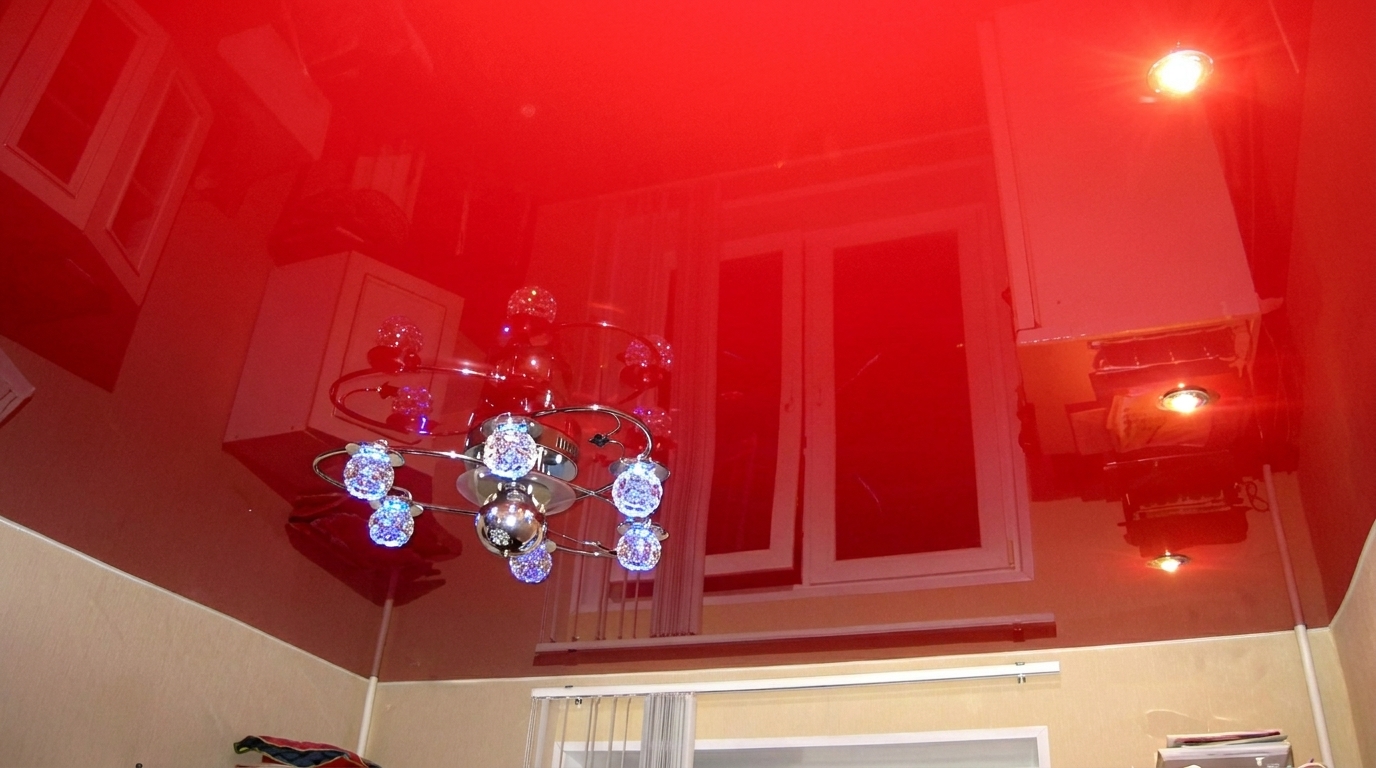
Stretch ceilings are a popular and visually aesthetic solution for residential interiors and small offices. There are special lines of films on the market that marketers position as “fire-resistant” (e.g., films with specific safety certificates). These can be:
- Specialized PVC sheets with added flame retardants (substances that slow down ignition).
- Fabric (polyester) ceilings with a polyurethane fire-retardant coating.
Myth debunking: These ceilings cannot be called absolutely non-combustible. In direct contact with fire, the polymer sheet will still melt and fail (lose integrity). Their main advantage is that they do not form burning drops and tend to self-extinguish if the fire source is removed. However, during smoldering, the fabric or film inevitably releases toxic gases. Stretch ceilings are not suitable for escape routes or large commercial facilities.
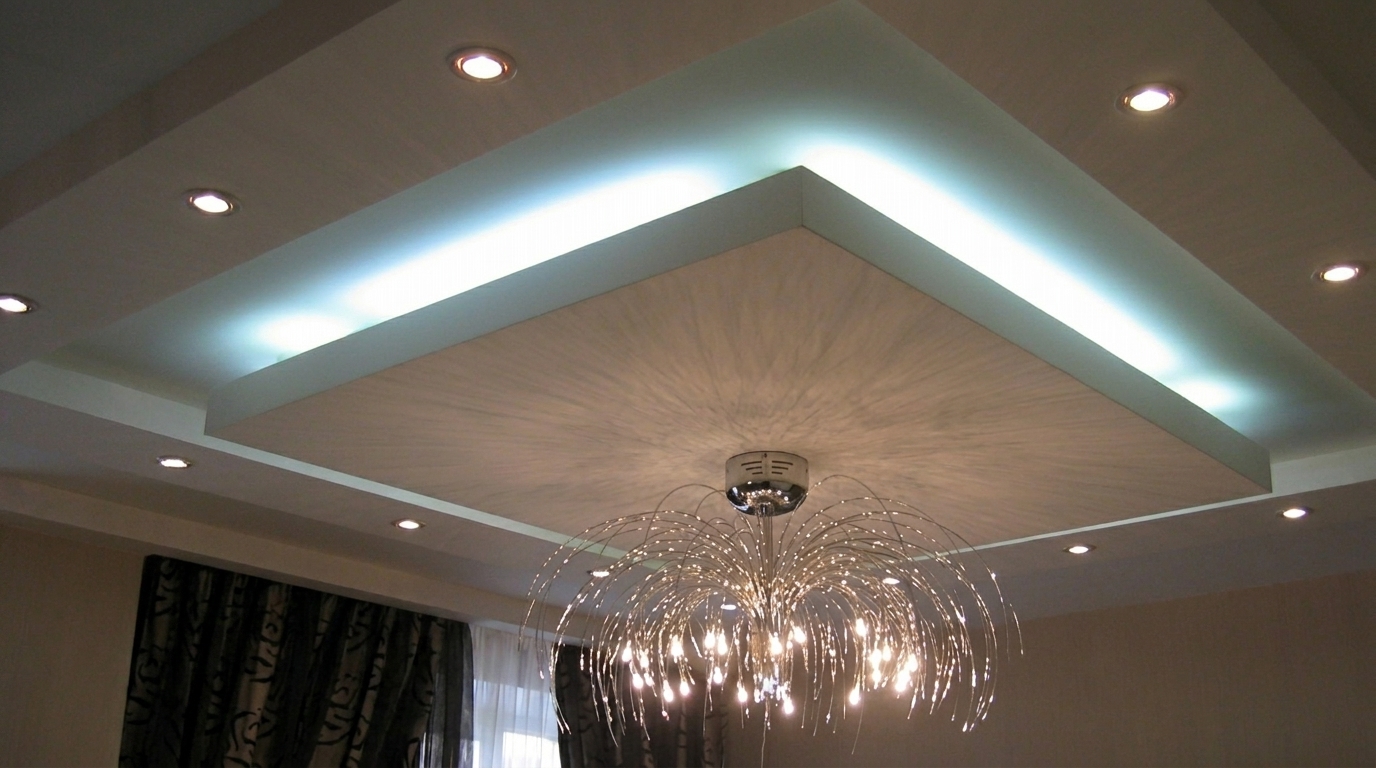
Gypsum board ceilings (Standard and Fire-rated)
Gypsum board primarily consists of gypsum core, which itself does not burn. However, a standard sheet is covered with construction paper, which is highly flammable. For fire-hazardous zones, Fire-rated Gypsum Board (often pink-colored) is used. Its gypsum core contains reinforcing fiberglass, and the cardboard is treated with flame retardants.
- Fire-rated gypsum can resist open flames for 45-60 minutes, maintaining its structure until all crystallized moisture in the gypsum evaporates.
- However, there are nuances: installing such a ceiling requires a perfect metal frame (under extreme heat, a weak profile will deform, causing the ceiling to collapse).
- Furthermore, the gypsum board itself requires finishing (putty, paint), and these decorative layers might be combustible.
A fire-rated gypsum ceiling is a good solution, but it is not eternal in a severe fire and requires strict adherence to installation technology.
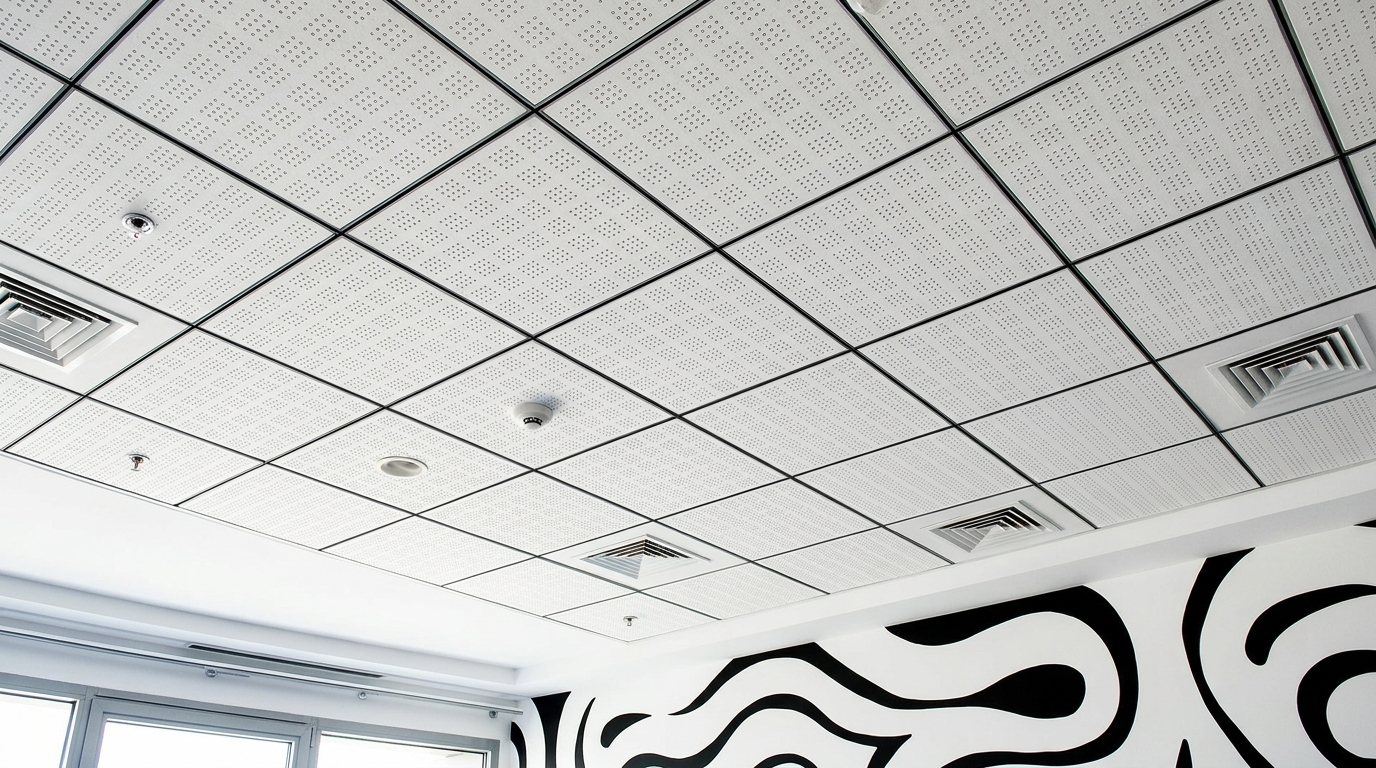
Mineral fiber tile ceilings
Tiles made of pressed mineral fiber (commonly known as “Armstrong” type ceilings) handle high temperatures reasonably well. Standard budget tiles are usually low-combustibility materials, while specialized medical or acoustic panels made of stone wool can have a full Non-combustible class.
In the absence of an open flame, such ceilings do not support combustion and have good thermal insulation properties.
System disadvantages:
- Many mineral tiles are extremely hygroscopic. They are afraid of moisture; during leaks from above, they instantly swell, become covered with yellow spots, deform, and fall out of the suspension system.
- The thin frame (T-profile) quickly loses its rigidity at high temperatures.
Metal suspended ceilings
Metal (galvanized steel and aluminum) is the absolute benchmark of fire resistance and structural reliability in ceiling finishing. Metal ceilings are deservedly assigned the highest fire safety class — Non-combustible (NC). They have zero indicators for smoke generation, toxicity, and flame spread. Under prolonged exposure to open fire, metal does not burn, smoke, or melt into drops, making it the only flawless choice for escape routes, shopping malls, and industrial zones.
The fire resistance of the structure is due to the physical properties of the materials:
- Galvanized steel withstands colossal temperatures (melting point around 1400-1500°C). A steel ceiling becomes a powerful physical barrier to the spread of fire into the plenum space, where power cables and ventilation ducts are often located.
- Aluminum has a lower melting point (around 660°C), but it is also absolutely non-combustible, extremely lightweight, and not subject to corrosion.
Metal fire-resistant closed-type systems (creating a solid screen) include:
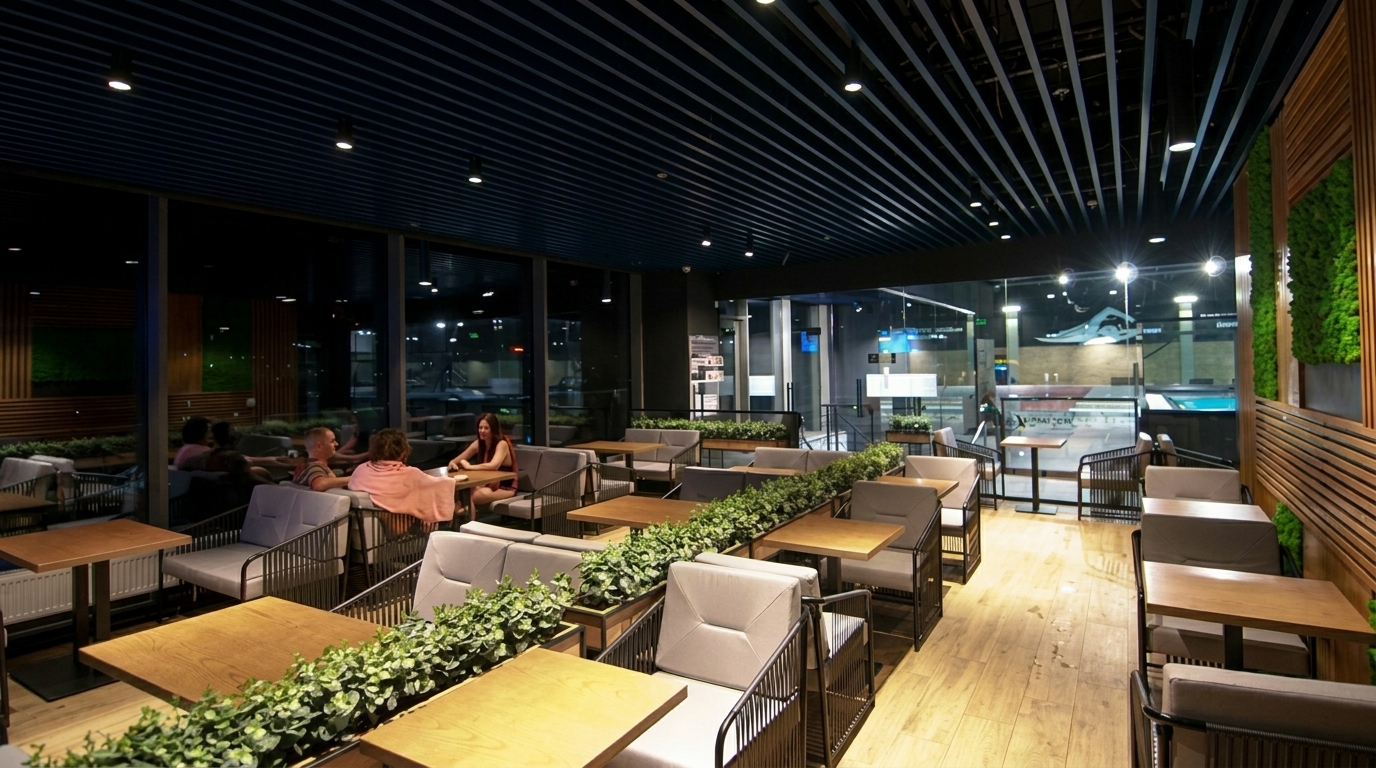
- Rack ceilings — ideal for narrow corridors (escape routes) and wet areas.
- Cassette ceilings — the standard for medical facilities, laboratories, and restaurant kitchens.
- Panel ceilings — used for covering large spans.
Integration with fire extinguishing systems:
Open systems deserve special attention: Cubic ceilings. They themselves are not afraid of flames, but their main value during a fire is their structure. Thanks to the open cells or the distance between the rails, such ceilings:
1. Do not obstruct the operation of automatic sprinkler systems (water flows freely through the ceiling).
2. Facilitate the instant and unobstructed removal of smoke through plenum exhaust ventilation systems. Smoke detectors hidden behind them trigger without delay.
Design without compromising safety:
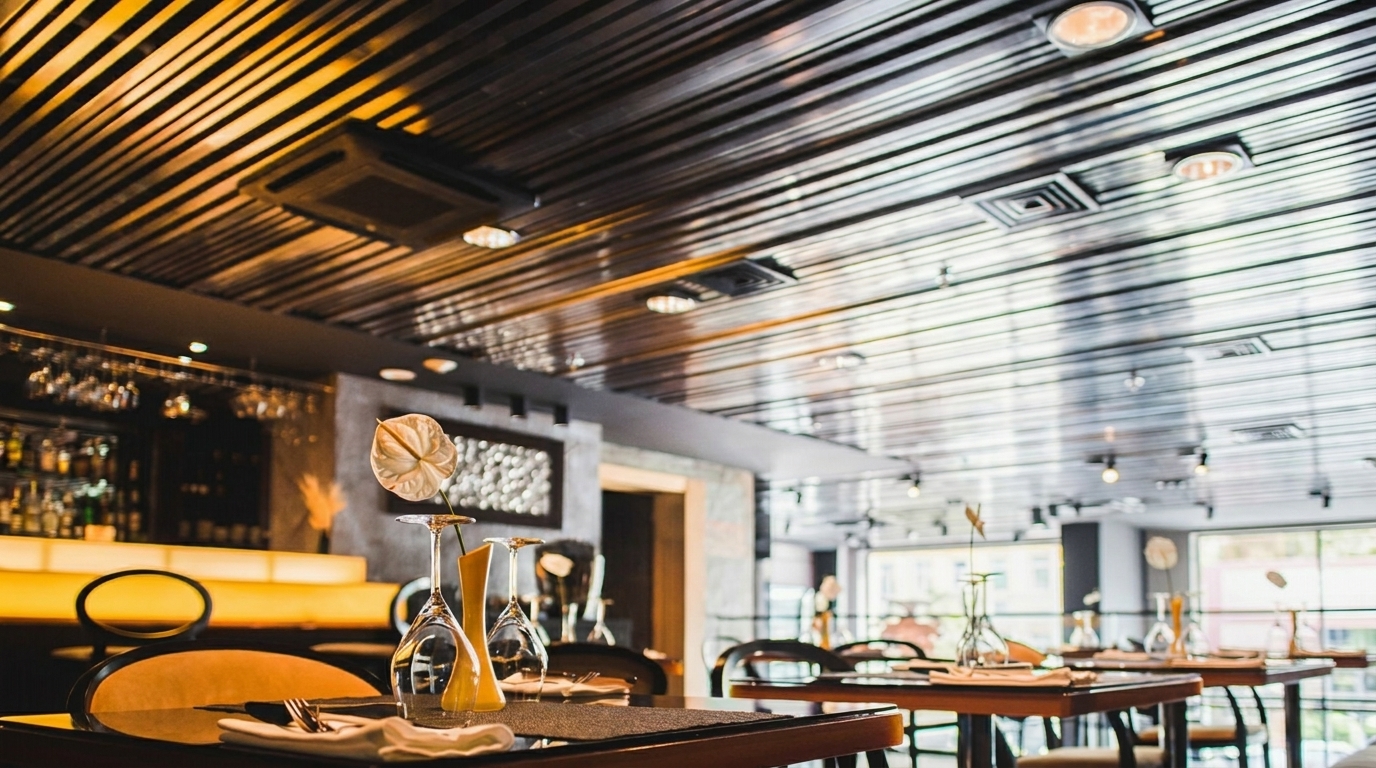
Often in interiors (e.g., in restaurants or hotel lobbies), designers want to use wood, but fire codes strictly forbid it. The solution is a metal ceiling with a polymer coating imitating wood texture (sublimation). Visually, it looks like natural timber, but in fact, it is fire-resistant NC-class metal.
Two key factors affect the real reliability of a metal ceiling during a fire:
- Metal thickness and frame rigidity — a high-quality rail or cassette should not be thinner than 0.4–0.5 mm. The supporting system (stringers, traverses) must be made of durable steel. The more rigid the structure, the longer the ceiling will not collapse during thermal expansion.
- Quality of the polymer coating — modern architectural powder paints do not support combustion. Under extreme heating, they do not emit poisonous gases, but only locally crystallize or burn off on the metal surface.
That is why when designing objects with increased fire safety requirements, preference should be given to certified manufacturers with their own production lines — such as the Mehbud metal products factory. The use of the right raw materials and strict engineering control guarantee that the ceiling will flawlessly pass any fire service inspections and, most importantly, save lives in a critical situation.
Comparative table of ceiling materials
| Ceiling Type | Safety Class | Toxicity (when heated) | Moisture Resistance |
|---|---|---|---|
| Stretch (PVC/Fabric) | Low to Medium | High / Medium | High |
| Fire-rated Gypsum (FR-GB) | Low combustibility | Low | Low (water sensitive) |
| Mineral Fiber Tiles | High / NC | None | Very Low |
| Metal (Aluminum, Steel) | Non-combustible (NC) | Absolutely safe | 100% Waterproof |
Conclusion
Attempts to save on non-combustible finishing can lead to serious problems — from fines by regulatory authorities to catastrophic consequences in a real fire. A non-combustible (or low-combustibility) ceiling can be made of various materials, but most of them have obvious disadvantages like moisture sensitivity or limited service life.
Analysis of the characteristics shows that suspended ceiling structures based on metal cassettes, panels, cubic shaped, or rails possess the benchmark combination of 100% fire protection (NC class), durability, moisture resistance, and modern design possibilities.
