

To minimize heat loss during the cold season, it is necessary to insulate premises. At the same time, insulation must be comprehensive — not only the walls of buildings but also the ceilings need insulation. Ceiling thermal insulation can be carried out according to various schemes, and these schemes are not always interchangeable.
How to insulate ceilings, what materials to use, and what finishing will be optimal — the specialists of the “Mehbud” company will explain.

Why Insulate the Ceiling?
The reasons why it is mandatory to insulate the ceiling are obvious:
- Firstly, a room can lose up to 15-20% of thermal energy through the upper floor slab. Therefore, an uninsulated ceiling literally becomes a “black hole” in the thermal insulation.
- Secondly, ceiling thermal insulation allows for reduced heat loss in the room located above — in the attic, mansard, or simply on the upper floor.
Insulation from Outside vs. Inside
As with walls, thermal insulation can be installed both from the outside and from the inside. However, while external insulation is preferred for wall structures, for ceilings, everything depends on the design of the premises.
External Insulation: Principle and Materials
External insulation refers to a method where the thermal insulation material is placed on top of the floor slab, from the side opposite to the room. In effect, the floor of the attic, mansard, or upper story is being insulated.
Placing insulation over the slab allows for the use of not only slab materials (more on them below) but also loose-fill insulators. This method of insulation can utilize:
- A mixture of clay and straw (reed). The most eco-friendly material, which nevertheless possesses good thermal insulation characteristics.
- Sawdust.
- Perlite.
- Expanded clay (keramzit).
- Loose eco-wool, etc.
Implementation of such an insulation scheme requires compliance with two rules:
- The thermal insulation material must be covered with rigid panels or boards on joists to avoid compression.
- To protect the insulation from moisture, a liquid-impermeable membrane is laid over it.
External insulation technology is quite simple to implement. However, you can only insulate the ceiling this way if there is access to the upper floor or attic. If there is no access or the integrity of the insulation cannot be guaranteed, the ceiling should be insulated from the room side.
Internal Insulation
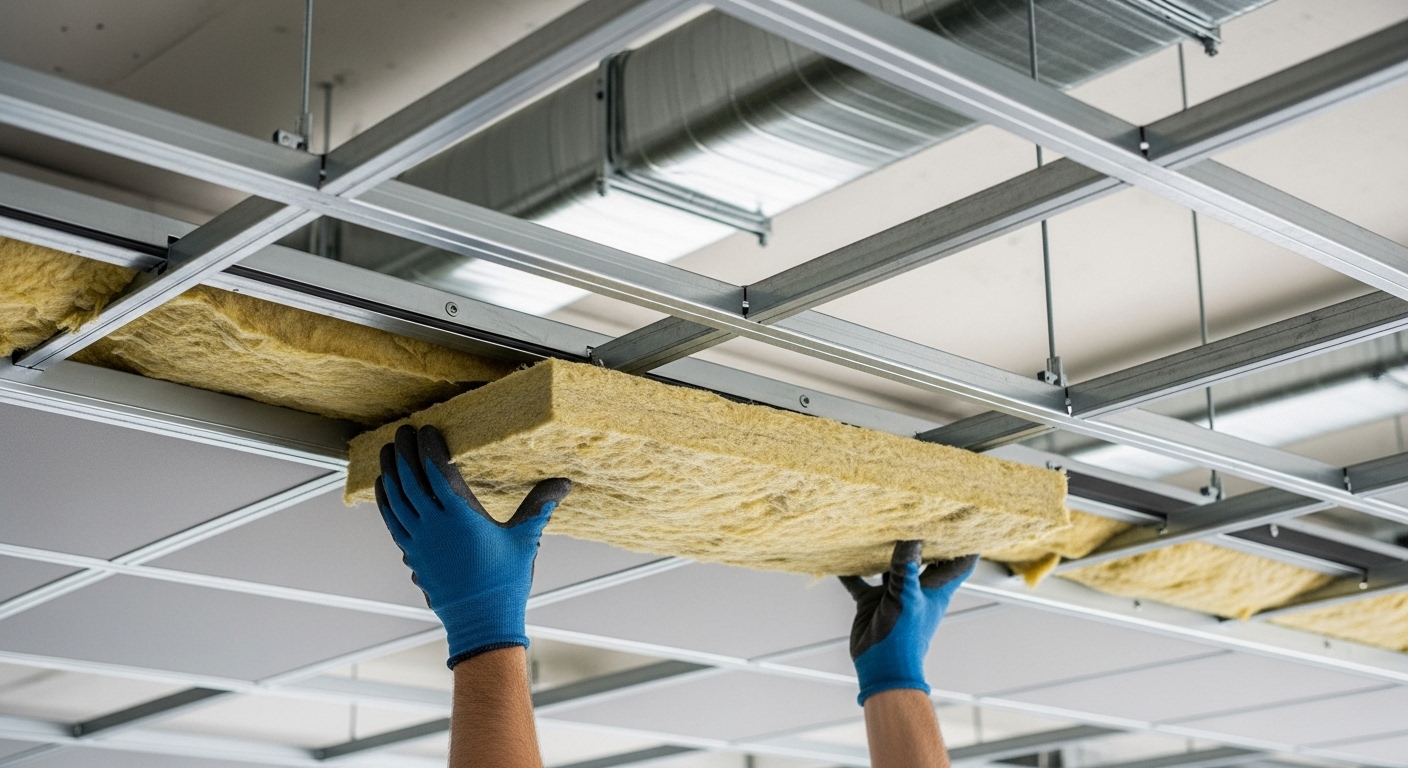
Very often, access to the space above the ceiling slab is difficult or completely impossible. In this case, the ceiling must be insulated from the inside. For this purpose, roll or slab materials are mounted onto the prepared ceiling slab:
- Foil-faced polyethylene foam (Penofol, Izolon, or analogues). In addition to thermal insulation, it also performs a vapor barrier function. Despite its small thickness, it provides decent protection against heat loss.
- Expanded polystyrene (not basic Styrofoam!). It is often used for insulation despite its relatively high flammability.
- Mineral (basalt) wool. One of the best materials for ceiling insulation — non-combustible and with low thermal conductivity. It is effective when not compressed and protected from moisture.
Please note! If it is possible to install a rough false ceiling made of plywood or drywall, the space between the cladding and the slab is filled with cellulose eco-wool or self-expanding polyurethane foam.
Thermal Insulation with a Suspended Ceiling: Technology
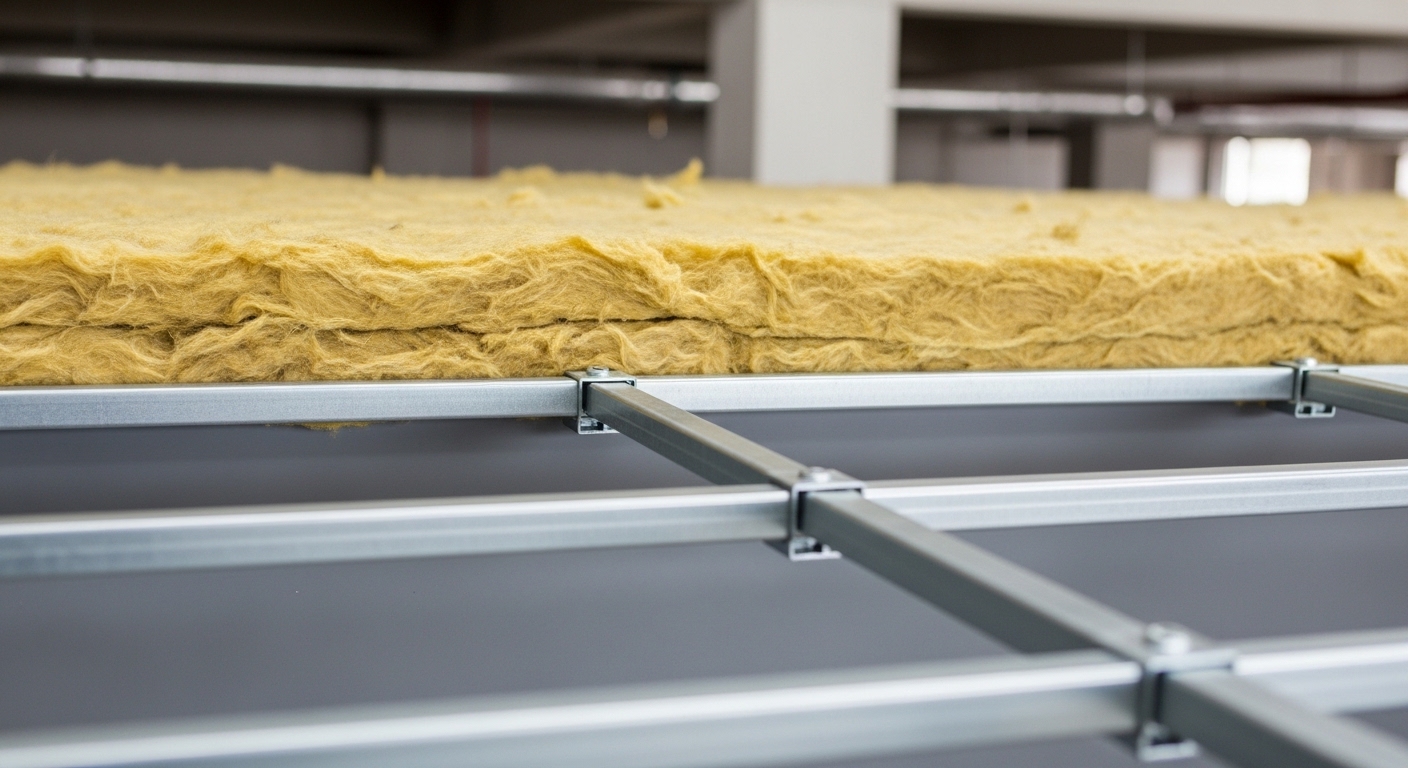
How is ceiling insulation carried out from the room side? Let’s consider the general scheme of thermal insulation works using an object with a suspended metal ceiling as an example:
The old ceiling finish is dismantled, and the base is cleaned.
- Base preparation is conducted — sealing cracks and gaps, treatment with antifungal agents.
- Brackets for the suspension system are mounted on the base according to the markings. The brackets are attached to the base with metal dowels of calculated strength.
- Wires for the lighting system are laid in non-combustible conduits. At the connection points for the lamps, the wires are brought out beyond the calculated ceiling level.
- Then, the thermal insulation material is mounted on the base — extruded polystyrene foam or mineral wool (in slabs or rolls). Plastic “umbrella” dowels with wide plate heads are used for fastening.
- Guides for the ceiling finishing elements are mounted over the insulation.
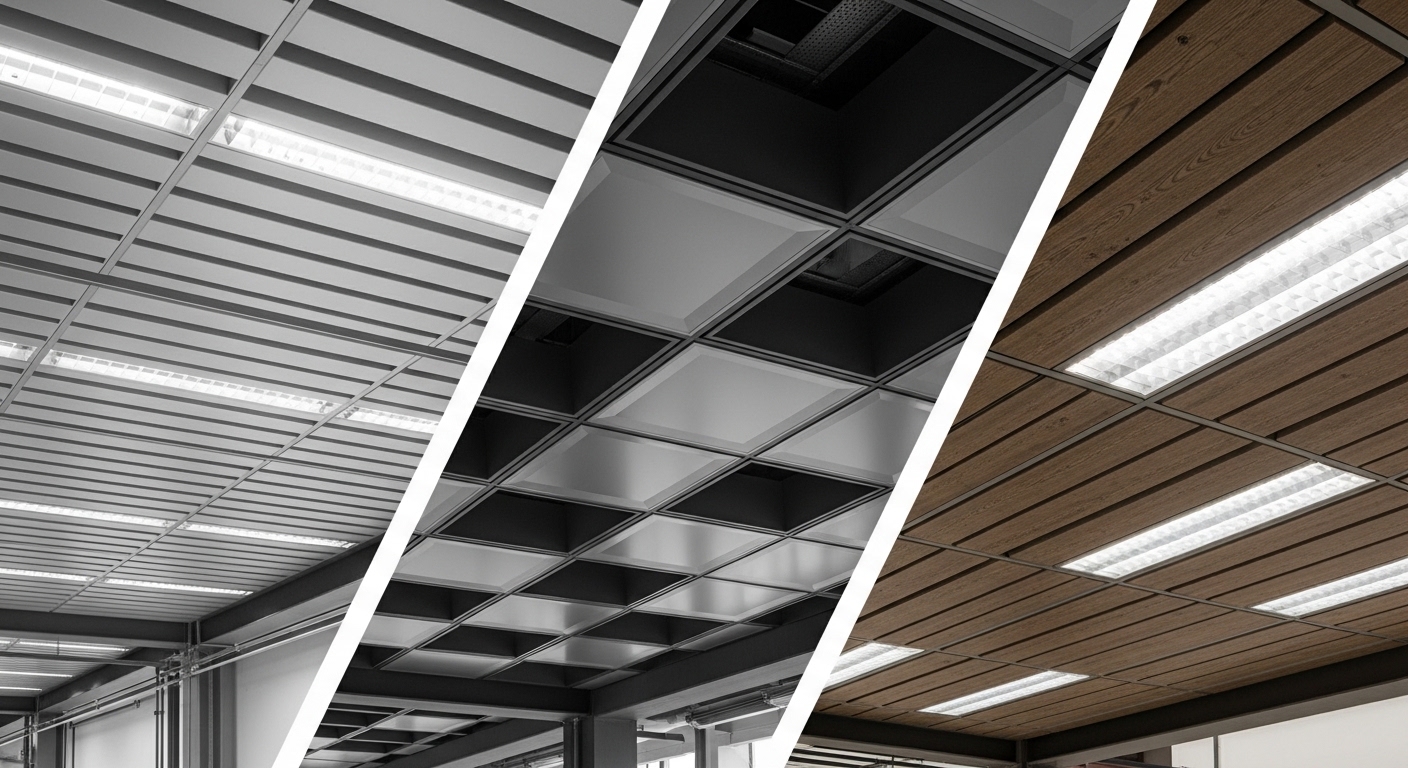
The cladding elements of the suspended ceiling are attached to the guides. From the standpoint of aesthetics, fire safety, and practicality, it is advisable to use metal elements with a polymer protective and decorative coating. In the “Mehbud” factory’s assortment, such products are represented in a wide variety:
- Standard-sized ceiling cassettes.
- Ceiling panels of arbitrary size and shape.
- Ceiling battens (linear strips), etc.
Conclusion
Ceiling thermal insulation is no less important than high-quality wall insulation. Creating a multi-layer ceiling structure with reliable protection against moisture and compression will reduce heat loss, ensure a comfortable microclimate in the room, and provide an opportunity for savings!
