

The facade of any building — whether residential, public, or commercial — can, without exaggeration, be considered its “calling card.” In the daytime, its appearance is shaped by architecture and the quality of finishing materials, but with the onset of twilight, properly designed lighting comes to the fore. It sets the mood, ensures safety, and emphasizes the status of the object.
Facade lighting is a high-tech engineering field at the intersection of lighting design, architecture, and styling. Modern facade lighting must be not only aesthetically appealing but also economically viable, meeting strict standards of energy efficiency (thanks to LED technologies) and environmental friendliness (minimizing light pollution).
The choice of lighting solution depends on many parameters: the purpose of the building, the texture and color of the cladding materials, landscape features, and the surrounding urban context. In this article, we will analyze in detail the key aspects, functions, and popular techniques of facade lighting design.
Functions of Facade Lighting
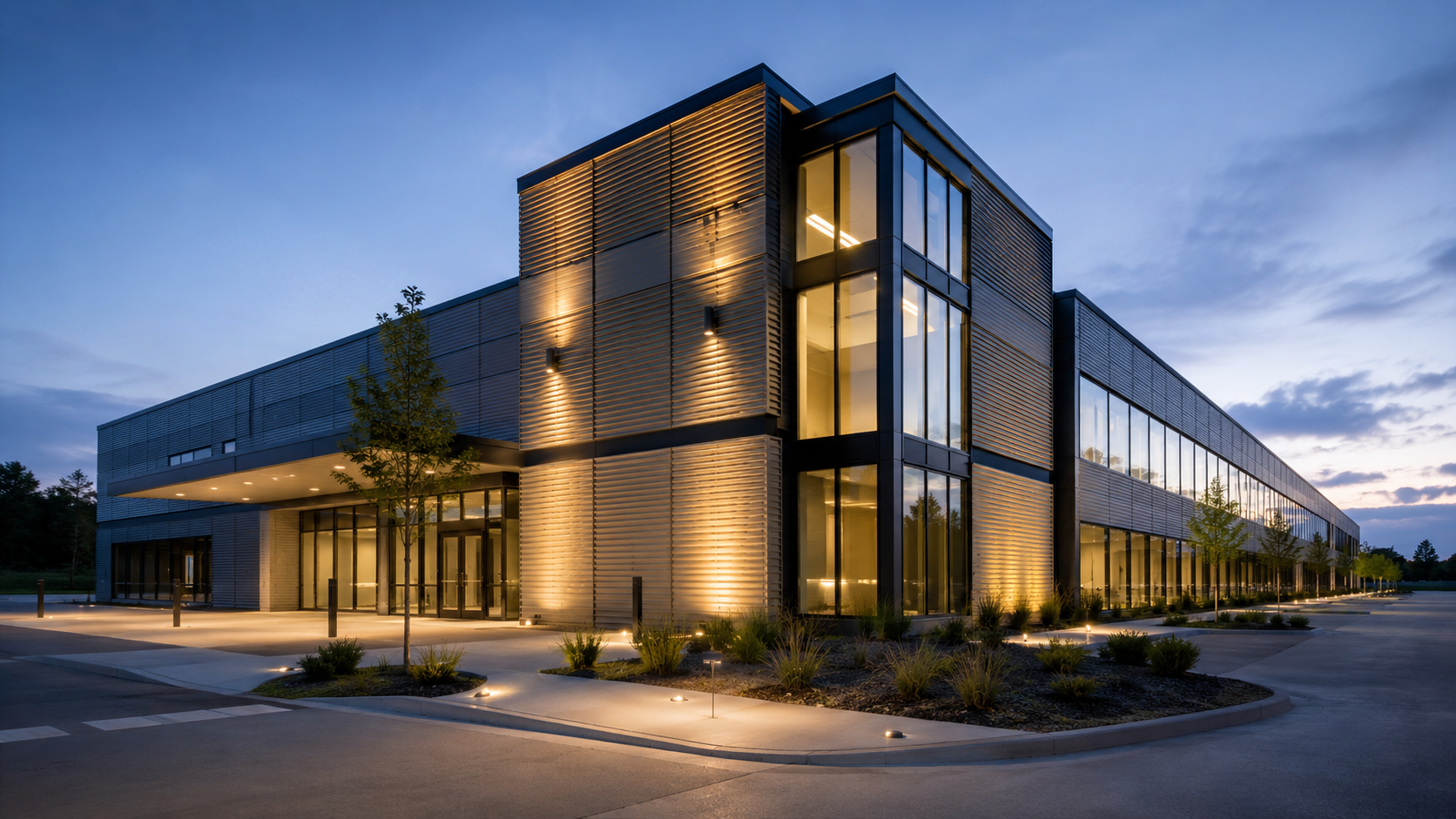
Architectural lighting solves a complex of crucial tasks, which can be divided into utilitarian, aesthetic, and commercial. To achieve these goals, building facades are equipped with LED floodlights, linear luminaires, and ground spots of various wattages and beam angles.
- Functional (utility) lighting. Its main goal is safety. It ensures the visibility of entrance groups, stairs, driveways, and the perimeter of the building at night. Proper light reduces the risk of injury and contributes to the correct operation of CCTV cameras.
- Informational lighting. This includes highlighting identifying objects: navigation signs, corporate logos, promotional signs, and banners.
- Decorative lighting. A tool for transforming the architectural appearance. It can visually alter the proportions of a building, hide potential construction defects, emphasize the texture of the cladding, and harmoniously integrate the structure into the night landscape.
- Marketing (image) function. For commercial real estate (shopping malls, business centers, hotels), a bright and recognizable lighting design is a powerful tool for attracting clients and increasing the property’s capitalization.
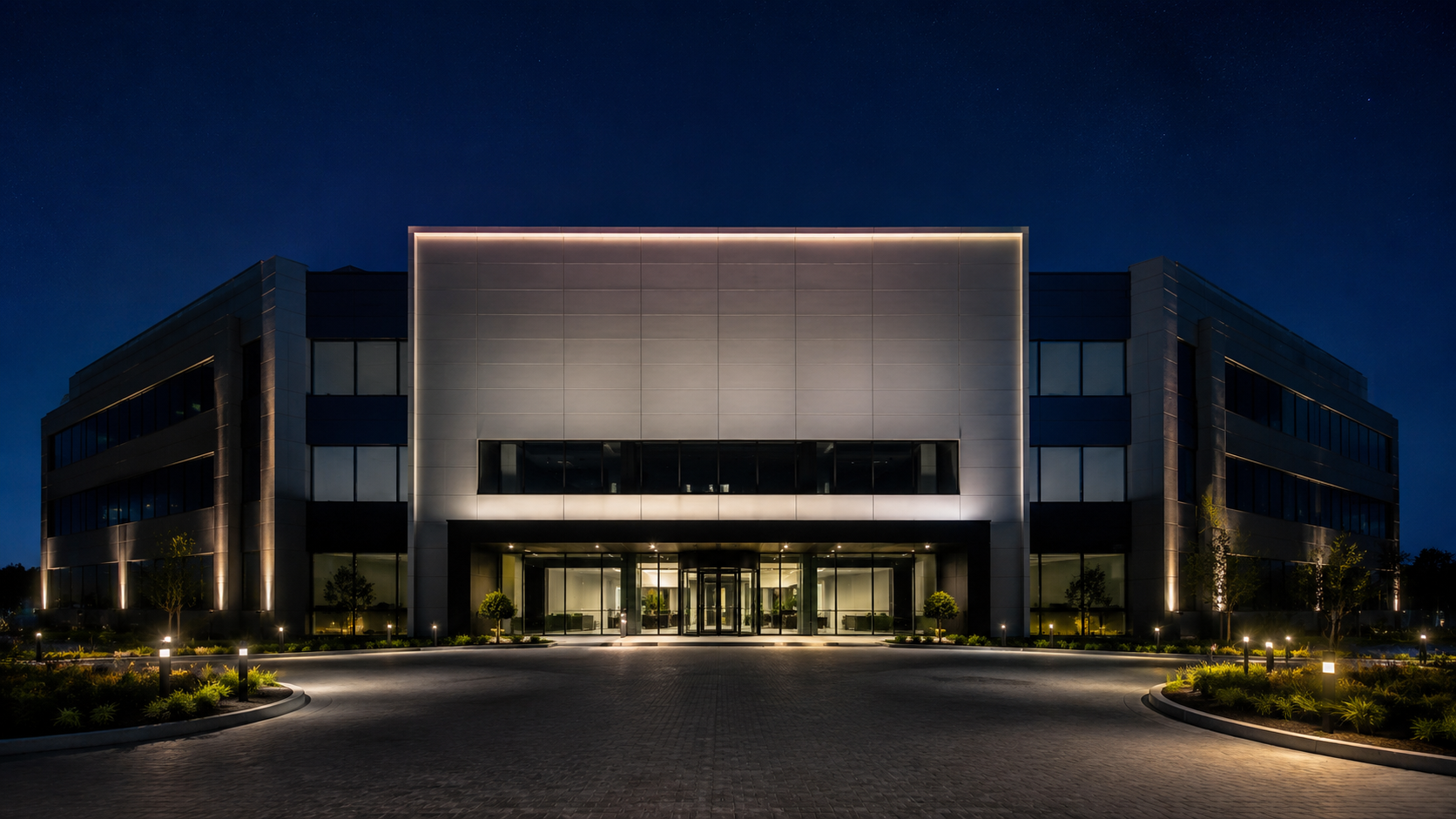
When designing, it is important to consider that any facade lighting system must meet strict criteria:
- Energy efficiency. The use of modern LED matrices and automatic dimming systems (reducing brightness at night).
- Safety and durability. Luminaires must have a high ingress protection rating (IP65 and above), as well as resistance to temperature extremes.
- Visual comfort. Elimination of the “glare” effect on pedestrians, drivers, and residents of neighboring houses.
Meeting these requirements requires a professional approach: creating 3D visualizations and accurate illuminance calculations (e.g., in DIALux software) before installation.
Most Popular Solutions in Lighting Design
Facade lighting design is a field with a rich arsenal of techniques. Any facade (classic brick, brutal concrete, or modern with metal panel finishing) can be radically transformed with properly integrated light.
For clarity, the main lighting schemes are presented in the table:
| Lighting Scheme | Operating Principle | Optimal Application |
|---|---|---|
| Flood (background) | Powerful floodlights evenly illuminate the entire facade, creating a sense of grandeur and monumentality. | Large administrative buildings, monuments, temples. |
| Accent (local) | Narrow-beam lights selectively highlight specific details: arches, columns, cornices, windows. | Historical buildings, private cottages with complex architecture. |
| Contour | LED strips and neon tubes outline the silhouette of the building and roof geometry, creating a glowing framework. | Modern shopping malls, skyscrapers, high-tech buildings. |
| Dynamic (media facade) | Use of RGBW matrices to create animations, smooth color changes, and graphics broadcasting. | Sports arenas, shopping and entertainment centers. |
Detailed breakdown of typical schemes:
- Flood lighting. Fixtures are placed at a distance (on poles or the ground) so that the main area of the facade is illuminated. Typically, the focus is on the central part, while the wings of the building remain in soft partial shadow, giving the structure visual volume.
- Accent lighting. Spotlights with a narrow beam angle (from 5° to 30°) are used, allowing for precise highlighting of architectural details: columns, balustrades, rotundas, or window piers. In modern buildings, this method is used to emphasize logos or the rhythmic pattern of facade cassettes.
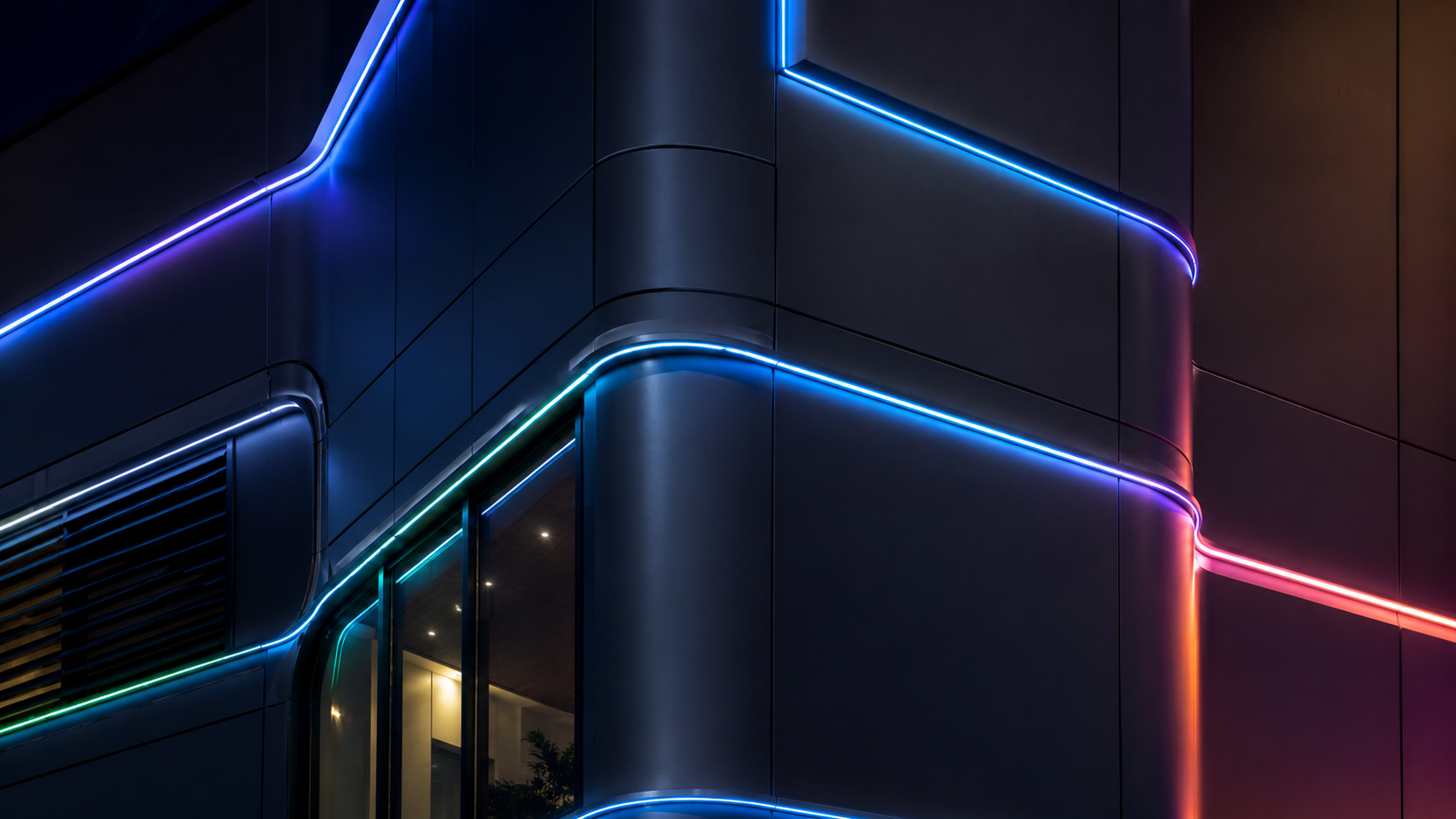
- Contour lighting. Installed along the perimeter of the building, along the roof overhangs. When decorating a facade finished with steel cassettes or slatted systems, LED strips can be covertly placed into the technological gaps (joints) between the cladding elements, creating a “floating” facade effect.
- Artistic (dynamic) lighting. Involves complex combination of schemes using controllers (e.g., DMX512 protocols) that change lighting scenarios depending on the time of day or holidays.
Lighting Dependence on Facade Type
In addition to functional tasks, when installing facade lighting, it is critically important to consider the type of building and the texture of the walls. Matte, glossy, or glass surfaces reflect light differently, so the approaches vary radically.
Private Houses
Private house facade lighting is a task that requires delicacy. On one hand, a small area dictates the use of medium-power luminaires with a warm color temperature (2700K–3000K) so that the light does not glare into bedroom windows. On the other hand, the complex configuration of bays and roofs requires installing multiple local points to create a harmonious picture.
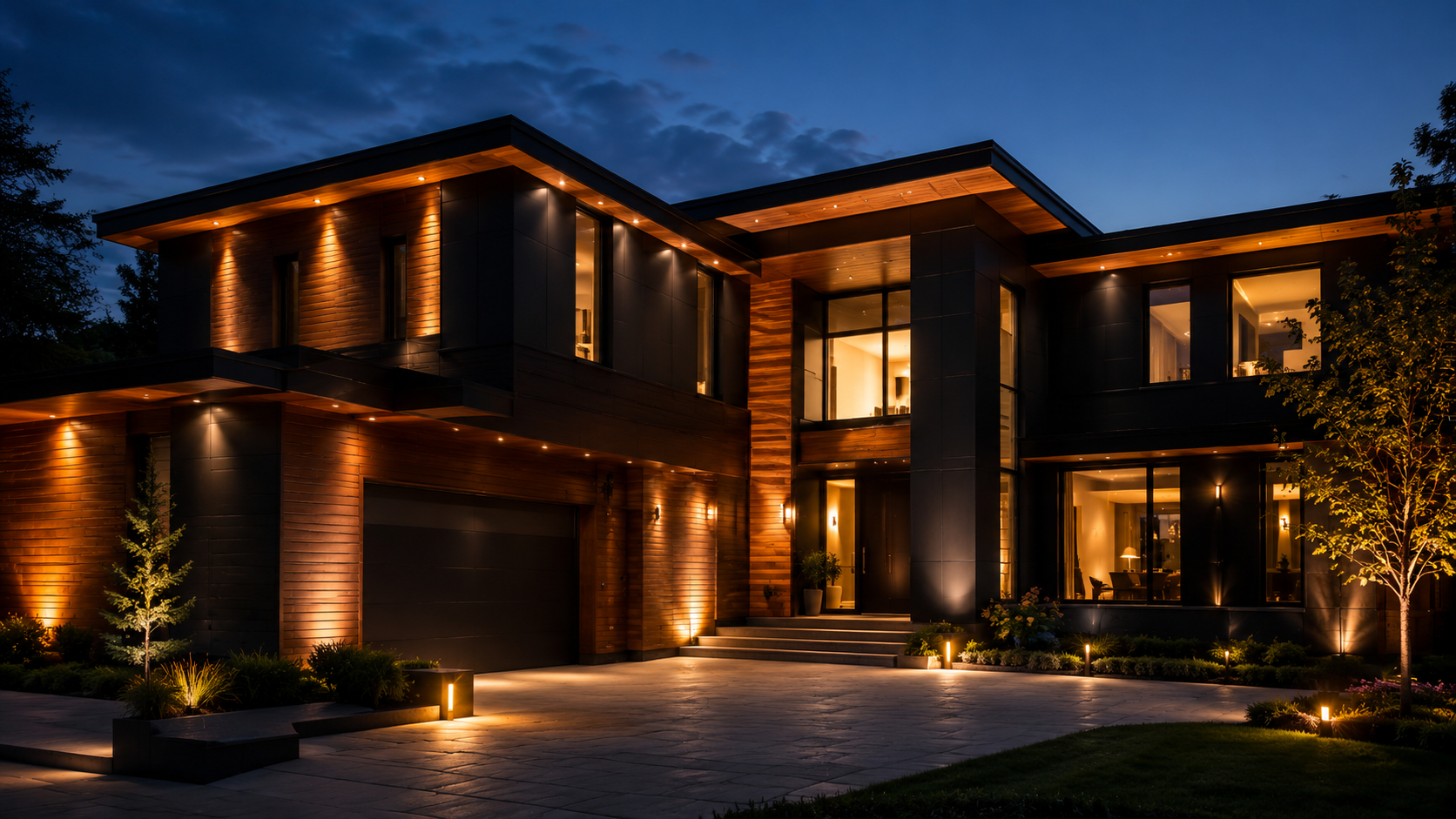
Commonly used:
- Bi-directional wall sconces (Up & Down), stretching the building’s silhouette upwards.
- Recessed spotlights on protruding cornices and roof soffits.
- Ground uplights and spotlights illuminating the plinth and wall texture from below.
- Functional luminaires on extension brackets near the entrance or parking lot.
Historical Buildings
Decorative lighting of buildings with historical value is a task strictly regulated by restoration rules. The lighting design must emphasize the authentic architecture, while the fixtures and wires themselves must be completely invisible during the day and installed without damaging ancient masonry.

Most often in such cases, the following is applied:
- Accent lighting of the facade with directional spotlights on elongated brackets painted to match the color of the walls (according to the RAL palette).
- Grazing contour lighting of the upper part of the building, emphasizing the relief of cornices and the stucco molding underneath.
- Flood lighting of the facade with floodlights located at a significant distance (on masts or adjacent roofs).
As for functional lighting, it is usually solved by installing antique-styled lanterns (wrought-iron sconces or floor lamps). They use modern LED lamps with an exclusively warm light spectrum, mimicking the light of gas lamps.
Modern Buildings
Modern architectural projects, dominated by glass and steel facade cassettes with polymer coating, can effectively transform at night. In this case:
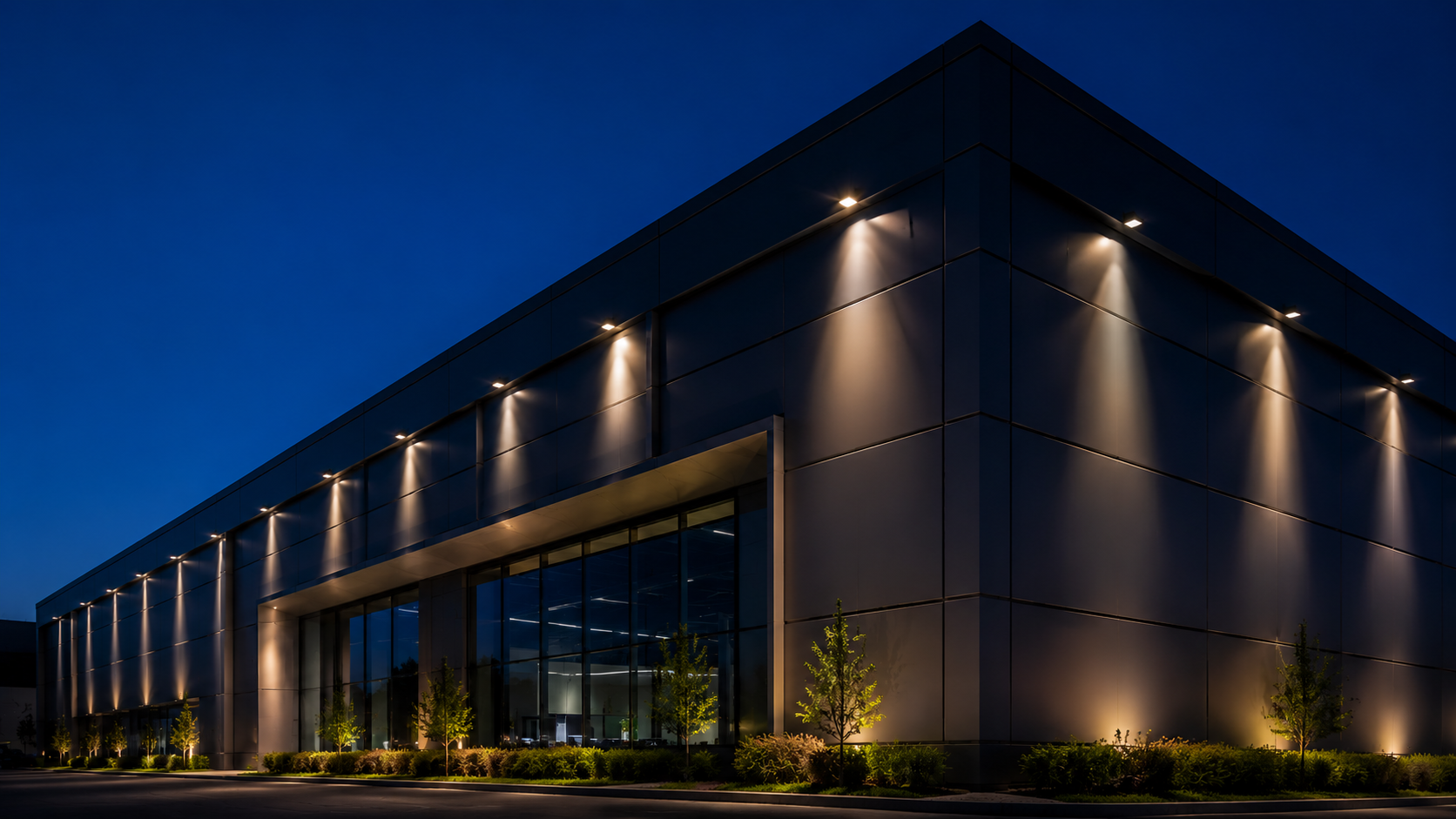
- Lighting is designed together with the facade subsystem, which allows complete hiding of cable routes and power supplies behind the metal cladding of the ventilated facade.
- Powerful integrated luminaires are used for functional lighting. It is advisable to use systems with DALI protocols, which makes it possible to automatically adjust brightness depending on natural light intensity.
- Combating reflections: decorative lighting is mounted in a way to avoid blinding glares on panoramic glazing and metal cassettes (matte diffusers and anti-glare louvers are used).
- If volumetric louver-cassettes are used in the facade finish (with diagonally arranged slats), lighting fixtures can be placed directly behind them. The light breaking through the gaps creates a stunning effect of internal glowing.
Conclusion: designing facade lighting is a complex engineering task that should ideally be solved by architects and lighting technicians before starting the cladding installation. A large assortment of professional LED equipment allows any idea to be realized. It is important to remember the main rule: lighting must work in synergy with the building’s geometry, texture, and color of its finish, ensuring an ideal balance between aesthetics and energy efficiency.
