
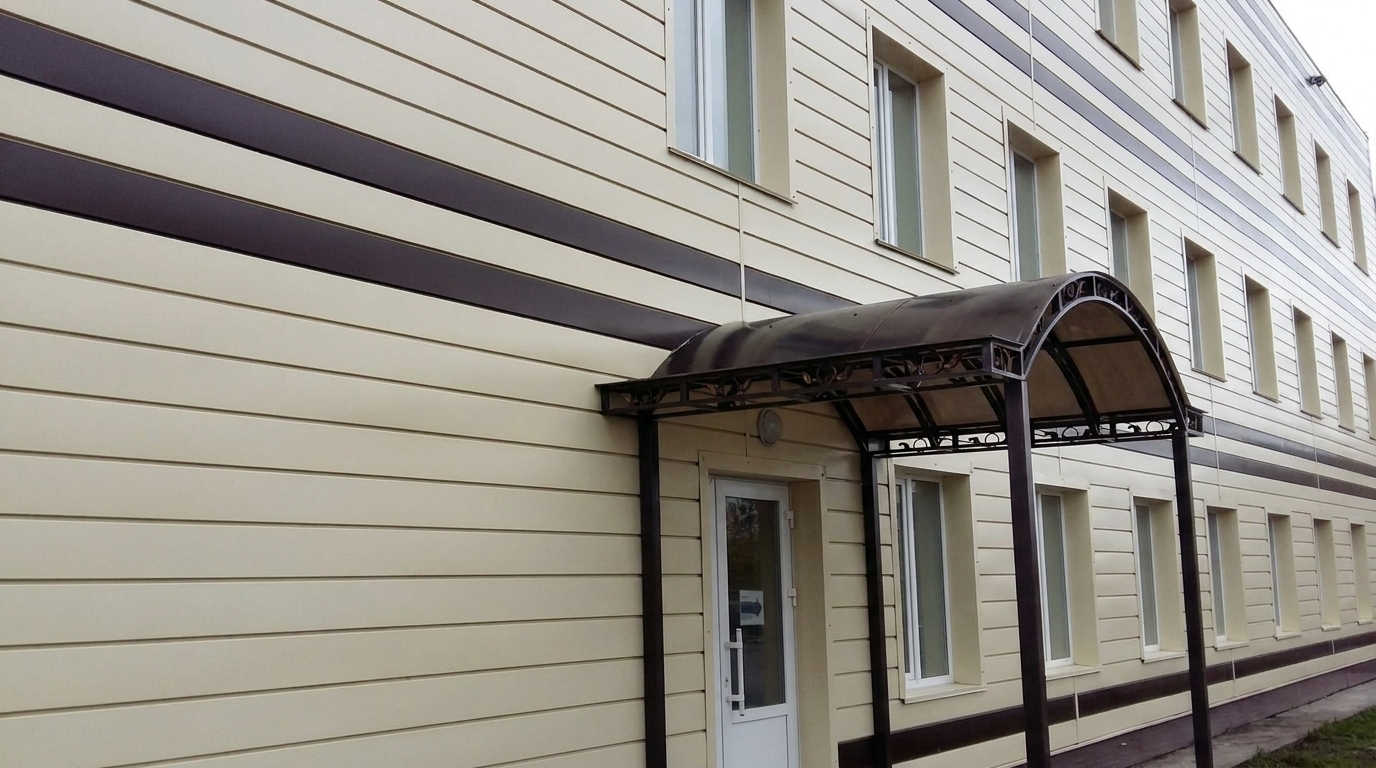
Administrative and Office Buildings in a New Look
The latest trends in rapid urbanization urge a transformation in the external appearance of administrative buildings, public institutions, industrial enterprises, commercial offices, and business centers. The modern cityscape dictates strict architectural requirements: a facade must not only be aesthetically pleasing but also functional, energy-efficient, and durable.
This task is becoming increasingly urgent as the service life of many old administrative buildings actively leased for offices has long passed their 20-to-30-year warranty threshold. Structural walls suffer from erosion, panel joints lose their airtightness, and the overall appearance looks dreary, significantly reducing the commercial attractiveness of the properties.
The necessity of taking urgent and radical measures to halt structural deterioration is further reinforced by the need to cut operational costs driven by the permanent growth of utility rates. This latter factor acts as an increasing necessity for both brand-new developments and buildings undergoing reconstruction. Today, energy-efficient modernization is the primary way to boost real estate profitability.
Insulating building walls is the most common and clear measure, applicable to both old buildings requiring renovation and newly erected modern structures. It is widely understood that the external thermal insulation of building envelopes must be complemented by updating the facade’s appearance using a protective screen. This screen serves as a reliable shield for the fragile insulation layer while simultaneously granting the building an exclusive architectural appeal.
Furthermore, the moral obsolescence of real estate assets—determined not only by the natural aging of materials but also by the futuristic architectural surroundings of new developments—stimulates property owners to revitalize the building’s look, presenting them with a difficult choice. Attempting a cheap fix using expanded polystyrene (EPS) and wet plaster solves the problem only halfway and for a very short period. Moreover, contractors offer a modest warranty of just 1–2 years, after which the facade begins to demand regular investments in cosmetic repairs.
To solve such a large-scale, multi-faceted, and complex task, there is a more reliable, durable, and effective engineering solution proven on thousands of properties worldwide. This is a protective-decorative screen installed at a distance from the load-bearing wall with a precisely calculated ventilated air gap. This construction is complemented by a highly efficient thermal insulation layer applied directly to the building wall. We are talking about Навесных Вентилируемых Фасадах (NVF) / Rainscreen Cladding Systems.

Operating Principle of NVF
NVF is a high-tech passive system that effectively manages thermal processes. It allows for a significant restriction of excess heat transfer from the external environment to the outer walls of the building in summer and minimizes heat loss in the opposite direction during the cold winter period.
Excellent thermal insulation performance is achieved through the synergy of two factors:
- The application of a dense layer of non-combustible mineral (basalt) wool.
- Continuous removal of heated or humid air outside the facade via directed vertical ventilation (the “chimney effect”).
The exterior cladding made of metal panels (cassettes, linear strips, sun louvers), coated in various light shades or ultra-modern metallic colors, effectively reflects direct sunlight. This minimizes the transformation of solar energy into heat, preventing the overheating of interior spaces during summer heatwaves and cutting air conditioning costs.
In winter, the process of heat transfer from the facade wall to the environment is strictly limited by a powerful thermal insulation barrier and the reflection of infrared radiation by the metal shell back toward the load-bearing wall. The air gap negates direct heat transfer processes due to constant natural air circulation.
The design of the NVF outer shell is engineered to the finest detail: any atmospheric precipitation stands absolutely no chance of penetrating behind the cladding. All rainwater and snowmelt run off exclusively along the exterior part of the screen, keeping the insulation and walls completely dry.
The Hidden Dangers of Expanded Polystyrene (EPS) Insulation
Despite its apparent low cost, using expanded polystyrene for commercial and administrative buildings carries serious hidden risks:
- Foam insulation with a plaster finish (“wet facade”) completely seals the building. Possessing extremely low vapor permeability, it prevents the walls from “breathing”. Consequently, a critical accumulation of moisture occurs within the building envelope. This severely degrades the microclimate in offices, causing the structure to develop the so-called “sick building syndrome,” which triggers headaches and fatigue among employees.
- Beneath the foam layer that blocks vapor escape, the dew point shifts inside the wall. The moisture percentage increases. During routine replacement or demolition of foam insulation—which is frequently damaged by rodents and birds—builders discover a colossal growth of hazardous microflora, such as black mold and mildew. These fungi gradually destroy the structure of concrete or brick and penetrate into workplaces.
- Insulation based on expanded polystyrene is a combustible material (Flammability Class G3–G4). According to current building codes and fire safety regulations, foam is strictly prohibited for use as continuous thermal insulation on most public, administrative, and high-rise properties. In the event of a fire, it emits highly toxic, life-threatening smoke.
Comparative Analysis of Facade Insulation Systems
| Comparison Criterion | Rainscreen Cladding (NVF) | EPS + Plaster (Wet Facade) |
|---|---|---|
| Service Life | From 30 to 50+ years (maintenance-free) | 5–7 years (requires repainting and touch-ups) |
| Fire Safety | Class NG (Non-combustible) | Class G3/G4 (Combustible, toxic smoke) |
| Vapor Permeability | Excellent (“breathing” facade) | Absent (thermos effect, dampness) |
| Installation Season | Year-round (dry method) | Spring and summer only (wet processes) |
| Damage Resistance | High (metal, anti-vandal protection) | Low (easily damaged mechanically) |
What Protection Does NVF Provide?
- The NVF system guarantees comprehensive building protection against the destructive impact of weather factors: cyclic solar heating, heavy downpours, critical snow loads, hail, and gale-force winds. It also neutralizes aggressive anthropogenic environmental impacts of urban areas, such as acid rain, smog, and industrial or transport chemical emissions.
- Effective insulation using hydrophobic mineral wool allows water vapor to escape freely outside, optimizing the indoor microclimate. Additionally, the multi-layered structure of NVF (metal – air gap – mineral wool) functions as an outstanding acoustic damper. It ensures excellent sound insulation, significantly lowering the penetration of urban noise, which enhances employee productivity in offices.
- The exterior decorative cladding panels, as well as the entire substructure (framework) of the rainscreen, are made of entirely non-combustible materials (steel, aluminum). This 100% satisfies the strict requirements of building codes regarding fire safety. The structural design of the cavity layout fully eliminates the vertical propagation of open flames.
- The innovative cladding system made of metal panels, cassettes, linear strips, or louvers creates a continuous protective circuit that provides additional shielding for the building against external high-frequency electromagnetic radiation.
ADVANTAGES OF RAINSCREEN CLADDING SYSTEMS
Modern NVF systems are universally versatile. They are equally effective for new construction, space expansion, large-scale reconstruction, technical retrofitting, careful restoration, and capital repairs of any type of building.
From economic, operational, and ecological perspectives, ventilated facades are the only correct and justified thermal protection in the long run. Due to perfect breathability and unhindered diffusion of water vapor through the insulation layers, the building walls always remain dry, and the property “breathes”. A healthy, clean microclimate is constantly maintained in such offices and halls, reducing staff sick leave rates.
The long-term resistance of NVF to extreme climate impacts is determined by a number of factors:
- High durability of the exterior metal cladding elements.
- Reliability of the engineered hidden or visible fastening system and its exemplary corrosion resistance.
- Preservation of the structural integrity and density of the insulation for decades, thanks to protective membranes or the properties of the wool itself.
- The exclusive use of fire-safe materials of class NG (non-combustible).
Acting as a robust architectural cocoon, NVF halts the natural cyclic temperature destruction (freezing/thawing) of the main building envelope, ensuring that load-bearing facade walls remain undamaged for an immense period of time.
Installation of the system does not require expensive leveling or labor-intensive preparation of the old wall surface. Thanks to a sophisticated set of adjustable substructures and brackets of various lengths, installers easily and quickly neutralize any defects, curvature, and deviations of the original walls, creating a perfectly aligned geometry for the new facade.
An immense palette of color options for the exterior polymer coating (RAL color chart) opens up limitless possibilities for architects and designers. Metal cladding elements from the “Mechbud” factory can be manufactured in a wide variety of configurations:
- Classic rectangular and square cassettes.
- Elongated linear panels and thin design slats.
- Complex non-rectangular and polygonal elements tailored to custom projects.
- Trendy 3D dimensional panels that create a dynamic interplay of light and shadows.
- Modern facade sun louvers, combining privacy, sun protection, and ventilation.
A wealth of ready-made architectural solutions accumulated over decades of successful NVF application allows for a radical, unrecognizable transformation of typical administrative buildings into futuristic Class-A business centers. It is possible to complement flat facades with new dimensional structural elements: expressive pylons, smooth rounded corners, strict horizontal bands, porticos, stylish window flashings, and massive designer canopies or awnings over entrance groups.
Thanks to the high-quality exterior coating, which possesses unique hydrophobic and self-cleaning properties during normal rain, NVF based on prepainted metal elements allows for maintaining the pristine shine of the facade without the gray film of urban dust for many years. This guarantees a radical reduction in operational expenses for building maintenance, eliminates the need for annual washing, and minimizes costs for restoration work (including protection against street vandalism).
An equally important factor is real estate asset capitalization: a high-quality rainscreen facade automatically increases the building’s insurance period, extends its legal service life, and substantially drives up the market value of the property itself. All these strategic advantages of NVF are guaranteed as a package, provided there is a proper choice of materials, high-precision factory manufacturing of all elements, and professional, qualified installation.
Related articles
Facade Finishing Passport in Kyiv and Major Cities: A Step-by-Step Guide to Obtaining Permits in 2026
A Step-by-Step Guide to Obtaining a Facade Finish Passport in Kyiv (2026): Approvals, Design Code, Signage, DBN Standards, and Materials.
Analysis of the cost and technological features of the installation of modern metal facades in the regions of Ukraine: Kyiv, Lviv, Dnipro
Cost analysis and installation of modern metal facades (cassettes, rack, blinds) in Ukraine (Kyiv, Lviv, Dnipro). Tech features & prices.
Planned preventive maintenance of metal ventilated facades of commercial facilities: methodology, regulations, and technologies
How to extend a metal facade's lifespan to 50 years? Effective strategies for preventive maintenance, diagnostics, and modern cleaning technologies.