Thin-sheet metal for building products is chosen based on three features: base material, protective coating, and delivery form. Coil, strip, and sheet describe the format of the workpiece. Galvanized steel, steel with aluzinc or polymer coating are different options for protecting the steel base. Zinc-titanium is a separate alloy, not a type of steel coating.
This review will help you compare suppliers’ offers in Ukraine by technical specification. It does not establish market shares or a universal rating of materials: suitability depends on the product, operating conditions, and processing technology.
Coil, strip, or sheet · Bases and coatings · Applications · Purchasing checklist · Frequently Asked Questions
Coil, strip, and sheet: what’s the difference
Coil is a metal strip rolled up for transportation and further processing. This format is convenient for lines that sequentially unroll, cut, and profile the material. You need to agree on the width, coil weight, and compatibility with the uncoiler.
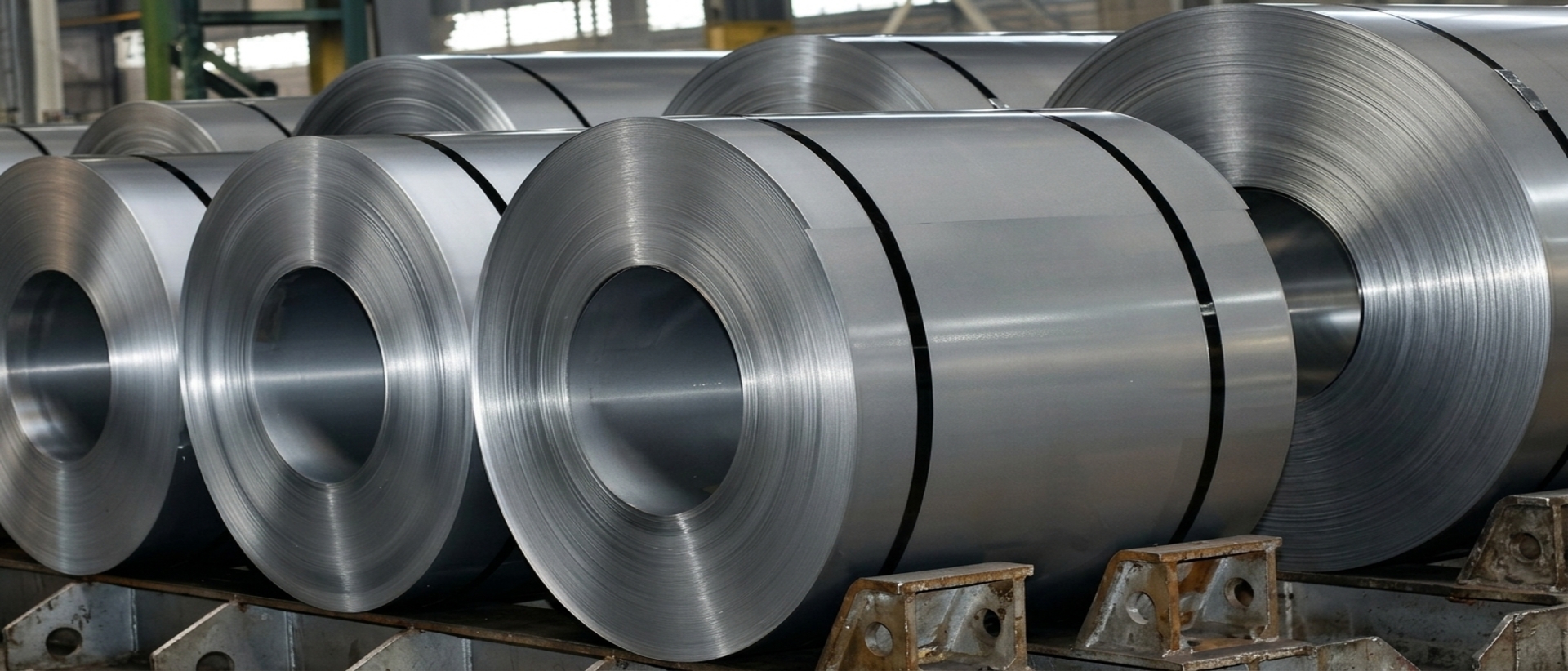
Strip is a narrow band obtained by the longitudinal slitting of a wider strip. It is ordered to match the width of the workpiece, for example, for profiling long parts. This can reduce cutting operations on your own line, but width accuracy and edge condition remain important.

Sheet is a flat workpiece of a specified length and width. Sheets are used in both custom and industrial manufacturing: for cutting, bending, perforation, and making cassettes. Waste depends on the nesting plan and part geometry, so a sheet is not automatically less economical than a coil.
Main materials and protective coatings
The format name does not determine the metal composition. The specification separately indicates the base, its grade and thickness, metallic coating, and, if any, organic finish.
Uncoated steel
Hot-rolled and cold-rolled steel are characteristics of the rolling method, not a finished anti-corrosion protection system. Uncoated steel is used in manufacturing, particularly when protection is provided at the next stage. For exterior cladding, the entire product and the intended protection system must be evaluated.
Galvanized steel
In hot-dip galvanized rolled products, the steel strip is coated with zinc. Its role is to protect the base from corrosion. The word “galvanized” itself does not determine the service life: the amount of coating, environment, processing, and assembly design are important.
For example, in the SSAB coating table, Z275 means a minimum total mass of zinc coating of 275 g/m² on both surfaces according to the manufacturer’s specified control method. This is not 275 g/m² on each side and not the thickness of the steel base. The description of hot-dip galvanizing should also not be confused with electrolytic zinc plating or zinc-rich paint.
Galfan: zinc-aluminum coating
Galfan is a metallic coating of steel based on zinc and aluminum. SSAB describes Galfan (ZA) as a coating with a composition of approximately 95% zinc and 5% aluminum. For a specific order, check the designation, coating mass, and allowable forming according to the manufacturer’s documentation.
Aluzinc coating
Aluzinc is also a coating for a steel base, but it has a different ratio of components. As an example, ArcelorMittal lists for Galvalume 55% aluminum, 43.4% zinc, and 1.6% silicon. These values describe a specific type of coating; it is incorrect to apply them to all zinc-aluminum alloys.
The name “aluzinc” alone is not enough to promise an increase in service life by a certain number of times. Materials with known characteristics must be compared under identical application conditions.
Prepainted (polymer-coated) steel
This is a multi-layer system: steel base, metallic protective layer, surface preparation, and organic coatings. The specific structure, top, and back coats are determined by the product’s technical data sheet. Polyester, polyurethane systems, PVDF, and plastisol cannot be compared by name alone: the characteristics of the specific system are important.
According to the coil coating technology described by ECCA, the coating is applied to the strip with rollers and cured on an industrial line. Painting the finished part can be a separate process. Read more about the differences in the article on painting thin-sheet metal.
A decorative pattern imitating wood or stone characterizes the finish. It does not replace data on the base, protection, color stability, and allowable operating conditions.
Zinc-titanium: a separate sheet material
Zinc-titanium should not be included in the list of steel coatings. It is a zinc alloy with small additions of titanium and copper. RHEINZINK describes it as an independent material for roofing, facades, and drainage. Its processing and joints are designed according to the manufacturer’s recommendations, not the rules for galvanized steel.
Brief comparison
| Option | What to check |
|---|---|
| Uncoated steel | Grade, formability, and subsequent protection system. |
| Galvanized steel | Application method, designation, and amount of zinc coating. |
| Galfan | Composition of the zinc-aluminum coating and its mass. |
| Aluzinc steel | Exact type of alloy, characteristics, and application limits. |
| Prepainted steel | The entire layer system, top and reverse sides, color, and processing conditions. |
| Zinc-titanium | Documentation for the specific alloy and compatible structural system. |
Where thin-sheet metal is used
Typical applications include facade and ceiling panels, cassettes, fence slats, flashing, parapet caps, and other accessory elements. A flat sheet and a profiled product made from it behave differently under load. The choice of thickness, profile, fasteners, and distances between supports must correspond to a specific system.
Not all parts of a fence are made from the same raw material: support posts and thin facing slats perform different functions. An example of the influence of shape on application is discussed in the corrugated board review.
Bending also has technological limits. The permissible radius, bending direction, and coating condition after forming are checked for the selected grade and coating system; there is no universal promise that it “bends without losing properties”.
What to check before purchasing in Ukraine
Compare commercial offers based on the same specification. The country of origin alone does not prove the quality of the material, and a lower price per ton does not account for the yield of usable parts and processing costs.
- Purpose. Exterior or interior use, moisture, contamination, contact with adjacent materials, appearance requirements.
- Base. Material, grade, nominal thickness, and tolerances; clarify whether the stated thickness includes the coating.
- Protection. Type and amount of metallic coating, organic system, its characteristics on both sides.
- Format. Strip width, sheet length, weight and coil parameters, edge condition, packaging.
- Processing. Compatibility with cutting, bending, profiling, or welding; requirements for protecting processed areas.
- Documents. Product passport, quality document for a specific batch, and compliance with the specified specification. Check the standard number along with its revision and scope of application.
- Acceptance. Batch identification, agreed-upon sample of color and texture, surface condition, and procedure in case of non-compliance.
To order finished Mehbud facade systems, ceilings, or fences, prepare the dimensions, installation location, and finish requirements. Agree on the material in the specification of the specific product, not just by the general metal name.
Frequently Asked Questions
How does a strip differ from a coil?
Strip describes a narrow band of a specified width; it can also be supplied coiled. Coil describes the packaging form of the strip. Actual dimensions and processing parameters are important for ordering.
Are Galfan and Aluzinc the same?
No. Both options contain zinc and aluminum, but the ratio of components and properties differ. Check the exact name and technical data sheet of the coating.
Which thin-sheet metal is the best?
There is no universal option. The choice depends on the part’s function, loads, environment, forming method, and surface requirements. The comparison should be based on the parameters of specific products.
Is it enough to choose a RAL color?
No. The color code does not determine the coating type, its thickness, gloss, or texture. For visible parts, agree on a physical sample and the full finish specification.
Related articles
Painting sheet metal: important nuances
We will discuss metal painting technologies and the key aspects of the painting process itself below in our article.
Comprehensive Analysis of Occupational Safety in Press Brake Operation
How to ensure press brake safety: optoelectronic light curtains, hydraulic monitoring, and PPE footwear. Complete industrial safety guide.
Digital Transformation of Construction Measurements: An In-Depth Study of Ruler Apps, Spatial Scanners, and Their Impact on Construction Economics
How are AR apps and 3D scanners transforming construction? Explore mobile tools, error economics, and seamless data integration with CAD & BIM.